Potter Wasps Identification Guide
Eumenes spp. (Subfamily Eumeninae)
Potter wasps are solitary wasps named for the small, pot-shaped mud nests they construct. These insects prey on caterpillars and rarely sting humans.
Taxonomy
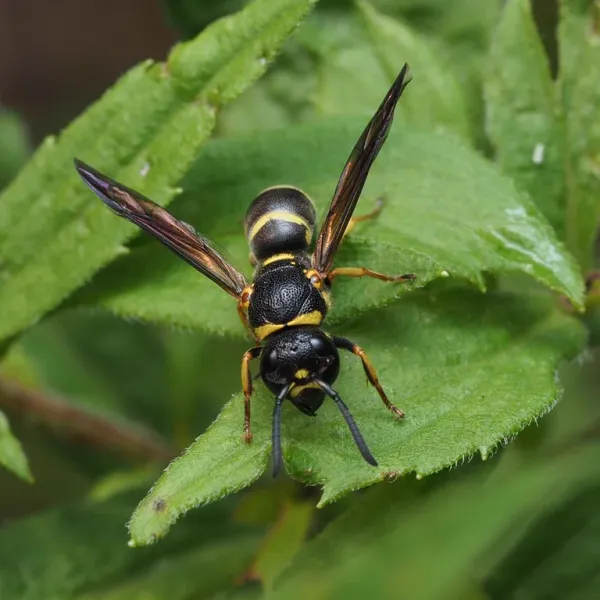
Potter Wasps Coloration
Common color patterns to help identify potter wasps
Potter Wasps
Seasonal Activity
When potter wasps are most active throughout the year

Where Potter Wasps Are Found
Hover over states to see their names. Green regions indicate where potter wasps have been reported.
Potter Wasp Identification Guide
Physical Characteristics
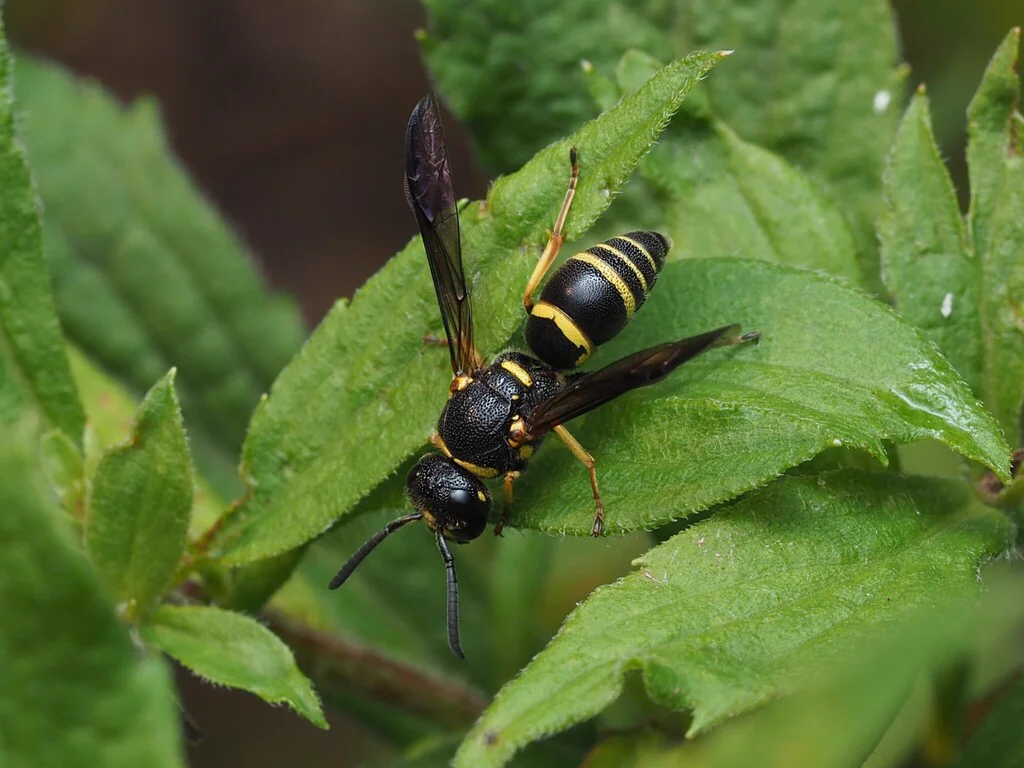
Potter wasps are solitary wasps in the subfamily Eumeninae. They measure between 10 and 20 millimeters (about 1/2 to 3/4 inch) in length. This makes them small to medium-sized wasps. Their bodies have the typical wasp shape with a head, thorax, and abdomen joined by a narrow waist.
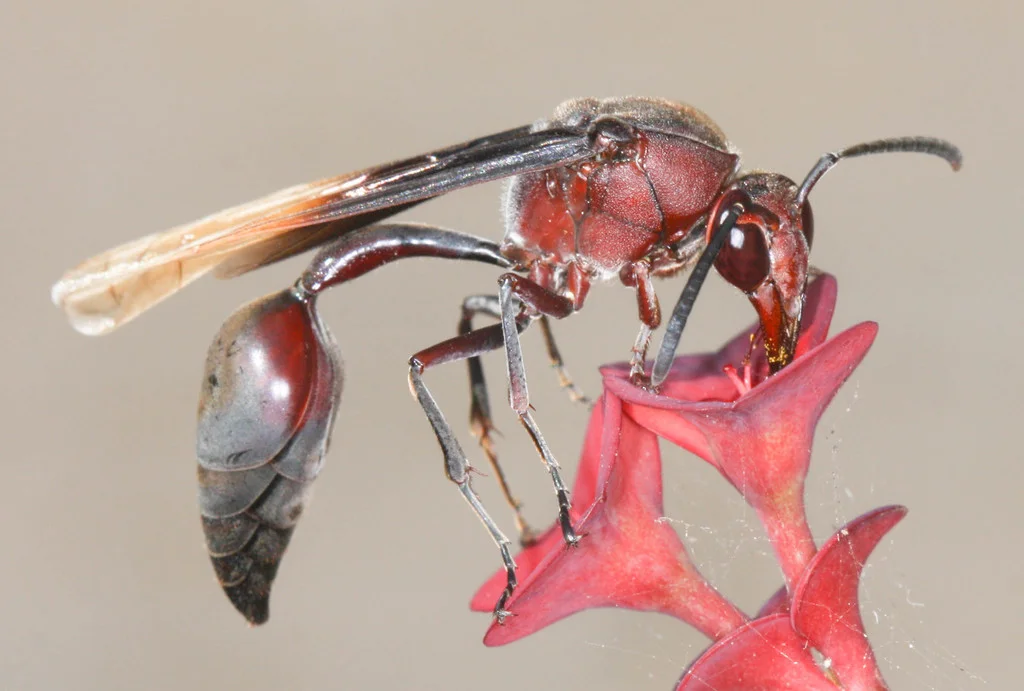
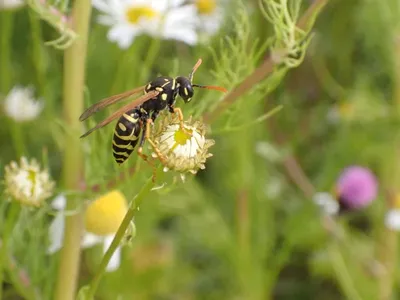
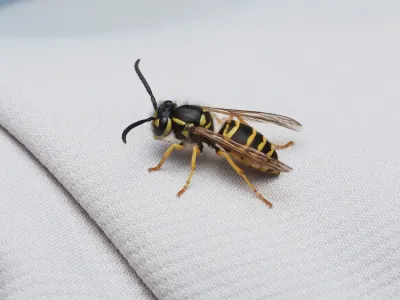
Most potter wasps are black with yellow or cream-colored markings on the face, thorax, and abdomen. Some species are reddish-brown, especially those in the genus Eumenes. The abdomen often has yellow bands. Their wings are clear with a slight brown tint. Like all wasps, they have six legs and two antennae.
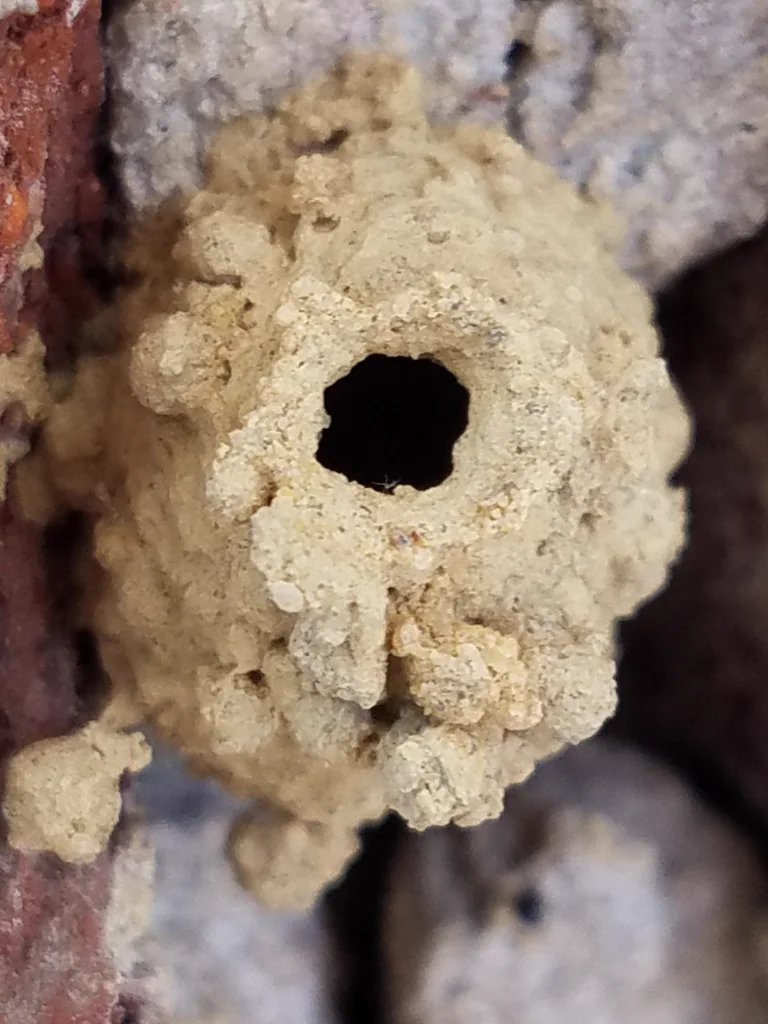
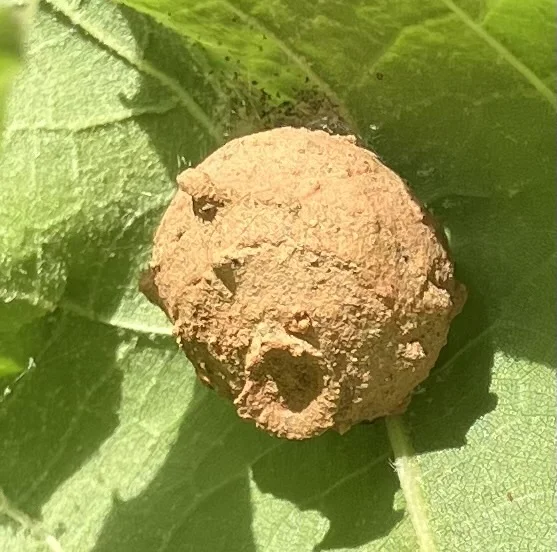
The name “potter wasp” comes from the mud nests these insects build. The small structures look like tiny clay pots or jugs with a narrow neck and opening at the top. Some believe Native Americans based pottery designs on these natural wasp nests.
Common Species
Several potter wasp species are found throughout North America:
-
Fraternal Potter Wasp (Eumenes fraternus): One of the most common species in eastern North America. Adults are small and delicate, measuring 9.5 to 19 mm. The body is black and shiny with ivory markings on the face, thorax, and abdomen. Found from Canada to Texas and as far west as Kansas and Nebraska.
-
Four-toothed Mason Wasp (Monobia quadridens): A larger species reaching up to 18 mm. Black with white markings and a distinctive notched lower lip. Often nests in pre-existing cavities rather than building free-standing pots.
-
Catskill Potter Wasp (Ancistrocerus catskill): A smaller species common in the northeastern United States. Black and yellow coloration with a compact body shape.
-
European Tube Wasp (Ancistrocerus gazella): An introduced species now established across North America. Black and yellow with distinctive markings.
Potter Wasp Behavior and Biology
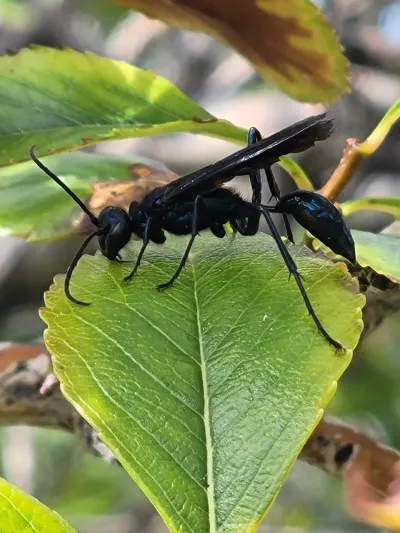
Potter wasps live alone. Each female builds her own nest and cares for her own young. This is different from social wasps like yellowjackets or paper wasps, which live in colonies with queens and workers. Because potter wasps have no colony to defend, they are much less aggressive. A related species, Cow Killers, shares similar characteristics.
Nest Construction A related species, Great Black Wasps, shares similar characteristics.
Female potter wasps gather mud or moist soil with their jaws and front legs. They mix this with water and saliva to form small mud balls. The wasp then carries these mud balls back to her nesting site.
Working one ball at a time, she builds a small pot-shaped chamber on a twig, leaf, window frame, or other sheltered surface. Building one pot may take hundreds of trips over several hours. Each finished pot is about 1/4 to 1/2 inch wide with a narrow opening at the top. Each pot holds just one offspring.
Hunting and Reproduction
When the pot is almost done, the female lays a single egg. She attaches the egg to the inside of the nest with a thin silk thread. This keeps the egg dry and away from the prey stored inside.
The female then hunts caterpillars. She finds a caterpillar, stings it to paralyze it, and carries it back to the nest. She places 1 to 12 paralyzed caterpillars in the chamber. The caterpillars stay alive but cannot move. They serve as fresh food for the growing larva.
Once she adds enough caterpillars, the female seals the pot with a mud plug. She may build more pots nearby. A single female can create 5 to 15 pots in her lifetime. Some species can produce two or three generations in one year.
Seasonal Activity
Potter wasps come out from their winter hiding spots when spring temperatures reach about 60 degrees Fahrenheit. Females start looking for nesting sites and begin building their first pots. The busiest nest-building period is late spring and summer.
Adults drink flower nectar for energy. You can often see them visiting gardens and wildflowers in warm months. By fall, the new generation has grown inside the sealed mud pots. Some emerge the same season. Others stay inside as pupae through winter and come out the next spring.
Treatment Methods for Potter Wasps
Potter wasps are solitary and rarely sting, so treatment is usually not urgent. However, if their mud nests are in unwanted areas around your home, there are several ways to address the problem.
Nest Removal
The simplest approach is to remove the mud nests. Wait until late fall or winter when the wasps are no longer active. At this point, you can scrape off the mud pots with a putty knife or similar tool. The nests are small and come off easily from most surfaces.
If nests must be removed during the active season, do so in the early morning or evening when wasps are less active. Potter wasps rarely sting even when disturbed, but it is best to take basic precautions.
Preventing Future Nesting
To prevent potter wasps from building nests in specific areas:
- Seal cracks and gaps around windows, doors, and eaves
- Paint or seal wood surfaces where nests commonly appear
- Remove sources of mud by fixing drainage issues near the foundation
- Keep garage doors closed when not in use
When to Call a Professional
Most homeowners can handle potter wasp nests on their own. However, if you have a large number of nests or are unsure what type of wasp you are dealing with, a pest control professional can help identify the species and recommend the best course of action.
Unlike social wasps such as yellowjackets or hornets, potter wasps do not form large colonies. Each nest contains only one wasp larva. This makes them much easier to manage than other stinging insects.
Potter Wasps vs. Other Solitary Wasps
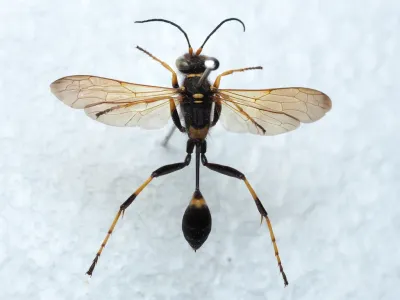
Potter wasps share many traits with mud daubers. Both are solitary wasps and both build nests from mud. The key differences are nest shape and prey.
Mud daubers build long, tube-shaped cells in parallel rows. They hunt spiders. Potter wasps build small, pot-shaped nests and hunt caterpillars. Both types are docile and rarely sting.
References
Other Wasps
Explore other species in the wasps family
Commonly Confused With
Potter Wasps are often mistaken for these similar pests
Where Potter Wasps Are Found
Hover over states to see their names. Green regions indicate where potter wasps have been reported.
Common Questions about Potter Wasps
Are potter wasps dangerous to humans?
+
Potter wasps are not dangerous to humans. They are solitary wasps and rarely sting unless directly handled or threatened. Unlike social wasps, they do not aggressively defend their nests and will typically fly away if disturbed.
What do potter wasp nests look like?
+
Potter wasp nests are small, rounded mud structures that resemble miniature clay pots or jugs. Each pot is about the size of a marble, measuring roughly 1/4 to 1/2 inch in diameter, with a narrow opening at the top. They attach these nests to twigs, leaves, window frames, and other surfaces.
Should I remove potter wasp nests from my property?
+
Potter wasp nests can be removed if they are in an unwanted location. The best time to remove them is in fall or winter when the wasps have finished their life cycle. You can scrape off the mud pots with a putty knife once they are no longer active.
What do potter wasps eat?
+
Adult potter wasps feed on flower nectar. However, they hunt and paralyze caterpillars to provision their nests as food for their developing larvae. Each mud pot may contain between 1 and 12 paralyzed caterpillars.
How can I tell potter wasps from mud daubers?
+
Potter wasps and mud daubers both build mud nests, but the nest shapes differ. Potter wasps build small, rounded pot-shaped nests that look like tiny clay jugs. Mud daubers build elongated tube-shaped cells. Potter wasps typically have a thicker body compared to the very thin-waisted mud daubers.
Do potter wasps live in colonies?
+
No, potter wasps are solitary insects. Each female builds and provisions her own nest independently. There are no queens, workers, or colony structure. This solitary lifestyle makes them far less defensive than social wasps.
When are potter wasps most active?
+
Potter wasps are most active from late spring through early fall when temperatures are warm. They spend their time building mud nests, hunting caterpillars, and visiting flowers for nectar. They are primarily active during daylight hours.

With five years of hands-on experience in the pest control industry, George Schulz is a registered technician with the Virginia Pest Management Association and a proud third-generation professional in a family business that's been protecting homes for over 57 years. He manages and trains a team of service pros while also leading internal research efforts—recently spearheading a deep-dive review of thousands of documents on pest control materials to hand-pick the most kid and pet friendly, most effective solutions tailored specifically for homes in the DC metro area.