Organ Pipe Mud Daubers Identification Guide
Trypoxylon politum
Organ pipe mud daubers are solitary wasps that build cylindrical mud tubes resembling organ pipes. These wasps prey on spiders and rarely sting humans.
Taxonomy
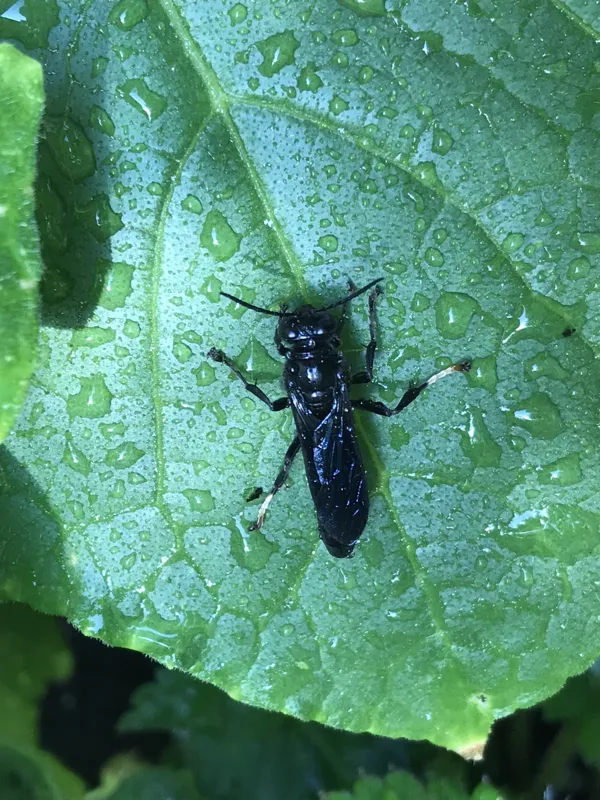
Organ Pipe Mud Daubers Coloration
Common color patterns to help identify organ pipe mud daubers
Organ Pipe Mud Daubers
Seasonal Activity
When organ pipe mud daubers are most active throughout the year

Where Organ Pipe Mud Daubers Are Found
Hover over states to see their names. Green regions indicate where organ pipe mud daubers have been reported.
Organ Pipe Mud Dauber Identification Guide
Physical Characteristics
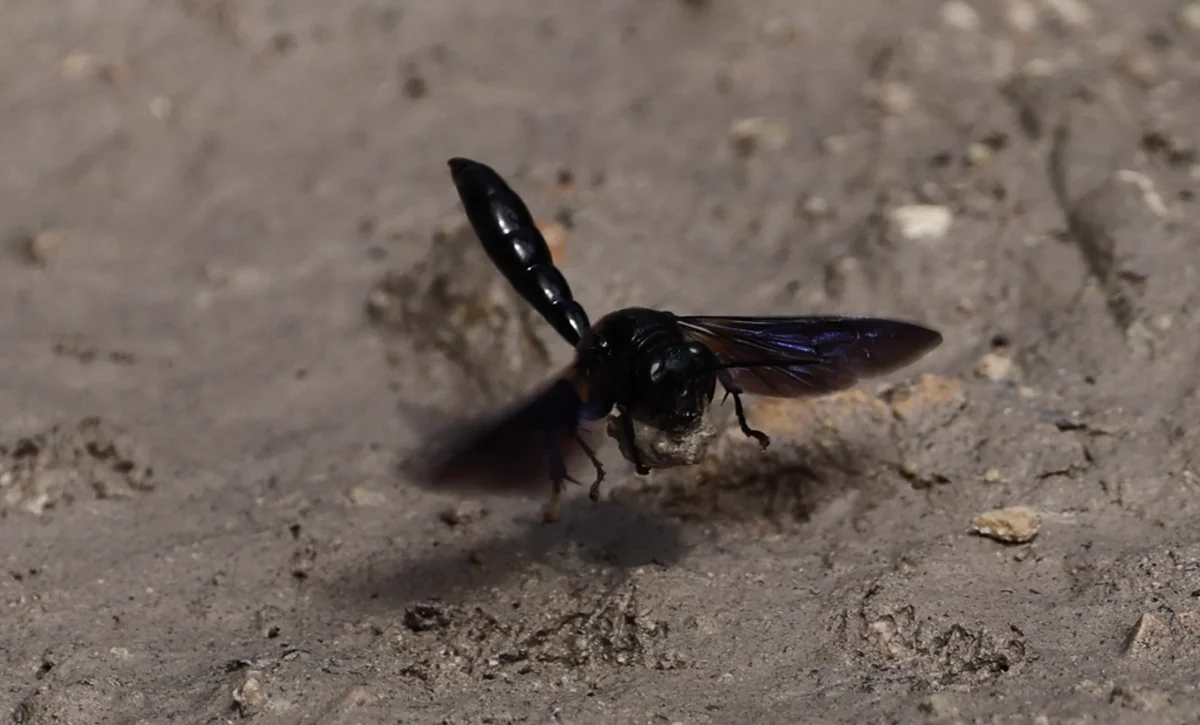
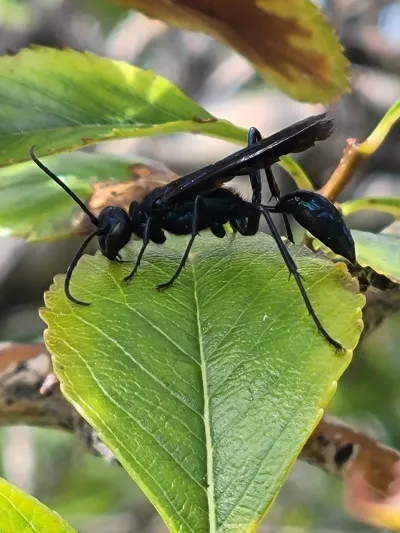
The organ pipe mud dauber (Trypoxylon politum) is one of the larger mud dauber species in North America. Adults measure 1.5 to 2 inches long (39-51 mm). This makes them bigger than most other solitary wasps. Their most notable feature is their shiny black body with wings that show a metallic blue color in some light.
Like other mud daubers, these wasps have a thin, thread-like waist between the thorax and abdomen. Their legs are mostly black. The back legs have pale yellow to white coloring on the lower parts with black feet. Males and females look alike, though females are usually a bit larger.
Nest Identification
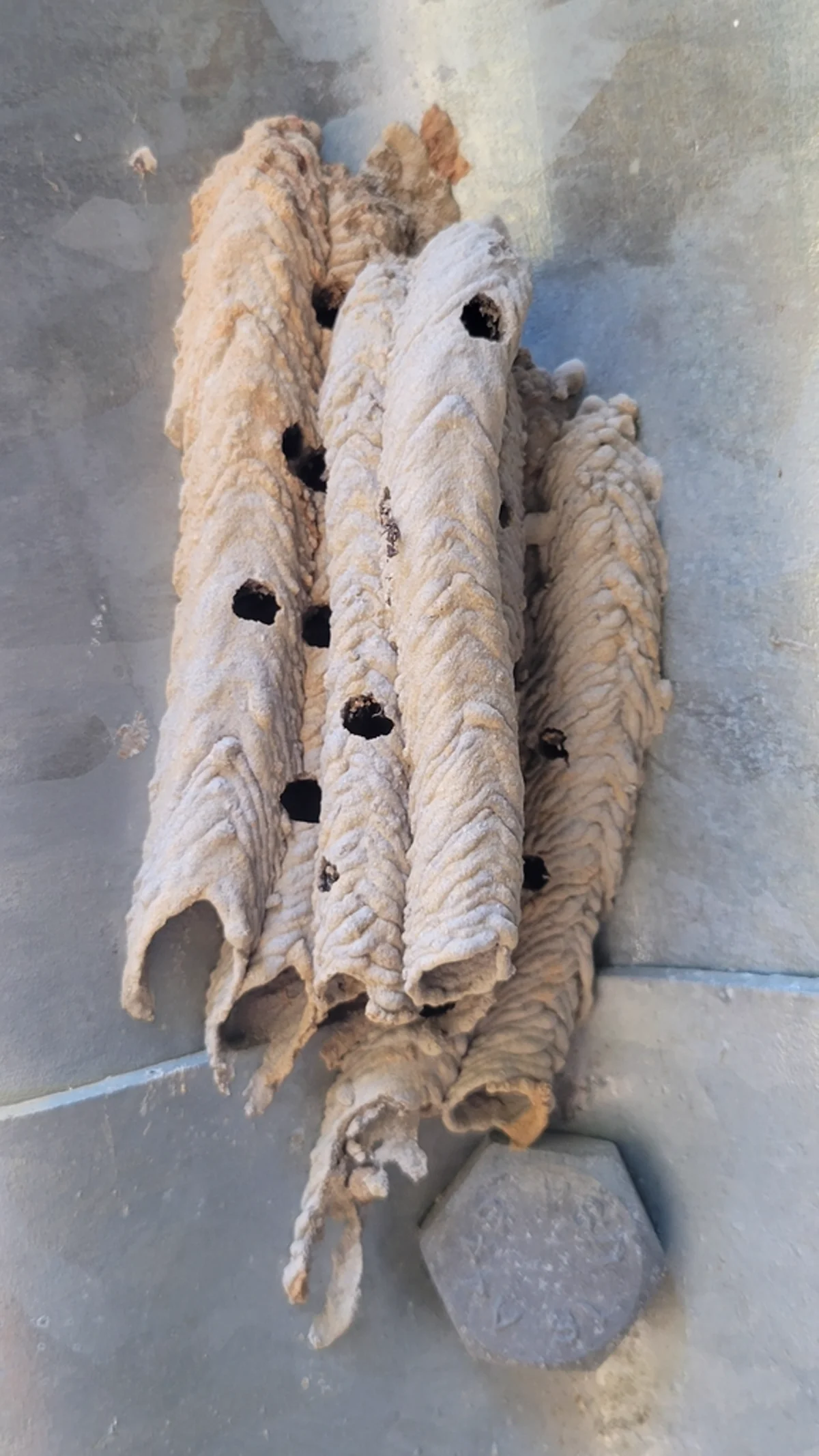
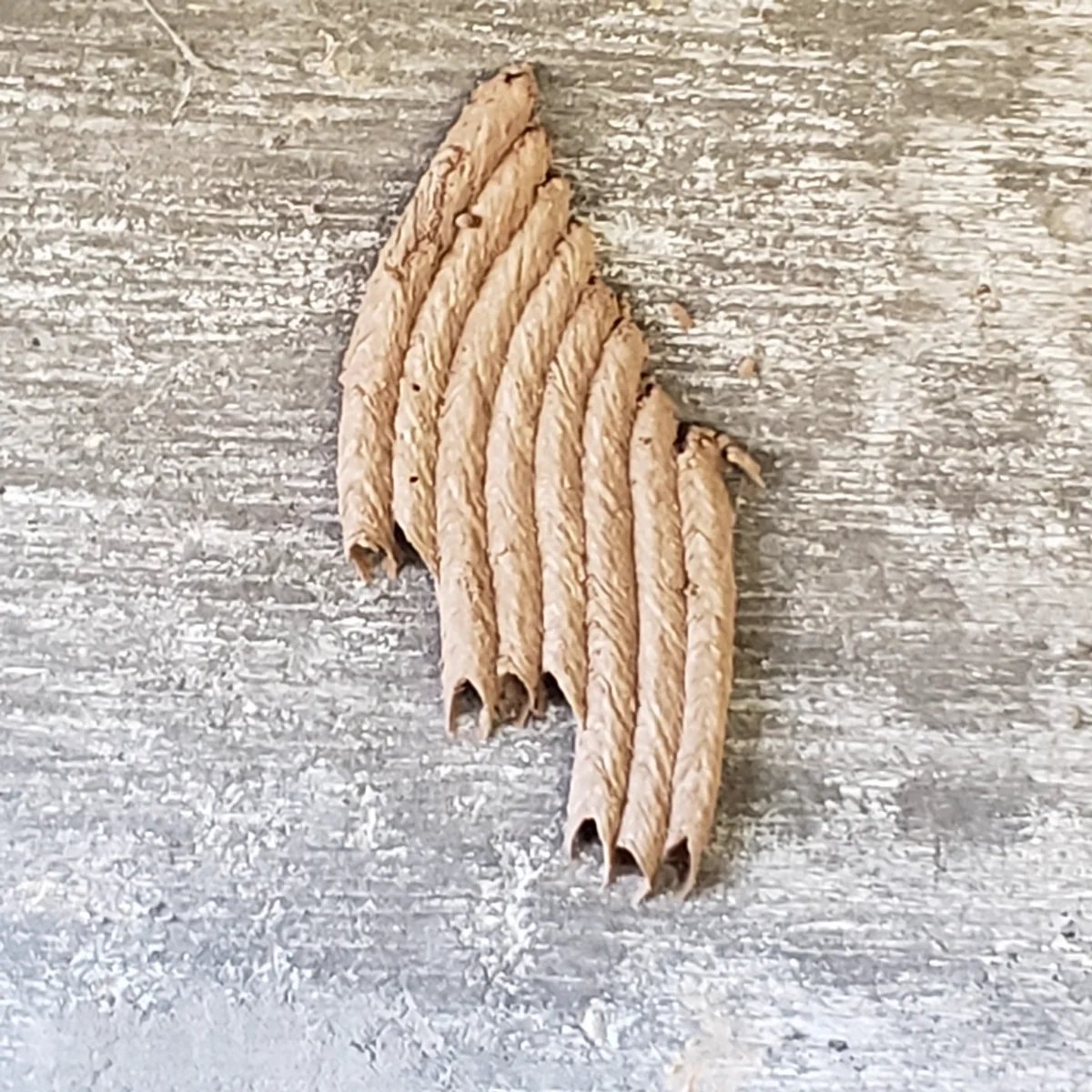
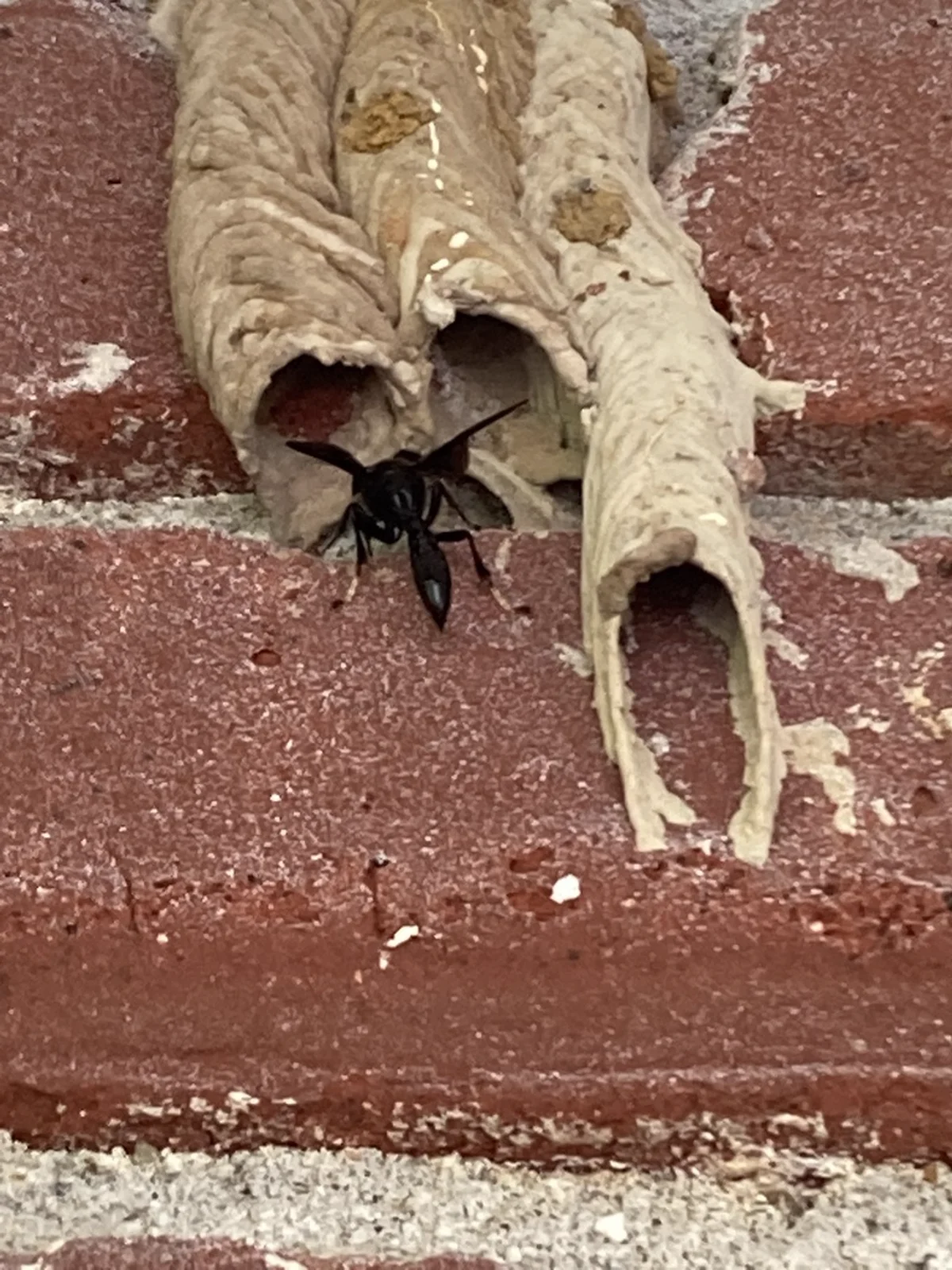
The easiest way to spot organ pipe mud daubers is by their nests. These wasps build long, round mud tubes placed side by side. A nest may have five or six tubes that look like the pipes of a pipe organ. This is how the species got its name. Each tube can be 8 inches or longer.
You will find nests on smooth, upright surfaces that stay dry. Common spots include under eaves, on porch ceilings, inside garages and sheds, and under bridges. These wasps like areas near both a mud source and woods where they can find spiders.
Organ Pipe Mud Dauber Behavior and Biology
Solitary Nesting Behavior
Organ pipe mud daubers live alone, not in colonies like yellowjackets or paper wasps. Each female builds and stocks her own nest. This makes them much calmer than social wasps. They have no colony to guard and no worker wasps to swarm attackers.
Females build nests by gathering mud from puddles or wet soil. They roll the mud into small balls and carry it to the nest site. They shape the mud into long tube-shaped rooms. A female usually builds five or six tubes in a group before moving on.
Male Guarding Behavior
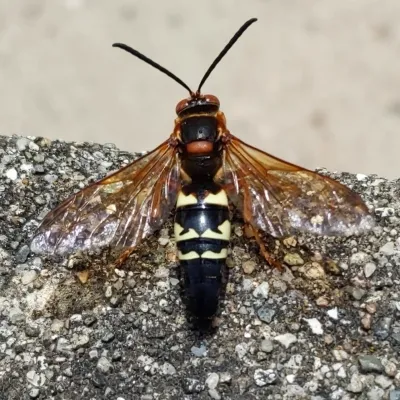
Organ pipe mud daubers show a behavior rare among wasps. Males guard the nest entrance while females hunt spiders. The male sits at the tube opening and chases away parasites, other insects, and rival males. This helps protect the young. A related species, Cow Killers, shares similar characteristics.
The male may also help the female build the nest. This teamwork between mates is unusual for solitary wasps. A related species, Great Black Wasps, shares similar characteristics.
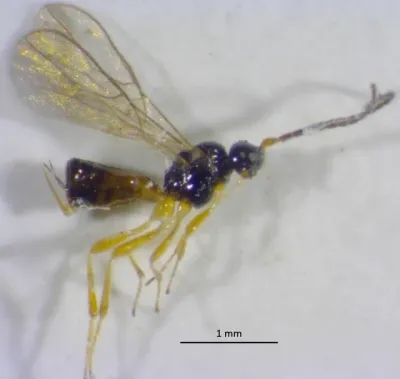
Spider Predation A related species, Ichneumon Wasps, shares similar characteristics.
Adult organ pipe mud daubers drink flower nectar for energy. Their young eat only spiders. Female wasps are skilled spider hunters. They find spiders in webs or hiding spots, sting them to cause paralysis, and carry them to the nest.
Each mud tube cell holds several paralyzed spiders. The female lays one egg on a spider and seals the room with mud. When the larva hatches, it eats the stored spiders until fully grown. The spiders stay alive but cannot move, giving fresh food to the growing wasp.
Seasonal Activity
Organ pipe mud daubers are active from late spring through early fall, usually May through September. They fly during the day and are most often seen gathering mud or hunting spiders. By late summer, females have finished building and stocking their nests.
The next generation of wasps grows inside the sealed mud tubes. They spend the winter as pupae in the chambers. In spring, adult wasps chew their way out to start the cycle again. Adult wasps from the year before do not live through winter.
Organ Pipe Mud Daubers and Homeowners
Sting Risk
These wasps rarely sting humans. Their calm nature means you can often watch them from close range without concern. If you get near a nest, the male guard may buzz as a warning. Stings only happen if a wasp is grabbed or trapped against skin.
When Nests Become a Problem
Organ pipe mud dauber nests often appear in places homeowners find inconvenient. Nests on visible walls, near doorways, or inside garages can be unwanted. The mud tubes may stain painted surfaces if left in place for a long time.
Old or empty nests can also draw other pests. More aggressive wasp species may move into vacant mud tubes. Blue mud daubers are known to take over abandoned nests from other mud dauber species. Many homeowners remove old nests to prevent this from happening.
Nest Removal and Treatment
Many homeowners want mud dauber nests removed when they appear on their home. Here is how nest removal typically works.
Inactive Nest Removal
For nests no longer in use, wait until late fall or winter when all wasps have left. Scrape the mud tubes off with a putty knife or paint scraper. Clean the surface with soap and water. Paint or seal the area to stop future nesting in the same spot.
Active Nest Treatment
For nests with active wasps, treatment works much like other solitary wasp removal. A pest control technician can apply a residual product to the nest. Once activity stops, the nest is scraped away and the area is cleaned. This approach removes the nest while reducing the chance of stings.
Professional help ensures complete removal without damage to painted or stained surfaces. A technician can also find other nesting sites you may have missed.
Prevention Strategies
To discourage organ pipe mud daubers from nesting in specific areas:
- Seal gaps and crevices where nests commonly appear
- Apply paint or finish to bare wood surfaces under eaves
- Reduce standing water and muddy areas that provide nest-building materials
- Remove old nests promptly to discourage construction in the same location
- Install physical barriers in areas where nesting is unwanted
References
Other Wasps
Explore other species in the wasps family
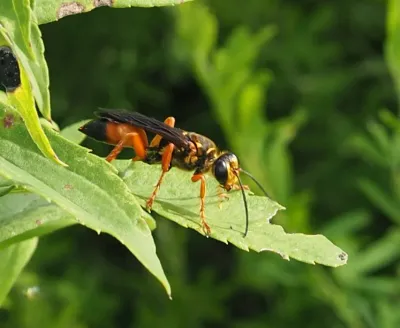
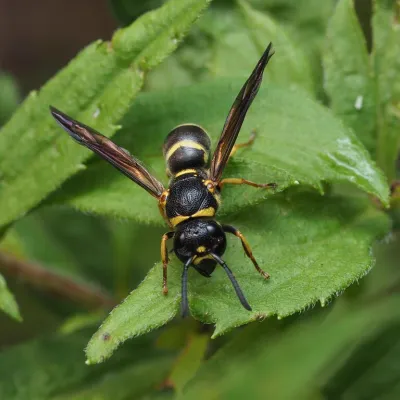
Commonly Confused With
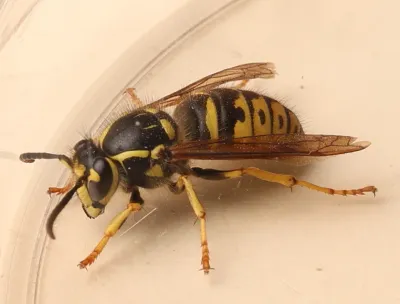
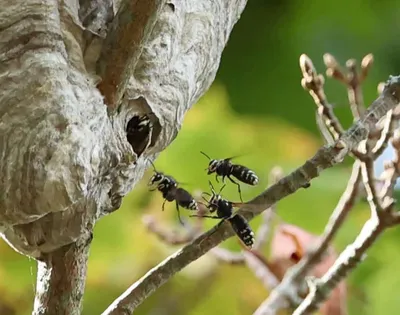
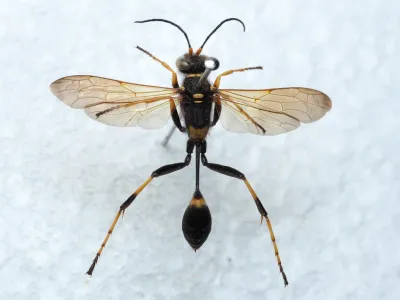
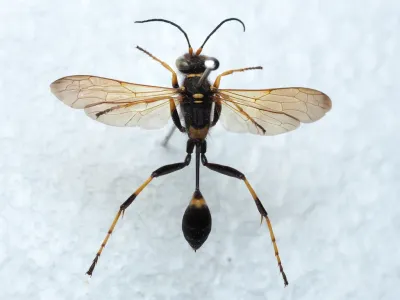
Organ Pipe Mud Daubers are often mistaken for these similar pests
Where Organ Pipe Mud Daubers Are Found
Hover over states to see their names. Green regions indicate where organ pipe mud daubers have been reported.
Common Questions about Organ Pipe Mud Daubers
Are organ pipe mud daubers dangerous?
+
Organ pipe mud daubers are not dangerous. They are among the most docile wasp species and rarely sting unless directly handled or trapped against skin. They do not aggressively defend their nests like yellowjackets or hornets.
What makes organ pipe mud dauber nests different from other mud dauber nests?
+
Organ pipe mud daubers build long, cylindrical mud tubes arranged side by side in parallel rows. The nest resembles the pipes of a pipe organ. Other mud daubers build more rounded or irregular mud cells.
Why do organ pipe mud daubers build nests on my house?
+
These wasps prefer sheltered vertical surfaces protected from rain. They need access to nearby mud sources and adjacent wooded areas where they hunt spiders. Eaves, porch ceilings, and garage walls provide ideal nesting sites.
Do organ pipe mud daubers eat spiders?
+
Yes, organ pipe mud dauber larvae feed only on spiders. Female wasps hunt, paralyze, and store spiders in the mud tubes as food for their developing young.
Why does a male mud dauber guard the nest?
+
Organ pipe mud daubers are unique among wasps because males guard the nest entrance. The male protects developing offspring from parasites, intruders, and rival males while the female hunts spiders.
Should I remove organ pipe mud dauber nests?
+
Many homeowners choose to remove these nests when they appear in visible or high-traffic areas. Inactive nests can be scraped off with a putty knife after the wasps leave in fall. For active nests, professional removal gets the job done right.
When are organ pipe mud daubers most active?
+
Organ pipe mud daubers are active from May through September. They fly during daylight hours, spending their time gathering mud, hunting spiders, and constructing their distinctive pipe-shaped nests.

With five years of hands-on experience in the pest control industry, George Schulz is a registered technician with the Virginia Pest Management Association and a proud third-generation professional in a family business that's been protecting homes for over 57 years. He manages and trains a team of service pros while also leading internal research efforts—recently spearheading a deep-dive review of thousands of documents on pest control materials to hand-pick the most kid and pet friendly, most effective solutions tailored specifically for homes in the DC metro area.