Mason Wasps Identification Guide
Subfamily Eumeninae
Mason wasps are solitary wasps that build small mud nests in crevices, holes, and mortar joints. They hunt caterpillars and rarely sting humans.
Taxonomy
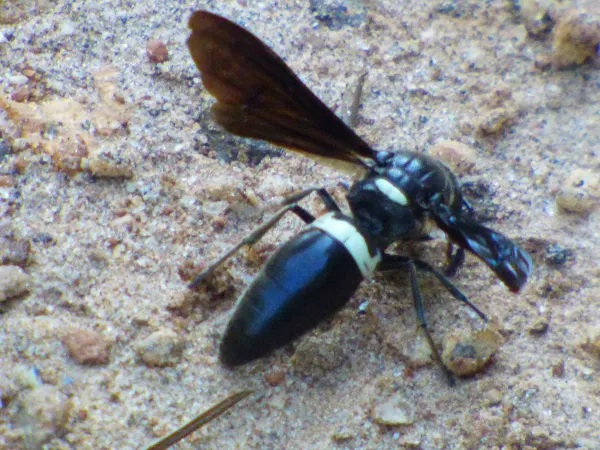
Mason Wasps Coloration
Common color patterns to help identify mason wasps
Mason Wasps
Seasonal Activity
When mason wasps are most active throughout the year
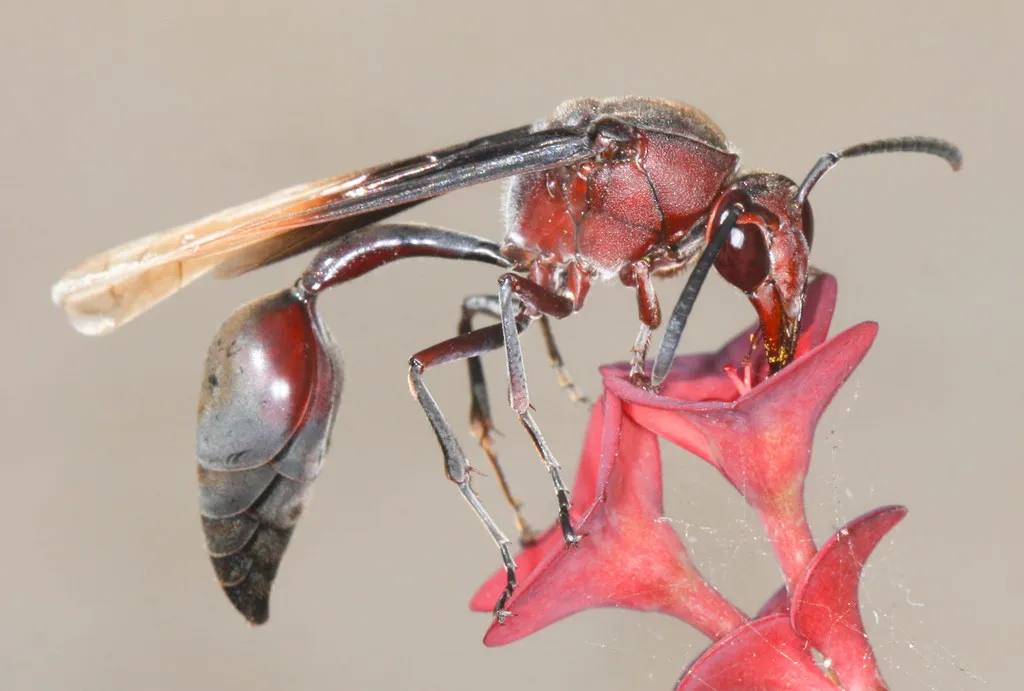
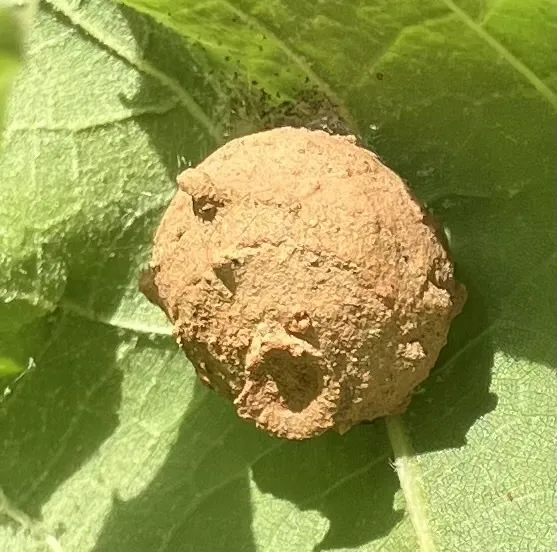
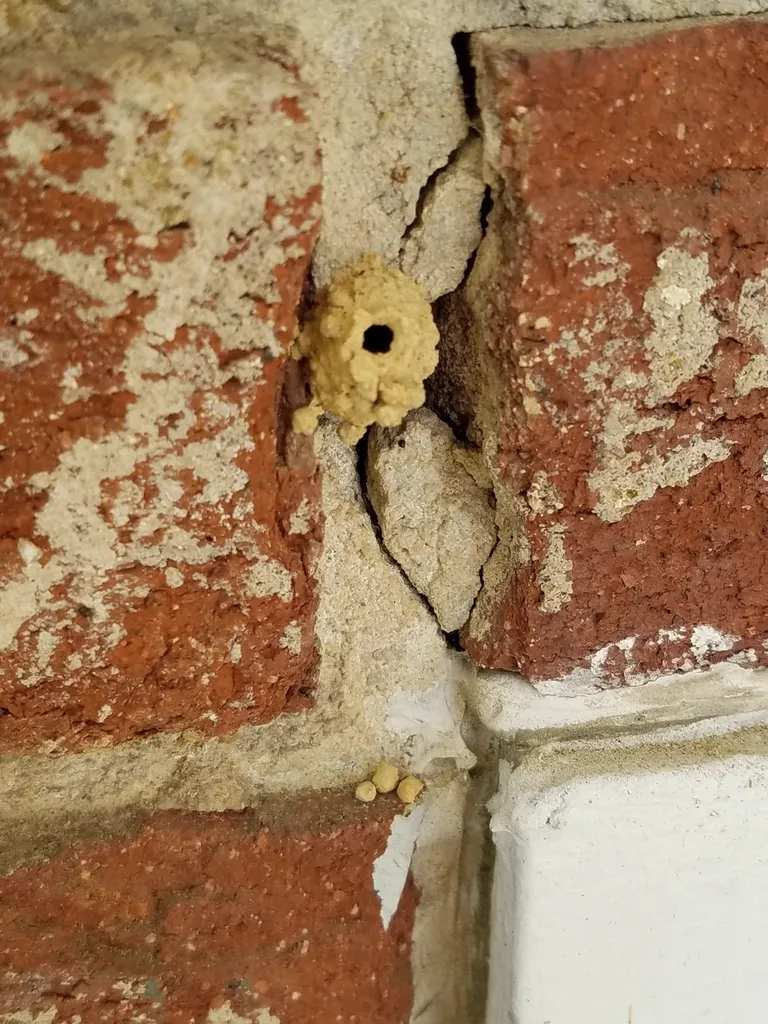

Where Mason Wasps Are Found
Hover over states to see their names. Green regions indicate where mason wasps have been reported.
Mason Wasp Identification Guide
Physical Characteristics
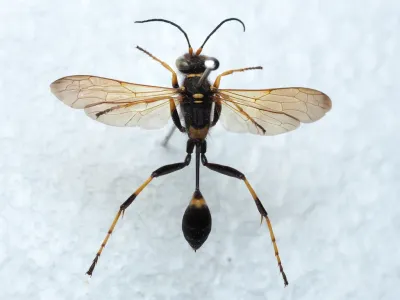
Mason wasps belong to the subfamily Eumeninae within the Vespidae family. They range from 10 to 25 millimeters in length (about 1/2 to 1 inch). This makes them small to medium-sized wasps. Their bodies have the typical wasp shape with a head, thorax, and abdomen joined by a narrow waist. This waist is less extreme than in mud daubers.
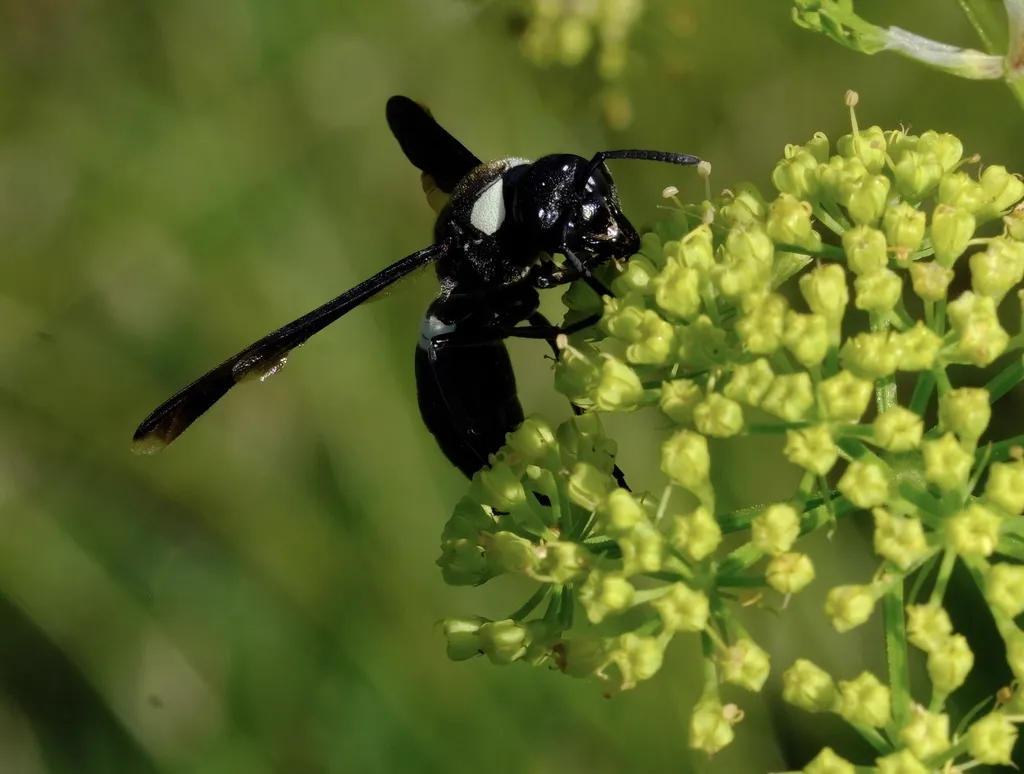
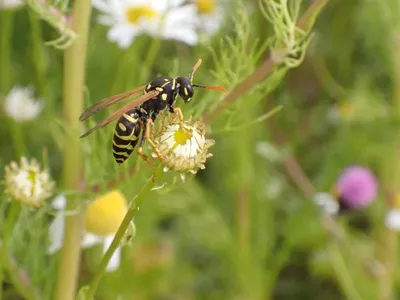
Most mason wasps are black or dark brown with markings of yellow, white, cream, or orange. The Four-toothed Mason Wasp (Monobia quadridens) is one of the most common species in eastern North America. It is black with white or ivory spots on its face and abdomen. Other species may be reddish-brown or have yellow bands like yellowjackets.
Mason wasps have clear wings that fold along their backs when at rest. They have six legs, two compound eyes, and two antennae. A key feature is the parategula, a small bump on each side of the thorax. This helps tell them apart from other wasp groups.
Common Species
Several mason wasp species are commonly encountered across North America:
-
Four-toothed Mason Wasp (Monobia quadridens): The most common mason wasp in eastern North America. Adults measure 14 to 18 mm and are black with white markings. Named for four tooth-like bumps on its face. Often nests in carpenter bee bees holes and beetle tunnels in wood.
-
Pitted Mason Wasp (Euodynerus foraminatus): A smaller species at 10 to 14 mm. Black with yellow markings on the abdomen. Common in the eastern and central United States. Often nests in hollow plant stems.
-
Fraternal Potter Wasp (Eumenes fraternus): Part of the mason wasp subfamily despite its name. Measures 9.5 to 19 mm with a black body and ivory markings. Builds pot-shaped mud nests on twigs and structures.
-
Hidalgo Mason Wasp (Euodynerus hidalgo): Found mainly in the southwestern United States and Mexico. Black and yellow with a compact body. Nests in various cavities including old mud dauber nests.
Mason Wasp Behavior and Biology
Mason wasps are solitary insects. Each female works alone to build her nest, hunt prey, and lay eggs. There are no queens or workers like you see in yellowjackets or paper wasps. This solitary lifestyle makes mason wasps less defensive. They are much less likely to sting than social wasps. Homeowners dealing with Mason Wasps may also encounter Wasp, which can appear in similar environments.
Nesting Habits
The name “mason wasp” comes from how they use mud to seal nest cavities, like a mason working with mortar. Unlike potter wasps that build free-standing pot-shaped nests, mason wasps use holes and cavities that already exist. Common nesting sites include:
- Old beetle tunnels in wood
- Abandoned carpenter bee galleries
- Gaps and holes in brick mortar
- Hollow plant stems
- Nail holes and screw shafts
- Cracks in walls and window frames
The female mason wasp changes these cavities to suit her needs. She collects mud by gathering moist soil and mixing it with water and saliva. She uses this mud to create walls inside the cavity. These walls divide it into individual cells. Each cell holds one egg and its food supply.
Hunting and Reproduction
After preparing a cell, the female lays a single egg inside. She then hunts for caterpillars to stock the nest. Mason wasps target hairless caterpillars like cutworms and corn earworms. The female stings her prey to paralyze it without killing it. This keeps the food fresh for her developing young.
She places one to several paralyzed caterpillars in each cell with the egg. Once a cell is full, she seals it with a mud wall and starts on the next cell. A single nest cavity may hold several cells stacked in a row. When the whole cavity is full, she seals the entrance with a mud plug.
Female mason wasps can control the sex of their offspring. Fertilized eggs become females, while unfertilized eggs become males. Females usually place male eggs near the nest entrance. Males emerge first and wait for the larger females to come out from deeper in the nest.
Life Cycle and Seasonality
Mason wasps spend winter as pupae inside their sealed nest cells. When spring temperatures warm, adults emerge and begin mating. Females then look for nesting cavities and start building nests, hunting, and laying eggs.
Peak activity occurs in late spring and summer, usually May through August. Adult mason wasps visit flowers to drink nectar for energy. You may see them on goldenrod, Queen Anne’s lace, and other flowering plants.
By fall, the new generation has grown inside the sealed nest cells. Most species produce one or two generations per year. The young stay in their cells through winter and emerge the next spring.
Treatment Methods for Mason Wasps
Mason wasps are solitary and rarely sting. Their nests are small and easy to remove. If you want to address mason wasp activity around your home, there are several options.
Nest Removal
The simplest approach is to wait until late fall or winter when the wasps have finished their life cycle. At this point, you can remove the mud plugs and clean out the nest cavities without risk of stings. Use a screwdriver or similar tool to scrape away mud seals.
If removal is needed during the active season, do so in early morning or evening when wasps are less active. Wear protective clothing and work carefully. A pest control professional can also handle removal if you prefer not to do it yourself.
Treatment Options
For homeowners who want to treat mason wasp nests:
- Apply a residual insecticide dust directly into nest openings
- Use an aerosol wasp spray to treat active nests from several feet away
- A pest control technician can apply targeted treatments to nesting areas
Treatment works best when applied directly to the nest entrance. The wasps must contact the product when entering or leaving the nest.
Prevention Strategies
To stop mason wasps from nesting in specific locations:
- Seal entry points: Fill cracks, gaps, and holes in brick mortar with fresh mortar or caulk
- Repair weathered wood: Fill old beetle holes and carpenter bee galleries with wood putty
- Maintain structures: Fix deteriorating mortar joints before wasps discover them
- Remove hollow stems: Cut back plant stems near doorways that provide nesting habitat
When to Call a Professional
Consider calling a pest control company if:
- Nests are in high-traffic areas where contact is likely
- You or a family member has a severe allergy to wasp stings
- Large numbers of wasps are nesting in one area
- You cannot easily reach the nest location
References
Other Wasps
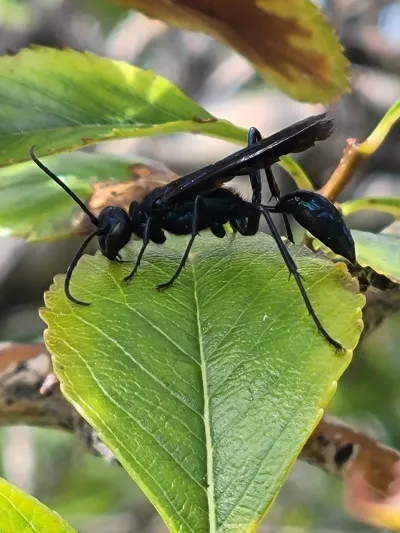
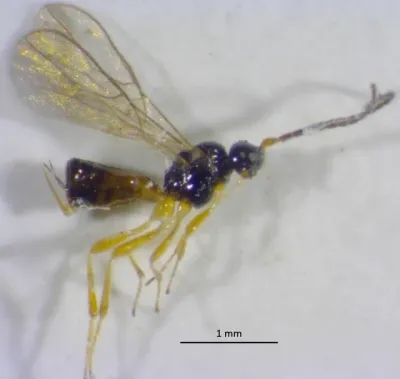
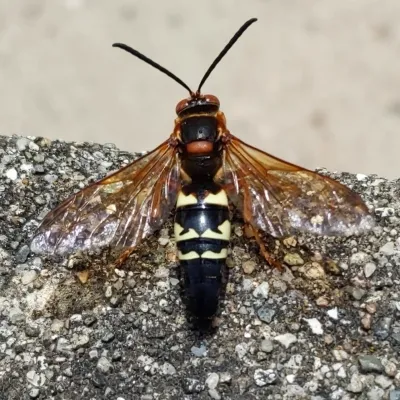
Explore other species in the wasps family
Commonly Confused With
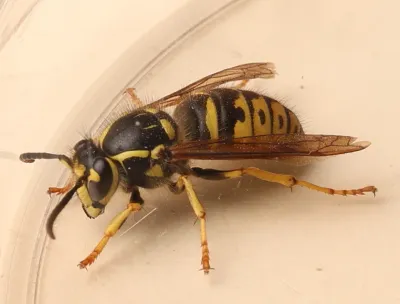
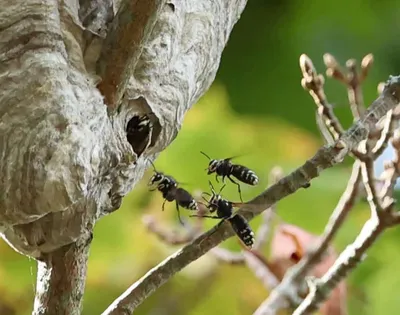
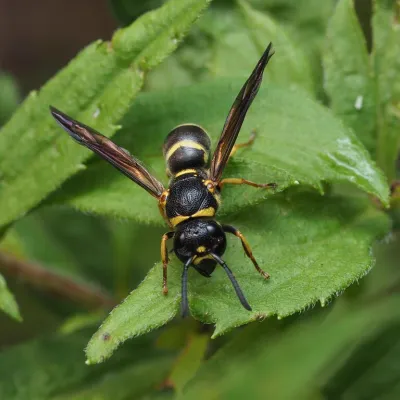
Mason Wasps are often mistaken for these similar pests
Where Mason Wasps Are Found
Hover over states to see their names. Green regions indicate where mason wasps have been reported.
Common Questions about Mason Wasps
Are mason wasps dangerous to humans?
+
Mason wasps are not dangerous to humans. They are solitary insects that rarely sting unless directly handled or threatened. Unlike social wasps such as yellowjackets, mason wasps do not defend their nests aggressively because there is no colony to protect.
What do mason wasp nests look like?
+
Mason wasp nests are small mud structures built into pre-existing holes, cracks, and crevices. Unlike potter wasps that build free-standing pot-shaped nests, mason wasps typically fill cavities such as old beetle holes in wood, gaps in brick mortar, nail holes, or hollow plant stems. The nest entrance is sealed with mud after the wasp provisions it with prey.
Why are mason wasps in my brick wall?
+
Mason wasps commonly nest in brick walls because they seek out existing holes and gaps in mortar joints. Weathered mortar provides ideal nesting cavities. The wasps do not damage the mortar themselves but use spaces that already exist. You may notice small mud plugs sealing holes in your mortar during summer months.
Should I remove mason wasp nests from my home?
+
Mason wasp nests can be removed if they are in an inconvenient location. Wait until late fall or winter when the wasps have completed their life cycle. You can scrape away the mud plugs and any debris inside the cavity. To prevent future nesting, seal cracks and holes with caulk or fresh mortar.
What do mason wasps eat?
+
Adult mason wasps feed on flower nectar for energy. They also hunt caterpillars to provision their nests. A female mason wasp paralyzes caterpillars with her sting and stores them in the nest as fresh food for her developing larvae.
How can I tell mason wasps from mud daubers?
+
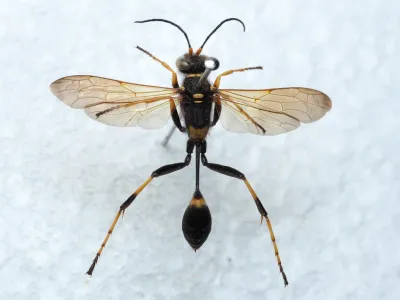
Mason wasps and mud daubers are both solitary wasps that use mud for nesting, but they differ in body shape and nest style. Mason wasps have a stockier body with a less pronounced waist and typically nest in existing cavities. Mud daubers have an extremely thin, thread-like waist and build exposed tube-shaped mud nests on walls and ceilings.
Do mason wasps sting?
+
Mason wasps can sting but very rarely do. They are not aggressive and only sting when directly grabbed or stepped on. Their sting is mild compared to social wasps like yellowjackets. Since they are solitary and do not have a colony to protect, they have little reason to sting in defense.
When are mason wasps most active?
+
Mason wasps are most active from late spring through early fall. Peak activity occurs during summer months when females are building nests, hunting caterpillars, and laying eggs. They are active during daylight hours and rest at night.

With five years of hands-on experience in the pest control industry, George Schulz is a registered technician with the Virginia Pest Management Association and a proud third-generation professional in a family business that's been protecting homes for over 57 years. He manages and trains a team of service pros while also leading internal research efforts—recently spearheading a deep-dive review of thousands of documents on pest control materials to hand-pick the most kid and pet friendly, most effective solutions tailored specifically for homes in the DC metro area.