Great Golden Digger Wasps Identification Guide
Sphex ichneumoneus
Large solitary wasps with golden hairs and orange legs that dig burrows in sandy soil. These wasps are docile and rarely sting humans.
Taxonomy
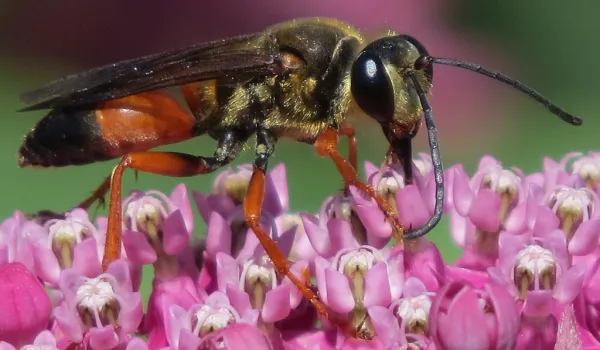
Great Golden Digger Wasps Coloration
Common color patterns to help identify great golden digger wasps
Great Golden Digger Wasps
Seasonal Activity
When great golden digger wasps are most active throughout the year

Where Great Golden Digger Wasps Are Found
Hover over states to see their names. Green regions indicate where great golden digger wasps have been reported.
Great Golden Digger Wasp Identification Guide
Physical Characteristics
The great golden digger wasp is one of the most striking solitary wasps in North America. Adults measure 0.6 to 1.1 inches long. Their large size often alarms homeowners. Despite their size, these wasps are calm and pose little threat to people.
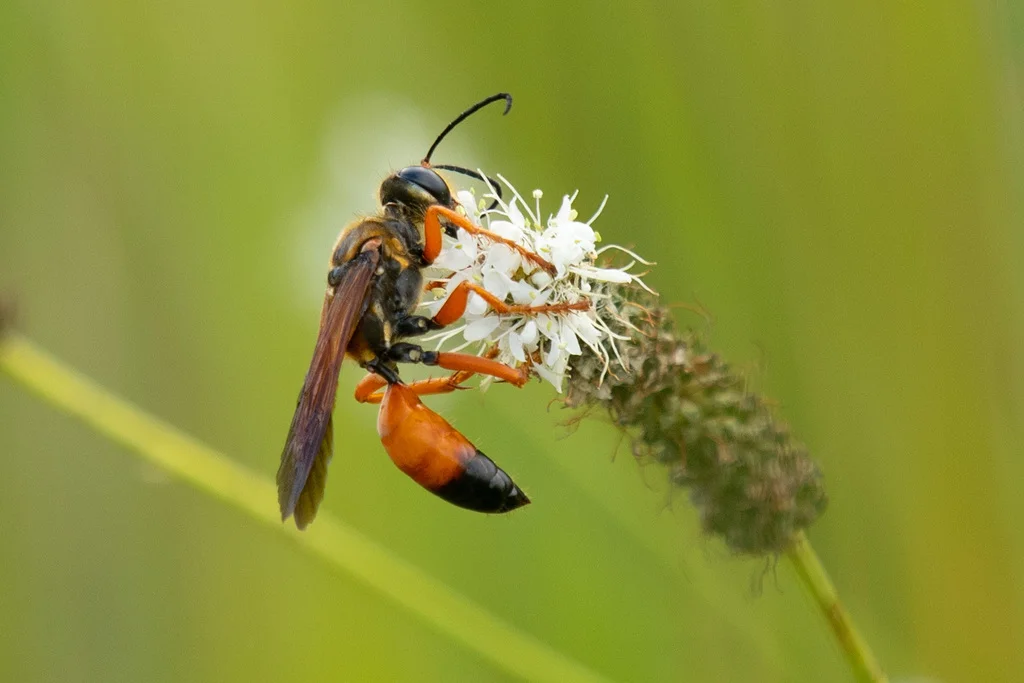
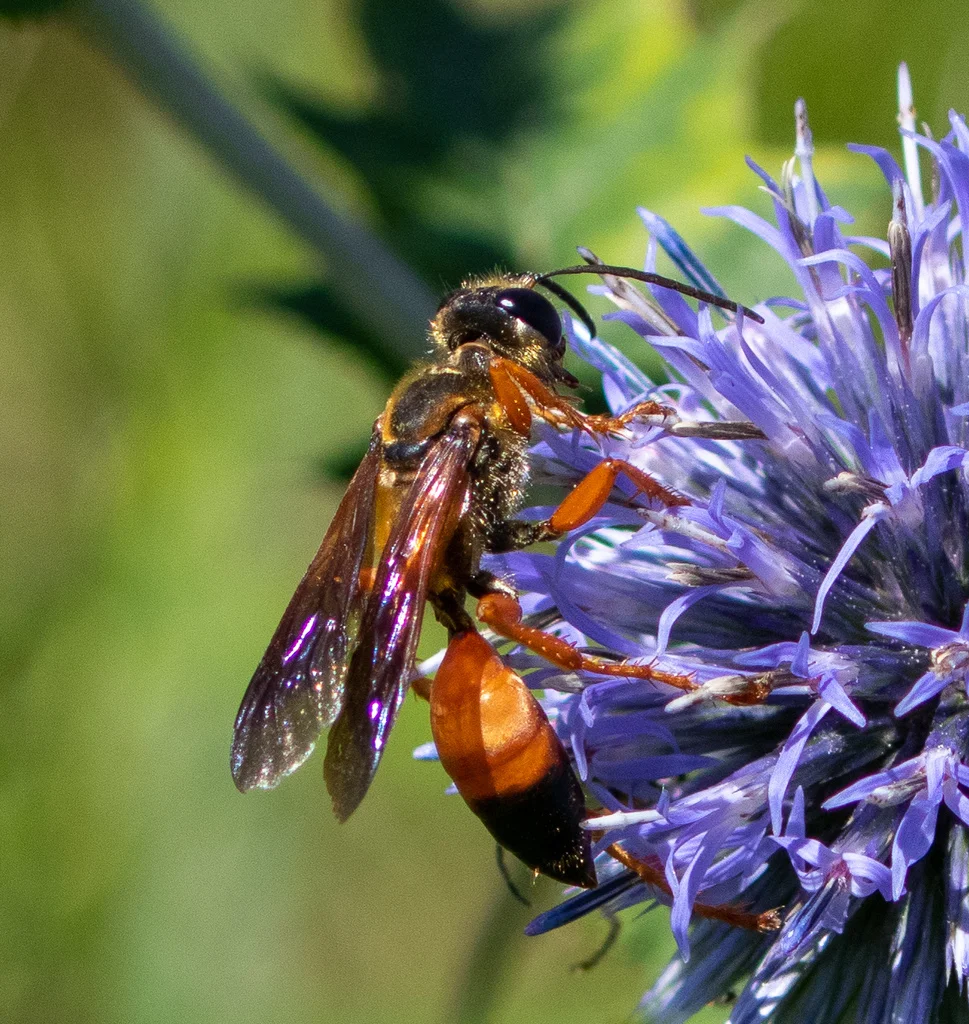
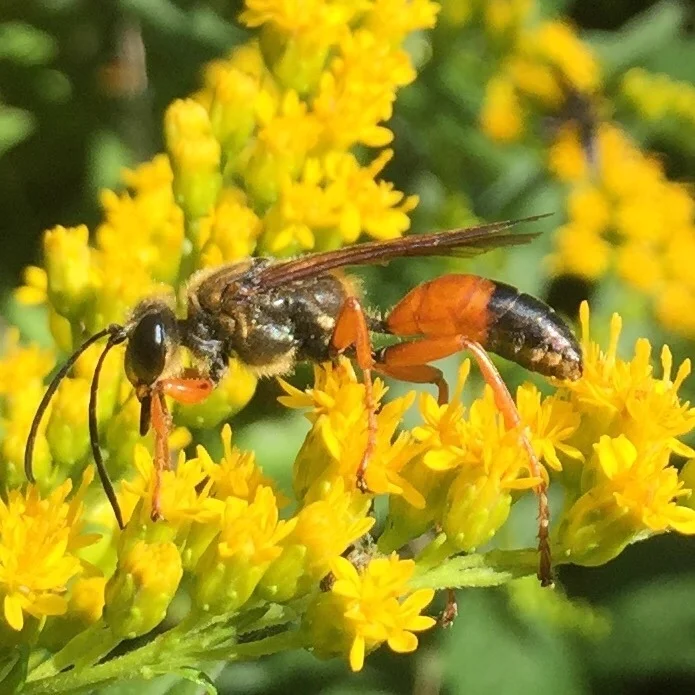
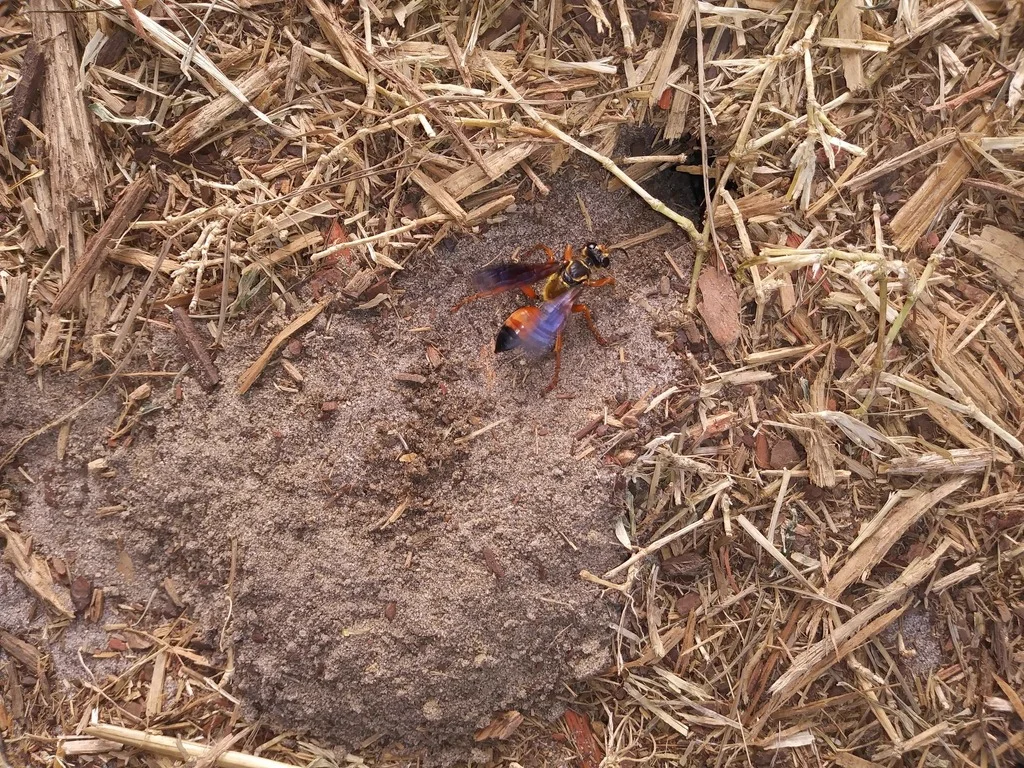
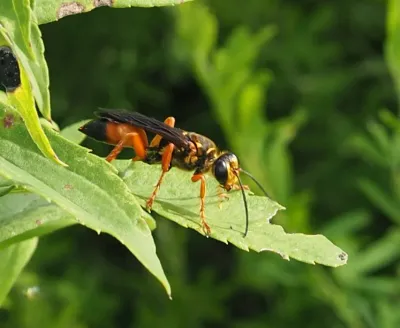
The most notable feature is the dense layer of short golden hairs on the head and thorax. This golden color gives the species its name. The legs are bright orange. The abdomen is mostly orange with a black tip. Wings are amber to brownish with a slight shine.
Females are larger than males and have a stinger. They use it mainly to stun prey rather than for defense. Males have no stinger and cannot harm people. Both sexes have large eyes, long antennae, and strong jaws used for digging.
Distinguishing Features
Several features help identify great golden digger wasps:
- Golden thorax: Dense golden hairs cover the head and middle body section
- Orange legs: All six legs are bright orange, standing out against the body
- Bicolored abdomen: Orange front portion with black rear segments
- Large size: Noticeably bigger than common wasps at nearly an inch long
- Solitary behavior: Seen individually rather than in groups defending a nest
Similar Species
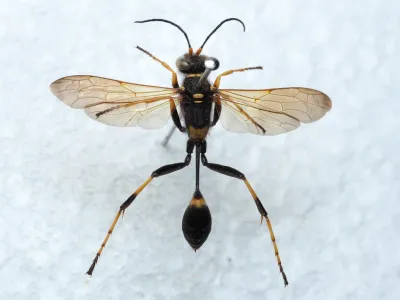
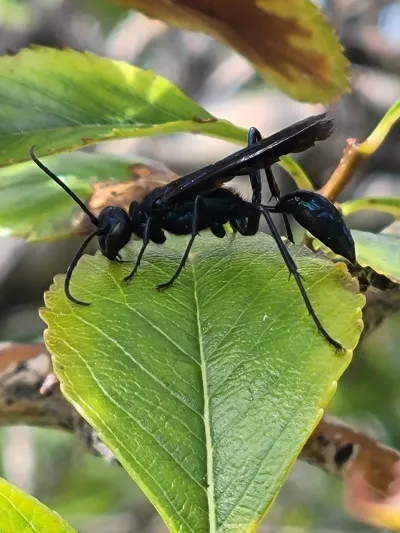
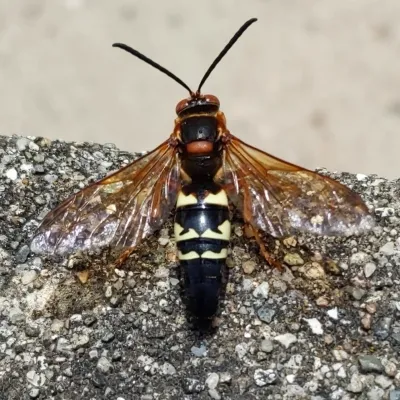
Great golden digger wasps belong to the genus Sphex. This group includes several related species. The great black wasp (Sphex pensylvanicus) is all black with a blue shine. Cicada killers (Sphecius speciosus) are larger with yellow and black bands but no golden color. Sand wasps look similar but differ in color and size.
Great Golden Digger Wasp Behavior and Biology
Solitary Lifestyle
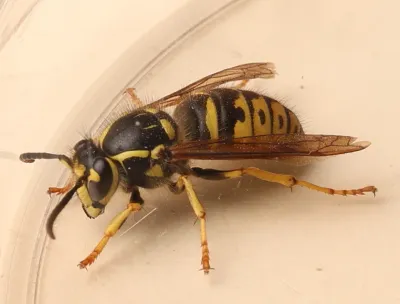
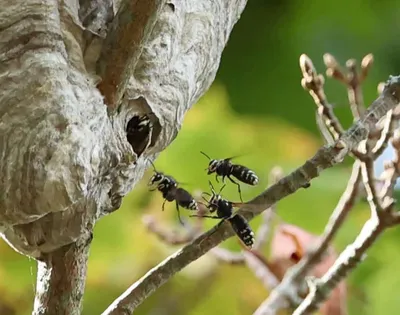
Unlike yellowjackets, hornets, and paper wasps, great golden digger wasps do not form colonies. There is no queen and no workers. Each female works alone, building her own burrow and stocking it with prey for her young.
This solitary nature makes them far less risky than social wasps. They have no colony to defend and show little hostility toward humans. A person would need to step on one or grab it to get stung.
Nesting Behavior
Female great golden digger wasps are skilled diggers. They use their strong jaws and legs to dig burrows 6 to 20 inches deep in sandy or loose soil. They prefer sunny, open areas with thin grass. Common nesting sites include lawns, flower beds, garden paths, play areas, and sandy patches near sidewalks.
The burrow has a main tunnel leading to one or more chambers. The female moves soil away from the entrance, making a small mound. Each chamber will hold one larva plus the paralyzed prey it eats.
Hunting and Provisioning
Great golden digger wasps hunt grasshoppers, crickets, and katydids. A female spots prey using her sharp eyesight, then attacks and stings it. The venom stuns the insect but keeps it alive. This keeps the food fresh for the growing larva.
After stinging her prey, the female carries or drags it back to the burrow. She may leave the grasshopper at the entrance while she checks inside. Then she pulls the prey in and lays one egg on it. The egg hatches in about two days. The larva feeds on the stunned insect for one to two weeks.
A single female may fill several chambers during her adult life. She can capture dozens of grasshoppers and crickets.
Life Cycle
Great golden digger wasps produce one generation per year in most areas. After the larva finishes eating, it spins a silk cocoon in the underground chamber. It stays there through fall and winter. It changes into an adult in spring, then emerges in late spring or early summer.
Adult wasps live about one to two months. Mating happens soon after they emerge. Females start digging burrows and hunting prey within days. Peak activity runs from July through August.
Treatment Approaches for Great Golden Digger Wasps
Great golden digger wasps pose minimal sting risk. They are solitary and do not defend their nests like yellowjackets do. However, homeowners may want to address nesting in play areas, paths, or places where people walk barefoot. Several methods can control or redirect these wasps.
-
Habitat Changes: These wasps prefer bare, sandy soil in sunny spots. Making these areas less appealing reduces nesting. Thick lawn grass created by overseeding keeps females away. Adding 2 to 3 inches of mulch covers bare soil in garden beds. Keeping soil moist also works because females prefer dry ground.
-
Water Deterrents: Running a sprinkler over nesting areas can push females to move elsewhere. This works as a short-term fix while other changes take hold.
-
Physical Barriers: Landscape fabric under mulch blocks access to soil. This works well for flower beds or paths where nesting causes problems.
-
Direct Treatment: For burrows in problem areas, treatment products can be applied to nest entrances. This works best in evening when wasps are less active. A pest control professional can treat individual burrows or apply products to active nesting zones.
References
Other Wasps
Explore other species in the wasps family
Commonly Confused With
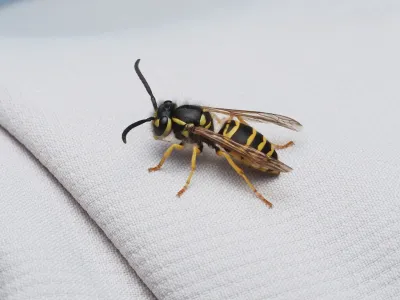
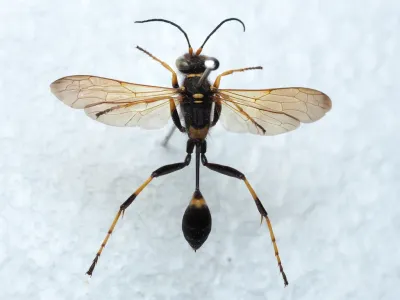
Great Golden Digger Wasps are often mistaken for these similar pests
Where Great Golden Digger Wasps Are Found
Hover over states to see their names. Green regions indicate where great golden digger wasps have been reported.
Common Questions about Great Golden Digger Wasps
Are great golden digger wasps dangerous?
+
Great golden digger wasps are not dangerous to humans. They are solitary wasps that rarely sting. Males cannot sting at all. Females only sting if stepped on or grabbed. Their venom is mild compared to social wasps like yellowjackets.
Why are great golden digger wasps digging in my yard?
+
Female great golden digger wasps dig burrows in sandy or loose soil to create nests for their offspring. They prefer sunny, open areas with sparse vegetation such as lawns, flower beds, garden paths, and areas near sidewalks or driveways. The small dirt mounds they create are signs of their nesting activity.
What do great golden digger wasps eat?
+
Adult great golden digger wasps feed on flower nectar from plants like milkweed and goldenrod. Females hunt grasshoppers, crickets, and katydids to feed their larvae. A single female may capture dozens of these insects during the nesting season.
How can I tell a great golden digger wasp from a cicada killer?
+
Great golden digger wasps are slightly smaller at 0.6 to 1.1 inches compared to cicada killers at 1.5 to 2 inches. Great golden digger wasps have distinctive golden hairs on the thorax and bright orange legs, with an orange abdomen that has a black tip. Cicada killers have yellow and black banding similar to yellowjackets and a reddish-brown thorax without golden hairs.
Do great golden digger wasps live in colonies?
+
No, great golden digger wasps are solitary insects. Each female builds and provisions her own nest independently without help from other wasps. However, when soil conditions are favorable, many females may nest in the same general area. This can give the appearance of a colony, but each wasp works alone.
When are great golden digger wasps most active?
+
Great golden digger wasps are most active from late June through August during their mating and nesting season. They emerge in late spring or early summer after overwintering as larvae in underground burrows. Adults typically live for one to two months and are most visible on warm, sunny days.
How do I get rid of great golden digger wasps?
+
Great golden digger wasps can be controlled through habitat changes or direct treatment. Thick lawn grass, mulch over bare soil, and keeping soil moist makes areas less appealing for nesting. For active burrows, dust or liquid products can be applied to nest entrances. A pest control professional can help with treatment in problem areas.

With five years of hands-on experience in the pest control industry, George Schulz is a registered technician with the Virginia Pest Management Association and a proud third-generation professional in a family business that's been protecting homes for over 57 years. He manages and trains a team of service pros while also leading internal research efforts—recently spearheading a deep-dive review of thousands of documents on pest control materials to hand-pick the most kid and pet friendly, most effective solutions tailored specifically for homes in the DC metro area.