Grass Carrier Wasps Identification Guide
Isodontia spp.
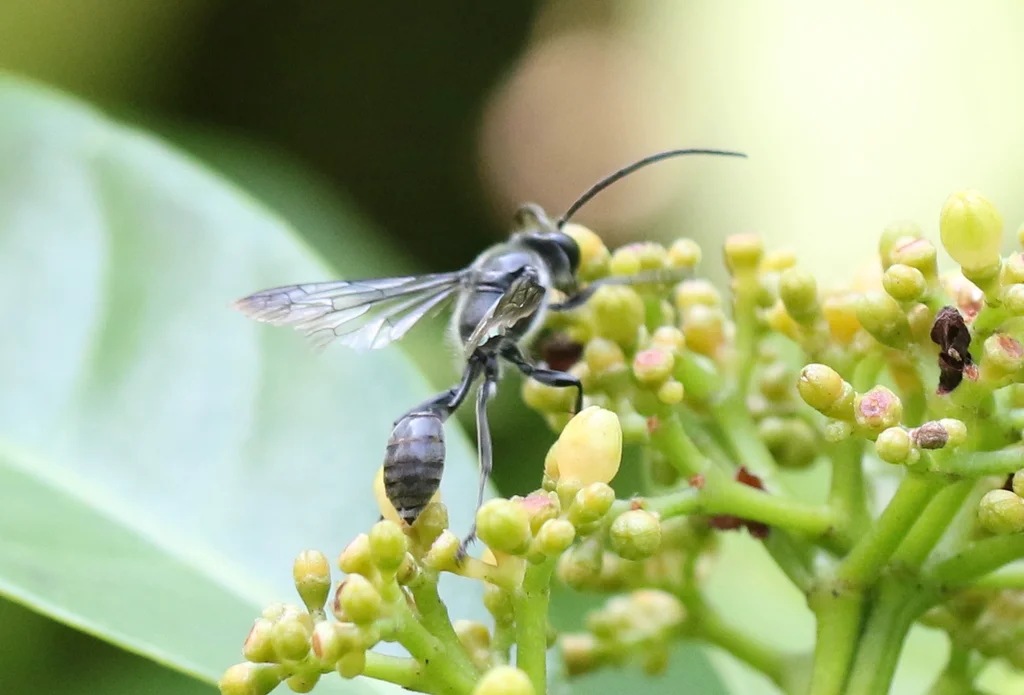
Grass carrier wasps are solitary wasps named for their habit of carrying long blades of grass to line their nests. These non-aggressive insects prey on crickets and katydids.
Taxonomy
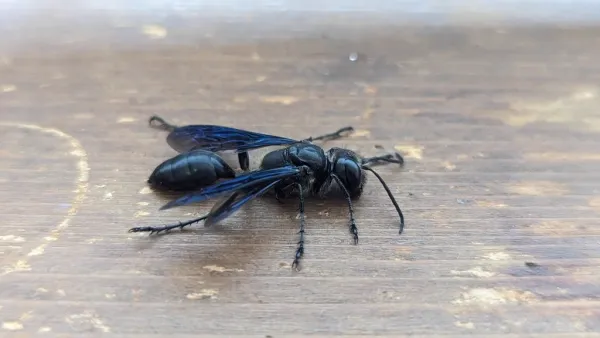
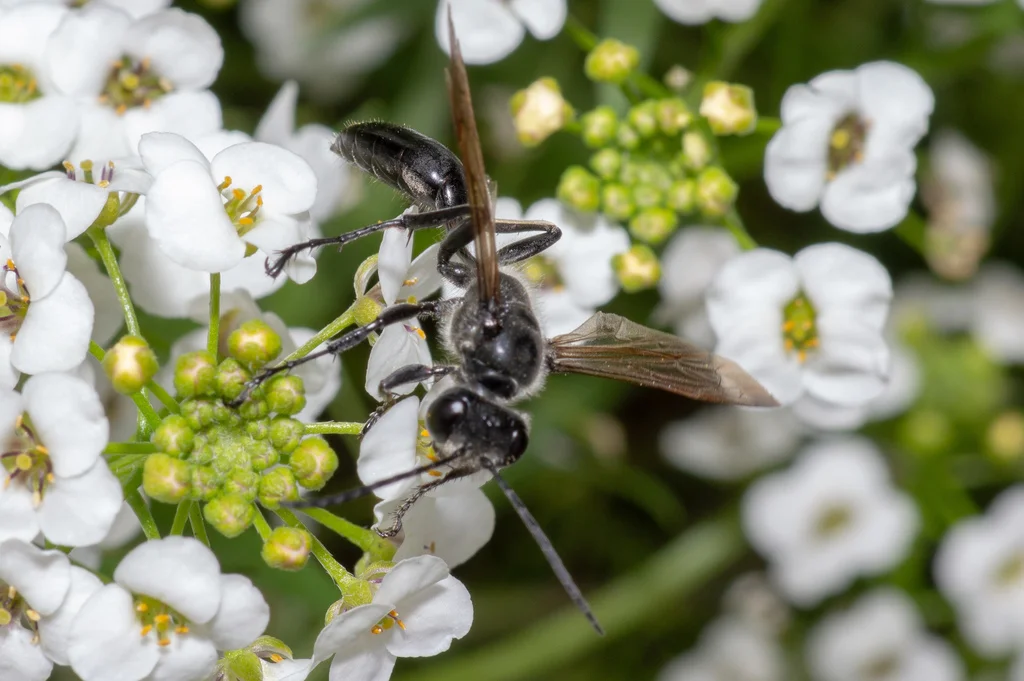
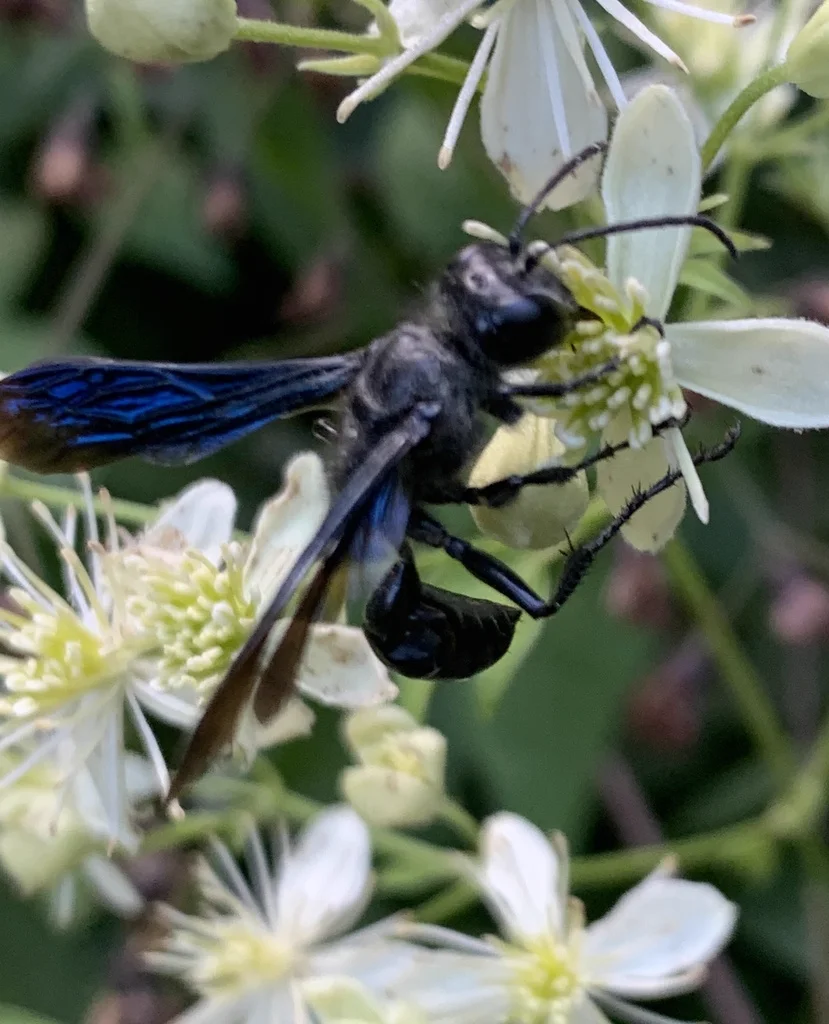
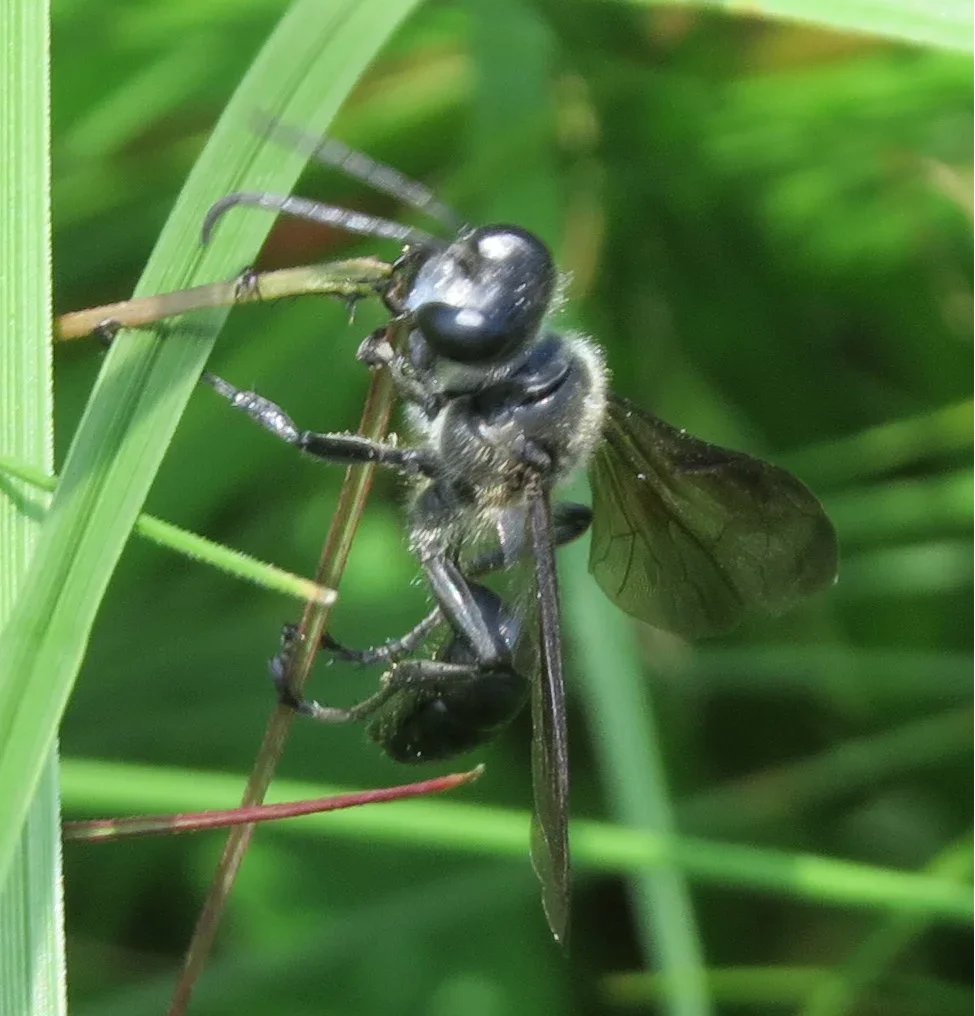
Grass Carrier Wasps Coloration
Common color patterns to help identify grass carrier wasps
Grass Carrier Wasps
Seasonal Activity
When grass carrier wasps are most active throughout the year

Where Grass Carrier Wasps Are Found
Hover over states to see their names. Green regions indicate where grass carrier wasps have been reported.
Grass Carrier Wasp Identification Guide
Physical Characteristics
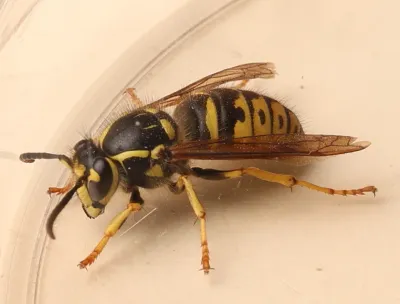
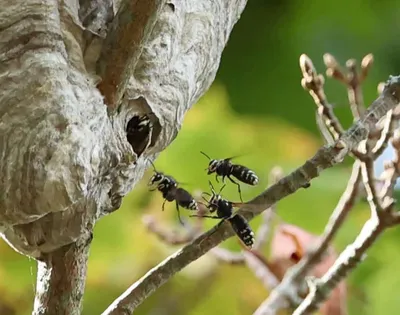
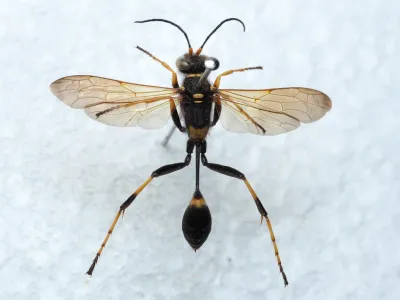
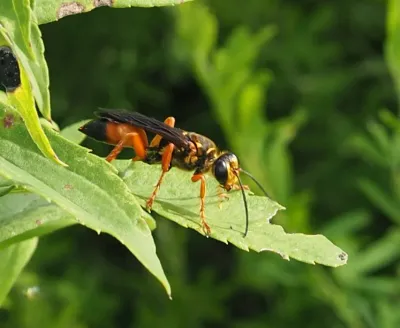
Grass carrier wasps are slender wasps measuring 15 to 20 millimeters long (about 5/8 to 3/4 inch). They have a very narrow “waist” between the middle and back sections of their body. This thin waist helps tell them apart from social wasps like yellowjackets.
Color varies by species. The most common species is entirely black with a fuzzy middle section. The wings have a smoky brown or black tint. They often show blue reflections in sunlight. Another common species has reddish-brown legs and brown wings. All species have long antennae and six legs.
Common Species
Several grass carrier wasp species live in North America:
-
Mexican Grass-Carrying Wasp (Isodontia mexicana): The most common species. It has an all-black body with a fuzzy chest area. Found across North America.
-
Brown-Legged Grass-Carrying Wasp (Isodontia auripes): Has reddish-brown legs and brown wings with blue shine. Common in eastern and central North America.
-
Elegant Grass-Carrying Wasp (Isodontia elegans): Found mainly in the southeastern United States. Looks similar to other species.
Grass Carrier Wasp Behavior and Biology
Grass carrier wasps live alone. Each female builds and stocks her own nest without help from other wasps. Unlike paper wasps or yellowjackets, grass carriers form no colonies. This makes them much calmer around people since they have no large nest to protect.
Nesting Habits
Female grass carrier wasps look for existing holes and gaps to nest in. Common nesting sites include:
- Abandoned carpenter bee bees galleries in wood
- Hollow plant stems and branches
- Bee hotels and insect houses
- Window tracks and door frame gaps
- Folded patio umbrellas
- Tubes of wind chimes
- Holes in soil banks or between rocks
Once the female finds a good spot, she lines it with grass blades. She makes separate chambers inside the nest, one for each future offspring. The grass often sticks out two inches or more from the entrance. This makes active nests easy to spot. Homeowners dealing with Grass Carrier Wasps may also encounter Wasp, which can appear in similar environments.
Hunting and Reproduction
Female grass carrier wasps hunt tree crickets, katydids, and related insects. The hunting process follows a set pattern:
- The female finds a cricket or katydid
- She stings it to paralyze but not kill it
- She carries the stunned insect back to her nest
- She places several paralyzed insects in a single chamber
- She lays an egg on one of the prey items
- She seals the chamber with grass
When the larva hatches, it feeds on the stored prey. The larvae are cream-yellow and grub-like with no legs. After growing, they spin cocoons and change into adult wasps inside the nest.
Lifecycle and Seasonal Activity
Grass carrier wasps produce two generations per year in most areas. Adults come out of cocoons in late spring or early summer. After mating, females spend several weeks building nests and stocking them with prey. The summer generation emerges in late July or August. These wasps produce offspring that overwinter as pupae and emerge the next spring.
Adult wasps spend much of their time visiting flowers to feed on nectar. They are often seen on goldenrod, milkweed, and other flowering plants.
Grass Carrier Wasps Around the Home
Grass carrier wasps often nest in and around homes. Homeowners may see them during summer months. Many people do not notice them unless they see grass sticking out of window tracks or spot a wasp carrying grass in flight.
Why They Choose Human Structures
Homes offer many nesting spots that are like natural cavities:
- Window weep holes and track channels
- Gaps in vinyl siding
- Hollow metal railings
- Outdoor furniture with tubular frames
- Decorative items with hollow interiors
These wasps do not damage structures. They simply use existing gaps that offer shelter for their offspring.
Signs of Grass Carrier Wasp Activity
You may have grass carrier wasps nesting nearby if you notice:
- Long grass blades sticking out of window tracks
- A slender black wasp repeatedly visiting the same spot
- Grass accumulating in unusual places around the exterior
- A wasp in flight carrying grass longer than its body
When Grass Carrier Wasps Become a Problem
While grass carrier wasps are solitary and non-aggressive, their nesting habits can create issues for homeowners. Nests built in window tracks can block window operation. Grass protruding from door frames or siding gaps looks unsightly. Multiple wasps nesting in the same area can become a nuisance during summer months.
Common reasons homeowners seek treatment include:
- Nests blocking window tracks or door frames
- Visible grass sticking out of home exterior
- Wasps repeatedly entering garages or sheds
- Concerns about stinging insects near entryways
- Activity around outdoor furniture and structures
Treatment Options for Grass Carrier Wasps
Several treatment methods can address grass carrier wasp nests around homes.
Prevention Strategies
To discourage nesting in specific areas:
- Seal gaps in window tracks and door frames with caulk
- Cover weep holes with fine mesh that allows drainage
- Store patio furniture folded tightly or indoors
- Remove old nests after the season ends to discourage return nesting
- Fill hollow tubes on wind chimes or decorative items
Nest Removal and Treatment
For inactive nests, physical removal is straightforward. Wait until late fall or winter when the adult wasps are gone. Pull out the grass material and clean the cavity.
For active nests, treatment works like it does for other solitary wasps. A residual insecticide can be applied to the nest entrance. Once activity stops, the nest material can be removed. Grass carrier wasps are solitary, so treatment carries less risk than treating social wasp colonies.
A pest control professional can identify nesting sites and apply targeted treatments when needed. Follow-up exclusion work can prevent future nesting in the same locations.
References
Other Wasps
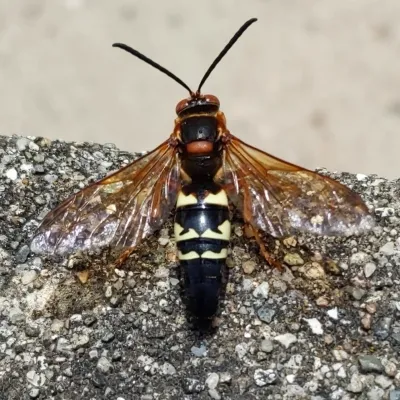
Explore other species in the wasps family
Commonly Confused With
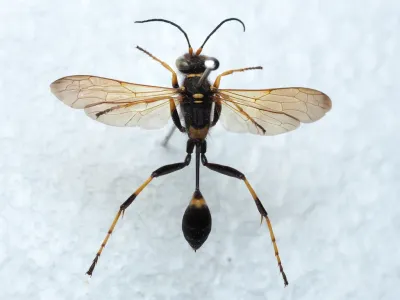
Grass Carrier Wasps are often mistaken for these similar pests
Where Grass Carrier Wasps Are Found
Hover over states to see their names. Green regions indicate where grass carrier wasps have been reported.
Common Questions about Grass Carrier Wasps
Are grass carrier wasps dangerous?
+
Grass carrier wasps are not dangerous to people. They are solitary wasps that rarely sting unless handled. They have no colonies to defend, so they do not act aggressive toward people near their nests.
Why do I see wasps carrying grass into my windows?
+
Grass carrier wasps nest in tight spaces like window tracks, door frames, and folded patio umbrellas. If you see a wasp carrying long grass blades, it is a female stocking her nest.
Should I remove grass carrier wasp nests?
+
If nests block window tracks or are in a bad spot, they can be removed after wasps leave in fall. Active nests can also be treated if needed.
What do grass carrier wasps eat?
+
Adult grass carrier wasps feed on flower nectar. Females hunt tree crickets and katydids to store in their nests as food for their young.
How can I tell grass carrier wasps from other wasps?
+
Grass carrier wasps have a slender body with a very thin waist. They are all black or black with reddish-brown legs. Their wings may show blue shine. Watch for their unique grass-carrying behavior.
Do grass carrier wasps sting?
+
Grass carrier wasps can sting if handled or trapped against skin, but they are very calm. Unlike yellowjackets, they do not defend their nests. Stings are rare and only happen by accident.
How do grass carrier wasps build their nests?
+
Females find existing holes like old carpenter bee tunnels, hollow plant stems, or gaps around homes. They line these spaces with grass blades, make chambers for eggs, stock each with paralyzed crickets, then seal with more grass.

With five years of hands-on experience in the pest control industry, George Schulz is a registered technician with the Virginia Pest Management Association and a proud third-generation professional in a family business that's been protecting homes for over 57 years. He manages and trains a team of service pros while also leading internal research efforts—recently spearheading a deep-dive review of thousands of documents on pest control materials to hand-pick the most kid and pet friendly, most effective solutions tailored specifically for homes in the DC metro area.