Common Yellowjackets Identification Guide
Vespula alascensis
A widespread native yellowjacket found throughout North America, known for aggressive nest defense and scavenging behavior around human food and outdoor gatherings.
Taxonomy
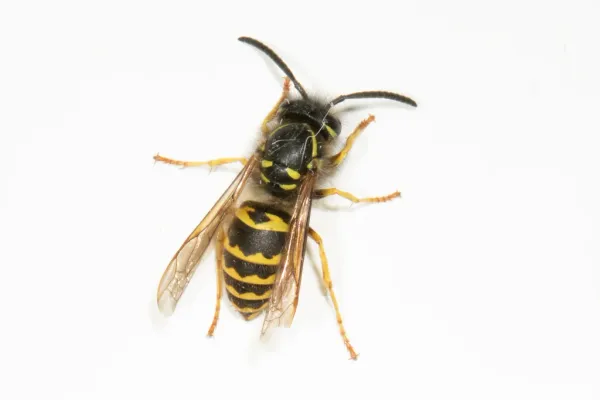
Common Yellowjackets Coloration
Common color patterns to help identify common yellowjackets
Common Yellowjackets
Seasonal Activity
When common yellowjackets are most active throughout the year

Where Common Yellowjackets Are Found
Hover over states to see their names. Green regions indicate where common yellowjackets have been reported.
Common Yellowjacket Identification Guide
Physical Characteristics
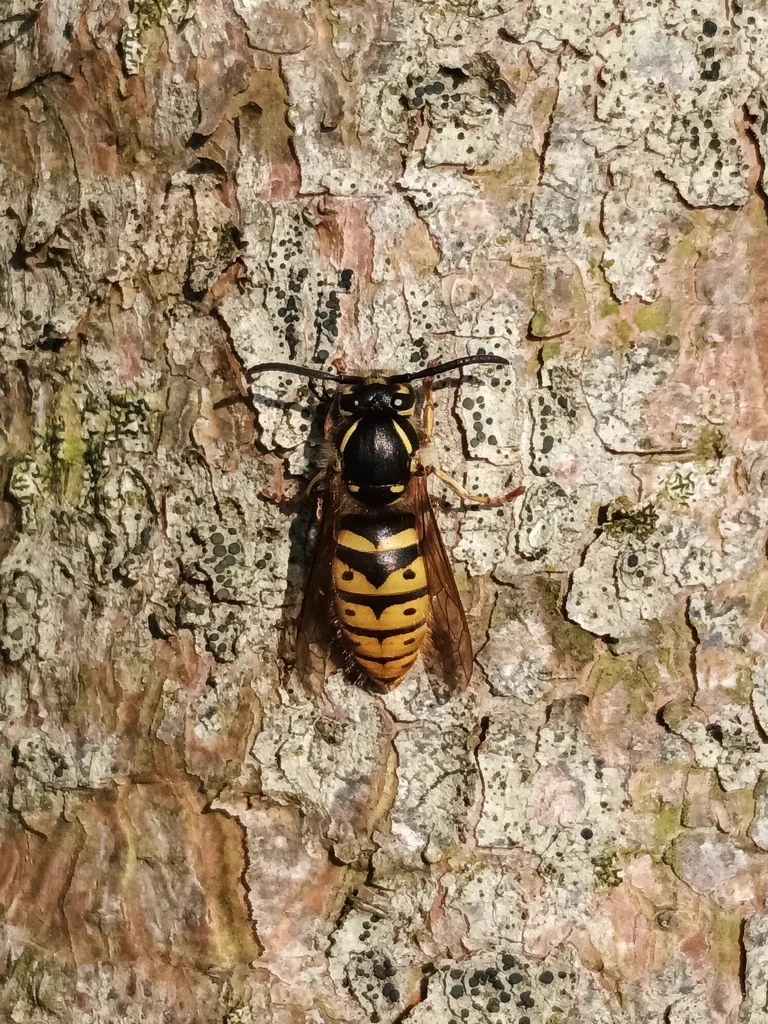
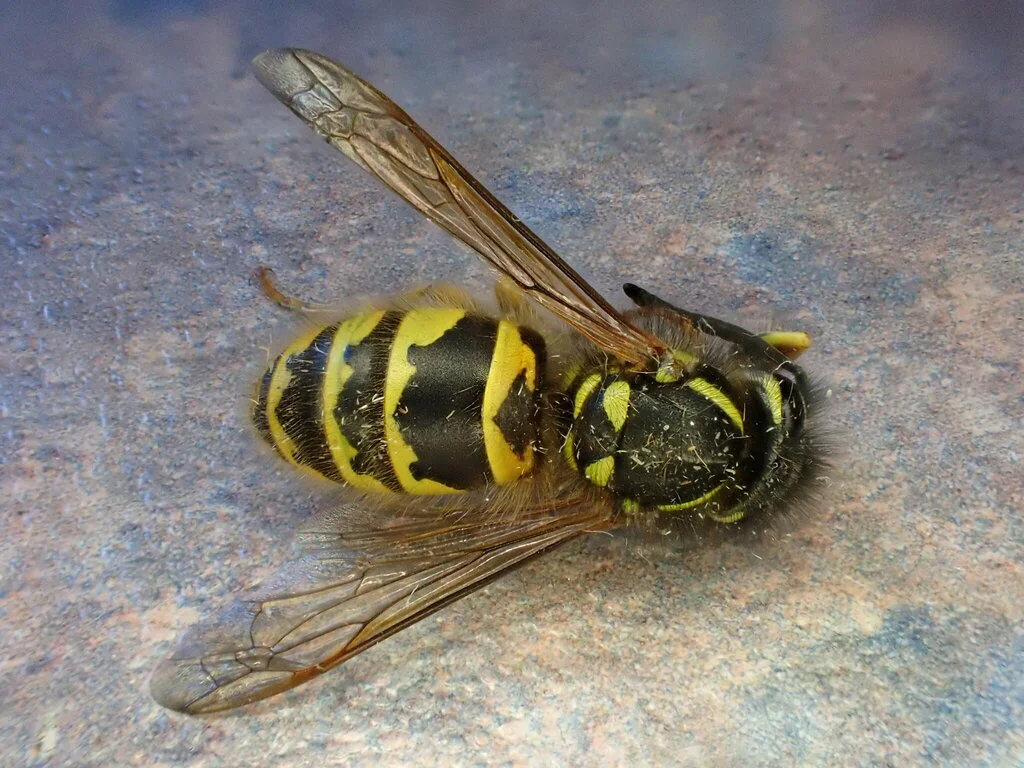
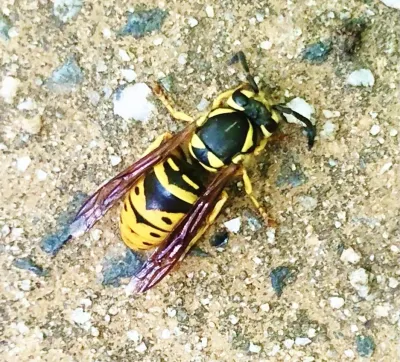
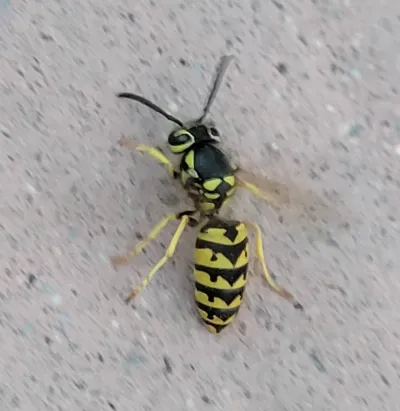
Common yellowjackets (Vespula alascensis) are medium-sized wasps. They measure 12 to 17 mm long. Queens grow a bit larger, up to 19 mm. They have bold black and yellow stripes across the abdomen.
The body looks smooth and slightly shiny. Unlike bees, yellowjackets have no fuzzy hair. Their narrow waist creates a clear pinch between the middle body and the rear. The clear wings fold flat along the body when resting.
One key feature is the face pattern. Common yellowjackets have an anchor-shaped black mark on the face plate between the eyes and mouth. German yellowjackets have three small black dots instead. This helps tell the two apart.
The antennae are long and dark. Legs are yellow with black markings. The bright colors warn predators that this insect can sting.
Taxonomy Note
Until 2010, North American yellowjackets were called Vespula vulgaris, the same name as the European species. DNA studies showed they are actually a separate species. Scientists now call the North American one Vespula alascensis. It is native to North America and lives throughout the U.S. and southern Canada.
Common Species in North America
Several yellowjacket species share similar habitats across North America:
- Common Yellowjacket (Vespula alascensis) - Found throughout the U.S. and Canada
- Eastern Yellowjacket (Vespula maculifrons) - Common in eastern North America
- Western Yellowjacket (Vespula pensylvanica) - Dominant in western states
- German Yellowjacket (Vespula germanica) - Invasive species now widespread
- Southern Yellowjacket (Vespula squamosa) - Found in southeastern states
Common Yellowjacket Behavior and Biology
Nesting Habits
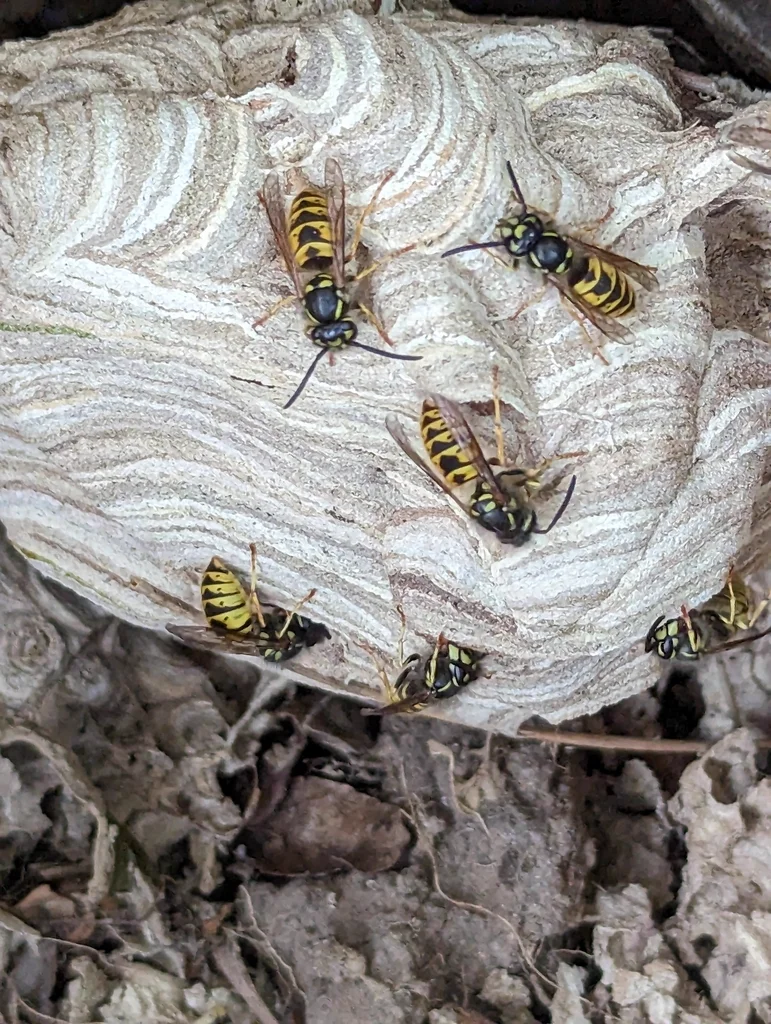
Common yellowjackets usually build nests underground. They often move into old rodent burrows or holes in the soil. The nest is made from paper. Workers create it by chewing wood and mixing it with spit.
A full-grown colony can have 1,000 to 4,000 workers by late summer. The nest has many layers of paper cells inside a paper shell. Underground nests can get large. Some reach the size of a basketball.
Ground nests are most common. But these yellowjackets also nest in wall voids, hollow trees, and other sheltered spots. Nests in buildings raise the chance of stings.
Foraging and Diet
Common yellowjackets hunt and scavenge for food. Workers catch insects like caterpillars, flies, and spiders. They bring this food back to feed the young in the nest. In return, the larvae make a sweet liquid that adults eat.
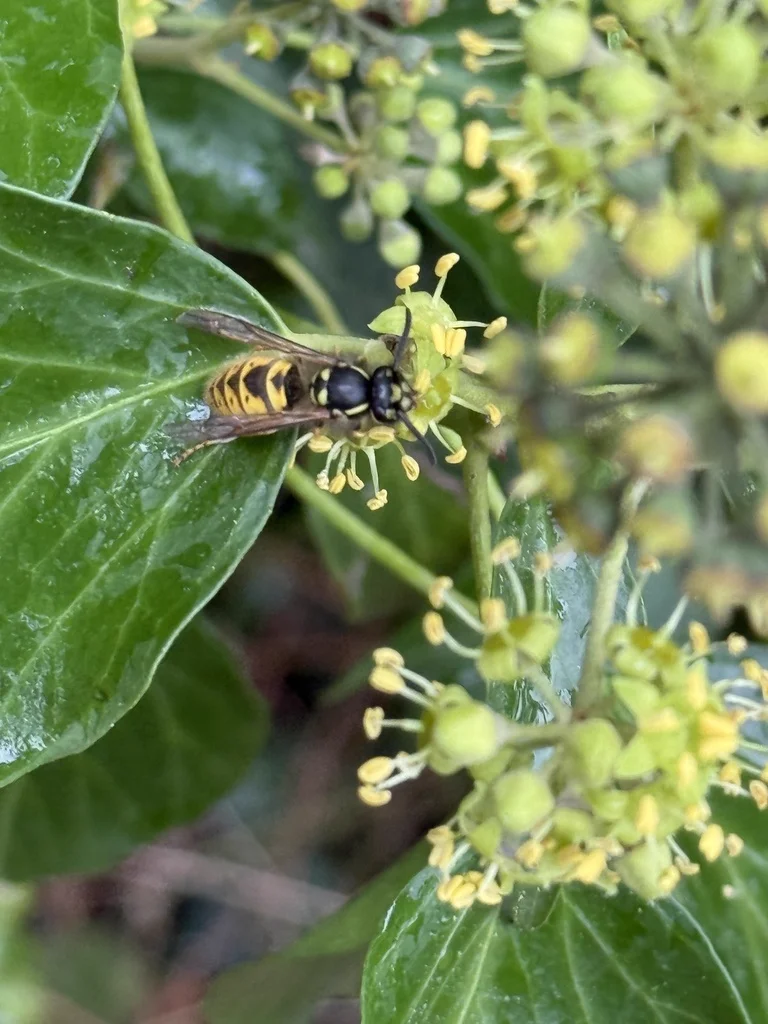
Adults also eat nectar, fruit, and other sweets. They like sugary foods and meat. This makes them a pest at picnics, near trash cans, and around any outdoor food.
In late summer and fall, there are fewer larvae in the nest. Without the sweet liquid from larvae, workers look harder for sugar. This is why yellowjackets bother people more at late-season events.
Colony Life Cycle
Yellowjacket colonies follow a yearly cycle in most of North America. In spring, a mated queen wakes from her winter sleep. She finds a good spot and starts building a small nest.
The queen raises the first workers alone. She lays eggs and feeds the young. Once these workers grow up, they take over. They build the nest, find food, and care for new young. The queen then only lays eggs.
The colony grows fast through summer. By late August or September, it hits peak size. At this point, the colony starts making new queens and males instead of workers. After mating, the new queens find shelter to spend the winter. The old queen, workers, and males all die when it gets cold. Only mated queens survive to start new colonies in spring.
Defensive Behavior
Yellowjackets strongly defend their nests. When disturbed, guard workers release scent signals that call more workers to help. You can spot yellowjackets by their quick side-to-side flight before they land.
Unlike honeybees, yellowjackets have smooth stingers. They do not lose their stingers after one sting. Each wasp can sting many times. The venom causes sharp pain. Some people have severe allergic reactions. The Asthma and Allergy Foundation of America says about 1% of Americans are allergic to stinging insect venom. Yellowjacket stings cause most insect-related deaths. If you have severe symptoms after a sting, seek medical help right away.
Workers sense danger and stand on the tips of their legs. They point their heads forward and shake their wings fast. This warns other workers to get ready to defend. Hitting a ground nest while mowing is a common way people get stung many times.
How We Treat for Common Yellowjackets
Killing yellowjackets one by one does not work. You must find and treat the nest.
-
Nest Location: We watch where wasps fly to find the nest opening. For ground nests, we look for where workers go in and out of the soil. For nests in structures, we trace activity back to gaps in siding, soffits, or other entry points.
-
Ground Nest Treatment: For nests in the ground, we apply insecticide to the nest opening and the soil around it. We may also put dust into the hole to reach deeper.
-
Wall Void Treatment: Nests inside walls are harder to treat. We apply dust or foam through entry points. Follow-up visits may be needed since hidden nests can be hard to fully remove in one visit.
-
Aerial Nest Treatment: For nests on eaves, branches, or other open spots, we apply product right to the nest. We usually treat in early morning or evening when wasps are calm and most are in the nest.
-
Prevention Tips: After treatment, we suggest sealing entry points. This includes gaps in siding, open vents, and other spots where nests could form later.
We offer free callbacks if the problem comes back between scheduled services.
References
Other Wasps
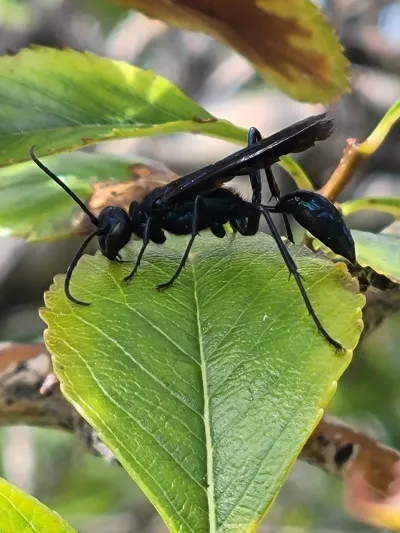
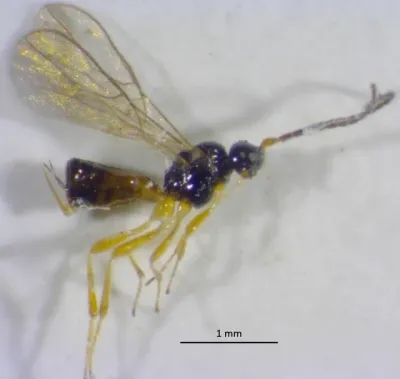
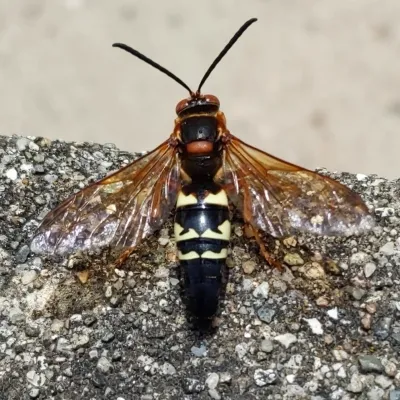
Explore other species in the wasps family
Commonly Confused With
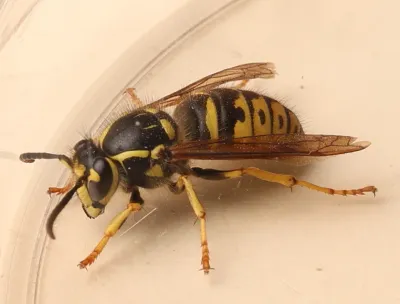
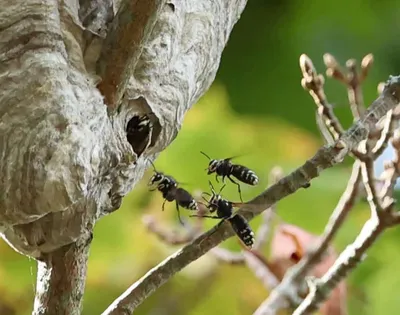
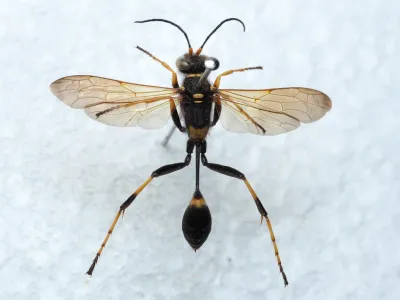
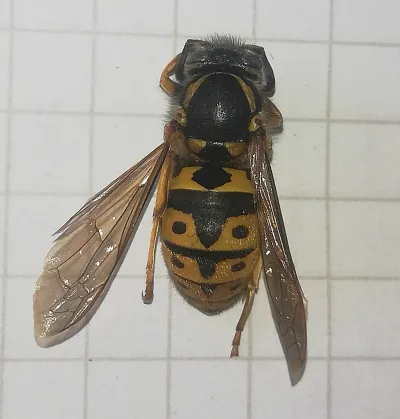
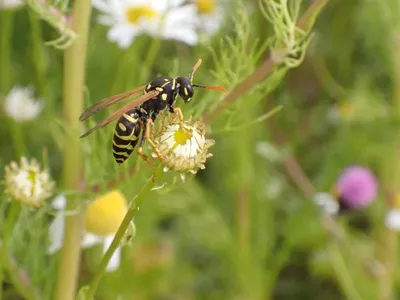
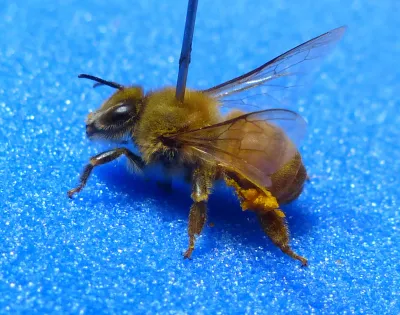
Common Yellowjackets are often mistaken for these similar pests
Where Common Yellowjackets Are Found
Hover over states to see their names. Green regions indicate where common yellowjackets have been reported.
Common Questions about Common Yellowjackets
How can I identify a common yellowjacket?
+
Common yellowjackets are 12 to 17 mm long with distinct black and yellow banding on the abdomen. They have a narrow waist, smooth bodies without fuzzy hair, and clear wings that fold along the body when at rest. The face has an anchor-shaped or dagger-shaped black mark on the clypeus, unlike the three dots seen on German yellowjackets.
Where do common yellowjackets build their nests?
+
Common yellowjackets typically nest underground in abandoned rodent burrows, hollow logs, or natural cavities. They may also nest in wall voids, attics, or other protected spaces in structures. Ground nests are most common and can grow quite large by late summer.
Are common yellowjackets aggressive?
+
Common yellowjackets will aggressively defend their nests when disturbed. They can sting multiple times since their stingers do not detach like honeybee stingers. Away from the nest, they are generally not aggressive unless swatted or trapped against skin.
Why are yellowjackets attracted to my food?
+
Common yellowjackets are scavengers that feed on proteins and sugars. They are drawn to meat, fruit, sugary drinks, and garbage. This scavenging behavior makes them a common pest at outdoor cookouts, picnics, and anywhere food is present.
When are common yellowjackets most active?
+
Common yellowjackets are most active from late spring through early fall. Colony populations peak in late August and September, which is when they become most noticeable and can be more aggressive as food becomes scarcer.
What is the difference between yellowjackets and bees?
+
Yellowjackets have a distinct narrow waist and smooth, shiny bodies. Bees have thicker bodies without a pinched waist and are covered in fuzzy hair. Yellowjackets can sting repeatedly, while honeybees typically sting only once. Yellowjacket venom is also chemically different from bee venom.
How long do yellowjacket colonies last?
+
In most of North America, yellowjacket colonies last one season. The colony dies off in winter, and only newly mated queens survive by hibernating in protected locations. These queens start new colonies the following spring.

With five years of hands-on experience in the pest control industry, George Schulz is a registered technician with the Virginia Pest Management Association and a proud third-generation professional in a family business that's been protecting homes for over 57 years. He manages and trains a team of service pros while also leading internal research efforts—recently spearheading a deep-dive review of thousands of documents on pest control materials to hand-pick the most kid and pet friendly, most effective solutions tailored specifically for homes in the DC metro area.