Black and Yellow Mud Daubers Identification Guide
Sceliphron caementarium
The black and yellow mud dauber is a solitary wasp that builds tube-shaped mud nests on homes. Learn how to identify and manage these common wasps.
Taxonomy
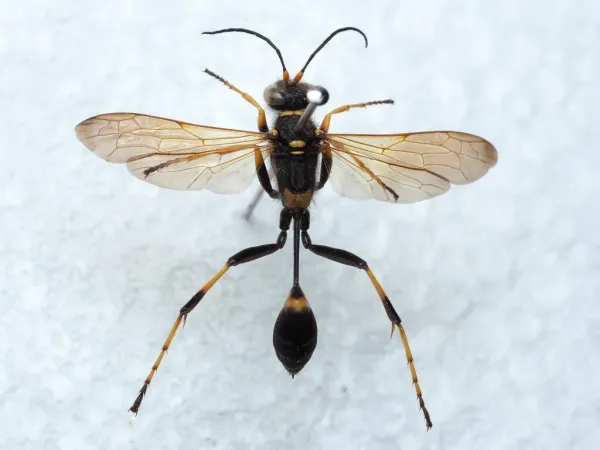
Black and Yellow Mud Daubers Coloration
Common color patterns to help identify black and yellow mud daubers
Black and Yellow Mud Daubers
Seasonal Activity
When black and yellow mud daubers are most active throughout the year

Where Black and Yellow Mud Daubers Are Found
Hover over states to see their names. Green regions indicate where black and yellow mud daubers have been reported.
Black and Yellow Mud Dauber Identification Guide
Physical Characteristics
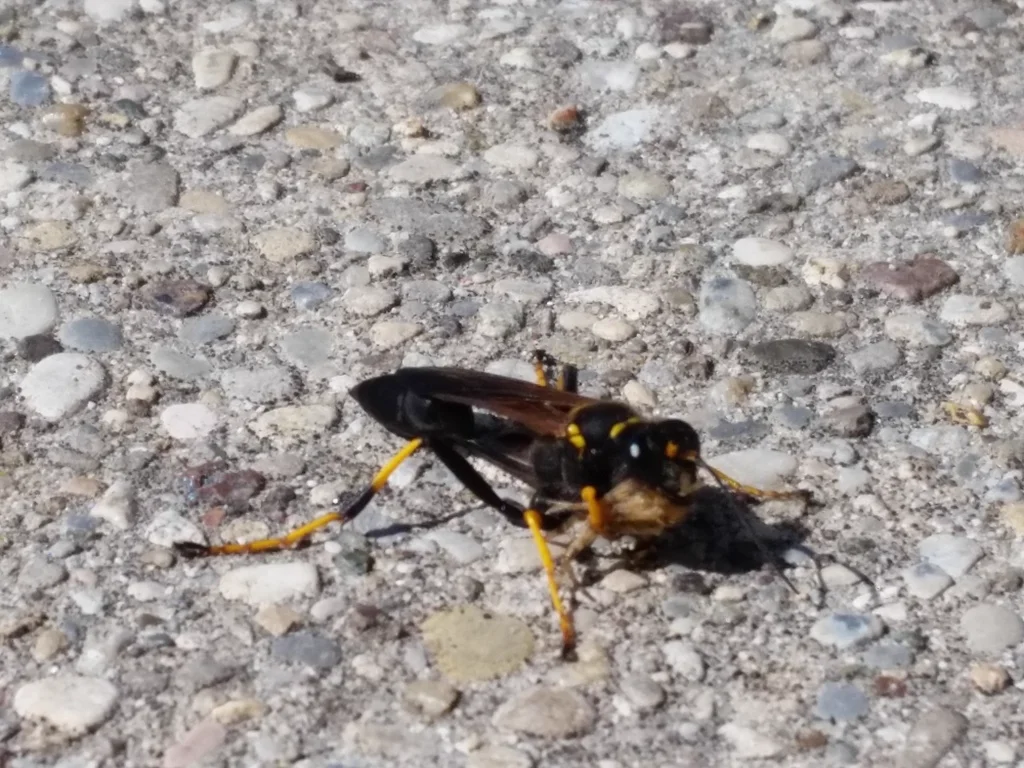
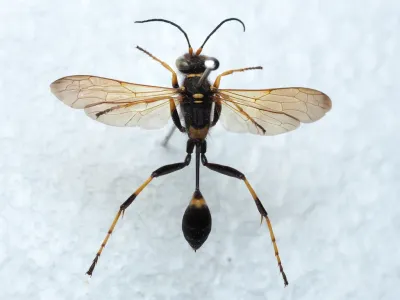
The black and yellow mud dauber (Sceliphron caementarium) is the most common mud dauber species in North America. These solitary wasps measure about 1 inch in length. Their most notable feature is an extremely thin, thread-like waist. This narrow section connects the front body to the abdomen and is about half the length of the abdomen itself.
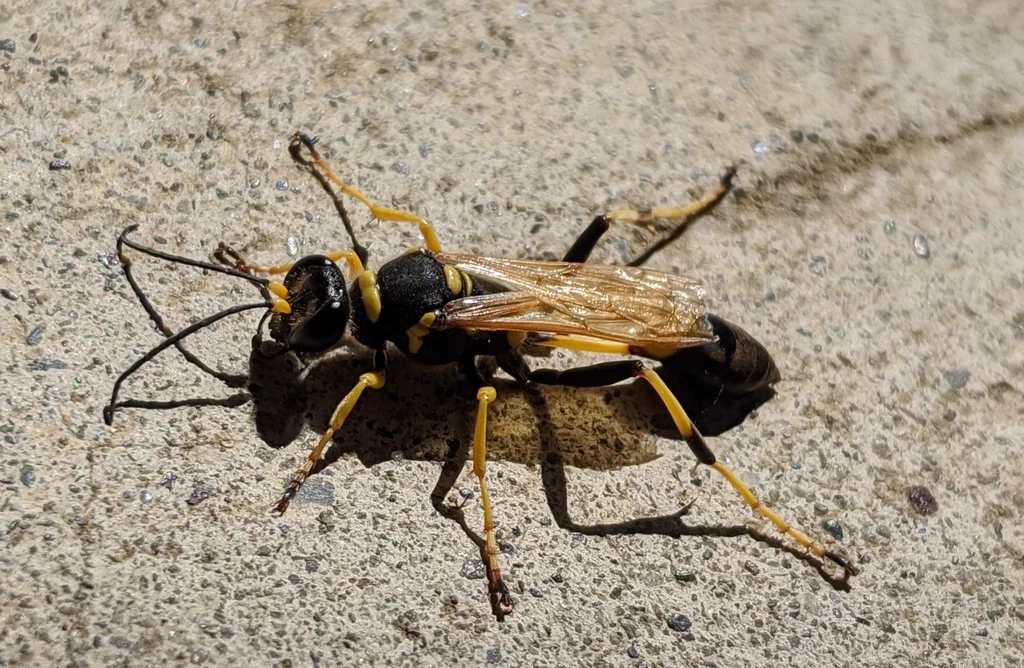
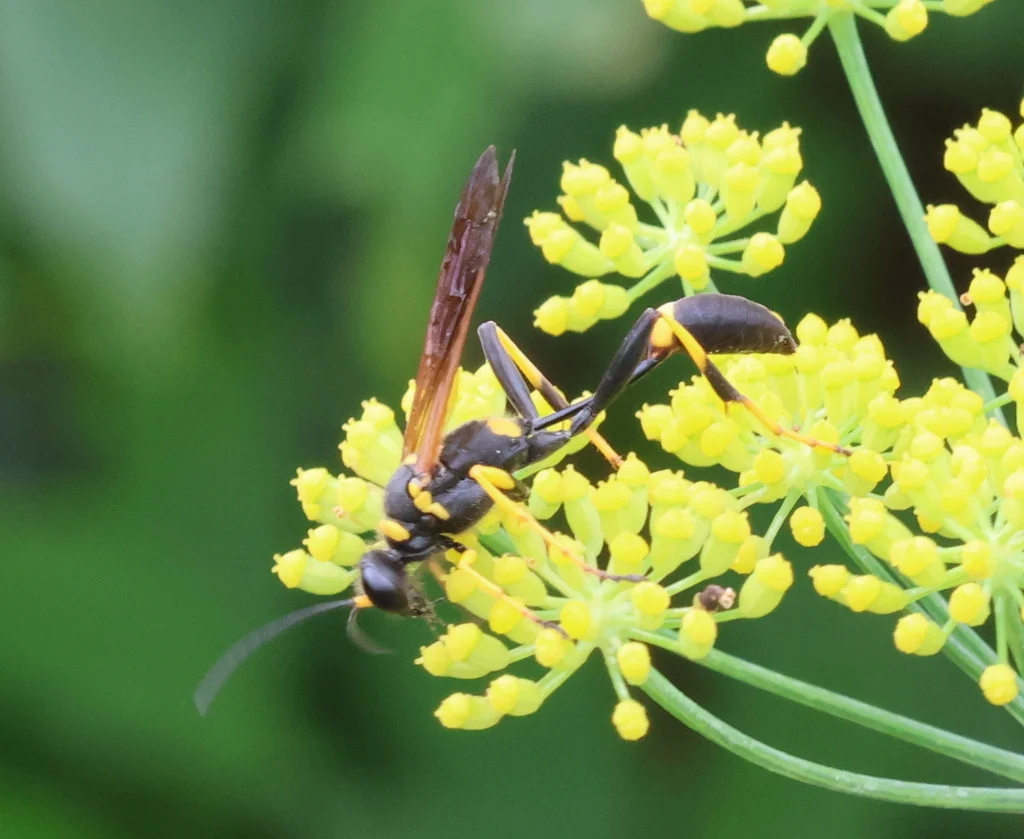
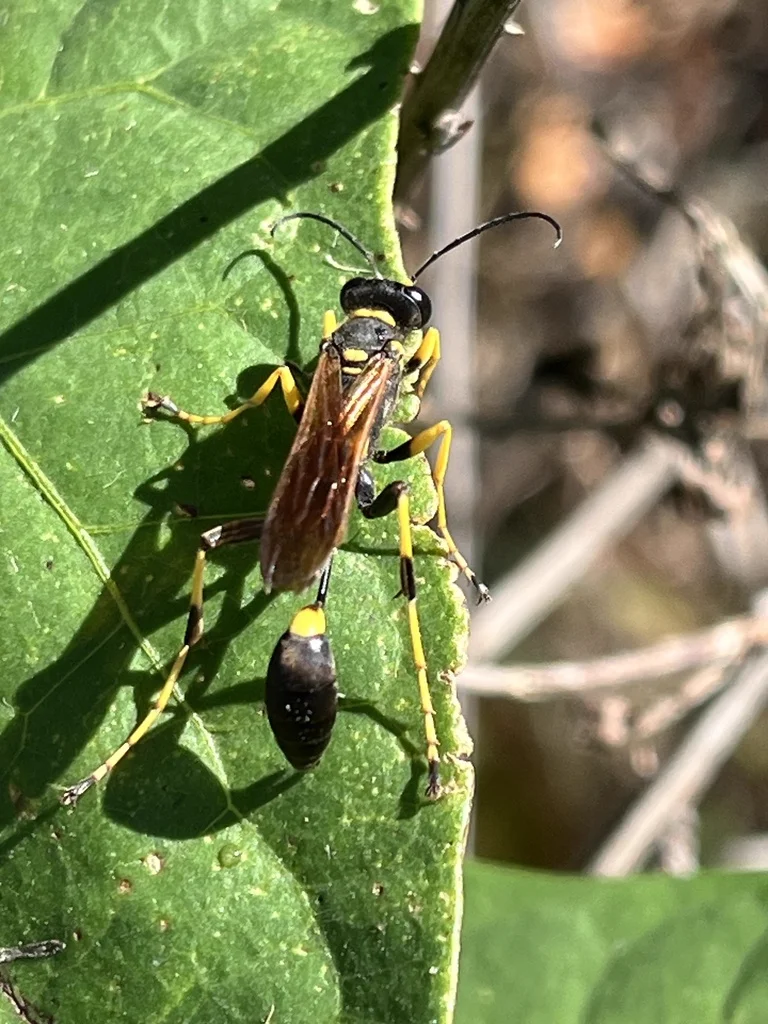
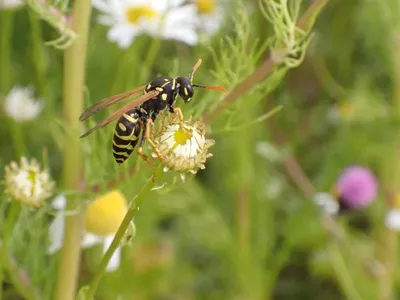
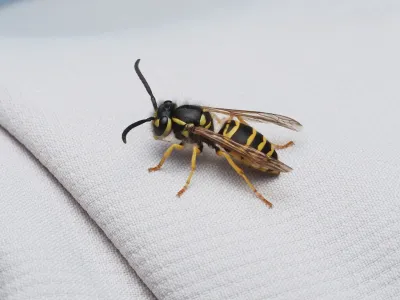
The body is mostly black with bright yellow markings. Yellow coloring appears on the legs, parts of the thorax, and rear body section. The eyes and antennae are black. The wings have a tan or amber color. In the United States, black and yellow mud daubers are the only species with yellow-marked legs. This makes them easy to tell apart from other wasps.
The amount of yellow varies by region. Wasps from northern states and Canada have less yellow, with many areas appearing all black. Southern populations show more yellow markings. West of the Rocky Mountains, these wasps often have clearer amber wings and yellow waists. Eastern populations typically have darker amber wings and black waists.
Geographic Distribution
Black and yellow mud daubers live across North America. They occur throughout the United States, Canada, Mexico, Central America, and the Caribbean. This species has also spread to Hawaii, Australia, Japan, and several Mediterranean countries.
Black and Yellow Mud Dauber Behavior and Biology
Nesting Habits
Female black and yellow mud daubers build their nests from mud. They gather mud at puddle edges, stream banks, or any source of wet soil. They roll mud into small balls and carry it back to a sheltered spot. Common nest locations include under eaves, porch ceilings, inside garages and sheds, and on building walls.
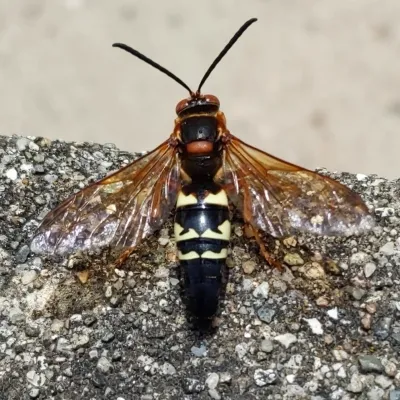
The nest is made of tube-shaped cells. Often one, two, or three cells group together in a cigar-shaped clump. Multiple cell clusters are often built side by side and covered with more mud. Each cell holds a single egg and food for the growing larva. A related species, Cow Killers, shares similar characteristics.
Hunting and Reproduction
Black and yellow mud daubers hunt spiders. The female finds a spider, stings it to paralyze it, and carries it back to her nest. The venom does not kill the spider but keeps it alive as fresh food. Each nest cell holds 25 to 30 paralyzed spiders before the female lays an egg and seals the chamber.
Common prey includes crab spiders, orb weavers, and some jumping spiders. These wasps hunt spiders found in and around plants and vegetation.
Life Cycle
Black and yellow mud daubers go through four life stages: egg, larva, pupa, and adult. The egg hatches within a few days to a week. The larva feeds on the paralyzed spiders, growing over several weeks. Once the spiders are eaten, the larva forms a pupa inside the sealed mud cell.
The pupal stage can last several weeks to several months. Many mud daubers spend the winter in this stage. They stay dormant through cold months and emerge as adults the following spring. Adults usually complete one or two generations per year. Adult wasps do not survive the winter.
Temperament and Sting Risk
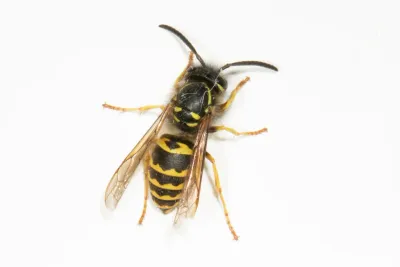
Black and yellow mud daubers are among the most docile wasps you might see around your home. These solitary wasps do not live in colonies and have no workers to defend a nest. Unlike yellowjackets, they show no interest in human food or aggressive behavior.
Stings are rare. They occur only when a wasp is handled directly or trapped against skin. Their venom lacks several components found in other wasp venoms. While a sting is still painful, black and yellow mud daubers pose minimal sting risk to homeowners.
When Black and Yellow Mud Dauber Nests Become a Problem
Mud dauber nests are not always welcome on homes. Mud structures on visible exterior walls hurt curb appeal. Nests built over doorways, on vehicles, or blocking storage access create practical problems. Old abandoned nests can also attract other insects looking for shelter.
Common reasons homeowners want nest removal:
- Unsightly mud tubes on home exteriors
- Nests in bad spots like doorframes or light fixtures
- Wasp activity near high-traffic areas
- Old nests drawing other pests
How Mud Dauber Nests Are Treated
For inactive nests, removal is simple. Wait until late fall or winter when adult wasps are gone. Scrape the mud cells off with a putty knife or paint scraper. Clean and paint or seal the surface to stop future nesting.
For active nests, a pest control professional can treat the nest directly. A residual insecticide applied to the nest and surrounding area will eliminate the wasps. The solitary nature of mud daubers means there is no large colony to deal with. Treatment is usually a one-time service.
Prevention Tips
To stop black and yellow mud daubers from nesting in unwanted areas:
- Seal cracks and gaps where nests commonly appear
- Paint or finish bare wood surfaces under eaves
- Reduce standing water and mud sources near structures
- Remove old nests promptly to stop new building in the same spot
- Install screens or barriers in often-used areas
References
Other Wasps
Explore other species in the wasps family
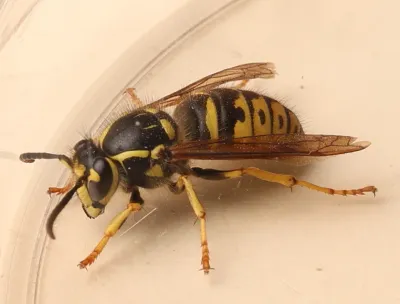
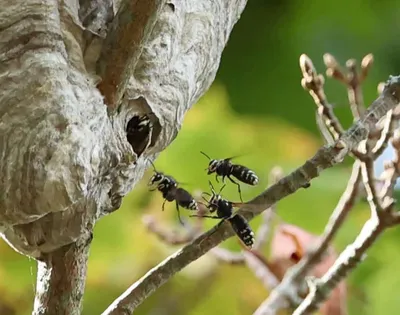
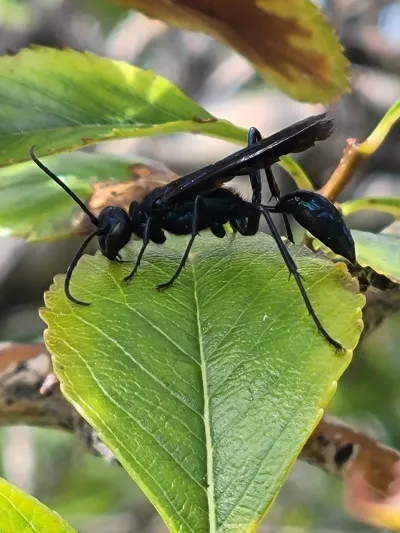
Commonly Confused With
Black and Yellow Mud Daubers are often mistaken for these similar pests
Where Black and Yellow Mud Daubers Are Found
Hover over states to see their names. Green regions indicate where black and yellow mud daubers have been reported.
Common Questions about Black and Yellow Mud Daubers
Are black and yellow mud daubers dangerous?
+
Black and yellow mud daubers are not dangerous to humans. They are solitary wasps with a very mild temperament and rarely sting unless directly handled or trapped against skin. Unlike yellowjackets, they do not aggressively defend their nests.
What do black and yellow mud daubers eat?
+
Adult black and yellow mud daubers feed on flower nectar for energy. They hunt and paralyze spiders to provision their mud nest cells as food for their larvae. A single nest can contain 25 to 30 paralyzed spiders per cell.
Why are black and yellow mud daubers building nests on my house?
+
Black and yellow mud daubers seek sheltered locations protected from rain and weather. Eaves, porch ceilings, garages, and sheds provide ideal nesting sites. They also need access to mud from puddles or moist soil nearby.
Should I remove black and yellow mud dauber nests?
+
If mud dauber nests are in a visible or inconvenient location, they can be removed. Inactive nests can be scraped off in late fall or winter after the wasps have left. Active nests can be treated by a pest control professional.
How can I tell a black and yellow mud dauber from other wasps?
+
Black and yellow mud daubers have an extremely thin, thread-like waist that is about half the length of the abdomen. They have yellow markings on the legs, thorax, and head, with yellow legs distinguishing them from other species in the United States.
How long do black and yellow mud daubers live?
+
The complete life cycle of a black and yellow mud dauber spans about one year. Adults emerge in spring, are active through summer building nests and provisioning cells, then die in fall. Their offspring overwinter as pupae in the sealed mud cells.
Do black and yellow mud daubers reuse their nests?
+
Black and yellow mud daubers do not reuse old nests. However, [blue mud daubers](/pests/wasps/blue-mud-daubers/) often take over abandoned black and yellow mud dauber nests, softening the mud with water and renovating the chambers for their own use.

With five years of hands-on experience in the pest control industry, George Schulz is a registered technician with the Virginia Pest Management Association and a proud third-generation professional in a family business that's been protecting homes for over 57 years. He manages and trains a team of service pros while also leading internal research efforts—recently spearheading a deep-dive review of thousands of documents on pest control materials to hand-pick the most kid and pet friendly, most effective solutions tailored specifically for homes in the DC metro area.