Florida Dampwood Termites Identification Guide
Neotermes castaneus
Florida dampwood termites are large termites found in southern Florida that infest moist, decaying wood. Unlike subterranean termites, they do not require soil contact and rarely damage homes.
Taxonomy
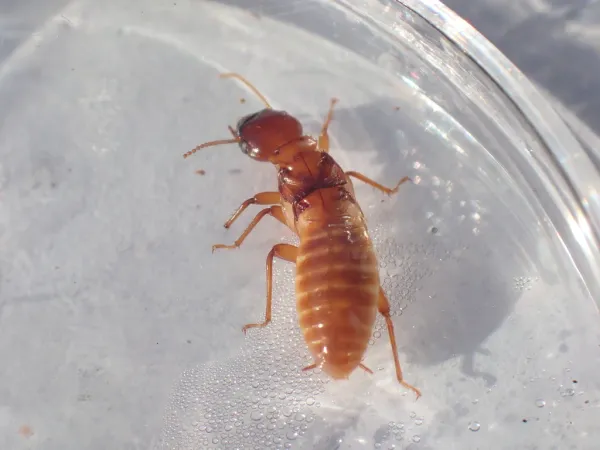
Florida Dampwood Termites Coloration
Common color patterns to help identify florida dampwood termites
Florida Dampwood Termites
Seasonal Activity
When florida dampwood termites are most active throughout the year

Where Florida Dampwood Termites Are Found
Hover over states to see their names. Green regions indicate where florida dampwood termites have been reported.
Florida Dampwood Termite Identification Guide
Physical Characteristics
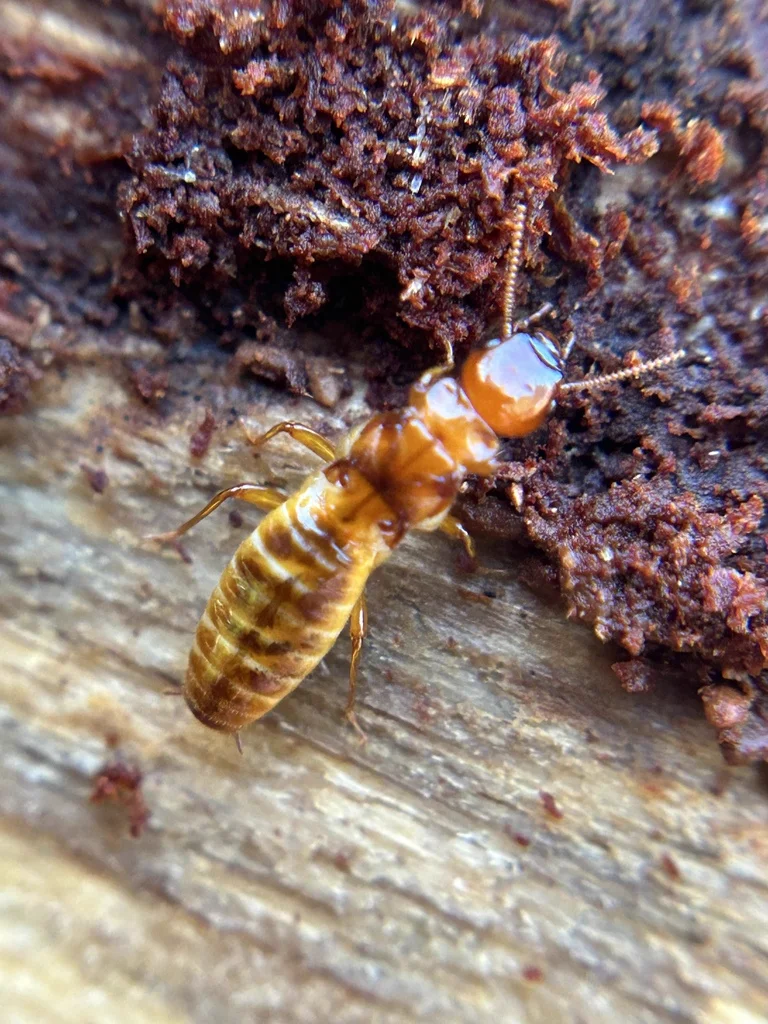
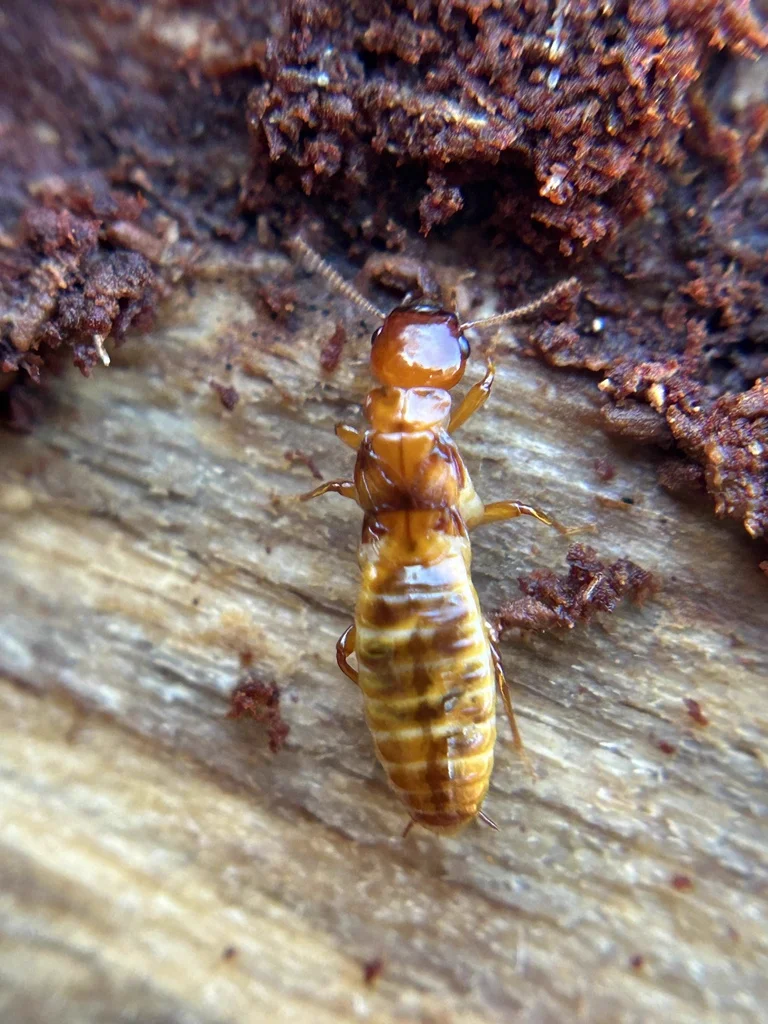
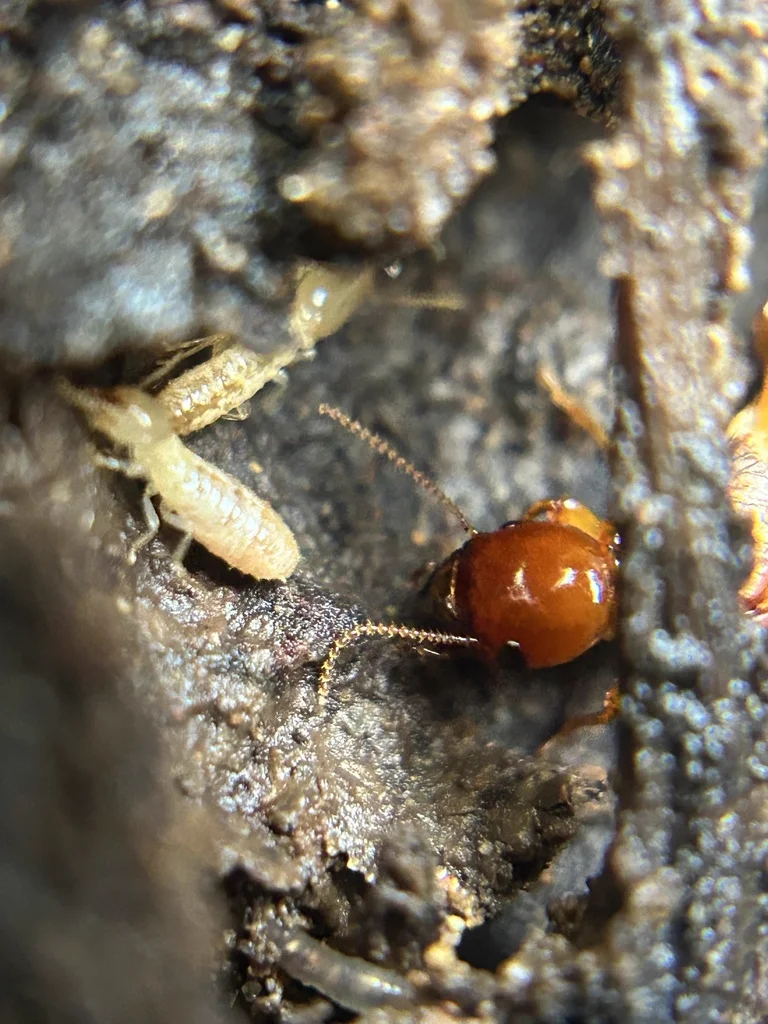
Florida dampwood termites are some of the largest termites in North America. Soldiers are about 3/4 inch (19 mm) long. Their head and jaws make up about one-third of their body. They have reddish-brown to blackish heads with cream-colored bodies. Workers and nymphs are smaller at about 1/2 inch (13 mm) long. They have pale, cream-colored bodies.
Winged adults are called alates. They are the largest members of the colony. Their wings stretch past the end of their body. The wings measure over 1/2 inch (16 mm) long. Look for the thick vein near the front edge of each wing. This feature sets Florida dampwood termites apart from other termites in the state. Alates have reddish-brown bodies with fine hairs on their heads. For help telling them apart, see our guide on what termites look like.
Common Species
Three types of Neotermes dampwood termites live in Florida:
-
Florida Dampwood Termite (Neotermes castaneus): The most common type. Found along coastal southern Florida and the Keys.
-
Jouteli Dampwood Termite (Neotermes jouteli): Found mainly in the Florida Keys and far southern Florida.
-
Luykx Dampwood Termite (Neotermes luykxi): The rarest type. Only found in the Florida Keys.
Florida Dampwood Termite Behavior and Biology
Habitat and Nesting
Florida dampwood termites are different from subterranean termites. They do not build nests in soil. They also do not create mud tubes. Instead, they live inside the wood they eat. They need wood with lots of moisture to survive. This is why they prefer living trees, dead logs, untreated fence posts, and rotting stumps.
These termites dig tunnels through the wood they infest. The tunnels look smooth and clean inside. They seal entry holes with waste material. This helps keep the humidity high inside their home.
Colony Structure
Florida dampwood termite colonies have three main groups: reproductives (king, queen, and winged adults), soldiers, and young termites called pseudergates. Pseudergates do the work of the colony. They can grow into either soldiers or winged adults. This species has no true worker group. Colonies are fairly small. A full-grown colony has several thousand termites.
Life Cycle and Swarming
After their mating flight, pairs drop their wings. They look for a good spot to nest, like a crack in damp wood or a wound in a tree. They seal themselves inside and start laying eggs within a few weeks. Colonies grow slowly. It takes several years for the first soldiers to appear. It takes even longer for the colony to produce its own winged adults.
Florida dampwood termites swarm in late fall and early winter. They fly at dusk or at night. Winged termites are drawn to lights. This is different from subterranean termites, which swarm in spring and summer. Other dampwood termite species in the western U.S. also swarm at different times of year.
Diet and Feeding
Like all termites, Florida dampwood termites eat cellulose from wood. They feed on moist, rotting wood. They play a key role in breaking down dead wood in nature. Their gut has tiny organisms that help them digest wood into food they can use.
Signs of Florida Dampwood Termite Infestation
Look for these signs to spot a Florida dampwood termite problem:
- Swarmers and shed wings: Winged termites near lights at night in fall or early winter. You may also find piles of dropped wings.
- Fecal pellets: Piles of waste near infested wood. The pellets may look clumped due to moisture.
- Damaged wood: Wood that feels damp and spongy. Look for smooth, clean tunnels carved inside.
- Colonies in trees: Termites found when pruning trees or after storm damage.
Treatment Methods for Florida Dampwood Termites
Florida dampwood termites need moist wood to survive. The best way to control them is to remove their moisture source. Chemical treatments are often not needed.
Moisture Control
The best way to manage dampwood termites is to fix the moisture problem. This may include:
- Fixing roof leaks and plumbing issues
- Improving drainage around your foundation
- Replacing water-damaged wood with treated lumber
- Removing dead trees, stumps, and logs near your home
Once you remove the moisture, dampwood termites cannot survive. The colony will die as the wood dries out. For more detailed guidance, read our article on how to get rid of termites.
Wood Replacement
Remove infested wood and replace it with treated lumber. This gets rid of the active colony and stops them from coming back. Make sure the new wood stays dry.
Chemical Treatments
Sometimes moisture control alone is not enough. In these cases, spot treatments with chemicals can help. Borate products work well because the moisture in the wood helps the product soak in. These treatments can kill active colonies and protect the wood.
Prevention Tips
To prevent Florida dampwood termite problems:
- Move water away from your foundation
- Keep good drainage around your yard
- Fix roof and plumbing leaks right away
- Remove dead trees and stumps near your home
- Use pressure-treated wood for outdoor projects
- Check trees often for signs of stress or damage
For more ways to protect your home, see our termite prevention tips.
Florida Dampwood Termites vs. Other Termites
Knowing the differences between termite types helps you identify and control them:
| Feature | Florida Dampwood | Eastern Subterranean |
|---|---|---|
| Size | Large (10-19 mm) | Small (3-10 mm) |
| Mud tubes | No | Yes |
| Soil contact | Not required | Required |
| Wood preference | Moist, decaying | Any wood with moisture access |
| Home damage risk | Low | High |
| Swarm season | Fall/Winter | Spring/Summer |
References
Other Termites
Explore other species in the termites family
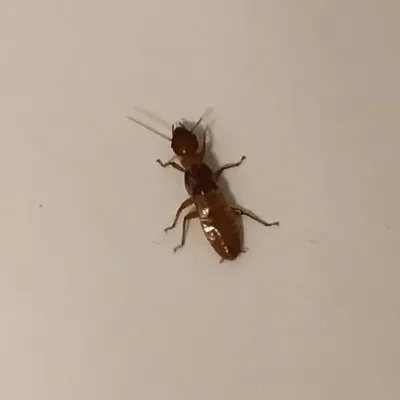
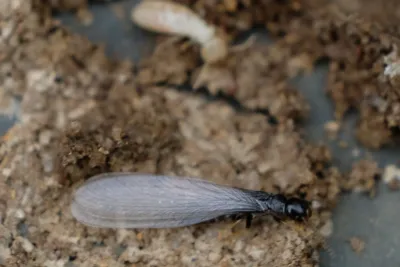
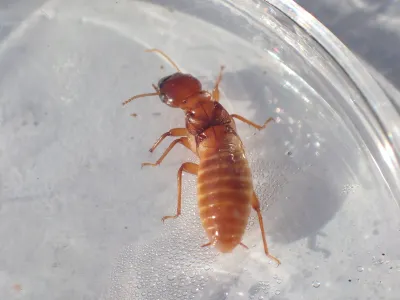
Commonly Confused With
Florida Dampwood Termites are often mistaken for these similar pests
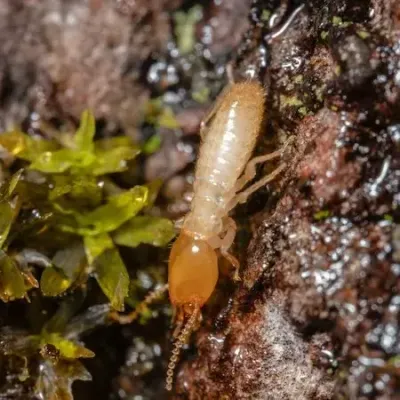
Where Florida Dampwood Termites Are Found
Hover over states to see their names. Green regions indicate where florida dampwood termites have been reported.
Common Questions about Florida Dampwood Termites
Are Florida dampwood termites found outside of Florida?
+
Florida dampwood termites are primarily found in southern Florida, the Florida Keys, and parts of the Caribbean. They require humid, subtropical conditions and do not survive in colder climates.
Do Florida dampwood termites damage homes?
+
Florida dampwood termites rarely damage homes because they need wood with very high moisture content. They typically infest living trees, logs, and untreated fence posts rather than dry structural wood.
How can I tell the difference between dampwood and subterranean termites?
+
Dampwood termites are larger, do not build mud tubes, and only infest wood with high moisture content. Subterranean termites are smaller, build mud tubes to travel, and can infest dry wood as long as they have access to soil moisture.
What attracts Florida dampwood termites to my property?
+
Dampwood termites are attracted to moist, decaying wood. Dead trees, untreated fence posts, leaking pipes near wood, and areas with poor drainage can all attract these termites.
When do Florida dampwood termites swarm?
+
Florida dampwood termites typically swarm in late fall or early winter, usually at dusk or at night. They are attracted to lights during their dispersal flights.
How do I get rid of Florida dampwood termites?
+
The most effective control method is eliminating the moisture source. Fix leaking pipes, improve drainage, and replace infested wood. In most cases, no pesticide treatment is needed once moisture issues are resolved.
Can Florida dampwood termites spread to other parts of my home?
+
Florida dampwood termites cannot survive in dry wood, so they will not spread to structural wood unless there is a significant moisture problem. They are less likely to cause widespread damage compared to subterranean termites.
Should I be concerned about dampwood termites in my trees?
+
Dampwood termites in living trees can indicate the tree is stressed or damaged. While they help decompose dead wood in nature, infested landscape trees should be evaluated by an arborist to determine if removal is necessary.

With five years of hands-on experience in the pest control industry, George Schulz is a registered technician with the Virginia Pest Management Association and a proud third-generation professional in a family business that's been protecting homes for over 57 years. He manages and trains a team of service pros while also leading internal research efforts—recently spearheading a deep-dive review of thousands of documents on pest control materials to hand-pick the most kid and pet friendly, most effective solutions tailored specifically for homes in the DC metro area.