Trapdoor Spiders Identification Guide
Infraorder Mygalomorphae (multiple families)
Burrowing spiders that build silk-lined underground tunnels fitted with hinged lids. Trapdoor spiders ambush prey from their hidden burrows and are found across the southern and western United States.
Taxonomy
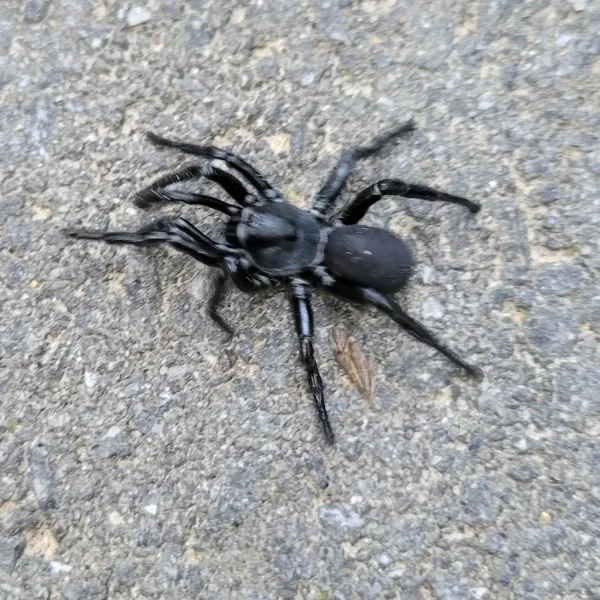
Trapdoor Spiders Coloration
Common color patterns to help identify trapdoor spiders
Trapdoor Spiders
Seasonal Activity
When trapdoor spiders are most active throughout the year
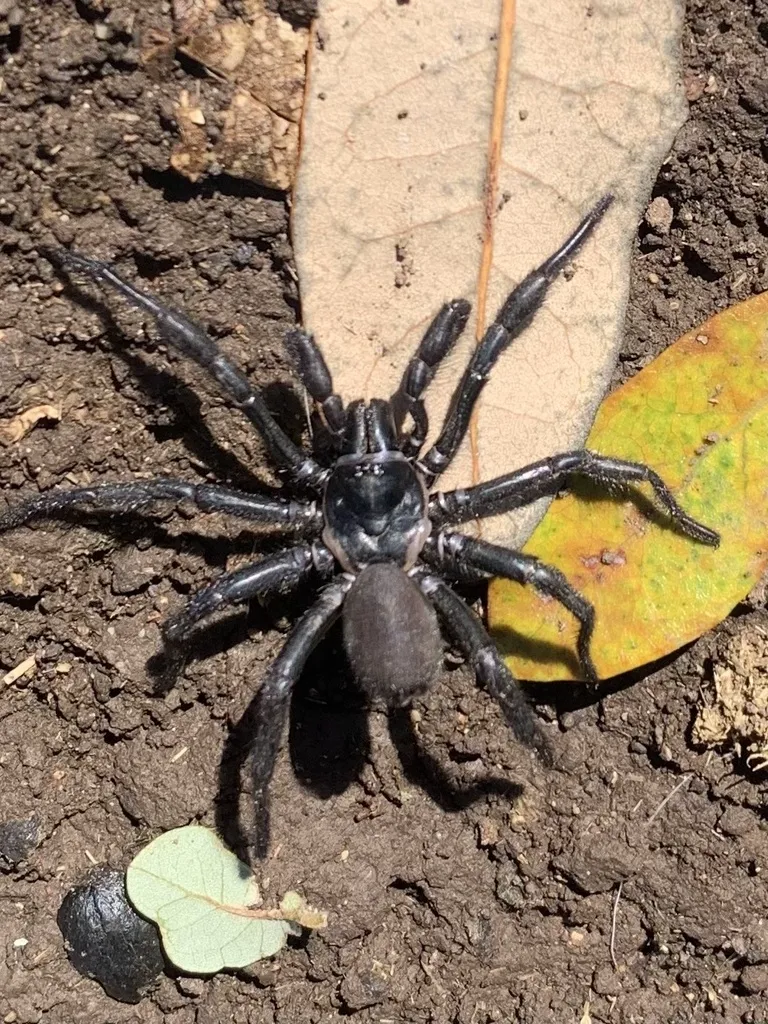
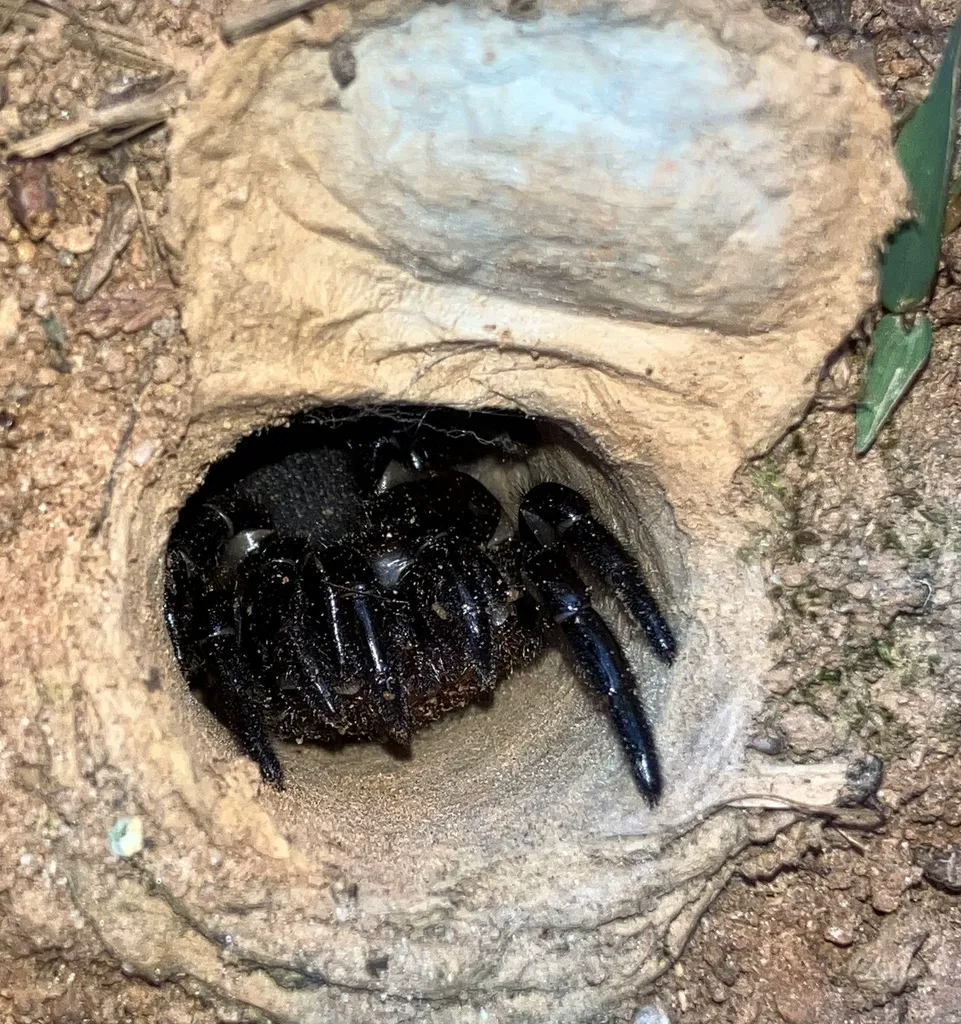
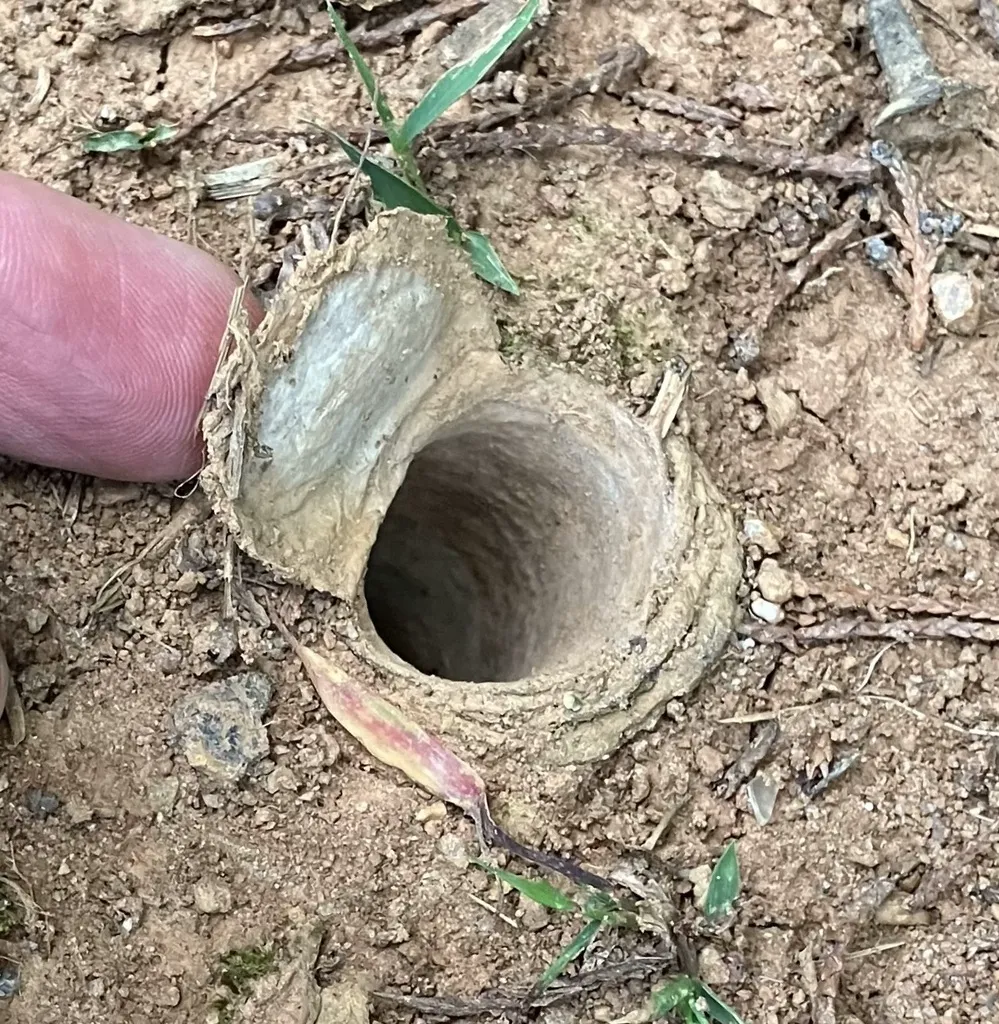

Where Trapdoor Spiders Are Found
Hover over states to see their names. Green regions indicate where trapdoor spiders have been reported.
Trapdoor Spider Identification Guide
Physical Characteristics
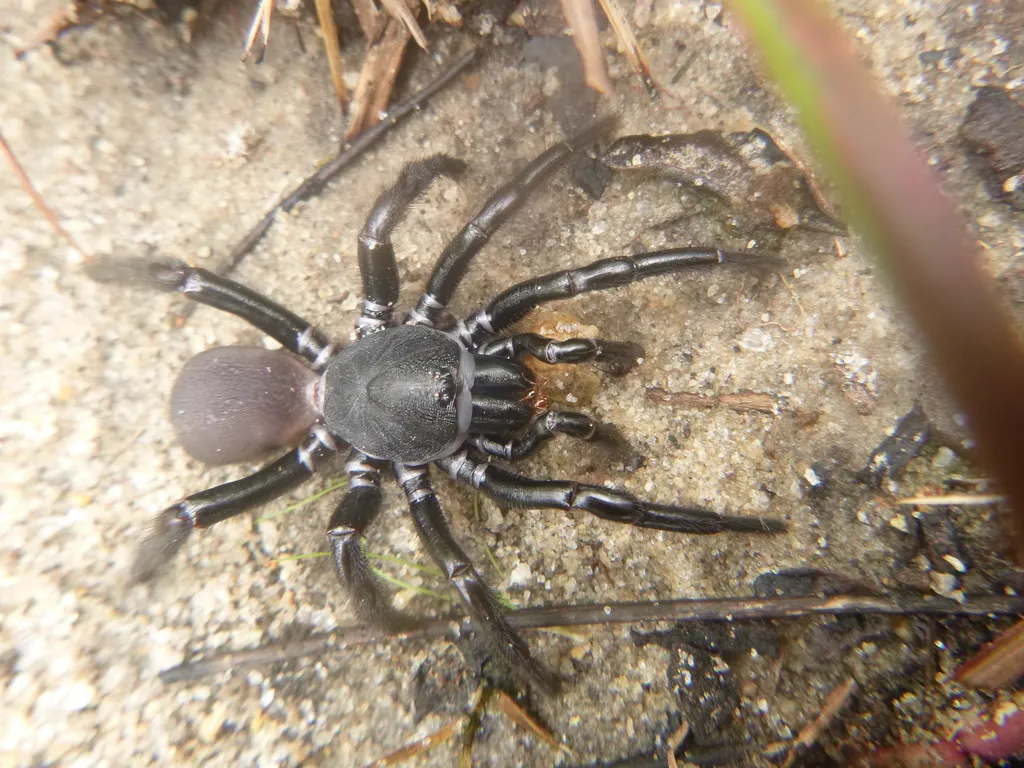
Trapdoor spiders are stocky, strong spiders that spend most of their lives underground. Adults measure 10-35 mm in body length depending on the species. Females are larger than males. Their color ranges from dark brown to black, sometimes with a reddish-brown tint. The body surface is smooth and glossy, which sets them apart from the much hairier tarantulas they are often confused with.
The front body section is wide and flat. Their legs are thick and strong, built for digging. The front two pairs of legs have rows of heavy spines on the underside. These spines work like a rake to loosen soil when building burrows. Their fangs are large and point straight down, unlike most common spiders whose fangs cross like pincers. They share this fang style with tarantulas and other related spiders.
Their eyes are small and grouped together on a raised bump at the front of the head. Even though they have eight eyes, trapdoor spiders see poorly. They rely on vibration to sense the world around them.
Common Species in North America
Cork-lid Trapdoor Spiders (Ummidia spp.) are the most common trapdoor spiders in the eastern and southeastern United States. They build burrows sealed with thick, plug-like doors that fit tightly into the opening. Adults reach about 15-25 mm.
Wafer-lid Trapdoor Spiders (Family Euctenizidae) live across the southern and western states. Their trapdoors are thin and wafer-like instead of thick plugs. The genus Aptostichus is very diverse in California, with over 30 known species.
Folding-door Spiders (Antrodiaetus spp.) live in the eastern United States and Pacific Northwest. Instead of a hinged trapdoor, they build a silk collar at the burrow entrance that folds shut when the spider pulls back inside.
Ravine Trapdoor Spiders (Cyclocosmia spp.) stand out for their hardened, disc-shaped abdomen. This disc works as a plug to seal the burrow entrance when the spider feels threatened. They live in the southeastern United States and parts of the Appalachians.
Trapdoor Spider Behavior and Biology
Trapdoor spiders are ambush hunters with a unique strategy. Each spider digs a burrow in the ground, lines it with silk, and builds a hinged lid from soil, bits of plants, and silk. The lid blends in with the ground so well that it is nearly impossible to spot.
Silk triplines spread out from the burrow entrance across the ground. When a beetle, cricket, ant, or other small bug steps on a tripline, the spider feels the vibration. In less than a tenth of a second, the spider flings open the door, grabs the prey, and drags it underground. The attack is so fast you can barely see it happen.
These spiders live alone and guard their territory. Each one builds and keeps its own burrow, sometimes for its whole life. Females almost never leave their burrows. Males leave only after they mature, usually in the fall, to search for mates. This is the main reason homeowners run into trapdoor spiders. You may see them crossing lawns, driveways, or walking into homes through open doors.
Reproduction and Lifecycle
Mating takes place at the female’s burrow. The male taps on the trapdoor in a set pattern to show he is a mate and not food. If the female accepts him, she lets him enter. Males usually die within weeks to months after mating.
Females lay 100 to 300 eggs in a silk egg sac inside the burrow. The young spiders stay in their mother’s burrow for several weeks before leaving to dig their own small burrows nearby. Trapdoor spiders grow slowly. It takes 2 to 5 years for them to fully mature. Females can live 5 to 20 years, and some have been recorded living over 25 years. This makes them some of the longest-lived spiders in the world.
Preferred Habitats
- Well-drained clay or loam soil on hillsides and embankments
- Lawns, gardens, and landscaped areas
- Along foundations, retaining walls, and walkways
- Under leaf litter and ground cover in wooded areas
- Sheltered slopes and riverbanks
- Areas with moderate moisture and stable soil
Treatment Methods for Trapdoor Spiders
Trapdoor spiders are not aggressive and rarely bite. Most homeowners encounter them when males wander into homes during fall mating season or when burrowing activity shows up in yards and gardens. Several treatment methods can help control trapdoor spider activity around the home.
- Habitat Changes: Cut back ground cover, leaf litter, and debris near the home. This removes the moist, sheltered conditions that trapdoor spiders look for when building burrows. Keep soil around the foundation dry by fixing drainage problems.
- Sealing Entry Points: Close gaps under doors, around utility lines, and in foundation cracks. Door sweeps and weather stripping are simple ways to keep wandering males out of the home during fall.
- Burrow Removal: You can flood individual burrows with water to push the spider to the surface for removal. If burrowing is heavy in a yard or play area, a pest control professional can help with targeted treatment.
- Perimeter Treatment: Applying residual insecticides around the foundation and entry points cuts down on wandering spiders that enter the home. This works best in the fall when males are on the move.
- Lighting Changes: Switch outdoor lights to yellow or sodium vapor bulbs. Turning off lights you do not need reduces the insects that draw spiders to the area.
How to Tell Trapdoor Spiders from Similar Species
Trapdoor spiders are often confused with other spider groups. Here is how to tell them apart:
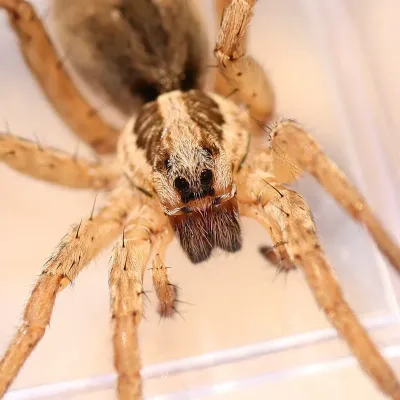
- Wolf Spiders look similar in size and color. However, wolf spiders hunt on the surface and do not build burrows with trapdoors. They also have two very large eyes that face forward.
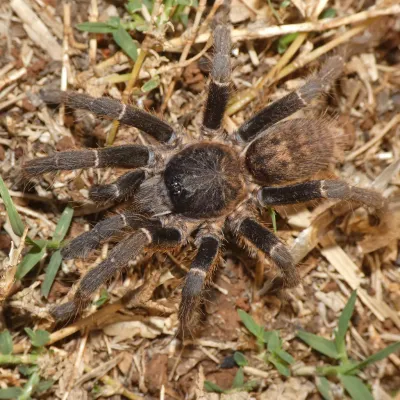
- Tarantulas are close relatives but much larger and covered in thick hair. Trapdoor spiders look smoother and more compact.
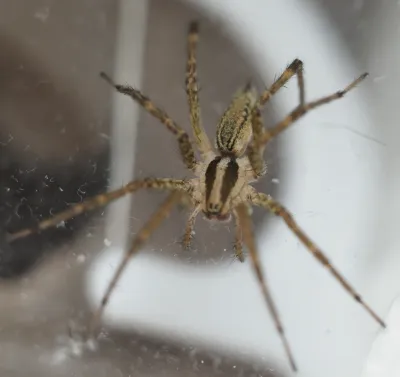
- Funnel Weaver Spiders build funnel-shaped webs in grass and corners, not underground burrows. Their bodies are thinner and longer.
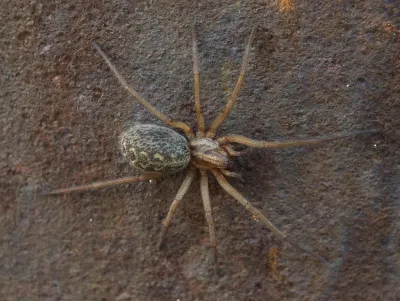
- Hobo Spiders share a brown color, but they build sheet webs and live mainly in the Pacific Northwest. Their legs are much thinner and longer.
The best way to confirm a trapdoor spider is by its burrow. No other common spider builds a silk-lined tunnel underground with a hidden, hinged lid.
References and Further Reading
- Spider Guide - National Pest Management Association - Spider identification and control information from the NPMA.
- Spiders - EPA - General guidance on spider management from the Environmental Protection Agency.
- American Arachnological Society - Taxonomic resources for North American trapdoor spider families.
- Spiders - University of California Pest Notes - Spider identification and management guide from the University of California.
- Spider Bites - Mayo Clinic - Medical information on spider bite treatment and when to seek care.
Other Spiders
Explore other species in the spiders family
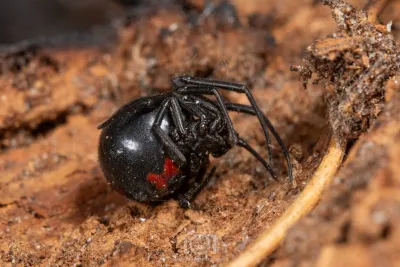
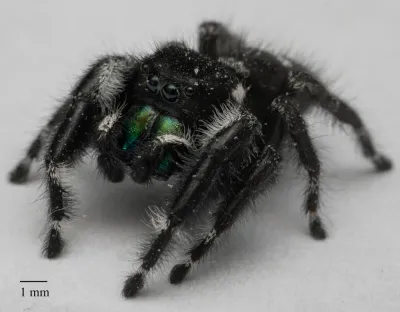
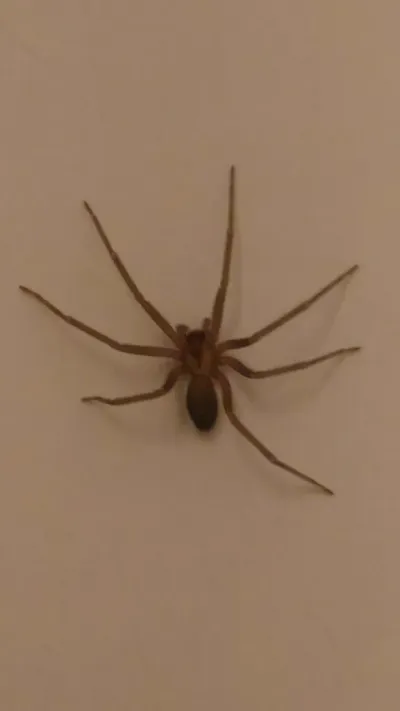
Commonly Confused With
Trapdoor Spiders are often mistaken for these similar pests
Where Trapdoor Spiders Are Found
Hover over states to see their names. Green regions indicate where trapdoor spiders have been reported.
Common Questions about Trapdoor Spiders
Are trapdoor spiders dangerous to humans?
+
Trapdoor spiders are not considered dangerous. They can bite if handled or provoked, but their venom is mild and poses no serious medical threat to healthy adults. Bites may cause temporary pain and swelling similar to a bee sting. These spiders are shy and rarely encountered because they spend nearly all their time underground.
How do I identify a trapdoor spider?
+
Trapdoor spiders are stocky, medium-sized spiders with thick legs and a glossy appearance. They range from brown to black in color and measure 10-35 mm in body length. Their most distinctive feature is their burrow, a silk-lined tunnel in the ground sealed with a hinged lid made of soil and silk. The lid blends in so well with the surrounding ground that it is extremely hard to spot.
Where do trapdoor spiders live?
+
Trapdoor spiders live in underground burrows they dig in soil, clay, or soft earth. They are most common in the southern and western United States. They prefer well-drained soil in areas that are not too dry or too wet. You can find their burrows in lawns, gardens, hillsides, embankments, and along the base of walls or foundations.
How do trapdoor spiders catch their prey?
+
Trapdoor spiders are ambush predators. They wait inside their burrow with the trapdoor slightly open. Silk triplines extend from the burrow entrance across the ground. When an insect walks over these lines, the spider feels the vibration, flings open the door, grabs the prey, and drags it underground in a fraction of a second.
Why am I seeing trapdoor spiders outside their burrows?
+
Male trapdoor spiders leave their burrows in fall to search for females. This is the most common time homeowners encounter them wandering across lawns, patios, or even indoors. Females almost never leave their burrows. Heavy rain can also flood burrows and force spiders to the surface temporarily.
How long do trapdoor spiders live?
+
Trapdoor spiders are among the longest-lived spiders. Females can live 5 to 20 years in a single burrow. Males have much shorter lifespans and typically die within a year or two of reaching maturity, usually after leaving their burrow to find a mate.
How do I get rid of trapdoor spider burrows in my yard?
+
Individual burrows can be flooded with water to flush the spider out for removal. For heavy activity near the home, reducing ground cover and leaf litter makes the area less appealing. Sealing gaps under doors and around the foundation keeps wandering males from getting inside. A pest control professional can also apply a perimeter treatment to reduce spider activity around the home.

With five years of hands-on experience in the pest control industry, George Schulz is a registered technician with the Virginia Pest Management Association and a proud third-generation professional in a family business that's been protecting homes for over 57 years. He manages and trains a team of service pros while also leading internal research efforts—recently spearheading a deep-dive review of thousands of documents on pest control materials to hand-pick the most kid and pet friendly, most effective solutions tailored specifically for homes in the DC metro area.