Spined Micrathena Identification Guide
Micrathena gracilis
The spined micrathena is a small orb-weaving spider easily recognized by the prominent spines on its abdomen. Common in eastern North American woodlands, it builds webs across trails and pathways at face height during summer and fall.
Taxonomy
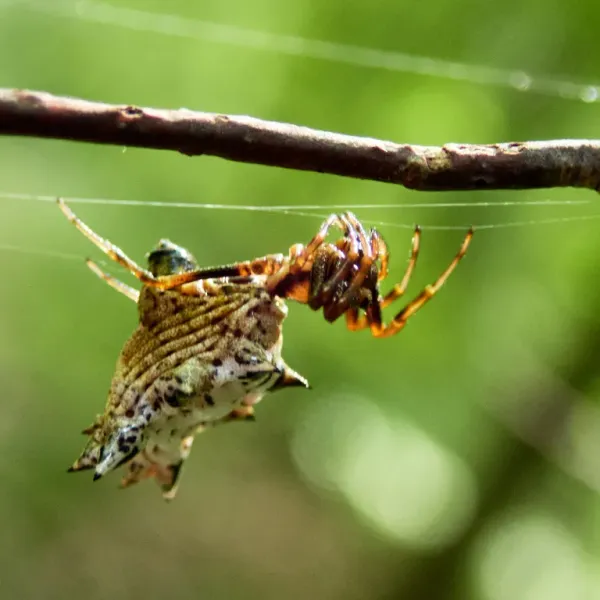
Spined Micrathena Coloration
Common color patterns to help identify spined micrathena
Spined Micrathena
Seasonal Activity
When spined micrathena are most active throughout the year
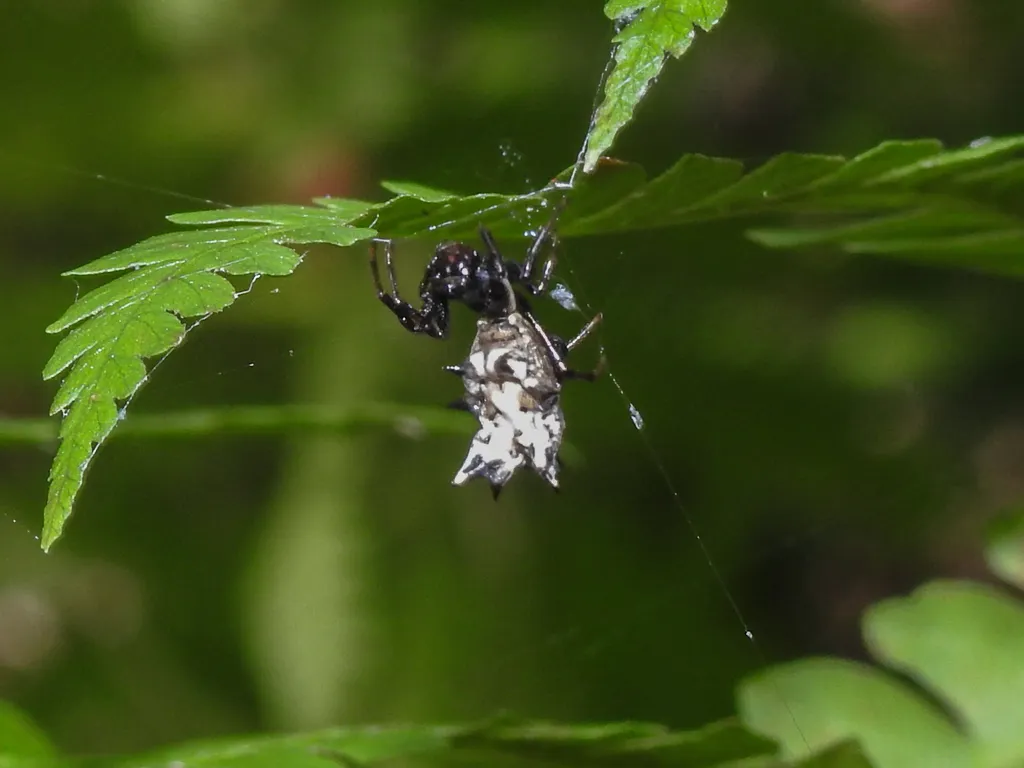

Where Spined Micrathena Are Found
Hover over states to see their names. Green regions indicate where spined micrathena have been reported.
Spined Micrathena Identification Guide
Physical Characteristics
The spined micrathena (Micrathena gracilis) is one of the most distinctive spiders in eastern North America. It belongs to the family Araneidae, the orb weaver spiders. What sets it apart is the hard, spiny abdomen that looks almost like a tiny medieval weapon or crown.
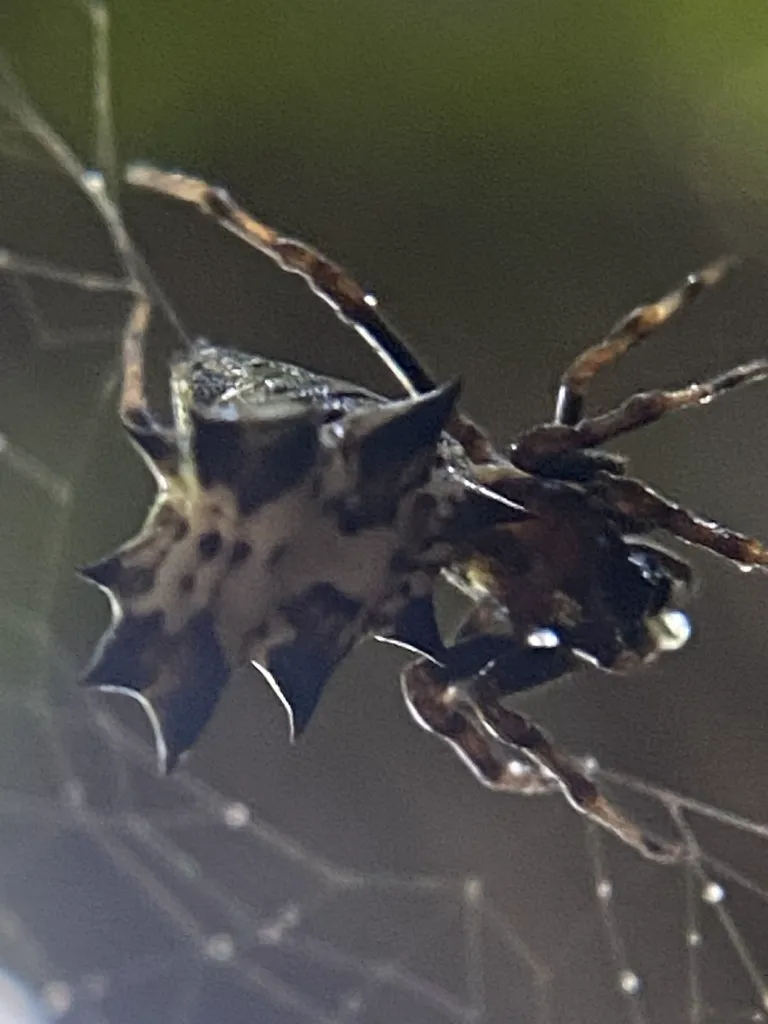
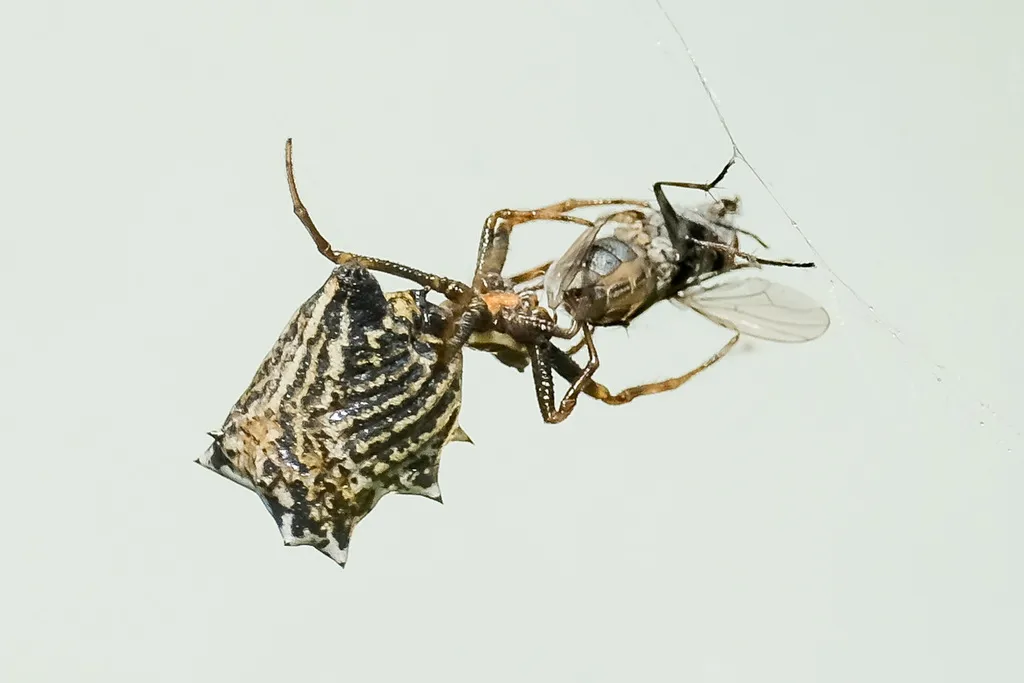
Adult females measure 5 to 10 mm in body length and are much more noticeable than males. The female abdomen is broad and arrow-shaped, with 10 cone-shaped spines projecting from the edges. Colors vary from white and cream to brown and black, often with irregular dark patches or a banded pattern on the top surface. The cephalothorax (front body section) and legs are typically dark brown to black.
Males are much smaller at only 4 to 5 mm and have a narrower abdomen without the prominent spines. Their small size means males are rarely noticed.
Key identification features include:
- Spiny abdomen: Ten pointed spines projecting from the edges of the abdomen (females)
- Body shape: Abdomen wider than it is long, arrow-like or shield-like in outline
- Color: White, cream, brown, or black with dark markings
- Legs: Dark brown to black with visible banding
- Web: Classic circular orb web built at face height between trees
How to Tell Spined Micrathena Apart from Similar Spiders
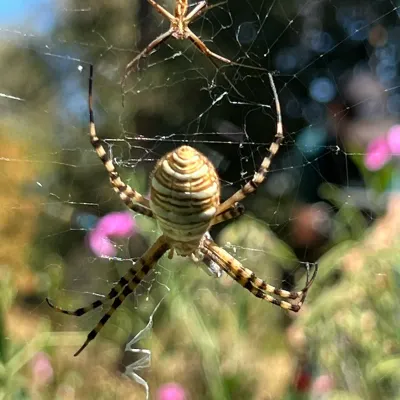
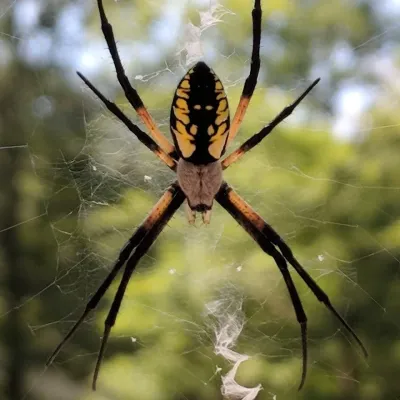
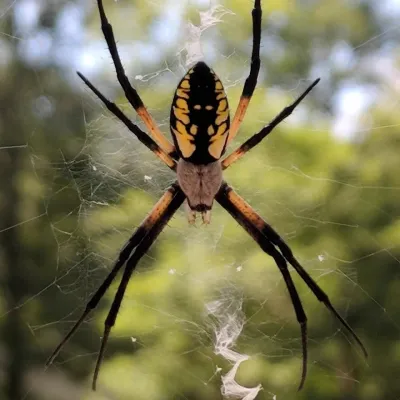
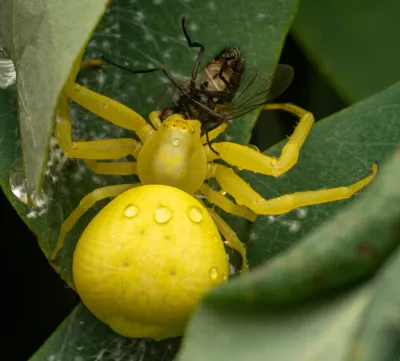
The spined micrathena is sometimes confused with crab spiders because of its broad, angular body shape. However, crab spiders do not build webs and hold their front legs out to the sides. Garden spiders also build orb webs but are much larger and have a smooth, oval abdomen without spines. Other orb weavers in the same family may build similar webs, but none of the common North American species share the prominent abdominal spines of Micrathena gracilis.
Common Micrathena Species in North America
Several Micrathena species live in the eastern United States. The most commonly encountered include:
- Spined Micrathena (Micrathena gracilis): The most widespread species. White to brown with 10 abdominal spines. Found throughout the eastern half of the continent.
- Arrow-shaped Micrathena (Micrathena sagittata): Has a bright red or yellow arrow-shaped abdomen with two long, pointed spines at the rear. Less common but very striking in appearance.
- White Micrathena (Micrathena mitrata): A smaller species with a white, spiny abdomen. Found in the southeastern United States.
Spined Micrathena Behavior and Biology
Where They Live
Spined micrathena spiders are woodland specialists. They are found in deciduous and mixed forests throughout eastern North America, from southeastern Canada south to Florida and west to the Great Plains. They prefer shaded, humid environments with plenty of vertical structures for web attachment.
Common habitats include:
- Forest trails and woodland paths
- Edges between woodlands and open areas
- Shrubby garden borders near tree lines
- Overgrown areas with low branches and tall shrubs
- Wooded suburban yards and parks
These spiders build their webs across gaps between trees, shrubs, and other vegetation at roughly 3 to 6 feet off the ground. This puts their webs right at face height for anyone walking through, which is why encounters on trails are so frequent during late summer.
Web Construction and Feeding
Spined micrathena spiders are diurnal, meaning they are active during the day. This is unusual for orb weavers, many of which build and tend their webs at night. Females construct a new orb web each morning and take it down at dusk, recycling the silk by eating the old web.
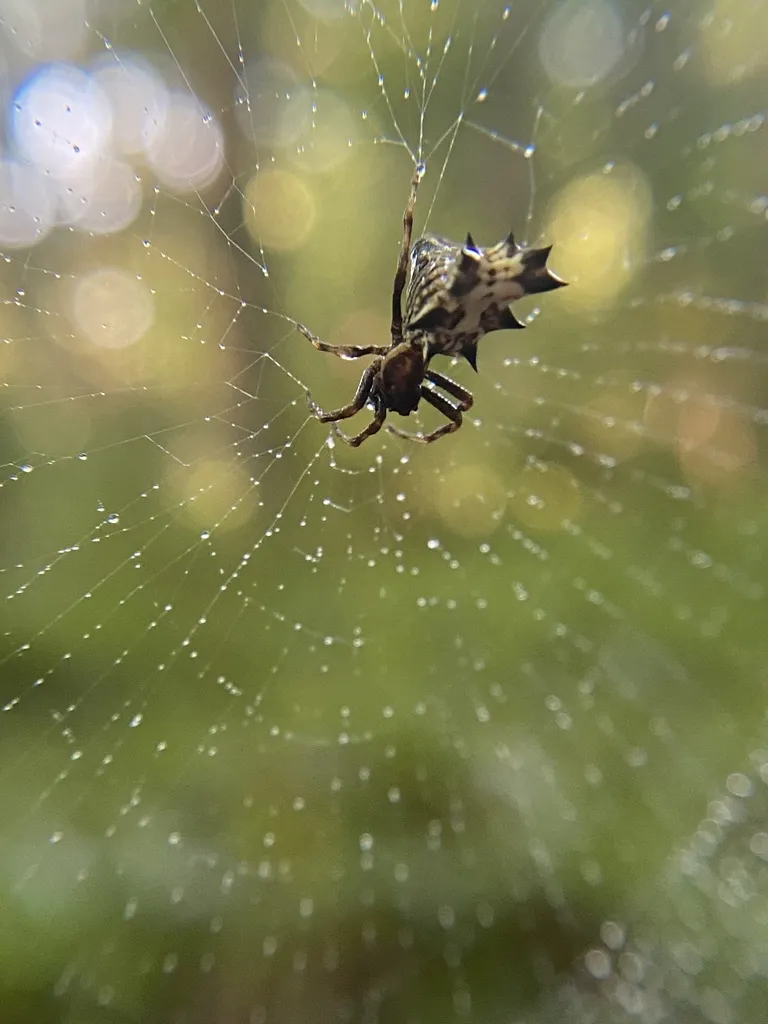
The orb web is a classic circular design, typically 15 to 30 cm (6 to 12 inches) across. It hangs at an angle and has a noticeable “missing” sector near the top. A single signal line runs from the hub of the web to a nearby branch or leaf where the spider retreats when not actively monitoring the web.
Their diet consists mainly of small flying insects:
- Gnats and midges
- Small flies
- Mosquitoes
- Tiny moths and beetles
- Other small flying arthropods
When prey strikes the web, the spider rushes to the trapped insect, wraps it quickly in silk, and delivers a venomous bite. Despite their small size, spined micrathena spiders are efficient predators that can consume many insects in a single day.
Reproduction and Life Cycle
Spined micrathena spiders have an annual life cycle. Mating takes place in late summer. Males approach the female’s web cautiously and use vibrations to signal their identity. After mating, females produce a rounded egg sac wrapped in tough, brownish silk. The egg sac is attached to vegetation near the web site.
Eggs overwinter inside the protective sac. Spiderlings hatch in spring and disperse by ballooning, releasing silk threads that catch the wind and carry them to new locations. Young spiders grow through several molts during late spring and early summer, reaching adult size by July.
Adult females are typically active from July through October. They die after the first hard frosts in fall. Males have a shorter adult lifespan and are most commonly seen in July and August.
Treatment Methods for Spined Micrathena Spiders
Spined micrathena spiders commonly build webs across walkways, garden paths, and outdoor living spaces during summer and fall. When their webs consistently appear in areas where people walk, sit, or gather, management can help reduce the nuisance.
Habitat Modification
The most effective long-term approach to reducing spined micrathena activity around outdoor living spaces involves changing the environment:
- Trim vegetation: Open up gaps between trees and shrubs near patios, decks, and walkways. Fewer anchor points means fewer places for webs.
- Reduce shading: These spiders prefer shaded, humid areas. Thinning canopy cover and improving air circulation makes an area less attractive.
- Manage lighting: Outdoor lights attract the small flying insects that spined micrathena spiders feed on. Switching to yellow bug lights or motion-activated lighting reduces the prey base.
Mechanical Control
Regular web removal is the simplest way to discourage spiders from building in specific locations:
- Knock down webs with a broom or long stick each morning
- Consistent removal over several days will encourage the spider to relocate
- Vacuuming spiders and webs in covered outdoor areas is also effective
Perimeter Treatments
For properties adjacent to wooded areas where spined micrathena spiders routinely build webs on structures, perimeter treatments applied to eaves, doorframes, and outdoor living areas can reduce spider activity. These treatments target spiders that wander onto treated surfaces while seeking web attachment points.
What to Expect
Because spined micrathena spiders live in wooded environments and are most active during a relatively short window from July through October, complete elimination is not realistic for properties that border forested areas. The goal is to keep webs out of high-traffic zones and reduce spider activity around outdoor living spaces.
References
- Spined Micrathena Overview - Wikipedia
- Spined Micrathena (Micrathena gracilis) - iNaturalist
- Orb Weaving Spiders - Utah State University Extension
- Spiders - Identification and Management Guide - University of California Agriculture and Natural Resources
- Spider Identification and Management - Penn State Extension
Other Spiders
Explore other species in the spiders family
Commonly Confused With
Spined Micrathena are often mistaken for these similar pests
Where Spined Micrathena Are Found
Hover over states to see their names. Green regions indicate where spined micrathena have been reported.
Common Questions about Spined Micrathena
Are spined micrathena spiders dangerous?
+
No. Spined micrathena spiders are harmless to people and pets. They can technically bite if handled roughly, but their venom is not medically significant. These spiders are shy and prefer to flee rather than bite.
Why do I keep walking into spider webs on trails?
+
Spined micrathena spiders build their orb webs across gaps between trees and shrubs at roughly face height. Woodland trails and garden paths are prime web-building locations. The silk is nearly invisible, so walking into them is a common and frustrating experience during summer and early fall.
How do I identify a spined micrathena?
+
Look for a small spider with a hard, spiny abdomen that is wider than it is long. Females have 10 prominent pointed spines projecting from the edges of the abdomen. Colors range from white and cream to brown and black, often with dark markings. Males are much smaller and lack the dramatic spines.
Do spined micrathena spiders come inside houses?
+
Spined micrathena spiders rarely enter homes. They are woodland spiders that need open space between trees or shrubs to build their webs and catch flying insects. You are most likely to encounter them outdoors on wooded trails, garden paths, and around the edges of yards near tree lines.
When are spined micrathena spiders most active?
+
These spiders are most active from July through September in most of their range. Females build and maintain their webs during the day, making them unusual among orb weavers, which are often nocturnal. You will see the most webs during late summer and early fall.
What do spined micrathena spiders eat?
+
They eat small flying insects like gnats, mosquitoes, small flies, and midges that get caught in their sticky orb webs. A single spider can consume dozens of small insects per day.
How long do spined micrathena spiders live?
+
Spined micrathena spiders typically live less than one year. Adults emerge in late spring, reach maturity by midsummer, and die after the first hard frosts in fall. Females produce an egg sac before dying, and the spiderlings overwinter and emerge the following spring.

With five years of hands-on experience in the pest control industry, George Schulz is a registered technician with the Virginia Pest Management Association and a proud third-generation professional in a family business that's been protecting homes for over 57 years. He manages and trains a team of service pros while also leading internal research efforts—recently spearheading a deep-dive review of thousands of documents on pest control materials to hand-pick the most kid and pet friendly, most effective solutions tailored specifically for homes in the DC metro area.