Black and Yellow Garden Spiders Identification Guide
Argiope aurantia
Black and yellow garden spiders are large orb-weavers known for their bold coloring and distinctive zig-zag web pattern. These common spiders are found across North America in gardens, fields, and around homes.
Taxonomy
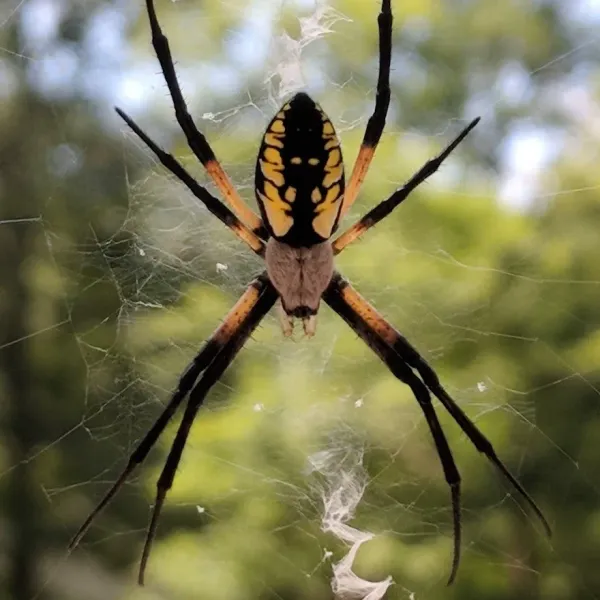
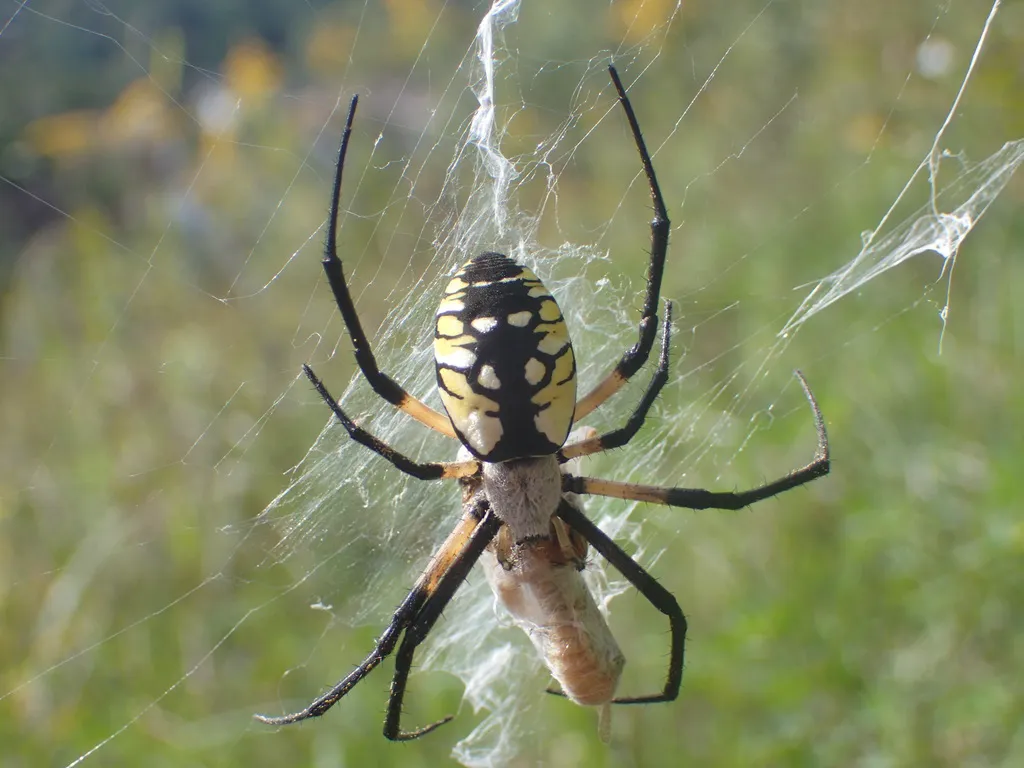
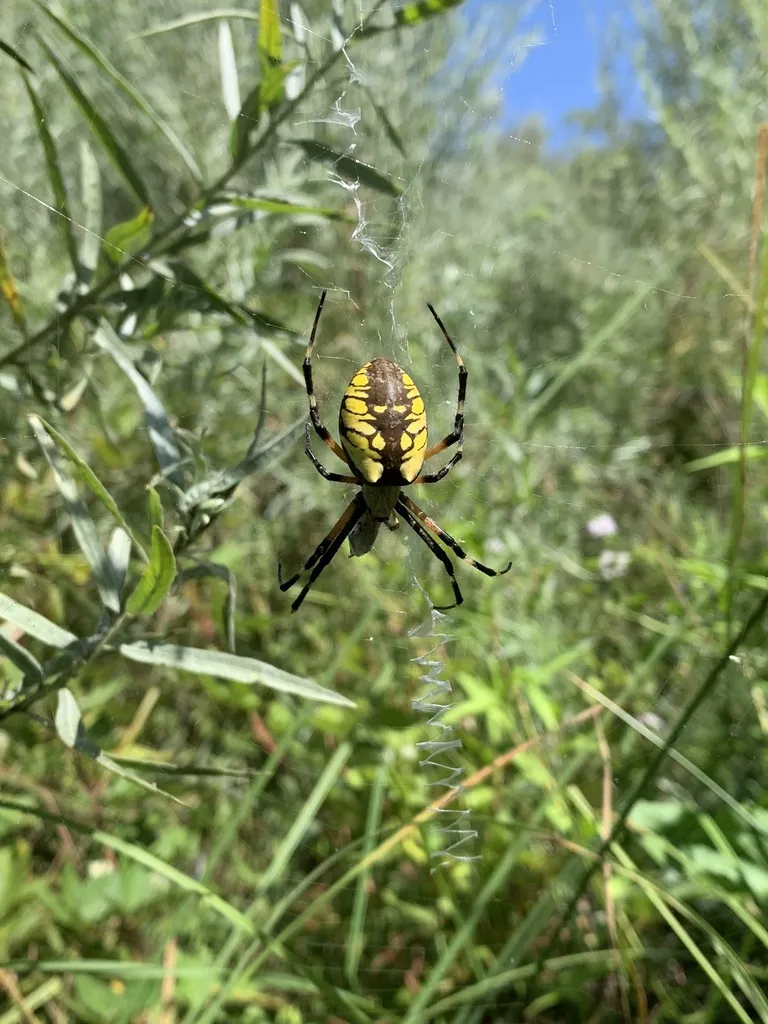
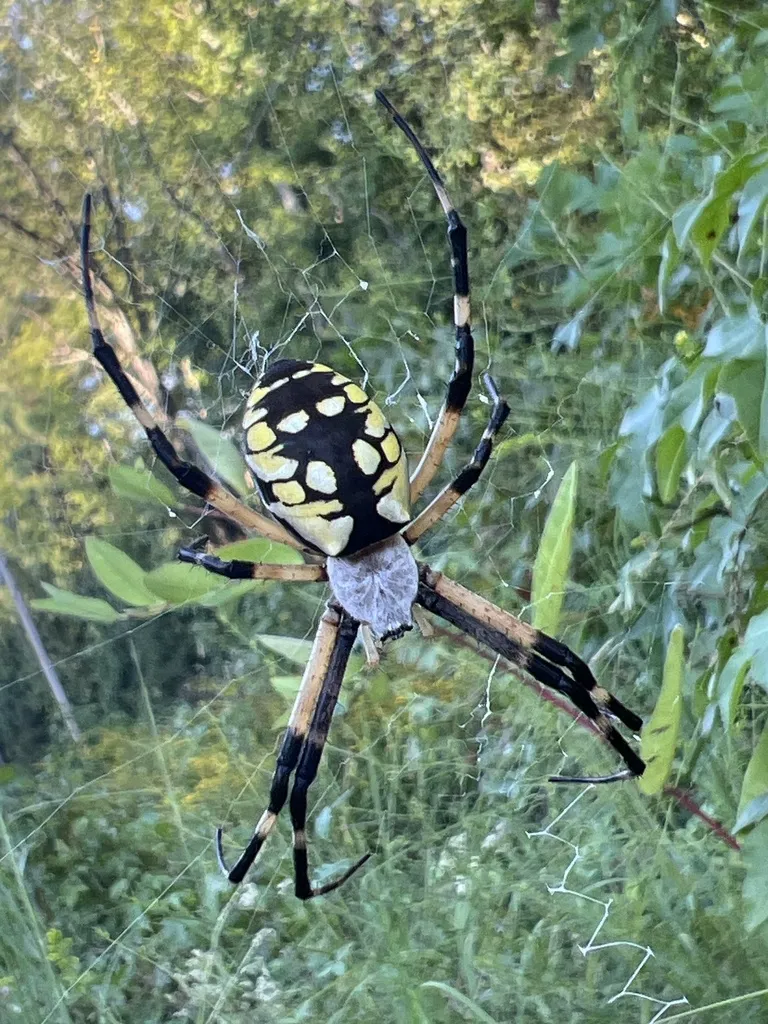
Black and Yellow Garden Spiders Coloration
Common color patterns to help identify black and yellow garden spiders
Black and Yellow Garden Spiders
Seasonal Activity
When black and yellow garden spiders are most active throughout the year

Where Black and Yellow Garden Spiders Are Found
Hover over states to see their names. Green regions indicate where black and yellow garden spiders have been reported.
Black and Yellow Garden Spider Identification Guide
Physical Characteristics
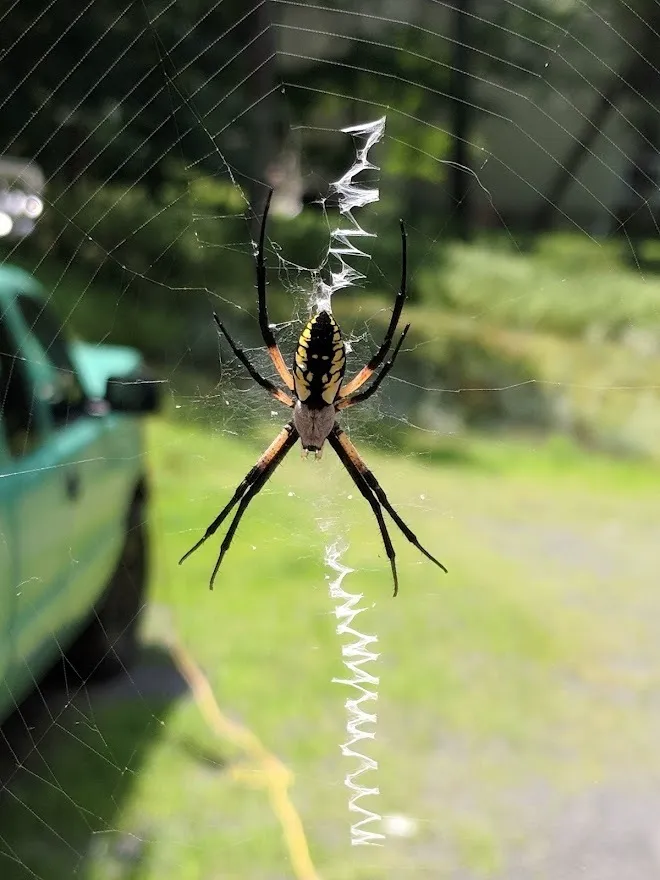
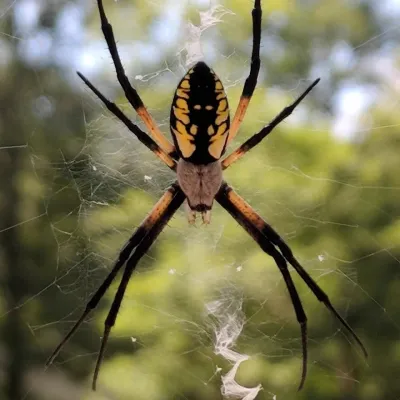
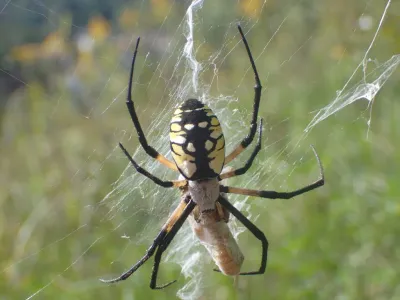
The black and yellow garden spider (Argiope aurantia) is one of the easiest spiders to spot in North America. Adult females are large, with body lengths from 0.75 to 1.1 inches (19-28 mm). Males are much smaller at about 0.25 inches (5-9 mm). With legs spread out, a large female can span 2 to 3 inches across.
The abdomen has a bold pattern of black and bright yellow (or sometimes orange-yellow) markings. The head region is covered in short, silvery-white hairs that give it a shiny look. The legs are mostly black with reddish-brown or orange sections near the body.
Key identification features include:
- Abdomen pattern: High-contrast black and yellow markings in a symmetrical pattern
- Head region: Covered in silvery-white hairs
- Leg coloring: Black legs with reddish-brown bands near the base
- Resting posture: Legs held in pairs forming an “X” shape
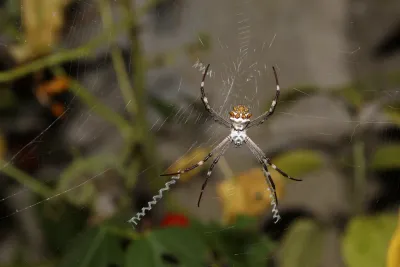
- Web decoration: A thick, white zig-zag band of silk (stabilimentum) running vertically through the web center
- Size difference: Females are roughly 3 to 4 times larger than males
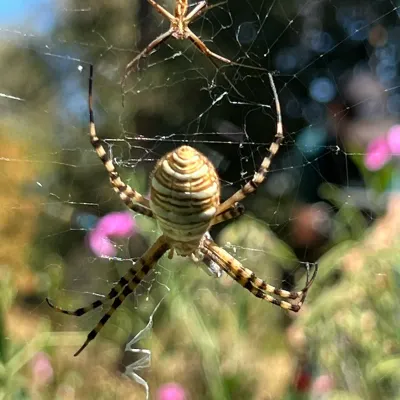
These spiders are sometimes confused with banded garden spiders, which belong to the same genus but have a more silvery, banded abdomen pattern instead of the bold black and yellow patches.
Common Names
This spider goes by many regional names across North America, including yellow garden spider, writing spider, zipper spider, corn spider, golden garden spider, and black-and-yellow argiope. The name “writing spider” and “zipper spider” both refer to the distinctive zig-zag stabilimentum pattern found in the web.
Common Orb-Weaver Species in North America
Several related orb-weaver spiders share similar habitats and web styles:
- Banded Garden Spider (Argiope trifasciata): A close relative with silver and dark bands across the abdomen instead of bold yellow patches. Often found in the same gardens.
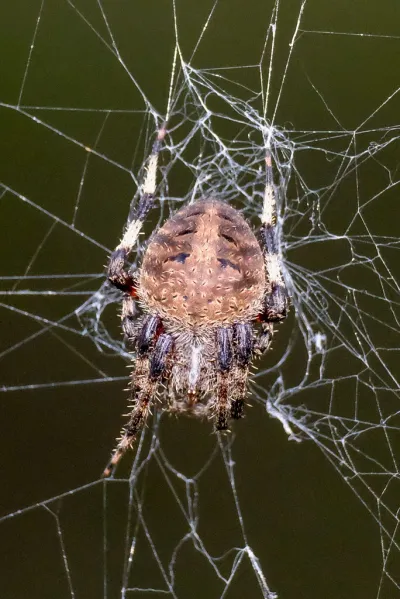
- Spotted Orbweaver (Neoscona crucifera): A brown or tan spider active at night. It does not have the black and yellow pattern.
- Barn Spider (Araneus cavaticus): A yellow-brown spider that builds webs on barns, sheds, and porches. Smaller and duller in color.
- Marbled Orbweaver (Araneus marmoreus): Has an orange or yellow abdomen with brown or purple marbling.
Black and Yellow Garden Spider Behavior and Biology
Where They Live
Black and yellow garden spiders are a common sight in sunny, open areas where flying insects are plentiful. Preferred habitats include:
- Flower gardens and vegetable patches
- Tall grass, meadows, and field edges
- Shrub borders and hedgerows
- Along fence lines and garden trellises
- Porch railings and eaves near outdoor lighting
- Between ornamental plants and structures
They build their large orb webs where they can catch flying insects. Webs are strung between sturdy supports like plant stems, fence posts, or building corners. They often face the morning sun. These spiders prefer edge areas where open space meets dense plants and shrubs.
Web Construction
A mature female’s web can measure 2 feet or more across. The web has the classic wheel shape with spokes radiating from the center and a sticky spiral that traps insects.
The most notable feature is the stabilimentum, a thick, white zig-zag band of silk that runs down the center of the web. Not every web has one. Younger spiders may create a round or disc-shaped version instead of the zig-zag. Scientists think this silk band may attract prey by reflecting UV light, warn birds not to fly through the web, or add extra support.
What They Eat
Black and yellow garden spiders are generalist predators that catch a wide variety of insects in their webs:
- Grasshoppers and crickets
- Flies and mosquitoes
- Wasps and bees
- Moths and butterflies
- Beetles
- Dragonflies and damselflies
When prey hits the web, the spider feels the vibrations through tiny hairs on its legs. It rushes over, wraps the prey in silk, and delivers a bite. The venom breaks down the insect’s body so the spider can feed on it as a liquid. A single large female can eat several insects per day.
Life Cycle
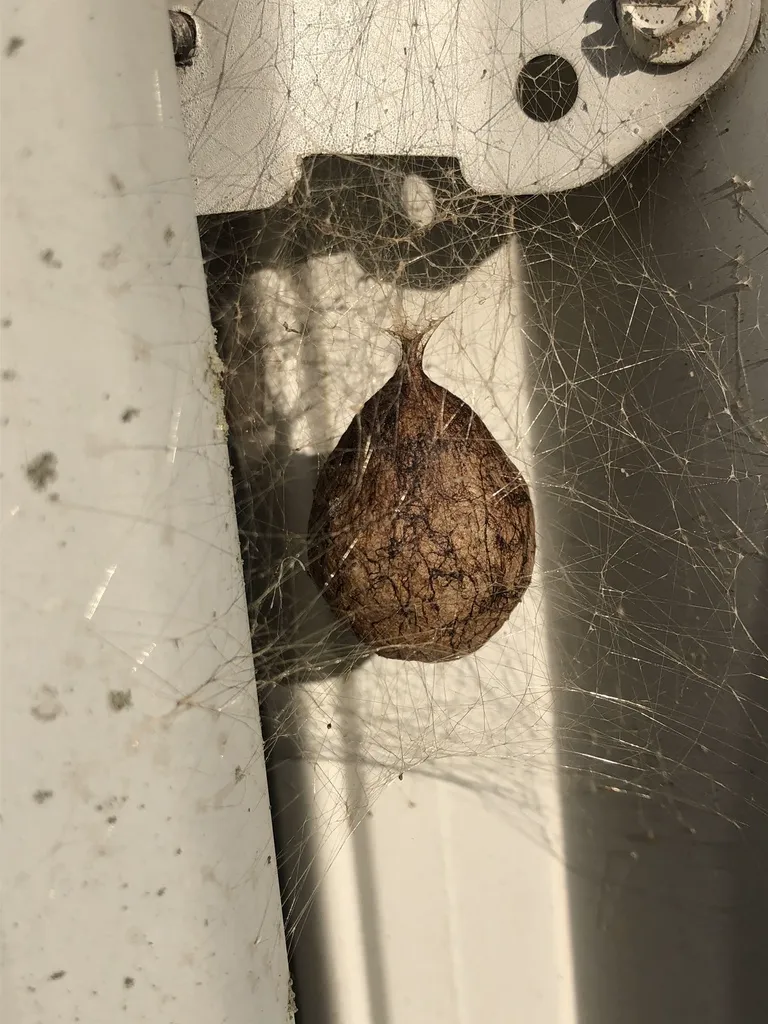
These spiders follow a one-year life cycle. In late summer or early fall, females make one or more large, round egg sacs. Each sac is about the size of a golf ball. It is brown and papery and holds 300 to 1,400 eggs. Females attach these sacs to their web or nearby plants and guard them until cold weather arrives.
Adults die with the first hard frosts. The eggs stay safe inside the tough silk sac through winter. In spring, hundreds of tiny spiderlings come out. They spread to new areas by “ballooning,” where they climb to a high point, release a strand of silk, and ride the wind. Ballooning spiderlings can travel long distances this way.
Through spring and summer, the young spiders grow by shedding their outer shell many times. By late summer, females reach full adult size and build their largest webs. Males are much smaller and wander in search of females during late summer. They are often found at the edges of a female’s web.
Seasonal Activity
In the Mid-Atlantic region (Virginia, Maryland, DC) and across much of the temperate United States:
- Winter (December through March): No activity. Eggs stay protected in silk sacs.
- Spring (April to May): Spiderlings hatch and spread out by ballooning. Tiny webs begin showing up in gardens.
- Early Summer (June to July): Young spiders grow fast. Webs get bigger and easier to spot.
- Late Summer through Fall (August to October): Peak activity. Adult females reach full size and spin their largest webs. Mating happens and egg sacs are made.
- Late Fall (November): Activity drops fast with cold weather. Most adults die after the first hard frost.
In warmer southern states, activity may begin earlier in spring and extend later into fall.
How We Treat for Black and Yellow Garden Spiders
Black and yellow garden spiders often build large webs in areas where people walk and gather. When their webs show up across doorways, walkways, patios, or outdoor living spaces, they become a nuisance. Here is how we approach spider management for this species.
Our Treatment Approach
Inspection and Web Removal
We start by identifying areas of spider activity around your home. We remove webs from doorways, walkways, patios, and other areas where they cause problems. Regular web removal discourages spiders from rebuilding in the same spot.
Habitat and Attractant Reduction
These spiders go where the bugs are. Cutting down the number of insects around your home is a strong long-term fix. We recommend:
- Switch to yellow exterior lighting. White lights attract flying insects, which then attract spiders. Yellow “bug lights” draw far fewer insects.
- Close blinds at night. Light from windows pulls insects to your home’s exterior. Fewer insects means fewer spiders.
- Trim plants near entry points. Overgrown shrubs and tall plants near doors give spiders good anchor points for webs.
- Clear ground-level clutter. Woodpiles, leaf litter, and dense ground cover hold insects that spiders feed on.
Targeted Perimeter Treatment
For persistent spider problems, we apply a non-repellent treatment to exterior areas where spiders are most active. This creates a protective barrier around entry points and high-traffic zones. Focus areas include:
- Door and window frames
- Eaves, soffits, and overhangs
- Porch ceilings and railings
- Corners where walls meet
- Areas around exterior lighting fixtures
Ongoing Protection
Spider treatments work best as part of a regular maintenance plan. We return three times per year to reapply the exterior barrier and perform web removal. Between visits, knocking down any new webs with a broom helps discourage spiders from setting up in problem spots.
What to Expect
We focus on removing spiders from areas where they cause problems for you and your family. Let us know your concerns and we will tailor our service to your needs.
References
- Yellow Garden Spider (Argiope aurantia) - UF/IFAS Featured Creatures
- Black and Yellow Garden Spider - NC State Extension
- Yellow Garden Spider Species Page - BugGuide (Iowa State University)
- Yellow Garden Spider - National Wildlife Federation
- Spiders in and Around Homes - NC State Cooperative Extension
- Argiope aurantia Occurrence Data - GBIF
Other Spiders
Explore other species in the spiders family
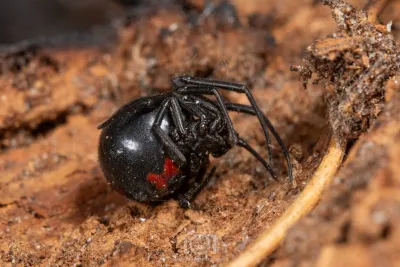
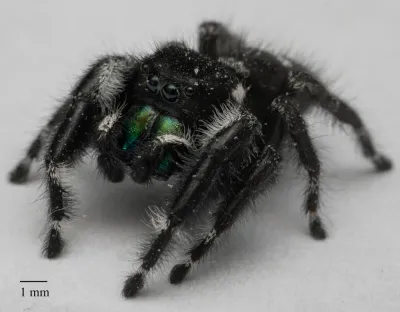
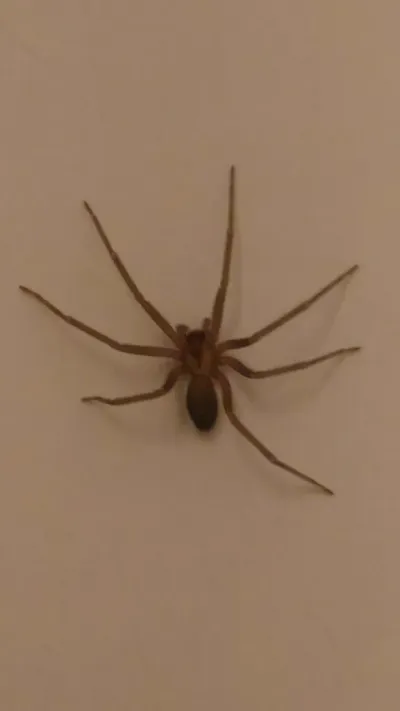
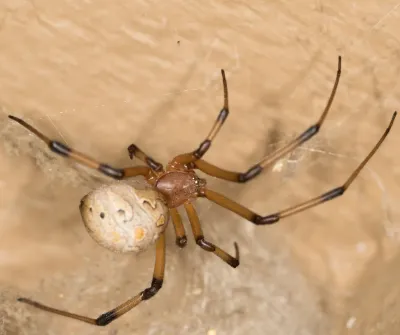
Commonly Confused With
Black and Yellow Garden Spiders are often mistaken for these similar pests
Where Black and Yellow Garden Spiders Are Found
Hover over states to see their names. Green regions indicate where black and yellow garden spiders have been reported.
Common Questions about Black and Yellow Garden Spiders
Are black and yellow garden spiders dangerous?
+
No, black and yellow garden spiders are not dangerous to humans. They are not aggressive and rarely bite. If a bite does occur, it produces only mild pain and swelling similar to a bee sting.
Why is there a zig-zag pattern in the spider's web?
+
The thick, white zig-zag band running through the center of the web is called a stabilimentum. Scientists are not entirely sure of its purpose, but leading theories suggest it may attract insect prey by reflecting UV light, warn birds to avoid flying through the web, or help camouflage the spider.
Should I remove black and yellow garden spiders from my yard?
+
If the spider is in a low-traffic area, you may choose to leave it since it feeds on other insects. If a spider has built its web across a walkway or doorway, you can relocate it or contact a pest control professional to treat the area and keep spiders from rebuilding there.
How long do black and yellow garden spiders live?
+
Most black and yellow garden spiders live about one year. Adults are most visible from late summer through fall. Females die after the first hard frost, but their egg sacs survive the winter. Spiderlings hatch the following spring to start the cycle again.
Why do black and yellow garden spiders bounce in their webs?
+
When threatened, these spiders rapidly vibrate or bounce their web up and down. This defensive behavior makes the spider appear as a blur, which can confuse or startle predators. If the threat continues, the spider may drop from the web on a silk dragline and hide in nearby vegetation.
What do black and yellow garden spiders eat?
+
These spiders are generalist predators that catch a wide variety of flying and jumping insects in their webs, including grasshoppers, flies, bees, wasps, moths, beetles, and mosquitoes. They wrap captured prey in silk before feeding.
How big do black and yellow garden spiders get?
+
Females are much larger than males. A female's body measures 0.75 to 1.1 inches long, and with legs extended she can span 2 to 3 inches across. Males are much smaller at roughly 0.25 inches in body length.

With five years of hands-on experience in the pest control industry, George Schulz is a registered technician with the Virginia Pest Management Association and a proud third-generation professional in a family business that's been protecting homes for over 57 years. He manages and trains a team of service pros while also leading internal research efforts—recently spearheading a deep-dive review of thousands of documents on pest control materials to hand-pick the most kid and pet friendly, most effective solutions tailored specifically for homes in the DC metro area.