Banded Garden Spiders Identification Guide
Argiope trifasciata
Banded garden spiders are large orb-weaving spiders known for their yellow and black banded abdomens. They build large webs in gardens and around homes across North America.
Taxonomy
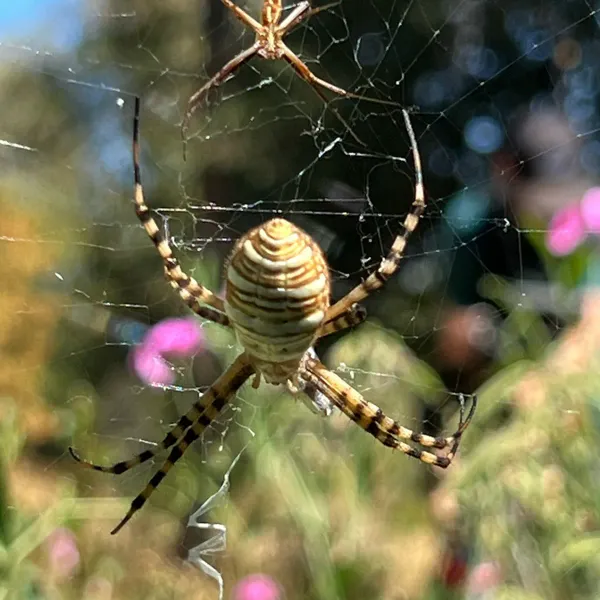
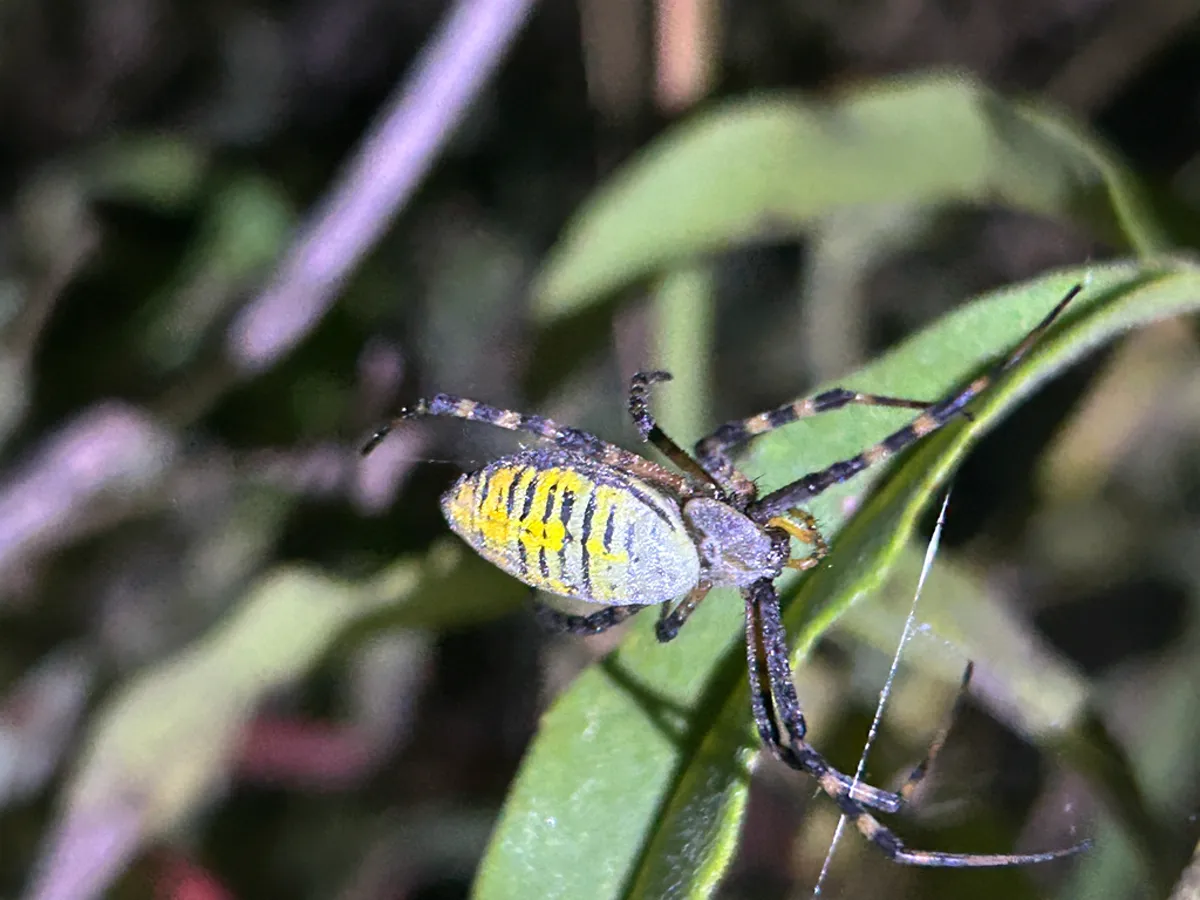
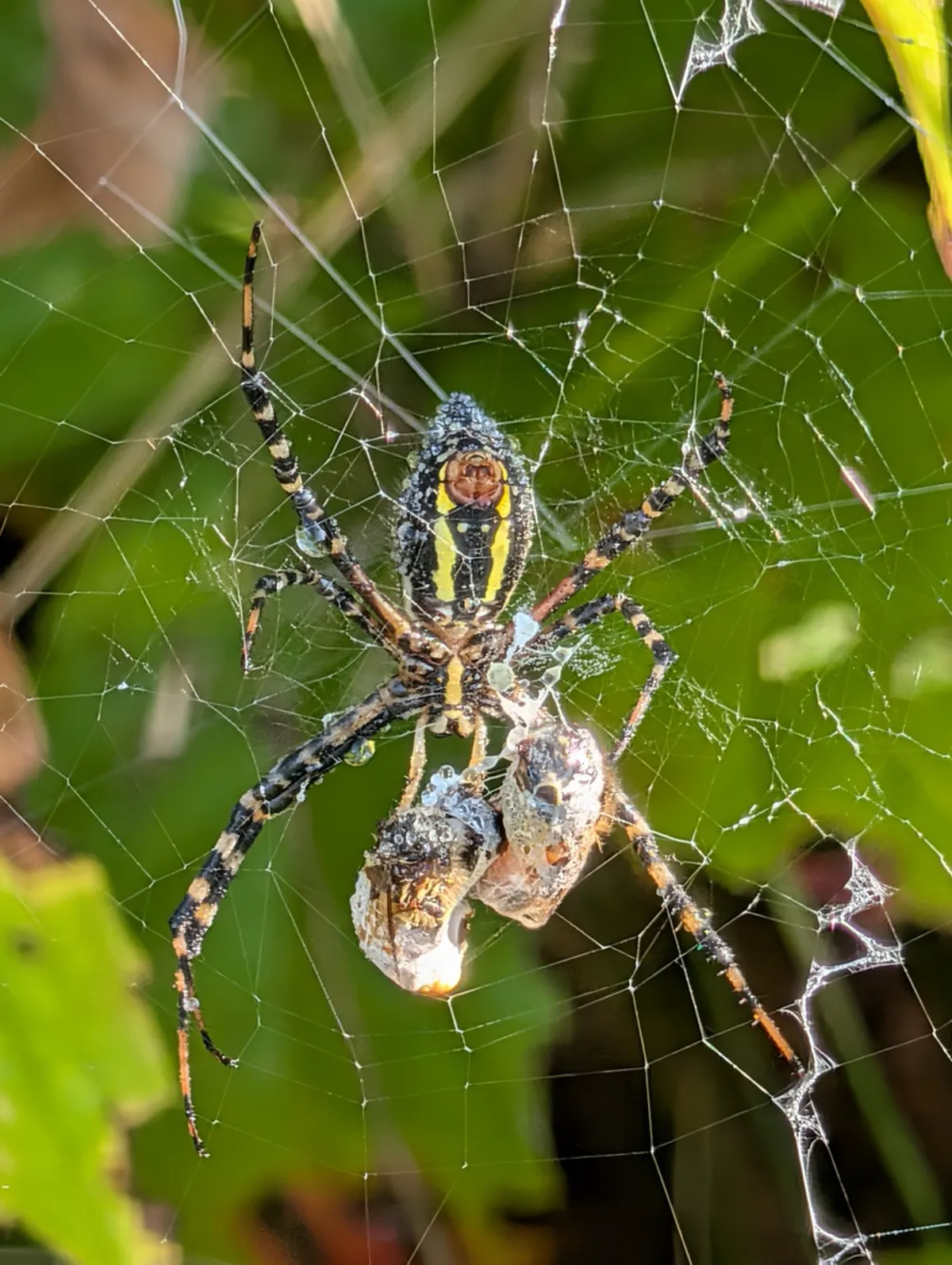
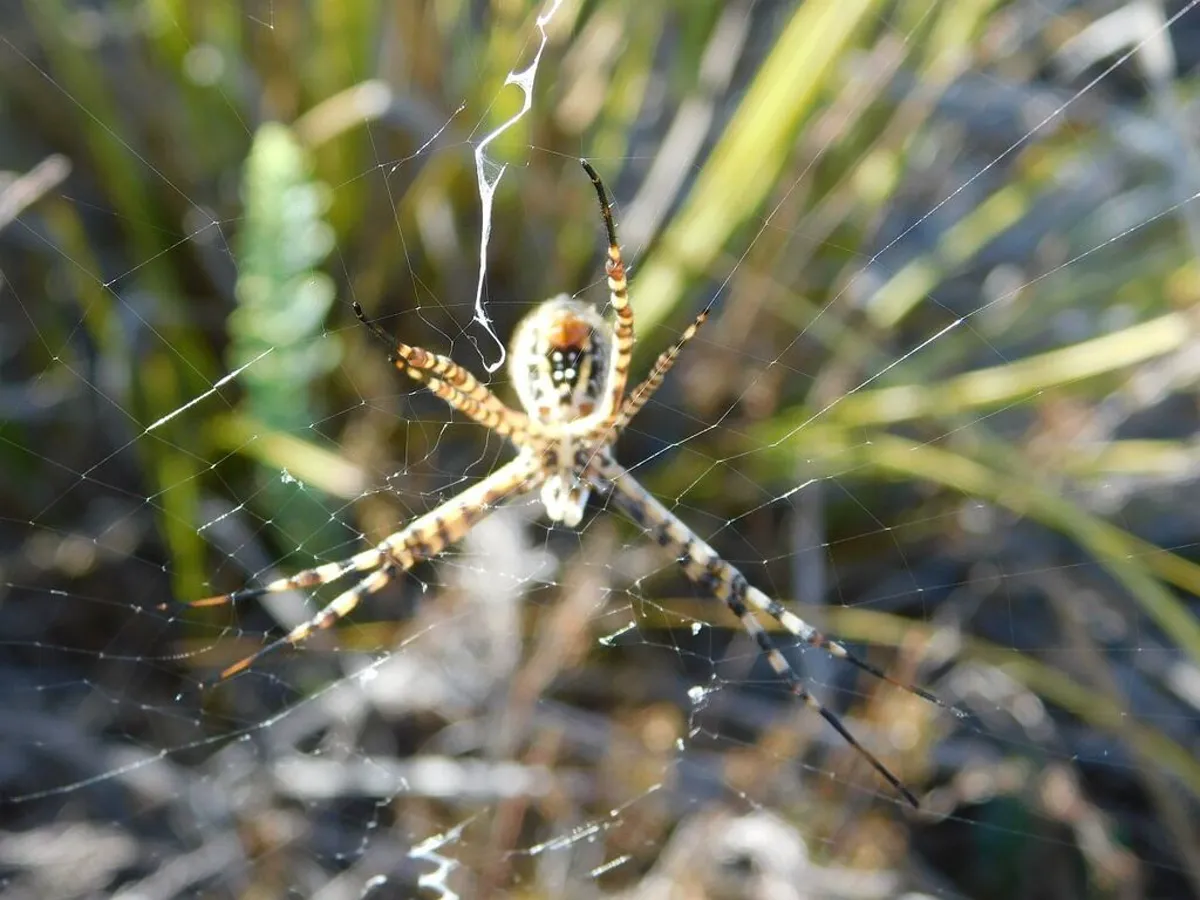
Banded Garden Spiders Coloration
Common color patterns to help identify banded garden spiders
Banded Garden Spiders
Seasonal Activity
When banded garden spiders are most active throughout the year

Where Banded Garden Spiders Are Found
Hover over states to see their names. Green regions indicate where banded garden spiders have been reported.
Banded Garden Spider Identification Guide
Physical Characteristics
Banded garden spiders (Argiope trifasciata) are medium to large orb weavers. Adult females measure 13 to 25 mm (about 0.5 to 1 inch) in body length. Males are much smaller at just 4 to 8 mm (about 0.2 to 0.3 inches). With legs spread out, a large female can span 1.2 to 1.6 inches.
The abdomen is the easiest feature to spot. Females have alternating bands of silver-white, yellow, and black running across a long, pointed abdomen. The head area is covered with silvery hairs that give it a pale, shiny look. The legs have light and dark rings.
Key identification features include:
- Abdomen pattern: Bands of silver, yellow, and black running side to side (the species name trifasciata means “three-banded”)
- Head area: Silvery-white with fine hairs
- Leg pattern: Light and dark rings, held in an X-shape while resting on the web
- Body shape: Long, pointed abdomen, more tapered than yellow garden spiders
- Eyes: Eight eyes in two rows
Males are much smaller and less colorful than females. You can often find them near the edge of a female’s web during mating season in late summer.
Web Characteristics
Banded garden spiders build round orb webs that can reach 1.5 to 2 feet across. They usually set up in low to mid-height plants, including garden borders, shrubs, tall grasses, and along fences.
One standout feature of their webs is the stabilimentum. This is a zigzag band of white silk woven near the center of the web. Not every spider builds one, and the pattern can range from a simple vertical line to an X-shape. Researchers have studied these decorations for decades. The leading ideas are that they attract insect prey by reflecting UV light, warn birds not to fly through the web, or help hide the spider against the silk background.
Common Species in North America
The banded garden spider is one of two Argiope species commonly found in gardens across North America:
- Banded garden spider (Argiope trifasciata): Thinner abdomen with silver, yellow, and black bands. Prefers open, sunny areas with low plants.
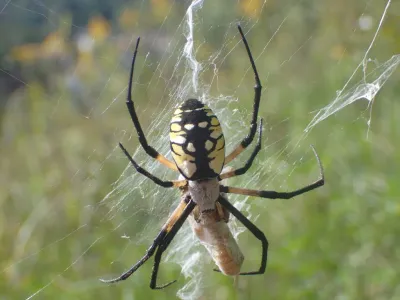
- Yellow garden spider (Argiope aurantia): Rounder abdomen with bold yellow and black markings. Often found in taller plants and garden borders. Also called the black and yellow garden spider or writing spider.
Both species are harmless to humans and feed on flying insects.
Banded Garden Spider Behavior and Biology
Where They Live
Banded garden spiders prefer open, sunny habitats where flying insects are abundant. Common locations include:
- Gardens, flower beds, and vegetable plots
- Meadows and fields with tall grasses
- Along fences, railings, and trellises
- Shrub borders and hedgerows
- Near porches and exterior walls of homes
- Edges of wooded areas
They tend to build webs closer to the ground than barn spiders and other orb weavers. You will often see webs stretched between low plants or just above ground cover in areas where flying insects pass through.
What They Eat
Banded garden spiders feed on a wide range of flying and jumping insects. Their diet includes:
- Flies and gnats
- Mosquitoes
- Moths and butterflies
- Small beetles
- Grasshoppers and crickets
- Wasps and bees
- Flying ants
When prey hits the web, the spider feels the vibrations through tiny hairs on its legs. It rushes over, bites the prey to stop it from moving, and wraps it in silk. The spider may eat right away or save the meal for later.
Life Cycle
Banded garden spiders live for about one year. Females make several egg sacs in late summer and early fall. Each sac is a papery pouch shaped like a small drum. It holds hundreds of eggs and is attached to plants or nearby structures.
The eggs stay inside the sac through winter. In spring, baby spiders hatch and spread out by “ballooning.” They climb to a high point, release silk threads, and let the wind carry them to new spots.
Young spiders shed their skin several times as they grow through spring and early summer. By mid-summer, females reach full size and start building their large webs. Mating happens in late summer, with males carefully approaching females on the web. Males often die soon after mating, and females die after the first hard frost.
Seasonal Activity
Across the Mid-Atlantic region (Virginia, Maryland, DC) and similar temperate zones:
- December to February: No activity. Eggs stay protected in silk sacs on plants.
- March to April: Baby spiders begin hatching and spreading out by ballooning.
- May to June: Young spiders set up territories and build small webs. Activity is moderate.
- July to September: Peak activity. Adult females are full-sized with large webs. This is when homeowners notice them most.
- October to November: Mating occurs and egg sacs are laid. Activity drops as it gets colder.
In warmer southern states, adult activity may begin earlier and extend later into the fall season.
How We Treat for Banded Garden Spiders
When banded garden spider webs show up around doorways, walkways, or outdoor living spaces, they can become a nuisance. Here is how we approach spider management.
Our Treatment Approach
Inspection and Assessment
We start by finding areas with the most spider activity and what is drawing them there. Common causes include bright outdoor lights (which draw the flying insects spiders eat), thick plants near the home, and moisture problems that support large insect numbers.
Web Removal and De-Webbing
We remove webs from busy areas like doorways, walkways, porches, and outdoor seating areas. Removing webs often discourages spiders from rebuilding in the same spots. During service visits, we can reach webs up to about 6 to 8 feet high.
Reducing Attractants
Since spiders follow their food source, reducing flying insect activity around your home means fewer spiders. We recommend:
- Switch to yellow or amber exterior lighting. Standard white lights attract large numbers of insects, which in turn attract spiders. Motion-activated lights are another good option.
- Close blinds at night. Interior light visible through windows draws insects to your home’s exterior walls, creating prime web-building territory.
- Trim vegetation near the house. Keeping shrubs and tall plants cut back from exterior walls reduces anchor points for webs.
Perimeter Treatment
For persistent spider activity, we apply targeted treatments to areas where spiders are most active. We focus on:
- Door and window frames
- Eaves, soffits, and overhangs
- Corners where walls meet
- Porch ceilings and railings
- Areas around exterior lighting fixtures
Ongoing Protection
Spider treatments remain effective for several months. We return three times per year to re-treat the perimeter and remove new webs. Between visits, knocking down webs with a broom or garden hose helps discourage rebuilding in problem areas.
What to Expect
Our treatment focuses on keeping webs and spider activity away from areas where they interfere with your daily life. Let us know your preferences and we will tailor our approach to your comfort level.
References
- Banded Garden Spider Fact Sheet - Colorado State University Extension
- Banded Garden Spider Species Overview - U.S. Fish and Wildlife Service
- Banded Argiope in the Garden - UC Agriculture and Natural Resources
- Argiope trifasciata Occurrence Data - BugGuide
- Spider Biology and Management - Washington State University Extension
- Orb Weaver Spiders in the Garden - Ohio State University Extension
Other Spiders
Explore other species in the spiders family
Commonly Confused With
Banded Garden Spiders are often mistaken for these similar pests
Where Banded Garden Spiders Are Found
Hover over states to see their names. Green regions indicate where banded garden spiders have been reported.
Common Questions about Banded Garden Spiders
Are banded garden spiders dangerous to humans?
+
No, banded garden spiders are not dangerous. They can bite if grabbed or squeezed, but their venom is mild and not medically significant for humans. These spiders are shy and would rather drop from their web than confront a person.
How can I tell a banded garden spider from a yellow garden spider?
+
Banded garden spiders have thinner, more elongated abdomens with silvery-white, yellow, and black horizontal bands. Yellow garden spiders (Argiope aurantia) have rounder abdomens with bold, solid yellow and black markings. Both hold their legs in an X-shape on their webs.
Why is there a zigzag pattern in my spider's web?
+
That zigzag is called a stabilimentum. Banded garden spiders and other Argiope species weave this distinctive silk decoration near the center of their webs. Scientists believe it may attract prey, warn birds to avoid the web, or help camouflage the spider.
Will banded garden spiders come inside my house?
+
It is very unlikely. Banded garden spiders need open outdoor space, low vegetation, and flying insects to survive. They build their webs in gardens, meadows, and along fences. You might occasionally find one on a porch or near a doorway, but they do not infest indoor spaces.
When are banded garden spiders most active?
+
Adult banded garden spiders are most visible from July through October. Females reach full size in late summer and build the largest webs at that time. Cold weather and the first hard frost kills them off, but they leave behind egg sacs that hatch the following spring.
Do banded garden spiders eat mosquitoes and other pests?
+
Yes, banded garden spiders catch a wide range of flying insects in their webs, including flies, mosquitoes, moths, beetles, and wasps. A single spider can consume dozens of insects each week.
How long do banded garden spiders live?
+
Most banded garden spiders live about one year. Eggs overwinter in silk sacs, spiderlings emerge in spring, and adults appear by mid-summer. Females produce several egg sacs in late summer before dying with the arrival of cold weather.
Should I remove banded garden spider webs from my yard?
+
If a web is in a high-traffic area like a doorway or walkway, you can relocate the spider or remove the web with a broom. For webs in out-of-the-way spots, you may choose to leave them. Professional spider control can keep webs from returning in problem areas.

With five years of hands-on experience in the pest control industry, George Schulz is a registered technician with the Virginia Pest Management Association and a proud third-generation professional in a family business that's been protecting homes for over 57 years. He manages and trains a team of service pros while also leading internal research efforts—recently spearheading a deep-dive review of thousands of documents on pest control materials to hand-pick the most kid and pet friendly, most effective solutions tailored specifically for homes in the DC metro area.