Dusky-Footed Woodrat Identification Guide
Neotoma fuscipes
The dusky-footed woodrat is a medium-sized rodent native to the Pacific coast of North America. Known for building elaborate stick houses and placing California bay leaves in their nests to control parasites, these woodrats can cause property damage when they invade structures or vehicles.
Taxonomy
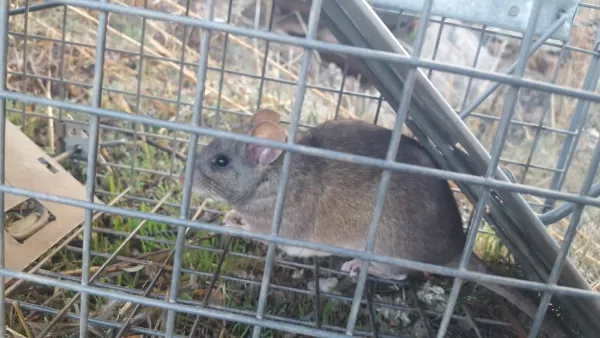
Dusky-Footed Woodrat Coloration
Common color patterns to help identify dusky-footed woodrat
Dusky-Footed Woodrat
Seasonal Activity
When dusky-footed woodrat are most active throughout the year


Where Dusky-Footed Woodrat Are Found
Hover over states to see their names. Green regions indicate where dusky-footed woodrat have been reported.
Dusky-Footed Woodrat Identification Guide
Physical Characteristics
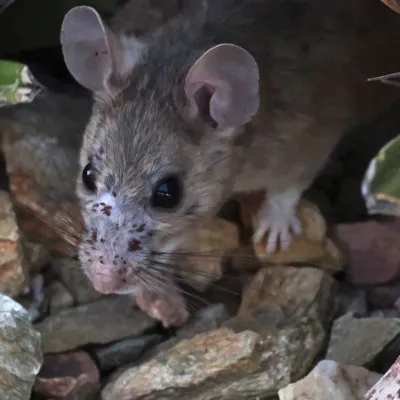
The dusky-footed woodrat is a medium-sized rodent that measures about 16 inches in total length. Their tail accounts for nearly half of this measurement at 7 to 9 inches long. Males are larger than females, with males averaging about 17 inches in length compared to 15 inches for females. Adult woodrats typically weigh between 200 and 350 grams.
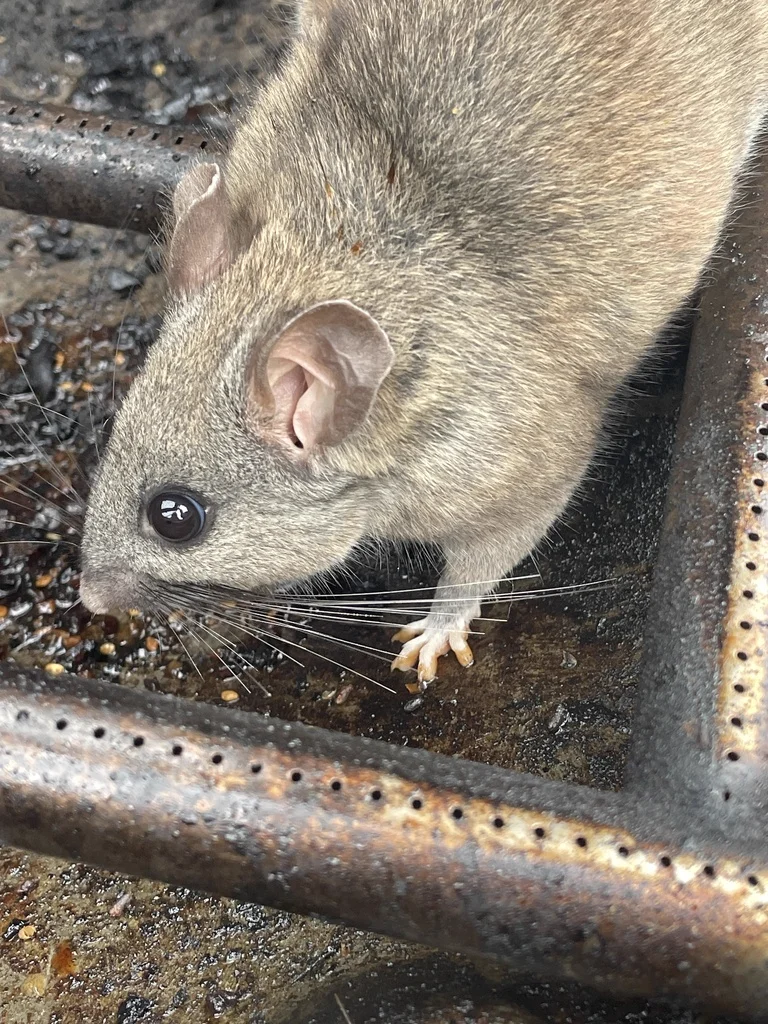
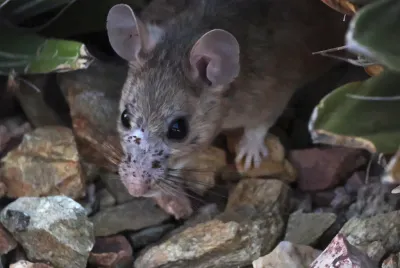
Their fur color ranges from cinnamon to gray with variations toward buff and pink tones. The underside is white or cream-colored, creating a distinct contrast with the darker back. The most distinctive feature that gives this species its name is the dark-colored hair covering their hind feet. Their tail is furred rather than scaly, which immediately sets them apart from Norway rats and roof rats.
Dusky-footed woodrats have large, thin ears that are rounded, broad, and slightly hairy. Their eyes are large and dark, adapted for their nocturnal lifestyle. Six parallel rows of whiskers help them navigate in low light conditions. Their claws are short, sharp, and curved downward, making them excellent climbers who can move easily through trees and dense vegetation.
Geographic Distribution
Dusky-footed woodrats inhabit low elevation woodland habitats along the Pacific coast of North America. Their range extends from southern Oregon throughout most of California and into Baja California, Mexico. They are most common in coastal regions and the western slopes of the Sierra Nevada mountains.
These woodrats prefer forests of coast live oak and native willow trees with thick underbrush and ground cover. They live close to streams and water sources when possible. While they can be found on hillsides, they usually select valley bottoms. They avoid open grassland and oak woodlands with sparse understory vegetation because these areas offer less protection from predators and fewer nest-building materials.
There are 11 subspecies of dusky-footed woodrats, with some showing specific habitat preferences. They are closely related to other pack rat species found across North America, including bushy-tailed woodrats and desert woodrats. One subspecies, the riparian woodrat (Neotoma fuscipes riparia), is federally listed as endangered due to habitat loss along riparian corridors in California’s Central Valley.
Dusky-Footed Woodrat Behavior and Biology
Dusky-footed woodrats are nocturnal and avoid light even as weak as moonlight. They prefer cool conditions and will move to cooler locations when temperatures approach 100 degrees Fahrenheit. These rodents are primarily solitary except during the breeding season, though their dens are frequently found in loose clusters of several dozen, forming rough communities.
Unlike many rodent species, dusky-footed woodrats have a matrilineal social structure. Adjacent females are usually closely related, while males disperse away from their birth den. Males are highly territorial and aggressive, especially during the breeding season. This behavior results in populations that are typically female-biased.
Nest Building and the Stick House
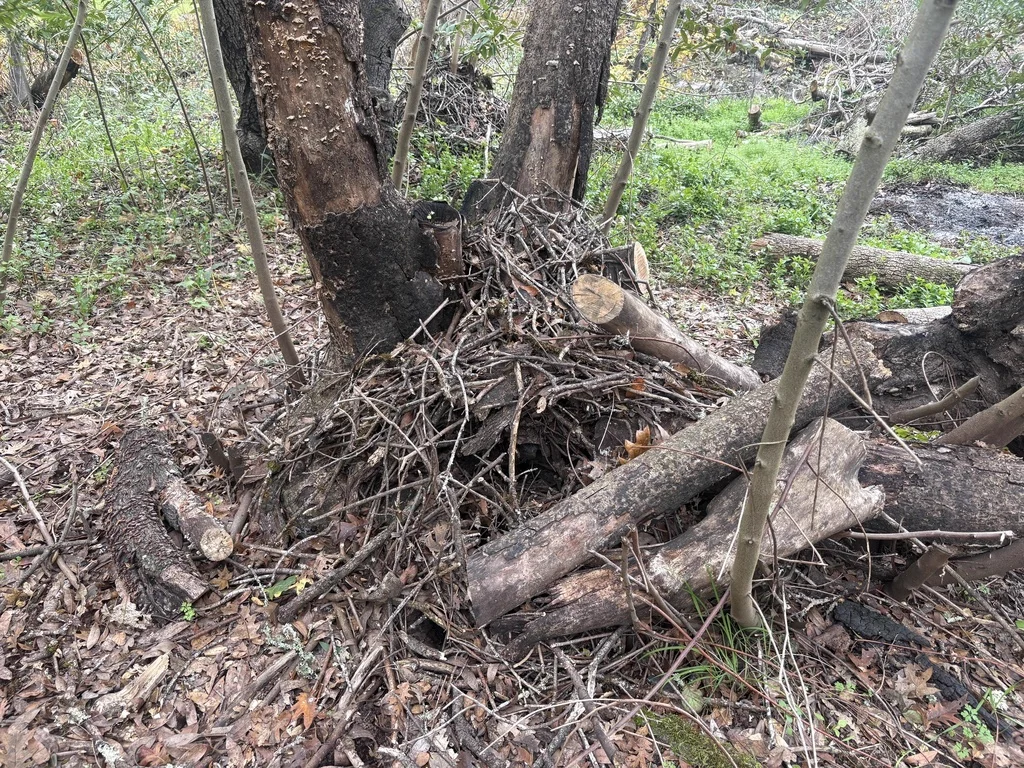
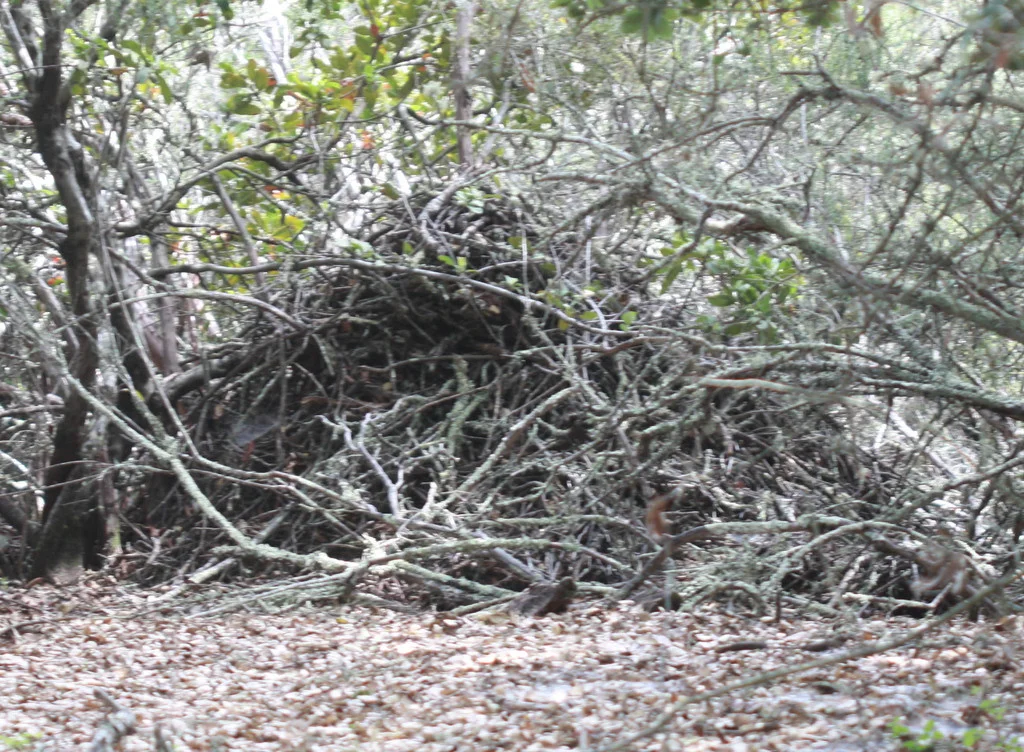
Dusky-footed woodrats are remarkable engineers among rodents. They construct conical-shaped nests called middens using sticks, bark, and various plant materials. These structures can grow to impressive sizes, ranging from two to eight feet tall and several feet wide. A single nest can house successive generations, with offspring adding to the structure and making it larger over time.
The interior of a stick house contains multiple chambers used for different purposes. There are rooms for food storage, resting, nurseries for young, and latrines. The complex structure provides excellent protection from predators and weather. Predators like coyotes may attempt to tear apart the nests, but the sheer volume of sticks and debris usually proves too difficult to penetrate.
Bay Leaf Behavior
One of the most fascinating behaviors of dusky-footed woodrats involves their use of California bay leaves (Umbellularia californica). Research has shown that these woodrats selectively place fresh bay leaves around the edges of their sleeping chambers to control ectoparasites like fleas. Homeowners dealing with Dusky-Footed Woodrat may also encounter Rodent, which can appear in similar environments.
The bay leaves contain volatile organic compounds that are toxic to flea larvae, including umbellulone, cineole, and cymene. Woodrats appear to refresh these leaves regularly to maintain the protective effect. Scientists believe this behavior represents a form of self-medication that evolved in response to environmental stresses posed by parasites.
Communication
Dusky-footed woodrats communicate through several methods. They create a distinctive rattling sound by shaking their tails on the ground. This behavior serves to alert other woodrats to nearby predators and acts as a warning to the predators themselves. Tail rattling can also initiate confrontations with rival woodrats competing for territory or resources.
Diet and Feeding
These woodrats are primarily herbivores. Their diet consists of cuttings from branches, inner bark, fungi, leaves, seeds, greens, fruits, and nuts. They show a strong preference for oak when available, but also feed heavily on maple, coffeeberry, alder, and elderberry depending on local availability.
Woodrats store food cuttings in their nests. Research shows that nests contain an average of 4.5 species of vegetation, though one dominant food source usually makes up the majority of stored cuttings. While most dusky-footed woodrats are habitat generalists that eat many plant varieties, some populations show evidence of local diet specialization based on what grows in their immediate area.
Reproduction
Breeding in dusky-footed woodrats occurs primarily in spring and summer. Females produce one to two litters per year with two to four young per litter. The young are born helpless and develop in the protected nest chambers. They are weaned at about four weeks old and may remain near the mother’s nest before establishing their own territories.
Female woodrats may live their entire lives near where they were born, inheriting and expanding the family stick house. Males must disperse to find unoccupied territory, making them more vulnerable to predation during this period. Life expectancy in the wild is typically two to three years.
Signs of Dusky-Footed Woodrat Activity
Identifying a dusky-footed woodrat presence involves looking for these common signs:
- Stick houses: Large conical piles of sticks and debris, often 2 to 8 feet tall, located at the base of trees or in dense brush
- Trail systems: Well-worn paths connecting nest sites to food sources and water
- Droppings: Dark, pellet-shaped droppings similar to but slightly larger than mouse droppings
- Collected objects: Piles of seeds, nuts, and occasionally shiny objects incorporated into nests
- Gnaw marks: Evidence of chewing on woody plants, wires, or building materials
- Urine stains: Crystallized urine deposits that may appear whitish on surfaces
Property Damage Concerns
While dusky-footed woodrats prefer natural woodland habitats, they sometimes establish nests in or around human structures. This can lead to several problems:
- Vehicle damage: Woodrats may nest in vehicle engine compartments, chewing on wires and hoses that can cause expensive repairs. Learn how to keep rodents out of your home mice with proven exclusion methods.
- Structural damage: They gnaw on wood, insulation, and building materials
- Electrical hazards: Chewed wires create fire risks
- Food contamination: Droppings and urine can contaminate stored food and surfaces
- Parasite introduction: Their nests can harbor fleas, ticks, and mites that may spread to humans and pets
Health Considerations
Like other rodents, dusky-footed woodrats can carry diseases and parasites. Their droppings, urine, and the parasites in their nests pose potential health risks. If you suspect exposure to rodent-borne illness, consult a healthcare provider for medical advice.
Parasites: These woodrats host fleas, ticks, and mites. Their unique bay leaf behavior helps control fleas in the nest, but these parasites can still spread to nearby areas and affect humans and pets.
Disease transmission: Rodents can carry hantavirus and other pathogens. Avoid direct contact with woodrats, their nests, or their droppings. When cleaning contaminated areas, avoid sweeping or vacuuming dry materials, which can aerosolize potentially harmful particles.
If cleanup is necessary, follow CDC guidelines for cleaning up after rodents. Wet down materials with a disinfectant solution before removal and wear appropriate protective equipment including gloves and a respirator.
Treatment Methods for Dusky-Footed Woodrats
Managing dusky-footed woodrat problems typically involves a combination of approaches:
Exclusion: Sealing entry points prevents woodrats from accessing structures. Focus on gaps around foundations, rooflines, utility entrances, and vents. Use durable materials like steel wool, hardware cloth, or sheet metal that woodrats cannot easily gnaw through.
Habitat modification: Remove attractive habitat features near structures. Clear brush piles, dense vegetation, and debris within at least 50 feet of buildings. Store firewood away from structures and off the ground. Eliminating cover and nesting materials discourages woodrats from establishing nearby.
Trapping: Both snap traps and live traps can be effective. Place traps along walls, runways, or near nest sites. Effective baits include peanut butter, nuts, seeds, and dried fruit. Woodrats may need time to become comfortable with new objects in their environment before approaching traps.
Nest removal: After ensuring a nest is no longer occupied, careful removal eliminates shelter and discourages return. Wear protective equipment due to disease and parasite risks. Dispose of materials in sealed bags and treat the area with disinfectant.
Vehicle protection: If woodrats are targeting vehicles, park in enclosed garages when possible. Inspect engine compartments regularly for nesting material. Running vehicles frequently may discourage nesting. Hardware cloth can block openings where woodrats might enter the engine compartment.
Prevention Tips
To reduce the likelihood of dusky-footed woodrat problems:
- Clear brush, debris, and dense vegetation near structures
- Store firewood at least 20 feet from buildings and elevate it off the ground
- Seal openings larger than one inch around building foundations and rooflines
- Install tight-fitting screens on vents and other openings
- Remove fallen fruit, spilled bird seed, and other potential food sources
- Inspect vehicles regularly, especially if parked near wooded areas
- Keep storage areas organized and inspect regularly for signs of rodent activity
Conservation Note
Dusky-footed woodrats play an important role in their native ecosystems. Their nests provide shelter for many other species including salamanders, lizards, and invertebrates. The middens also serve as food caches that benefit other animals. One subspecies, the riparian woodrat, is federally endangered due to habitat loss. In natural settings where they do not conflict with human activities, these woodrats are valuable members of Pacific coast woodland communities.
References
- Animal Diversity Web: Neotoma fuscipes - Comprehensive species account from the University of Michigan
- National Wildlife Federation: Dusky-Footed Woodrat - Overview of identification and behavior
- Friends of Edgewood: Dusky-footed Woodrat - Information on local populations and ecology
- California Department of Fish and Wildlife: Life History Account - Detailed species account
- U.S. Fish and Wildlife Service: Riparian Woodrat - Information on the endangered subspecies
- CDC: Cleaning Up After Rodents - Guidelines for safely cleaning rodent-contaminated areas
Other Rodents
Explore other species in the rodents family



Commonly Confused With
Dusky-Footed Woodrat are often mistaken for these similar pests

Where Dusky-Footed Woodrat Are Found
Hover over states to see their names. Green regions indicate where dusky-footed woodrat have been reported.
Common Questions about Dusky-Footed Woodrat
What does a dusky-footed woodrat look like?
+
Dusky-footed woodrats have cinnamon to gray-brown fur on their back with a lighter cream or white belly. They measure about 16 inches including their tail, which accounts for nearly half their body length. Their most distinctive feature is the dark-colored hair on their hind feet, which gives them their name. They have large rounded ears, big dark eyes, and a furry tail unlike the scaly tails of Norway and roof rats.
Why do dusky-footed woodrats put bay leaves in their nests?
+
Research shows that dusky-footed woodrats place California bay leaves around the edges of their sleeping chambers to control parasites like fleas. The volatile compounds in bay leaves, including umbellulone, cineole, and cymene, are toxic to flea larvae. This is a remarkable example of self-medication behavior in rodents.
Where do dusky-footed woodrats build their nests?
+
These woodrats build large domed stick houses called middens on the ground, in trees, or on bluffs with dense vegetation. Nests can be two to eight feet tall and contain multiple rooms for food storage, resting, and nurseries. They prefer areas near streams with thick underbrush and cover, avoiding open grasslands.
Are dusky-footed woodrats dangerous?
+
Dusky-footed woodrats are not aggressive, but they can carry diseases and parasites including fleas and ticks. Their nests and droppings can contaminate areas, and they may cause property damage by gnawing on wires, insulation, and building materials. They can also damage vehicles when nesting in engine compartments.
What is the difference between a dusky-footed woodrat and a roof rat?
+
The easiest way to tell them apart is the tail. Dusky-footed woodrats have furry tails while roof rats have scaly, hairless tails. Woodrats also have larger ears, bigger eyes, and softer fur. They build elaborate stick nests rather than living in burrows or wall voids like roof rats.
What do dusky-footed woodrats eat?
+
Dusky-footed woodrats are primarily herbivores. They eat leaves, bark, fruits, seeds, nuts, and fungi. Oak is their preferred food when available, but they also feed on maple, coffeeberry, alder, and elderberry. They store food cuttings in their nests for later use.

With five years of hands-on experience in the pest control industry, George Schulz is a registered technician with the Virginia Pest Management Association and a proud third-generation professional in a family business that's been protecting homes for over 57 years. He manages and trains a team of service pros while also leading internal research efforts—recently spearheading a deep-dive review of thousands of documents on pest control materials to hand-pick the most kid and pet friendly, most effective solutions tailored specifically for homes in the DC metro area.