Eastern Leaf-Footed Bugs Identification Guide
Leptoglossus phyllopus
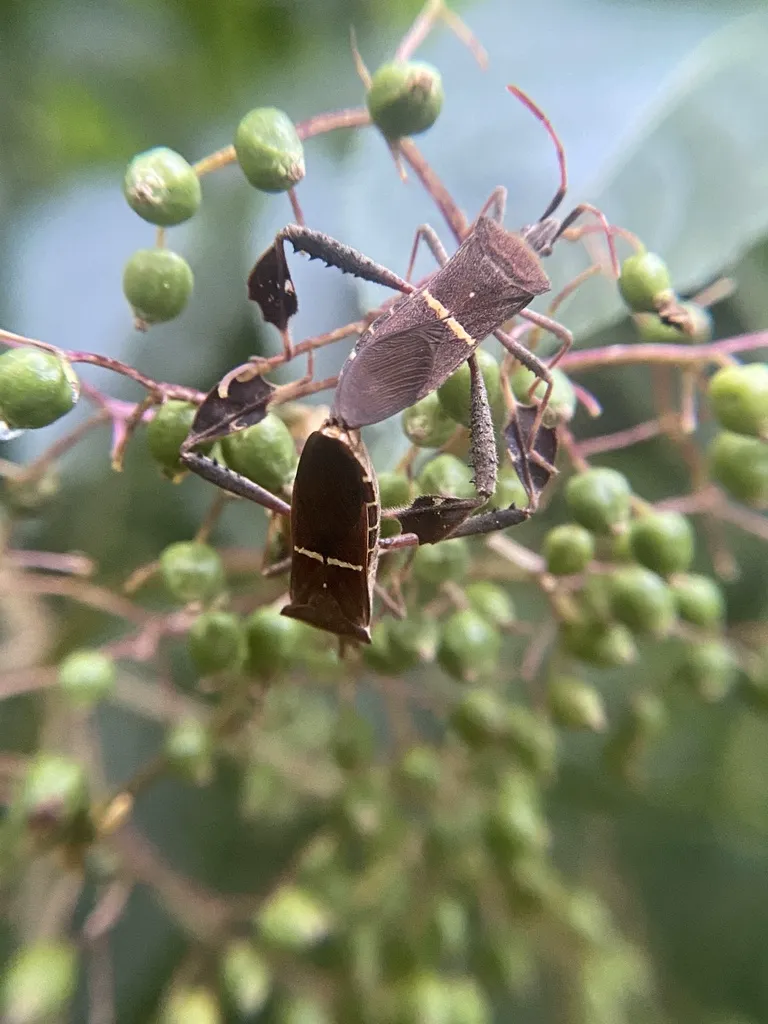
Eastern leaf-footed bugs are brown, shield-shaped plant feeders with distinctive leaf-like expansions on their hind legs and a white zigzag band across their wings.
Taxonomy
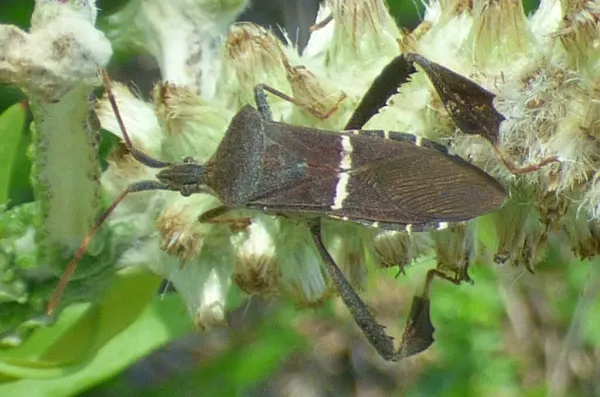
Eastern Leaf-Footed Bugs Coloration
Common color patterns to help identify eastern leaf-footed bugs
Eastern Leaf-Footed Bugs
Seasonal Activity
When eastern leaf-footed bugs are most active throughout the year
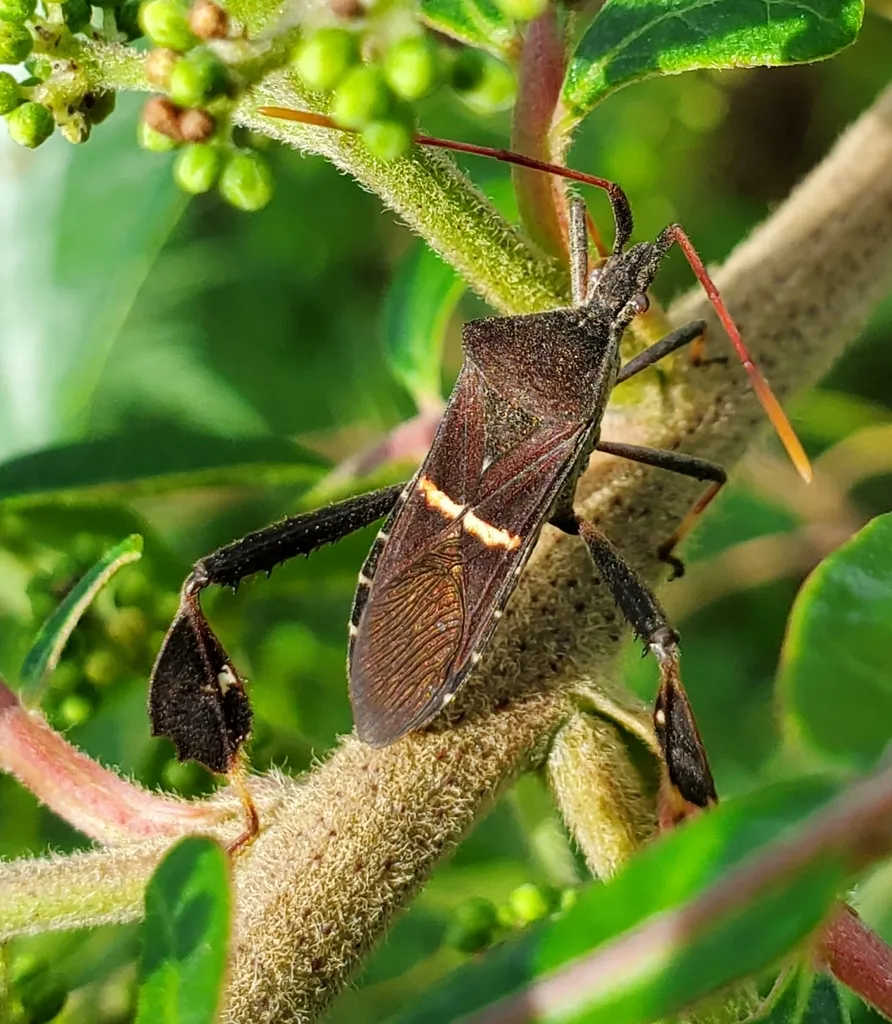
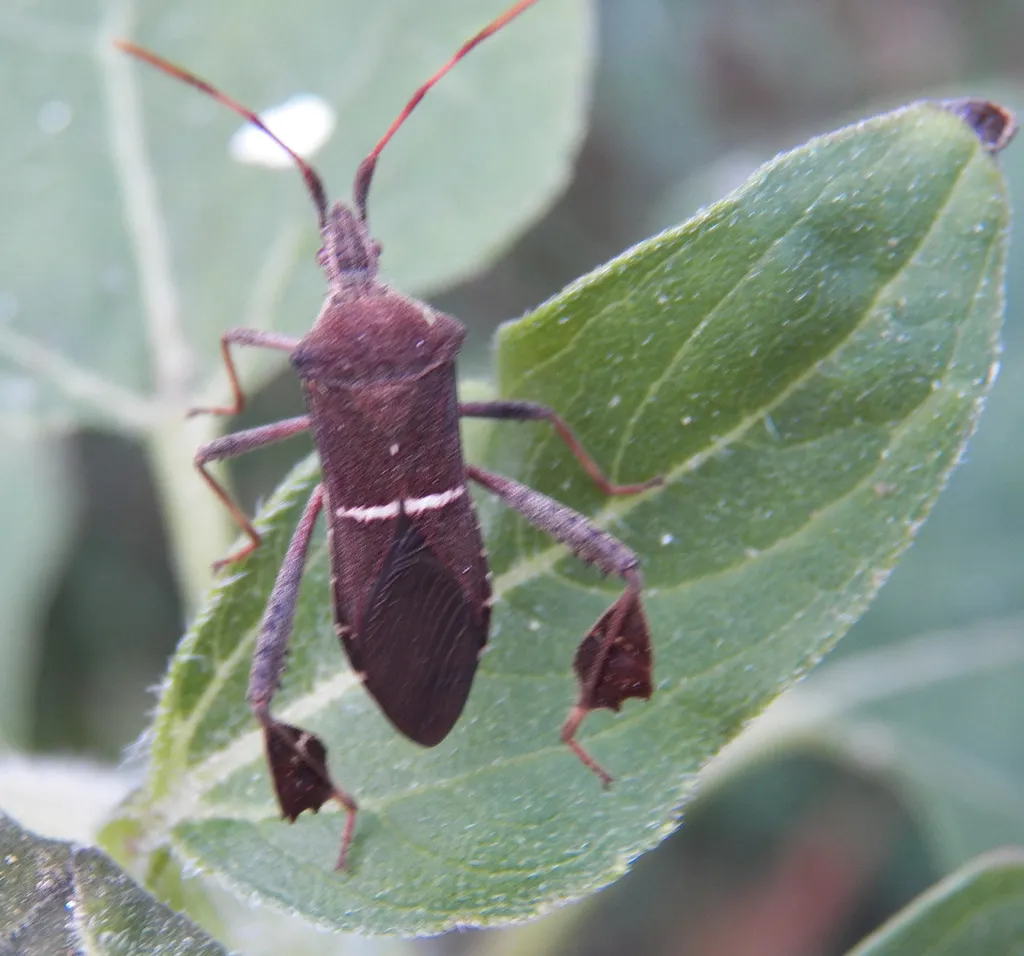
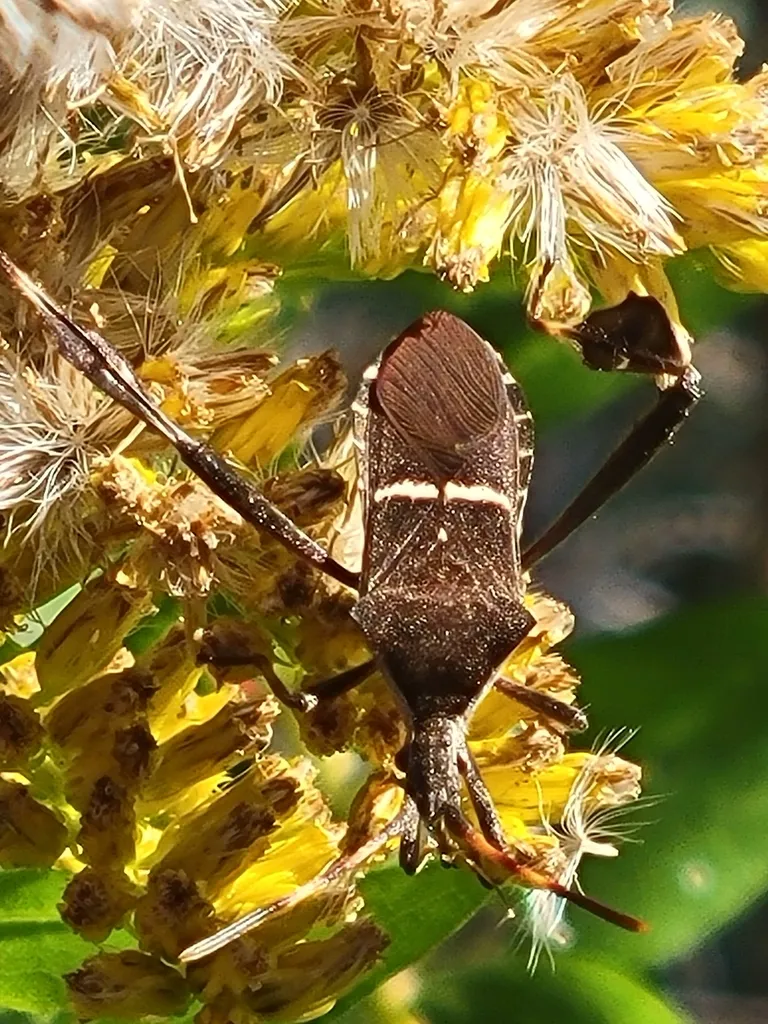

Where Eastern Leaf-Footed Bugs Are Found
Hover over states to see their names. Green regions indicate where eastern leaf-footed bugs have been reported.
Eastern Leaf-Footed Bug Identification Guide
Physical Characteristics
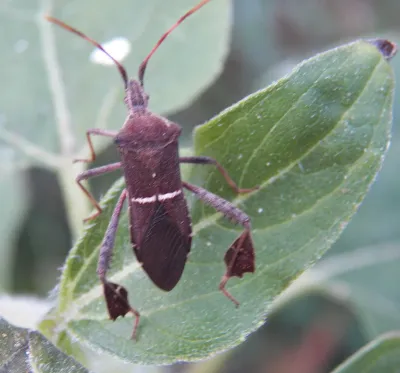
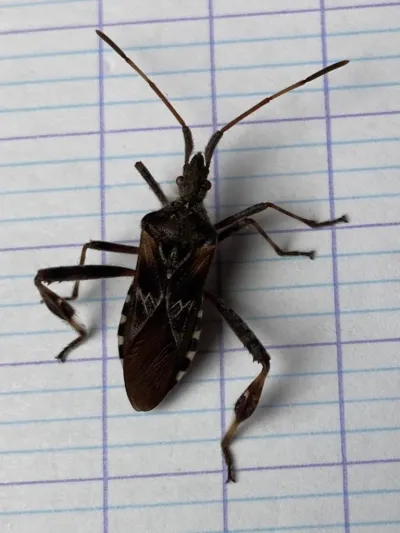
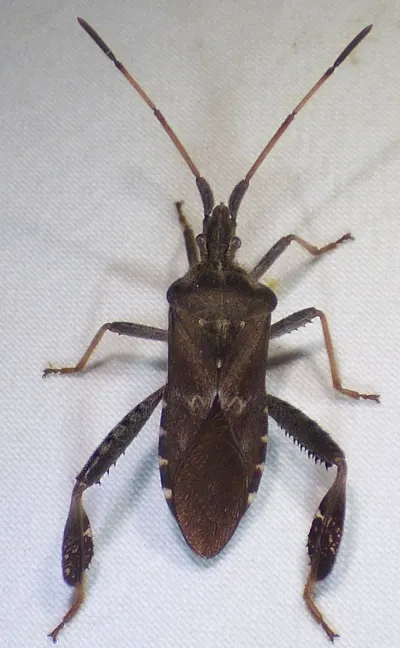
The eastern leaf-footed bug (Leptoglossus phyllopus) is about 1/2 to 3/4 of an inch long (12 to 20 mm). It has a narrow, slightly flat body that is dark brown to reddish-brown. The easiest way to spot this bug is by the straight white or cream band across its forewings. This pale stripe sets it apart from many similar bugs right away.
The other key feature is the flat, leaf-shaped flap on each hind leg. This is how the whole leaf-footed bug family gets its name. Adults have full wings folded flat over the body. When touched or crushed, they give off a strong smell from glands on their body, much like stink bugs. Young nymphs are bright orange or red and do not have wings yet. This makes them easy to spot on leaves. As they grow, nymphs darken and start to grow wing pads and the leaf-like leg flaps.
Common Look-Alikes
Eastern leaf-footed bugs are often mixed up with several related species:
- Western conifer seed bug (Leptoglossus occidentalis) has similar hind legs but lives on pine and spruce trees. Its wing pattern differs, and it is more common up north and out west.
- Leaf-footed pine seed bug (Leptoglossus corculus) looks similar but feeds mostly on pine seeds. It does not have the bold white wing band that L. phyllopus has.
- Squash bugs (Anasa tristis) are wider and flatter. They do not have the leaf-like leg flaps.
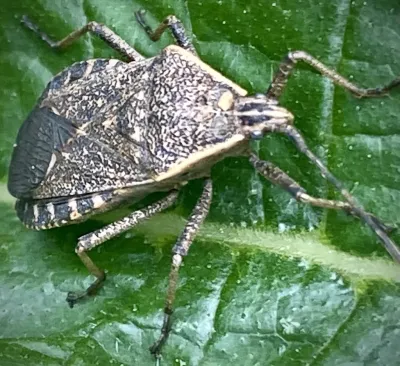
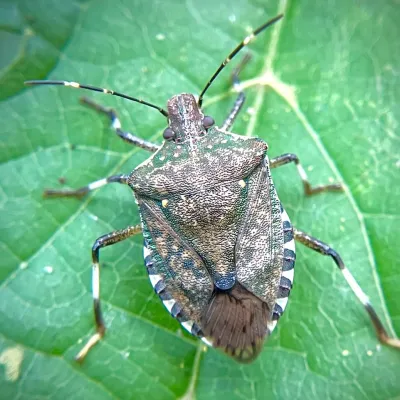
- Stink bugs (Pentatomidae) have a broad, shield-shaped body. Their shape is very different from the narrow leaf-footed bug. Stink bugs also lack the hind leg flaps.
Eastern Leaf-Footed Bug Behavior and Biology
Eastern leaf-footed bugs feed on many types of plants. They use needle-like mouthparts to pierce fruits, seeds, and stems and suck out the juices. Common targets include tomatoes, peppers, eggplant, beans, peaches, citrus, and pecans. They also feed on wild plants like thistles and sunflowers. Their feeding leaves sunken spots, dimples, and shriveled seeds. This can hurt the look and taste of garden produce.
Life Cycle
Females lay small, golden-brown eggs in rows along stems and leaf veins. Each batch has about 10 to 20 eggs. The eggs hatch into bright orange nymphs that cluster on a single fruit or flower head. Nymphs go through five growth stages over a few weeks before reaching adulthood. In warm southern areas, two or more rounds of offspring can happen each year. In the Mid-Atlantic and farther north, one to two rounds per season is more typical.
Adults spend the winter in sheltered spots like leaf litter, woodpiles, under bark, and sometimes inside buildings. They come out in spring when the weather warms up. Then they fly to nearby plants to feed and mate. Activity peaks from June through September across most of the eastern United States. It drops off in October as adults look for places to ride out the cold.
Habitat and Distribution
Eastern leaf-footed bugs are most common in the Southeast and eastern United States. Their range runs from Florida and Texas up through Virginia, Maryland, and Pennsylvania. They thrive in gardens, orchards, farm fields, and wooded edges where host plants grow. They also live in parts of Mexico and Central America. There are some records in southern Ontario, Canada.
Treatment Methods for Eastern Leaf-Footed Bugs
Controlling eastern leaf-footed bugs works best when you use several methods together. These insects fly well and feed on many plants. No single step will get rid of them on its own.
-
Monitoring and early detection. Check your garden often during the growing season to catch problems early. Look for bright orange nymphs grouped on fruit and adults on plant stems. Shaking branches over a white sheet is a simple way to find them.
-
Habitat cleanup. Remove weeds, crop debris, and woodpiles near your garden to cut down on hiding spots. Cleaning up these areas in late fall can lower the number of bugs that make it to next season.
-
Physical removal. Hand-picking bugs and dropping them into a bucket of soapy water works well for small numbers. Row covers or fine mesh netting over plants can keep bugs off your crops.
-
Trap cropping. Planting sunflowers, sorghum, or millet near your garden can pull leaf-footed bugs away from your main crops. Once the bugs gather on the trap plants, you can remove or treat them there.
-
Chemical treatment. When numbers get too high, insecticidal soaps or pyrethroid sprays labeled for garden use can help. Treating young nymphs works better than spraying adults, since adults are harder to kill. Always follow the product label and wait the listed time before picking food crops.
-
Keeping them out of your home. Seal cracks around windows, doors, and utility lines to block fall entry into your house. Fix torn screens and add weather stripping where needed. If bugs are already inside, vacuuming is the easiest way to remove them.
References
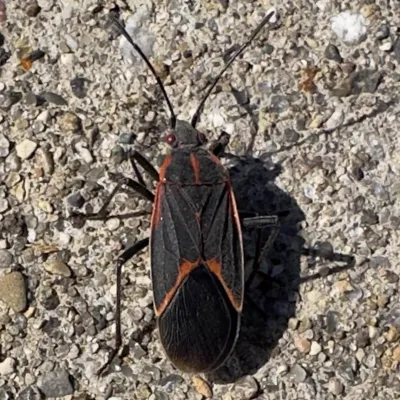
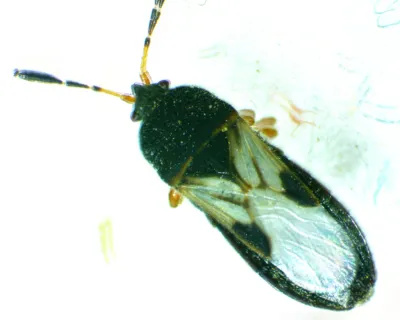
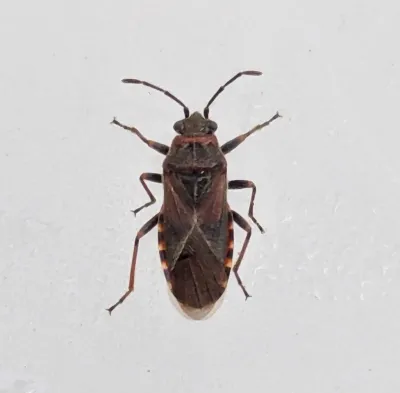
Other Plant Bugs
Explore other species in the plant bugs family
Commonly Confused With
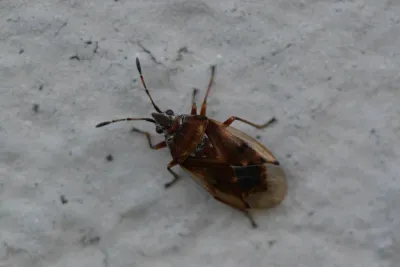
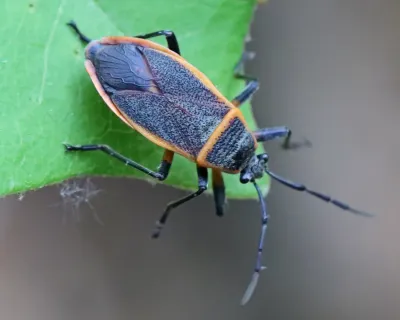
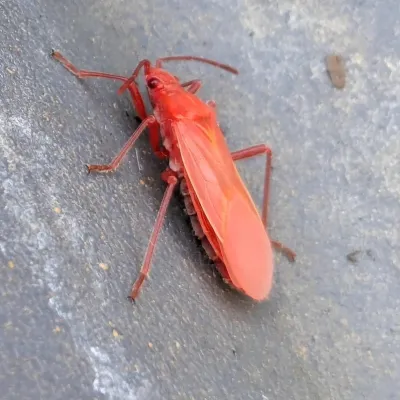
Eastern Leaf-Footed Bugs are often mistaken for these similar pests
Where Eastern Leaf-Footed Bugs Are Found
Hover over states to see their names. Green regions indicate where eastern leaf-footed bugs have been reported.
Common Questions about Eastern Leaf-Footed Bugs
Are eastern leaf-footed bugs harmful to people?
+
No, eastern leaf-footed bugs do not bite or sting people. They only feed on plants. They can give off a mild smell when bothered, much like stink bugs, but they are not a health risk to people or pets.
Do eastern leaf-footed bugs damage gardens?
+
Yes, they can harm garden plants. Their feeding leaves sunken spots and discolored patches on tomatoes, peppers, peaches, pecans, and other crops. In large numbers, they can cut into your harvest.
Why are eastern leaf-footed bugs in my house?
+
Eastern leaf-footed bugs sometimes come inside in the fall looking for warmth. They are drawn to the sunny sides of buildings and can squeeze through small gaps around windows, doors, and siding. Once inside, they tend to hide in walls and sheltered spaces until spring.
How can I tell an eastern leaf-footed bug from a stink bug?
+
Both are brown and about the same size, but their body shapes differ. Eastern leaf-footed bugs are longer and narrower, while stink bugs are broad and shield-shaped. The easiest way to tell them apart is the hind legs. Leaf-footed bugs have flat, leaf-like flaps on their back legs that stink bugs do not have. Leaf-footed bugs also show a straight white band across their wings.
What is the best way to remove eastern leaf-footed bugs from my garden?
+
For small numbers, pick bugs off by hand and drop them into a bucket of soapy water. Remove weeds and garden debris near your plants to cut down on hiding spots. Row covers can keep bugs off crops during peak season. For bigger problems, insecticidal soaps or pyrethroid sprays labeled for garden use can help bring numbers down.
Do eastern leaf-footed bugs fly?
+
Yes, adults are capable fliers and will readily fly between plants and into new areas. This ability to disperse makes them difficult to contain once populations establish in a garden or orchard.

With five years of hands-on experience in the pest control industry, George Schulz is a registered technician with the Virginia Pest Management Association and a proud third-generation professional in a family business that's been protecting homes for over 57 years. He manages and trains a team of service pros while also leading internal research efforts—recently spearheading a deep-dive review of thousands of documents on pest control materials to hand-pick the most kid and pet friendly, most effective solutions tailored specifically for homes in the DC metro area.