Rice Moth Identification Guide
Corcyra cephalonica
The rice moth is a stored-product pest found in warm climates and heated storage facilities across North America. Its larvae feed on rice, grains, flour, and dried goods, producing dense silk webbing that binds food into unusable clumps.
Taxonomy
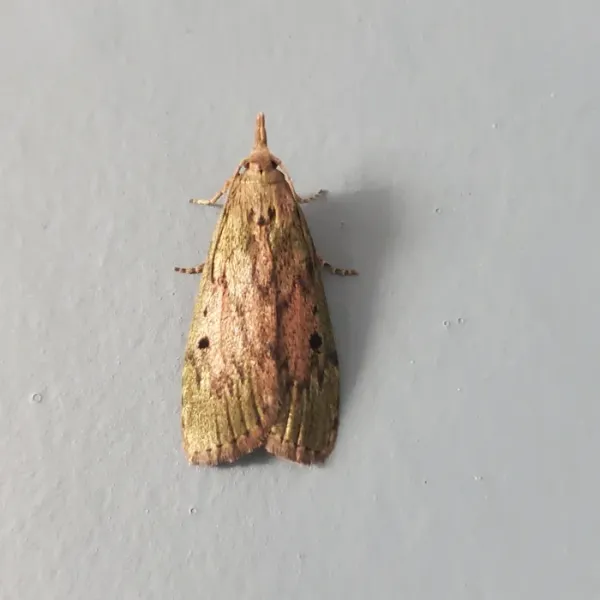
Rice Moth Coloration
Common color patterns to help identify rice moth
Rice Moth
Seasonal Activity
When rice moth are most active throughout the year
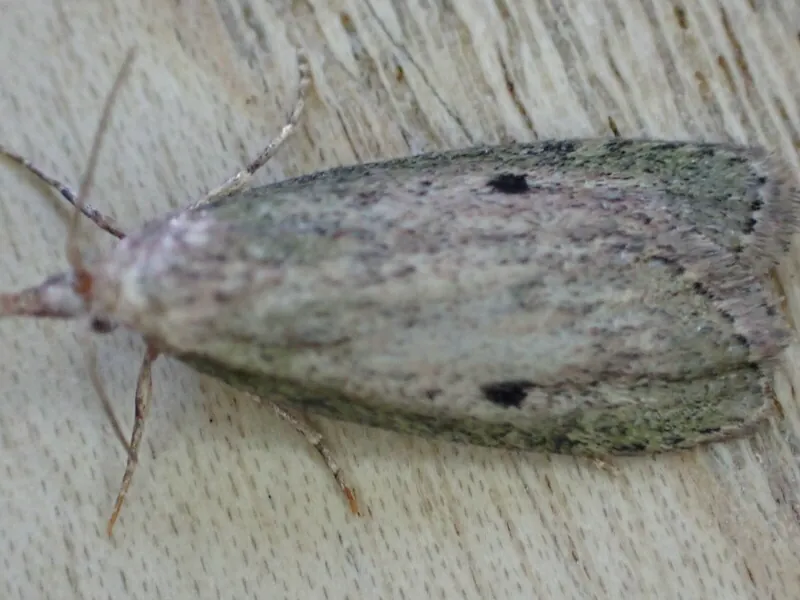
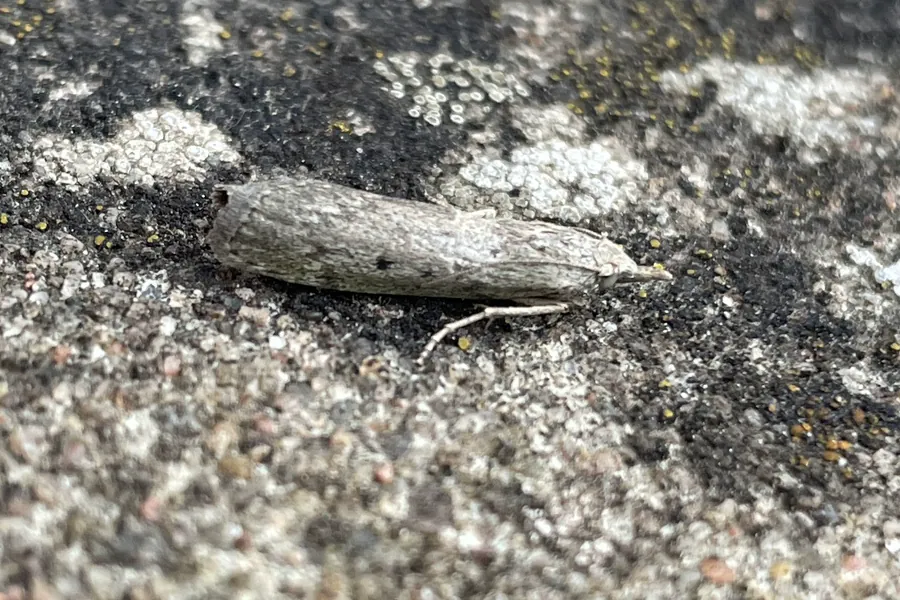
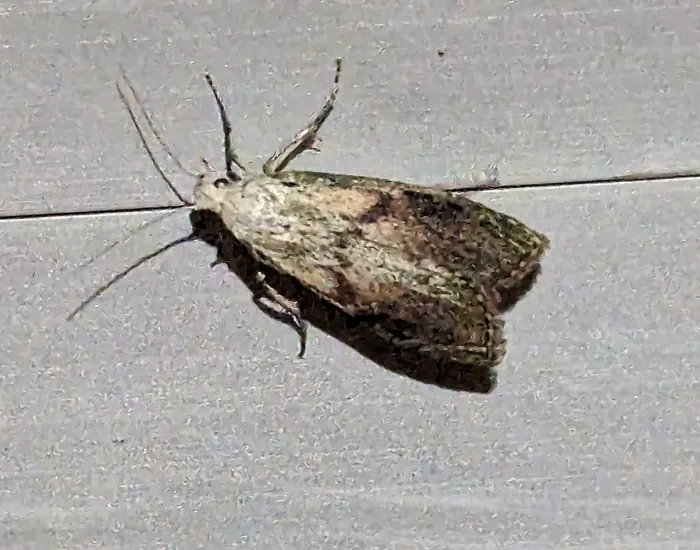

Where Rice Moth Are Found
Hover over states to see their names. Green regions indicate where rice moth have been reported.
Rice Moth Identification Guide
Physical Characteristics
Rice moths are small pests that attack stored food. They belong to the family Pyralidae. Adults measure 10 to 13mm in body length. Their wingspan ranges from 15 to 25mm. Males are a bit smaller than females.
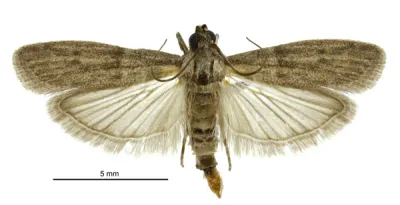
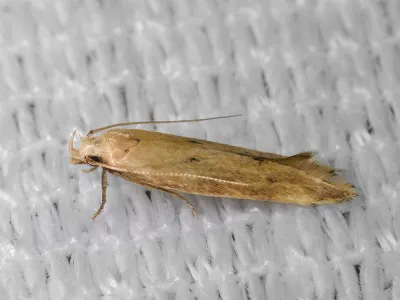
The forewings are an even pale grayish-brown to light brown color. They sometimes show a faint pinkish or tan tint. The wing veins may look slightly darker. Unlike the Indian meal moth, rice moths do not have a bold two-toned wing pattern. The hindwings are paler, usually buff or cream. At rest, rice moths fold their wings tight against the body in a tent shape. This gives them a narrow, pointed look.
The head has a small tuft of raised scales. Two long, thin antennae extend backward. The body is slender with six legs. Adults can fly, but they are most active at dusk and at night. They are drawn to lights.
Rice Moth Larvae
The larvae cause all the damage. Full-grown larvae reach about 15mm long. They are creamy white to yellowish caterpillars with a tan or brown head. Larvae shed their skin six to seven times as they grow. Their color may change a bit based on what they eat.
Rice moth larvae produce large amounts of silk. They spin thick webbing through their food source. This webbing binds grains and food bits into hard, useless clumps. They make more webbing than most other pantry pests. In bad cases, whole bags of grain can turn into solid masses of webbed food, waste, and cocoons.
When larvae are ready to change into adults, they spin tough white cocoons. You may find these cocoons on bag surfaces, in shelf cracks, or mixed in with the grain. The pupal stage lasts 7 to 14 days in warm conditions.
Telling Them Apart from Similar Pests
Several pantry moths look like rice moths. Here is how to tell them apart.
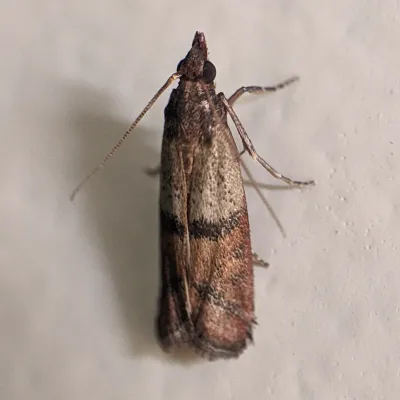
Vs. Indian meal moths: Indian meal moths have two-toned wings. The inner third is pale, and the outer part is coppery reddish-brown. Rice moths have even-colored grayish-brown wings. Wing color is the fastest way to tell them apart.
Vs. Mediterranean flour moths: Flour moths are similar in size but usually have paler wings with small dark spots or zigzag marks. Rice moths have a more even wing color without spots.
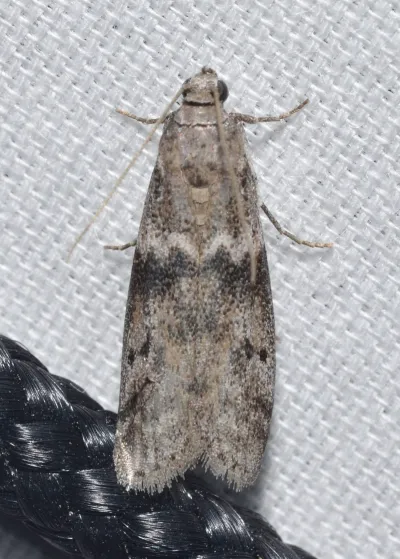
Vs. almond moths: Almond moths have grayish wings with faint dark marks. They are a bit smaller and prefer warmer tropical storage settings.
Vs. angoumois grain moths: Angoumois grain moths are smaller with narrower wings and a pointed fringe at the back edge. Their larvae grow inside grain kernels rather than spinning webs outside.
Rice Moth Behavior and Biology
Lifecycle and Development
Rice moths go through four life stages: egg, larva, pupa, and adult. In warm conditions (about 82 to 90 degrees Fahrenheit with 70 percent humidity), the full cycle takes 5 to 8 weeks. Cooler temps slow growth. Below about 59 degrees Fahrenheit, they stop breeding.
Eggs. Females lay up to a few hundred tiny white eggs on or near food. The eggs are too small to spot without a magnifying glass. They hatch in 3 to 7 days.
Larvae. This is the feeding stage. Larvae shed their skin six to seven times over 3 to 12 weeks. How fast they grow depends on food quality and temperature. They feed on the surface of grains and spin thick silk webbing that clumps food together. Full-grown larvae are about 15mm long.
Pupae. Mature larvae spin tough cocoons. The pupal stage lasts 7 to 14 days. You can find cocoons on bags, in shelf corners, and on storage walls.
Adults. Adult rice moths only live 1 to 2 weeks. They do not eat stored food. Their only job is to mate and lay eggs. They are most active at dusk and at night, and they fly toward lights.
What Do Rice Moths Eat?
Rice moth larvae eat many types of dried foods. Common targets include:
- Rice and broken rice (their top choice)
- Sorghum, millet, and other grains
- Wheat, corn, and flour
- Dried fruit, dates, and raisins
- Nuts and peanuts
- Cocoa beans and chocolate
- Lentils and dried beans
- Pet food and birdseed
- Pasta and cereal
Larvae like broken or cracked grains more than whole kernels. Broken grain is easier for them to eat. This is why mills, food plants, and pantries with older products are at higher risk.
Where Do Rice Moths Live?
Rice moths do best in warm, humid places. They are most common in tropical and warm regions. But they can set up in heated buildings and storage areas across North America. Common spots include:
- Kitchen pantries and food cabinets
- Bulk food storage in basements or garages
- Grain storage and processing plants
- Warehouses and storage buildings
- Pet food bins and birdseed bins
In cooler areas, rice moth activity peaks in the summer from June through September. Inside heated buildings, they can breed all year long with many overlapping cycles.
Signs of a Rice Moth Problem
What to Look For
- Moths near lights. Small, pale grayish-brown moths flying at night, mostly near kitchen or pantry lights
- Thick webbing in food. Dense silk webbing that binds grain or food into hard clumps
- Larvae in food. Creamy white caterpillars up to 15mm long in or near dry goods
- Tough cocoons. White cocoons stuck to bags, shelf edges, or crevices
- Bad smell. A musty or foul odor from badly infested food
- Waste and debris. Small pellets of waste mixed with silk and food bits
Where to Inspect
Check all stored dry goods with care. Open each container and look for webbing, larvae, or clumped grain. Focus on:
- Bags and boxes of rice, especially older ones
- Flour, cereal, and grain products
- Dried fruit, nut, and trail mix containers
- Pet food bags in warm areas
- Corners and cracks in pantry shelves
- Under shelf liners and behind stored items
Treatment Methods for Rice Moths
Getting rid of rice moths starts with finding and removing the food that supports them. These steps have proven effective.
-
Thorough Inspection. Check every stored food item in your pantry and kitchen. Look for webbing, larvae, and clumped grain. Do not skip items that seem sealed. Eggs and larvae can already be in the original packaging from the store.
-
Source Removal. Throw away all infested food in sealed plastic bags. Take them to an outdoor trash bin right away. If you are not sure whether something is infested, it is best to toss it.
-
Deep Cleaning. Vacuum all pantry shelves, cracks, corners, and gaps. Wipe surfaces with soapy water to remove eggs, silk, and food bits. Clean shelf pegs, bracket holes, and the back corners of cabinets.
-
Temperature Treatment. You can save some items with extreme heat or cold. Freezing at 0 degrees Fahrenheit for at least 7 days kills all life stages. Heating food to 130 degrees Fahrenheit for 30 minutes also works for grains and dry goods.
-
Proper Storage. Move all dry goods into airtight glass jars or thick plastic containers with tight lids. This keeps moths out and traps any hidden pests inside.
-
Monitoring. Pheromone traps made for pantry moths can help track remaining activity. Place traps in the pantry and check them often. Keep traps up for at least 8 weeks after cleanup to cover the full life cycle.
Prevention Tips
A few simple habits can lower your risk of rice moth problems:
- Check food before buying. Look at bags and boxes for holes, tears, or webbing at the store
- Use sealed containers. Move dry goods into glass jars or thick plastic bins right away
- Rotate your stock. Use older products first. Do not let dry goods sit for months
- Freeze new items. Put flour, grains, rice, and dried fruit in the freezer for one week before pantry storage
- Keep shelves clean. Wipe down pantry shelves often. Vacuum up crumbs and spills
- Store food in cool, dry spots. Rice moths love warmth and humidity, so cooler storage helps
- Buy what you need. Do not stockpile. Buy amounts you will use in a few weeks or months
References and Further Reading
Other Pantry Pests
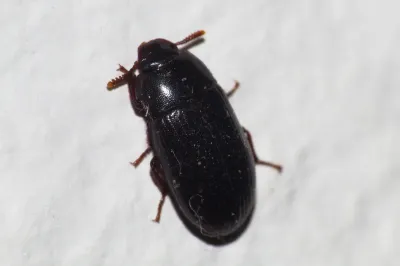
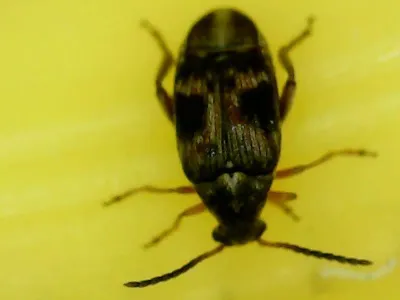
Explore other species in the pantry pests family
Commonly Confused With
Rice Moth are often mistaken for these similar pests
Where Rice Moth Are Found
Hover over states to see their names. Green regions indicate where rice moth have been reported.
Common Questions about Rice Moth
What does a rice moth look like?
+
Adult rice moths are small, measuring 10 to 13mm in body length with a wingspan of 15 to 25mm. Their forewings are uniformly pale grayish-brown with slightly darker veins. Unlike the Indian meal moth, rice moths lack the distinctive two-toned wing pattern. They have long, slender antennae and hold their wings in a tent-like shape when resting.
Are rice moths harmful to humans?
+
Rice moths do not bite or transmit diseases to humans. However, their larvae contaminate stored food products with silk webbing, frass, and shed skins. Eating heavily infested food can cause digestive discomfort. The main concern is the economic loss from contaminated and unusable food products in pantries and storage areas.
How do rice moths get into my house?
+
Rice moths most commonly enter homes inside infested food products purchased from grocery stores. Eggs or small larvae may already be present in rice, flour, grains, or other dried goods when you bring them home. Adult moths can also fly into homes through open windows and doors, especially in warmer climates.
What do rice moth larvae eat?
+
Rice moth larvae feed on a wide variety of stored dried goods including rice, broken grains, flour, cornmeal, sorghum, dried fruit, nuts, peanuts, cocoa beans, pulses, and other processed grain products. They prefer damaged or broken kernels over intact whole grains. The larvae spin dense silk webbing that binds food particles into clumps.
How can I tell the difference between rice moths and Indian meal moths?
+
The easiest way to tell them apart is by wing color. Indian meal moths have distinctive two-toned wings with a pale inner third and coppery reddish-brown outer two-thirds. Rice moths have uniformly pale grayish-brown forewings without that contrasting color pattern. Rice moth larvae also produce denser, more extensive webbing than Indian meal moth larvae.
How do I get rid of rice moths in my pantry?
+
Start by finding and discarding all infested food products in sealed bags. Clean all pantry shelves, cracks, and corners thoroughly with a vacuum and damp cloth. Transfer remaining dry goods into airtight glass or heavy plastic containers. You can freeze suspected items at 0 degrees Fahrenheit for at least 7 days to kill all life stages. Pheromone traps can help monitor for remaining moth activity.
How long do rice moths live?
+
The complete rice moth lifecycle takes about 5 to 8 weeks under warm conditions. Adults live only 1 to 2 weeks and do not feed. Females lay up to several hundred eggs near food sources. The larval stage lasts 3 to 12 weeks depending on temperature and food quality. In heated environments, rice moths can produce multiple generations per year.

With five years of hands-on experience in the pest control industry, George Schulz is a registered technician with the Virginia Pest Management Association and a proud third-generation professional in a family business that's been protecting homes for over 57 years. He manages and trains a team of service pros while also leading internal research efforts—recently spearheading a deep-dive review of thousands of documents on pest control materials to hand-pick the most kid and pet friendly, most effective solutions tailored specifically for homes in the DC metro area.