Foreign Grain Beetles Identification Guide
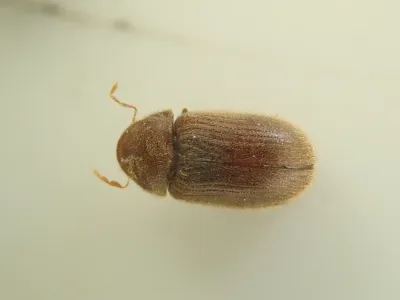
Ahasverus advena
Foreign grain beetles are tiny, reddish-brown pantry pests commonly found in new homes and buildings. They feed on mold and fungi growing on damp grain products, and their presence often signals a moisture problem rather than a food storage issue.
Taxonomy
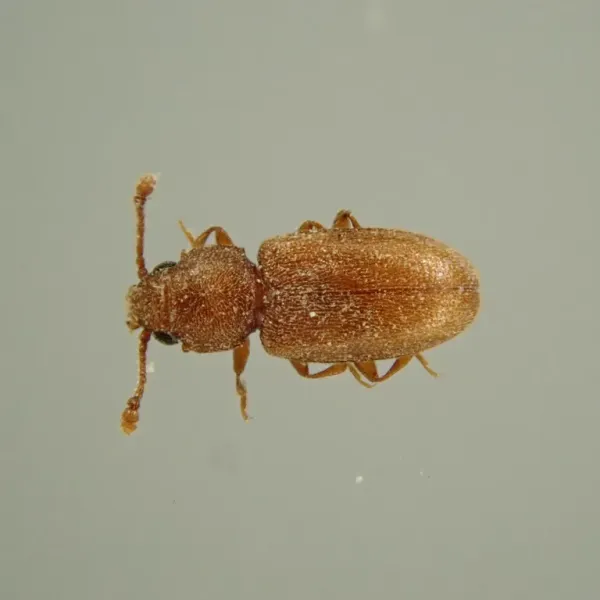
Foreign Grain Beetles Coloration
Common color patterns to help identify foreign grain beetles
Foreign Grain Beetles
Seasonal Activity
When foreign grain beetles are most active throughout the year

Where Foreign Grain Beetles Are Found
Hover over states to see their names. Green regions indicate where foreign grain beetles have been reported.
Foreign Grain Beetle Identification Guide
Physical Characteristics
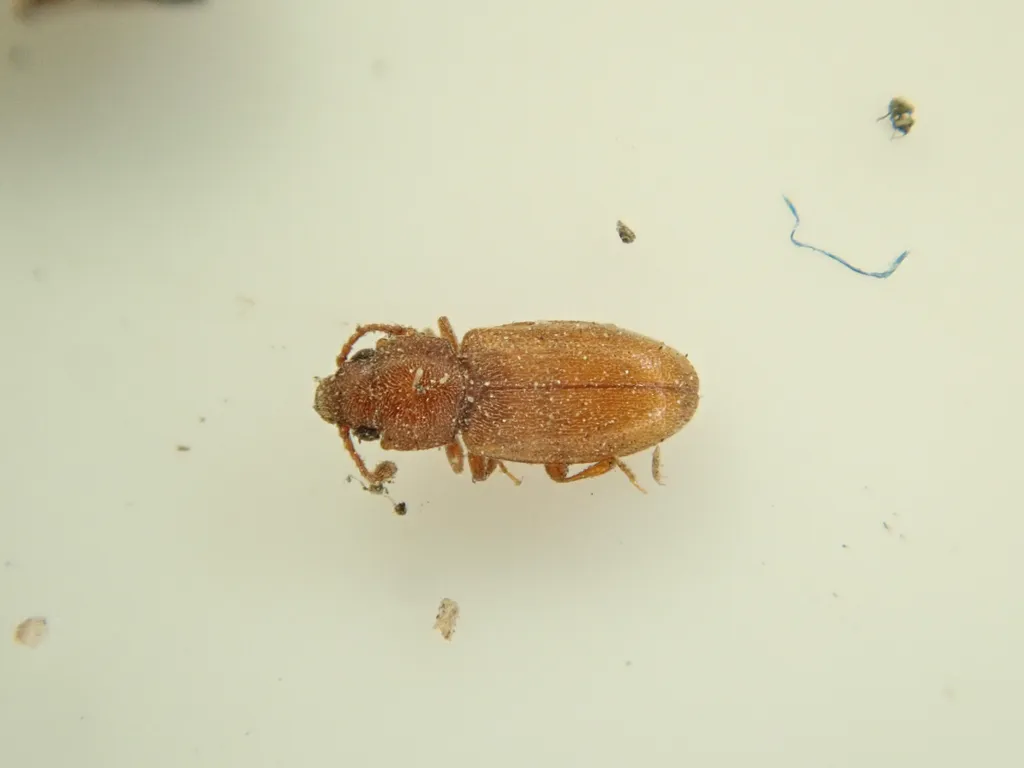
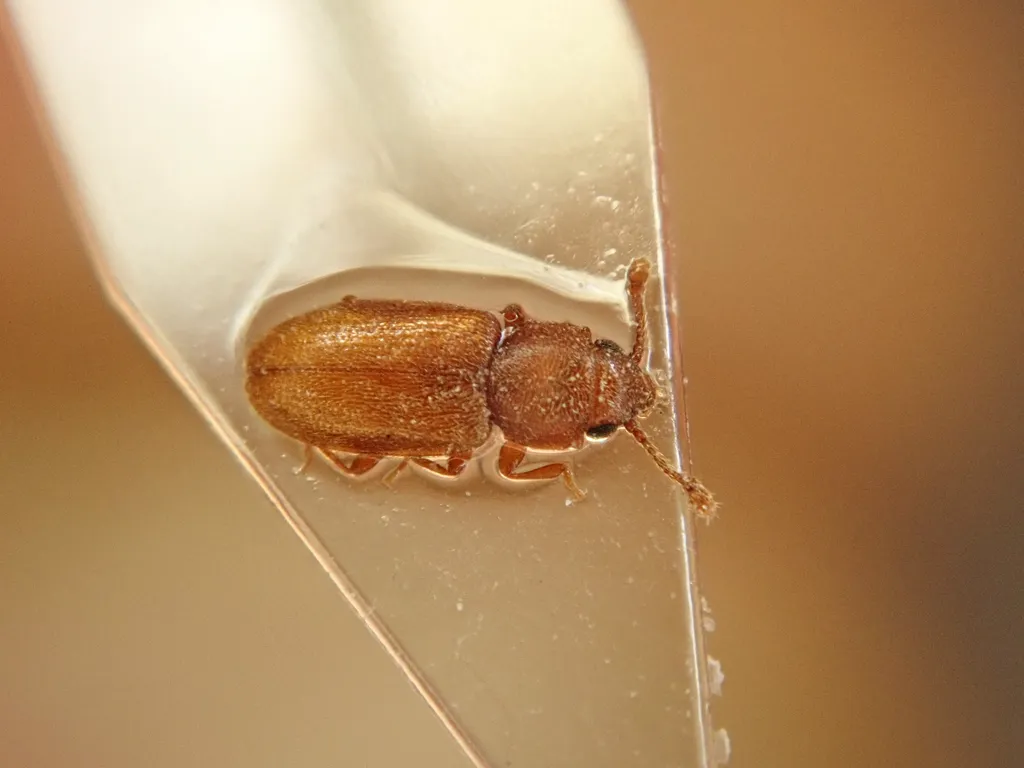
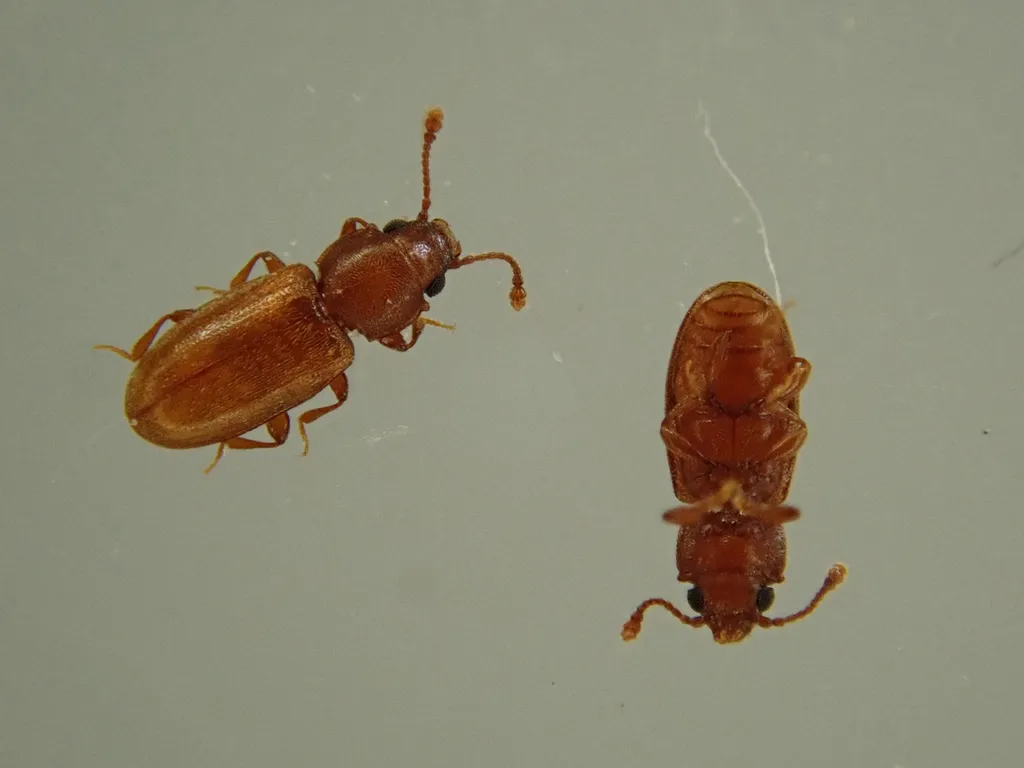
Foreign grain beetles (Ahasverus advena) are tiny insects. They measure just 2 to 3mm long, about the size of a pinhead. This is one reason they go unnoticed until their numbers grow. Their bodies are flat and oblong. The color ranges from reddish-brown to dark brown.
The best way to tell one apart is by the thorax. Each front corner has a small rounded knob. This sets them apart from most other pantry pests. You may need a hand lens to see it given the beetle’s small size.
Their antennae are fairly long. The tip forms a gradual club made of three segments. The wing covers have rows of fine dots that give them a textured look. Adults can fly, which helps them spread fast.
Telling Them Apart from Similar Pests
Foreign grain beetles are easy to confuse with other small brown beetles that show up in kitchens and pantries.
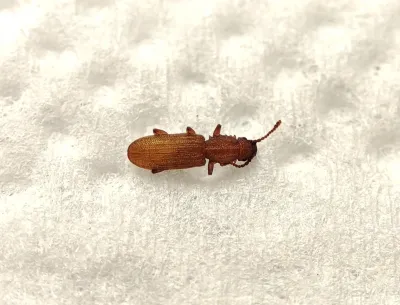
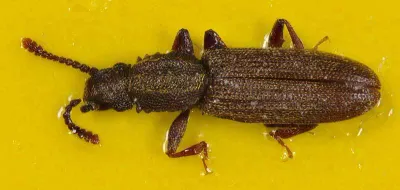
Sawtoothed grain beetles are the most common lookalike. Both are close in size and color. Sawtoothed grain beetles have six saw-like teeth on each side of the thorax. Foreign grain beetles have smooth, rounded knobs instead.
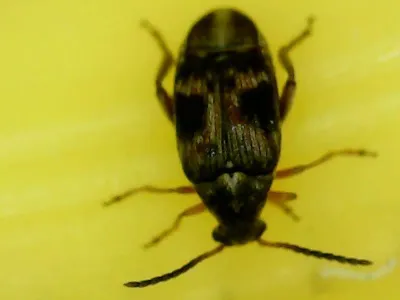
Merchant grain beetles also look similar. They belong to the same family (Silvanidae). Merchant grain beetles have larger eyes and the same saw-tooth pattern as sawtoothed grain beetles. They feed on food directly, not mold.
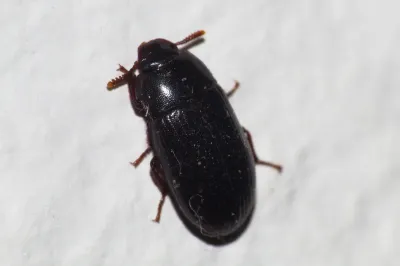
Drugstore beetles are about the same size but more rounded and humped. Their antennae end in a sharp three-segmented club. Their head tucks under the thorax when viewed from above.
Foreign Grain Beetle Behavior and Biology
Why They Love New Homes
Foreign grain beetles are one of the most common pests in newly built homes. Many homeowners are surprised to find bugs in a brand-new house. The reason is simple. These beetles eat mold and fungi, not food.
Fresh lumber, drywall, and plaster hold moisture. In the months after building, mold can grow on these damp surfaces. It shows up in walls, under floors, and near pipes. Foreign grain beetles move in to eat this mold.
As building materials dry out over one to two years, the mold goes away. Without a food source, the beetles die off on their own. This is why pest control pros call them a short-term problem in new homes.
Lifecycle and Reproduction
Foreign grain beetles have four life stages: egg, larva, pupa, and adult.
Eggs: Females lay eggs on surfaces where mold is growing. Each female can lay 100 to 200 eggs in her life.
Larvae: The larvae are small and cream-colored. They eat the same mold as adults. This stage lasts two to five weeks.
Pupae: This stage takes one to two weeks. Larvae pupate in small cracks near their food source.
Adults: Adults live about six to ten months. They can fly and like lights. The full lifecycle takes about four to six weeks in warm, humid conditions. This means numbers can grow fast.
Diet and Habitat
Despite their name, foreign grain beetles do not eat whole grain. They eat mold. Common food sources include:
- Mold and fungi on grain products
- Mildew on damp wood, drywall, and plaster
- Fungal growth on stored food that got wet
- Moldy cereals, flour, and pasta
- Fungal spores in damp basements and crawl spaces
This habit is what makes them different from most other pantry pests. When you find them, it usually means there is too much moisture somewhere in your home.
Where They Hide
Foreign grain beetles show up where moisture and mold are present:
- Walls, floors, and ceilings in new homes
- Damp basements and crawl spaces
- Areas around plumbing leaks
- Kitchens and bathrooms with poor air flow
- Stored grain products that got damp
- Birdseed, pet food, and bulk dry goods in humid areas
- Window sills where flying adults gather near light
Signs of a Foreign Grain Beetle Problem
What to Look For
- Small brown beetles near windows and lights. Adults fly toward light. You may see them on window sills or near lamps.
- Clusters of tiny beetles on counters or walls. Large numbers can show up fast.
- Beetles in new homes. Finding small beetles in the first year of a new build is a common sign.
- Beetles near damp spots. Check around sinks, dishwashers, and basement walls.
- Moldy or damp stored foods. Look at grain products that may have gotten wet.
Timing of Infestations
Foreign grain beetle activity peaks in late summer and early fall. This is when temps and humidity are highest. In new homes, problems usually start a few months after building. They may last through the first or second summer.
Treatment Methods for Foreign Grain Beetles
Getting rid of foreign grain beetles starts with fixing moisture. These beetles eat mold. No moisture means no mold, and no mold means no beetles.
Moisture Reduction
The most important step is lowering indoor humidity:
- Use dehumidifiers in basements, crawl spaces, and damp rooms to keep humidity below 50 percent
- Run exhaust fans in kitchens and bathrooms to move air
- Fix leaks right away, even small drips under sinks
- Check drainage around the foundation to keep water away from the house
- Keep HVAC running in new homes to help building materials dry out
Food Source Elimination
For beetles found near stored foods:
- Check all grain products, cereals, flour, and pet food for moisture or mold
- Throw away any food with mold or that has been stored in damp spots
- Move dry goods into airtight glass or thick plastic containers
- Clean shelves well and let them dry before putting food back
- Do not store food on concrete floors in basements
Exclusion
To reduce the number of beetles entering from outdoors:
- Seal gaps around windows, doors, and utility pipes
- Repair or replace damaged window screens
- Caulk cracks in the foundation and exterior walls
- Install door sweeps on exterior doors
When to Call a Professional
Most foreign grain beetle problems go away once moisture is fixed. But you may need a pro if:
- Large numbers persist for more than two seasons
- You cannot identify or resolve the moisture source
- Beetles appear in multiple rooms or areas of the home
- The infestation is in a commercial food storage setting
A pest control pro can find hidden moisture sources and treat cracks, crevices, and wall voids where beetles hide.
References and Further Reading
Other Pantry Pests
Explore other species in the pantry pests family
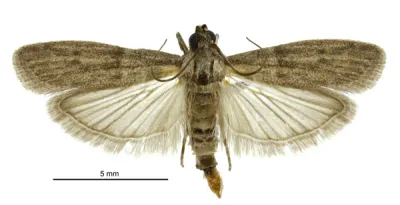
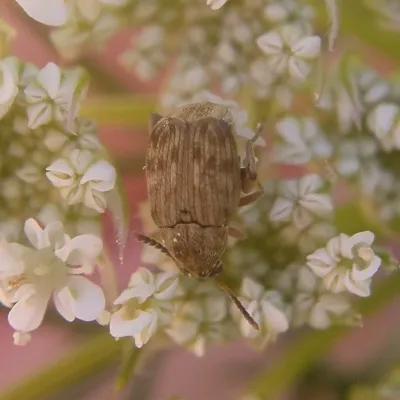
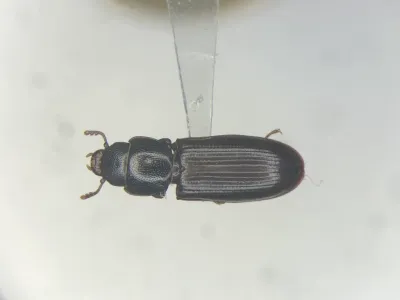
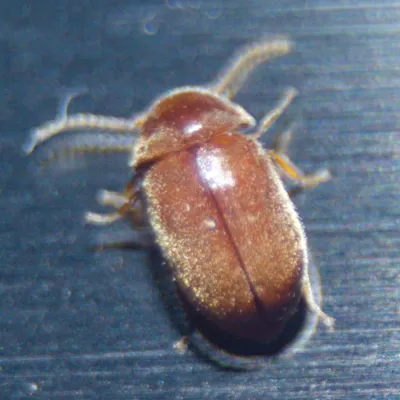
Commonly Confused With
Foreign Grain Beetles are often mistaken for these similar pests
Where Foreign Grain Beetles Are Found
Hover over states to see their names. Green regions indicate where foreign grain beetles have been reported.
Common Questions about Foreign Grain Beetles
What do foreign grain beetles look like?
+
Foreign grain beetles are very small, about 2-3mm long. They are reddish-brown to dark brown and have a flattened, oblong body shape. A key identifying feature is the small knob or bump on each front corner of the thorax. Their antennae end in a gradual three-segmented club.
Why do I have foreign grain beetles in my new house?
+
Foreign grain beetles are one of the most common pests in new construction. They feed on molds and fungi that grow on damp building materials like fresh lumber, drywall, and plaster. As these materials dry out over the first year or two, the mold disappears and so do the beetles.
Are foreign grain beetles harmful?
+
Foreign grain beetles are not harmful to people or pets. They do not bite, sting, or transmit diseases. They do not damage building materials or furniture. Their main nuisance is their numbers, as large populations can appear suddenly in homes, especially new ones.
How do I get rid of foreign grain beetles?
+
The most effective solution is reducing moisture. Use dehumidifiers to keep indoor humidity below 50 percent. Improve ventilation in damp areas like basements and crawl spaces. In new homes, the problem usually resolves on its own as building materials finish drying. Discard any moldy grain products.
What is the difference between foreign grain beetles and sawtoothed grain beetles?
+
Both are similar in size and color, but they differ in key ways. Foreign grain beetles have small rounded knobs on the front corners of their thorax. Sawtoothed grain beetles have six saw-like teeth on each side of the thorax. Foreign grain beetles feed mainly on mold, while sawtoothed grain beetles feed directly on stored food products.
Do foreign grain beetles fly?
+
Yes, foreign grain beetles can fly. They are attracted to lights and may enter homes through open windows and doors, especially on warm summer evenings. Their ability to fly helps explain why they can appear suddenly in large numbers.
How long do foreign grain beetle infestations last?
+
In new homes, foreign grain beetle infestations typically resolve within one to two years as building materials dry completely. In older homes with ongoing moisture problems, infestations can persist until the moisture source is addressed. Fixing leaks and reducing humidity speeds up the process.

With five years of hands-on experience in the pest control industry, George Schulz is a registered technician with the Virginia Pest Management Association and a proud third-generation professional in a family business that's been protecting homes for over 57 years. He manages and trains a team of service pros while also leading internal research efforts—recently spearheading a deep-dive review of thousands of documents on pest control materials to hand-pick the most kid and pet friendly, most effective solutions tailored specifically for homes in the DC metro area.