Cadelle Beetles Identification Guide
Tenebroides mauritanicus
Cadelle beetles are large, shiny black stored-product pests that infest grain, flour, and cereal products. Their larvae bore into grain kernels and can damage wooden structures, making them one of the most destructive warehouse beetles worldwide.
Taxonomy
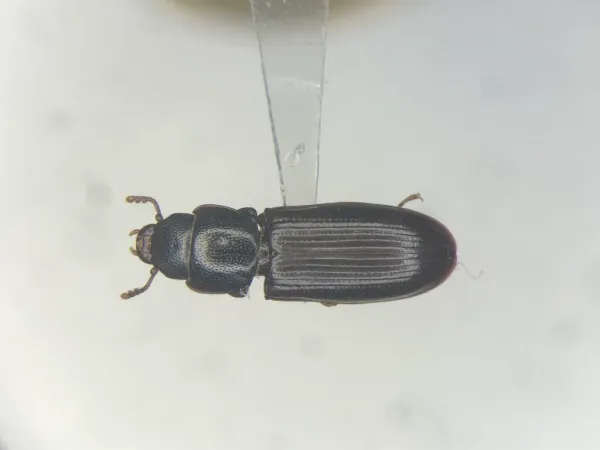
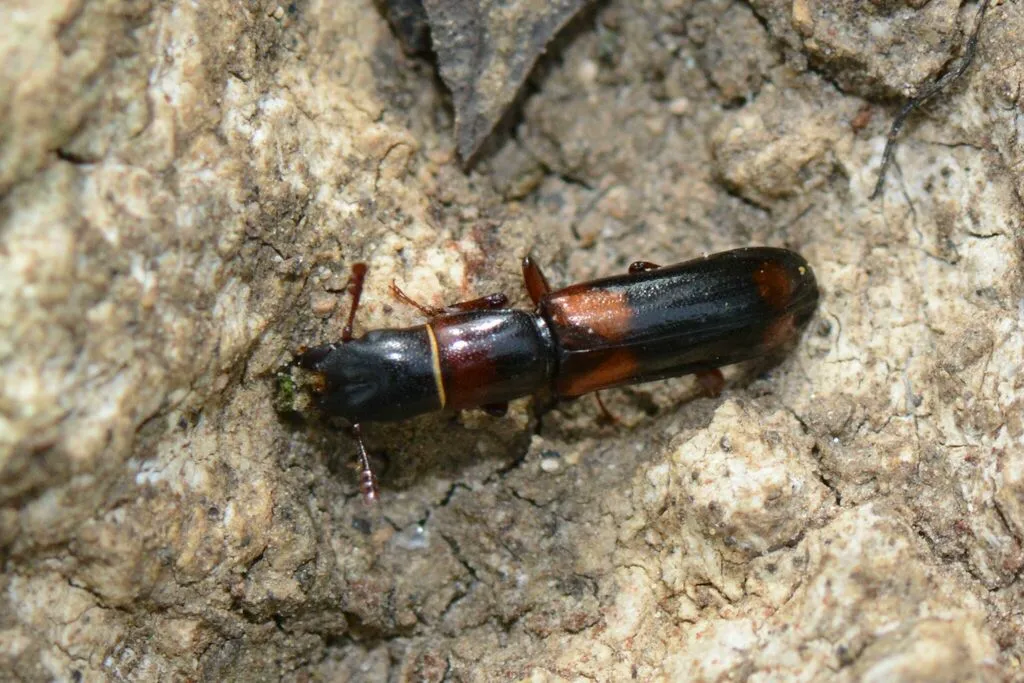
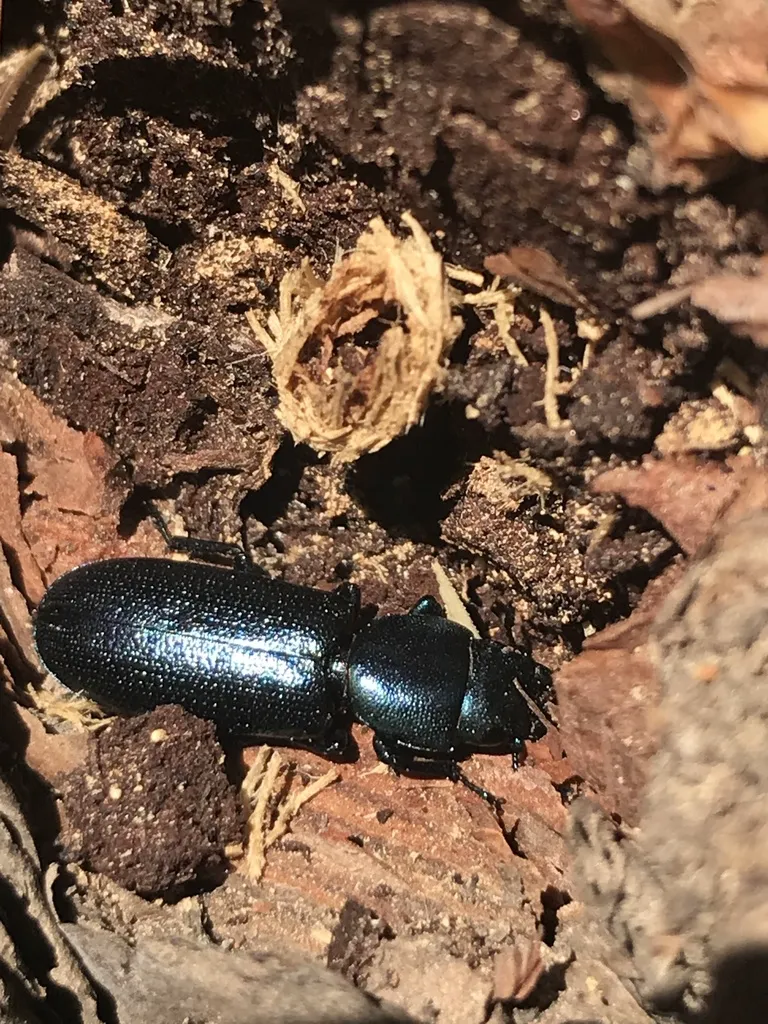
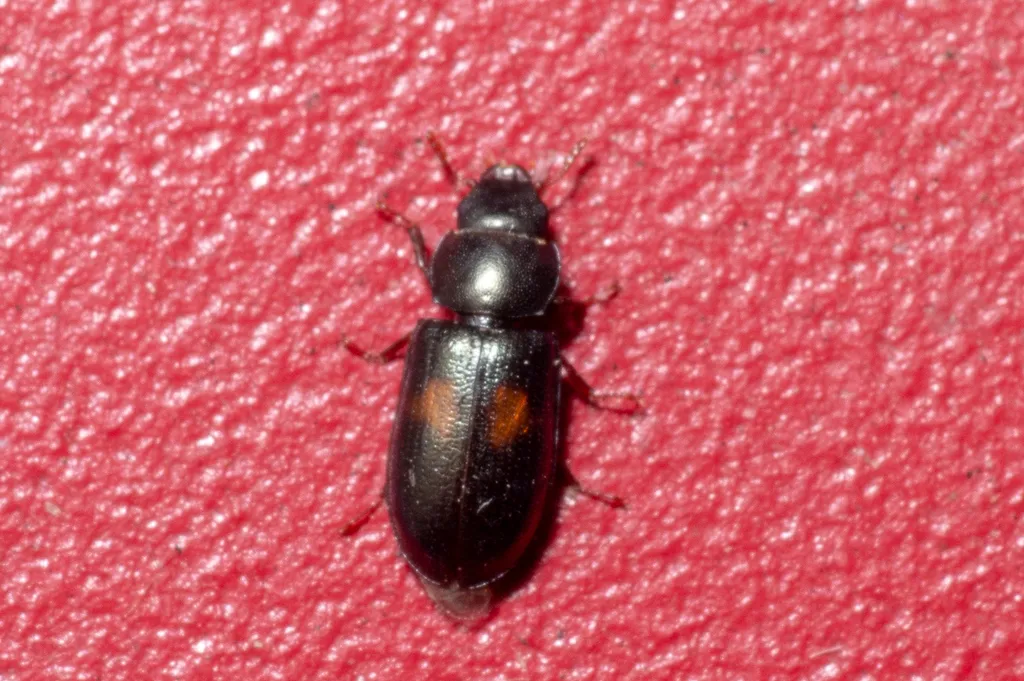
Cadelle Beetles Coloration
Common color patterns to help identify cadelle beetles
Cadelle Beetles
Seasonal Activity
When cadelle beetles are most active throughout the year

Where Cadelle Beetles Are Found
Hover over states to see their names. Green regions indicate where cadelle beetles have been reported.
Cadelle Beetle Identification Guide
Physical Characteristics
Cadelle beetles are one of the largest pantry pests you will find in homes. Adults are 6 to 11mm long, or about 1/4 to nearly 1/2 inch. They have long, flat bodies that are shiny black to dark brown on top. The underside, antennae, and legs are often reddish-brown.
The easiest way to spot a cadelle beetle is the clear “waist” between the front section (prothorax) and the wing covers. This pinch gives the beetle an almost two-part look when seen from above. The head tucks under the front section, so you cannot see it well from the top. The wing covers have fine ridges running along their length.
Adult cadelle beetles have wings and can fly, but they rarely do so. They are active mostly at night. When scared, they play dead by pulling their legs in and staying still.
Cadelle beetle larvae are long, white to cream-colored grubs with a dark brown head and two dark points at the tail. They have three pairs of small legs near the front. Full-grown larvae can reach 18mm, making them bigger than the adults. You will most often find them burrowed inside grain kernels or tunneling through stored food.
Telling Them Apart from Similar Pests
Cadelle beetles look like a few other beetles found near stored food. Here are the main ways to tell them apart.
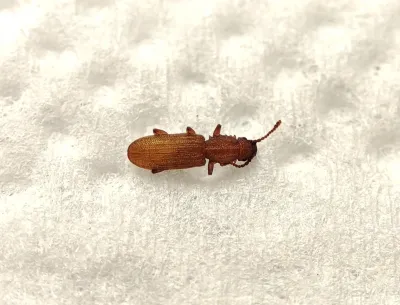
Flour beetles are much smaller at 3 to 4mm and are reddish-brown all over. They do not have the waist between the thorax and wing covers. Flour beetles also have clubbed antennae, while cadelle beetle antennae thicken more slowly toward the tips.
Sawtoothed grain beetles are only 2.5 to 3mm long, much smaller than cadelle beetles. They have six saw-like teeth on each side of the thorax. Cadelle beetles lack these teeth.
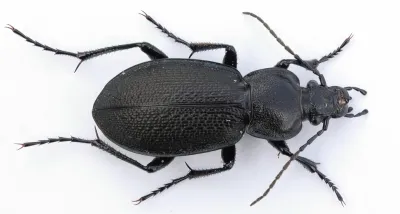
Ground beetles have a similar long, dark body and can be about the same size. But ground beetles live outdoors and hunt other bugs. They have longer legs built for running. You will find them near doors and windows, not inside pantries.
Cadelle Beetle Behavior and Biology
Lifecycle and Development
Cadelle beetles go through four life stages: egg, larva, pupa, and adult. The full cycle takes about 70 days in warm conditions. In cooler temps, it can stretch to several months.
Eggs: Females lay clusters of eggs in cracks, crevices, or among stored grain. One female can lay a few hundred eggs in her lifetime. The eggs are tiny, white, and oval. They hatch in about 8 to 14 days based on the temperature.
Larvae: This is the stage that causes the most damage. Larvae bore into whole grain kernels and tunnel through flour and cereal as they eat and grow. This stage lasts 5 to 14 weeks. When ready to change into adults, the larvae often bore into wood, cardboard, or other materials to make a sheltered chamber. This digging can damage wooden bins, food packages, and grain processing gear.
Pupae: Inside their chambers, larvae change into adults over about 7 to 14 days.
Adults: Cadelle beetle adults live much longer than most pantry pests. They can survive over a year, and some may live up to two years in good conditions. Adults can also go weeks or months without eating. This makes them very hard to get rid of in storage areas.
Best conditions: Cadelle beetles grow fastest at 77 to 90 degrees Fahrenheit. They can stay active at temps as low as 60 degrees Fahrenheit, but growth slows a lot. In heated homes, they can breed all year long.
What Do Cadelle Beetles Eat?
Cadelle beetles feed on many types of stored food. Common targets include:
- Whole grains like wheat, corn, barley, oats, and rice
- Flour and cereal products
- Pasta and baked goods
- Nuts and dried fruits
- Seeds and birdseed
- Pet food and animal feed
- Spices and dried herbs
One thing that makes cadelle beetles stand out is that they are partly predatory. Both adults and larvae will eat the eggs and young of other pantry pests. This means cadelle beetles can survive in storage areas even when there is little food left, as long as other insects are around.
Where Do Cadelle Beetles Hide?
Cadelle beetles are most common in grain storage, flour processing plants, warehouses, and food plants. In homes, you can find them in:
- Pantry shelves with grain, flour, and cereal
- Bulk food storage areas
- Pet food bags and bins
- Kitchen cabinets with baking supplies
- Stored birdseed or garden seeds
Larvae bore into wood and other materials to pupate. This lets cadelle beetles build hidden groups in cracks, gaps, and wooden shelves that are hard to find. Adults hide in dark, tight spaces near their food during the day.
Signs of a Cadelle Beetle Problem
Early Warning Signs
- Large dark beetles in the pantry: Shiny black beetles 6 to 11mm long near stored food.
- Bore holes in grain: Larvae make round holes as they tunnel into whole grains.
- Bore holes in wood or boxes: Larvae bore into wood and cardboard to pupate, leaving small round exit holes.
- Fine powdery dust: Look for gritty residue near stored food.
- Grubs inside food: White larvae with dark heads inside grain, flour, or cereal.
- Damaged containers: Cadelle beetle larvae can chew through thin plastic bags and cardboard.
Where to Inspect
If you think you have cadelle beetles, check these areas:
- All whole grain products, flour, and cereal
- Pet food and birdseed, especially bulk bags
- Baking supplies like nuts and dried fruit
- Wooden pantry shelves (look for small bore holes)
- Cracks and gaps in shelving and cabinet walls
- Behind and under stored food containers
Treatment Methods for Cadelle Beetles
Getting rid of cadelle beetles takes a step-by-step approach that combines cleaning, physical controls, and prevention.
Source Elimination
The most important first step is finding and removing every infested product:
- Check all stored grain, flour, cereal, and baked goods
- Look through pet food, birdseed, and animal feed
- Check nuts, dried fruit, and spices
- Look for bore holes in wooden shelves and food packages
- Throw out any items with signs of beetle activity
Put infested items in sealed plastic bags before throwing them away. This stops beetles from spreading.
Thorough Cleaning
After removing infested products:
- Vacuum all shelves, cracks, gaps, and corners well
- Focus on shelf supports, brackets, and joints where crumbs collect
- Wipe all surfaces with soap and water
- Clean behind and under all storage areas
- Check any wooden parts for bore holes
- Empty the vacuum right away and throw out the contents outside
Temperature Treatment
For items you want to save:
Freezing: Place items at 0 degrees Fahrenheit or colder for at least seven days. This kills all life stages, including eggs and larvae inside grain kernels. Make sure the items freeze all the way through.
Heating: Heat items to 130 degrees Fahrenheit for several hours. This works well for dry goods like grain and flour. Use a thermometer to make sure the heat reaches the center of the product.
Prevention Strategies
To keep cadelle beetles from coming back:
- Store all grain, flour, and cereal in airtight glass or heavy plastic containers
- Buy smaller amounts of products you use slowly
- Check new purchases before putting them in the pantry
- Use older items first and rotate your stock
- Keep storage areas clean, dry, and well-aired
- Fix or seal cracks in wooden shelves where larvae might bore
- Check stored pet food and birdseed often
When to Call a Professional
If cadelle beetles keep coming back after thorough cleaning, or if you find bore holes in wooden parts of your pantry, you may need help from a pro. Cadelle beetles are among the toughest pantry pests to remove because their larvae hide inside grain and wood. A pest control professional can treat cracks, gaps, and hard-to-reach spots that normal cleaning misses. They can also find hidden sources of the problem that are easy to overlook.
References and Further Reading
Other Pantry Pests
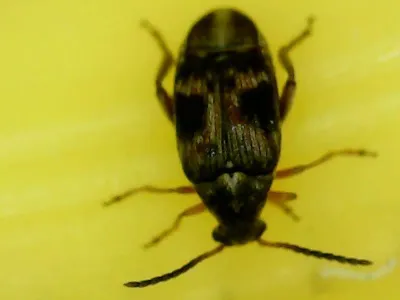
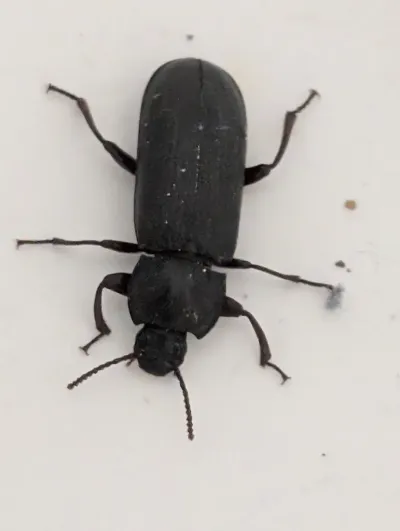
Explore other species in the pantry pests family
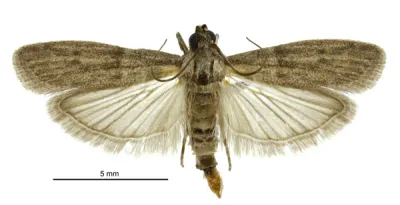
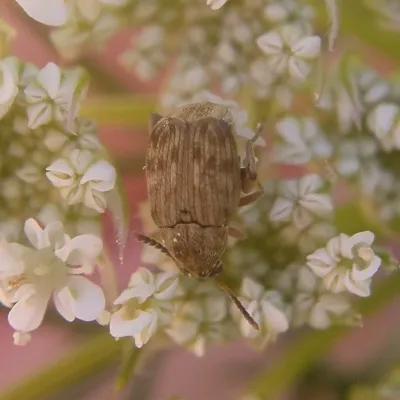
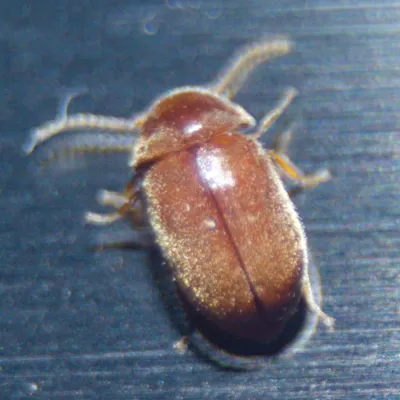
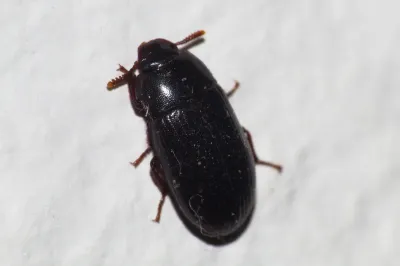
Commonly Confused With
Cadelle Beetles are often mistaken for these similar pests
Where Cadelle Beetles Are Found
Hover over states to see their names. Green regions indicate where cadelle beetles have been reported.
Common Questions about Cadelle Beetles
What do cadelle beetles look like?
+
Cadelle beetles are relatively large stored-product pests, measuring 6 to 11mm long. They have shiny black to dark brown, elongated, slightly flattened bodies. Their most distinctive feature is a noticeable narrowing or waist between the prothorax and the wing covers. The head is partly hidden by the prothorax when viewed from above. Their antennae, legs, and undersides are often reddish-brown.
Are cadelle beetles harmful to humans?
+
Cadelle beetles do not bite or sting humans. However, they can cause major damage to stored grain, flour, cereal, and other pantry items. Their larvae bore into grain kernels and can tunnel into wooden shelving and packaging. Eating food that cadelle beetles have infested can cause stomach discomfort.
How do cadelle beetles get into my house?
+
Cadelle beetles usually enter homes inside infested grain products, flour, cereal, or other stored food items purchased from stores. The products may have been contaminated at a warehouse, grain elevator, or during shipping. Adults are capable of flight and may occasionally enter through open doors or windows, though they fly infrequently.
What do cadelle beetles eat?
+
Cadelle beetles feed on a wide range of stored products including whole grains, flour, cereal, pasta, nuts, dried fruit, seeds, and pet food. They are unusual among pantry pests because both the larvae and adults are partly predatory. They will eat the eggs and larvae of other stored-product insects sharing their habitat.
How long do cadelle beetles live?
+
Cadelle beetles are exceptionally long-lived compared to most pantry pests. Adults can live for over a year, and some sources report lifespans of up to two years under favorable conditions. Their full life cycle from egg to adult takes about 70 days in warm conditions but can stretch to several months in cooler temperatures.
How do I get rid of cadelle beetles?
+
Start by finding and discarding all infested food products. Thoroughly vacuum and clean all pantry shelves, cracks, and crevices. Store remaining food in airtight glass or heavy plastic containers. For items you want to save, freeze them at 0 degrees Fahrenheit for at least seven days to kill all life stages. If the infestation persists, contact a pest management professional.
What is the difference between cadelle beetles and flour beetles?
+
Cadelle beetles are significantly larger than flour beetles, measuring 6 to 11mm compared to the flour beetle's 3 to 4mm. Cadelle beetles are shiny black with a distinct waist between the thorax and wing covers, while flour beetles are reddish-brown with a more uniform body shape. Cadelle beetle larvae bore into whole grain kernels, while flour beetle larvae feed mainly on broken grain and flour.

With five years of hands-on experience in the pest control industry, George Schulz is a registered technician with the Virginia Pest Management Association and a proud third-generation professional in a family business that's been protecting homes for over 57 years. He manages and trains a team of service pros while also leading internal research efforts—recently spearheading a deep-dive review of thousands of documents on pest control materials to hand-pick the most kid and pet friendly, most effective solutions tailored specifically for homes in the DC metro area.