Rice Weevil Identification Guide
Sitophilus oryzae
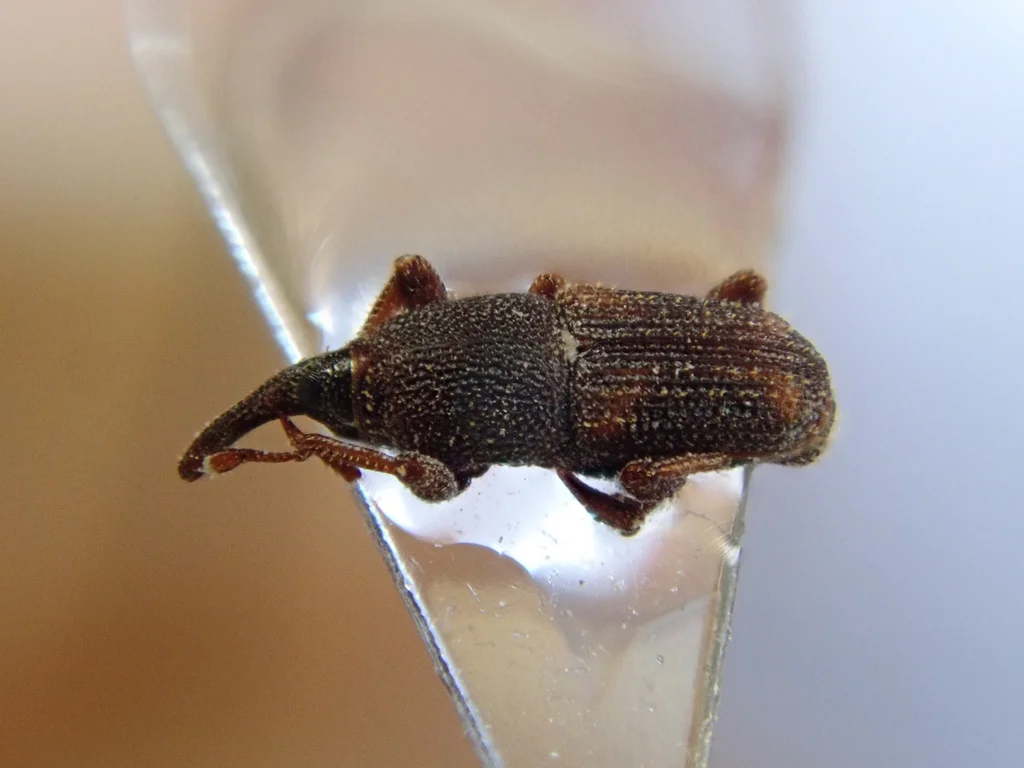
The rice weevil is a small reddish-brown beetle with a long snout that infests stored grains. It has four faint yellowish spots on its wing covers and can fly, making it one of the most widespread pantry pests in North America.
Taxonomy
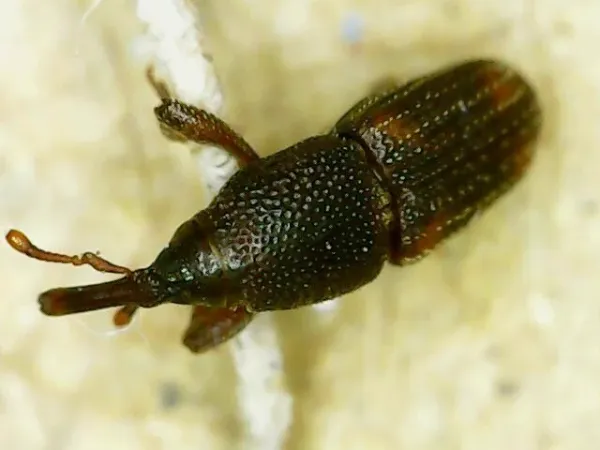
Rice Weevil Coloration
Common color patterns to help identify rice weevil
Rice Weevil
Seasonal Activity
When rice weevil are most active throughout the year
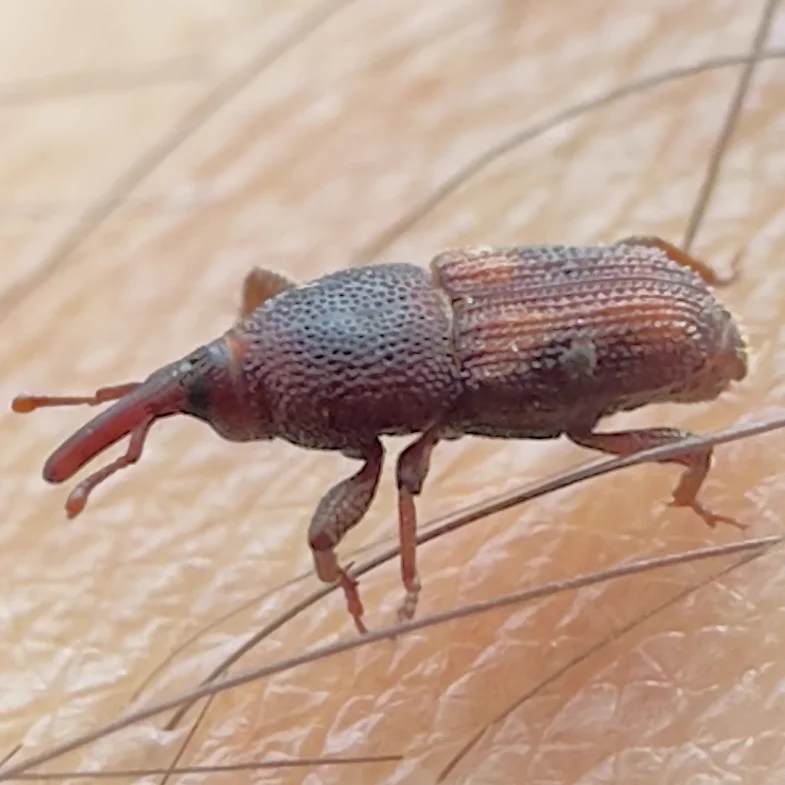
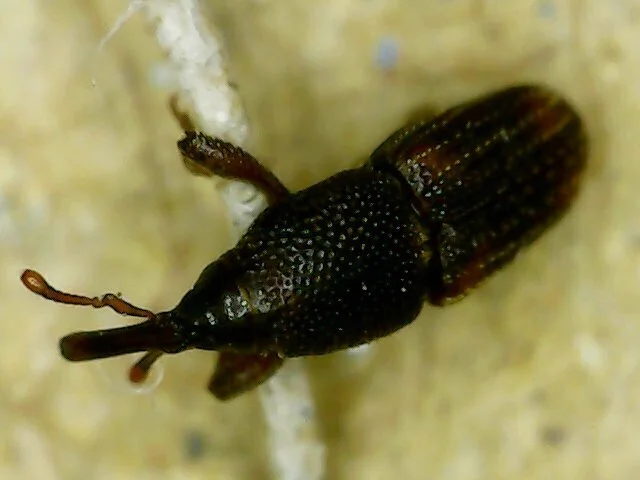
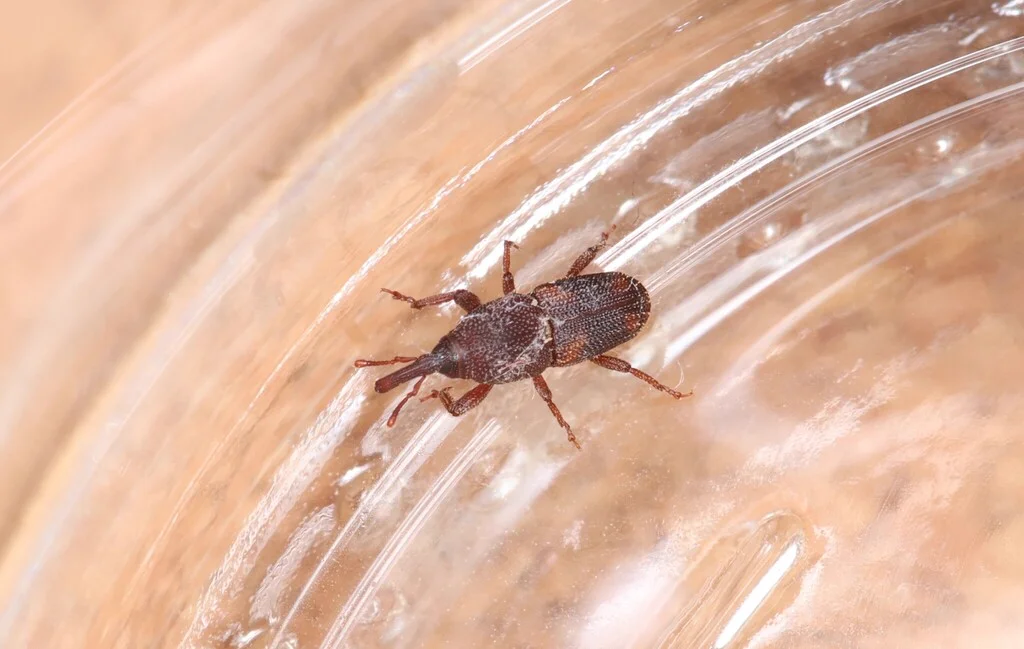

Where Rice Weevil Are Found
Hover over states to see their names. Green regions indicate where rice weevil have been reported.
Rice Weevil Identification Guide
Physical Characteristics
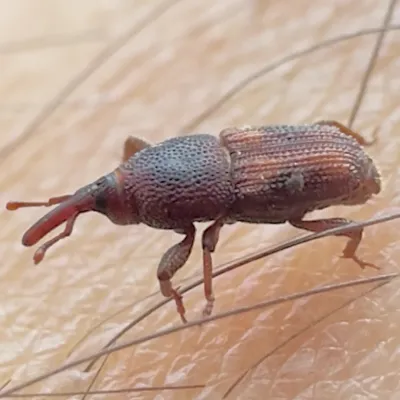
Rice weevils are small beetles measuring 2 to 3 millimeters long, about the size of a grain of rice. Their most notable feature is a long, curved snout that projects from the front of the head. They use this snout to bore into grain kernels when feeding and laying eggs.
The body is reddish-brown to dark brown with a pitted, textured surface. Rice weevils have four faint yellowish or reddish spots on their wing covers, two on each side. These spots help tell them apart from the similar-looking granary weevil, which lacks any spots. The antennae are bent and club-shaped, attached near the middle of the snout.
Rice weevils have fully developed wings under their wing covers and can fly. They are drawn to light, which you may notice if they fly toward windows or lamps in your kitchen. Their legs are reddish-brown with small spines that help them grip grain surfaces.
Life Stages
The rice weevil goes through complete metamorphosis with four life stages: egg, larva, pupa, and adult. What makes this pest unusual is that the first three stages all happen hidden inside a single grain kernel.
Female rice weevils use their snouts to chew a small hole into a grain kernel. They deposit one egg inside and seal the hole with a waxy plug. A single female can lay 300 to 400 eggs over her 4 to 5 month lifespan.
Eggs hatch in 4 to 14 days depending on temperature. The larva is a small, legless, creamy-white grub with a brown head. It feeds on the inside of the kernel for 3 to 5 weeks, hollowing out the grain as it grows. The pupal stage lasts about one week inside the empty kernel shell.
When the adult is ready, it chews a round exit hole through the grain’s outer coat and emerges. These “shot holes” are often the first visible sign of a rice weevil problem. In warm conditions around 80 degrees Fahrenheit, the full cycle from egg to adult takes 4 to 5 weeks.
Rice Weevil Behavior and Biology
Habitat Preferences
Rice weevils thrive in warm, humid conditions. They prefer temperatures between 75 and 90 degrees Fahrenheit with humidity above 40 percent. These conditions are common in many home pantries, especially during summer months.
Unlike many stored product pests, rice weevils can tolerate cooler temperatures. They remain active at temperatures as low as 60 degrees, though their development slows. This allows them to survive in climate-controlled homes year-round.
Rice weevils are found worldwide and rank among the most common stored grain pests. They originated in tropical regions of Asia and spread through international grain trade. Today they infest homes, warehouses, grain elevators, and food processing plants across North America.
Diet and Feeding Habits
Rice weevils feed on whole, undamaged grains. They attack rice, wheat, corn, oats, barley, rye, millet, and sorghum. They will also infest dried beans, bird seed, and some pasta products made from whole grains.
Adults and larvae both feed on grain, but larvae cause the most damage. Each larva consumes most of the inside of one kernel as it develops. A heavy infestation can destroy large amounts of stored grain. The empty shells left behind crumble into fine powder.
Adult weevils continue feeding after they emerge. They chew into the outside of grains, leaving irregular pits and holes. Adults can survive without food for up to one month, which helps them spread to new food sources.
Reproduction
Rice weevils reproduce quickly under good conditions. A single pair can produce hundreds of offspring in just a few months. Females begin laying eggs within days of mating and continue throughout their adult lives.
Development speeds up in warm weather. At 86 degrees Fahrenheit, rice weevils complete their life cycle in about 26 days. At cooler temperatures around 70 degrees, development takes 8 weeks or longer. This temperature sensitivity means infestations grow fastest during summer.
Rice weevils mate multiple times. Females store sperm and can produce fertile eggs for their entire lifespan after a single mating. This means even one female in your pantry can start a large infestation.
How We Treat for Rice Weevils
Rice weevil control focuses on finding the source, removing infested products, and stopping future problems. Larvae develop hidden inside grain kernels, so surface sprays alone cannot reach them.
Inspection and Source Removal
The first step is a thorough inspection of all stored food products. We check rice, cereals, flour, pasta, bird seed, pet food, and any other grain-based items. Infested products must be sealed in bags and removed from the home to stop the infestation cycle.
Deep Cleaning
After removing infested items, we recommend vacuuming all pantry shelves, corners, and cracks. Rice weevil eggs and larvae can hide in tiny gaps. A thorough cleaning removes these hidden pests and the spilled grain they feed on.
Crack and Crevice Treatment
For persistent infestations, we apply residual treatments to cracks and crevices where weevils may hide. This targets adults that have left the food source and may be crawling in the pantry structure.
Prevention Guidance
We help you set up proper food storage to prevent future problems. Airtight containers made of glass, metal, or thick plastic keep weevils from spreading between products. Freezing new grain purchases for 4 days before pantry storage kills any eggs or larvae already inside.
Monitoring
Pheromone traps designed for stored product pests can help monitor for remaining activity. These traps attract adult weevils and show whether the infestation has been fully controlled.
Prevention Tips
Preventing rice weevils starts at the store. Inspect grain packages before buying and avoid any with holes, tears, or visible insects. Choose products with recent packaging dates when possible.
Store all grains in airtight containers as soon as you bring them home. Glass jars with rubber-sealed lids work well. Metal canisters and thick plastic containers with snap-tight lids also protect food from weevils.
Consider freezing grain products for 4 to 7 days before storing them in your pantry. Freezing kills rice weevil eggs and larvae that may already be inside the grains. This simple step can prevent infestations before they start.
Keep your pantry cool and dry. Rice weevils prefer warm, humid conditions. Good ventilation and air conditioning help make your pantry less attractive to these pests.
Rotate your food stock by using older products first. Rice weevils take 4 to 5 weeks to develop, so using grains within a month of purchase reduces your risk. Do not store large amounts of grain for long periods.
Clean spills right away. Spilled grain in pantry corners provides food for weevils and other pests. Regular vacuuming and wiping down shelves removes these food sources.
References
Other Other Pests
Explore other species in the other pests family
Where Rice Weevil Are Found
Hover over states to see their names. Green regions indicate where rice weevil have been reported.
Common Questions about Rice Weevil
How do rice weevils get into sealed food packages?
+
Rice weevils often enter your home already inside the grains you buy. Female weevils lay eggs inside grain kernels at food processing or storage facilities. The larvae grow hidden inside the kernel, and you may not notice a problem until adult weevils emerge weeks later.
Can rice weevils fly?
+
Yes, rice weevils can fly. This sets them apart from granary weevils, which cannot fly. Rice weevils are also drawn to light, which helps them spread to new food sources in your home. Their ability to fly makes them harder to contain once they infest your pantry.
What foods do rice weevils infest?
+
Rice weevils attack many whole grains and seeds. They infest rice, wheat, corn, oats, barley, rye, bird seed, dried beans, and some cereals. They prefer whole, undamaged kernels because the female must bore into the grain to lay her eggs inside.
Are rice weevils harmful to humans?
+
Rice weevils do not bite, sting, or spread diseases. Eating food with rice weevils will not make you sick. However, most people throw away infested products because finding insects in your food is unpleasant.
How long do rice weevils live?
+
Adult rice weevils live 4 to 5 months. Some may survive up to 8 months under good conditions. A single female can lay 300 to 400 eggs in her lifetime. In warm weather around 80 degrees, the full life cycle from egg to adult takes about 4 to 5 weeks.
How do I know if I have rice weevils?
+
Look for small reddish-brown beetles with long snouts in your pantry. Check for small round holes in grains where adults have chewed their way out. You may also see fine powder or dust in your grain products from their feeding. Rice weevils are drawn to light, so you might spot them near windows.
Will freezing kill rice weevils?
+
Yes, freezing works well to kill rice weevils at all life stages. Place infested or suspect grains in your freezer at 0 degrees Fahrenheit for at least 4 days. You can also freeze new grain purchases as a preventive step before storing them in your pantry.
How do I get rid of rice weevils?
+
Start by finding and throwing away all infested food. Check every grain product in your pantry. Vacuum all shelves, cracks, and corners to remove eggs and larvae. Wipe down surfaces with soap and water. Store remaining grains in airtight glass, metal, or thick plastic containers.

With five years of hands-on experience in the pest control industry, George Schulz is a registered technician with the Virginia Pest Management Association and a proud third-generation professional in a family business that's been protecting homes for over 57 years. He manages and trains a team of service pros while also leading internal research efforts—recently spearheading a deep-dive review of thousands of documents on pest control materials to hand-pick the most kid and pet friendly, most effective solutions tailored specifically for homes in the DC metro area.