White-Shouldered House Moth Identification Guide
Endrosis sarcitrella
The white-shouldered house moth is a common household pest found worldwide in buildings year-round. Its larvae feed on a wide variety of dried organic materials including stored foods, grains, dried fruits, and occasionally textiles.
Taxonomy
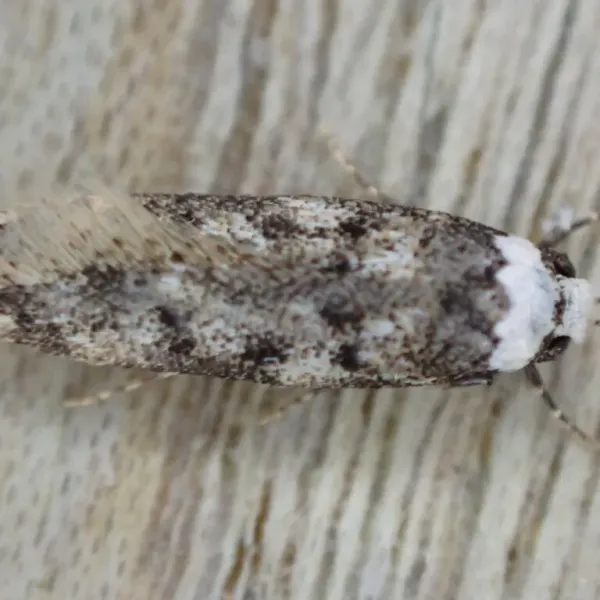
White-Shouldered House Moth Coloration
Common color patterns to help identify white-shouldered house moth
White-Shouldered House Moth
Seasonal Activity
When white-shouldered house moth are most active throughout the year

Where White-Shouldered House Moth Are Found
Hover over states to see their names. Green regions indicate where white-shouldered house moth have been reported.
White-Shouldered House Moth Identification Guide
Physical Characteristics
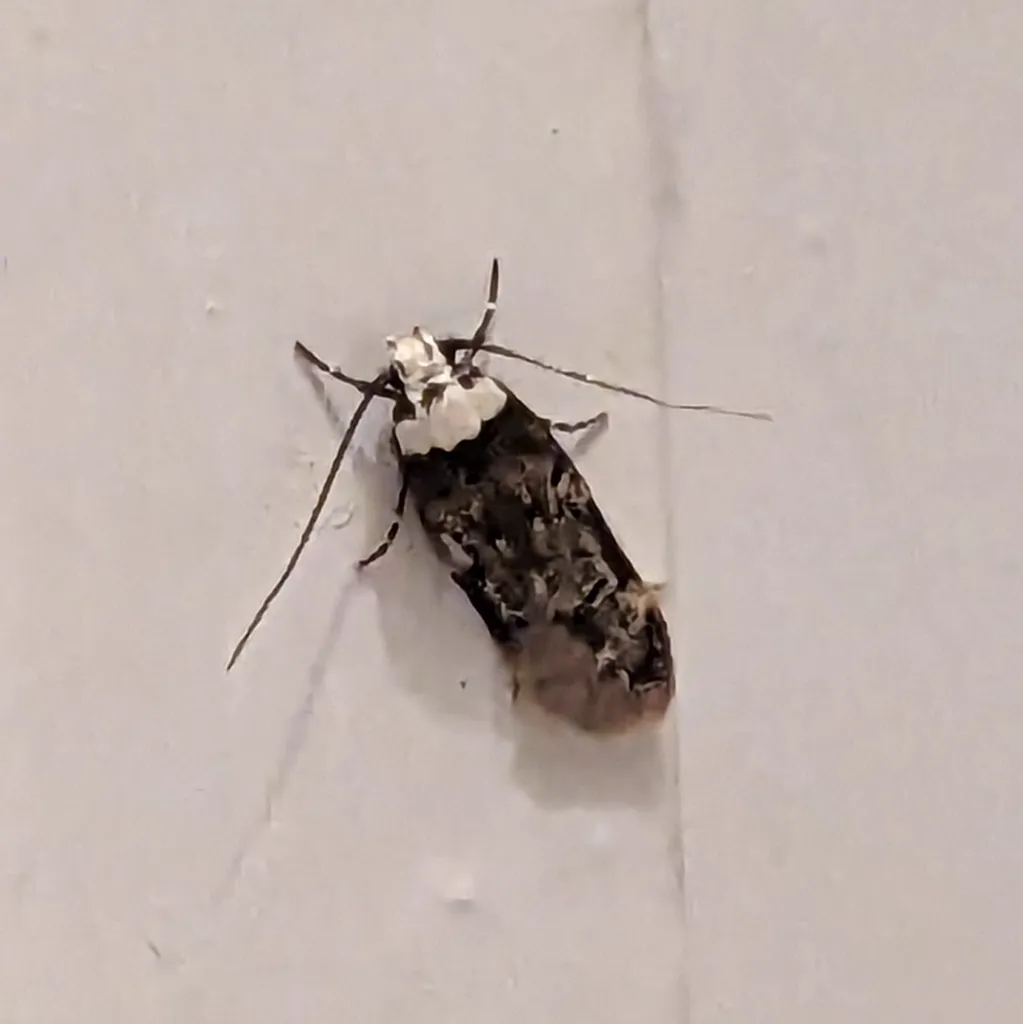
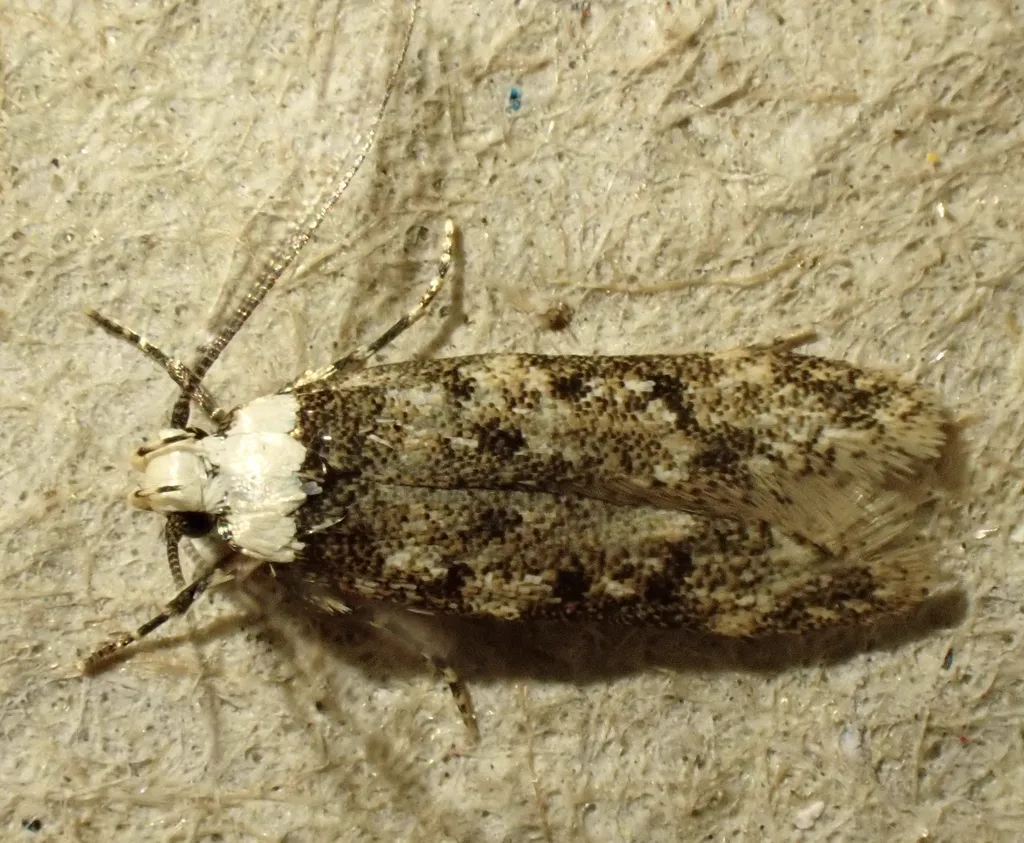
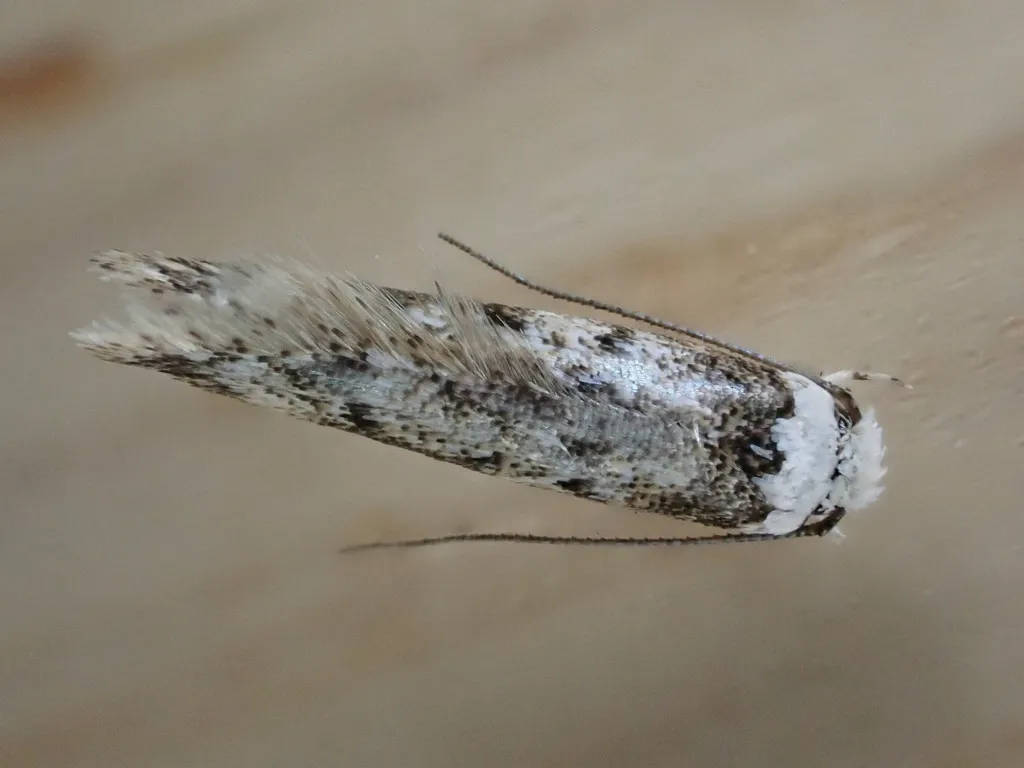
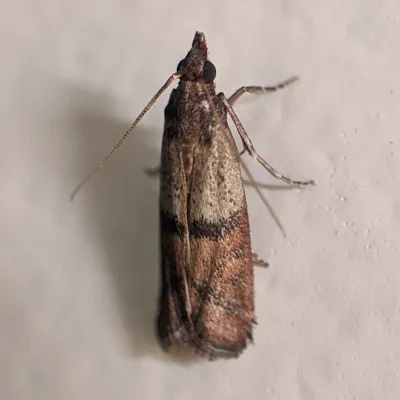
The white-shouldered house moth (Endrosis sarcitrella) is a small moth that you can easily tell apart from other household moths. It has a bright white head and shoulders that stand out against its gray-brown wings. The wings have dark spots and patches that give them a speckled look.
Adults are 6-10mm long. Males tend to be smaller at about 6mm, while females can reach 10mm. The wingspan is 10-25mm. The back wings are lighter in color with fine hairs along the edge. When resting, the wings fold flat against the body like a tent.
These moths have long, thin antennae that point forward from their white heads. They fly toward lights and are often found near windows at night. Unlike some household moths that hide from light, these moths are drawn to bright areas.
Larvae Appearance
The larvae are small, grub-like caterpillars that grow up to 15mm long. They are dirty white or cream colored with a light brown head. The larvae build silk tubes inside their food and feed mostly at night from the shelter of these tunnels.
Silken webbing and tunnels are often the first signs of an infestation. You may see thin, thread-like tubes mixed with food bits and droppings. The pupae are light brown and wrapped in loose, silky cocoons away from the feeding area.
Common Species
The white-shouldered house moth is the only species in its genus (Endrosis). It shares homes with several similar moths:
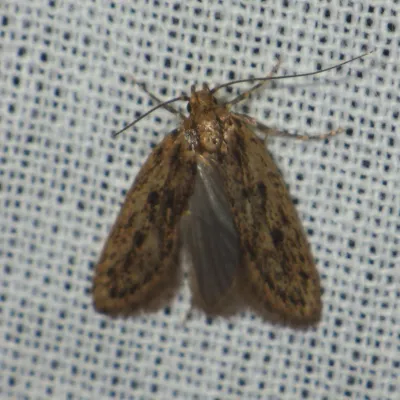
- Brown House Moth (Hofmannophila pseudospretella): Larger and all brown without the white head and shoulders
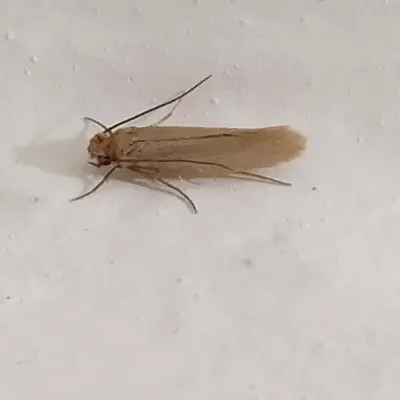
- Webbing Clothes Moth (Tineola bisselliella): Smaller with golden-tan wings; prefers fabrics
- Indian Meal Moth (Plodia interpunctella): Has two-toned wings with copper-colored tips; mainly a pantry pest
White-Shouldered House Moth Behavior and Biology
Habitat and Distribution
This moth originally came from Europe and Asia but has spread worldwide through trade in dried goods. It now lives throughout North America, Europe, and other areas where people live. This species lives closely with humans and their buildings.
White-shouldered house moths live almost only indoors in cooler climates. They need the steady warmth of buildings to survive. You can find them in barns, grain storage areas, and other places where dried food is kept. In homes, they show up in pantries, kitchens, basements, and attics. Bird nests in or near buildings also provide them with food and shelter.
Diet and Feeding Habits
White-shouldered house moth larvae eat many types of dried materials. Their main food sources include:
- Stored foods: Dried fruits, cereals, bran, flour, oatmeal, and grain products
- Seeds: Birdseed, grass seed, and stored seeds
- Plant material: Potatoes, rotting wood, cork, and dried plant bits
- Animal products: Old fabrics, wool sometimes, feathers, and dried insects
- Other items: Old rodent baits, debris in bird nests, and built-up organic matter
Unlike true clothes moths that eat keratin-rich fabrics, white-shouldered house moths prefer plant materials. They rarely cause major damage to wool or silk but may eat these when other food runs out.
Adult moths cannot eat because their mouthparts are too small. They only live 2-3 weeks as adults, and their sole job is to mate and lay eggs.
Reproduction and Lifecycle
Females lay about 200 eggs during their lifetime. They place eggs on or near food sources for the larvae. The eggs are small, oval, and cream colored.
The lifecycle has four stages:
- Egg stage: 7-25 days, depending on temperature
- Larval stage: Several months of feeding and growing
- Pupal stage: 1-5 weeks in a silk cocoon
- Adult stage: 2-3 weeks, focused on mating
In heated buildings, these moths breed all year long with overlapping generations. This constant breeding means infestations can last forever if not treated. Warmer temperatures speed up the lifecycle.
Treatment Methods for White-Shouldered House Moths
Getting rid of white-shouldered house moths takes a few steps: finding and removing food sources, cleaning well, and watching for signs of return.
Inspection and Source Identification
Check all areas where these moths might find food:
- Pantry shelves and food storage spots
- Bulk grain, flour, and cereal products
- Bird seed and pet food storage
- Dried fruit, nuts, and seed collections
- Attics near bird nests or debris
- Basements with stored goods or old materials
- Areas where old rodent bait may be
Look for adult moths near lights, silk webbing in food, larvae in stored goods, and debris that could feed them.
Source Elimination
Throw away all infested food products. Check every package, container, and bag of dry goods. Get rid of items in damaged packaging or those with webbing, larvae, or strange debris.
For items you want to save:
- Freezing: Keep items at 0 degrees F for at least 72 hours to kill all life stages
- Heat treatment: Heat materials above 120 degrees F for 30 minutes or more
- Isolation: Put items in sealed containers for several weeks to prevent spread
Cleaning and Sanitation
Good cleaning removes eggs, larvae, and food bits:
- Empty pantry shelves and vacuum well, including cracks
- Wipe down shelves with soap and water
- Clean behind and under appliances where food debris builds up
- Vacuum attic spaces, especially near old bird nests
- Remove built-up debris from basements and storage areas
Prevention and Monitoring
Prevent future problems with these steps:
- Store all dry goods in airtight glass or plastic containers
- Check groceries before storing, especially bulk items
- Keep pantry shelves clean and tidy
- Use older products before newer ones
- Keep storage areas dry with good airflow
- Use pheromone traps to watch for moth activity
Pheromone traps made for pantry moths can detect white-shouldered house moths. For more on pantry pests, see our guide on how to get rid of pantry moths. They help show if the problem is gone or still around.
References and Further Reading
Other Moths
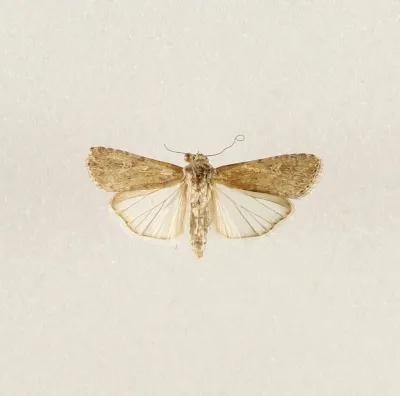
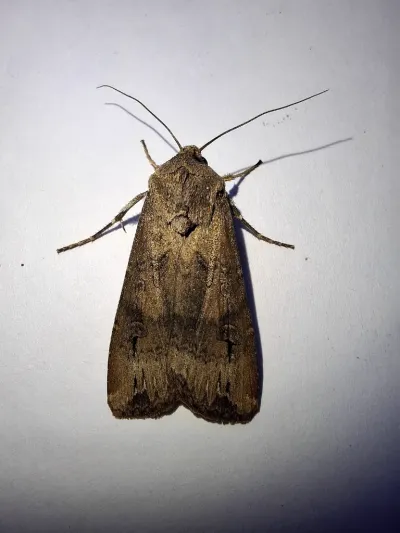
Explore other species in the moths family
Commonly Confused With
White-Shouldered House Moth are often mistaken for these similar pests
Where White-Shouldered House Moth Are Found
Hover over states to see their names. Green regions indicate where white-shouldered house moth have been reported.
Common Questions about White-Shouldered House Moth
How do I identify a white-shouldered house moth?
+
Look for a small moth with a bright white head and shoulders. The rest of the body has gray-brown wings with dark spots. Adults are small, about 6 to 10mm long.
What do white-shouldered house moth larvae eat?
+
The larvae eat many dried materials. They feed on dried fruits, cereals, flour, seeds, potatoes, and rotting wood. They also eat animal feed and old rodent bait. Sometimes they damage wool and old fabrics.
Are white-shouldered house moths harmful?
+
These moths do not bite or sting people. The larvae can get into stored food and sometimes damage fabrics. They cause less fabric damage than clothes moths. You should throw away any food they have gotten into.
Why do I see white-shouldered house moths year-round?
+
These moths breed all year in heated buildings. Unlike outdoor moths that follow seasons, they can reproduce any time when living indoors. This is why you may see them in any month.
How did white-shouldered house moths get into my house?
+
They usually come in with infested food, grains, or dried goods from stores. They may also arrive with bird seed or pet food. Sometimes they spread from bird nests in attics or sheds.
How long does it take for white-shouldered house moth eggs to hatch?
+
Eggs hatch in 7 to 25 days based on temperature. The full lifecycle from egg to adult takes several months. Adult moths live about 2 to 3 weeks.
What is the best way to get rid of white-shouldered house moths?
+
Find and throw away infested food. Clean pantry shelves well and store dry goods in airtight containers. Vacuum areas where debris builds up. Pheromone traps help track activity. Bad infestations may need professional treatment.

With five years of hands-on experience in the pest control industry, George Schulz is a registered technician with the Virginia Pest Management Association and a proud third-generation professional in a family business that's been protecting homes for over 57 years. He manages and trains a team of service pros while also leading internal research efforts—recently spearheading a deep-dive review of thousands of documents on pest control materials to hand-pick the most kid and pet friendly, most effective solutions tailored specifically for homes in the DC metro area.