Peachtree Borer Moth Identification Guide
Synanthedon exitiosa
The peachtree borer moth is a destructive clearwing moth whose larvae bore into the trunks of peach, plum, cherry, and other stone fruit trees. Adults closely resemble wasps but do not sting.
Taxonomy
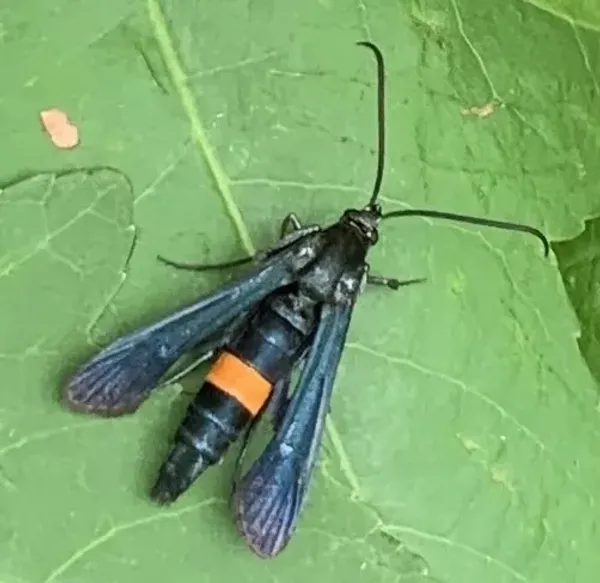
Peachtree Borer Moth Coloration
Common color patterns to help identify peachtree borer moth
Peachtree Borer Moth
Seasonal Activity
When peachtree borer moth are most active throughout the year
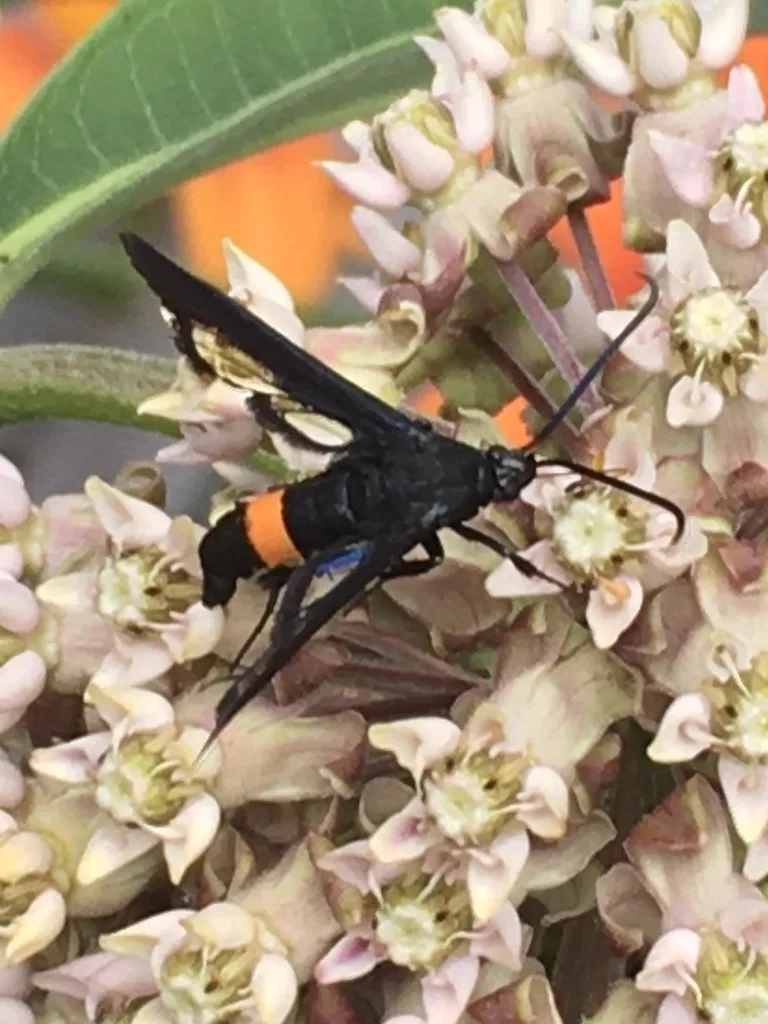
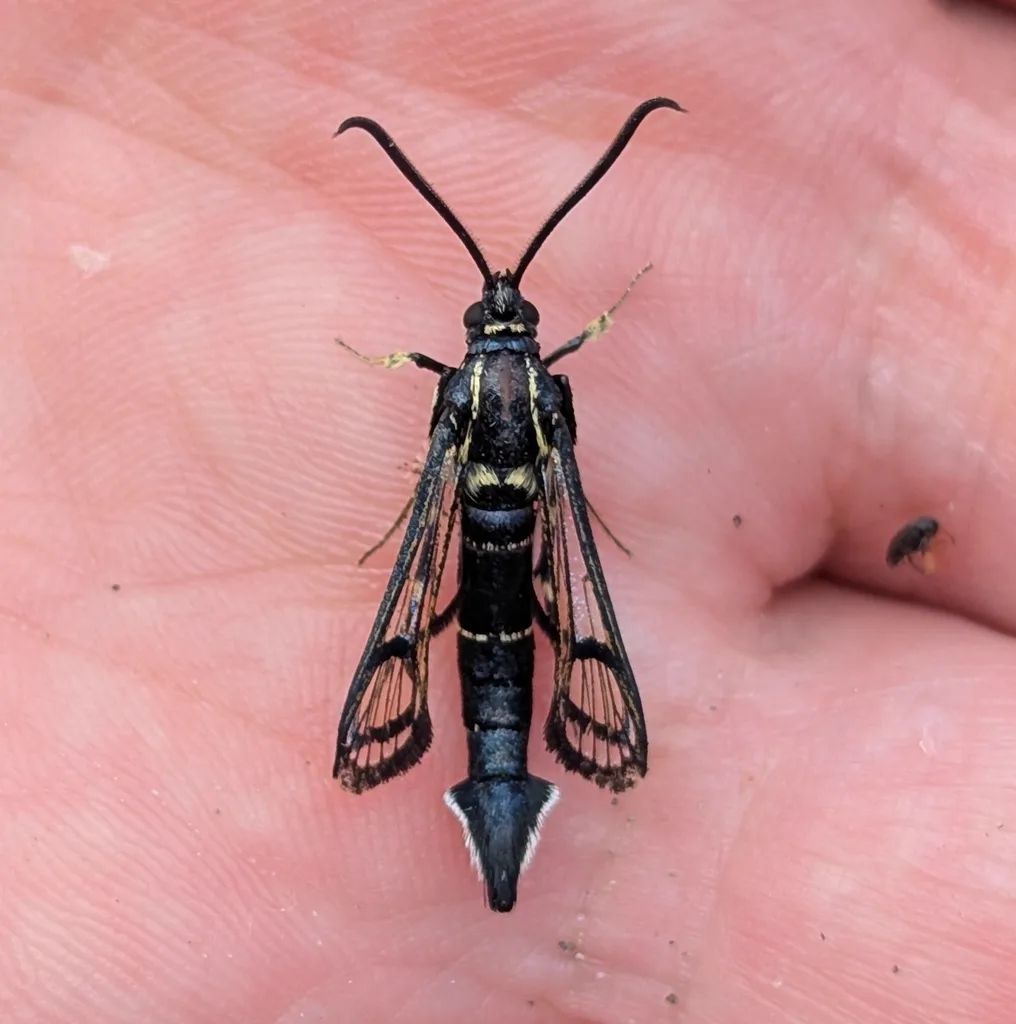
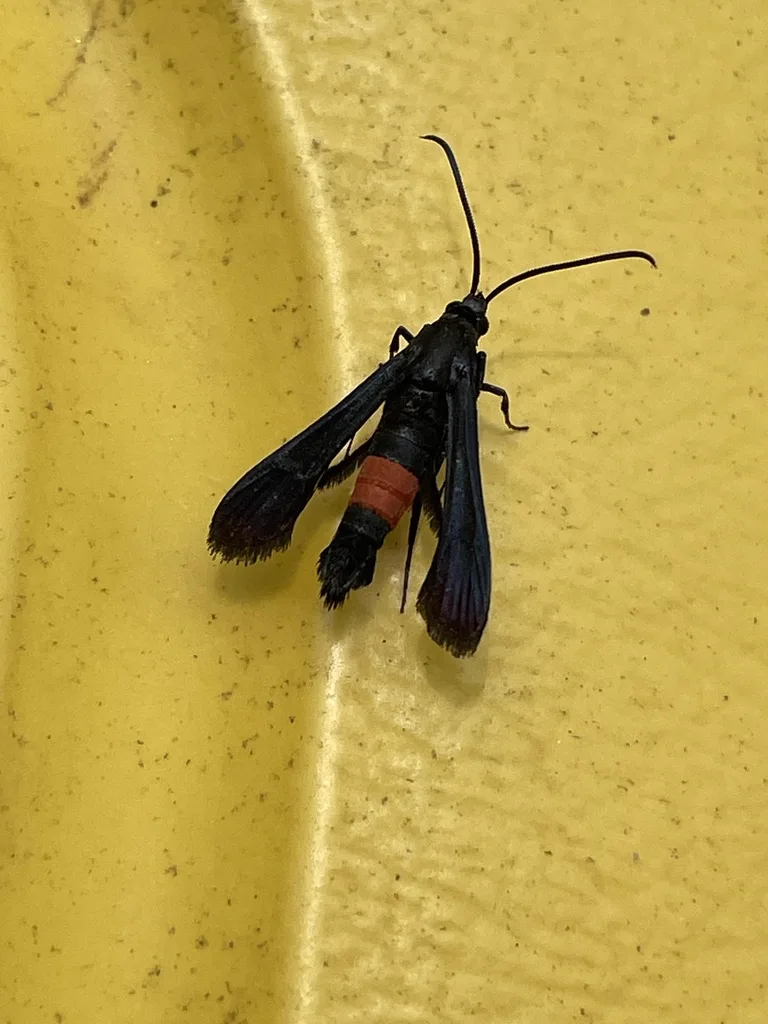

Where Peachtree Borer Moth Are Found
Hover over states to see their names. Green regions indicate where peachtree borer moth have been reported.
Peachtree Borer Moth Identification Guide
Physical Characteristics
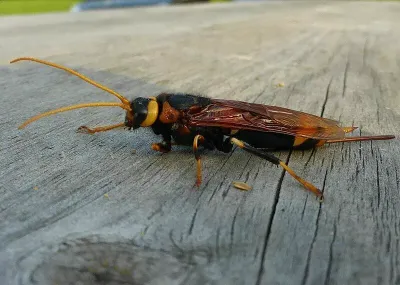
The peachtree borer moth belongs to the clearwing moth family. These moths look a lot like wasps. Many people mistake them for stinging insects at first. But they are harmless moths that cannot sting.
Female moths are larger than males. They have a wingspan of about 25 to 35mm. Their bodies are shiny blue-black. The most notable feature is a bright orange band around the belly. This band covers two body segments. The front wings are dark and solid. The back wings are mostly clear with dark edges.
Male moths are smaller and thinner than females. They have narrow yellow bands around the belly. These bands may hide when the body curves. Males have more clear areas on their wings than females. Both males and females have long, dark antennae.
Unlike most moths, peachtree borers fly during the day. They dart around quickly, which makes them look even more like wasps. Flying by day helps protect them from predators.
Larvae Identification
The larvae cause all the damage to trees. Young larvae are tiny when they hatch. They grow to 12 to 35mm long when fully grown. They are cream or white colored with a brown head. The body is soft and grub-like with clear segments.
Larvae live inside the tree and feed under the bark. You will not see them unless you cut into damaged parts of the trunk. You can tell they are there by the gummy sap and sawdust they push out of their tunnels.
Similar Species
Lesser Peachtree Borer (Synanthedon pictipes): This related species attacks the upper trunk and branches instead of the base. These two species together cause more damage to peach trees than all other insects.
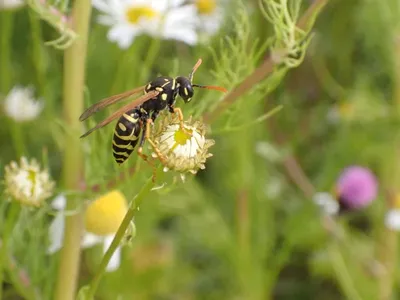
Paper Wasps: These stinging insects look similar but lack the fuzzy scales of moths. Wasps have a thin waist and fold their wings lengthwise when resting.
Other Clearwing Moths: Other clearwing moths attack different plants. The squash vine borer targets squash and pumpkin vines. The dogwood borer attacks dogwood trees. To learn how to tell moths from butterflies and other flying insects, see our guide on moth vs butterfly identification.
Peachtree Borer Moth Behavior and Biology
Lifecycle and Development
Peachtree borers have one generation per year. Knowing their lifecycle helps you time control efforts.
Overwintering: Partly grown larvae spend winter in tunnels under the bark. They go dormant when it gets cold and start feeding again in spring.
Pupation: Mature larvae build silken cocoons under the bark near the soil. This happens between May and August. The pupal stage lasts 17 to 25 days. You may see empty brown pupal skins sticking out of the bark after adults emerge.
Adult Emergence: Moths start emerging in May in southern areas. They keep emerging through September. Most emerge from late June through August. Males come out about two weeks before females.
Mating and Egg Laying: Female moths release scents that attract males from far away. Mating happens soon after females emerge. Each female can lay 400 to 900 eggs over her short life of a few weeks. Some lay up to 1,200 eggs. A related species, Armyworms, shares similar characteristics.
Eggs: Females lay eggs in cracks and rough bark on the lower trunk. Most eggs are within 12 inches of the soil line. Eggs are tiny and oval. They hatch in 8 to 10 days in warm weather. A related species, Fall Webworms, shares similar characteristics.
Larval Feeding: New larvae bore into the bark right away. They feed on the cambium layer all summer and fall until cold weather makes them go dormant.
Host Plants and Damage
The peachtree borer gets its name from its main host, the peach tree. But it attacks many stone fruit trees. The Oriental fruit moth is another moth pest of stone fruits, though it bores into the shoots and fruit rather than the trunk. Trees at risk include:
- Peach and nectarine
- Plum and prune
- Cherry (sweet and sour)
- Apricot
- Almond
- Wild plum and wild cherry
Larvae feed on the inner bark of the trunk at or just below soil level. This layer moves water and nutrients through the tree. When larvae tunnel through it, they cut off the tree’s supply lines.
Signs of damage include:
- Gummy sap oozing from the trunk base
- Sawdust mixed with the gum
- Branch dieback
- Wilting leaves in hot weather
- Poor fruit production
- Slow tree decline over several years
Young trees are at greatest risk. One larva can kill a young tree in one season by girdling the trunk. Older trees can handle some damage. But heavy attacks weaken them over time. Weak trees often get fungal or bacterial infections.
Detection and Monitoring
Signs of Infestation
Check fruit trees often, especially in late spring and summer. Look at the trunk from soil level to about 12 inches up. Warning signs include:
- Gummy sap: Amber-colored gum oozing from the trunk base is the clearest sign. This sap often has brown sawdust and wood bits in it.
- Sawdust buildup: Waste material collects at the base of infested trees.
- Pupal skins: Empty brown cases sticking out of bark mean moths recently emerged.
- Bark damage: Rough or cracked bark at the trunk base may hide larval tunnels.
Pheromone Traps
Pheromone traps help track adult moth activity. These traps give off scents that attract and catch male moths. They help in two ways:
- Timing treatments: Traps show when adults are active and laying eggs.
- Mating disruption: Many traps in an orchard can confuse males and reduce mating.
Set traps in late spring before moths emerge. Check them weekly to track moth activity in your area.
Treatment Methods for Peachtree Borers
Control methods target different life stages of the borer. Using several methods together works best.
Cultural Controls
Keeping trees healthy makes them less likely to be attacked:
- Proper watering: Avoid water stress that weakens trees
- Balanced fertilizer: Too much nitrogen makes soft growth that attracts borers
- Protect the trunk: Wounds from mowers and trimmers attract egg-laying females
- Remove infested trees: Badly damaged trees spread borers to healthy trees
- Clear the base: Keep grass and weeds away from trunk bases
Physical Barriers
Barriers stop moths from laying eggs on trunk bark:
- Wrap trunk bases with fine mesh or tree wraps before egg-laying season
- Make sure barriers go from just below soil to at least 12 inches up
- Remove barriers in fall after moths stop flying to prevent moisture problems
Mechanical Removal
For small problems, you can remove larvae by hand:
- In fall or spring, probe gummy areas with a knife or wire
- Find and kill larvae in their tunnels
- Be careful not to damage healthy bark
- This works best for young trees with few larvae
Chemical Controls
Insecticides can protect trees when timed well:
- Trunk sprays in late spring and late summer kill young larvae before they bore in
- Pyrethroid products labeled for borers protect bark surfaces
- Systemic products applied to soil can protect trees from inside
- Using pheromone traps to time sprays makes them work better
Mating Disruption
The European corn borer is another tunneling moth pest that homeowners near agricultural areas may encounter on their property. In orchards, pheromone products can reduce borer numbers:
- Dispensers release scents throughout the orchard
- High scent levels confuse males so they cannot find females
- This works best in orchards far from wild host plants
- It may take several years to reduce borer numbers
Prevention Tips
Protecting fruit trees from peachtree borers takes ongoing care:
- Plant trees in well-drained soil and water them properly
- Do not damage bark with mowers or trimmers
- Remove suckers and water sprouts from the trunk base
- Check trees monthly during the growing season
- Apply trunk treatments before moths emerge
- Remove and destroy badly infested trees quickly
- Choose resistant rootstocks when planting new trees
References and Further Reading
- NC State Extension - Greater Peachtree Borer in the Landscape
- University of Florida - Peachtree Borer
- Colorado State University Extension - Peachtree Borer
- Penn State Extension - Tree Fruit Insect Pest: Peachtree Borer
- Oklahoma State University - Peachtree Borer
- Pacific Northwest Pest Management Handbooks - Peachtree Borer
Other Moths
Explore other species in the moths family
Commonly Confused With
Peachtree Borer Moth are often mistaken for these similar pests
Where Peachtree Borer Moth Are Found
Hover over states to see their names. Green regions indicate where peachtree borer moth have been reported.
Common Questions about Peachtree Borer Moth
What does a peachtree borer moth look like?
+
Peachtree borer moths are clearwing moths that closely resemble wasps. Females are larger with a wingspan of about 35mm, metallic blue-black coloring, and a bright orange band around the abdomen. Males are smaller and more slender with narrow yellow bands on the abdomen. Both have mostly clear wings with dark borders.
Do peachtree borer moths sting?
+
No, peachtree borer moths do not sting despite looking very similar to wasps. This resemblance is a form of protective mimicry that helps them avoid predators. They are completely harmless to humans and pets.
What trees do peachtree borers attack?
+
Peachtree borers primarily attack stone fruit trees in the genus Prunus. Their main hosts include peach, nectarine, plum, prune, cherry, apricot, and almond trees. Their original native hosts were wild plums and wild cherries before cultivated fruit trees became available.
How do I know if my tree has peachtree borers?
+
Look for gummy, amber-colored sap oozing from the base of the trunk near the soil line. This gum often contains sawdust-like frass and wood fragments. You may also see pupal skins protruding from the bark in summer. Severely infested trees show wilting, poor growth, and may eventually die.
When are peachtree borer moths active?
+
Adult moths emerge from May through September, with peak activity in July and August. They are day-flying moths, unlike most moths which fly at night. Females lay eggs within hours of emerging, and egg-laying continues through the warm months.
How much damage can peachtree borers cause?
+
Peachtree borers can cause severe damage to fruit trees. The larvae feed on the cambium layer and inner bark near the soil line, which can girdle and kill young trees. Even mature trees weakened by borers become susceptible to disease and may decline over several years. They account for more damage to peach trees than all other insect pests combined.
Can I prevent peachtree borer infestations?
+
Yes, prevention strategies include maintaining tree health through proper watering and fertilization, avoiding trunk injuries that attract egg-laying females, keeping grass and weeds away from tree bases, and wrapping trunk bases with protective barriers before egg-laying season begins in late spring.

With five years of hands-on experience in the pest control industry, George Schulz is a registered technician with the Virginia Pest Management Association and a proud third-generation professional in a family business that's been protecting homes for over 57 years. He manages and trains a team of service pros while also leading internal research efforts—recently spearheading a deep-dive review of thousands of documents on pest control materials to hand-pick the most kid and pet friendly, most effective solutions tailored specifically for homes in the DC metro area.