Oriental Fruit Moth Identification Guide
Grapholita molesta
The Oriental fruit moth is a significant agricultural pest that attacks peaches, apples, pears, and other stone and pome fruits. Originally from China, this small gray-brown moth has spread throughout North America, where its larvae bore into growing shoots and ripening fruit.
Taxonomy
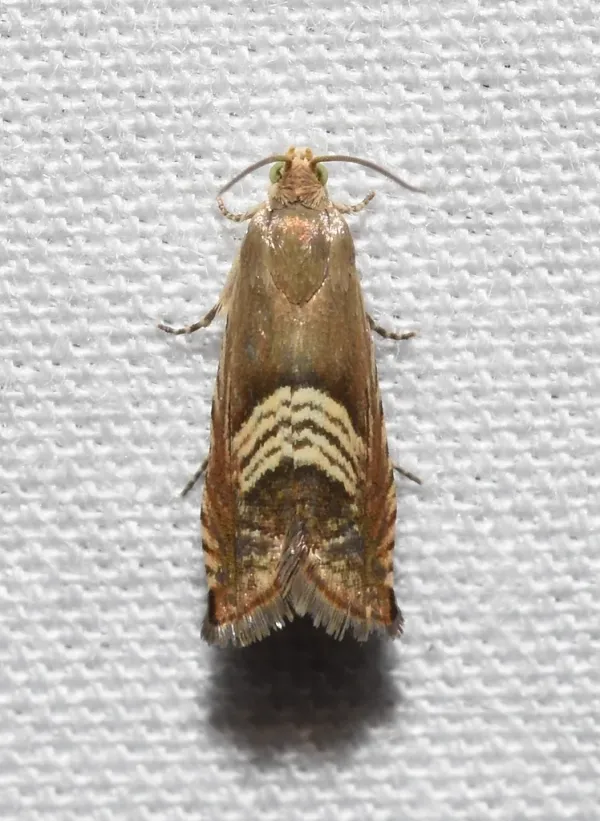
Oriental Fruit Moth Coloration
Common color patterns to help identify oriental fruit moth
Oriental Fruit Moth
Seasonal Activity
When oriental fruit moth are most active throughout the year

Where Oriental Fruit Moth Are Found
Hover over states to see their names. Green regions indicate where oriental fruit moth have been reported.
Oriental Fruit Moth Identification Guide
Physical Characteristics
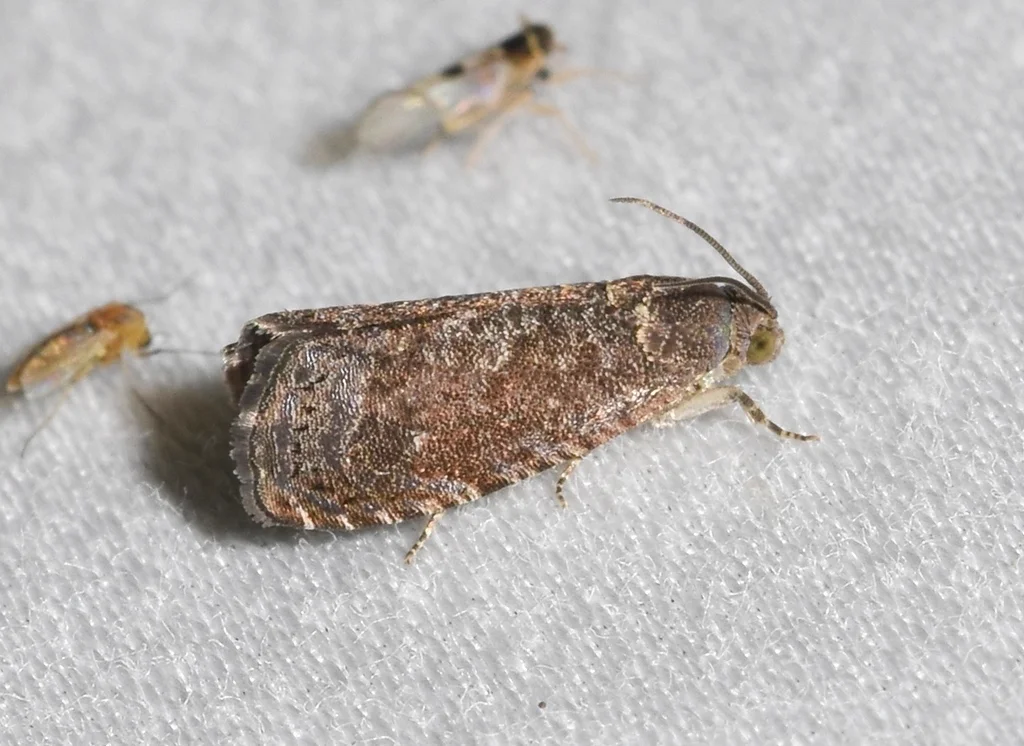
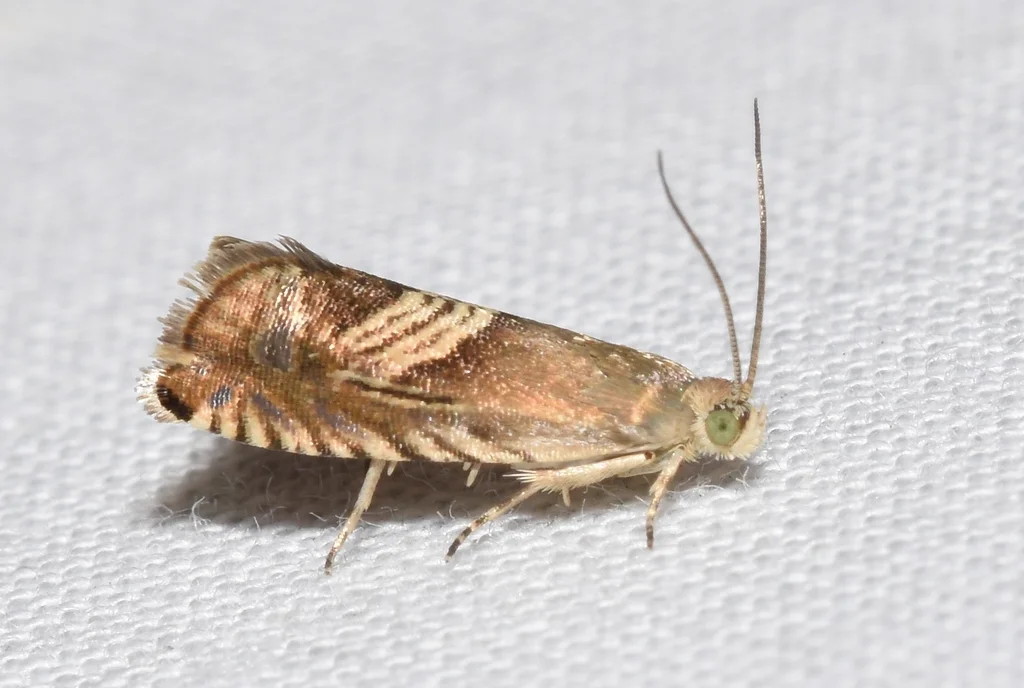
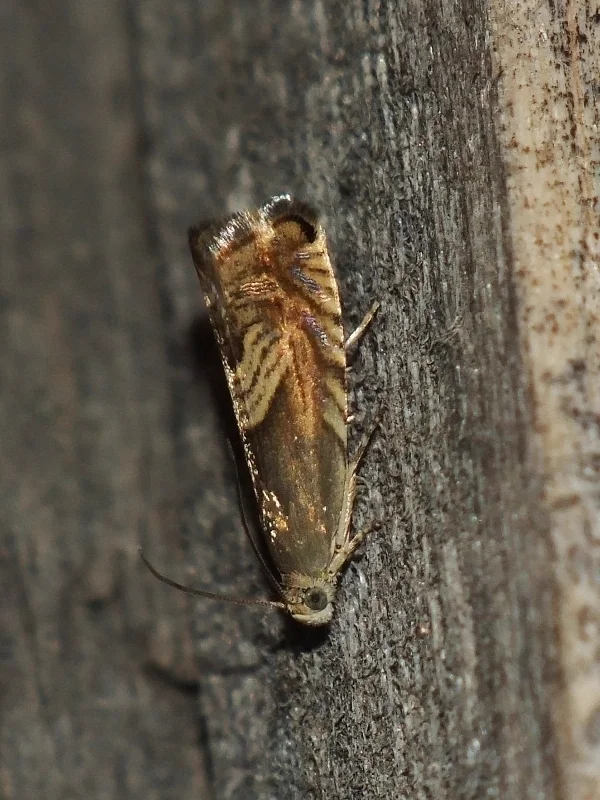
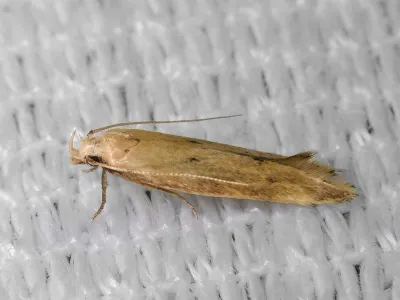
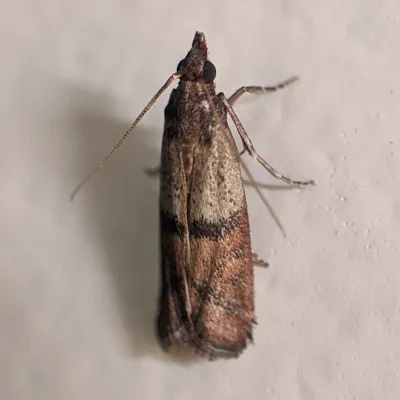
The Oriental fruit moth is a small moth that often goes unnoticed in home orchards. Adults measure 6 to 7mm in body length with a wingspan of about 13mm. The forewings are gray-brown with a salt-and-pepper pattern made by light and dark scales. When resting, the moth holds its wings flat against its body. This gives it a narrow, stretched-out look.
Males and females look alike, though females are slightly larger. The antennae are thin and thread-like. They extend about half the length of the body. The plain look of this moth helps it blend into tree bark and avoid being seen.
Larval Appearance
The larvae cause all the damage to fruit and trees. Newly hatched larvae are tiny, about 1.5mm long. They are cream-colored with a dark head. As they feed and grow through 4 to 5 molts, they reach 10 to 12mm in length. Mature larvae turn pinkish to reddish but keep their brown head.
One key feature for identification is the anal comb. This is a row of small teeth on the last body segment. You can only see it under magnification, but it sets Oriental fruit moth larvae apart from codling moth larvae. The anal comb helps larvae grip surfaces as they tunnel through fruit.
Eggs and Pupae
Eggs are very small, about 0.7mm across. They are almost impossible to spot without a magnifying glass. Females lay eggs one at a time on leaves, twigs, or fruit surfaces. Fresh eggs are clear white. They turn yellowish as the embryo grows inside.
The pupal stage happens inside silk cocoons spun in protected spots. Larvae that overwinter spin cocoons in bark cracks, soil debris, or fallen leaves. Pupae start out yellowish-brown. They darken to reddish-brown and then black right before the adult moth emerges.
Oriental Fruit Moth Behavior and Biology
Lifecycle and Generations
Oriental fruit moths have a fast lifecycle with multiple generations each year. In temperate North American climates, 4 to 5 generations overlap from spring through fall. Southern areas may see up to 6 generations. This rapid reproduction makes the pest hard to control.
Mature larvae spend the winter in silk cocoons hidden in bark cracks, under debris, or in soil near host trees. They pupate in early spring as the weather warms. The first adults emerge around peach bloom time. In the Mid-Atlantic, this is usually late April to May.
Females start laying eggs within days of emerging. Each female lays 100 to 200 eggs over her 2 to 3 week adult life. Eggs hatch in 5 to 14 days depending on temperature. The larval stage lasts 2 to 3 weeks in summer but takes longer in cooler weather. The full lifecycle from egg to adult takes 30 to 45 days when it is warm.
Feeding Behavior and Host Plants A related species, Armyworms, shares similar characteristics.
Oriental fruit moths attack a wide range of fruit trees. Primary hosts include: A related species, Fall Webworms, shares similar characteristics.
- Peaches, nectarines, apricots, plums, cherries, almonds
- Apples, pears, quinces
- Flowering quince, hawthorn, cotoneaster, loquat
Early in the season, larvae target growing shoot tips instead of fruit. First-generation larvae bore into tender shoots and tunnel down through the soft tissue. This feeding kills the shoot tip and makes it wilt and die. Damaged shoots often grow multiple side branches in response.
Later generations feed on developing fruit instead of shoots. Larvae may enter through the stem end, sides, or any wound. Once inside, they tunnel through the flesh toward the pit or core. Unlike codling moths that go straight for seeds, Oriental fruit moth larvae make winding tunnels through the fruit. For tips on identifying the difference between moths and butterflies you may encounter around fruit trees, see our identification guide.
Signs of Damage
Shoot damage shows up most in spring and early summer. Look for wilted shoot tips with brown, dead leaves still attached. Peel back the bark to find the larval tunnel. You may also see the larva itself or its brown waste (frass).
Fruit damage shows up as fruit grows. Entry holes are small and may have gummy sap or brown waste around them. Some larvae enter through the stem and leave no outside signs. Cut open any suspect fruit to look for tunnels. These may go all the way to the pit in stone fruits.
Badly damaged fruit often drops early. Fruit that stays on the tree cannot be sold and tends to rot. Even small tunnels near the skin leave marks called stings that lower fruit quality.
Distribution and Spread
Origin and Introduction
The Oriental fruit moth is native to China. It evolved alongside peach trees over thousands of years. The pest spread to Japan and other parts of Asia before reaching North America. It was first found in Washington, DC in 1913. It likely arrived in infested peach nursery stock.
From that first finding, the moth spread fast through peach-growing areas. It reached California by 1942. It is now found in all major fruit-growing areas of the United States and southern Canada. The pest also lives throughout Europe, South America, Australia, and parts of Africa.
Current Range in North America
Oriental fruit moths are found wherever people grow stone fruits and apples. This includes both large farms and home gardens. They are most common in:
- The Mid-Atlantic states (Virginia, Maryland, Pennsylvania, New Jersey)
- The Southeast (Georgia, South Carolina, North Carolina)
- The Great Lakes region (Michigan, Ohio, New York)
- The Pacific Coast (California, Washington, Oregon)
- Southern Ontario and British Columbia in Canada
Moth numbers vary with climate and how many host trees are around. Areas with large commercial orchards have more moths than places with just a few backyard trees.
Management Strategies for Oriental Fruit Moths
Controlling Oriental fruit moths requires a combined approach using monitoring, cultural practices, and treatment methods. This is mainly an agricultural pest that affects fruit orchards. Most homeowners only encounter it when growing fruit trees in their yard.
Monitoring
Pheromone traps help track Oriental fruit moth activity. These traps use synthetic female scent to attract and capture male moths. The catches show when moth populations are active and when treatment timing is best. Orchard growers set traps before bloom and check them weekly through the growing season.
Degree-day models predict moth development based on heat buildup. By knowing when eggs will hatch, growers can time treatments more precisely than simple calendar schedules allow.
Cultural Controls
Several practices reduce Oriental fruit moth pressure without chemical inputs:
- Remove wild hosts: Eliminate wild cherry, crabapple, and hawthorn near fruit trees that serve as pest reservoirs
- Sanitation: Collect and destroy fallen fruit that may contain larvae before they complete development
- Pruning: Remove and dispose of infested shoots showing flag damage to reduce the next generation
- Harvest timing: Pick fruit promptly when ripe to minimize the window for late-season infestation
Biological Control
Natural enemies help reduce Oriental fruit moth numbers. Parasitic wasps attack larvae and eggs. Ground beetles, earwigs, and birds eat larvae and pupae found on the ground or in bark.
Mating disruption uses synthetic pheromone to fill the orchard air. This prevents males from finding females to mate with. The technique works best in larger orchards of 5 to 10 acres or more. In smaller areas, moths can still find mates from outside the treated zone.
When to Seek Professional Help
Another moth pest that targets stone fruit trees is the peachtree borer moth, which bores into the trunk rather than the fruit. Home fruit growers with ongoing Oriental fruit moth problems may want to contact agricultural extension services or certified arborists. These experts can check infestation levels, suggest the right management approach, and advise on timing and methods that fit local conditions.
References and Further Reading
Other Moths
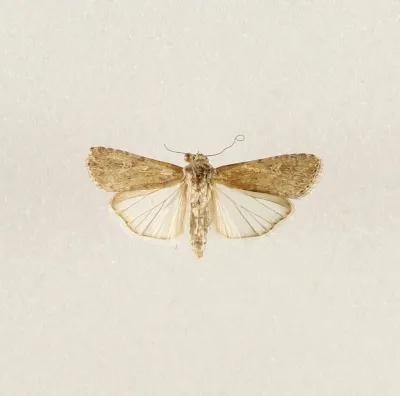
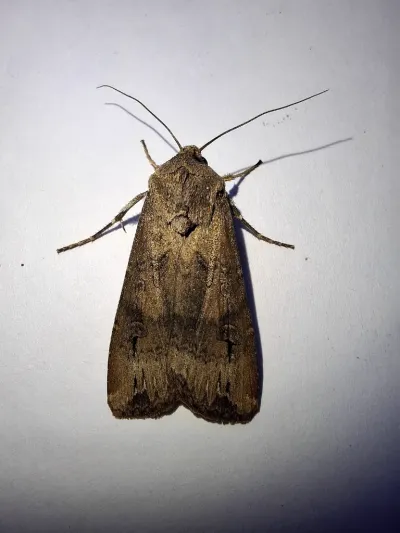
Explore other species in the moths family
Commonly Confused With
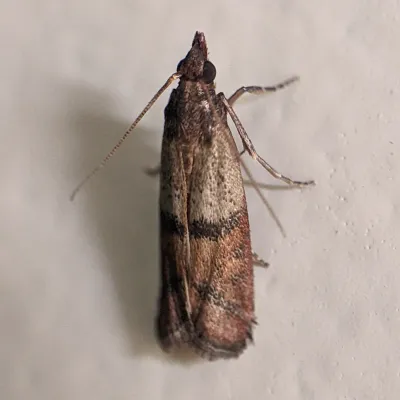
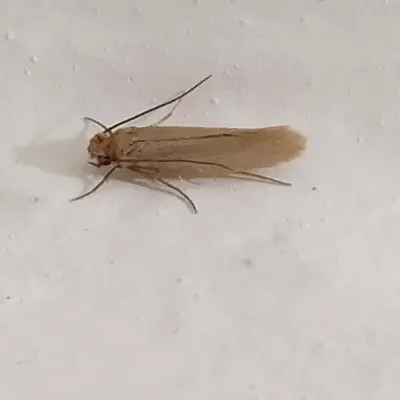
Oriental Fruit Moth are often mistaken for these similar pests
Where Oriental Fruit Moth Are Found
Hover over states to see their names. Green regions indicate where oriental fruit moth have been reported.
Common Questions about Oriental Fruit Moth
What does an Oriental fruit moth look like?
+
Adult Oriental fruit moths are small, measuring about 6-7mm in length with a wingspan of approximately 13mm. They have gray-brown wings with a faint salt-and-pepper mottled pattern. The wings are held flat against the body when at rest. Larvae are pinkish-white with a brown head, reaching up to 12mm when fully grown.
What plants do Oriental fruit moths attack?
+
Oriental fruit moths primarily target peaches, nectarines, and apricots. They also infest apples, pears, plums, cherries, almonds, and quinces. The pest can be found on wild host plants including wild cherry, flowering quince, and hawthorn. Home gardeners with fruit trees are most at risk.
How can I tell if my fruit trees have Oriental fruit moths?
+
Look for wilted, dying shoot tips on young growth, especially in spring. This flagging occurs when larvae bore into tender shoots. On fruit, look for small entry holes often near the stem end, sometimes with gummy exudate or brown frass. Cut open suspected fruit to find tunneling damage inside.
Are Oriental fruit moths the same as codling moths?
+
No, they are different species. Oriental fruit moths are smaller with more uniform gray-brown coloring, while codling moths are larger with distinctive copper wing tips. Oriental fruit moth larvae have an anal comb visible under magnification that codling moth larvae lack. Both attack apples but Oriental fruit moths prefer peaches.
How many generations do Oriental fruit moths have per year?
+
Oriental fruit moths can produce 4-6 generations per year depending on climate. In northern regions like the Mid-Atlantic, 4-5 generations are typical. The overlapping generations mean adults and larvae can be present throughout the growing season from April through October.
Do Oriental fruit moths come indoors?
+
Oriental fruit moths occasionally enter homes when attracted to lights, but they do not infest stored food or fabrics like other household moths. They require living fruit tree tissue or fresh fruit to reproduce. Any moths found indoors are likely strays and not an infestation. If you find moths near your fruit trees, the closely related [peachtree borer moth](/pests/moths/peachtree-borer-moths/) is another pest to watch for on stone fruits.
How do Oriental fruit moths spread?
+
Oriental fruit moths spread naturally through adult flight within a few hundred meters. Long-distance spread occurs through the transport of infested fruit, nursery stock, and packing materials. The pest was introduced to North America in 1913, likely in imported peach trees from Asia.

With five years of hands-on experience in the pest control industry, George Schulz is a registered technician with the Virginia Pest Management Association and a proud third-generation professional in a family business that's been protecting homes for over 57 years. He manages and trains a team of service pros while also leading internal research efforts—recently spearheading a deep-dive review of thousands of documents on pest control materials to hand-pick the most kid and pet friendly, most effective solutions tailored specifically for homes in the DC metro area.