European Corn Borer Identification Guide
Ostrinia nubilalis
The European corn borer is an invasive moth species and one of the most destructive agricultural pests in North America. While primarily affecting corn and other crops, these moths may be attracted to outdoor lights near homes and occasionally enter structures.
Taxonomy
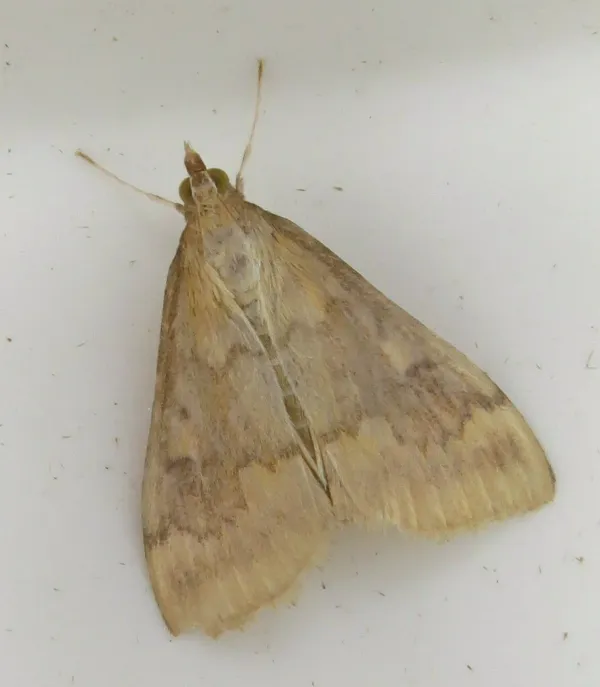
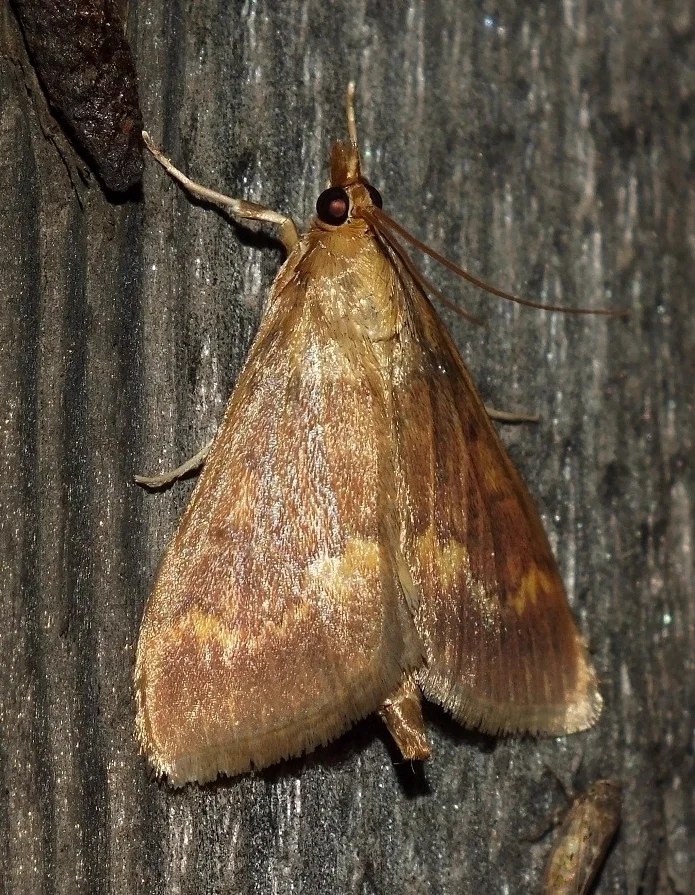
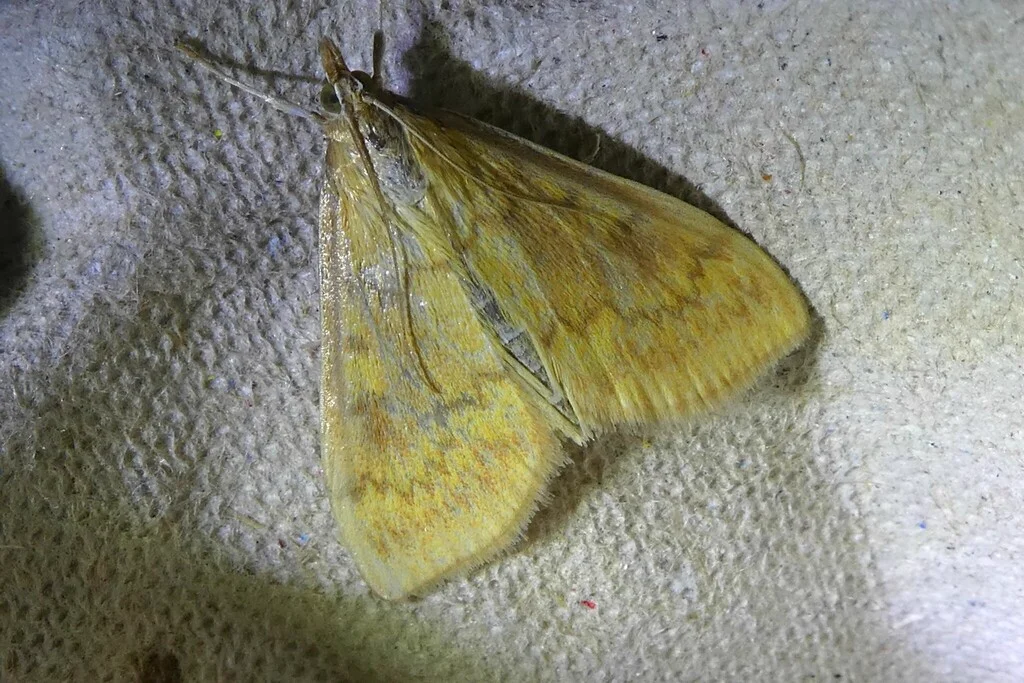
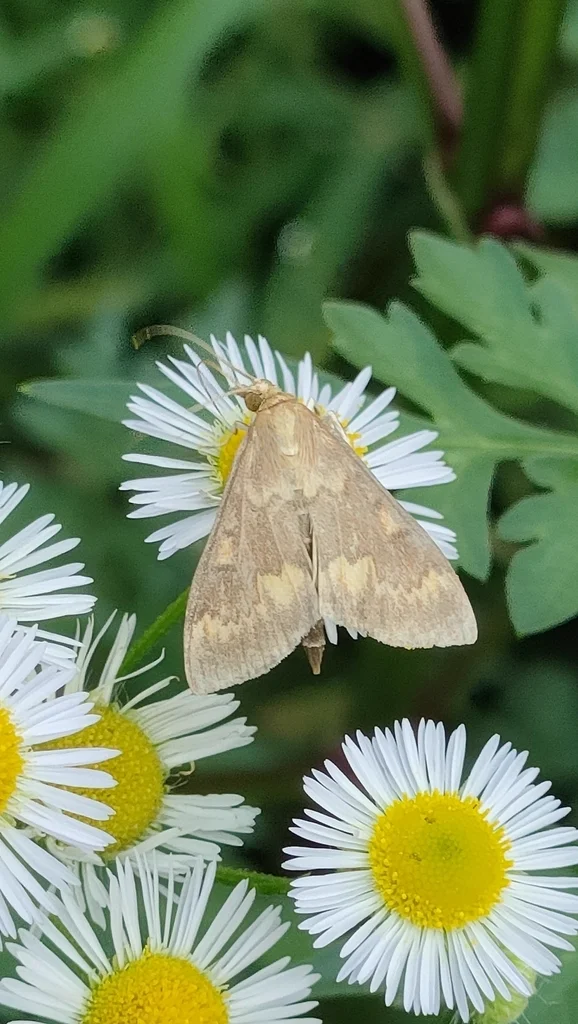
European Corn Borer Coloration
Common color patterns to help identify european corn borer
European Corn Borer
Seasonal Activity
When european corn borer are most active throughout the year

Where European Corn Borer Are Found
Hover over states to see their names. Green regions indicate where european corn borer have been reported.
European Corn Borer Identification Guide
Physical Characteristics
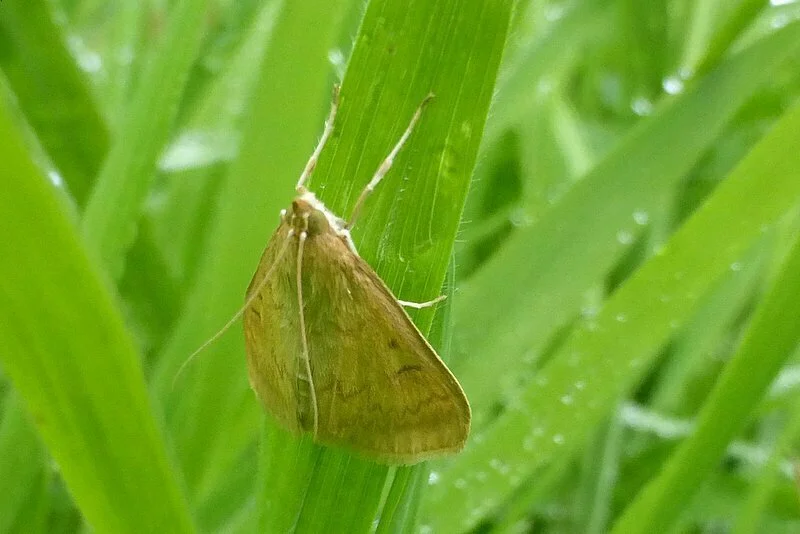
The European corn borer moth is medium-sized with a wingspan of 25 to 35mm. Males and females look quite different. Males are smaller and darker. They have olive-brown to dark tan wings with darker wavy lines. Females are larger and paler. They are usually pale yellow to light tan with fainter markings.
Both sexes share some key features. The wings show a zigzag or scalloped pattern. When resting, moths hold their wings flat or slightly tented over the body. The body is slim and slightly fuzzy. The antennae are thread-like and reach about half the length of the front wings.
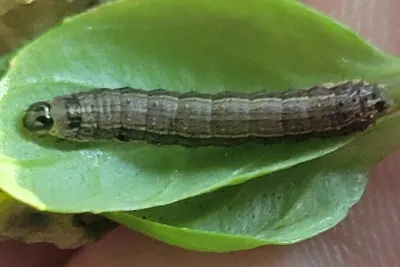
If you grow corn or certain vegetables, you are more likely to see larvae than adult moths. Young caterpillars are cream-colored with dark spots and a dark head. Full-grown larvae reach 20 to 25mm long. They turn pinkish or grayish as they grow. They have rows of small dark spots along their body.
Life Stages
European corn borers undergo complete metamorphosis with four distinct life stages:
Eggs: Females lay flat clusters of 15 to 30 eggs on the undersides of leaves. Fresh eggs are creamy white. They turn tan before hatching. Each egg is about 1mm wide and hard to see.
Larvae: After hatching, larvae feed briefly on leaf surfaces before boring into plant tissue. They go through five larval stages over 3 to 4 weeks. During this time they tunnel through stalks, ears, and other plant parts.
Pupae: Mature larvae pupate inside their tunnels within plant tissue. The pupal stage lasts 10 to 14 days. Pupae are reddish-brown and about 15 to 20mm long.
Adults: Moths emerge, mate, and begin laying eggs within a few days. Adults live approximately 10 to 14 days and do not feed. Their sole purpose is reproduction.
Similar Species
European corn borer moths can be confused with several other moth species:
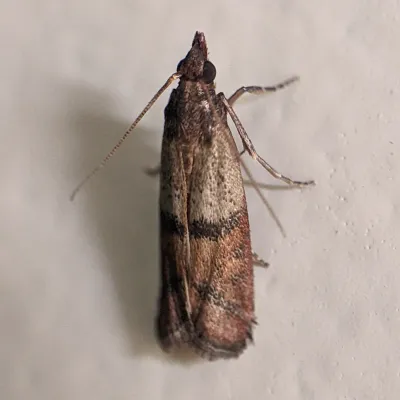
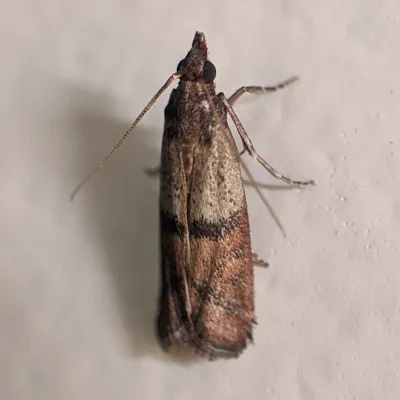
Indian meal moths are smaller with two-toned wings. The outer part of their wings is coppery brown. The inner part is pale. They infest stored food, not living plants.
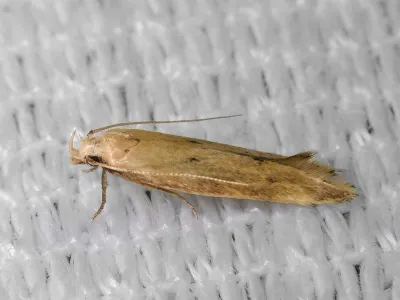
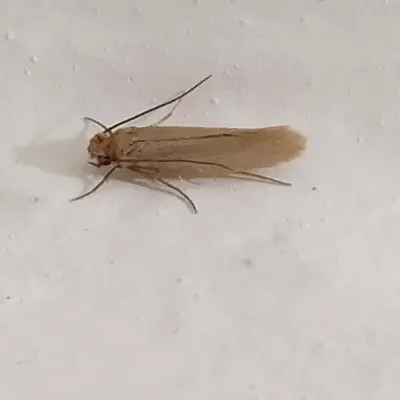
Clothes moths are much smaller, measuring only 6 to 8mm, and have solid golden or buff-colored wings. They avoid light and infest natural fibers rather than plants.
Other similar moths may look alike but feed on different plants. Looking closely at wing patterns helps tell species apart.
European Corn Borer Behavior and Biology
Habitat and Distribution
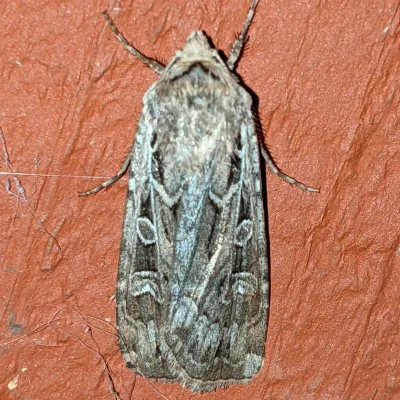
European corn borers live throughout the eastern and central United States and southern Canada. They came to North America by accident in the early 1900s. They likely arrived in broom corn shipped from Europe. Since then, they have spread across most corn-growing areas. A related species, Armyworms, shares similar characteristics.
These moths do best in farming areas, especially near corn fields. But they also use over 200 different plants as hosts. Besides corn, they attack peppers, snap beans, potatoes, tomatoes, cotton, hops, and many other crops. Gardeners growing tomatoes and peppers should also watch for tobacco hornworms and tomato hornworms, which are large caterpillars that defoliate these same plants. They can also grow in large-stemmed weeds and flowers.
Adult moths fly at night and are drawn to lights. This is why people near farms may see them around porch lights and windows in summer. But they do not breed inside homes.
Seasonal Activity
The number of generations per year depends on location. Northern areas may have only one generation per year. Southern areas may have three to four. The typical pattern looks like this:
Spring emergence: Overwintering larvae pupate as temperatures warm. First-generation adults emerge in late May to early June.
Summer generations: Moths lay eggs, larvae develop and bore into plants, and new adults emerge throughout summer. Peak moth activity occurs in June and July.
Fall decline: The last generation of larvae becomes dormant in late summer or fall. They spend winter as mature larvae inside crop debris and plant stalks.
Winter dormancy: Larvae remain dormant through winter, surviving freezing temperatures inside their protected tunnels.
Feeding Behavior
Adult European corn borer moths do not eat. Their mouthparts do not work. They live off energy stored during the larval stage.
Larvae cause all the damage. After hatching, young caterpillars eat leaf surfaces for a few days. Then they bore into the plant. They make tunnels in stalks, ears, and other soft tissue. This weakens plants, blocks nutrient flow, and lets diseases enter.
In corn, larvae may feed on:
- Leaf midribs and sheaths
- Stalks at any height
- Ear shanks and kernels
- Tassels and developing ears
Tunnel damage can cause stalks to break, ears to drop, and yields to fall. Fungal infections often follow larval feeding, causing more crop losses.
Signs of European Corn Borer Activity
In Gardens and Crops
If you grow corn or other susceptible vegetables, watch for these signs of European corn borer activity:
- Sawdust-like frass: Fine debris pushed out of entry holes in stalks
- Broken tassels: Tassels that snap off or wilt prematurely
- Stalk damage: Holes in stalks, sometimes with visible tunneling
- Ear damage: Larvae tunneling into ears, often near the tip
- Wilting: Plants that wilt despite adequate water due to stalk damage
- Lodging: Stalks that break and fall over from tunneling damage
Around Homes
Homeowners typically encounter European corn borer moths rather than larvae. Signs of their presence include:
- Moths resting on exterior walls near lights
- Moths flying around porch lights and windows at night
- Moths occasionally entering homes through open doors
- Dead moths accumulating around light fixtures
These sightings do not mean you have an infestation. The moths are just drawn to lights during their night flights.
Managing European Corn Borers
In Agricultural Settings
European corn borers cause about one billion dollars in crop losses and control costs each year in North America. Effective control combines several strategies:
Crop cleanup: Destroying crop debris after harvest removes places where larvae spend winter. Shredding and plowing stalks into the soil kills many larvae. Choosing planting dates and crop varieties wisely can reduce damage.
Natural enemies: Parasitic wasps, predatory insects, birds, and diseases all attack corn borers. Farmers sometimes release Trichogramma wasps that destroy eggs. The bacterial spray Bacillus thuringiensis (Bt) kills young larvae.
Bt corn: Corn varieties that produce Bt proteins have greatly reduced European corn borer numbers in many areas. These proteins kill corn borer larvae but do not affect humans or most other animals.
Insecticide sprays: When pest numbers are high, targeted sprays may be needed. Timing matters because larvae are protected once inside plants. Sprays must hit larvae during the short time they feed on plant surfaces.
For Home Gardeners
Home gardeners growing sweet corn, peppers, or other susceptible crops can take several steps:
- Monitor for moths: Watch for adults around lights in early summer
- Scout for eggs: Check undersides of leaves for egg masses
- Remove infested plants: Pull and destroy heavily damaged plants
- Clean up debris: Remove old stalks and plant material after harvest
- Use Bt sprays: Apply Bacillus thuringiensis products to young larvae
- Plant resistant varieties: Some corn varieties show better tolerance
Reducing Moths Around Homes
If European corn borer moths are congregating around your lights, you can minimize their presence:
- Switch to yellow bulbs: Moths are less attracted to yellow or amber lights
- Use motion-sensor lights: Lights that turn off reduce attraction time
- Close curtains: Block interior lights from attracting moths to windows
- Seal entry points: Ensure screens are intact and doors close tightly
These moths are harmless and will leave when summer ends. They do not breed indoors or damage household items. Other boring moth species that homeowners near orchards may encounter include the peachtree borer moth and the Oriental fruit moth.
References and Further Reading
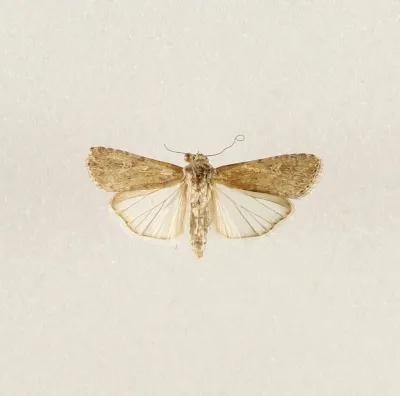
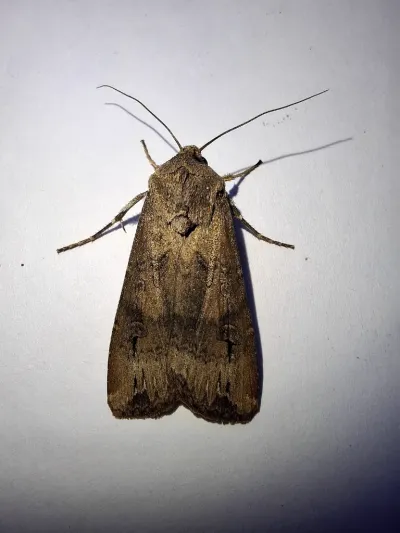
Other Moths
Explore other species in the moths family
Commonly Confused With
European Corn Borer are often mistaken for these similar pests
Where European Corn Borer Are Found
Hover over states to see their names. Green regions indicate where european corn borer have been reported.
Common Questions about European Corn Borer
What does a European corn borer moth look like?
+
European corn borer moths are medium-sized with a wingspan of 25 to 35mm. Males are darker with olive-brown to dark tan coloring and distinctive wavy lines across the wings. Females are lighter, typically pale yellow to tan with similar but fainter markings. Both sexes have a characteristic zigzag pattern across their wings.
Are European corn borers harmful to humans?
+
European corn borers do not bite, sting, or pose any direct health threat to humans. They do not infest stored food products like pantry moths. Their impact is primarily agricultural, causing billions of dollars in crop damage annually, particularly to corn.
Why are European corn borer moths near my house?
+
Adult European corn borer moths are attracted to lights at night. If you live near agricultural areas, cornfields, or gardens with peppers, beans, or other host plants, you may see these moths around outdoor lights during summer months. They do not establish infestations inside homes.
Do European corn borers damage homes or gardens?
+
European corn borers primarily damage field crops like corn, but they can also affect garden vegetables including peppers, snap beans, potatoes, and tomatoes. They do not damage structures, fabrics, or stored foods. Their larvae bore into plant stems and ears of corn.
How can I tell European corn borers from pantry moths?
+
European corn borers are larger than most pantry moths, with a 25-35mm wingspan compared to 16-20mm for Indian meal moths. European corn borers have wavy lines across their wings rather than the two-toned color pattern of pantry moths. They also do not infest stored foods.
When are European corn borers most active?
+
Adult moths are most active from late May through August, with peak activity in June and July. There are typically one to four generations per year depending on location. Moths fly at night and are most commonly seen around lights during warm summer evenings.
Where do European corn borer larvae live?
+
The larvae bore into the stalks, ears, and tassels of corn plants. They create tunnels inside plant tissue where they feed and develop. Larvae overwinter inside corn stalks, plant debris, and other crop residue, emerging as moths the following spring.

With five years of hands-on experience in the pest control industry, George Schulz is a registered technician with the Virginia Pest Management Association and a proud third-generation professional in a family business that's been protecting homes for over 57 years. He manages and trains a team of service pros while also leading internal research efforts—recently spearheading a deep-dive review of thousands of documents on pest control materials to hand-pick the most kid and pet friendly, most effective solutions tailored specifically for homes in the DC metro area.