Douglas-fir Tussock Moth Identification Guide
Orgyia pseudotsugata
The Douglas-fir tussock moth is a native North American defoliator that primarily attacks Douglas-fir, true firs, and spruce trees in western forests. The colorful caterpillars can cause severe damage during periodic outbreaks.
Taxonomy
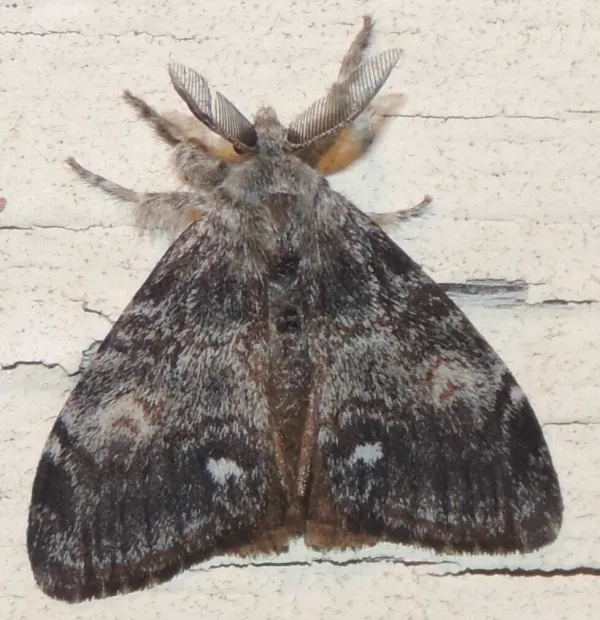
Douglas-fir Tussock Moth Coloration
Common color patterns to help identify douglas-fir tussock moth
Douglas-fir Tussock Moth
Seasonal Activity
When douglas-fir tussock moth are most active throughout the year
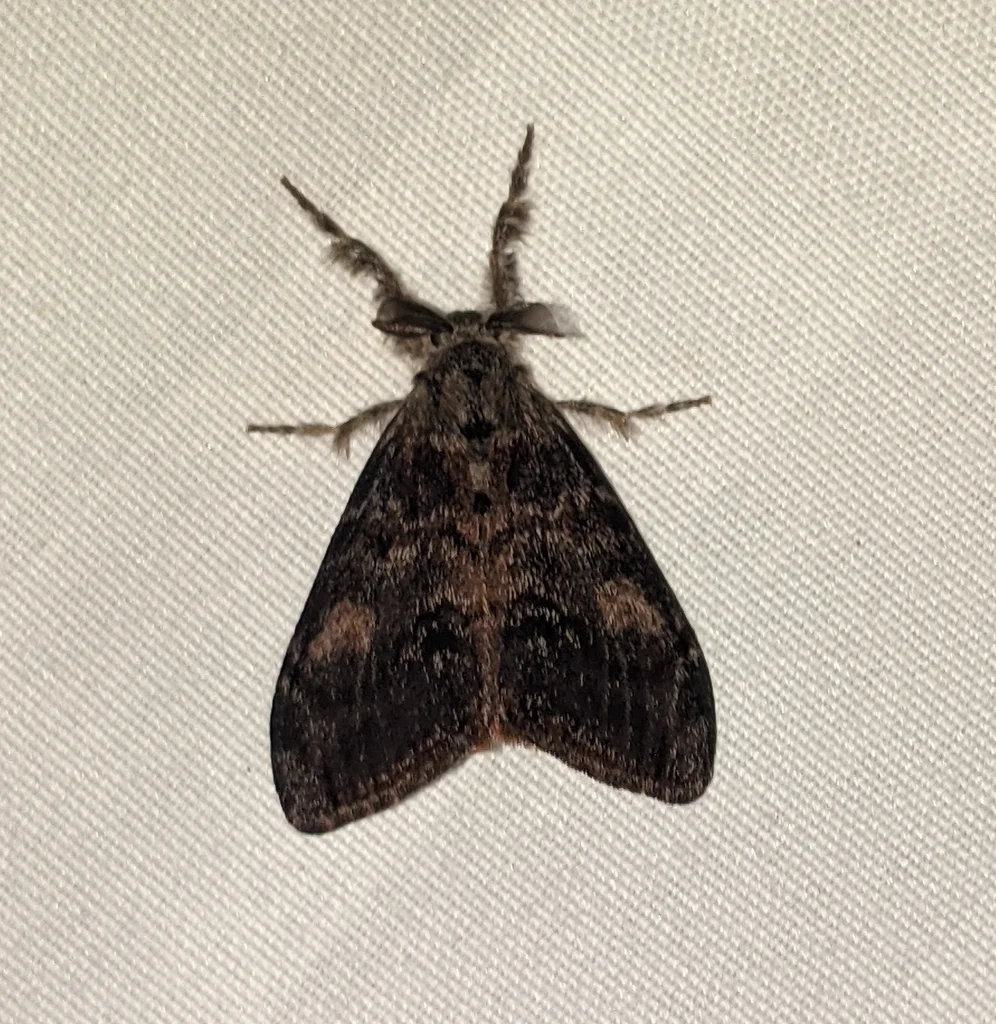
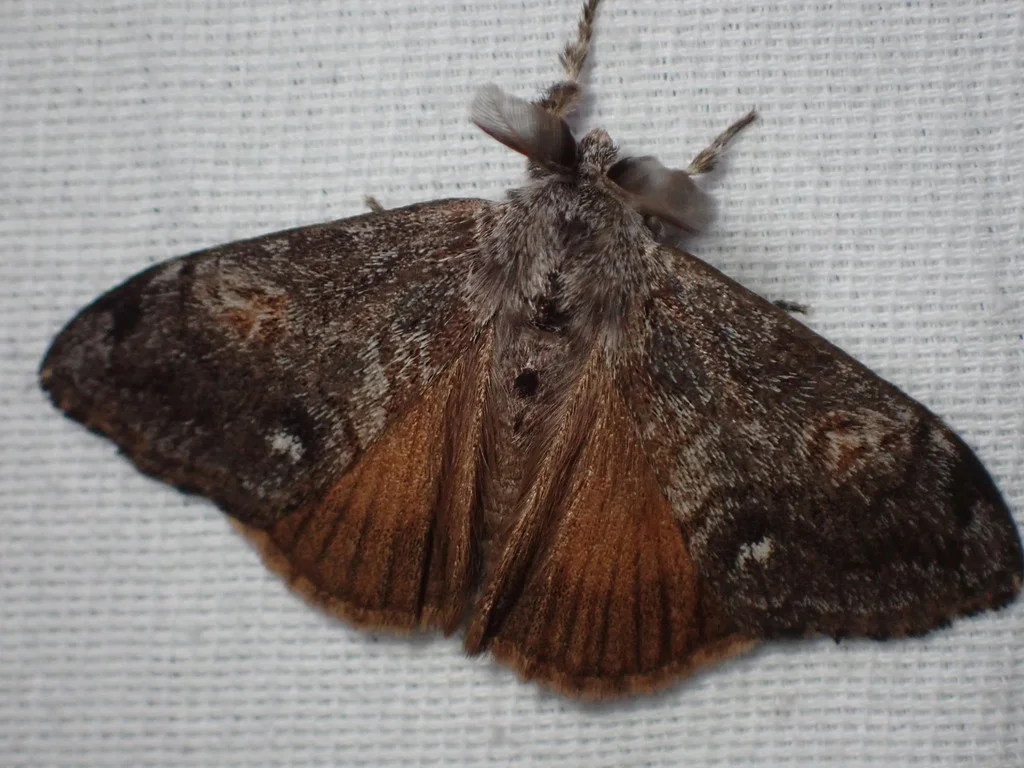

Where Douglas-fir Tussock Moth Are Found
Hover over states to see their names. Green regions indicate where douglas-fir tussock moth have been reported.
Douglas-fir Tussock Moth Identification Guide
The Douglas-fir tussock moth is one of the most harmful native leaf-eating pests in western North American forests. This moth lives from British Columbia to Mexico, and from the Pacific Coast to the Rocky Mountains. It attacks Douglas-fir and true fir forests. Most years, the number of moths stays low. But outbreaks can grow fast and kill millions of trees in just a few seasons.
This species is closely related to the white-marked tussock moth found in eastern forests. Like its eastern cousin, it has colorful caterpillars with hair tufts that stand out. Forest managers watch this pest closely using scent traps. Finding them early lets managers step in before outbreaks get bad.
Physical Characteristics
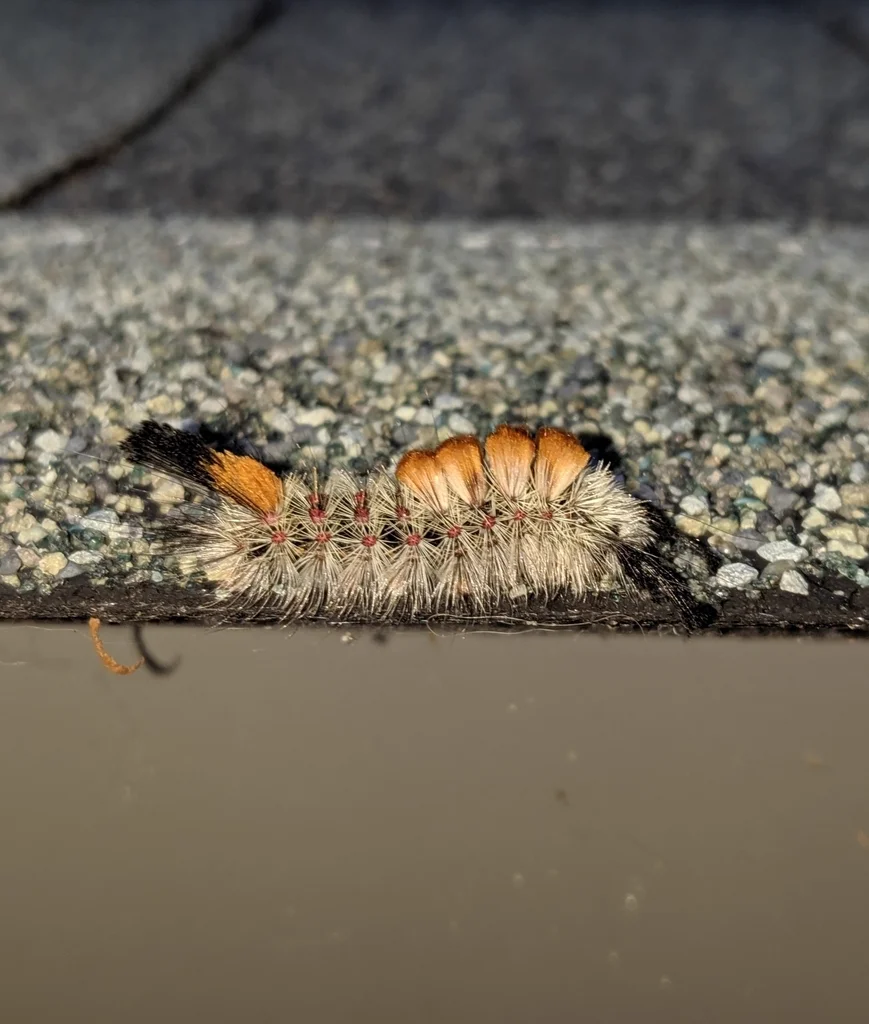
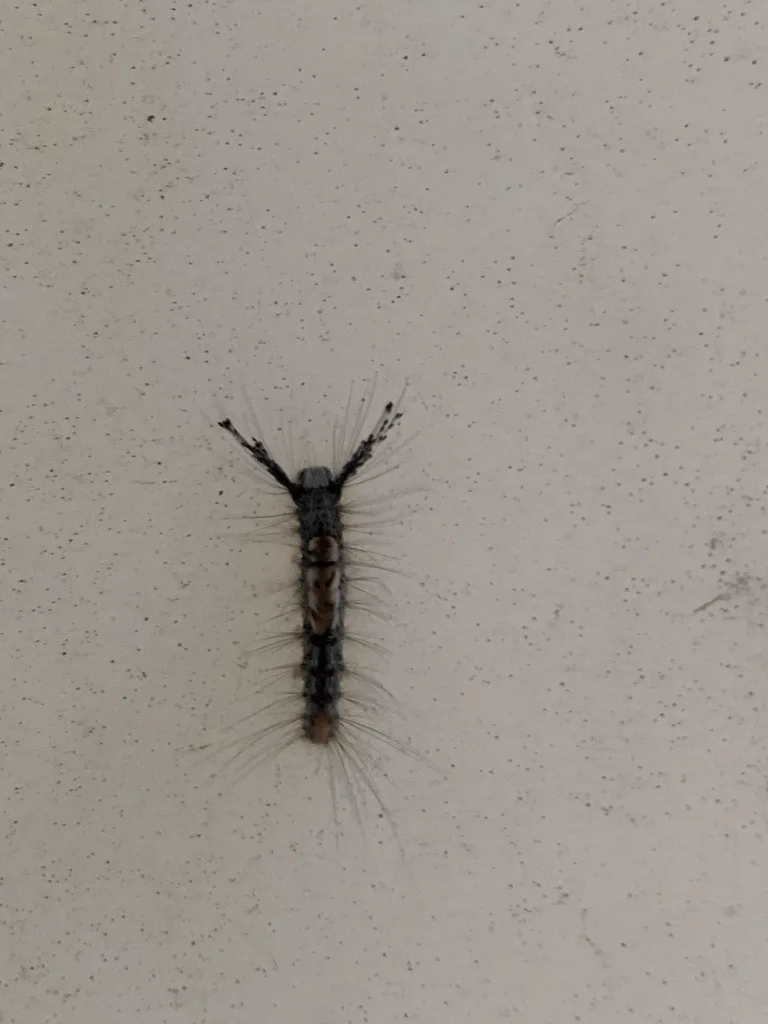
Caterpillars: Full-grown larvae measure about 1 to 1.25 inches long. They have these identifying features:
- A gray body with orange or rust-colored markings
- Two long black hair pencils extending forward from behind the head like antennae
- Four dense tufts of cream, tan, or light brown hair on the back
- One red to brown hair pencil extending from the rear
- Scattered long white hairs covering the body
- A dark head capsule
Early instar caterpillars are smaller and darker but show similar hair patterns.
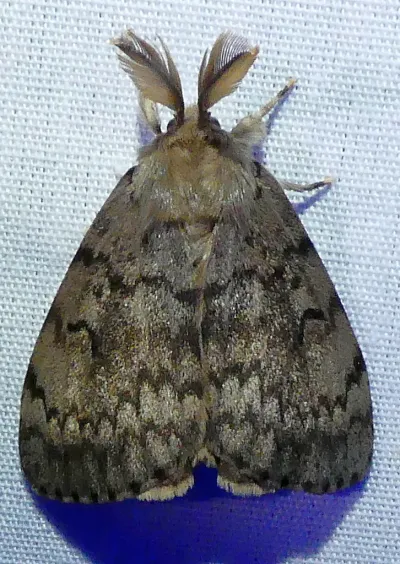
Adult Males: Male moths have a wingspan of about 1 to 1.3 inches. Their wings are gray to brown with darker wavy bands. They often have lighter spots near the wing tips. The back wings are orange-brown. Males have large feathery antennae that help them find females by scent.
Adult Females: Females are wingless and covered with gray to brown hairs. They are plump and measure about half an inch long. After emerging from the cocoon, females stay in place and release pheromones to attract males.
Egg Masses: Females lay 100-350 eggs in a grayish, foamy clump. They usually lay this clump on or near the cocoon. It may include hairs from the female’s body. Eggs survive the winter and hatch the next spring.
Cocoons: Pupae develop inside loose gray cocoons made from silk and caterpillar hairs. Cocoons attach to tree bark, branches, or needles.
Similar Species
Several other tussock moth species and hairy caterpillars occur in western forests:
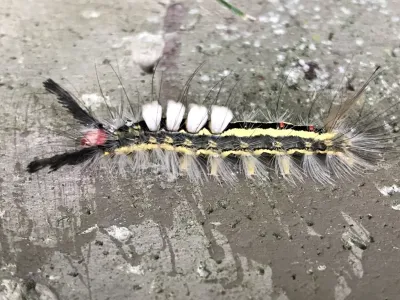
- White-marked tussock moth: Lives in eastern forests. Caterpillars have a red head and brighter yellow marks.
- Western tussock moth (Orgyia vetusta): Found in California and Oregon. Caterpillars are darker with less clear tufts.
- Rusty tussock moth (Orgyia antiqua): Found around the world in northern areas. Males have rust-colored wings.
- Spongy moth caterpillars: Have blue and red dots in rows but no hair tufts.
Douglas-fir Tussock Moth Behavior and Biology
Life Cycle
Douglas-fir tussock moths complete one generation per year. The life cycle follows this pattern:
Eggs: Eggs overwinter in the frothy mass where the female laid them. They can tolerate cold temperatures well. Hatching begins in late May to early June, timed with new foliage growth on host trees.
Larvae: Young caterpillars may float on silk threads carried by the wind. This is called ballooning. It lets them reach trees far from where they hatched. Caterpillars go through five or six growth stages over about six weeks. Young ones eat new growth. Older ones eat both old and new needles.
Pupae: Caterpillars spin loose cocoons in late July or August. The pupal stage lasts about two weeks. Females usually pupate where they stopped eating. Males may spin cocoons in bark cracks or on the ground.
Adults: Adults emerge in late summer, typically August. Males fly in search of females, while females remain near their cocoons. Mating occurs within a day of emergence. Females lay a single egg mass and die shortly after. Adults do not feed.
Feeding Habits A related species, Armyworms, shares similar characteristics.
Douglas-fir tussock moth caterpillars prefer conifer foliage, especially: A related species, Fall Webworms, shares similar characteristics.
Primary hosts:
- Douglas-fir (Pseudotsuga menziesii)
- White fir (Abies concolor)
- Grand fir (Abies grandis)
- Subalpine fir (Abies lasiocarpa) A related species, Peachtree Borer Moth, shares similar characteristics.
Secondary hosts:
- Engelmann spruce
- Blue spruce
- Western larch
- Ponderosa pine (occasionally)
Caterpillars first eat the new needles from this year. Then they move to older needles as they grow. They eat whole needles, leaving only the center vein. Heavy feeding makes trees look burned as the leftover needle stubs turn brown.
Population Dynamics
Douglas-fir tussock moth numbers change a lot from year to year. They may stay low for years, then spike into harmful outbreaks. Outbreaks tend to follow this pattern:
- Building phase: Populations increase over 2-3 years, often starting on dry, stressed sites
- Peak phase: High populations cause obvious defoliation over large areas for 1-2 years
- Collapse phase: Natural enemies, disease, and starvation crash populations rapidly
Several factors contribute to outbreak development:
- Hot, dry weather: Makes caterpillars grow faster and stresses the trees
- Dry sites: Trees on dry south-facing slopes face the most risk
- Past drought: Weak trees have a harder time bouncing back from needle loss
- Few predators: When natural enemies are scarce, moth numbers can grow
A virus called nuclear polyhedrosis virus (NPV) usually ends outbreaks. This virus spreads fast through crowded caterpillar groups. It can cut the population by over 99% in a single year.
Tree Damage and Economic Impact
Defoliation Effects
Douglas-fir tussock moth feeding can cause severe tree damage:
- First year damage: Trees may lose all their needles. Douglas-fir often dies after just one year of total needle loss.
- Partial damage: Trees that lose 60-80% of needles usually live but grow more slowly.
- Repeated damage: Trees rarely live through two years in a row of heavy feeding.
- Top death: Even trees that survive may lose their tops. This creates forked or flat-topped crowns.
True firs generally tolerate defoliation better than Douglas-fir. They can survive 2-3 years of feeding that would kill Douglas-fir.
Historical Outbreaks
Major Douglas-fir tussock moth outbreaks have caused enormous damage:
- 1946-1948: Outbreak in Oregon and Washington killed trees containing an estimated 1.3 billion board feet of timber
- 1970-1974: Outbreak across the Pacific Northwest defoliated over 800,000 acres
- 2000-2002: Outbreak in Idaho and Montana affected more than 200,000 acres
These outbreaks caused timber losses, raised wildfire risk, hurt wildlife habitat, and harmed streams and rivers.
Monitoring Programs
The USDA Forest Service and state agencies monitor Douglas-fir tussock moth populations annually. The monitoring program uses:
- Pheromone traps: These traps use synthetic female scent to catch male moths. High trap catches signal rising numbers.
- Egg mass counts: Counting egg masses in fall shows how many moths to expect.
- Flights over forests: Planes map the spread of needle loss during outbreaks.
Early detection allows managers to plan treatments before outbreaks cause extensive damage.
Treatment Methods for Douglas-fir Tussock Moths
Several methods can help reduce Douglas-fir tussock moth damage. The best plan depends on site conditions, forest value, and how far the outbreak has spread.
Biological Control
Nuclear polyhedrosis virus (NPV): This natural virus is the main control tool. It can be sprayed on trees during early outbreaks. The virus spreads through caterpillar groups and causes a fast crash in numbers. Products with NPV only affect tussock moths and do not harm other insects or wildlife.
Bacillus thuringiensis (Bt): This bacteria-based product kills caterpillars when they eat treated needles. It works best on young caterpillars and must be applied while they are feeding. Bt breaks down in sunlight within days.
Natural enemies: Wasps and flies that lay eggs in other insects attack tussock moth eggs, caterpillars, and pupae. Birds eat large numbers of caterpillars, especially in spring when feeding their young. These natural enemies help keep moth numbers low between outbreaks.
Chemical Control
Insecticide sprays can protect high-value trees during outbreaks. Products with carbaryl, pyrethroids, or other labeled ingredients work well when applied while caterpillars are feeding. Spraying from aircraft can cover large areas fast.
Chemical treatments are typically reserved for:
- High-value timber stands
- Recreation areas
- Campgrounds and developed sites
- Urban interface zones
Silvicultural Practices
Forest management can reduce outbreak severity and tree mortality:
- Species mix: Forests with different tree types suffer less damage.
- Thinning: Cutting some trees improves the health of those left and slows caterpillar spread.
- Choosing tough species: Leaving more true fir than Douglas-fir on risky sites helps.
- Salvage logging: Removing dead and dying trees during outbreaks saves wood value and lowers fire risk.
Integrated Management
Effective Douglas-fir tussock moth management combines multiple approaches:
- Monitor populations annually with pheromone traps
- Identify high-risk areas based on site conditions and trap catches
- Apply NPV or Bt treatments early when populations begin increasing
- Use chemical treatments only where necessary to protect high-value resources
- Salvage dead timber to capture value and reduce fire hazard
- Adjust future management to improve stand resistance
Prevention and Risk Assessment
While Douglas-fir tussock moth outbreaks cannot be entirely prevented, land managers can reduce risk:
- Check your site: Look for outbreak risk factors like dry ground, south-facing slopes, and pure Douglas-fir stands.
- Improve your forest: Thin dense stands and remove stressed trees.
- Plant different trees: Add non-host species when replanting risky sites.
- Watch for signs: Join regional trapping programs to track moth numbers.
- Act early: Treat growing populations before they become outbreaks.
For homeowners with Douglas-fir or true fir in western regions, watch for caterpillars in early summer. Contact a local forester or extension office if you notice unusual numbers of hairy caterpillars or defoliation on conifer trees.
References
Other Moths
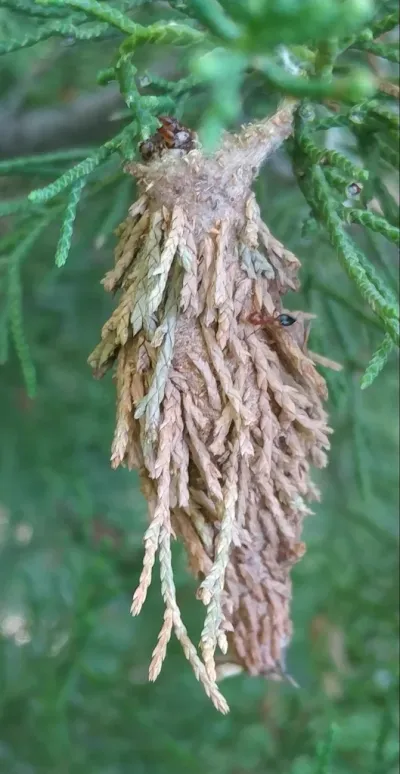
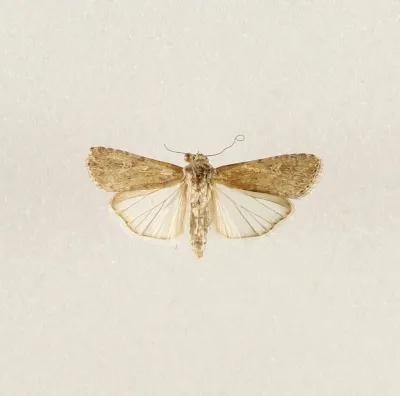
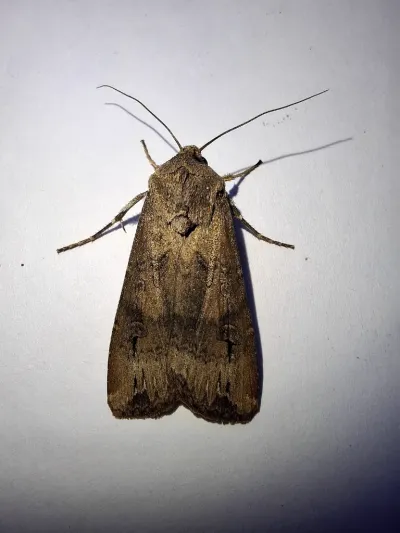
Explore other species in the moths family
Commonly Confused With
Douglas-fir Tussock Moth are often mistaken for these similar pests
Where Douglas-fir Tussock Moth Are Found
Hover over states to see their names. Green regions indicate where douglas-fir tussock moth have been reported.
Common Questions about Douglas-fir Tussock Moth
What does a Douglas-fir tussock moth caterpillar look like?
+
Douglas-fir tussock moth caterpillars are colorful and hairy. They have gray bodies with orange or rust-colored spots and two black hair pencils extending forward from behind the head. Four distinctive tufts of cream to tan-colored hair sit on top of the back. A single reddish hair pencil extends from the rear.
What trees do Douglas-fir tussock moths attack?
+
These moths primarily attack Douglas-fir, white fir, grand fir, and subalpine fir. They also feed on Engelmann spruce, blue spruce, western larch, and occasionally ponderosa pine. Douglas-fir is the preferred host in most areas.
Are Douglas-fir tussock moth caterpillars dangerous to humans?
+
The caterpillar hairs can cause skin irritation, redness, and itching in some people. While not truly poisonous, the urticating hairs may trigger allergic reactions. Avoid handling caterpillars directly and wash skin thoroughly if contact occurs.
How much damage can Douglas-fir tussock moths cause?
+
During outbreaks, these moths can cause widespread defoliation and tree death. A single year of complete defoliation often kills Douglas-fir trees. Outbreaks typically last 2-4 years and can affect millions of acres of forest. Historically, outbreaks have killed billions of board feet of timber.
When are Douglas-fir tussock moth outbreaks most likely?
+
Outbreaks tend to occur during hot, dry conditions and follow a 7-10 year cycle in many areas. They are most common on dry sites at middle elevations. Forest managers monitor populations annually using pheromone traps to predict outbreaks before they begin.
Can female Douglas-fir tussock moths fly?
+
No, female Douglas-fir tussock moths are wingless. After emerging from their cocoon, females release pheromones to attract flying males. They lay their eggs in a frothy mass directly on or near their cocoon. This limits natural spread to distances young caterpillars can travel on silk threads.
Where are Douglas-fir tussock moths found?
+
Douglas-fir tussock moths are native to western North America. They occur from British Columbia south to Arizona and New Mexico, and from the Pacific Coast to the Rocky Mountains. They are most common in mixed conifer forests at elevations between 2,000 and 8,000 feet.

With five years of hands-on experience in the pest control industry, George Schulz is a registered technician with the Virginia Pest Management Association and a proud third-generation professional in a family business that's been protecting homes for over 57 years. He manages and trains a team of service pros while also leading internal research efforts—recently spearheading a deep-dive review of thousands of documents on pest control materials to hand-pick the most kid and pet friendly, most effective solutions tailored specifically for homes in the DC metro area.