Yellow Spotted Millipede Identification Guide
Harpaphe haydeniana
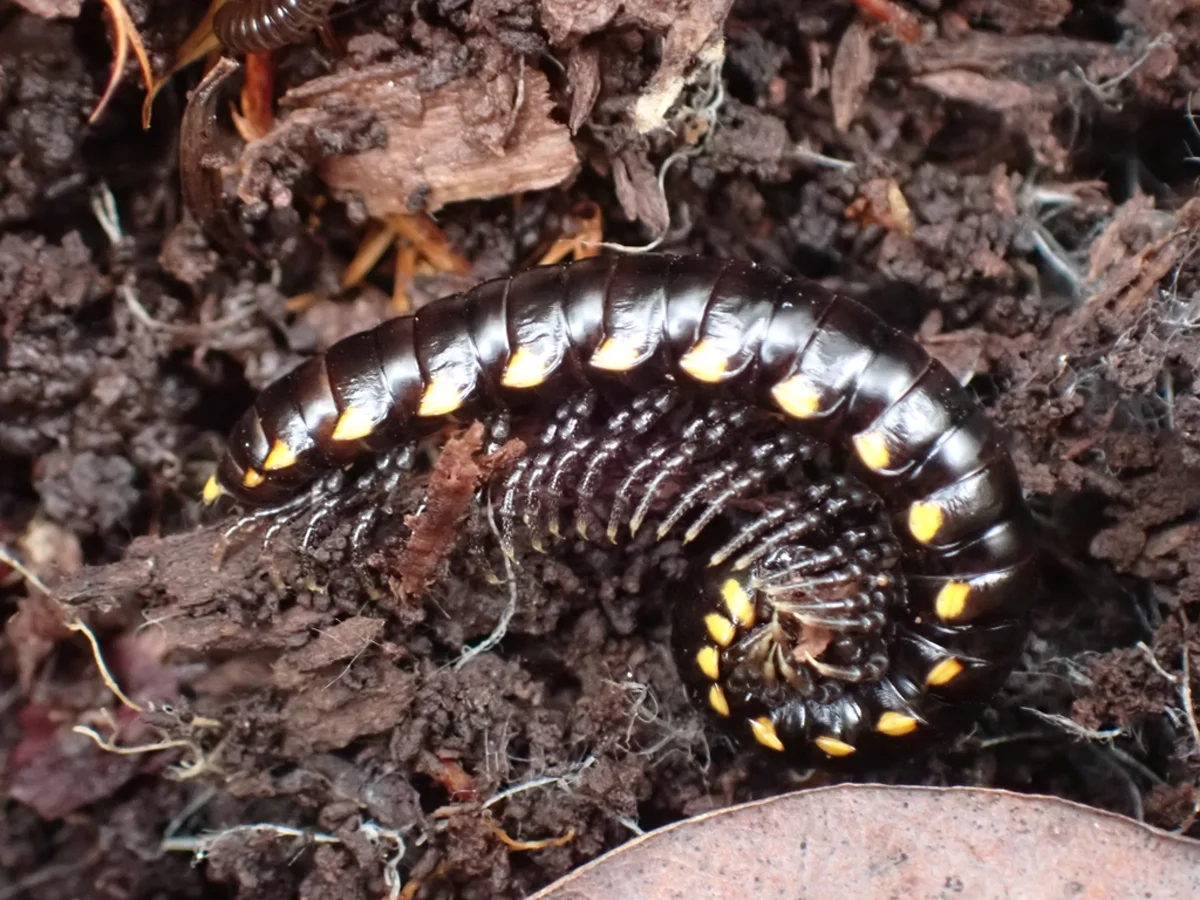
The yellow spotted millipede is a flat-backed millipede found in Pacific Northwest forests. It has a black body with bright yellow spots and releases cyanide gas when scared.
Taxonomy
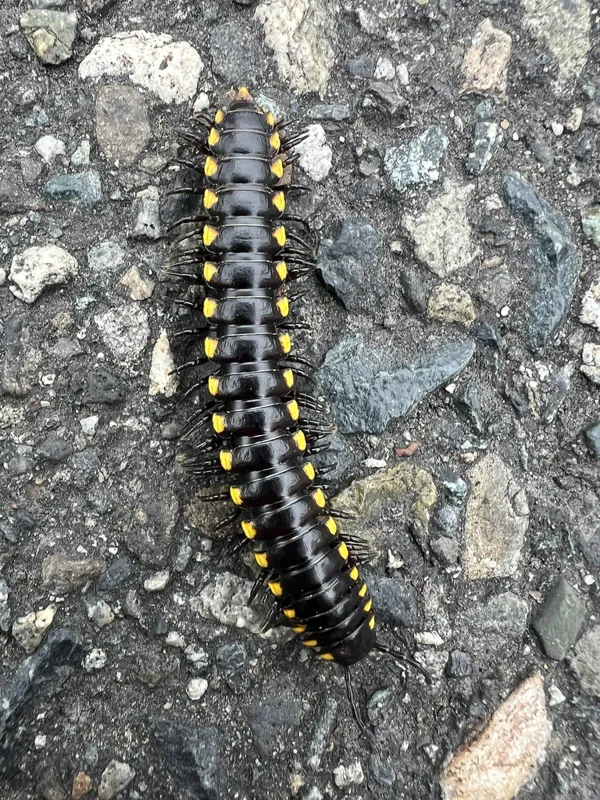
Yellow Spotted Millipede Coloration
Common color patterns to help identify yellow spotted millipede
Yellow Spotted Millipede
Seasonal Activity
When yellow spotted millipede are most active throughout the year
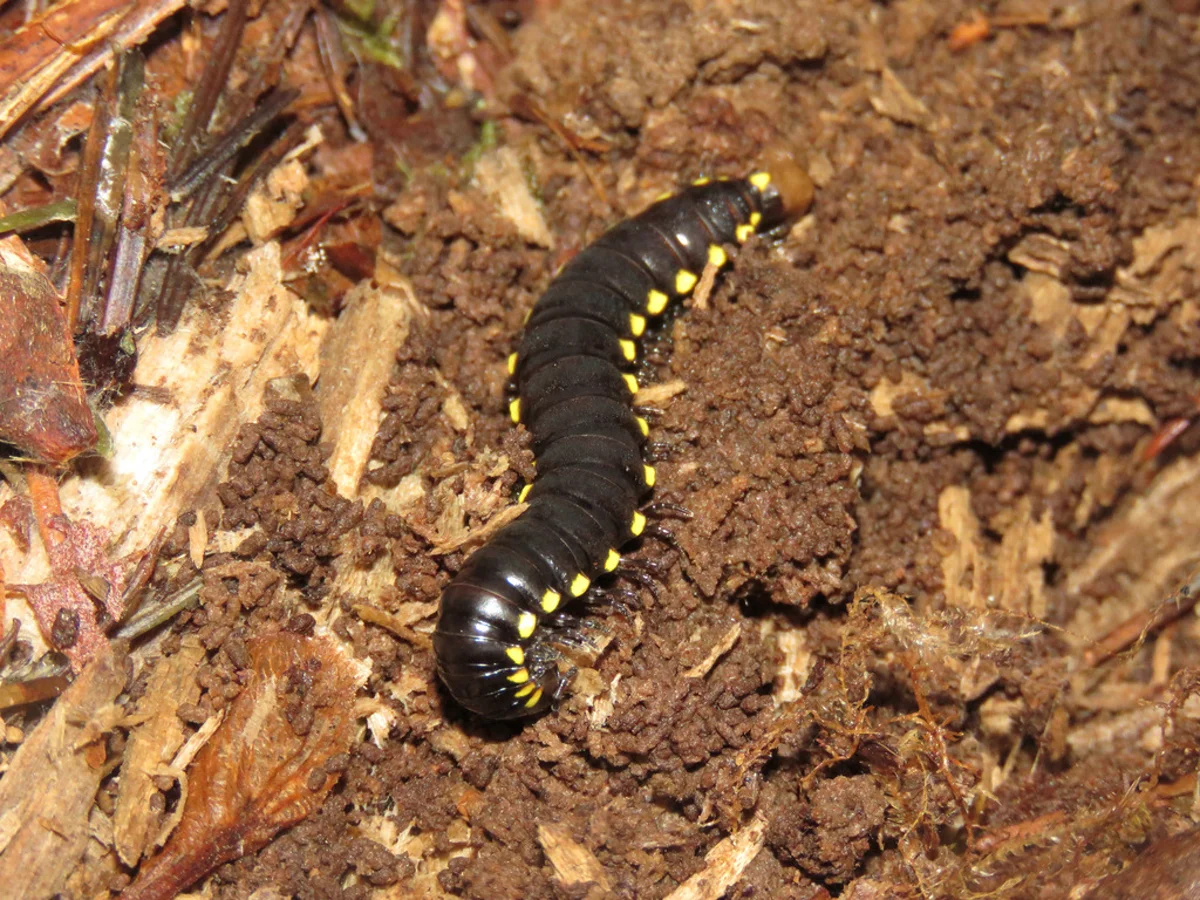
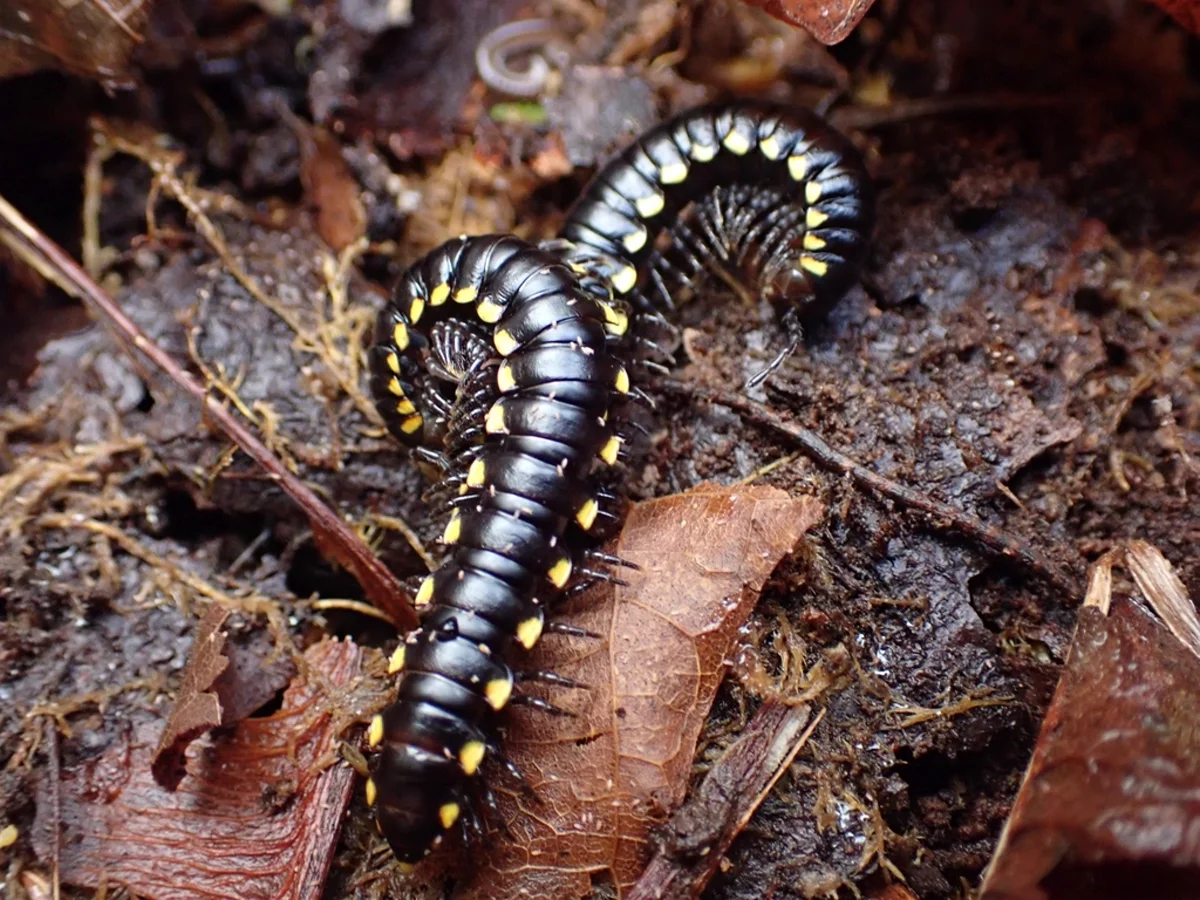
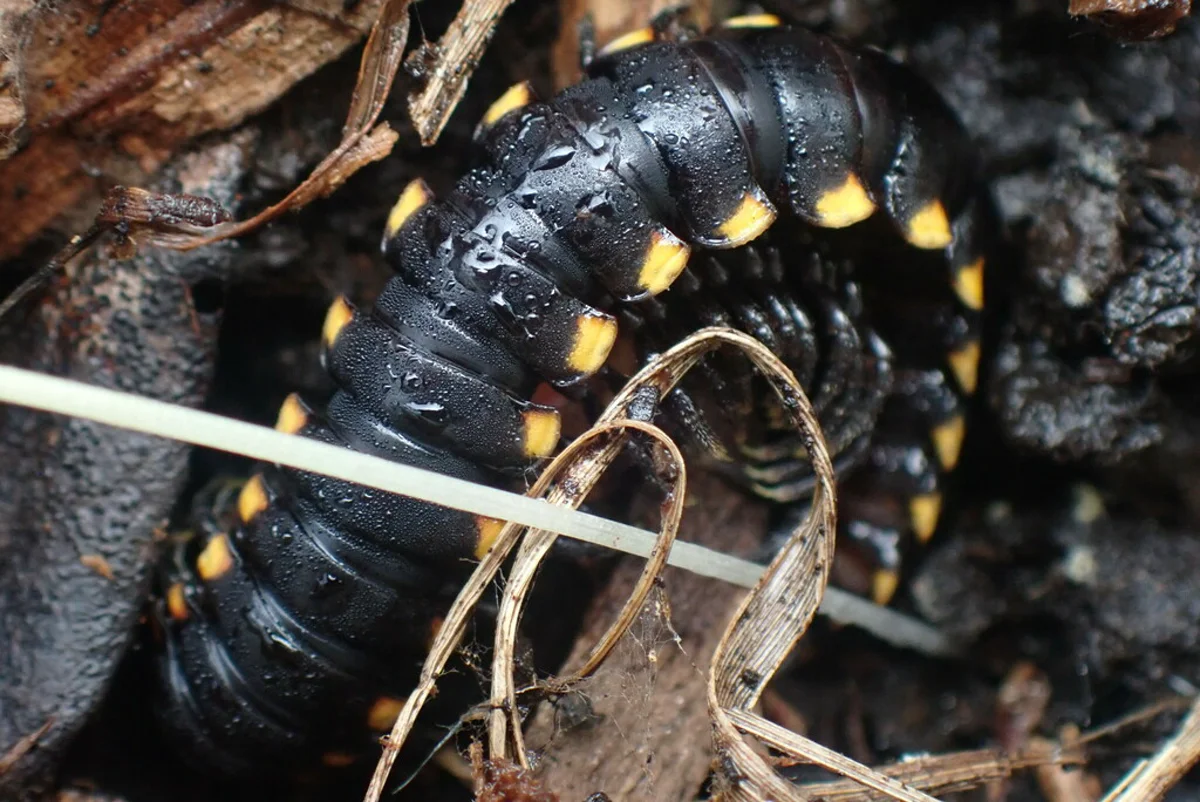

Where Yellow Spotted Millipede Are Found
Hover over states to see their names. Green regions indicate where yellow spotted millipede have been reported.
Yellow Spotted Millipede Identification Guide
Physical Characteristics
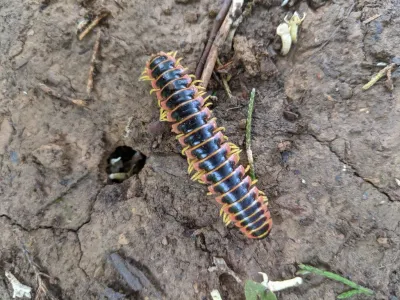
The yellow spotted millipede (Harpaphe haydeniana) is a flat-backed millipede that grows 4 to 5 centimeters long (about 1.6 to 2 inches). Its body is black to olive-green with bright yellow or orange patches along each side. These yellow spots give the millipede its name. They also warn predators to stay away.
Unlike round millipedes, yellow spotted millipedes have a flattened shape similar to other flat-backed millipedes. They do not have eyes but have antennae that sense chemicals, moisture, and movement. Young millipedes are pale and have fewer body parts. As they shed their skin and grow, they get darker. Their yellow spots become brighter, and they add more body segments.
Common Species
- Harpaphe haydeniana (Yellow Spotted Millipede, also known as the Almond-Scented Millipede or Cyanide Millipede)
You can tell this species apart from similar millipedes by the sharp points on its side plates. To confirm the exact species, experts look at the male reproductive organs.
Yellow Spotted Millipede Behavior and Biology
Yellow spotted millipedes spend most of their time eating dead leaves in damp Pacific Northwest forests. They like to eat needles from Douglas fir and Sitka spruce trees. In their range, these millipedes eat 33 to 50 percent of all fallen leaves. This makes them key decomposers in the forest. A related species, North American Millipedes, shares similar characteristics.
These millipedes are common in redwood forests. Many can live in a small area. In some spots, you may find 20 to 90 millipedes in one square meter. This is a very high number for forest millipedes. A related species, Black and Gold Flat Millipede, shares similar characteristics.
Defense Mechanism A related species, Bristly Millipedes, shares similar characteristics.
When scared, yellow spotted millipedes curl into a tight ball and release cyanide gas from glands on their body. This defense gives off an almond-like smell that keeps most predators away. The cyanide is not harmful to humans in small amounts. However, it can cause pain if it touches your eyes, mouth, or nose. One ground beetle called Promecognathus laevissimus is not fooled by this defense. It feeds only on yellow spotted millipedes. A related species, Greenhouse Millipedes, shares similar characteristics.
Reproduction
During mating season, yellow spotted millipedes gather in huge groups. These groups can have tens of thousands or even millions of millipedes in one spot. Females lay eggs in hidden spots within leaf litter and soil. Baby millipedes are pale and have few body parts. As they grow and shed their skin, they get darker and add more segments.
Ecological Role
Harpaphe haydeniana is the main shredder throughout Northwest forests and plays a key part in the soil food web. These millipedes break down plant material with help from tiny fungi that live in their gut. The fungi help the millipede digest leaves while they absorb nutrients. This speeds up how fast dead leaves turn into soil.
Treatment Methods for Yellow Spotted Millipedes
Yellow spotted millipedes rarely become household pests. When they do enter homes in the Pacific Northwest during heavy rain or mating season, these methods can help control them:
-
Reduce Moisture: Millipedes need damp air to live. Cut down moisture near your home’s base to keep them away. Fix leaky pipes, improve drainage, and make sure crawl spaces have good air flow.
-
Seal Entry Points: Close gaps and cracks in your foundation, around doors and windows, and where pipes enter your home. Add door sweeps and weather strips for extra protection.
-
Change the Habitat: Clear away leaf piles, rotting wood, and thick mulch near your foundation. Keep a plant-free zone of 12 to 18 inches around your home to reduce millipede activity.
-
Perimeter Treatments: For ongoing problems, granular insecticide around the foundation and mulch beds can lower millipede numbers moving toward your home.
-
Indoor Control: Millipedes that get inside usually die in a few days because homes are too dry. Vacuuming works well to remove them. For bigger problems, treating baseboards and entry points can help.
References
Other Millipedes
Explore other species in the millipedes family
Commonly Confused With
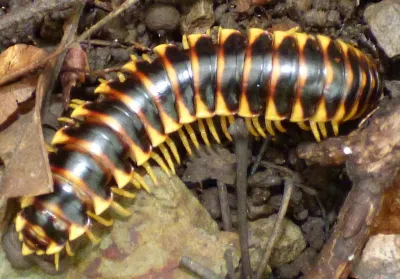
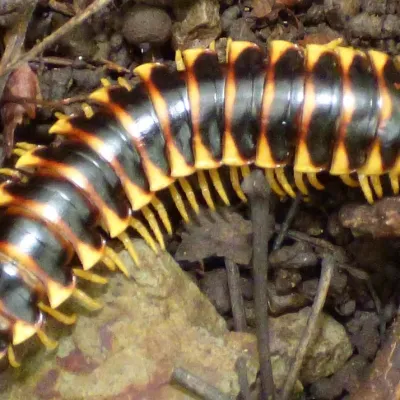
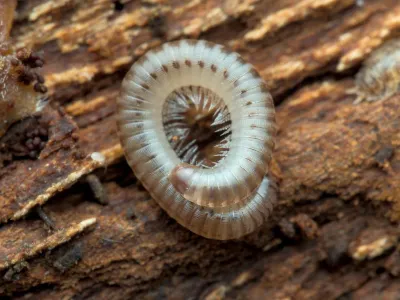
Yellow Spotted Millipede are often mistaken for these similar pests
Where Yellow Spotted Millipede Are Found
Hover over states to see their names. Green regions indicate where yellow spotted millipede have been reported.
Common Questions about Yellow Spotted Millipede
Are yellow spotted millipedes dangerous to humans?
+
Yellow spotted millipedes are not harmful to humans. When scared, they release cyanide gas that smells like almonds. This gas is not dangerous in small amounts but can irritate your skin. Keep it away from your eyes, mouth, and nose.
Why do yellow spotted millipedes have bright yellow markings?
+
The yellow spots warn predators that the millipede is toxic. The bright color against the dark body signals danger and tells animals to stay away.
Where do yellow spotted millipedes live?
+
Yellow spotted millipedes live in damp forests along the Pacific coast from Alaska to California. They like rotting logs, leaf piles, and wet woodland areas. You can find many of them in conifer and redwood forests.
What do yellow spotted millipedes eat?
+
These millipedes eat dead leaves, mainly needles from Douglas fir and Sitka spruce trees. They eat 33 to 50 percent of all fallen leaves in their range. This helps break down plant matter and return nutrients to the soil.
Can yellow spotted millipedes enter homes?
+
Yellow spotted millipedes mostly stay in forests. They may wander into homes in the Pacific Northwest during wet weather or mating season. They do not live long indoors because homes are too dry.
How do yellow spotted millipedes reproduce?
+
Yellow spotted millipedes gather in huge groups to mate. These groups can have thousands or millions of millipedes. Females lay eggs in leaf litter and soil. Baby millipedes are pale and get darker as they grow.
How do I get rid of yellow spotted millipedes in my home?
+
Reduce moisture near your home and seal cracks in the foundation. Clear away leaf piles and mulch from the base of your house. Millipedes that get inside usually die in a few days. Vacuum them up or call a pest control company for help.

With five years of hands-on experience in the pest control industry, George Schulz is a registered technician with the Virginia Pest Management Association and a proud third-generation professional in a family business that's been protecting homes for over 57 years. He manages and trains a team of service pros while also leading internal research efforts—recently spearheading a deep-dive review of thousands of documents on pest control materials to hand-pick the most kid and pet friendly, most effective solutions tailored specifically for homes in the DC metro area.