Root Aphids Identification Guide
Pemphigus spp. / Rhopalosiphum rufiabdominalis
Root aphids are small, sap-feeding insects that live underground and feed on plant roots. They cause stunting, wilting, and decline in garden plants, greenhouse crops, and nursery stock across North America.
Taxonomy
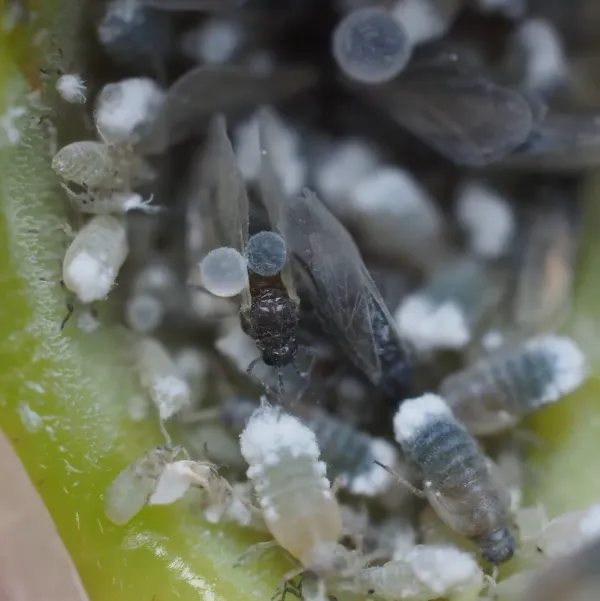
Root Aphids Coloration
Common color patterns to help identify root aphids
Root Aphids
Seasonal Activity
When root aphids are most active throughout the year

Where Root Aphids Are Found
Hover over states to see their names. Green regions indicate where root aphids have been reported.
Root Aphid Identification Guide
Physical Characteristics
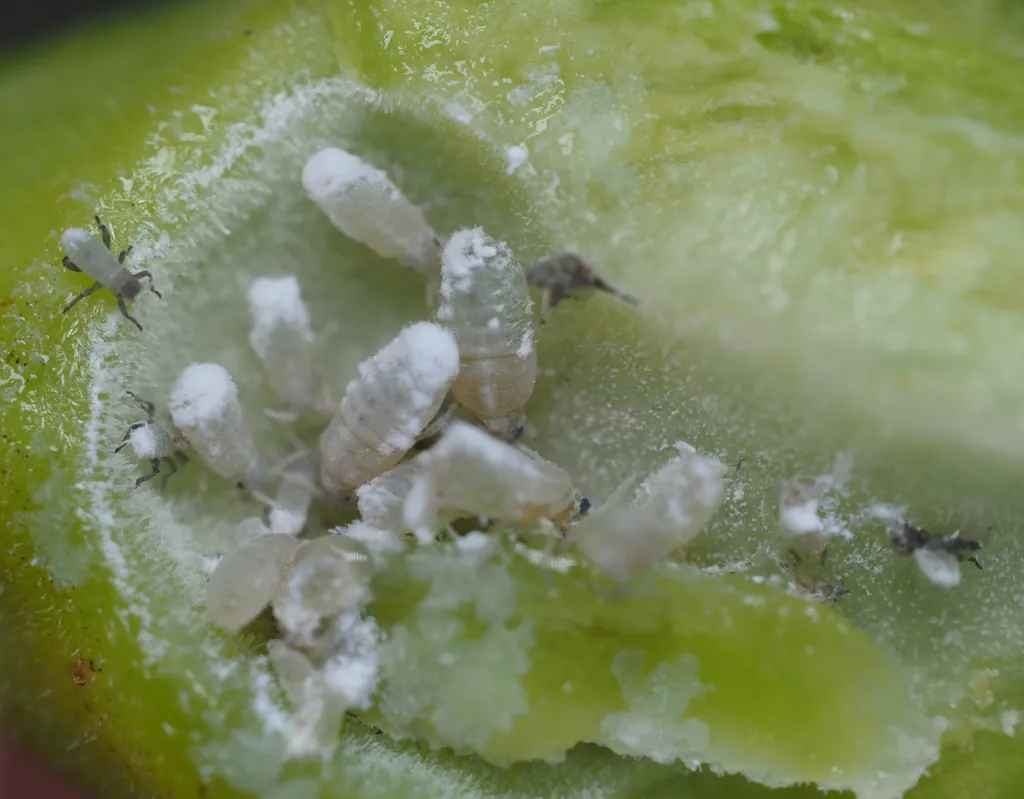
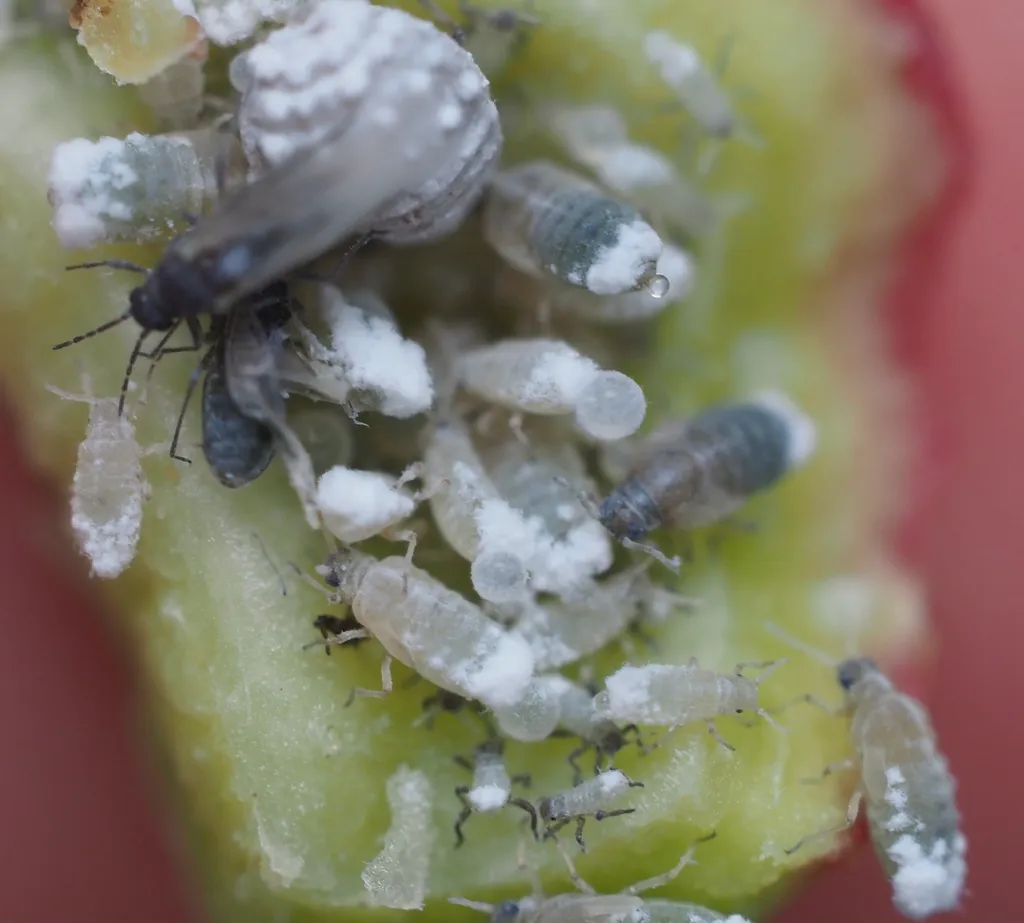
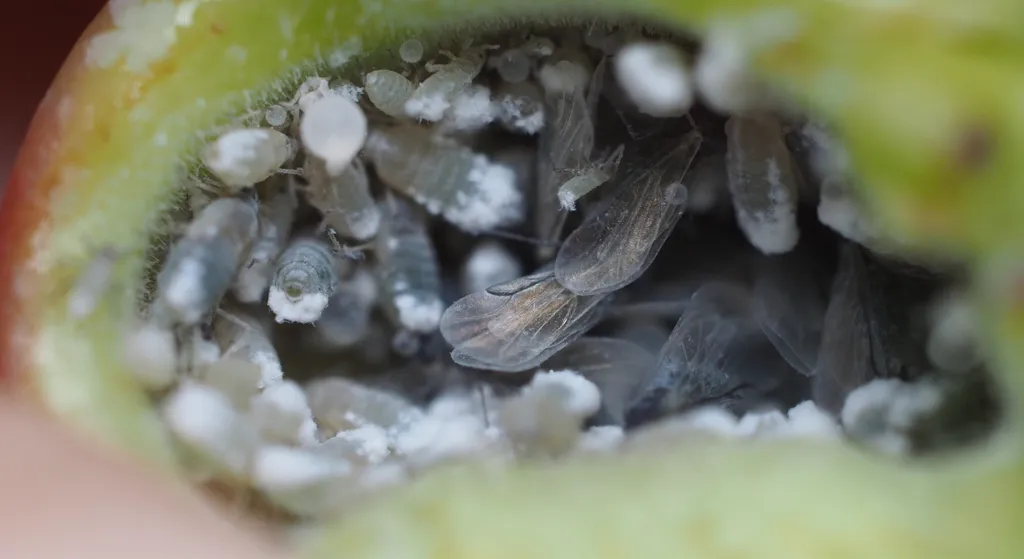
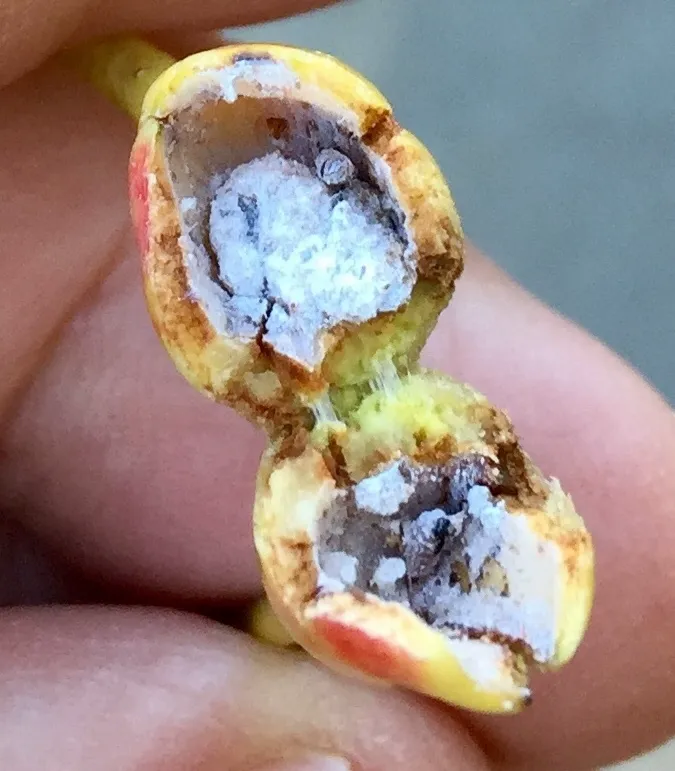
Root aphids are small, soft-bodied insects that measure between 1 and 4 millimeters long. Most species appear white, cream, pale gray, or translucent, though some like the rice root aphid can have a reddish-brown tinge to their abdomen. Many root aphids produce a powdery white wax that coats their bodies and the surrounding roots, making colonies look like patches of white mold or powder at first glance.
Like all aphids, root aphids have six legs, a pair of antennae, and piercing-sucking mouthparts designed to tap into plant fluids. However, root-feeding species in the genus Pemphigus tend to have shorter antennae (less than one-third of their body length) and reduced or absent cornicles compared to the familiar leaf-feeding aphids you might see aboveground. These features, combined with their underground habitat, make them look somewhat different from typical garden aphids.
Root aphids produce both wingless and winged forms. The wingless individuals spend their entire lives on roots. Winged adults appear during certain seasons or when colonies become crowded, and they fly to new host plants to start fresh colonies. You might spot these winged forms emerging from soil or crawling on the soil surface near infested plants.
Common Species
Several species across North America are commonly called root aphids:
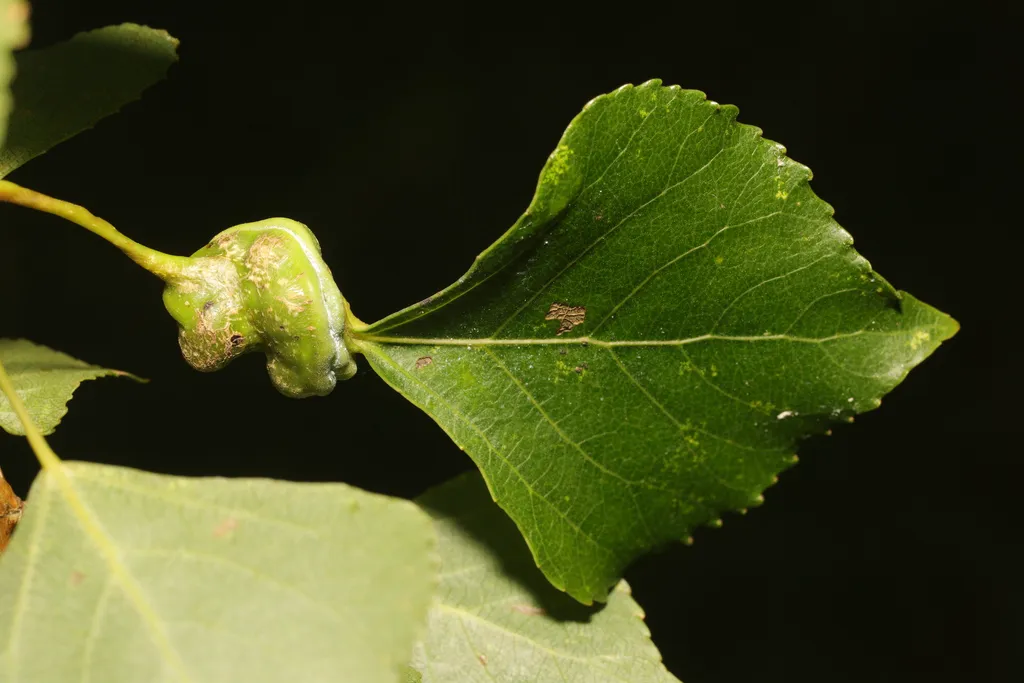
- Lettuce root aphid (Pemphigus bursarius) is one of the most well-known root aphids. It alternates between poplar trees, where it forms galls on leaf petioles in spring, and lettuce or other herbaceous plants, where it feeds on roots during summer. It is a major concern in lettuce-producing regions of California and Arizona.
- Rice root aphid (Rhopalosiphum rufiabdominalis) infests a wide range of hosts including grains, herbs, and ornamental nursery plants. It is a growing problem in greenhouses and nursery production across the Mid-Atlantic, Southeast, and Pacific Northwest. In protected environments, it can reproduce year-round without a dormant season.
- Conifer root aphids (Prociphilus spp.) feed on the roots of fir, spruce, and pine trees. They are a concern in Christmas tree farms and forest nurseries, particularly in Oregon, Washington, and North Carolina. Ant activity around the base of young conifers is often the first sign of an infestation.
- Sugarbeet root aphid (Pemphigus populivenae) targets sugarbeet roots in the Great Plains states. Like the lettuce root aphid, it alternates between poplar trees and its crop host.
Root Aphid Behavior and Biology
Root aphids feed by inserting needle-like mouthparts into roots and rootlets to extract plant sap. This feeding weakens the root system, reduces the plant’s ability to absorb water and nutrients, and can cause root discoloration and death of fine rootlets. Heavily infested plants show stunting, yellowing, midday wilting, and overall decline that is often mistaken for nutrient deficiency or root rot.
Many root aphid species have complex life cycles that involve alternating between two different types of host plants. The lettuce root aphid, for example, overwinters as eggs on poplar trees. In spring, the eggs hatch and the young aphids form distinctive galls on the leaf petioles. Inside these galls, the aphids reproduce and eventually produce winged adults that fly to lettuce fields or gardens, where they settle onto roots and begin feeding. In autumn, a return generation flies back to poplars to lay overwintering eggs. In mild climates or greenhouse settings, some populations skip the tree phase entirely and remain on roots year-round.
Reproduction is rapid. Female root aphids give birth to live clones of themselves without mating, a process called parthenogenesis. This allows colonies to grow quickly during favorable conditions. A single aphid can produce dozens of offspring over her lifetime, and multiple overlapping generations can develop in a single growing season.
Ants play a notable role in root aphid biology. Many ant species tend root aphid colonies underground, feeding on the sugary honeydew the aphids excrete. In return, ants protect the aphids from predators and even carry them to fresh roots when the current feeding site declines. Heavy ant traffic around the base of a plant, especially ants moving into and out of the soil, is a reliable indicator that root aphids may be present below the surface.
Treatment Methods for Root Aphids
Because root aphids live underground and are shielded from many conventional treatments, managing them requires a targeted approach:
- Inspection and removal: The first step is identifying infested plants. Pull up struggling plants and examine the roots for white or waxy aphid colonies. Remove and discard heavily infested plants and their growing media to prevent the aphids from spreading to neighboring containers or garden beds.
- Soil drenches: Systemic insecticide drenches applied to the soil can reach root aphids where they feed. Products containing imidacloprid, dinotefuran, or pymetrozine have shown effectiveness against root aphids in university trials. Always follow label directions for the specific crop or plant type.
- Biological controls: Entomopathogenic fungi such as Beauveria bassiana can be applied as a soil drench to target root aphids. Research at the University of Maryland found that Beauveria bassiana formulations reduced rice root aphid populations in greenhouse trials.
- Ant management: Since ants protect and transport root aphids, controlling ant populations around affected plants can make aphid colonies more vulnerable to natural enemies and treatments. Ant baits placed near the base of plants can reduce ant attendance.
- Sanitation and prevention: Use clean, sterile growing media for new plantings. Inspect incoming nursery stock and transplants before adding them to your garden or greenhouse. Avoid planting susceptible crops near poplar trees or other known primary hosts of root aphid species.
- Cultural practices: Allowing soil to dry between waterings can slow root aphid reproduction, as they prefer moist conditions. In field settings, deep tillage between crops and planting resistant varieties where available can reduce carryover.
Root aphids are often easier to prevent than to eliminate once established. Regular monitoring, especially pulling up a few plants from any patch showing unexplained decline, helps catch infestations early when they are still manageable.
References
Other Garden Pests
Explore other species in the garden pests family
Commonly Confused With
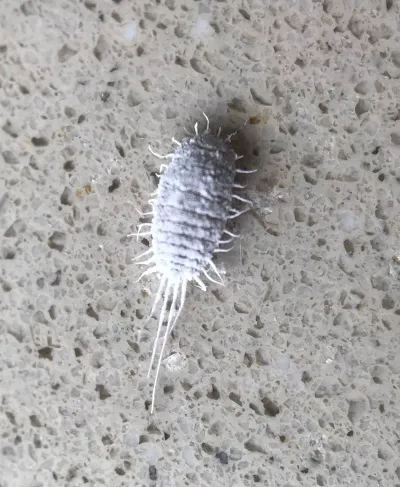
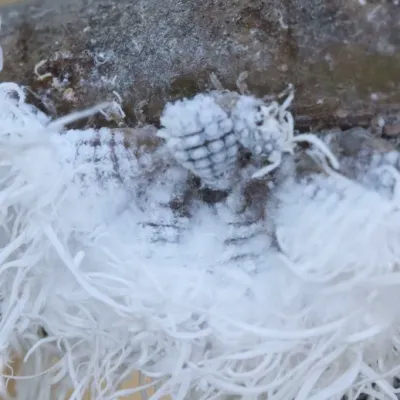
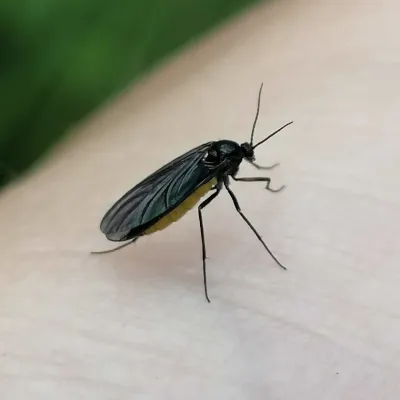
Root Aphids are often mistaken for these similar pests
Where Root Aphids Are Found
Hover over states to see their names. Green regions indicate where root aphids have been reported.
Common Questions about Root Aphids
What are root aphids?
+
Root aphids are small, soft-bodied insects in the family Aphididae that feed on plant roots rather than leaves or stems. Several species fall under this label, including the lettuce root aphid (Pemphigus bursarius), the rice root aphid (Rhopalosiphum rufiabdominalis), and conifer root aphids (Prociphilus spp.). They live underground and are often hidden from view until plants begin to decline.
How do I know if my plants have root aphids?
+
Look for unexplained stunting, yellowing leaves, and wilting that does not improve with watering. To confirm, carefully remove a struggling plant from its pot or dig around its roots. Root aphid colonies appear as clusters of small white, cream, or grayish insects on the roots, sometimes covered with a powdery or waxy coating. You may also notice ants traveling along stems and into the soil, since ants often tend root aphid colonies.
Are root aphids the same as regular aphids?
+
Root aphids belong to the same insect family (Aphididae) as the leaf-feeding aphids you commonly see on garden plants. The difference is where they feed. Root aphids spend most or all of their time underground on roots, while common garden aphids feed on stems, leaves, and buds above the soil surface.
What plants do root aphids attack?
+
Root aphids have a wide host range depending on the species. The lettuce root aphid targets lettuce and related crops. The rice root aphid infests many greenhouse and nursery plants, herbs, and grains. Conifer root aphids feed on fir, spruce, and pine tree roots in nurseries and Christmas tree farms. Other species feed on sugarbeets, grasses, and various ornamental plants.
Do root aphids spread from plant to plant?
+
Yes. Root aphids can spread through contaminated soil, shared pots, or drainage water that carries crawling nymphs between containers. They also produce winged forms at certain times of year that fly to new host plants. Ants can physically move root aphids from one plant to another as well.
Can I see root aphids without a microscope?
+
Yes, root aphids are visible to the naked eye. They range from about 1 to 4 millimeters long. Individual aphids are tiny, but colonies are easier to spot because they cluster together and may produce white waxy or powdery secretions on the roots.
How do I get rid of root aphids?
+
Treatment typically involves a combination of removing heavily infested plants, applying soil drenches with appropriate insecticides or biological controls like Beauveria bassiana, and managing ant populations that protect the aphids. Preventing reintroduction through clean growing media and inspecting new plants before adding them to your garden or greenhouse is also important.

With five years of hands-on experience in the pest control industry, George Schulz is a registered technician with the Virginia Pest Management Association and a proud third-generation professional in a family business that's been protecting homes for over 57 years. He manages and trains a team of service pros while also leading internal research efforts—recently spearheading a deep-dive review of thousands of documents on pest control materials to hand-pick the most kid and pet friendly, most effective solutions tailored specifically for homes in the DC metro area.