Flea Beetles Identification Guide
Alticini tribe
Flea beetles are small, jumping garden pests that chew tiny holes in plant leaves. They attack vegetables, ornamentals, and field crops throughout North America.
Taxonomy
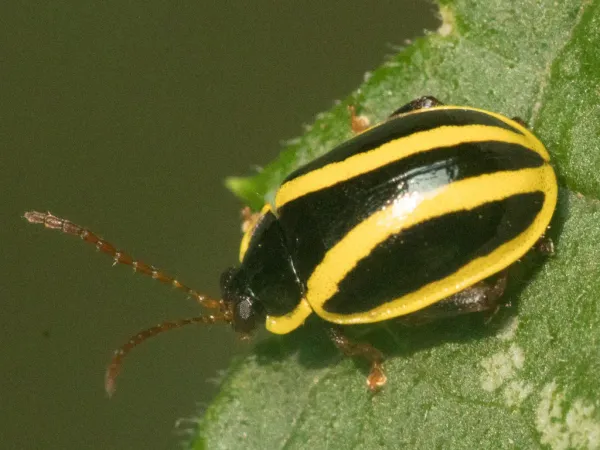
Flea Beetles Coloration
Common color patterns to help identify flea beetles
Flea Beetles
Seasonal Activity
When flea beetles are most active throughout the year

Where Flea Beetles Are Found
Hover over states to see their names. Green regions indicate where flea beetles have been reported.
Flea Beetle Identification Guide
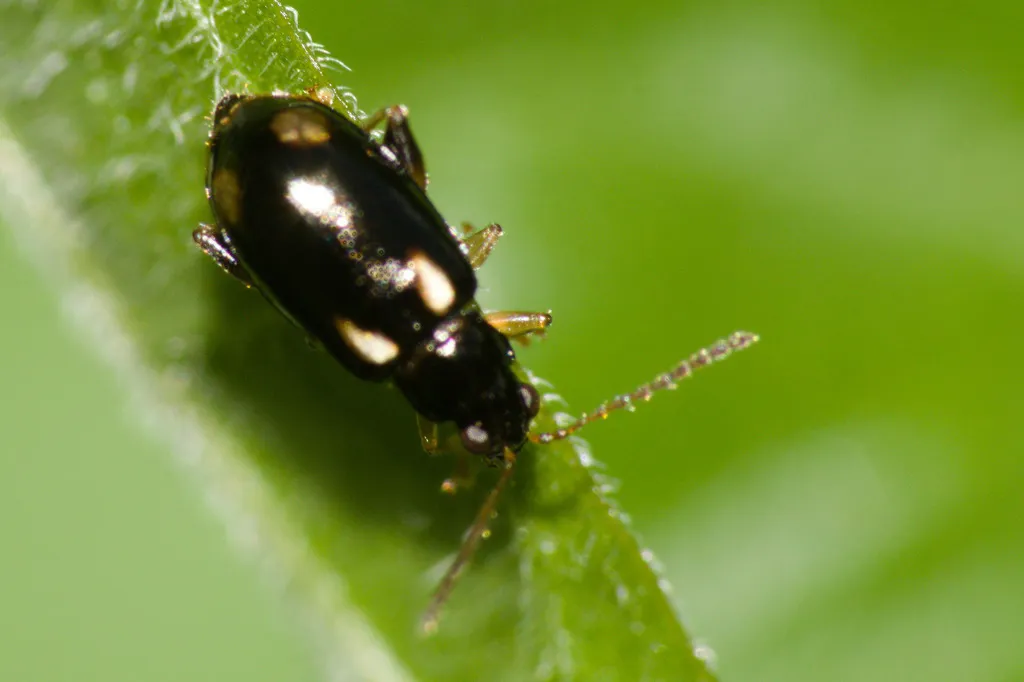
Flea beetles are some of the most common garden pests in North America. These tiny beetles belong to the tribe Alticini in the leaf beetle family Chrysomelidae. Hundreds of species live across the continent. They get their name from their large back legs, which let them jump into the air when scared, just like a flea. They rarely hurt full-grown plants. But they can destroy seedlings and young transplants in vegetable gardens.
Physical Characteristics
Flea beetles are small insects. They measure just 1 to 5mm long. Their compact, oval bodies and big back legs are the best ways to tell them apart from other bugs. Most species have hard, shiny wing covers. They can both jump and fly.
Key features to look for:
- Compact oval body, usually 1-5mm long
- Enlarged hind legs built for jumping
- Shiny, often metallic wing covers
- Short, thread-like antennae
- Six legs with the rear pair noticeably larger
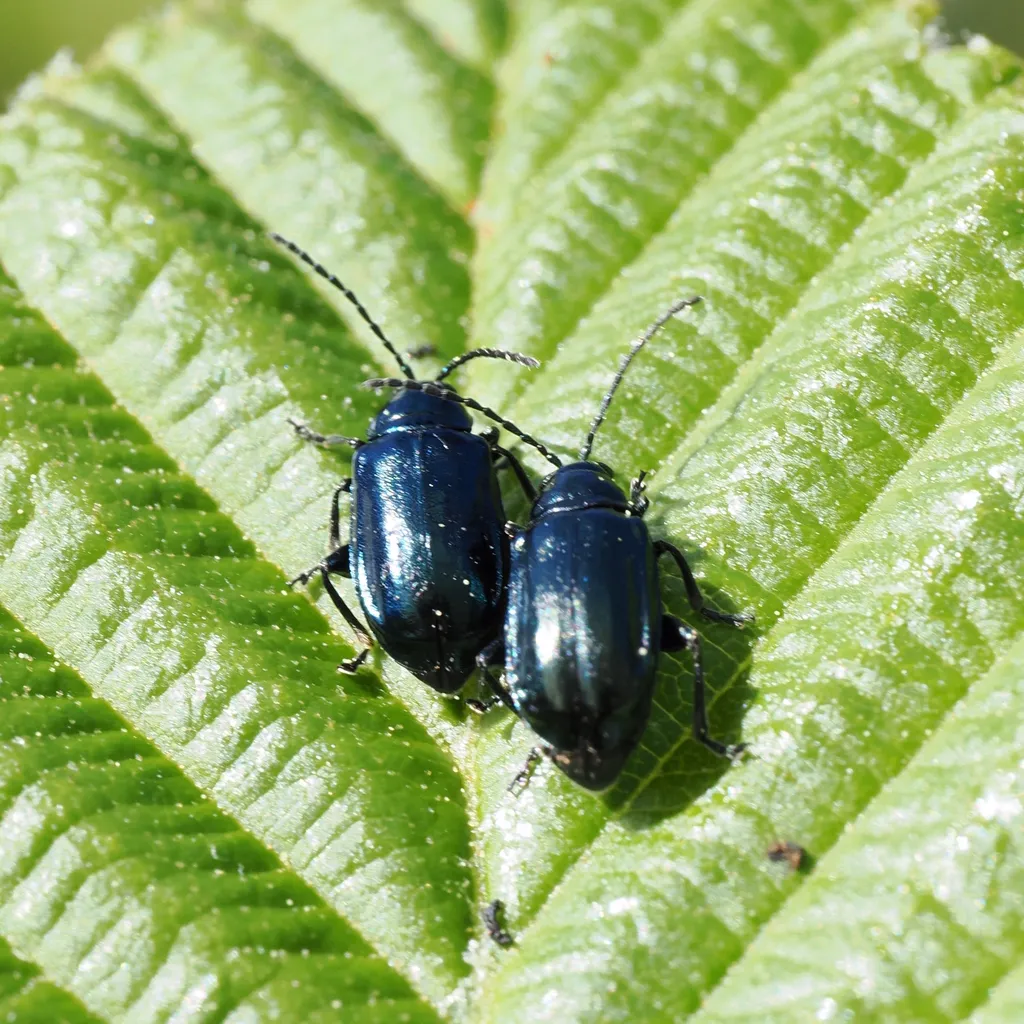
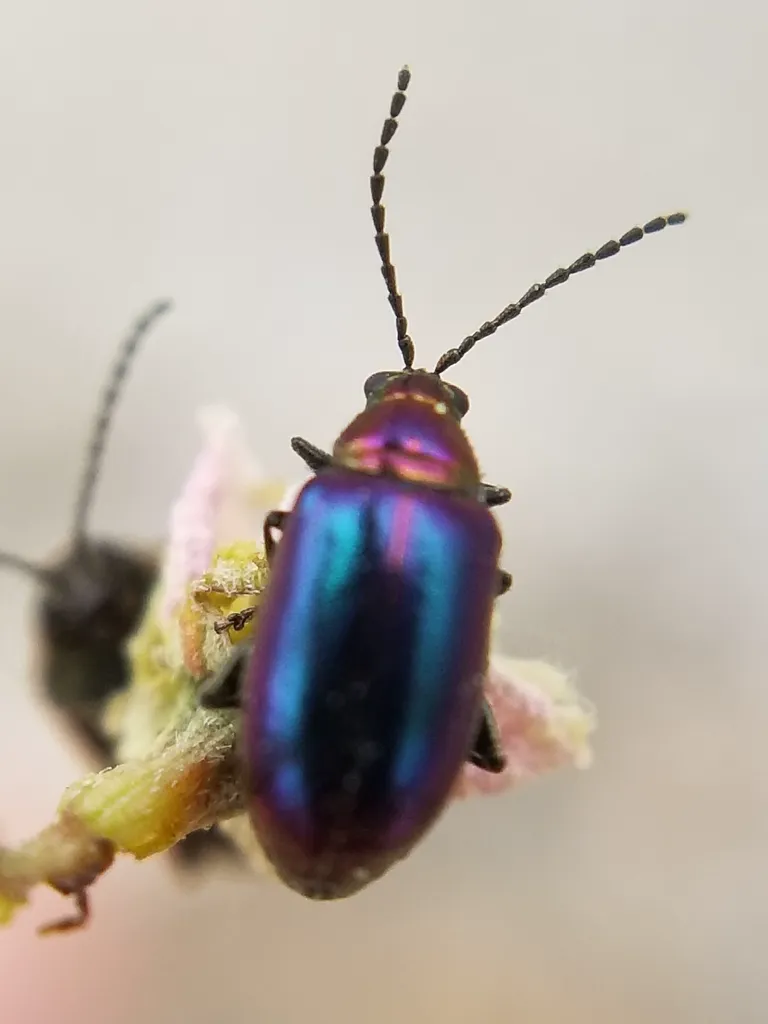
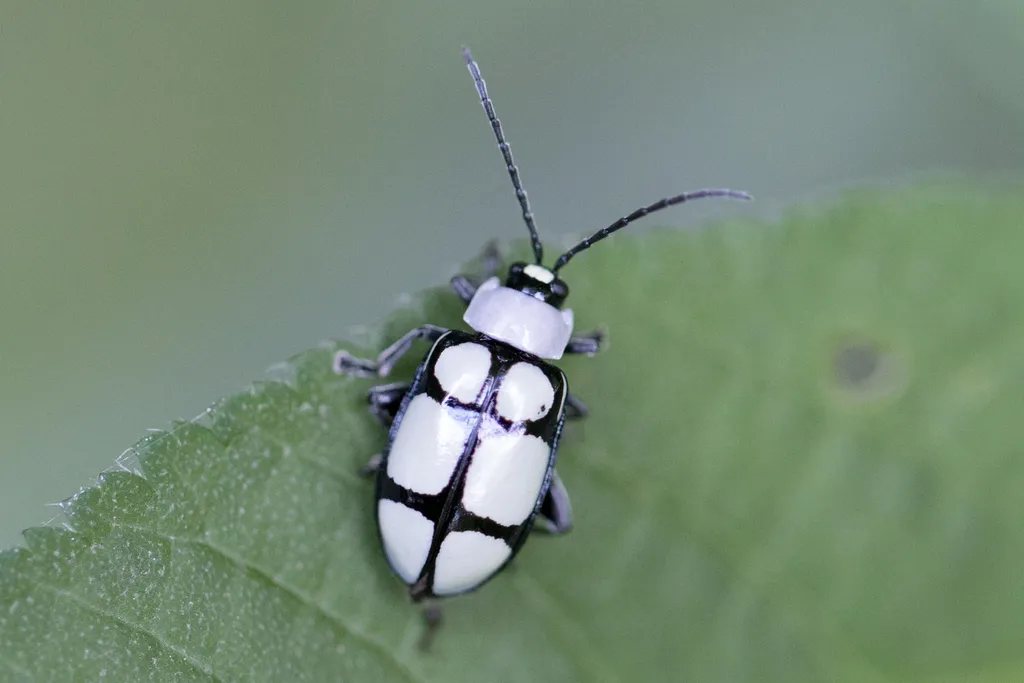
Colors vary a lot by species. Some are solid black or dark brown. Others have metallic blue, green, or bronze sheens. Several common species have bold yellow and black stripes. The wide range of colors can make them hard to identify. But the jumping behavior plus their small size is almost always a dead giveaway.
Common Species in North America
Striped Flea Beetle (Phyllotreta striolata) is one of the most widespread species. Adults are about 2mm long with yellow and black stripes on their wing covers. They mainly attack cabbage, broccoli, and radishes.
Crucifer Flea Beetle (Phyllotreta cruciferae) is a small, shiny black species about 2mm long. It goes after the same crops as the striped flea beetle. It is common across the United States and southern Canada.
Eggplant Flea Beetle (Epitrix fuscula) is dark brown to black and about 2mm long. It feeds heavily on eggplant but also attacks tomatoes, peppers, and potatoes.
Pale-Striped Flea Beetle (Systena blanda) is a generalist that eats many types of plants. It is about 3 to 4mm long with pale yellowish stripes. Common targets include beans, corn, lettuce, and sunflowers.
Grape Flea Beetle (Altica chalybea) is a metallic blue-green species about 4 to 5mm long. It feeds on grape leaves and buds in spring. It can also attack Virginia creeper and evening primrose.
Corn Flea Beetle (Chaetocnema pulicaria) is a tiny, shiny black beetle just 1.5 to 2mm long. It feeds on corn seedlings. This species can also spread Stewart’s bacterial wilt, a serious corn disease.
Flea Beetle Behavior and Biology
Lifecycle and Development
Flea beetles go through four life stages: egg, larva, pupa, and adult. Most species produce one to two generations per year, depending on the climate.
Adults spend the winter in leaf litter, garden debris, and along field edges. They become active in spring when soil warms above 50 degrees Fahrenheit. After coming out, they feed on plants and mate. Females lay tiny eggs in the soil near host plants.
Eggs hatch in about one to two weeks. They are white and oval. Females place them alone or in small groups in soil cracks near plant roots.
Larvae are small, white, worm-like grubs. They feed on plant roots and underground stems. Root feeding can weaken plants, but this damage is usually less obvious than the leaf damage adults cause. Larvae take two to five weeks to grow.
Pupae form in small chambers in the soil. After one to two weeks, new adults come out and start feeding on leaves. In northern areas, this second group feeds until fall, then finds shelter for winter. In warmer areas, a third group may develop.
Feeding Behavior and Damage
Adult flea beetles chew small, round holes in leaves. This creates a “shothole” pattern. Each hole is about the size of a pinhead. When many beetles feed on one plant, the leaves look like they were hit with fine birdshot.
This damage is worst for:
- Seedlings and transplants that have only a few leaves. Heavy feeding can kill them outright.
- First leaves to emerge are often targeted by beetles. This can kill a plant before it gets going.
- Stressed plants that are drought-stressed or growing poorly are less able to bounce back.
Full-grown, healthy plants can usually handle some flea beetle damage. The leaf loss rarely goes above 10 to 20 percent on mature plants, and most crops can handle that.
Some flea beetle species also spread plant diseases. The corn flea beetle carries Stewart’s bacterial wilt. Other species spread viruses and bacteria as they move from plant to plant.
Habitat and Host Plants
Flea beetles show up wherever their host plants grow. You can find them in backyard gardens and on large farms alike. Different species focus on different plant families:
- Cabbage family (cabbage, broccoli, kale, radishes): Striped and crucifer flea beetles
- Nightshade family (tomatoes, peppers, eggplant, potatoes): Eggplant and tobacco flea beetles
- Grasses and corn: Corn flea beetles
- Grapes and berries: Grape flea beetle
- Mixed crops: Pale-striped and other generalist species
Adults are most active on warm, sunny days. They tend to be less active in cool, cloudy, or rainy weather. They fly well and can move into new plantings fast from nearby areas.
Treatment Methods for Flea Beetles
Flea beetles are hard to control because of their small size and ability to fly in from nearby areas. No single method works on its own. The best results come from combining several approaches.
Physical and Cultural Controls
Good garden habits are the first line of defense against flea beetles:
- Floating row covers are lightweight fabric covers placed over crops right after planting. They block beetles from reaching plants. This is one of the most reliable ways to protect young seedlings.
- Delayed planting means waiting to plant until seedlings are bigger and stronger. This helps them survive feeding damage. The first wave of spring beetles may move on before late-planted crops come up.
- Trap crops like radishes or mustard greens planted near your main crop can draw beetles away from plants you want to protect.
- Fall cleanup is key. Removing plant debris, weeds, and leaf litter in fall cuts down on places where beetles overwinter near the garden.
- Crop rotation means moving crops to new spots each year. This can lower the number of beetles in any one area.
Chemical Treatment Options
When flea beetle numbers get high enough to threaten young plants, targeted treatments can bring them down:
- Pyrethrin-based sprays provide fast knockdown of adult beetles on contact. They break down quickly and need to be applied again after rain.
- Neem oil works as a repellent and feeding blocker. It must go directly on leaves and be reapplied after rainfall.
- Kaolin clay is sprayed on leaves to form a white film that keeps beetles from feeding. Plants need to be coated before beetles show up.
- Spinosad is a naturally derived product that works well against flea beetles when sprayed on leaves.
The University of Minnesota Extension suggests treating when more than 25 percent of the leaf area is damaged on seedlings, or when you count an average of five or more beetles per plant on young transplants.
Prevention Tips for Homeowners
You can take steps before planting season to reduce flea beetle problems:
- Start seedlings indoors so they are bigger and stronger before going outside
- Use transplants instead of seeds for crops that beetles love, like eggplant
- Mulch around plants to make it harder for beetles to reach the soil for egg laying
- Keep plants well watered and fed so they can outgrow light damage
- Plant strong-scented herbs like basil near your crops, which may push some flea beetle species away
- Check plants every day in spring for the first signs of tiny holes in leaves
References and Further Reading
- University of Minnesota Extension - Flea Beetles
- University of Kentucky Entomology - Flea Beetles in the Garden
- Colorado State University Extension - Flea Beetles
- Penn State Extension - Flea Beetles in Home Gardens
- USDA Agricultural Research Service - Insect Research
- Agriculture and Agri-Food Canada - Flea Beetles of Canola
Other Garden Pests
Explore other species in the garden pests family
Commonly Confused With
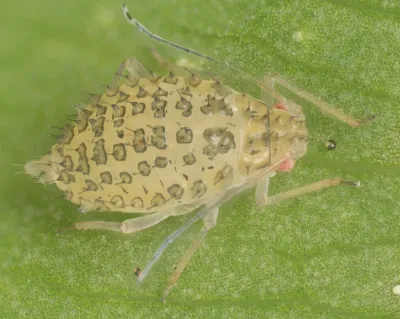
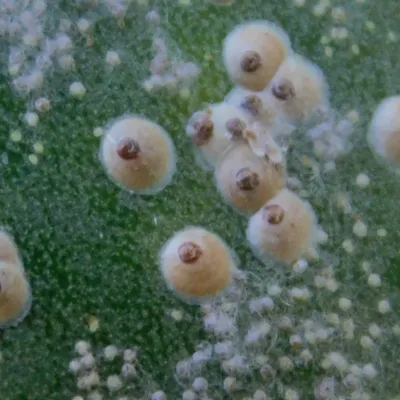
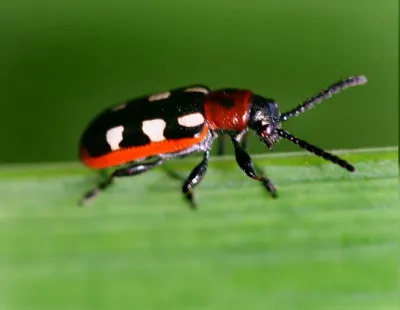
Flea Beetles are often mistaken for these similar pests
Where Flea Beetles Are Found
Hover over states to see their names. Green regions indicate where flea beetles have been reported.
Common Questions about Flea Beetles
What do flea beetles look like?
+
Flea beetles are very small beetles, usually 1-5mm long, with enlarged hind legs that let them jump like fleas when disturbed. They come in many colors depending on species, including black, metallic blue-green, striped, and brown. Their compact oval bodies and jumping behavior are the easiest ways to identify them.
Do flea beetles bite humans?
+
No, flea beetles do not bite humans. Despite their name, they are not related to fleas. The name comes from their powerful hind legs and ability to jump quickly when threatened. They feed only on plant tissue and pose no direct health risk to people or pets.
What plants do flea beetles attack?
+
Flea beetles attack a wide range of plants. Common targets include eggplant, tomatoes, peppers, potatoes, radishes, cabbage, broccoli, corn, and leafy greens. Some species are specialists that only feed on certain plant families, while others are generalists that feed on many different crops.
What does flea beetle damage look like?
+
Flea beetle damage appears as many tiny round holes in leaves, often described as a shothole pattern. Heavy feeding makes leaves look like they were hit with fine birdshot. Seedlings and young transplants are most at risk because they have less leaf area to lose. Mature plants can usually tolerate moderate damage.
When are flea beetles most active?
+
Flea beetles are most active from late spring through midsummer, typically May through August. Adults emerge from the soil in spring when temperatures warm above 50 degrees Fahrenheit. They feed heavily in spring, lay eggs, and a second generation may appear in late summer in warmer climates.
How do I get rid of flea beetles in my garden?
+
Floating row covers are one of the best ways to block beetles from reaching plants. Removing plant debris in fall cuts down on overwintering sites. Planting trap crops like radishes can draw beetles away from your main crops. For bad infestations, targeted sprays applied to foliage can reduce numbers quickly.
Are flea beetles the same as fleas?
+
No, flea beetles and fleas are completely different insects. Flea beetles belong to the beetle order Coleoptera and feed on plants. Fleas belong to the order Siphonaptera and are blood-feeding parasites. The only similarity is their jumping ability, which is why flea beetles got their common name.

With five years of hands-on experience in the pest control industry, George Schulz is a registered technician with the Virginia Pest Management Association and a proud third-generation professional in a family business that's been protecting homes for over 57 years. He manages and trains a team of service pros while also leading internal research efforts—recently spearheading a deep-dive review of thousands of documents on pest control materials to hand-pick the most kid and pet friendly, most effective solutions tailored specifically for homes in the DC metro area.