Little House Flies Identification Guide
Fannia canicularis
Little house flies are small gray flies often seen hovering in circles beneath lights and in shaded areas. They breed in moist organic matter and are common nuisance pests in homes near animal facilities or areas with decaying waste.
Taxonomy
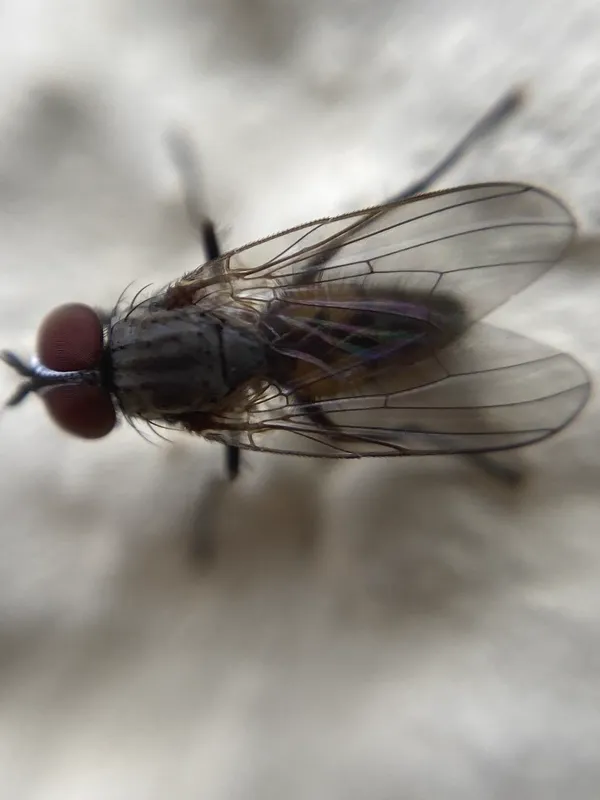
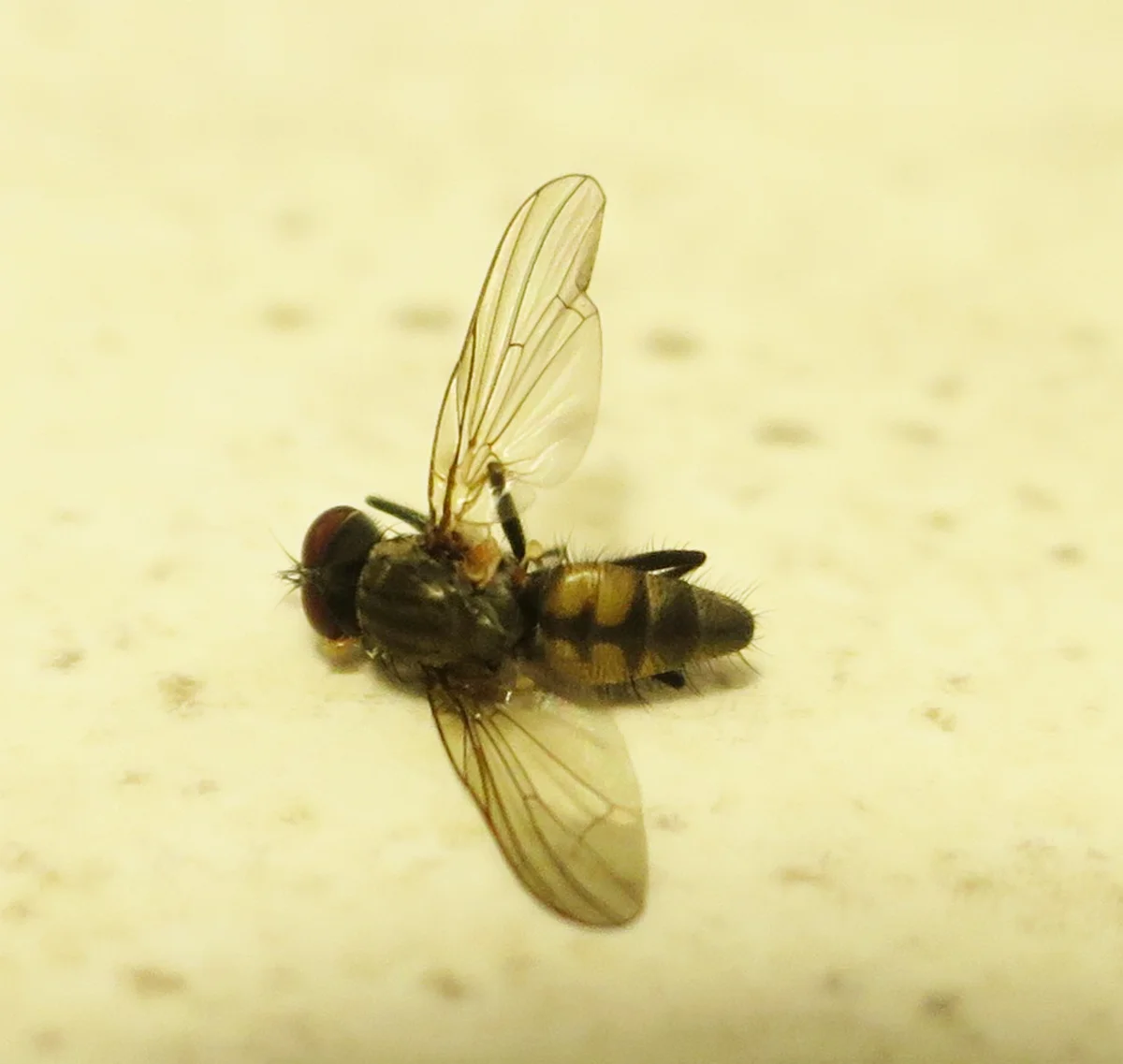
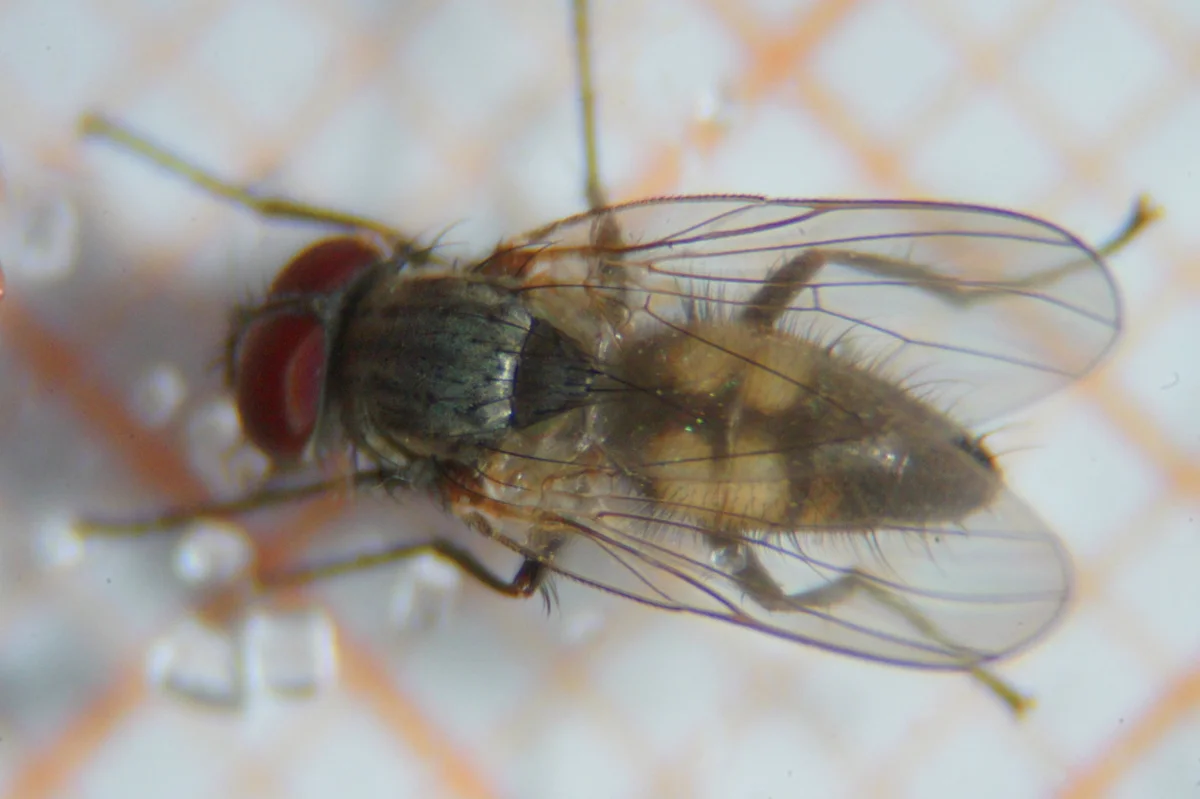
Little House Flies Coloration
Common color patterns to help identify little house flies
Little House Flies
Seasonal Activity
When little house flies are most active throughout the year

Where Little House Flies Are Found
Hover over states to see their names. Green regions indicate where little house flies have been reported.
Little House Fly Identification Guide
Physical Characteristics
Little house flies (Fannia canicularis) are also called lesser house flies. These small flies measure about 4 to 7 millimeters long. That is roughly two-thirds the size of a common house fly. They have a gray to brown-gray body with three faint stripes on the upper back. These stripes are harder to see than those on house flies.
You can tell males from females by looking at their eyes. In males, the eyes almost touch at the top of the head. In females, the eyes are farther apart. When resting, these flies hold their wings flat over their body. House flies hold their wings in a slight V-shape.
The wing veins look different too. In little house flies, the main wing vein runs fairly straight toward the wing tip. In house flies, this vein curves upward near the end. This small detail can help confirm what type of fly you have.
Little house flies do not bite. Like house flies, they have sponge-like mouthparts made for liquid feeding. They spit digestive fluids onto surfaces to break down food before eating it.
Common Species
Fannia canicularis is the most common little house fly in North America and around the world. It came from Europe but has spread across the globe. You can find it from Alaska through Canada, the United States, and into Mexico.
Other species in the Fannia group exist, but F. canicularis is the one you are most likely to see in homes. A close relative, the latrine fly (Fannia scalaris), breeds mainly in human and animal waste. Some experts call this species the lesser house fly to tell it apart from the common house fly (Musca domestica).
Little House Fly Behavior and Biology
Little house flies act different from other household flies. Male flies form hovering groups in shaded areas. Indoors, you will often see them flying in circles beneath hanging lamps or in the center of rooms. Outdoors, they hover beneath shade trees or in sheltered spots. This circling flight is how males attract females for mating.
Life Cycle and Reproduction
Little house flies go through four life stages: egg, larva, pupa, and adult. Females lay eggs in moist, rotting organic matter. The eggs have small side flaps that help them float in wet material. This lets the species breed in wetter places than some other flies can use.
In warm weather, eggs hatch in one to two days. The larvae (maggots) are flat with side bumps that make them look somewhat hairy. This is different from the smooth, cone-shaped maggots of house flies. Larvae feed on the rotting material around them for about six days or more. Then they move to a drier spot to pupate.
The pupal stage lasts about a week in warm weather. The full cycle from egg to adult takes about two to four weeks depending on temperature. Adults usually live two to three weeks. Many generations can occur each year where breeding conditions are good. A related species, Biting Midges, shares similar characteristics.
Breeding Sites and Habitat A related species, Coffin Flies, shares similar characteristics.
Little house flies grow in moist, rotting organic material. They prefer to breed in: A related species, Cheese Skipper Flies, shares similar characteristics.
- Poultry manure and droppings
- Animal manure from cattle, pigs, horses, and pets
- Compost piles and yard waste
- Garbage and food waste
- Rotting plants and grass clippings
- Soiled bedding and wet organic debris A related species, Dark-Eyed Fruit Flies, shares similar characteristics.
Homes near poultry farms, stables, or areas with pet waste buildup often have little house fly problems. The flies can travel from these breeding sites into nearby buildings.
Seasonal Patterns
Little house flies follow a different seasonal pattern than common house flies. They do not handle high summer heat well. They tend to appear most often during cooler parts of the year. In areas like the Mid-Atlantic, you will see peak activity in spring (March through May) and again in fall (September through November).
During the hottest summer months, little house fly numbers often drop outdoors. But heated buildings, poultry houses, and other indoor spaces can keep fly numbers up year-round if breeding material is present.
Treatment Methods for Little House Flies
Controlling little house flies works best when you find and remove their breeding sources. Sprays alone rarely give lasting results. New flies keep coming from untreated areas where larvae develop.
Sanitation and Source Removal
The best control method targets where the flies breed:
- Find breeding sites: Look for animal waste, poorly managed compost, garbage, or other moist organic matter near your home.
- Remove organic matter: Clean up pet waste right away. Keep garbage in sealed containers and take it out often. Turn compost piles to help them break down faster.
- Handle manure: On properties with animals, deal with manure through composting, regular removal, or spreading it to dry. Covering manure piles with tarps for at least two weeks can kill larvae inside.
- Cut moisture: Dry conditions stop little house fly breeding. Fix leaks, improve drainage, and do not overwater areas where organic matter builds up.
Keeping Flies Out
Keep little house flies from getting inside:
- Install and maintain tight-fitting window and door screens
- Seal gaps around pipes, vents, and openings
- Use automatic door closers on busy entrances
- Keep doors and windows closed when you can
Running fans can disrupt the hovering flight of males and make indoor spaces less appealing to these flies.
Trapping and Watching
Traps help reduce adult fly numbers and track how bad the problem is:
- UV light traps with sticky boards: Work well for catching adult flies indoors, especially in businesses
- Monitoring cards: White cards can track fly activity by showing spots from fly waste
- Fly paper and sticky traps: Simple ways to catch some adults
Keep in mind that many granular fly baits made for house flies do not work as well on little house flies. This species does not feed on scattered baits the way house flies do.
Biological Control Methods
On farms and in large buildings, natural enemies can help control flies:
- Parasitic wasps: Tiny wasps like Spalangia and Muscidifurax species attack fly pupae and reduce the number of adults that emerge. They work best along with good cleaning habits.
- Predatory insects: Some beetles and other bugs eat fly larvae in manure and compost.
These methods need ongoing effort and work best when paired with good sanitation.
Chemical Control Options
When cleaning is not enough, targeted sprays may help:
- Residual surface sprays: Put on areas where adult flies rest
- Space sprays: Kill flying adults fast but do not stop breeding
- Larvicides: Applied to breeding material as the label allows
Using only sprays for little house fly control often gives poor results over time. The flies breed fast, and new adults keep coming from untreated breeding sites. Flies can also become resistant to sprays with repeated use.
References
- Murillo AC, Hubbard CB, Hinkle NC, Gerry AC. Big Problems With Little House Fly. Journal of Integrated Pest Management. 2021.
- Little House Fly - UC Riverside Veterinary Entomology
- Pest Management Recommendations for Poultry - Cornell/Penn State Extension
- Lesser House Flies - Utah State University Extension
- Integrated Pest Management for Nonbiting Flies in Schools - Oregon State Extension
Other Flies
Explore other species in the flies family
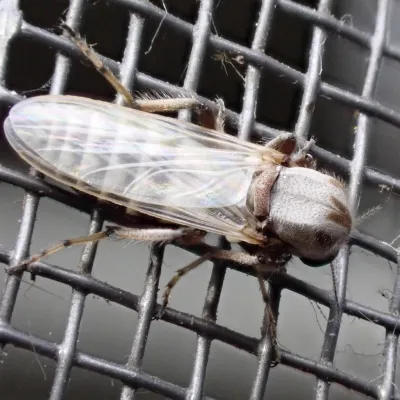
Commonly Confused With
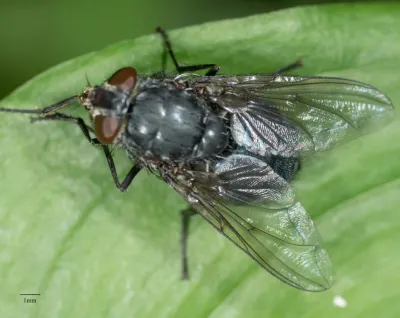
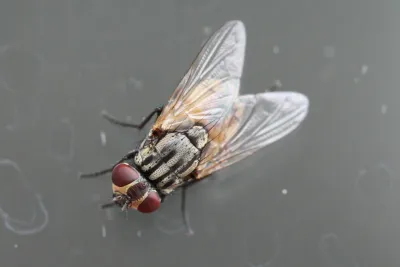
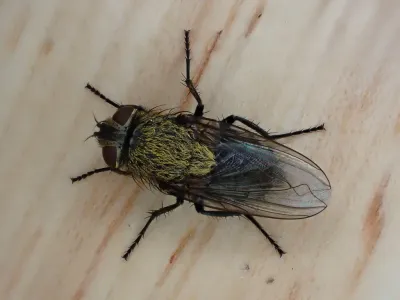
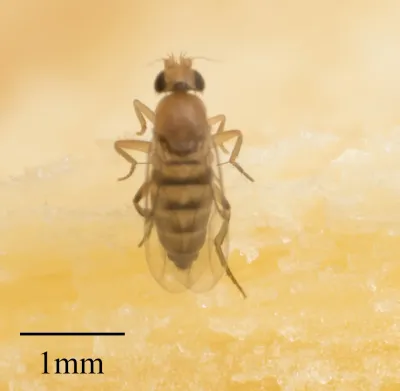
Little House Flies are often mistaken for these similar pests
Where Little House Flies Are Found
Hover over states to see their names. Green regions indicate where little house flies have been reported.
Common Questions about Little House Flies
How can I tell little house flies apart from regular house flies?
+
Little house flies are noticeably smaller than common house flies, measuring about 4 to 7 millimeters compared to 6 to 8 millimeters. The easiest way to identify them is by their behavior. Male little house flies hover and fly in circles beneath lights, chandeliers, or in the center of rooms. Regular house flies dart around and land more frequently.
Why do little house flies fly in circles?
+
The circling flight pattern is a mating behavior unique to male little house flies. Males form hovering swarms in shaded indoor areas or beneath outdoor shade trees to attract females. This distinctive behavior is one of the most reliable ways to identify this species.
Where do little house flies come from?
+
Little house flies breed in moist, nitrogen-rich decaying organic matter. Common breeding sites include poultry manure, pet waste, compost piles, garbage, and rotting vegetation. Homes near farms, stables, or areas with accumulated animal waste often experience little house fly problems.
Are little house flies dangerous?
+
Little house flies are primarily nuisance pests. They do not bite humans. However, because they develop in decaying organic matter, they can mechanically carry bacteria on their bodies and potentially contaminate food and surfaces when they land.
When are little house flies most active?
+
Unlike common house flies that peak in hot summer months, little house flies prefer cooler temperatures. They are most abundant in spring and fall in temperate regions. They tend to decline during the hottest parts of summer and may be found indoors year-round in heated buildings.
How do I get rid of little house flies in my house?
+
The most effective approach is finding and eliminating the breeding source. Check for pet waste in the yard, poorly maintained compost, garbage accumulation, or nearby animal facilities. Clean up organic matter, keep garbage sealed, and improve sanitation around your property.
Do fly baits work on little house flies?
+
Many standard house fly baits are less effective against little house flies because they do not readily feed on scattered granular baits like house flies do. Source reduction and sanitation are more reliable control methods for this species.
Can little house flies breed inside my home?
+
Little house flies can breed indoors if suitable organic material is available. Neglected pet litter boxes, accumulated food waste, or damp organic debris can serve as breeding sites. However, most infestations trace back to outdoor sources like manure or compost.

With five years of hands-on experience in the pest control industry, George Schulz is a registered technician with the Virginia Pest Management Association and a proud third-generation professional in a family business that's been protecting homes for over 57 years. He manages and trains a team of service pros while also leading internal research efforts—recently spearheading a deep-dive review of thousands of documents on pest control materials to hand-pick the most kid and pet friendly, most effective solutions tailored specifically for homes in the DC metro area.