Lesser House Flies Identification Guide
Fannia canicularis
Lesser house flies are small gray flies known for their distinctive circling flight pattern beneath hanging objects. They are common nuisance pests that breed in decaying organic matter and animal waste.
Taxonomy
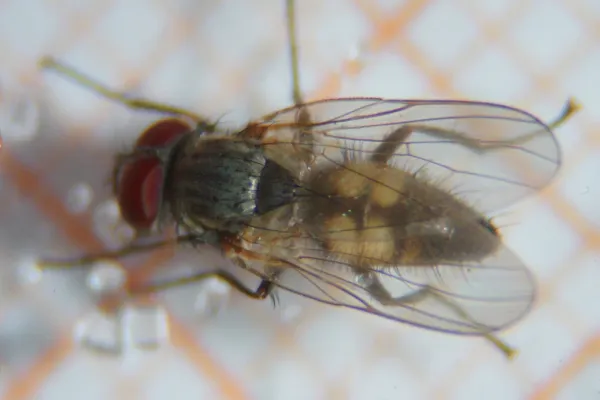
Lesser House Flies Coloration
Common color patterns to help identify lesser house flies
Lesser House Flies
Seasonal Activity
When lesser house flies are most active throughout the year

Where Lesser House Flies Are Found
Hover over states to see their names. Green regions indicate where lesser house flies have been reported.
Lesser House Fly Identification Guide
Physical Characteristics
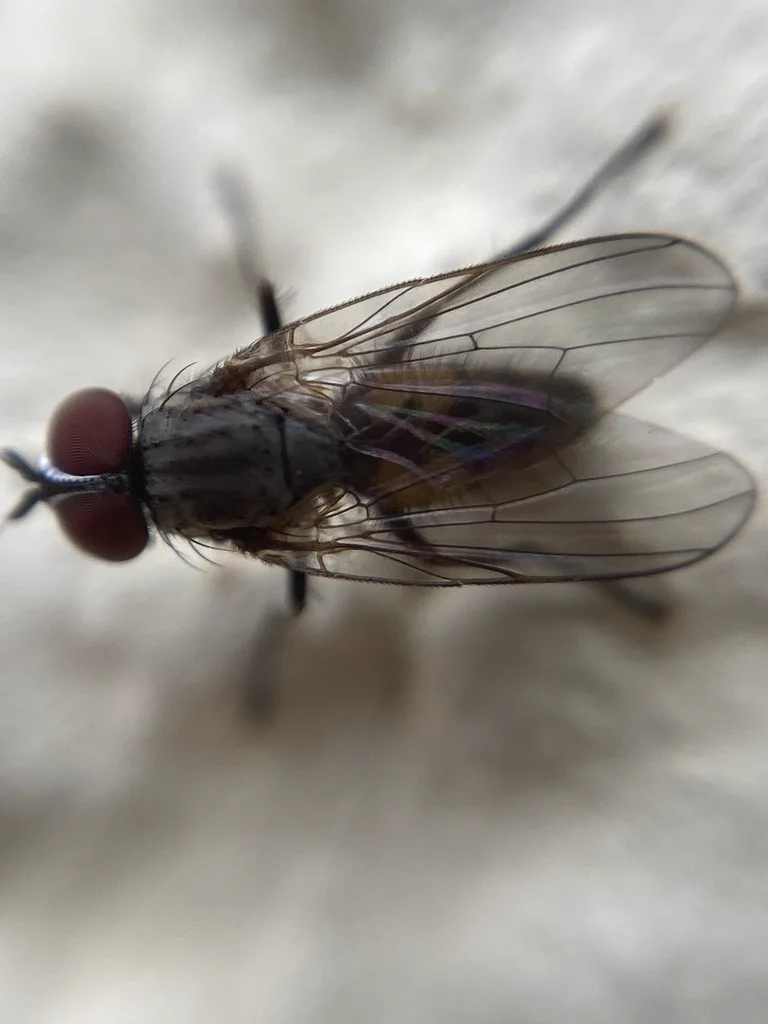
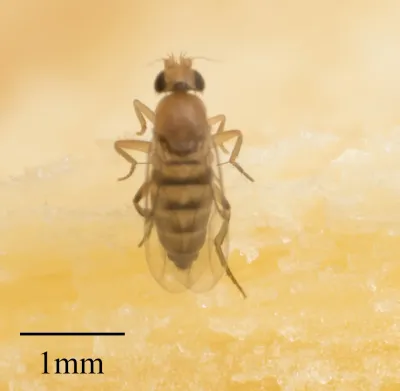
Lesser house flies (Fannia canicularis), also called little house flies, are smaller and thinner than common house flies. Adults are 3.5 to 6 millimeters long, about half the size of a regular house fly. Their bodies are grayish-brown with three faint stripes on the upper body. These stripes are easier to see on males than females.
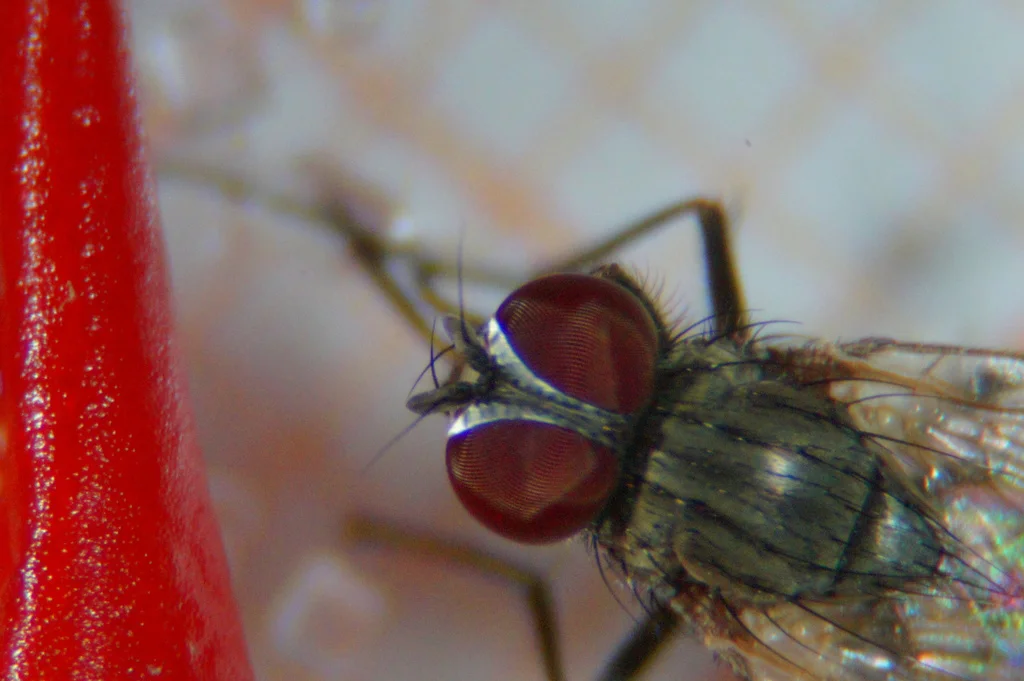
Males and females look a bit different. Males have a narrow, pointed belly with pale yellow patches near the front. Females have a wider, rounder gray belly. Male eyes nearly touch at the top of the head. Female eyes are farther apart.
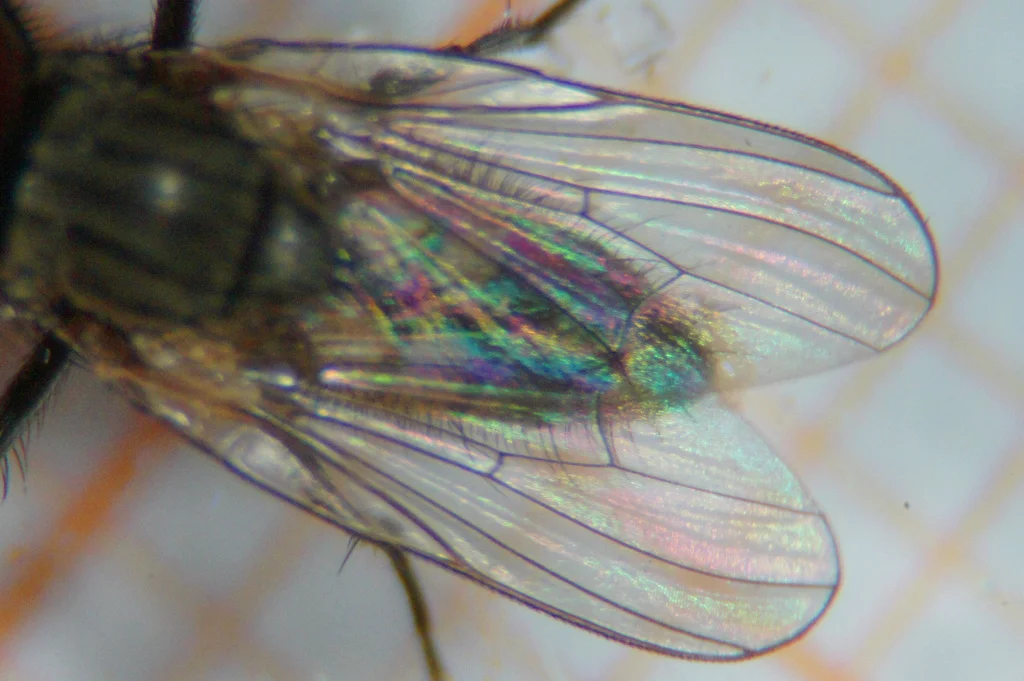
You can also tell them apart by their wings. House fly wings have a vein that curves sharply near the tip. Lesser house fly wings have a straight vein in the same spot. You may need a magnifying glass to see this.
Larvae Appearance
Lesser house fly larvae look quite different from regular fly maggots. House fly maggots are smooth and tapered. Lesser house fly larvae are flat, brownish, and shaped like small boats. They have feathery edges that help them float in wet, decaying material. The larvae grow to about 6 millimeters long before changing into adults.
Common Species
The lesser house fly (Fannia canicularis) is the main species found in homes across North America. It came from Europe and Asia but now lives worldwide. A related species called the latrine fly (Fannia scalaris) looks similar but breeds mainly in human waste. The latrine fly is less common today due to modern plumbing. Both species are also sometimes called little house flies.
Lesser House Fly Behavior and Biology
The Circling Flight Pattern
The easiest way to spot lesser house flies is by how they fly. Males fly to the center of a room and circle in jerky patterns beneath hanging objects. They often circle under light fixtures, ceiling fans, or lamp cords. This silent circling can go on for a long time.
This flight pattern is part of their mating behavior. Males set up patrol zones in the air where they watch for other males and for females. They usually fly about five to six feet off the ground in spots out of the wind and direct sunlight. You will often see these flies in entryways, covered patios, garages, and rooms near where they breed. A related species, Biting Midges, shares similar characteristics.
Breeding Habits A related species, Coffin Flies, shares similar characteristics.
Lesser house flies breed in moist, rotting organic matter. They need material high in nitrogen. Common breeding sites include: A related species, Cheese Skipper Flies, shares similar characteristics.
- Chicken and bird droppings
- Dog and other pet waste
- Compost with animal manure
- Rotting vegetables and plant material
- Piles of organic debris in damp areas A related species, Dark-Eyed Fruit Flies, shares similar characteristics.
Moisture matters a lot for these flies. They can only lay eggs and grow in material that is more than 40 percent wet. If the material dries out, the flies cannot breed there.
Life Cycle
The full life cycle takes 18 to 22 days in warm weather. It takes longer when temperatures are cooler. Females start laying eggs when they are about 10 days old. The eggs are banana-shaped and about 1 millimeter long. They have ridges that help them float in wet material.
Eggs hatch in 24 to 48 hours when it is warm. The larvae go through three growth stages over at least eight days. They reach about 6 millimeters long. When ready to change into adults, larvae move to drier spots. The pupal stage lasts at least 10 days before adult flies come out.
Adult lesser house flies live two to three weeks. In good conditions, they can produce about seven generations per year.
Seasonal Activity
Lesser house flies are most active during warm months when they breed quickly. You will see the most flies from late spring through early fall. Unlike common house flies, lesser house flies do not like to come inside as much. They often gather in outdoor areas like patios, entryways, and garages. Face flies share this habit of entering buildings in fall to seek shelter, though face flies are specifically associated with cattle.
When fall temperatures drop, they look for shelter in buildings or thick plants. Flies can live indoors through winter if the building is heated and breeding sites are nearby.
Treatment Methods for Lesser House Flies
The best way to control lesser house flies is to remove their breeding sites and keep them out of buildings. Sprays alone are not enough for lasting results.
Source Elimination
Getting rid of breeding sites is the key to fly control:
- Animal waste cleanup: Pick up pet waste from yards right away and often. If you live near a chicken farm, proper manure handling is very important.
- Keep things dry: Lesser house flies need wet material (above 40 percent moisture) to breed. Dry manure that crumbles when you squeeze it will not support fly growth.
- Compost care: Turn compost piles often to create heat and speed up breakdown. Do not add meat or too much nitrogen-rich material. Cover piles when you can.
- General cleanup: Remove rotting vegetables, decaying debris, and any waste that could become a breeding spot.
Physical Exclusion
Keep flies out of your home or building:
- Fix or replace window and door screens with fine mesh
- Use air curtains at entrances in stores and other businesses
- Install self-closing doors with tight seals
- Seal gaps around pipes, vents, and other openings
Monitoring and Trapping
Lesser house flies do not go to the same baits that work for common house flies. Browse our fly identification guide to learn how lesser house flies compare with other species. You can track fly numbers using:
- Sticky fly tapes in areas where you see a lot of flies
- UV light traps placed away from doors so they do not draw more flies inside
- Regular checks to see where flies gather most often
Combined Control Methods
Long-term lesser house fly control works best when you use multiple approaches together. Using only chemical products can lead to resistance over time. Combining sanitation, exclusion, and targeted treatments gives you better and longer-lasting results.
References
Other Flies
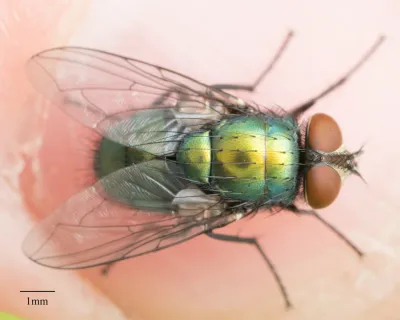
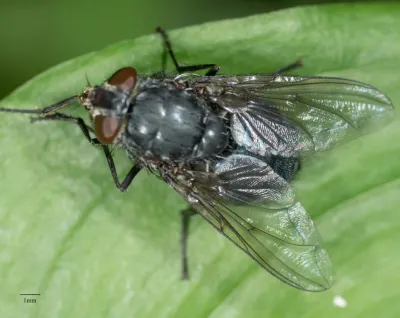
Explore other species in the flies family
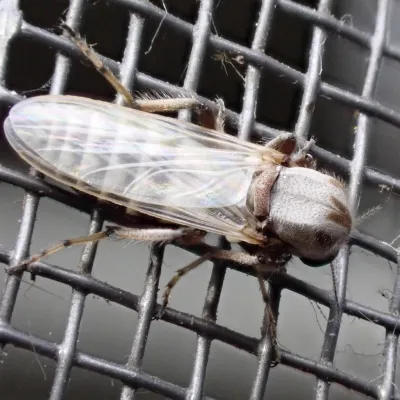
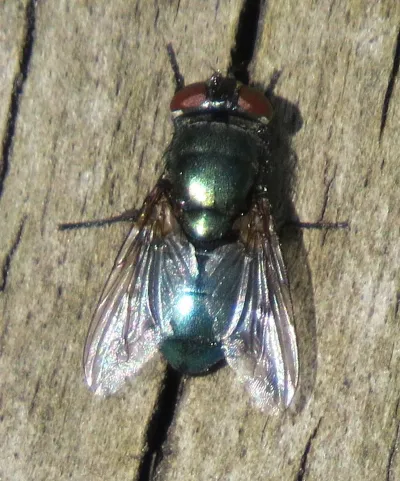
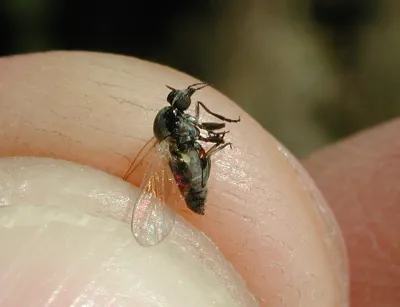
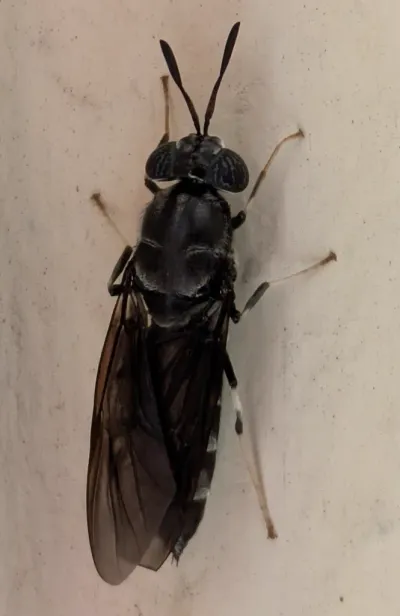
Commonly Confused With
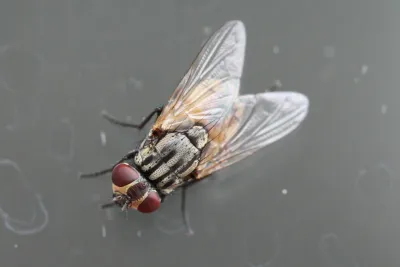
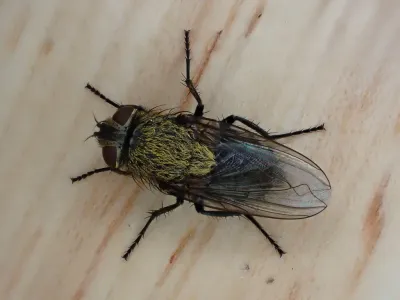
Lesser House Flies are often mistaken for these similar pests
Where Lesser House Flies Are Found
Hover over states to see their names. Green regions indicate where lesser house flies have been reported.
Common Questions about Lesser House Flies
How do I identify a lesser house fly?
+
Lesser house flies are smaller than common house flies. They are 3.5 to 6 mm long with a gray body and three faint black stripes. They have thin bodies. The easiest way to spot them is by how they fly. They circle in jerky patterns under light fixtures and other hanging objects.
Why do lesser house flies fly in circles?
+
Male lesser house flies circle as part of their mating behavior. They set up patrol zones under hanging objects and wait for females. This makes them easy to tell apart from other fly types.
Are lesser house flies dangerous?
+
Lesser house flies are mostly just annoying. They are not major disease carriers. They can pick up germs from rotting matter, but they rarely land on human food. They pose less health risk than common house flies.
What attracts lesser house flies to my home?
+
These flies are drawn to rotting organic matter like animal waste, compost, and decaying plants. Homes near chicken farms, kennels, or areas with pet waste often have more problems. Flies also come inside to find sheltered spots for mating.
Where do lesser house flies breed?
+
Lesser house flies breed in moist, rotting material, especially animal waste. Chicken manure is a top breeding spot. They also grow in dog waste, compost piles, rotting vegetables, and other wet decaying matter.
How long do lesser house flies live?
+
Adult lesser house flies live two to three weeks. The full life cycle from egg to adult takes 18 to 22 days in warm weather. It takes longer when it is cool. They can have about seven generations per year.
How do I get rid of lesser house flies?
+
Remove breeding sites by cleaning up animal waste, compost, and rotting matter. Keep waste dry since flies need wet material to breed. Fix screens and seal gaps to keep flies out of your home.
What is the difference between lesser house flies and regular house flies?
+
Lesser house flies are smaller and thinner than common house flies. Their wing veins are straight, not curved. The biggest difference is behavior. Lesser house flies circle quietly under hanging objects. House flies fly more directly and land often on food and surfaces.

With five years of hands-on experience in the pest control industry, George Schulz is a registered technician with the Virginia Pest Management Association and a proud third-generation professional in a family business that's been protecting homes for over 57 years. He manages and trains a team of service pros while also leading internal research efforts—recently spearheading a deep-dive review of thousands of documents on pest control materials to hand-pick the most kid and pet friendly, most effective solutions tailored specifically for homes in the DC metro area.