House Flies Identification Guide
Musca domestica
House flies are medium-sized gray flies with four dark stripes on the thorax that are found worldwide. They are significant pests due to their ability to mechanically transmit disease-causing pathogens.
Taxonomy
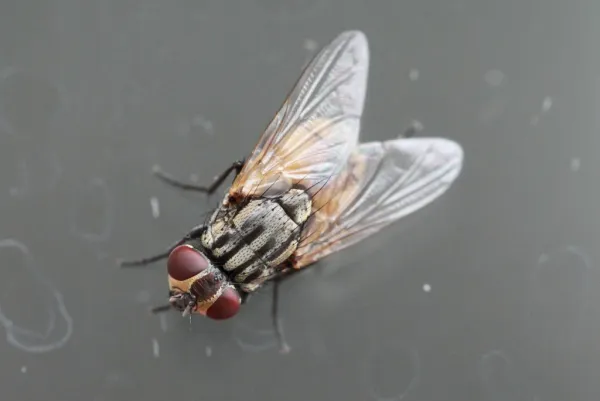
House Flies Coloration
Common color patterns to help identify house flies
House Flies
Seasonal Activity
When house flies are most active throughout the year

Where House Flies Are Found
Hover over states to see their names. Green regions indicate where house flies have been reported.
House Fly Identification Guide
Physical Characteristics
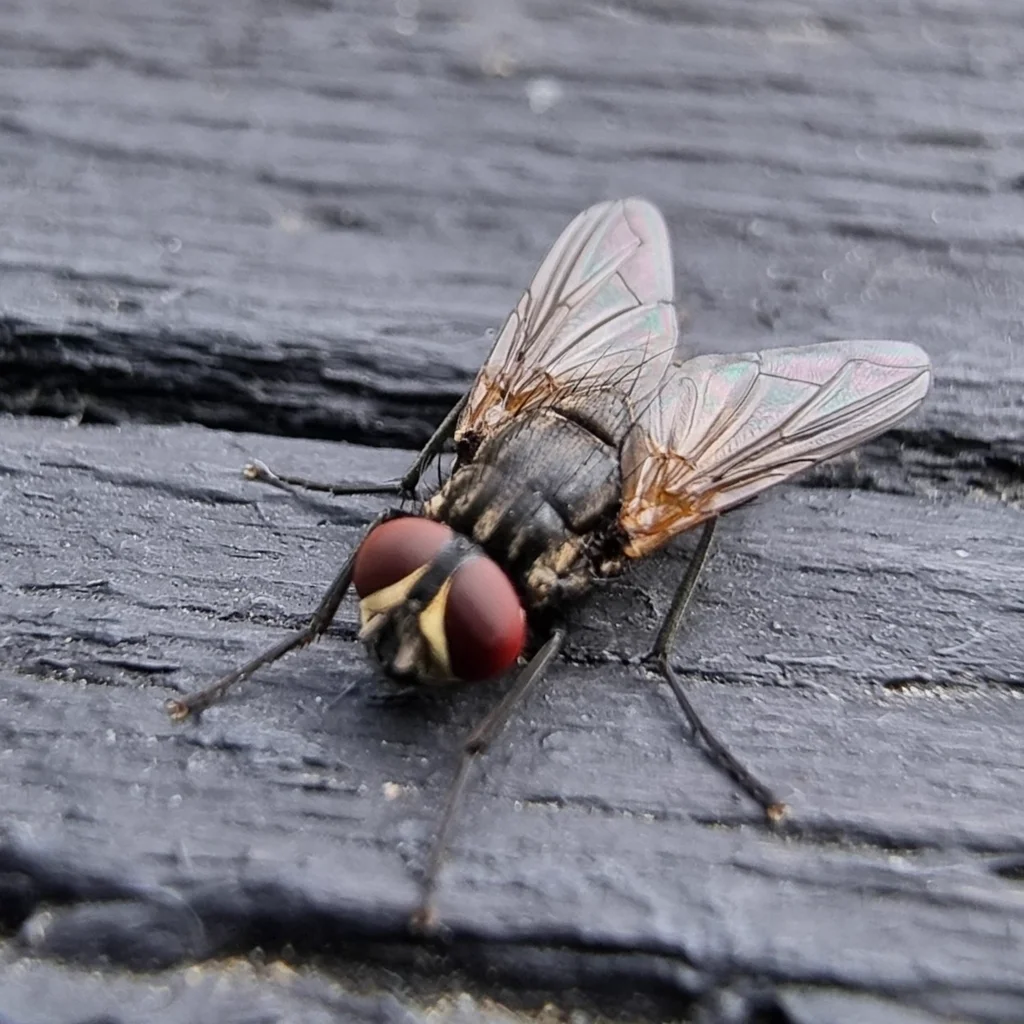
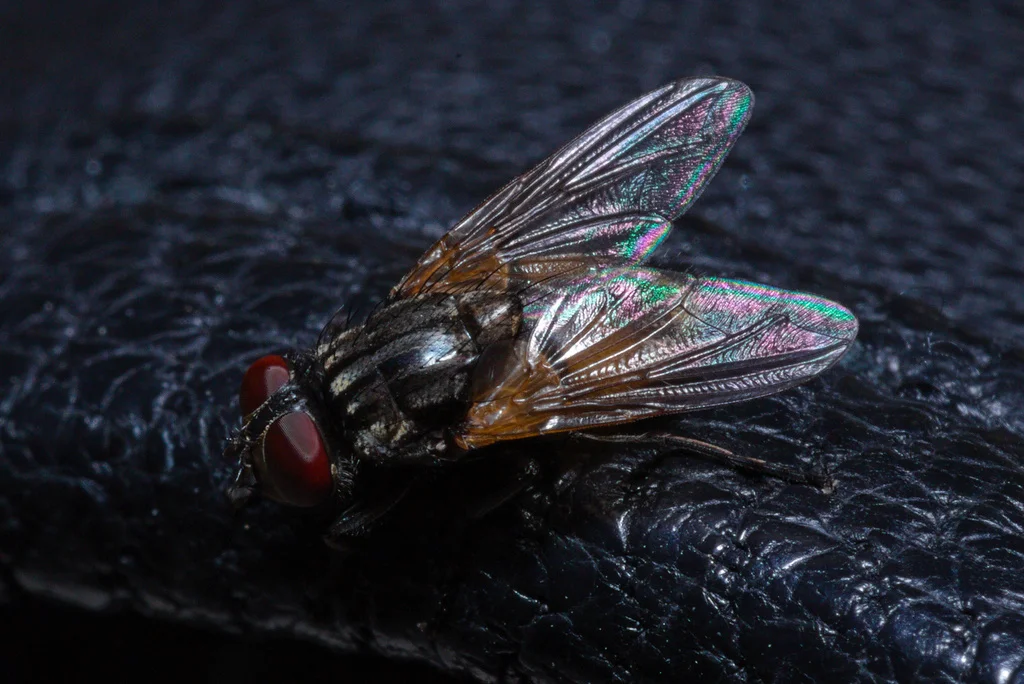
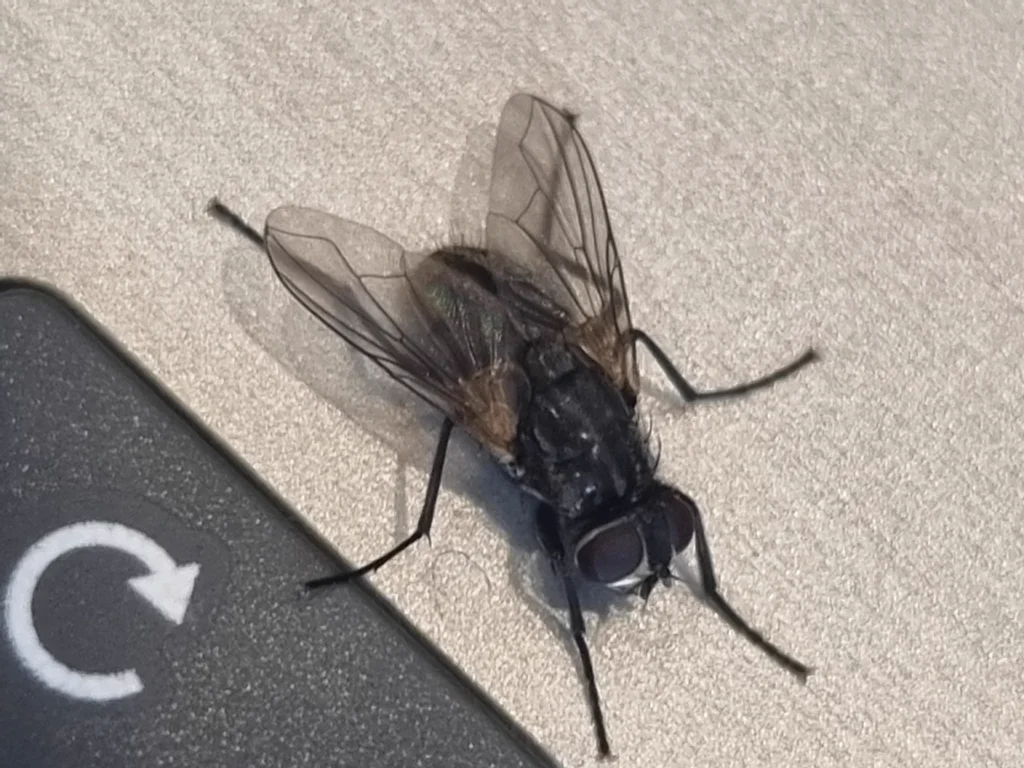
House flies (Musca domestica) are one of the most common species in the fly family and measure about 4 to 8 millimeters long. That is roughly the size of a small pea. The easiest way to spot them is by the four dark stripes on their gray upper body.
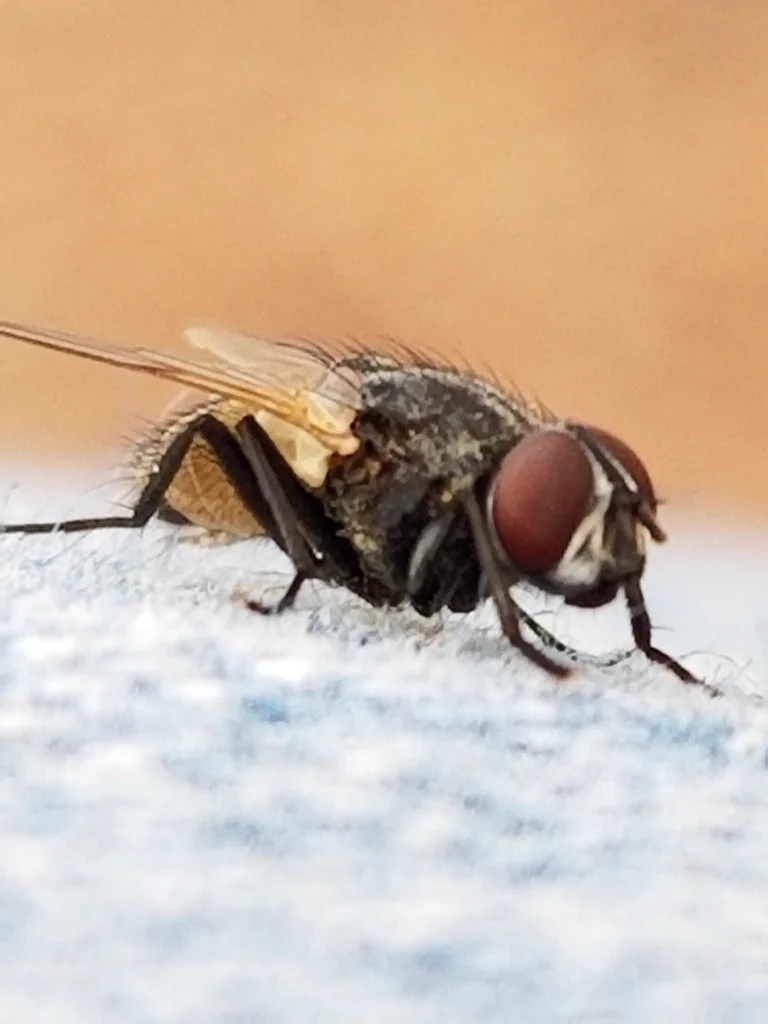
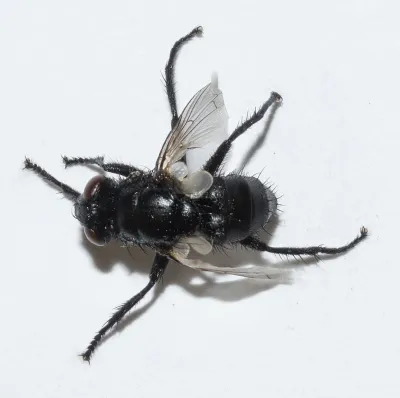
Adult house flies have large red-brown eyes. In males, the eyes almost touch. In females, the eyes are farther apart. Their bodies are covered with fine hairs. They have a dull gray color with yellow patches on the sides of the belly.
House flies do not bite. Instead, they have sponge-like mouthparts. They spit saliva onto food to dissolve it, then sponge up the liquid. This is one reason they spread germs so well.
House flies are strong fliers. They can travel several miles from where they breed. You will often see them buzzing around kitchens and landing on food over and over.
Common Species
The common house fly (Musca domestica) is the most common fly found in homes across North America. It came from central Asia but has spread around the world. You can find it on every continent except Antarctica.
Other flies that look like house flies include:
- Lesser house fly (Fannia canicularis): A bit smaller and thinner. Often flies in circles under lights or hanging objects.
- Face fly (Musca autumnalis): Looks similar but is mostly found near cattle and other farm animals.
- Stable fly (Stomoxys calcitrans): Looks like a house fly but bites and feeds on blood.
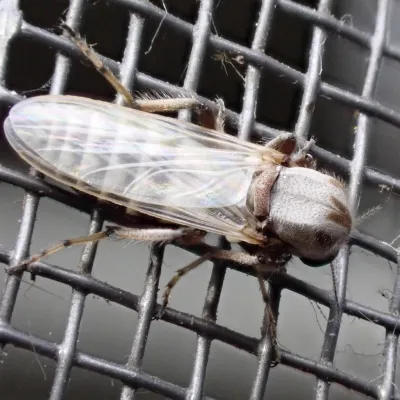
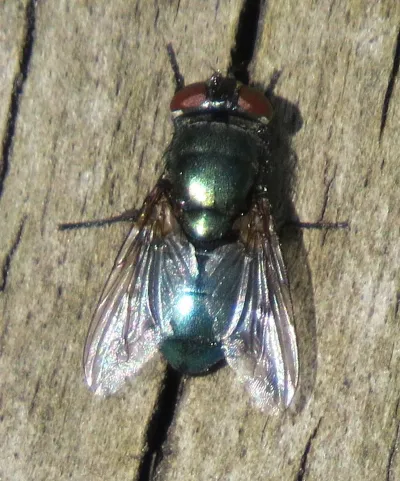
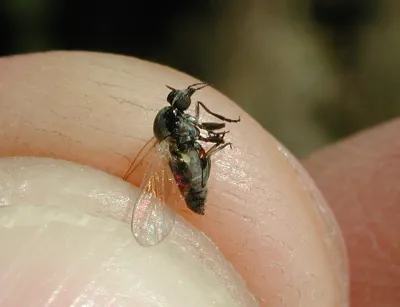
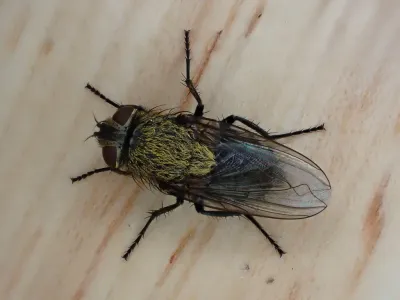
House flies are also frequently confused with cluster flies, blow flies, and flesh flies. See our cluster fly vs house fly, flesh fly vs house fly, and house fly vs fruit fly comparisons for detailed identification tips.
House Fly Behavior and Biology
House flies go through four life stages: egg, larva (maggot), pupa, and adult. In warm weather (77 to 86 degrees), the whole cycle takes just 7 to 10 days. This fast cycle lets fly numbers grow quickly in summer.
Female house flies lay 75 to 150 eggs at a time in moist, rotting material. One female can lay 500 or more eggs in her life. Eggs hatch in 12 to 24 hours when it is warm. The white, legless maggots eat the rotting matter around them for 3 to 7 days. Then they move to a drier spot to pupate.
The pupal stage lasts 3 to 6 days. During this time, the maggot changes into an adult fly inside a brown case. Adults push out of the case and can fly within a few hours. Adult house flies live 15 to 30 days. They may live longer when it is cooler.
Feeding Habits and Disease Spread
House flies like garbage, animal waste, rotting plants, and human food. Unlike horse flies that bite for blood, house flies cannot eat solid food. They must spit up saliva and stomach juices onto food to turn it into liquid before eating.
Because flies land on filth and then on your food, they can spread germs. Studies show house flies can carry over 100 types of germs. These include bacteria, viruses, and parasites. Diseases linked to house flies include:
- Typhoid fever
- Cholera
- Dysentery
- Salmonella
- E. coli
- Eye infections
Good sanitation and keeping food covered are key to stopping flies from spreading illness.
Seasonal Activity
House flies are most active in warm weather when they breed fast. In the north, outdoor fly numbers drop a lot in winter. However, flies can still live indoors where it is warm and food is around. In southern states, house flies stay active all year.
Peak fly season runs from late spring through early fall. Warm, humid weather speeds up breeding. Cool weather slows it down.
Treatment Methods for House Flies
Good fly control combines cleaning, keeping flies out, and killing flies that get in. Sprays alone do not work well. You must also get rid of what attracts flies in the first place.
Sanitation and Source Removal
The best way to control house flies is to remove their breeding sites. Key steps include:
- Garbage: Keep trash in sealed cans and take it out often. Clean your trash cans to remove smells that draw flies.
- Pet waste: Pick up pet waste in the yard right away. Keep litter boxes clean.
- Compost: Turn compost piles often and keep them covered. Do not add meat or dairy, which attract flies.
- Food waste: Clean up spills fast. Store food in sealed containers. Keep your kitchen clean.
- Farms: On farms, handle manure through composting, spreading, or removal.
Keeping Flies Out
Stop flies from getting inside your home:
- Fix or replace torn window and door screens
- Add door sweeps and seals around doors
- Keep doors and windows closed when you can
- Businesses can use air curtains at entrances
Traps and Physical Controls
You can reduce fly numbers without chemicals:
- Fly traps: UV light traps work well indoors. Bait traps help reduce flies near buildings.
- Fly swatters and sticky traps: Simple and work well for a few flies.
- Air flow: Good ventilation makes spaces less appealing to flies.
Chemical Options
When cleaning is not enough, you may need to use insecticides:
- Residual sprays: Applied to surfaces where flies rest. Must follow label directions.
- Baits: Fly baits with attractants and poison can cut fly numbers when placed near activity areas.
- Space sprays: Kill flying adults fast but do not last.
House flies often become resistant to pesticides over time. That is why it helps to rotate products and combine methods for better long-term results.
Biological Control
On farms and in large buildings, natural enemies can help control flies:
- Parasitic wasps: Tiny wasps attack fly pupae and reduce adult fly numbers. You need regular releases to keep them working.
- Predatory insects: Some beetles and other bugs eat fly larvae in manure and compost.
References
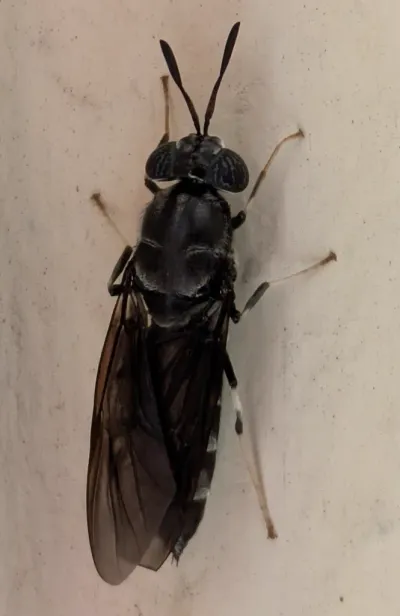
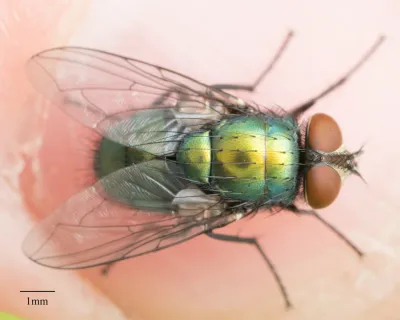
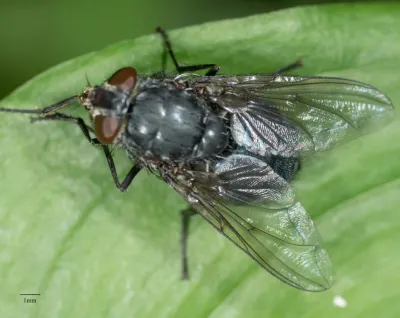
Other Flies
Explore other species in the flies family
Commonly Confused With
House Flies are often mistaken for these similar pests
Where House Flies Are Found
Hover over states to see their names. Green regions indicate where house flies have been reported.
Common Questions about House Flies
Why are there so many flies in my house all of a sudden?
+
A sudden increase in house flies usually indicates a nearby breeding source. House flies breed in decaying organic matter such as garbage, animal waste, compost, or rotting food. Check for forgotten garbage, pet waste in the yard, or food waste that may have fallen behind appliances.
Are house flies dangerous?
+
House flies can transmit disease-causing organisms by landing on contaminated surfaces and then on food or food preparation areas. They have been associated with the transmission of typhoid, cholera, dysentery, and other intestinal infections. While not every fly carries pathogens, their feeding habits make them a public health concern.
How long do house flies live?
+
Adult house flies typically live 15 to 30 days depending on temperature and food availability. However, their rapid reproduction rate means populations can grow quickly. A single female can lay 500 or more eggs in her lifetime.
What attracts house flies into homes?
+
House flies are attracted to odors from decaying organic matter, garbage, pet food, and food waste. They are also drawn to warmth and can enter through open doors and windows, torn screens, or gaps around doors. Even small amounts of spilled food or drink can attract them.
Do house flies bite?
+
House flies do not bite humans. They have sponging mouthparts designed for feeding on liquids. However, they regurgitate digestive fluids onto solid food to liquefy it before consuming, which is how they can contaminate food and surfaces.
Where do house flies lay their eggs?
+
Female house flies lay eggs in moist decaying organic material. Common sites include animal manure, garbage, compost, rotting vegetables, grass clippings, and pet waste. Eggs hatch within 12 to 24 hours in warm conditions.
How do I get rid of house flies permanently?
+
Permanent house fly control requires eliminating breeding sites through proper sanitation. Keep garbage in sealed containers, clean up pet waste promptly, maintain compost piles properly, and ensure doors and windows have intact screens. Reducing attractants makes your home less appealing to flies.
Can house flies breed indoors?
+
House flies can breed indoors if suitable organic material is available. Forgotten garbage, pet litter boxes, spilled food under appliances, or damp organic matter can all serve as breeding sites. Indoor infestations often trace back to a neglected sanitation issue.

With five years of hands-on experience in the pest control industry, George Schulz is a registered technician with the Virginia Pest Management Association and a proud third-generation professional in a family business that's been protecting homes for over 57 years. He manages and trains a team of service pros while also leading internal research efforts—recently spearheading a deep-dive review of thousands of documents on pest control materials to hand-pick the most kid and pet friendly, most effective solutions tailored specifically for homes in the DC metro area.