Flesh Flies Identification Guide
Sarcophagidae (Family)
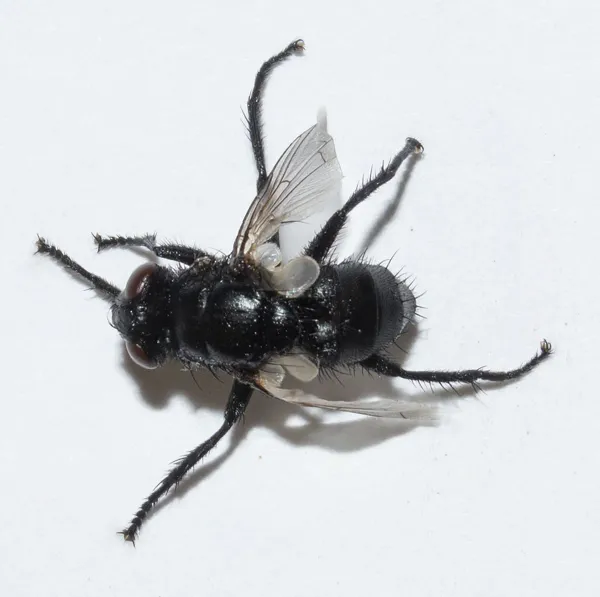
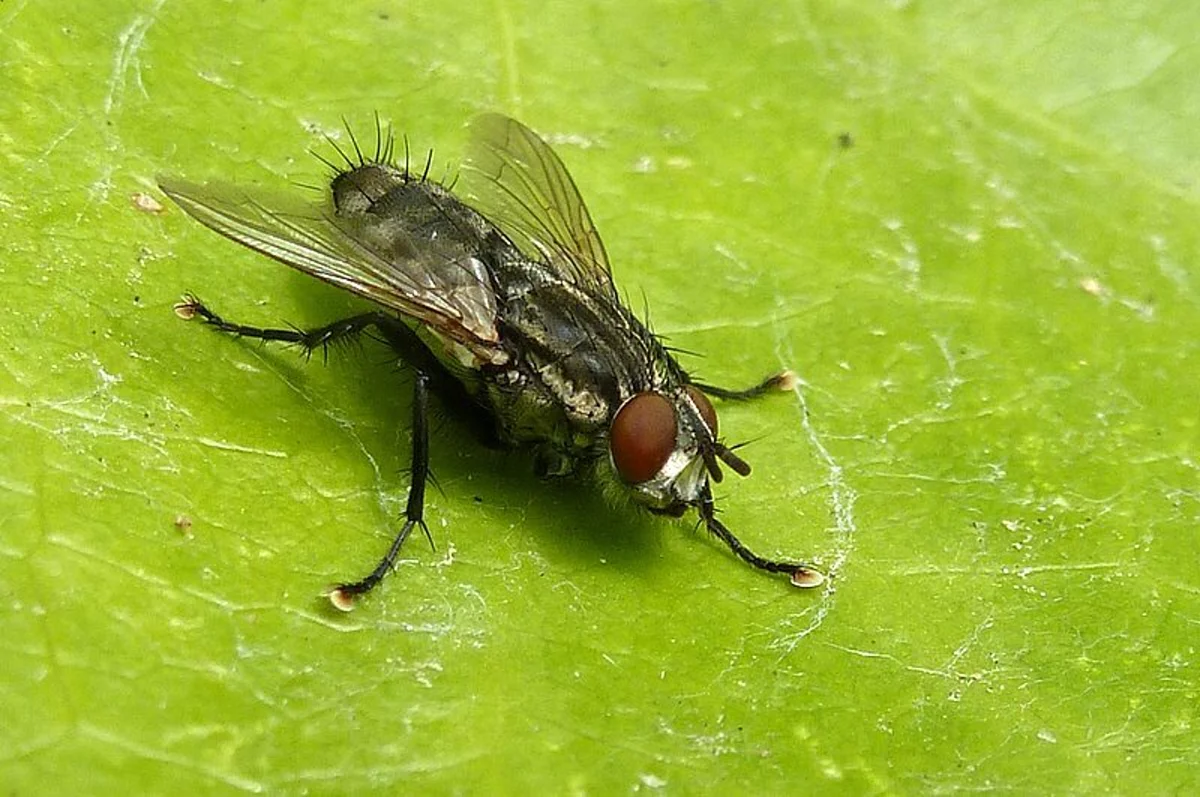
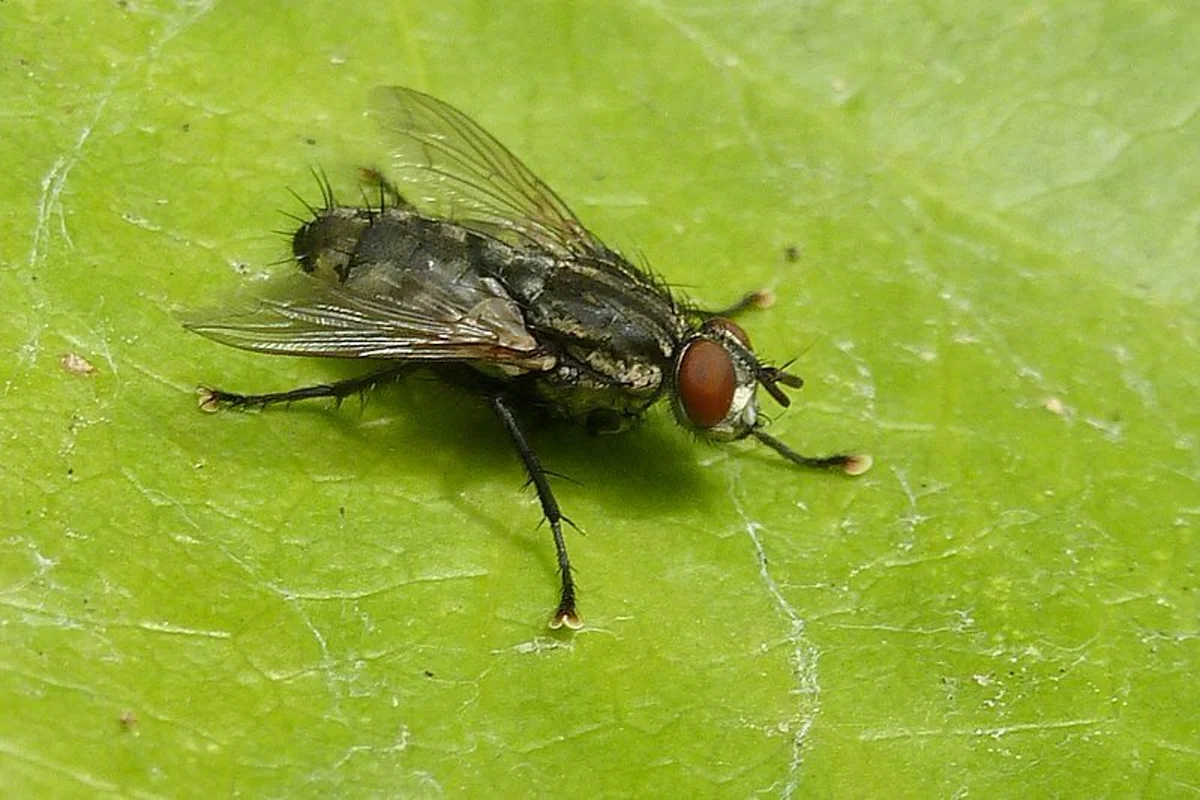
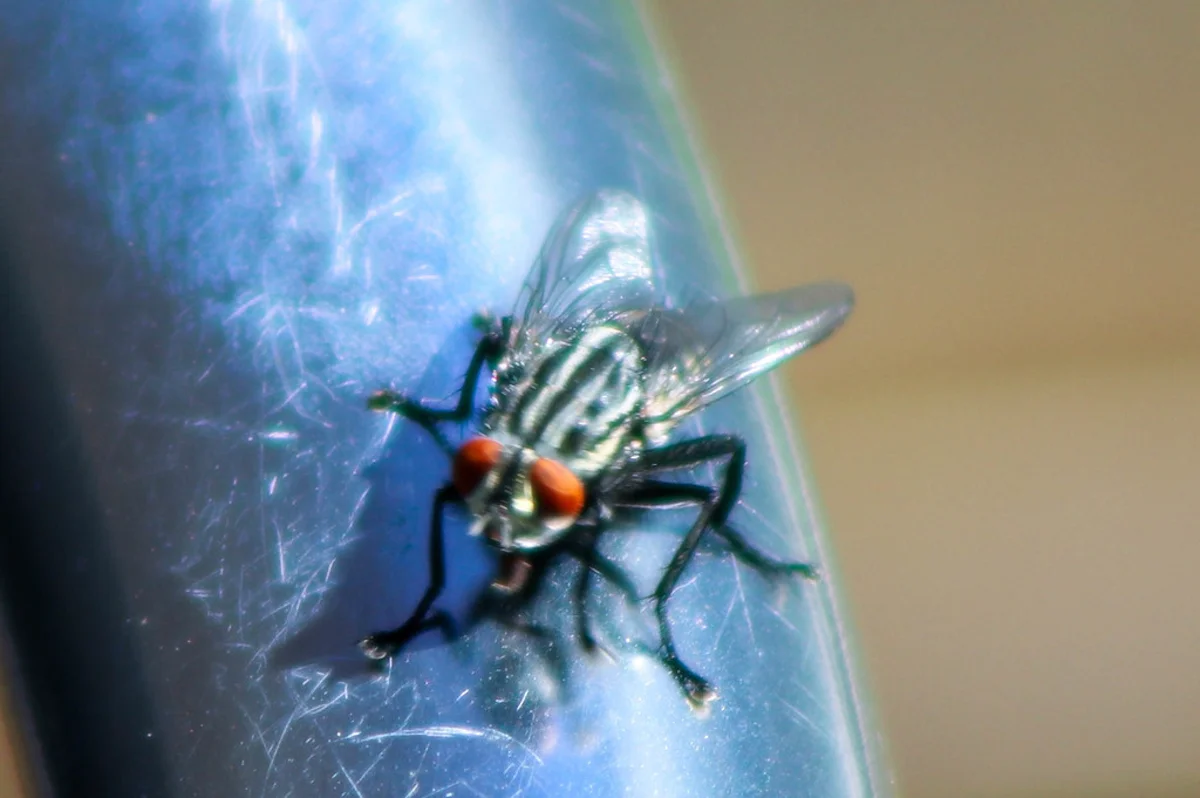
Flesh flies are gray flies with distinctive black and gray striped thoraxes and checkered abdomens. They breed in decaying organic matter and are often the first flies to arrive at animal remains.
Taxonomy
Flesh Flies Coloration
Common color patterns to help identify flesh flies
Flesh Flies
Seasonal Activity
When flesh flies are most active throughout the year

Where Flesh Flies Are Found
Hover over states to see their names. Green regions indicate where flesh flies have been reported.
Flesh Fly Identification Guide
Physical Characteristics
Flesh flies belong to the family Sarcophagidae within the broader fly order. The name comes from Greek words meaning “flesh” and “to eat.” These flies are 10 to 22 mm long. That makes them two to three times bigger than house flies. You can spot them by their gray bodies with black stripes on the upper back and a checkered pattern on the belly.
The best way to tell flesh flies apart from house flies is by their stripes. Flesh flies have three dark stripes on their upper back. House flies have four stripes. For a detailed side-by-side comparison, see our flesh fly vs house fly identification guide. The belly shows gray and black patches in a checkerboard pattern. Many flesh flies also have a red-brown tip at the end of the belly.
Flesh flies have large red eyes and clear wings. Stiff black bristles cover their bodies. These bristles are most visible on the upper back. The flies also have large pads at the tips of their feet. These pads are bigger than those on house flies.
Common Species in North America
About 327 flesh fly species live in the United States. Some of the most common include:
-
Gray Flesh Fly (Sarcophaga bullata): The most common species in eastern and southern states. It is 10 to 14 mm long. You will see it from May through September in both cities and rural areas.
-
Friendly Flesh Fly (Sarcophaga aldrichi): Found in the northern US and Canada. This species helps control tent caterpillar numbers.
-
Red-tailed Flesh Fly (Sarcophaga haemorrhoidalis): Easy to spot by its bright red tail tip. Common across North America and often found near homes.
-
Variegated Flesh Fly (Sarcophaga variegata): A medium-sized species with distinct color patterns. Found across the continent.
Flesh Fly Behavior and Biology
Flesh flies are part of the broader group of filth flies that breed in unsanitary organic matter. They help break down dead animals and waste in nature, a role they share with blow flies. They have a strong sense of smell. They can detect decay from far away. Adult flesh flies can reach a dead animal within minutes.
How They Reproduce
Most flies lay eggs. Flesh flies are different. They give birth to live maggots. The female holds the eggs inside her body until they hatch. She then places 30 to 200 live larvae on a food source like dead animals, manure, or rotting matter.
This gives flesh fly babies a head start. The maggots begin eating right away. They do not have to wait days for eggs to hatch. It also keeps them safe from predators that eat fly eggs.
Life Cycle Stages
The flesh fly life cycle has three main stages: larva, pupa, and adult. After the female places larvae on food, the maggots eat for about four days. They go through three growth phases during this time. The larvae are cream-colored and pointed at one end. They have hook-shaped mouths for feeding.
When ready to change, the larvae leave the food and dig into nearby soil. They form dark brown cases and stay still for 12 to 15 days. Adult flies come out and start mating within a few days. The full cycle takes 8 to 21 days based on temperature.
What They Eat
Adult flesh flies eat nectar, sweet liquids, plant sap, and fluids from decay. The name “flesh fly” is misleading. Adults do not eat flesh. Only the larvae feed on dead animals and rotting material. Adults often visit flowers. You may also see them eating honeydew made by aphids.
Signs of Flesh Fly Activity
Flesh flies inside your home often point to a bigger problem, similar to how cluster flies signal overwintering activity. Watch for these signs:
- Adult flies near windows: Flesh flies seek light and gather at windows trying to get outside
- Flies coming from walls or ceilings: This often means a dead animal is rotting inside the structure
- Buzzing in walls: Many trapped flesh flies make noise you can hear
- Bad smell: A foul odor often comes with flesh flies and points to decay
- Maggots in odd places: Finding larvae means a breeding site is nearby
Treatment Methods for Flesh Flies
To control flesh flies, you must find and remove what attracts them. Killing adult flies only works for a short time if the source remains.
Finding the Source
The first step is finding what draws the flies. Flesh flies breed in:
- Dead animals in walls, crawl spaces, or chimneys
- Trash cans with meat scraps or rotting food
- Pet waste in yards
- Compost piles with meat or animal products
- Spoiled meat left out in kitchens
Watch where flies gather. Follow their path. A cluster of flies near one spot often shows where the source is. Look for stains or wet spots on walls that might mean decay inside.
Removing the Source
If you find a dead animal, wear gloves to remove it. Put it in a sealed plastic bag and throw it away. Clean the area well to remove any leftover matter.
Sometimes the source is hard to reach. If an animal died inside a wall, you may have to wait for it to break down. This takes two to three weeks. Open windows and use odor sprays to help during this time.
Reducing Fly Numbers
While you fix the main problem, these steps help cut down on flies:
- Fix or add window screens to keep flies out
- Set up fly traps near windows and doors
- Keep doors shut or add door sweeps
- Cover food and clean spills right away
- Take out indoor trash often
How to Prevent Flesh Flies
To stop future problems:
- Seal gaps where mice or rats might get in and die inside walls
- Put caps on chimneys so birds cannot get trapped
- Keep trash in bins with tight lids
- Clean up pet waste each day
- Move outdoor trash cans away from doors
- Get rid of dead animals on your property quickly
- Keep screens and door seals in good shape
References
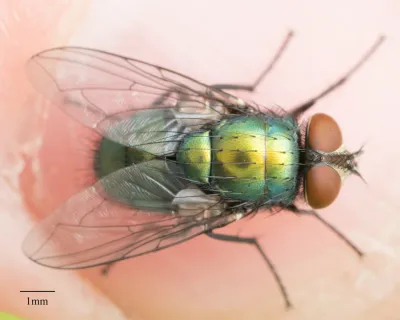
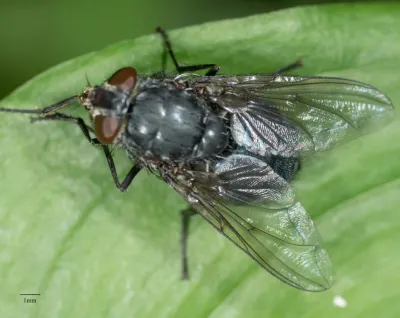
Other Flies
Explore other species in the flies family
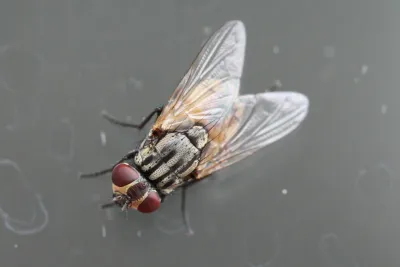
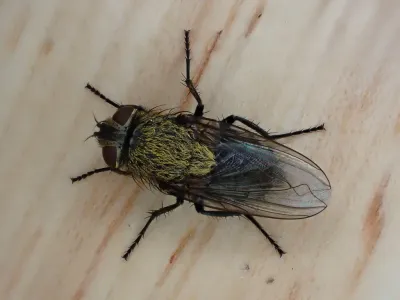
Commonly Confused With
Flesh Flies are often mistaken for these similar pests
Where Flesh Flies Are Found
Hover over states to see their names. Green regions indicate where flesh flies have been reported.
Common Questions about Flesh Flies
What do flesh flies look like?
+
Flesh flies are medium to large gray flies, about 10 to 22 mm long. They have three dark stripes on the thorax and a gray checkered pattern on the abdomen. Many have red eyes and a reddish-brown tip on the abdomen. They look like large house flies but are bigger and more bristly.
Where do flesh flies come from?
+
Flesh flies breed in decaying organic matter including dead animals, garbage, pet waste, and spoiled meat. They are attracted to these materials by smell and can detect them from far away. Indoors, they often appear when a dead animal is in a wall, attic, or crawl space.
Are flesh flies dangerous to humans?
+
Flesh flies do not bite. However, they can spread bacteria by landing on food after feeding on decaying matter or waste. They may carry pathogens like E. coli and Salmonella. Keep food covered when these flies are present in your home.
How do flesh flies differ from house flies?
+
Flesh flies are two to three times larger than house flies. They have three dark stripes on the thorax instead of four. Their abdomen has a gray and black checkered pattern rather than yellowish blotches. Flesh flies also have larger feet pads and are more bristly overall.
Why are flesh flies suddenly in my house?
+
A sudden appearance of flesh flies almost always means a dead animal is nearby. A mouse, rat, bird, or squirrel may have died in a wall, attic, chimney, or crawl space. The flies can smell the decaying matter and arrive quickly to breed.
How long do flesh flies live?
+
Adult flesh flies live for several weeks. Their complete life cycle from larva to adult takes 8 to 21 days depending on temperature. Females can produce 30 to 200 larvae in their lifetime. Unlike most flies, flesh flies give birth to live maggots rather than laying eggs.
Do flesh flies lay eggs in food?
+
Flesh flies deposit live maggots rather than eggs. They prefer to place their larvae on decaying meat and animal matter, not fresh food. However, they will use spoiled meat left out too long. Always refrigerate meat promptly and keep food covered.
What time of year are flesh flies most active?
+
Flesh flies are most active from May through September, with peak activity in late summer. They prefer warm weather and are strongest fliers during humid conditions. They can appear year-round indoors if breeding sites are available.

With five years of hands-on experience in the pest control industry, George Schulz is a registered technician with the Virginia Pest Management Association and a proud third-generation professional in a family business that's been protecting homes for over 57 years. He manages and trains a team of service pros while also leading internal research efforts—recently spearheading a deep-dive review of thousands of documents on pest control materials to hand-pick the most kid and pet friendly, most effective solutions tailored specifically for homes in the DC metro area.