Face Flies Identification Guide
Musca autumnalis
Face flies are cattle-associated pests that closely resemble house flies. They enter homes in fall to overwinter and can become a nuisance when they emerge on warm winter days.
Taxonomy
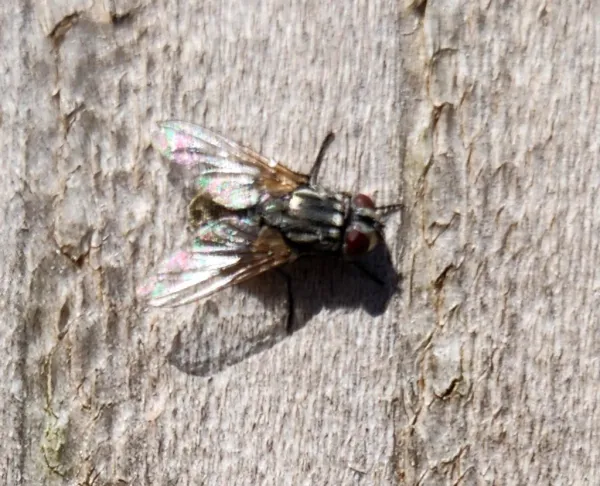
Face Flies Coloration
Common color patterns to help identify face flies
Face Flies
Seasonal Activity
When face flies are most active throughout the year
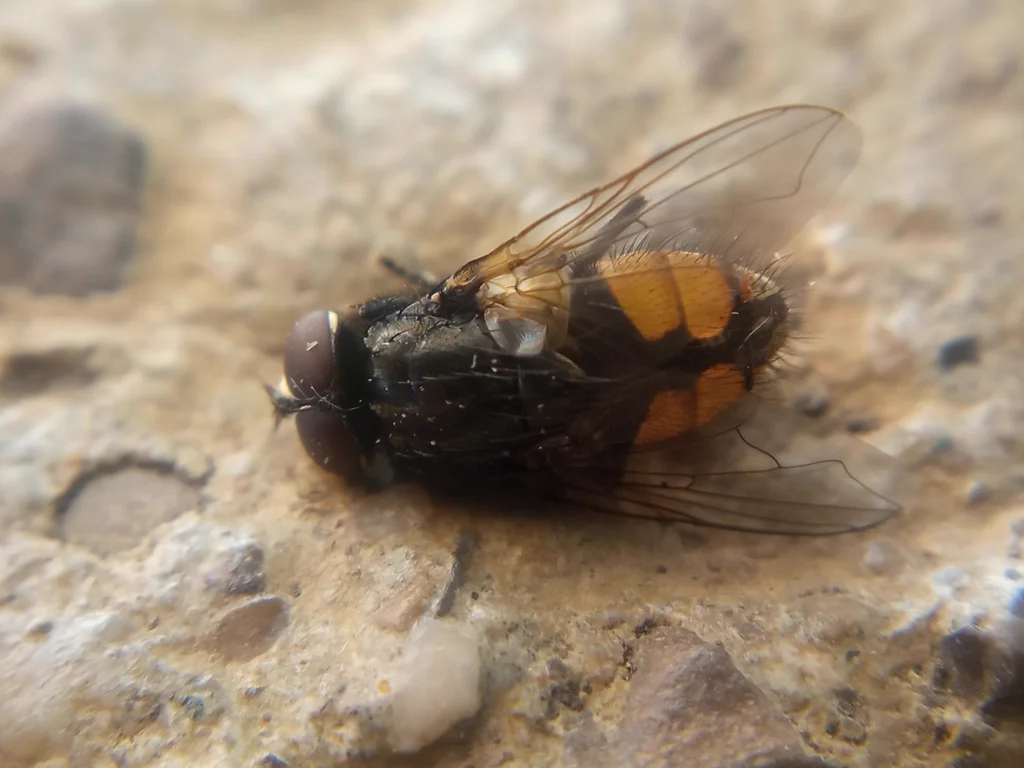
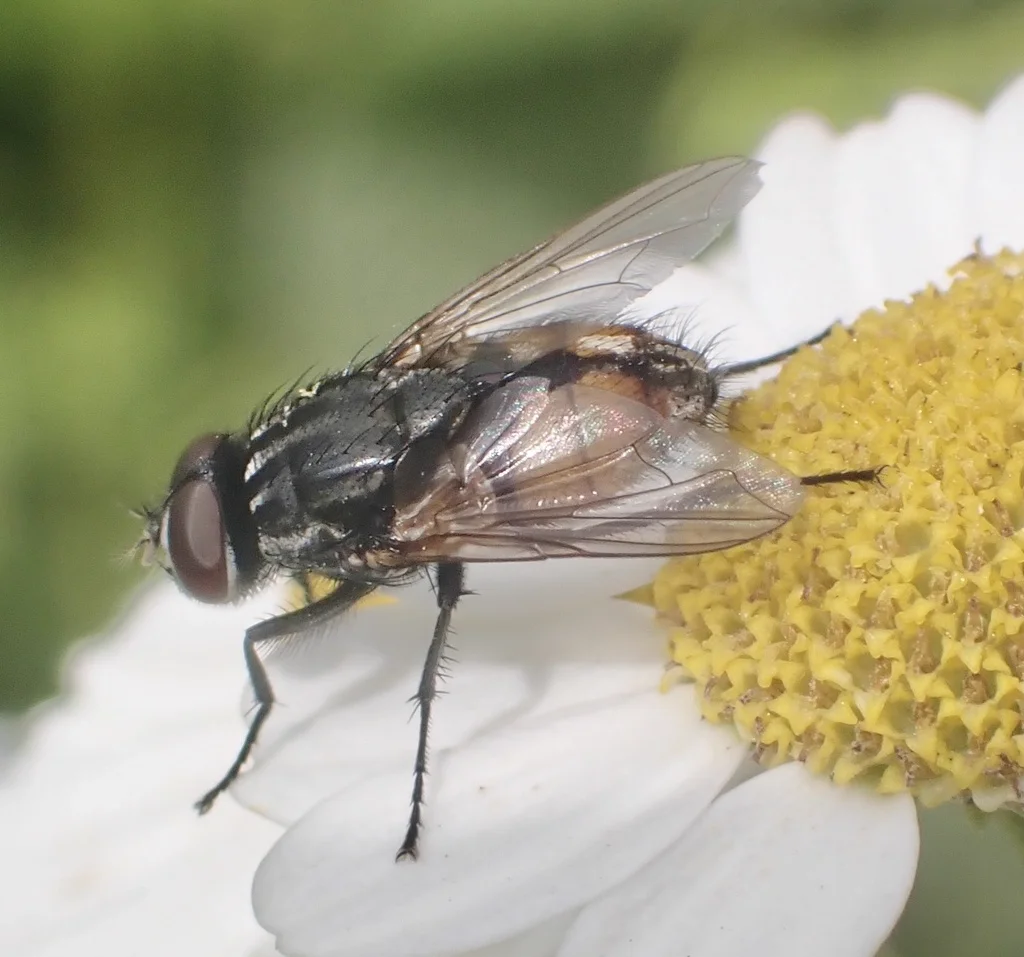
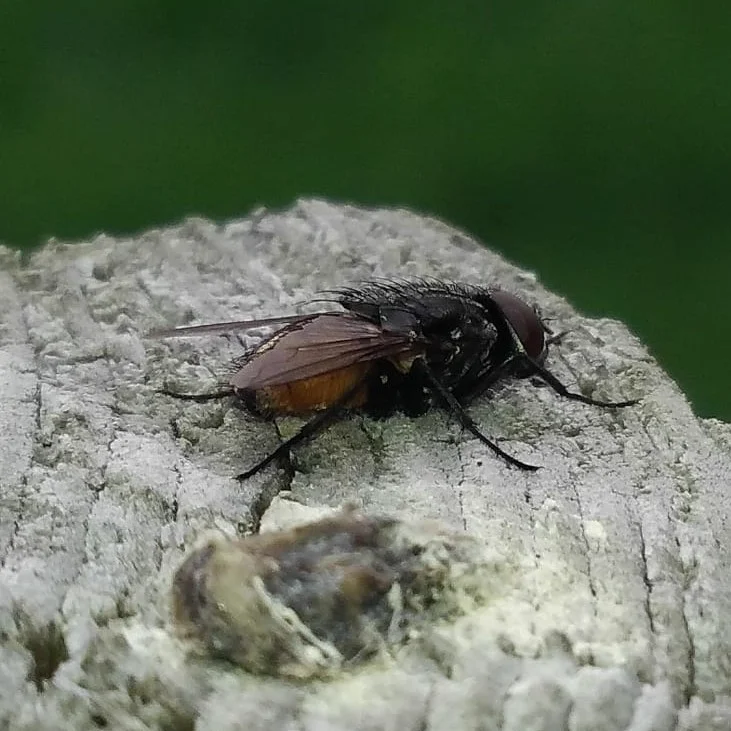

Where Face Flies Are Found
Hover over states to see their names. Green regions indicate where face flies have been reported.
Face Fly Identification Guide
Physical Characteristics
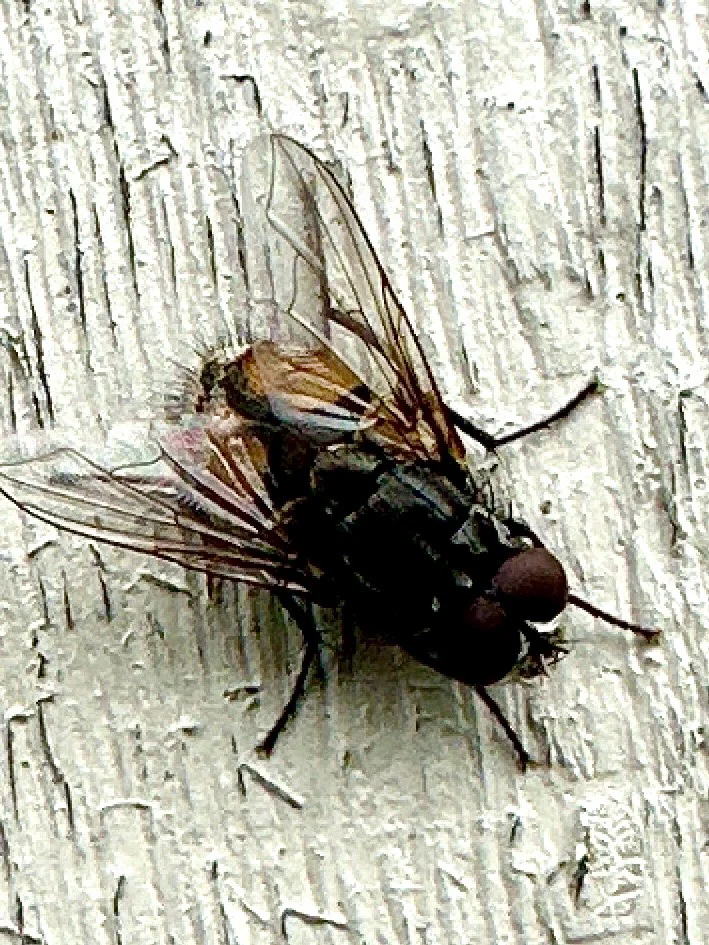
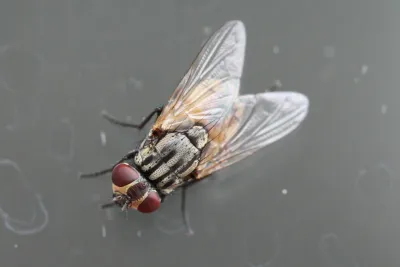
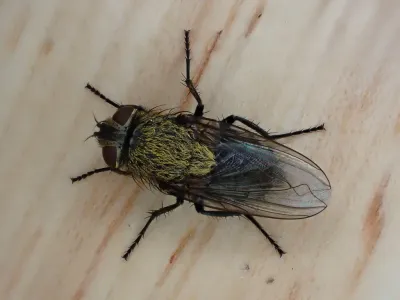
Face flies measure 6 to 10 millimeters long. This makes them about the same size as common house flies or slightly larger. Their gray thorax has four dark longitudinal stripes running from front to back. This pattern looks very similar to the house fly, making the two species hard to tell apart at first glance.
The best way to identify male face flies is by looking at their abdomen. Males have bright yellow-orange coloring on the sides of their belly, starting at the second segment. A black stripe runs down the middle of the abdomen. The eyes of male face flies meet at the top of the head with no gap between them.
Female face flies are harder to identify. Their abdomens are mottled gray and black without the bright yellow coloring of males. The only consistent marking is a small yellow patch on the lower edges of the first abdominal segment. Female eyes have a wider gap between them at the top of the head.
Both male and female face flies have sponging mouthparts. When at rest, they hold these mouthparts tucked up under the head. Their wings have a sharply curved M1 vein that can help with identification under magnification.
Common Species
Only one species of face fly exists in North America: Musca autumnalis. The scientific name means “autumn fly,” referring to the adult’s habit of seeking shelter in buildings as fall approaches. Other common names include autumn house fly and cattle face fly.
The face fly belongs to the family Muscidae, which also includes the common house fly (Musca domestica) and stable fly (Stomoxys calcitrans). Only experts can reliably tell face flies apart from house flies based on appearance alone. Behavioral differences provide the easiest way to distinguish them.
Face Fly Behavior and Biology
Face flies have a unique life cycle tied closely to cattle. Unlike house flies that breed in many types of decaying matter, and filth flies more broadly, face flies develop only in fresh cattle dung. Lesser house flies and cluster flies are other species that homeowners confuse with face flies. Horse manure, sheep droppings, and pig manure are not suitable for their larvae.
Life Cycle
Female face flies lay their eggs only on very fresh cattle manure - within minutes of it hitting the ground. Each female lays 100 to 200 eggs during her lifetime, depositing them in small batches. The eggs hatch quickly in warm weather.
The larvae (maggots) feed on the manure and complete their development in as little as two weeks under ideal conditions. They then pupate in the soil beneath the dung pat. Adult flies emerge and begin the cycle again. A face fly population can produce three to ten generations per year depending on weather conditions.
Feeding Behavior
Adult face flies feed on secretions around the eyes, nose, and mouth of cattle and horses. Both males and females use their sponging mouthparts with tiny prestomal teeth to stimulate secretion flow. They do not pierce the skin or draw blood.
Face flies feed only during daylight hours. Their activity depends heavily on weather conditions. They are most active on warm, calm, sunny days. Wind, rain, and cool temperatures reduce feeding activity. Hot animals produce more secretions that attract flies.
This feeding behavior irritates livestock and triggers defensive responses. Cattle shake their heads, flap their ears, and bat at flies with their tails. They may seek deep shade or bunch together to reduce fly exposure. These behaviors reduce grazing time and can affect weight gain in beef cattle.
Disease Transmission
Face flies can spread several pathogens to livestock. The most significant is Moraxella bovis, the bacterium that causes pinkeye (infectious bovine keratoconjunctivitis) in cattle. Face flies pick up the bacteria while feeding on infected animals and spread it to healthy ones.
Face flies also transmit the eyeworm Thelazia rhodesi to cattle and horses. The larvae of this parasitic nematode develop inside the fly before being deposited in the eye of a new host animal.
Overwintering Behavior
As days grow shorter in late summer and fall, face flies stop feeding and breeding. They enter a dormant state called diapause and begin searching for shelter. Like cluster flies, they are attracted to the sunny sides of buildings, especially light-colored structures. Learn more about the full range of fly species that can enter homes.
Face flies squeeze through gaps around windows, under siding, through weep holes, and around utility lines. They gather in attics, wall voids, and other protected spaces. Large numbers may congregate in the same location year after year.
During winter, hibernating face flies are inactive unless warmed by sunshine or heating systems. On mild days, they may wake up and move toward windows, buzzing against the glass as they try to escape. This is when homeowners most often notice them indoors.
In spring, surviving flies leave their overwintering sites to mate and begin feeding on cattle again. They spend the summer outdoors and return to seek shelter the following fall.
Treatment Methods for Face Flies
Face flies breed outdoors in cattle pastures, so eliminating breeding sites is not practical for most homeowners. Control focuses on preventing flies from entering buildings.
Prevention and Exclusion
The most effective approach is sealing entry points before face flies seek shelter in fall. Focus your efforts in late summer, before flies start looking for overwintering sites:
-
Seal gaps around windows and doors: Use caulk and weatherstripping to close openings around frames. Pay special attention to south and west-facing walls that receive afternoon sun.
-
Repair damaged screens: Check all window and vent screens for holes or tears. Replace screens with fine mesh (20 mesh or smaller) to block small flies.
-
Close gaps in siding: Fill cracks around utility penetrations, pipes, and wires. Make sure siding fits tightly against the building.
-
Screen roof vents: Cover soffit vents, gable vents, and ridge vents with fine mesh screening while maintaining proper ventilation.
Managing Indoor Infestations
If face flies have already entered your home, these methods can reduce their numbers:
-
Vacuum: Use a vacuum cleaner with a hose attachment to remove flies from windows, walls, and ceilings. Empty the vacuum outside immediately after use.
-
Light traps: UV light traps placed in attic spaces can capture flies when they become active. These work best in late winter and early spring.
-
Sticky traps: Window fly traps catch flies as they congregate near glass. Place traps near windows where you see the most fly activity.
What to Avoid
Avoid using chemical sprays inside your home for face flies. Since they do not breed indoors, killing adults does not address the problem. Dead flies in wall voids and attics can attract secondary pests like carpet beetles and dermestid beetles.
Do not crush face flies against walls or windows. Like cluster flies, they may leave stains that are difficult to remove.
Property Considerations
Homes located near cattle pastures or farms are most likely to have face fly problems. If you live in a rural area with livestock nearby, annual prevention work is especially important. Face flies release chemical signals that attract other flies to the same overwintering sites, so infestations often recur in the same buildings year after year.
For severe or persistent problems, professional pest control services can help identify all entry points and apply properly timed exterior treatments.
References
- Face Fly (Diptera: Muscidae) - Biology, Pest Status, Current Management Prospects, and Research Needs - Oxford Academic
- Face Flies, Musca autumnalis De Geer: Another Fall Home Invader - University of Tennessee Extension
- Species Musca autumnalis - Face Fly - BugGuide
- Musca autumnalis - Wikipedia
- Cluster Flies, Face Flies, and Blow Flies in Homes - University of Kentucky Entomology
Other Flies
Explore other species in the flies family
Commonly Confused With
Face Flies are often mistaken for these similar pests
Where Face Flies Are Found
Hover over states to see their names. Green regions indicate where face flies have been reported.
Common Questions about Face Flies
What is the difference between face flies and house flies?
+
Face flies are about the same size or slightly larger than house flies. Male face flies have distinctive yellow-orange coloring on the sides of their abdomen, while females look almost identical to house flies. The easiest way to tell them apart is by behavior - face flies cluster around the faces of cattle and horses outdoors, while house flies prefer garbage and food waste.
Why are face flies in my house?
+
Face flies enter homes in fall seeking warm places to spend the winter. They are attracted to the sunny sides of buildings and squeeze through small gaps around windows, doors, and siding. Like cluster flies, they hibernate in attics and wall voids during cold months.
Do face flies bite humans?
+
No, face flies do not bite. They have sponging mouthparts similar to house flies, not piercing mouthparts. They feed on secretions from the eyes, nose, and mouth of cattle and horses, but they do not seek out or bite humans.
Are face flies dangerous?
+
Face flies are primarily a nuisance pest in homes. On livestock, they can spread eye diseases including pinkeye (infectious bovine keratoconjunctivitis) and eyeworm parasites. They do not transmit diseases to humans, but their presence indoors can be annoying.
When are face flies most active?
+
Outdoors, face flies are most active from late spring through fall, feeding on cattle during daylight hours. In homes, they become noticeable in fall as they seek shelter and again in late winter or early spring when warming temperatures wake them from hibernation.
Where do face flies come from?
+
Face flies originated in Europe and Central Asia. They were first discovered in North America in Nova Scotia in 1952 and have since spread across most of the United States and Canada. They are most common in rural areas near cattle pastures since their larvae develop exclusively in fresh cattle manure.
Why do face flies cluster near windows?
+
Face flies that have been hibernating in wall voids and attics are attracted to light and warmth. When they wake up on warm winter days, they move toward windows trying to get outside. This is when homeowners typically notice them buzzing against window glass.

With five years of hands-on experience in the pest control industry, George Schulz is a registered technician with the Virginia Pest Management Association and a proud third-generation professional in a family business that's been protecting homes for over 57 years. He manages and trains a team of service pros while also leading internal research efforts—recently spearheading a deep-dive review of thousands of documents on pest control materials to hand-pick the most kid and pet friendly, most effective solutions tailored specifically for homes in the DC metro area.