Coffin Flies Identification Guide
Megaselia scalaris
Coffin flies are small phorid flies known for their ability to locate and breed in buried organic matter, including corpses. They are found throughout North America and can become indoor pests when breeding in decaying materials.
Taxonomy
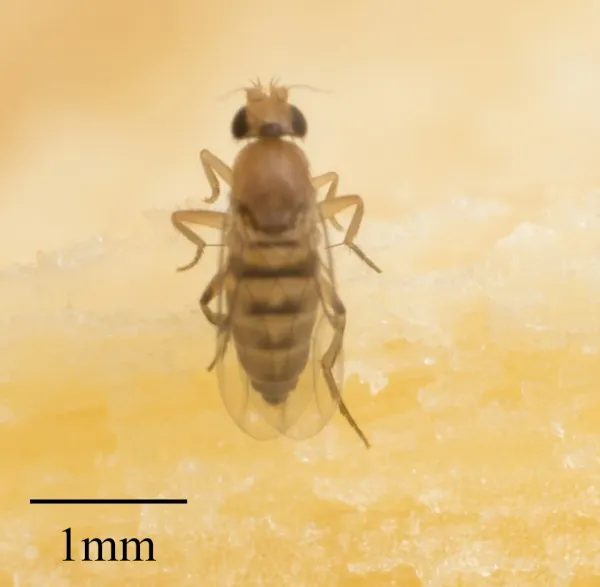
Coffin Flies Coloration
Common color patterns to help identify coffin flies
Coffin Flies
Seasonal Activity
When coffin flies are most active throughout the year

Where Coffin Flies Are Found
Hover over states to see their names. Green regions indicate where coffin flies have been reported.
Coffin Fly Identification Guide
Physical Characteristics
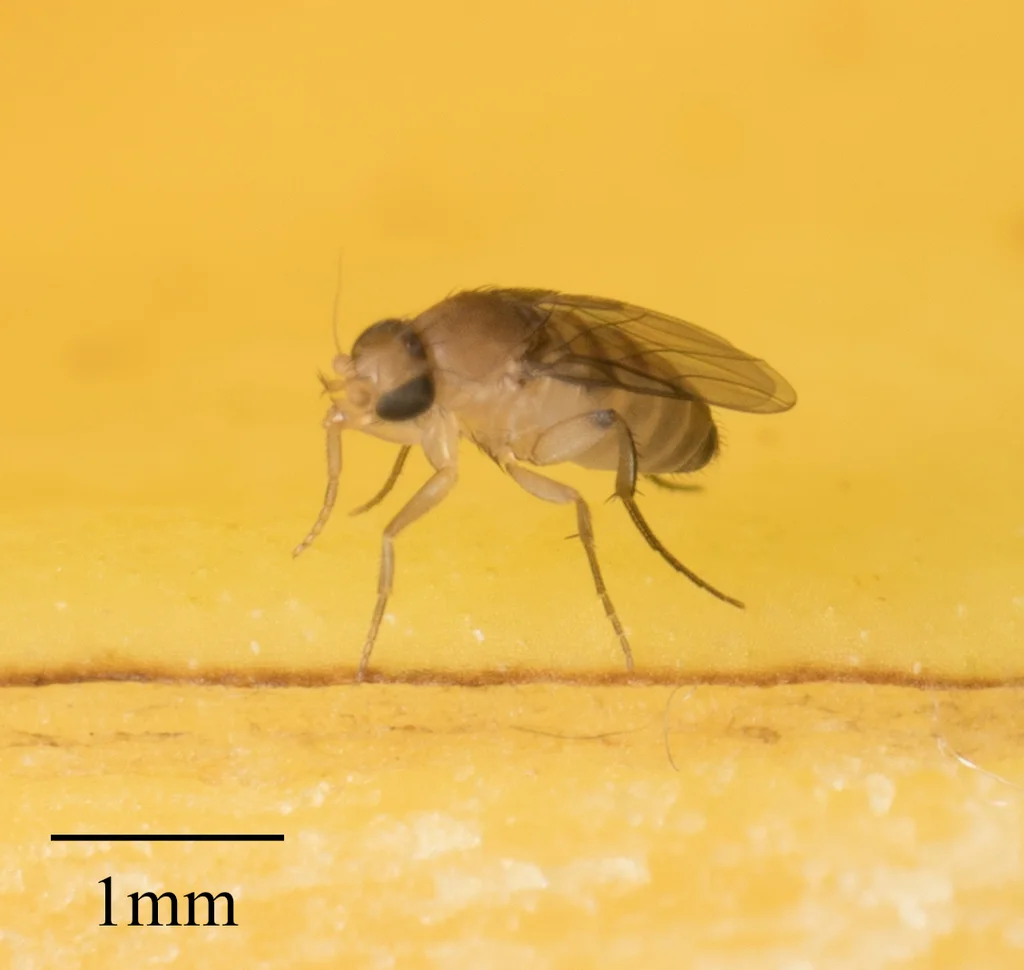
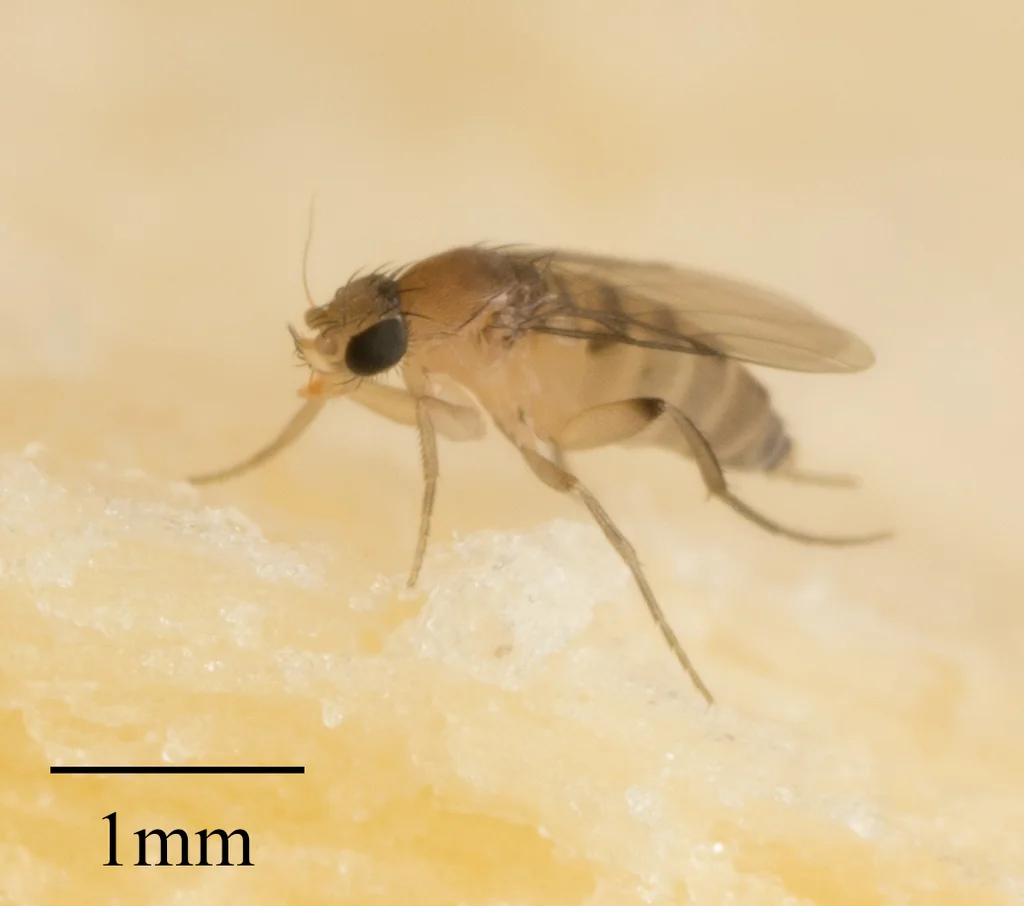
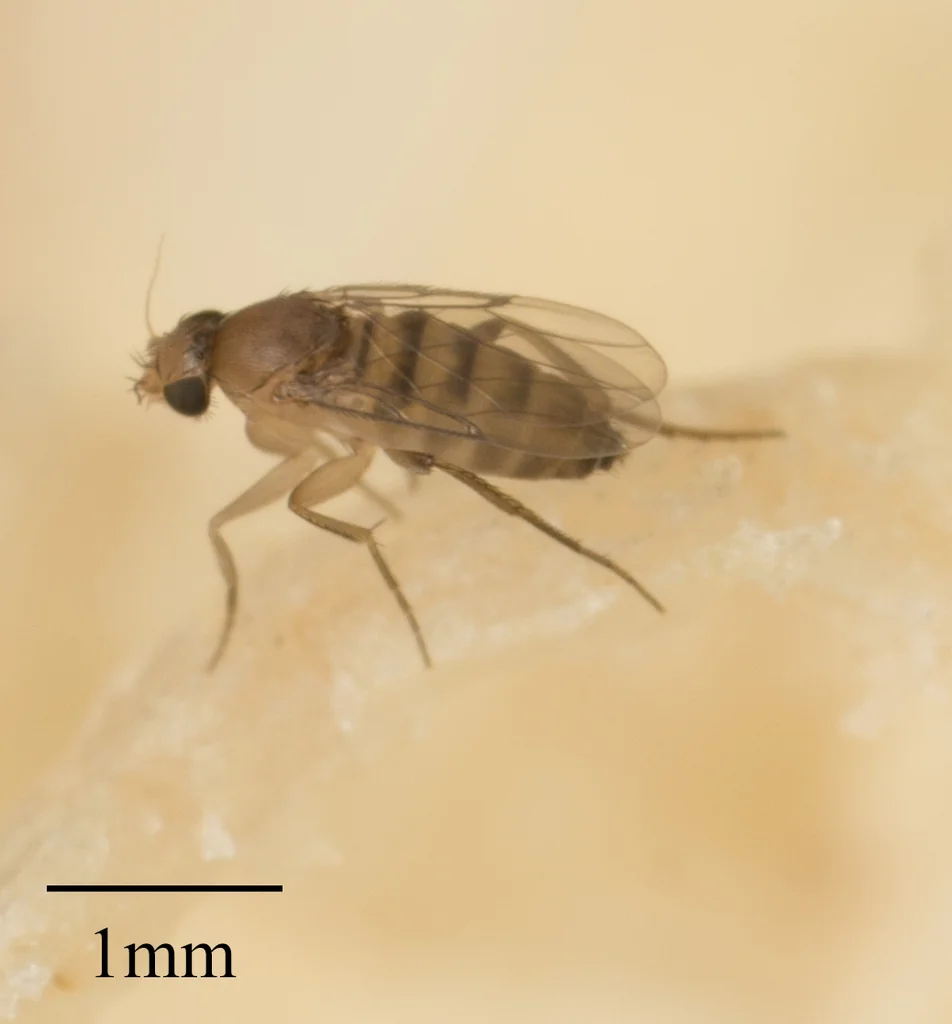
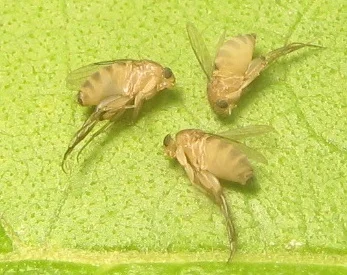
Coffin flies are very small insects. They measure only 1 to 3 millimeters long, about the size of a pinhead. Like all phorid flies, they have a humpbacked look when seen from the side. This arched upper body is one of the easiest ways to spot them among small flies in your home.
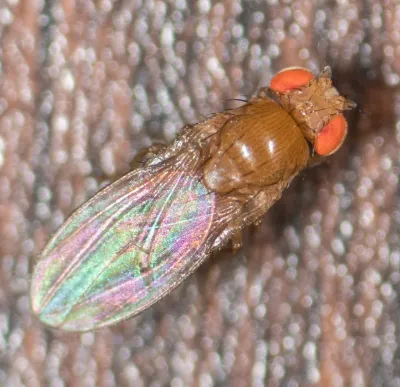
The body color ranges from tan to yellowish-brown. The abdomen has dark stripes running across it. These black bands help tell coffin flies apart from other phorid species. The eyes are dark, not the bright red color seen in fruit flies.
The wings are clear with a thick vein along the front edge. The hind legs are larger and flatter than the front legs, which helps them jump. Their short antennae are often hidden by bristly hairs on the head.
One behavior sets phorid flies apart from other small flies. When bothered, coffin flies run fast across surfaces in short, jerky movements before flying away. This running behavior is so unique that phorid flies are often called “scuttle flies.” If you see a tiny fly running quickly rather than flying away right away, it is likely a phorid fly.
Common Species and Names
The main species known as the coffin fly is Megaselia scalaris. This species is also called the scuttle fly or humpbacked fly. It belongs to the family Phoridae, which has over 4,000 species worldwide and more than 370 species in North America. For a broader overview of flies that breed in organic matter, see our guide to filth flies.
Another species sometimes called a coffin fly is Conicera tibialis. This one is more common in Europe. It breeds on buried human remains and has been found on corpses up to 18 years after burial.
Megaselia scalaris is more common in North American homes. It came from warm climates but has spread worldwide by living near people. It is the phorid fly species most often found infesting living tissue in North America.
Coffin Fly Behavior and Biology
Life Cycle
Coffin flies have four life stages: egg, larva, pupa, and adult. The entire cycle takes 14 to 37 days depending on heat and moisture. Warm, moist conditions speed up growth.
Female coffin flies lay their eggs at the edge of rotting material. The eggs are tiny, long, and whitish. A single female can lay 20 to 40 eggs at once and up to 500 eggs in her lifetime. With such fast breeding, numbers can grow quickly when conditions are right.
Larvae hatch within 24 hours in warm conditions. These legless, whitish-gray maggots feed for 8 to 16 days. The larvae have a unique survival trick. When stuck in small pools of liquid, they swallow air to float. This may help them survive flooding.
After feeding, larvae crawl to a drier spot to pupate. The pupal stage lasts about one week. Adults come out and can start mating and laying eggs within days.
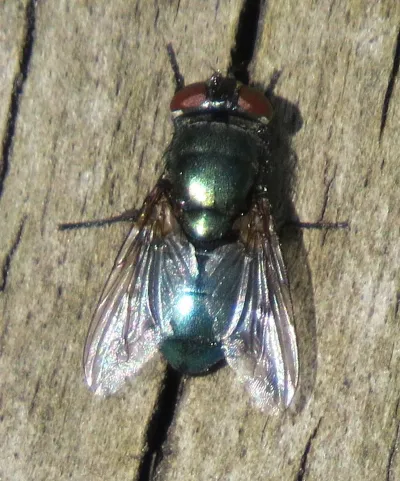
Diet and Feeding Habits A related species, House Flies, shares similar characteristics.
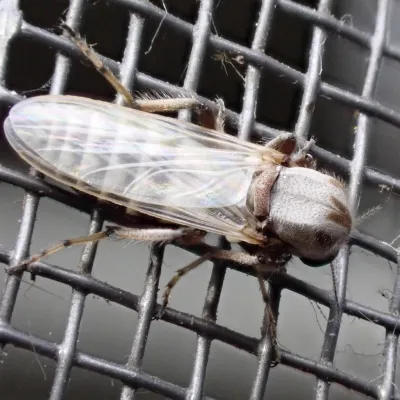
Coffin flies eat almost anything organic, dead or alive. This includes rotting plant matter, animal remains, fungi, bacteria, and even other insects. Their wide diet helps them thrive in many places. A related species, Biting Midges, shares similar characteristics.
This ability to eat so many things gives coffin flies an edge in finding new food sources. They can live on bacteria and fungi when other food is hard to find. This makes them common in many habitats around the world.
Adults feed on fluids from rotting materials. They use sponging mouthparts to soak up liquids rather than biting. While they do not bite people, their feeding habits mean they may pick up and spread bacteria from dirty surfaces to food or kitchen areas.
Breeding Habits and Habitat
The name “coffin fly” comes from their ability to find and reach buried organic matter. Adults can burrow through soil to find food underground. They can travel about half a meter through soil in just four days. This lets them find and breed on remains that other insects cannot reach.
Once they find a food source, coffin flies may breed for many generations without ever coming to the surface. Researchers have found coffin flies on human remains buried for 18 years. Their small size lets them enter through tiny cracks in coffins and other containers.
In homes, coffin flies breed in the same types of materials as other phorid flies and drain flies:
- Organic buildup inside drains and garbage disposals
- Rotting fruits and vegetables, especially potatoes and onions
- Dead animals in walls or crawl spaces
- Pet waste and spilled pet food
- Dirty trash containers and recycling bins
- Moist soil in potted plants
- Areas with water damage or plumbing leaks
- Broken sewer lines and septic systems
Moisture is key for coffin fly breeding. Any area with dampness and organic matter can become a breeding site. This is why water leaks and drainage problems often go hand in hand with coffin fly problems.
Treatment Methods for Coffin Flies
Getting rid of coffin flies means finding and removing their breeding sources. Killing adult flies only helps for a short time since new adults will keep coming from hidden larvae. The following methods work well for treating coffin fly problems.
Source Identification
The first step in any coffin fly treatment is finding where they breed. These flies breed in many types of materials, which can make this hard. Start by checking the most common indoor sources:
- Check all floor drains, sink drains, and garbage disposals
- Look at stored produce, especially root vegetables
- Look under appliances where food may have built up
- Check pet areas for waste or spilled food
- Look at potted plants for too much moisture
Sticky traps placed around the home can help show where flies are most active. If traps in one area catch many more flies than others, the breeding source is likely nearby.
Sanitation and Source Removal
Removing the organic material where larvae grow is key to control. This requires deep cleaning, not just wiping surfaces:
- Throw out all rotting produce and clean storage areas
- Clean drains with enzyme cleaners made to break down organic buildup. Regular bleach does not remove the slimy film where larvae feed
- Clean well under appliances, behind furniture, and in corners where debris builds up
- Remove any dead animals from walls or crawl spaces
- Clean up pet waste right away and keep feeding areas clean
- Empty and clean trash containers often
If a dead animal is causing the problem, it must be found and removed. Coffin flies can find and reach remains that are well hidden in wall voids or other hard-to-reach areas.
Addressing Hidden Sources
Ongoing problems often point to hidden breeding sources. Broken sewer lines under concrete slabs are a common cause of lasting coffin fly issues. Warning signs include:
- Flies coming out of one spot over and over
- Strange odors near floor drains
- Damp spots on floors with no clear cause
- Past plumbing problems or slow drains
A plumber with a camera can check pipes to find damage. Smoke testing can show cracks in sewer lines by revealing where smoke enters the building. Fixing broken pipes and removing dirty soil is needed to get rid of these hidden breeding sites.
Traps and Monitoring
Several types of traps can help reduce adult fly numbers and track activity:
- Sticky fly traps placed near suspected breeding areas catch adults and help find problem spots
- Apple cider vinegar traps with a drop of dish soap attract and drown many small flies
- UV light traps attract flying adults and can cut numbers in kitchens and other areas
Traps work best as part of a larger control plan. They will not get rid of a problem by themselves but can reduce adult numbers while you deal with the breeding source.
Prevention
After getting rid of an active problem, ongoing steps keep coffin flies from coming back:
- Keep drains clean with regular enzyme treatments
- Store produce well and throw out overripe items quickly
- Keep trash containers clean and tightly sealed
- Fix plumbing leaks and moisture problems right away
- Clean under appliances and in hard-to-reach areas often
- Seal cracks around pipes and drains to limit fly access
Since coffin flies can breed in so many materials, keeping good sanitation throughout the home is the best long-term way to prevent them.
References
- Megaselia scalaris - Wikipedia
- Phorid Flies - NC State Extension
- Megaselia scalaris - ScienceDirect Topics
- Complete morphological characterization of Megaselia scalaris - Nature Scientific Reports
- The Coffin Fly - Natural History Museum of Los Angeles
- Managing Phorid Fly Infestations - LA County Public Health
Other Flies
Explore other species in the flies family
Commonly Confused With
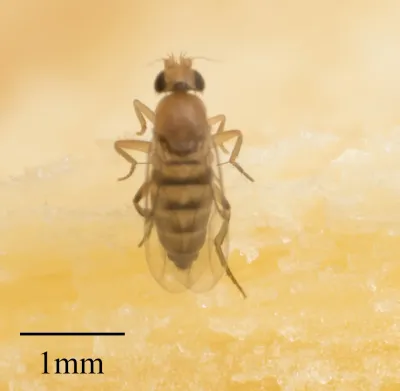
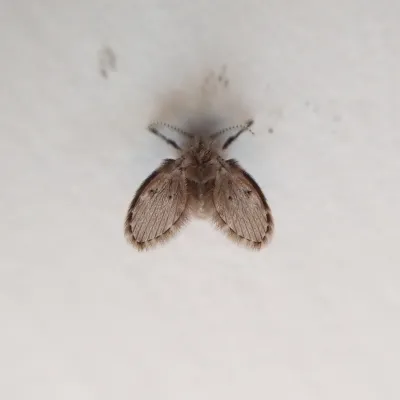
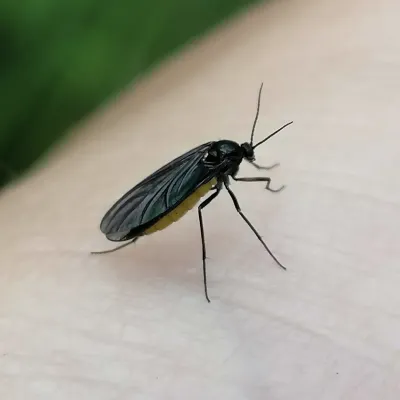
Coffin Flies are often mistaken for these similar pests
Where Coffin Flies Are Found
Hover over states to see their names. Green regions indicate where coffin flies have been reported.
Common Questions about Coffin Flies
What is a coffin fly?
+
A coffin fly is a type of phorid fly, scientifically known as Megaselia scalaris. The name comes from their unusual ability to locate and breed in buried organic matter, including human remains in coffins. In homes, they breed in decaying organic materials similar to other phorid flies.
Why are they called coffin flies?
+
These flies earned the name because they can burrow through soil to reach buried remains. Their small size allows them to find tiny cracks and crevices to access food sources that other insects cannot reach. This ability makes them important in forensic entomology.
Are coffin flies dangerous?
+
Coffin flies do not bite or sting, but they can spread bacteria because they breed in unsanitary materials. They may contaminate food surfaces in kitchens. Their presence usually indicates a sanitation issue or hidden decaying organic matter that needs attention.
How do coffin flies get in my house?
+
Coffin flies enter homes through open doors, windows, or small gaps. They are attracted to moist, decaying organic matter. Common indoor breeding sites include clogged drains, rotting produce, pet waste, dead animals in walls, and areas with water damage.
How do I tell coffin flies apart from fruit flies?
+
Coffin flies have a distinctive humpbacked appearance and run rapidly across surfaces before flying. They have dark eyes and striped abdomens. Fruit flies are rounder, have bright red eyes, and tend to hover rather than scuttle. The running behavior is the easiest way to tell them apart.
How long do coffin flies live?
+
Adult coffin flies live about one to two weeks. Their complete lifecycle from egg to adult takes 14 to 37 days depending on temperature. In warm conditions, populations can grow very quickly because females can lay hundreds of eggs.
What attracts coffin flies indoors?
+
Coffin flies are attracted to moist, decaying organic matter. Clogged drains, rotting food, dirty garbage disposals, dead animals, pet waste, and water-damaged areas can all attract them. Unlike some flies, they eat almost anything organic, dead or alive.
Can coffin flies breed in drains?
+
Yes, coffin flies commonly breed in the organic film that builds up inside drain pipes. However, they can also breed in many other locations. If cleaning drains does not solve the problem, there may be another breeding source such as a broken sewer line or hidden decaying matter.

With five years of hands-on experience in the pest control industry, George Schulz is a registered technician with the Virginia Pest Management Association and a proud third-generation professional in a family business that's been protecting homes for over 57 years. He manages and trains a team of service pros while also leading internal research efforts—recently spearheading a deep-dive review of thousands of documents on pest control materials to hand-pick the most kid and pet friendly, most effective solutions tailored specifically for homes in the DC metro area.