Bottle Flies Identification Guide
Calliphoridae (Family)
Bottle flies are metallic-colored flies commonly seen around homes, especially when decaying organic matter is present. Named for their shiny, bottle-like appearance, these flies can indicate dead animals or sanitation problems nearby.
Taxonomy
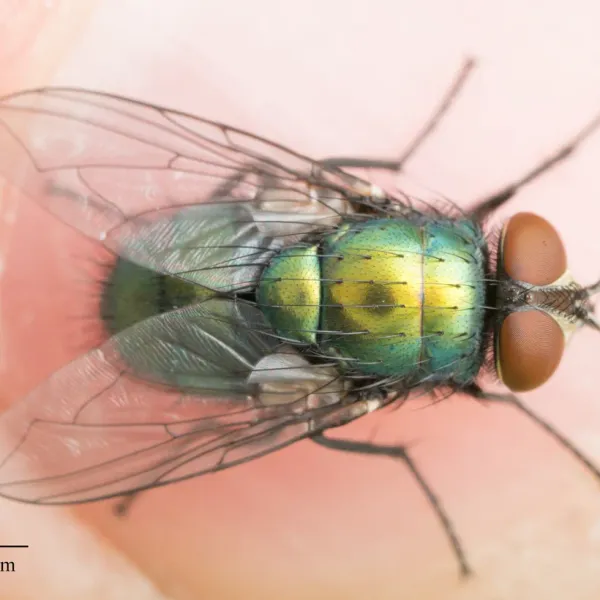
Bottle Flies Coloration
Common color patterns to help identify bottle flies
Bottle Flies
Seasonal Activity
When bottle flies are most active throughout the year

Where Bottle Flies Are Found
Hover over states to see their names. Green regions indicate where bottle flies have been reported.
Bottle Fly Identification Guide
Physical Characteristics
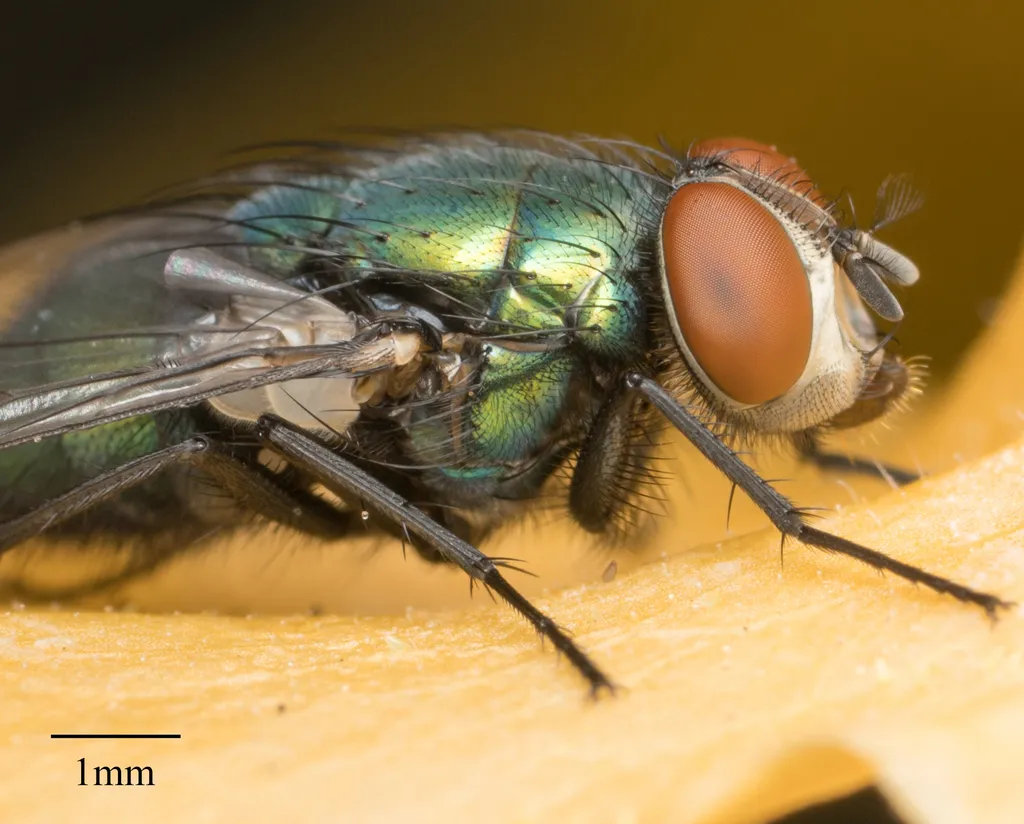
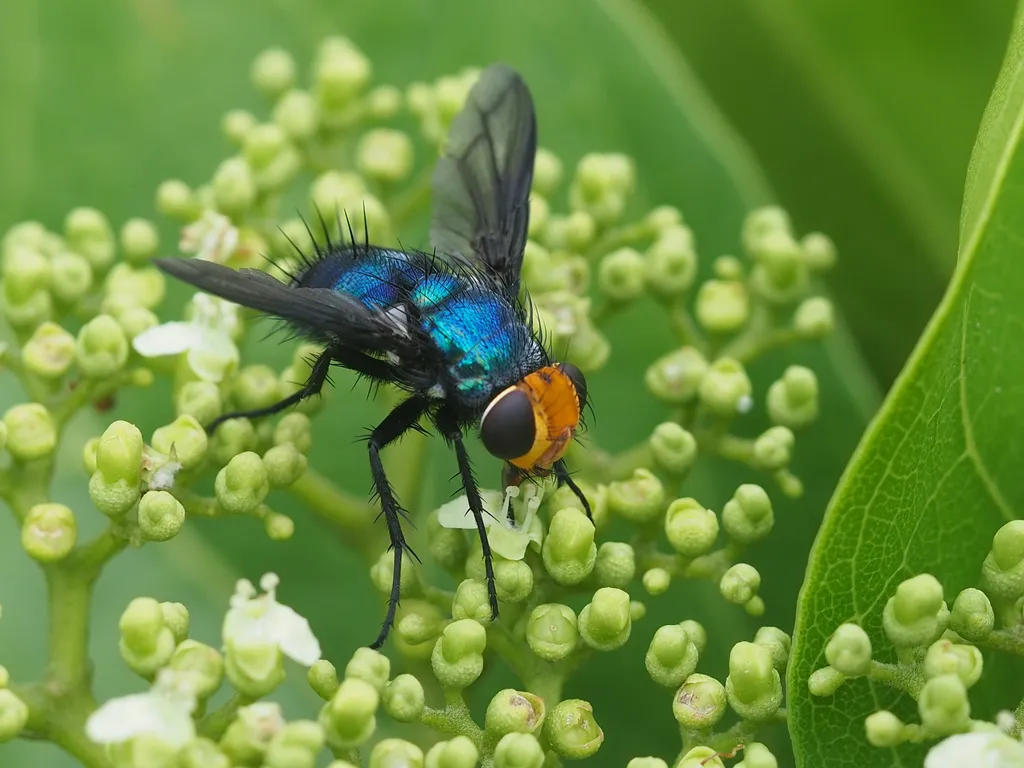
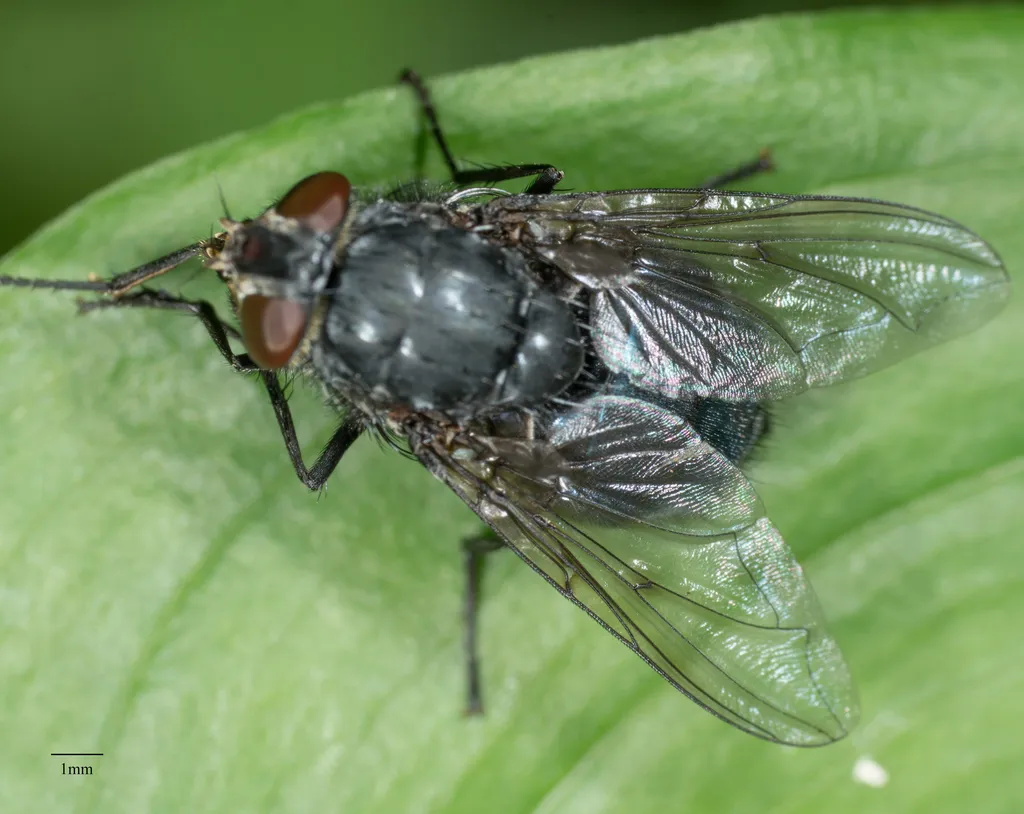
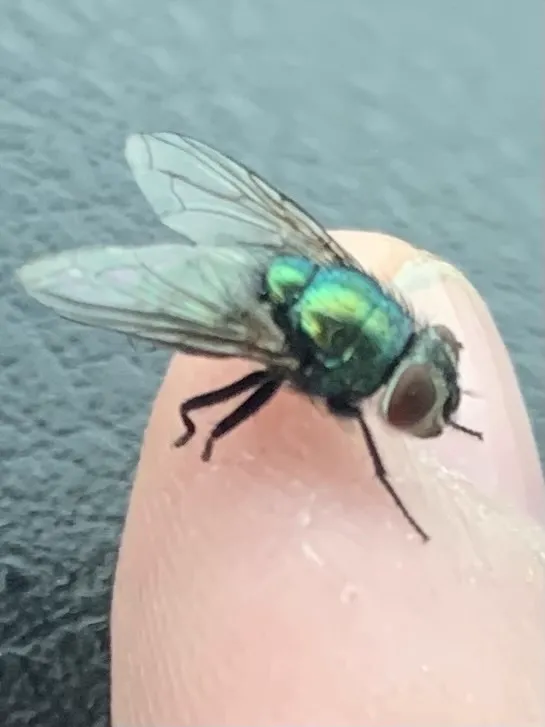
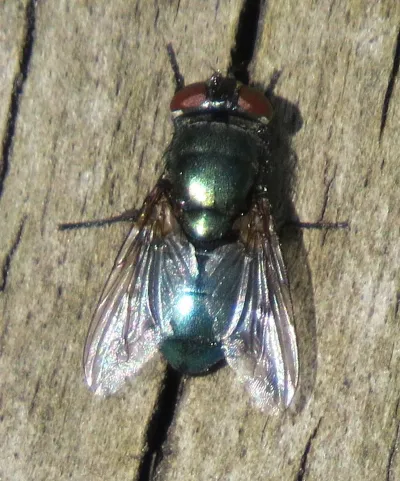
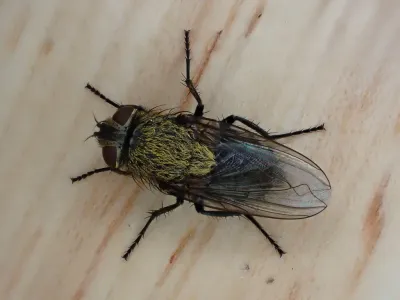
Bottle flies get their name from their shiny look that resembles colored glass bottles. These flies are 6 to 14 millimeters long. That makes them a bit larger than house flies. Their bodies shine with metallic colors. Depending on the species, they may be bright green, blue, bronze, or black.
The shiny look comes from how their outer shell reflects light. This makes bottle flies easy to spot, even from far away. They have large red-brown eyes that cover most of their head. Short, stiff hairs cover their bodies. Their wings are clear with veins you can see.
Bottle flies make a loud buzzing sound when they fly. You may hear them before you see them. This is common when several flies circle near a window or food. Females are a bit larger than males. Their eyes sit farther apart too.
Common Species in North America
Several bottle fly species show up in and around homes. Bottle flies are also known as blow flies, with both names referring to the family Calliphoridae. The most common species include:
-
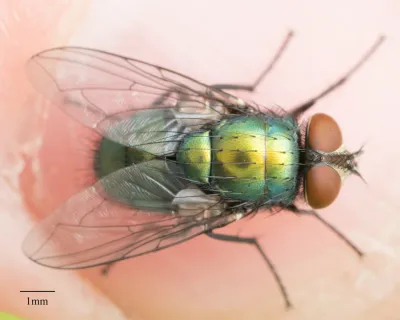
Green Bottle Fly (Lucilia sericata): The most common species. It has a bright metallic green body and measures 10 to 14 mm. You can find it all over North America.
-
Blue Bottle Fly (Calliphora vomitoria): A large species with a metallic blue belly and gray upper body. It has orange-yellow hairs on the back of its head. This fly likes cooler weather.
-
Black Blow Fly (Phormia regina): A dark blue-black species common in northern areas. It is often the first fly to show up at dead animals in early spring.
-
Bronze Bottle Fly (Lucilia cuprina): Like the green bottle fly but with a bronze or coppery shine. It is more common in warmer southern areas.
Bottle Fly Behavior and Biology
Bottle flies help break down dead animals in nature. They return nutrients to the soil. Their strong sense of smell lets them find rotting matter from far away. Studies show that bottle flies can find dead animals within minutes of death.
Feeding and Reproduction
Adult bottle flies feed on nectar, plant sap, and fluids from rotting matter. Females need protein from decay before they can lay eggs. After feeding, they look for good spots to deposit their eggs. They prefer moist, shaded areas on dead animals like the mouth, eyes, ears, or wounds.
A single female lays 150 to 200 eggs at a time. Over her two to three week life, she may lay up to 2,000 eggs total. The eggs are tiny and white. They cluster together and look like small grains of rice.
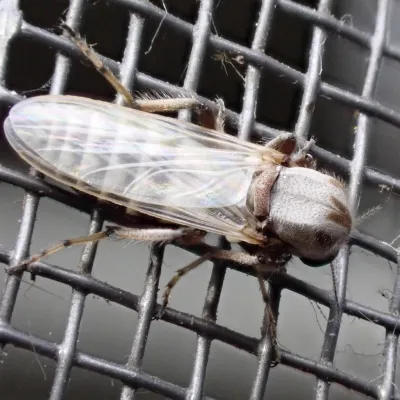
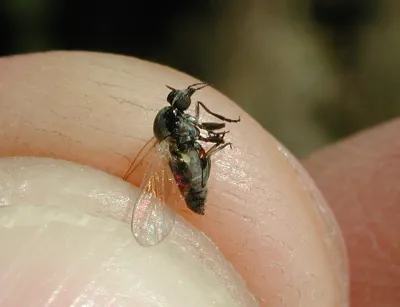
Life Cycle A related species, Biting Midges, shares similar characteristics.
Bottle flies go through four life stages:
- Egg Stage: Eggs hatch in 24 to 48 hours when it is warm.
- Larval Stage: The cream-colored maggots eat for 6 to 11 days. They grow through three phases.
- Pupal Stage: Grown maggots leave the food and dig into soil. This stage lasts about 8 days.
- Adult Stage: New adults can feed and mate within hours.
The whole cycle takes about two weeks in warm weather. It slows down in cooler temperatures. Bottle flies are busiest between 9 AM and 2 PM when the weather is right for flying.
Seasonal Activity
Bottle flies stay active from late spring through early fall in most areas. Their numbers peak in the warmest summer months. Some species, like the blue bottle fly, handle cooler weather better. They show up earlier in spring and stay later in fall.
In winter, bottle flies in northern areas die off or go dormant. But they can stay active all year in heated buildings if they find breeding material.
Why Bottle Flies Enter Homes
When bottle flies show up indoors, something is drawing them in. Knowing what attracts them helps you find and fix the problem.
Common Indoor Attractants
- Dead animals: The top cause. Mice, rats, birds, or squirrels may have died in walls, attics, crawl spaces, or chimneys.
- Garbage: Open trash cans with meat scraps or other waste.
- Pet areas: Built-up pet waste or dirty litter boxes.
- Spoiled food: Meat, fish, or other food left out too long.
- Drains: Gunk buildup in floor drains or garbage disposals can also attract drain flies.
A sudden wave of bottle flies inside usually means a dead animal is nearby. The flies often come out through gaps around light fixtures, outlets, or pipes as they try to escape.
Treatment Methods for Bottle Flies
To control bottle flies, you must find and remove what attracts them. Just killing the adult flies will not fix the problem. More flies will keep coming until you deal with the source.
Finding the Source
Watch where the flies gather. Then check these spots:
- Walls and ceilings near where flies cluster. Look for stains that could point to a dead animal.
- Attics near eaves, vents, and roof gaps where animals could get in.
- Crawl spaces and basements.
- Chimneys and fireplaces, where birds or animals can get trapped.
- Garbage cans, recycling bins, and dumpsters.
- Outdoor spots near compost piles or pet waste.
Follow your nose. Dead animals usually smell bad. Small animals may not smell as much.
Eliminating the Source
If you find a dead animal you can reach, remove it while wearing gloves. Put it in a sealed plastic bag. Throw it in an outdoor trash can. Clean the area well with an enzyme cleaner to get rid of leftover material.
Sometimes the dead animal is in a wall or other spot you cannot reach. In that case, you may need to wait for it to fully decay. This takes about two to three weeks. Odor sprays and better air flow can help during that time.
Reducing Fly Activity
While you deal with the source, these steps can cut down on flies inside:
- Fix or add window and door screens.
- Keep doors closed or add door sweeps.
- Set fly traps near windows where flies gather.
- Cover all food and clean up spills quickly.
- Empty indoor trash cans often.
- Use lids that fit tight on garbage cans.
Prevention Strategies
To stop future bottle fly problems:
- Seal gaps, cracks, and holes where animals could get in.
- Add chimney caps so animals do not get trapped.
- Keep outdoor trash in sealed bins with tight lids.
- Pick up pet waste every day.
- Put compost bins far from the house.
- Store meat and fish in the fridge, not on counters.
- Clean trash cans often to remove buildup.
Health Concerns
Bottle flies do not bite humans or pets, but they can spread germs. These flies feed on rotting matter, feces, and garbage, so they pick up bacteria on their bodies, legs, and mouthparts. When they land on food or kitchen surfaces, they may leave behind harmful germs.
Germs that bottle flies can carry include:
- Salmonella bacteria
- E. coli bacteria
- Staphylococcus bacteria
- Parasites
- Other harmful microbes
Keep food covered when bottle flies are present. Clean any surfaces where flies have landed before preparing food. Put perishables in the refrigerator promptly and do not leave meat sitting out at room temperature.
References
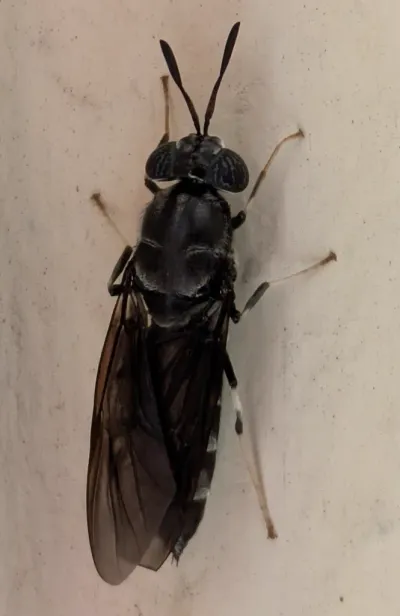
Other Flies
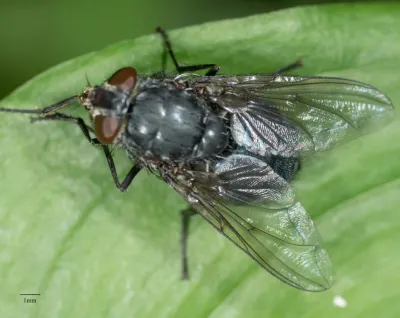
Explore other species in the flies family
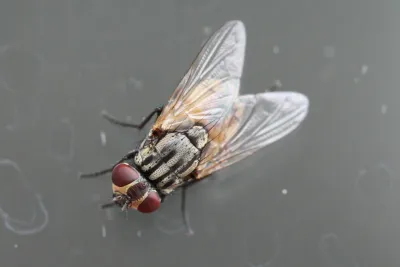
Commonly Confused With
Bottle Flies are often mistaken for these similar pests
Where Bottle Flies Are Found
Hover over states to see their names. Green regions indicate where bottle flies have been reported.
Common Questions about Bottle Flies
What is the difference between bottle flies and blow flies?
+
Bottle flies and blow flies are the same insect. Both terms refer to flies in the family Calliphoridae. The name bottle fly comes from their shiny, bottle-like metallic appearance, while blow fly refers to their habit of laying eggs on decomposing meat, which was historically said to make meat bloated or blown.
Why are bottle flies suddenly appearing in my house?
+
Bottle flies almost always appear when something has died nearby. A mouse, rat, bird, or squirrel may have died in a wall, attic, crawl space, or chimney. These flies can detect decay from long distances and arrive quickly to lay eggs. Less commonly, they may be attracted by garbage, pet waste, or spoiled food.
Are bottle flies dangerous?
+
Bottle flies do not bite, but they can spread germs. They feed on rotting matter and feces, so they pick up bacteria on their bodies. When they land on food or kitchen surfaces, they may leave behind Salmonella, E. coli, and other harmful germs. Always cover food when bottle flies are present.
How long do bottle flies live?
+
Adult bottle flies live about 10 to 25 days. However, the complete life cycle from egg to adult takes only about two weeks in warm weather. A single female can lay up to 2,000 eggs during her short life, which explains why populations can explode quickly around a food source.
What attracts bottle flies to my property?
+
Bottle flies are strongly attracted to decaying organic matter, especially dead animals and rotting meat. They also gather around garbage cans, pet waste, compost piles, and any decomposing food left outdoors. Their excellent sense of smell allows them to detect these materials from surprisingly far away.
How can I get rid of bottle flies in my house?
+
The key to eliminating bottle flies is finding and removing what attracts them. Check for dead animals in walls, attics, and crawl spaces. Empty garbage frequently and keep lids tightly sealed. Clean up pet waste daily. If the source is a dead animal you cannot reach, the flies will typically disappear within two to three weeks as the carcass decomposes.
What time of year are bottle flies most active?
+
Bottle flies are most active from late spring through early fall when temperatures are warm. They become less common in winter but can still appear indoors if a suitable breeding source is present. Some species, like the blue bottle fly, prefer cooler temperatures and are among the first flies active in spring.
Do bottle flies bite humans or pets?
+
No, bottle flies cannot bite. Their mouthparts are designed for soaking up liquids, not for piercing skin. They feed on nectar and decaying fluids as adults. If you notice bites around the same time as bottle fly activity, another pest is likely responsible.

With five years of hands-on experience in the pest control industry, George Schulz is a registered technician with the Virginia Pest Management Association and a proud third-generation professional in a family business that's been protecting homes for over 57 years. He manages and trains a team of service pros while also leading internal research efforts—recently spearheading a deep-dive review of thousands of documents on pest control materials to hand-pick the most kid and pet friendly, most effective solutions tailored specifically for homes in the DC metro area.