Blue Bottle Flies Identification Guide
Calliphora vomitoria
Blue bottle flies are large, metallic blue blow flies known for their loud buzzing and attraction to decaying organic matter. They are common throughout North America and often indicate the presence of dead animals or sanitation issues nearby.
Taxonomy
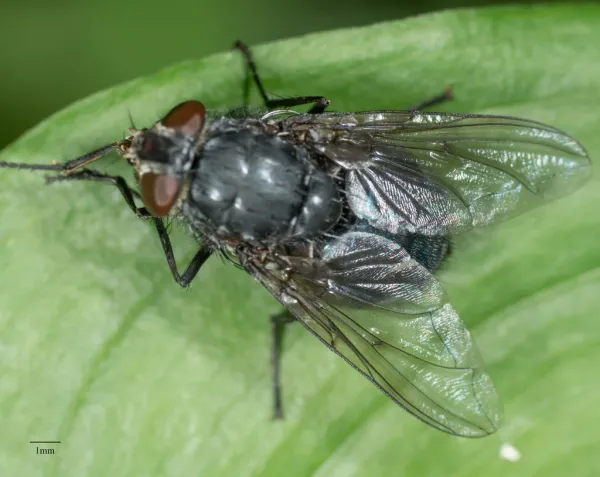
Blue Bottle Flies Coloration
Common color patterns to help identify blue bottle flies
Blue Bottle Flies
Seasonal Activity
When blue bottle flies are most active throughout the year
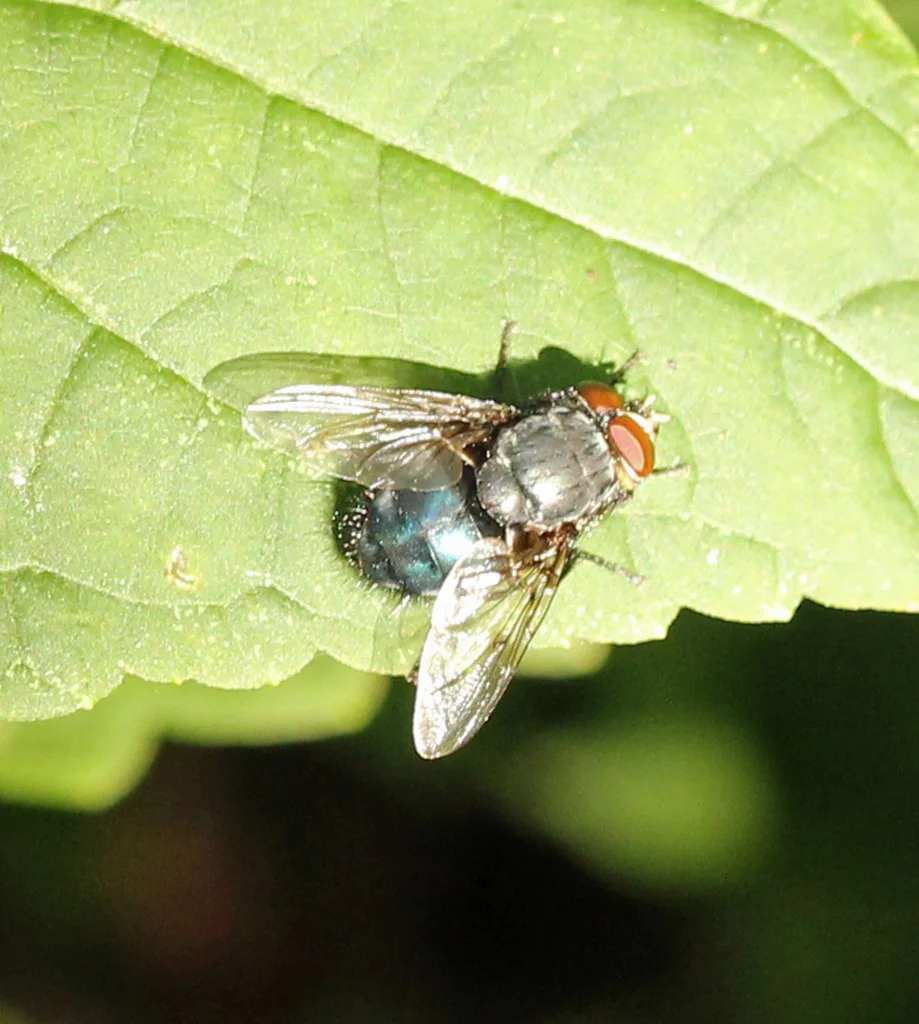
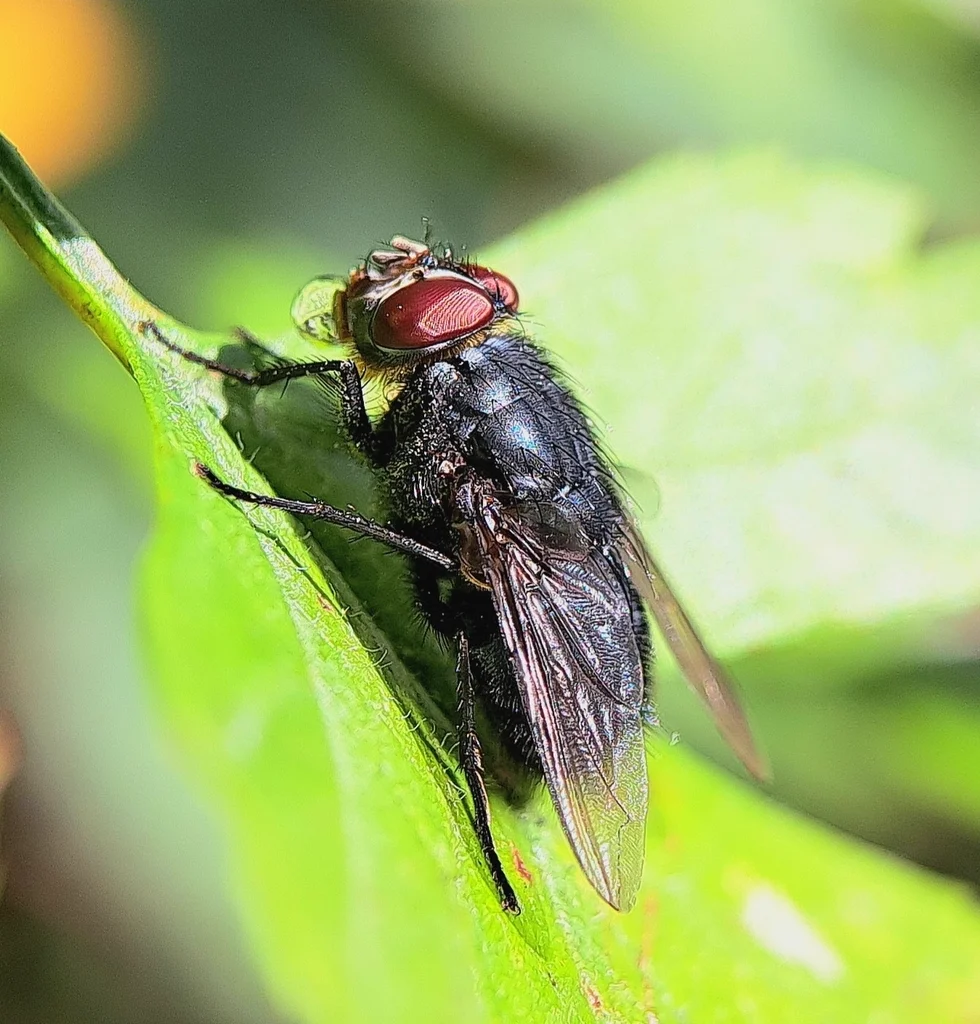
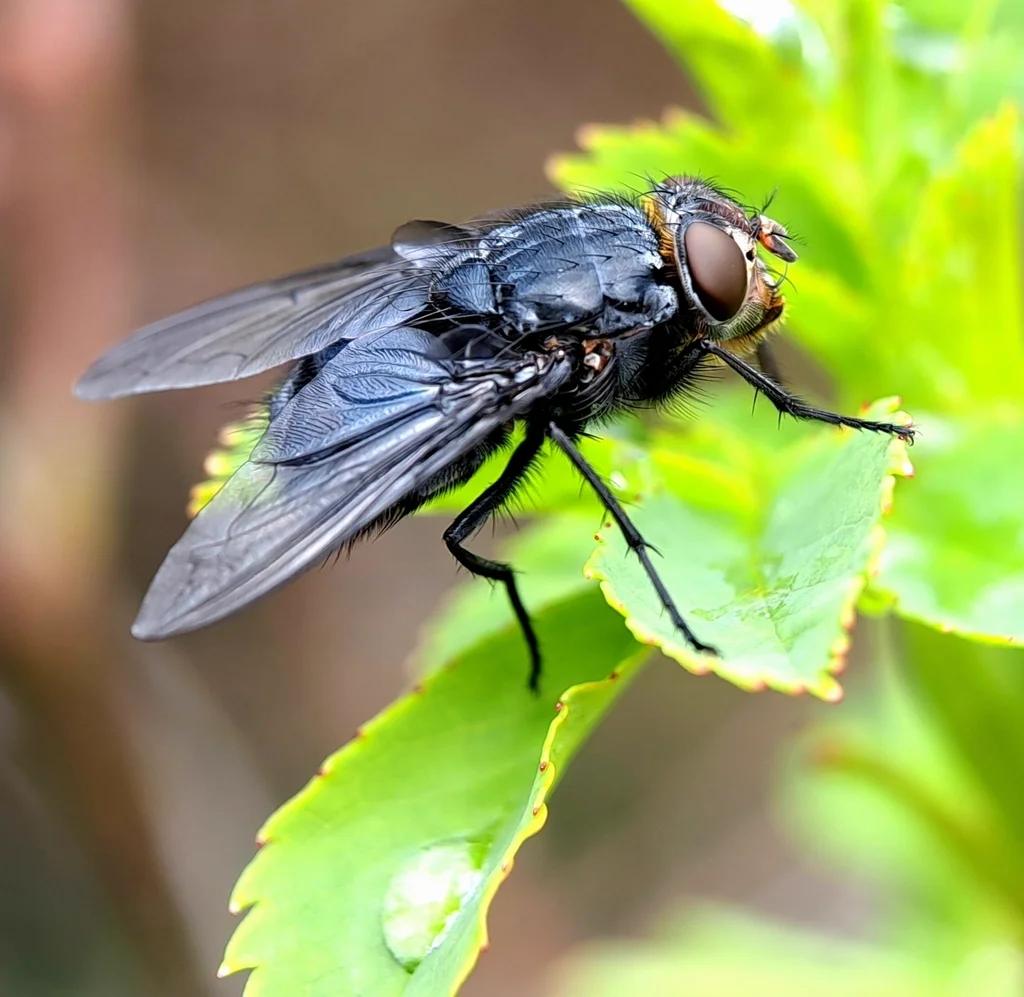

Where Blue Bottle Flies Are Found
Hover over states to see their names. Green regions indicate where blue bottle flies have been reported.
Blue Bottle Fly Identification Guide
Physical Characteristics
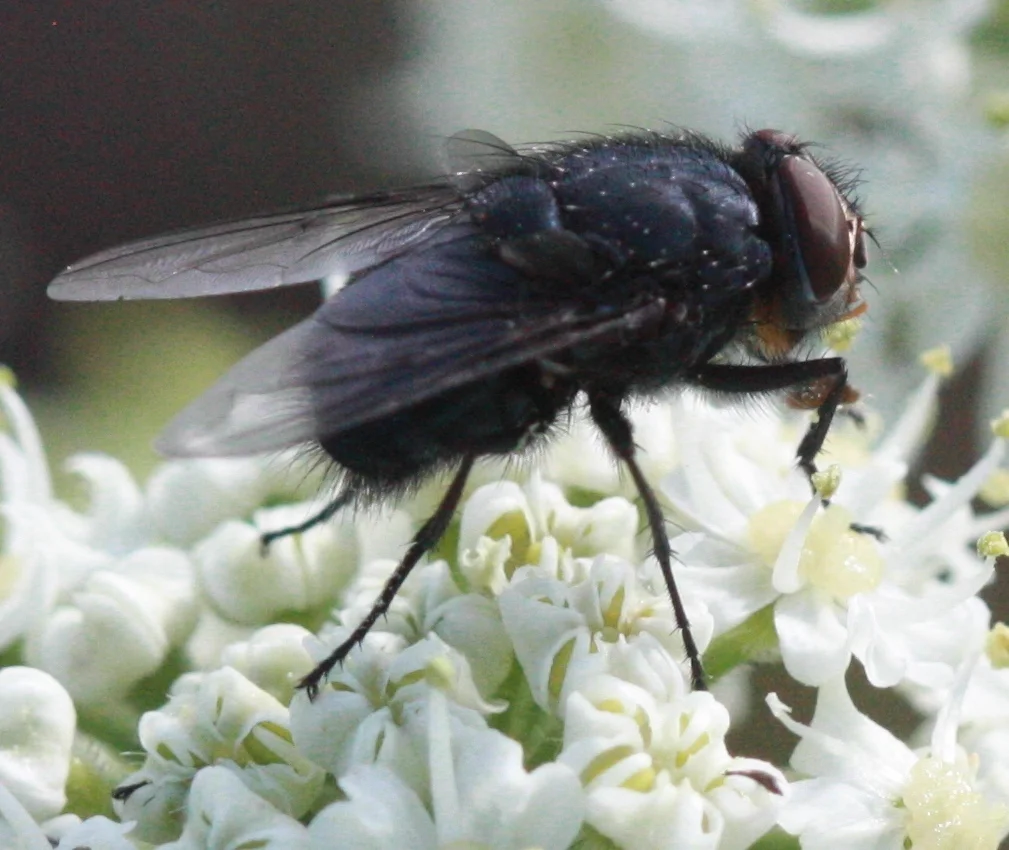
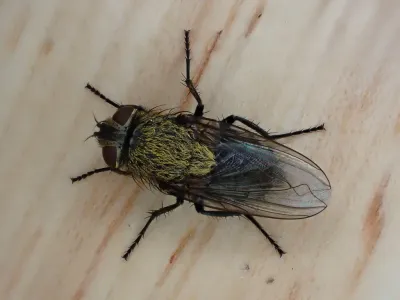
Blue bottle flies measure 10 to 14 millimeters long, making them almost twice the size of a common house fly. Their most striking feature is the bright metallic blue abdomen that gives them their name. The head and thorax are dull gray with a slight metallic sheen. A key identification mark is the patch of orange-yellow hairs on the back of the head, often called a “ginger beard.”
Like all flies, blue bottle flies have one pair of functional wings. Their hind wings have evolved into small knob-like structures called halteres that help with balance during flight. They have large reddish-brown compound eyes that give them excellent vision. Short, stiff bristles cover their bodies, and their mouthparts are sponge-like for soaking up liquids.
These flies are strong fliers and produce a loud buzzing sound that is often the first sign of their presence. You may hear them before you see them, especially when they circle near windows trying to find a way outside.
Distinguishing Blue Bottle Flies from Other Species
Blue bottle flies belong to the blow fly family (Calliphoridae), which includes several similar-looking fly species:
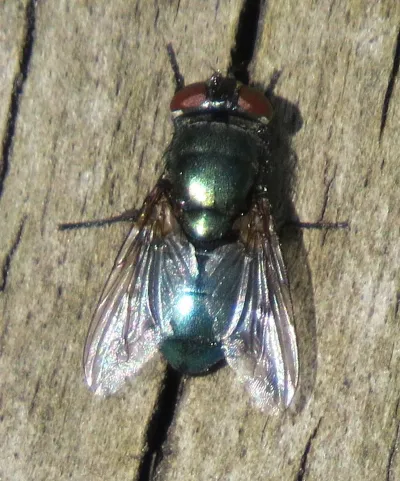
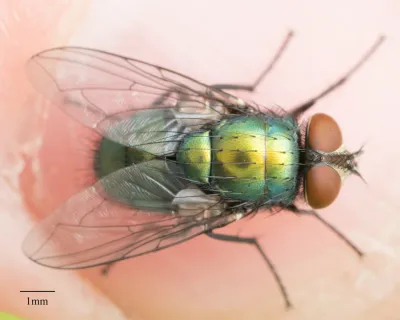
- Green Bottle Fly (Lucilia sericata): Entirely metallic green body, slightly smaller
- Black Blow Fly (Phormia regina): Dark blue-black coloring, common in cooler northern regions
- Secondary Screwworm (Cochliomyia macellaria): Greenish-blue, found mainly in southern states
The orange beard on the back of the head is the most reliable way to identify blue bottle flies specifically. Other blow flies, including bottle flies and carrion flies, lack this distinctive feature.
Blue Bottle Fly Behavior and Biology
Blue bottle flies play an important role in nature by breaking down dead animals. They have an extremely sensitive sense of smell that allows them to detect decaying matter from long distances. Within minutes of an animal dying, blue bottle flies may begin arriving to investigate.
Female blue bottle flies require a protein meal from decay before they can produce eggs. After feeding, they search for suitable places to lay their eggs. A single female deposits 150 to 200 eggs at a time in shaded, moist areas of a carcass such as the mouth, eyes, ears, or other openings. Over her lifetime, one female may lay up to 2,000 eggs.
Life Cycle
Blue bottle flies go through complete metamorphosis with four stages:
- Eggs: Small, white, and laid in clusters. They hatch in 24 to 48 hours.
- Larvae (Maggots): Cream-colored and legless. They feed for 6 to 11 days, growing through three stages.
- Pupae: Larvae leave the food source and burrow into soil. This stage lasts about 8 days.
- Adults: Emerge from pupae ready to feed and reproduce. Adults live 10 to 25 days.
The entire cycle takes roughly two weeks in warm conditions but slows down in cooler weather. Blue bottle flies prefer cooler temperatures compared to other blow fly species and are often among the first insects active in spring.
Seasonal Activity
Blue bottle flies are most active from late spring through early fall. They tend to prefer shady locations and slightly cooler conditions than green bottle flies. In woodland areas and higher elevations, blue bottle flies may be the dominant blow fly species.
These flies rarely fly at night. Research suggests they do not lay eggs after dark, regardless of whether suitable material is present. This behavior is useful information for forensic scientists who use blow flies to estimate when death occurred.
Why Blue Bottle Flies Enter Homes
When blue bottle flies appear inside a building, they are almost always attracted by one of these sources:
- Dead animals: Mice, rats, birds, squirrels, or other animals that died in walls, attics, crawl spaces, or chimneys
- Garbage: Open trash cans containing meat scraps or other organic waste
- Pet waste: Dog waste or neglected litter boxes
- Spoiled food: Forgotten meat, fish, or other food that has begun to decay
- Compost: Improperly managed compost bins near entry points
A sudden wave of blue bottle flies inside usually means something has died nearby. The flies often emerge from walls through gaps around light fixtures, pipes, or electrical outlets as they try to find their way outside.
Treatment Methods for Blue Bottle Flies
Effective control of blue bottle flies requires finding and removing the source that attracts them. Simply killing adult flies without addressing the underlying cause will not solve the problem, as more flies will continue to emerge or arrive.
Finding the Source
Start by observing where the flies gather most. Check these common areas:
- Walls and ceilings near where flies cluster (look for stains that might indicate a dead animal)
- Attics, especially near eaves, vents, and roof gaps
- Crawl spaces and basements
- Chimneys and fireplaces
- Garbage cans and recycling bins
- Outdoor compost piles
- Pet areas and kennels
Follow your nose. A bad smell often points directly to the source. Small animals may not produce a strong odor, but larger carcasses usually do.
Source Removal
If you can locate and reach the dead animal, remove it while wearing gloves. Place the remains in a sealed plastic bag and dispose of it properly. Clean the area thoroughly afterward.
Sometimes the animal is inside a wall void or other inaccessible location. In these cases, you may need to wait for decomposition to complete, which typically takes two to three weeks. Opening windows and using odor-neutralizing products can help during this period.
Reducing Fly Numbers
While addressing the source, these steps help reduce the number of flies inside:
- Install or repair window screens
- Keep doors closed or add door sweeps
- Place fly traps near windows where flies gather
- Cover all food and clean up spills promptly
- Empty indoor trash cans frequently
- Use tight-fitting lids on all garbage containers
Prevention Strategies
To prevent future infestations, focus on excluding animals and maintaining cleanliness:
- Seal gaps and holes where rodents or birds could enter walls
- Install chimney caps to prevent animals from getting trapped
- Keep outdoor garbage in sealed containers
- Pick up pet waste daily
- Position compost bins away from the house
- Repair torn screens and worn weatherstripping
- Store meat and fish properly in the refrigerator
Health Concerns
Blue bottle flies do not bite humans, but they can pose health risks through contamination. Because they feed on decaying matter and feces, they pick up bacteria on their bodies and mouthparts. When they land on food or food preparation surfaces, they may transfer pathogens including:
- Salmonella species
- E. coli bacteria
- Staphylococcus bacteria
- Various other disease-causing organisms
Keep food covered when blue bottle flies are present, and clean surfaces thoroughly if you notice flies landing on them.
Note: This information is for educational purposes only and should not be considered medical advice. If you have health concerns related to pest exposure, please consult a healthcare professional.
References
Other Flies
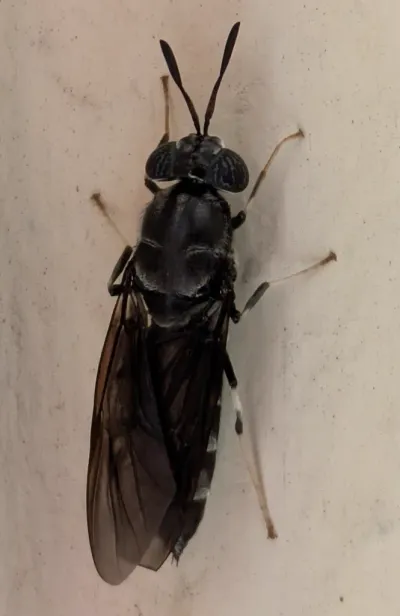
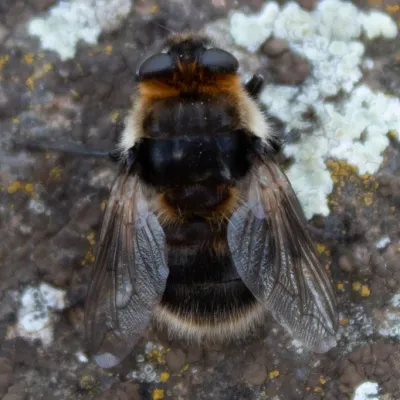
Explore other species in the flies family
Commonly Confused With
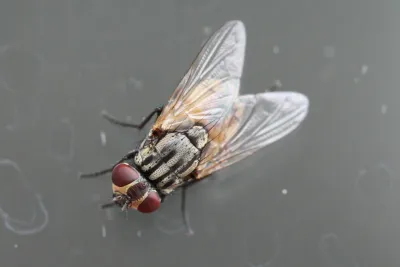
Blue Bottle Flies are often mistaken for these similar pests
Where Blue Bottle Flies Are Found
Hover over states to see their names. Green regions indicate where blue bottle flies have been reported.
Common Questions about Blue Bottle Flies
What is the difference between blue bottle flies and green bottle flies?
+
Blue bottle flies have a bright metallic blue abdomen with a dull gray head and thorax. Green bottle flies have a shiny metallic green body all over. Blue bottles are slightly larger and have orange-yellow hairs on the back of the head that look like a beard. Both are blow flies with similar habits.
Why do blue bottle flies suddenly appear in my house?
+
Blue bottle flies almost always show up when something has died nearby. A mouse, rat, bird, or other small animal may have died in a wall, attic, crawl space, or chimney. These flies can smell decay from far away and arrive quickly to lay eggs on the source.
Are blue bottle flies dangerous to humans?
+
Blue bottle flies do not bite people. However, they can spread germs because they land on food after feeding on rotting matter or waste. They may carry bacteria like E. coli and Salmonella. Keep food covered when these flies are present.
How long do blue bottle flies live?
+
Adult blue bottle flies live about 10 to 25 days. The full life cycle from egg to adult takes roughly two weeks in warm weather. Females can lay up to 2,000 eggs during their short lives, which is why populations can grow quickly around a food source.
What attracts blue bottle flies to my property?
+
Blue bottle flies are drawn to decaying organic matter, especially dead animals and meat. They also come to garbage cans, pet waste, compost piles, and any rotting food left outdoors. Strong odors from decay attract them from surprisingly long distances.
How can I tell if I have blue bottle flies or house flies?
+
Blue bottle flies are larger than house flies and have a shiny metallic blue body. House flies are smaller, dull gray, and have four dark stripes on their thorax. Blue bottles also buzz much louder and are more drawn to meat and dead animals.
Will blue bottle flies go away on their own?
+
Blue bottle flies will leave once their food source is gone. If a dead animal caused the problem, the flies usually disappear within two to three weeks as the body breaks down. Removing the source speeds up this process greatly.
Do blue bottle flies bite?
+
No, blue bottle flies cannot bite. Their mouthparts are made for soaking up liquids, not piercing skin. They feed on nectar as adults and only lay eggs on decaying matter. Any skin irritation near these flies likely has another cause.

With five years of hands-on experience in the pest control industry, George Schulz is a registered technician with the Virginia Pest Management Association and a proud third-generation professional in a family business that's been protecting homes for over 57 years. He manages and trains a team of service pros while also leading internal research efforts—recently spearheading a deep-dive review of thousands of documents on pest control materials to hand-pick the most kid and pet friendly, most effective solutions tailored specifically for homes in the DC metro area.