Black Soldier Flies Identification Guide
Hermetia illucens
Black soldier flies are large, dark-colored flies that mimic wasps in appearance. They do not spread disease or bite humans, which sets them apart from common house flies and blow flies.
Taxonomy
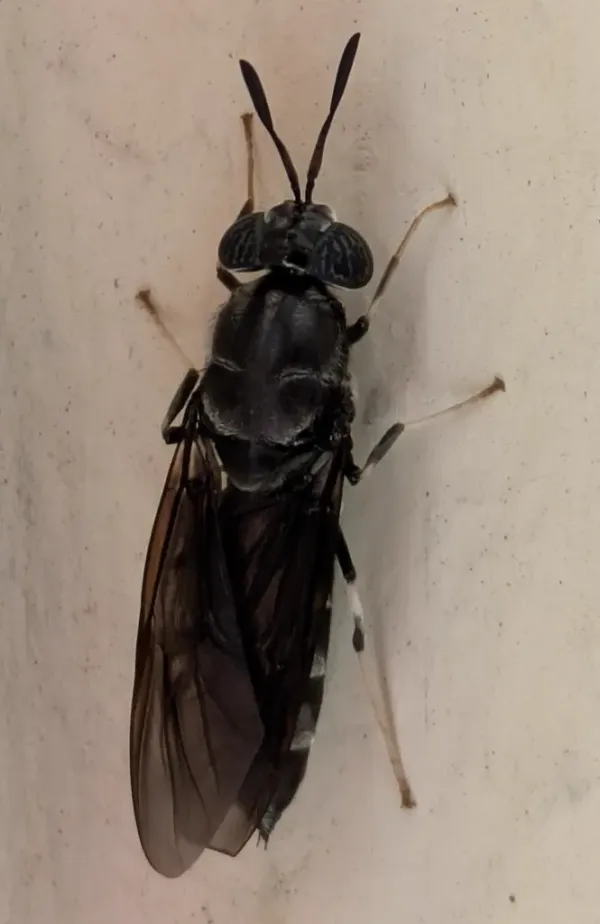
Black Soldier Flies Coloration
Common color patterns to help identify black soldier flies
Black Soldier Flies
Seasonal Activity
When black soldier flies are most active throughout the year
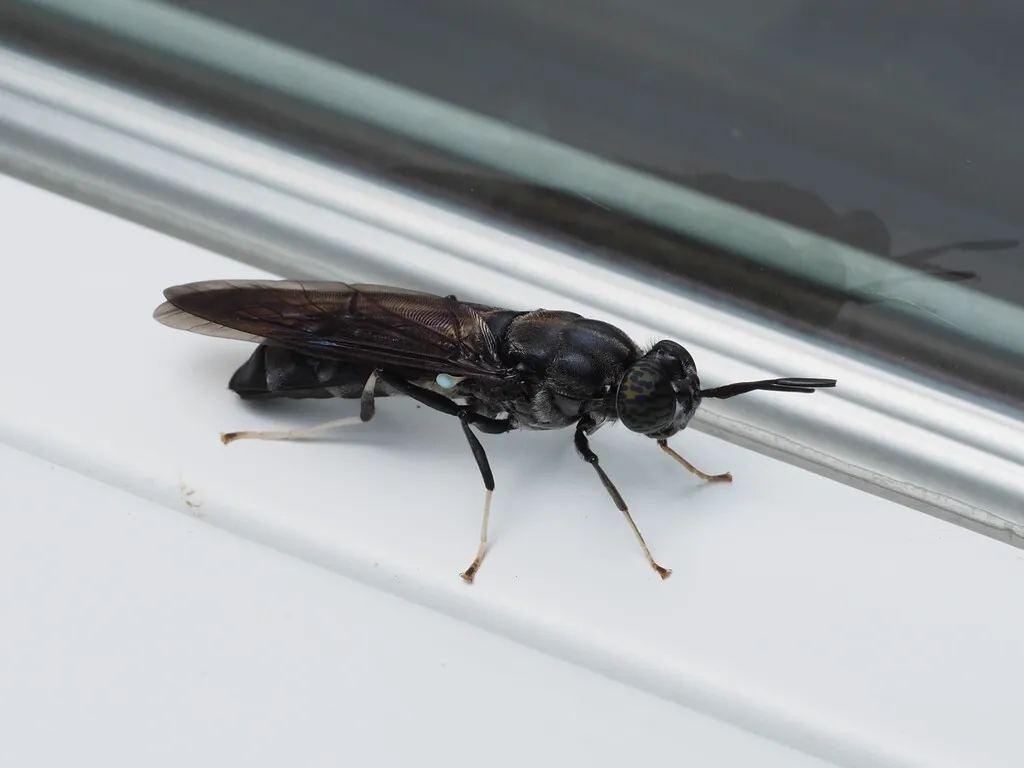
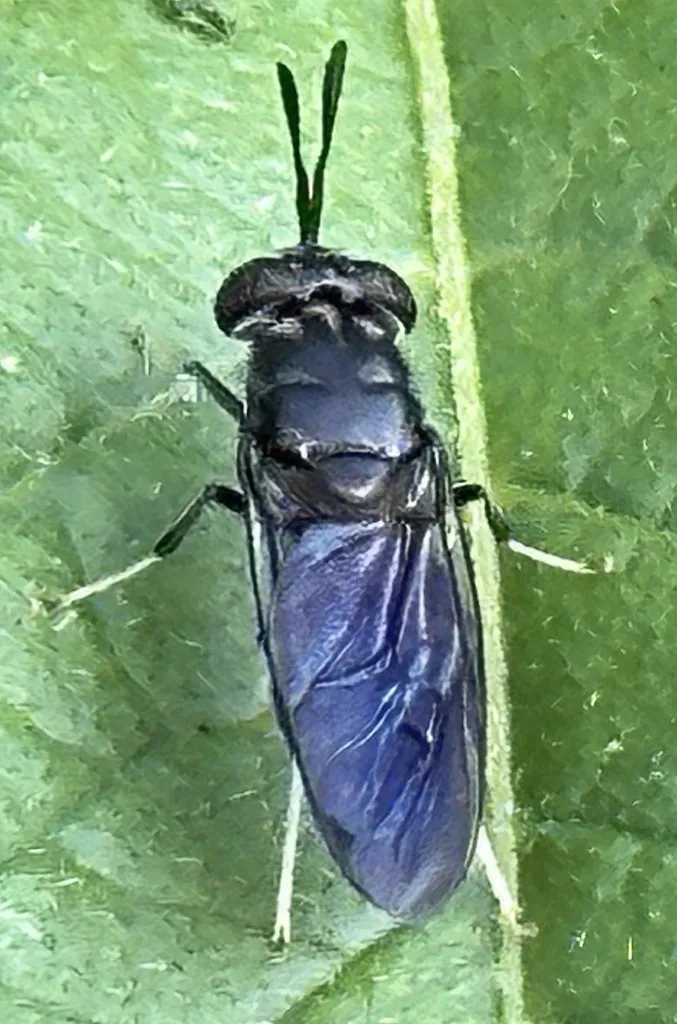
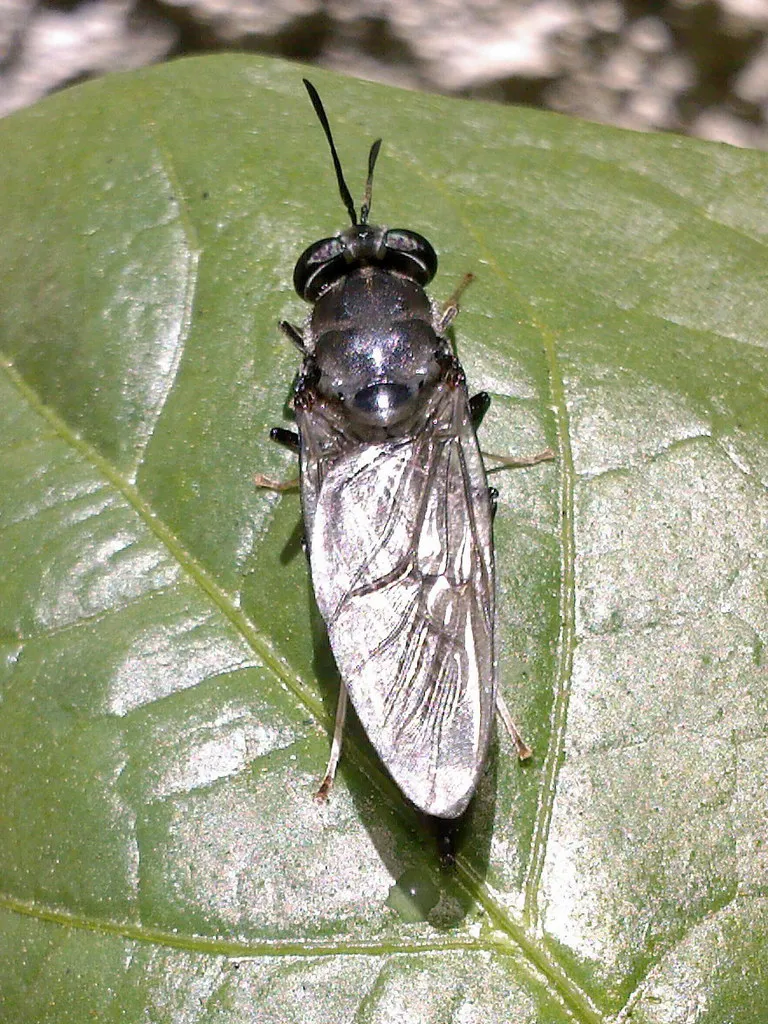

Where Black Soldier Flies Are Found
Hover over states to see their names. Green regions indicate where black soldier flies have been reported.
Black Soldier Fly Identification Guide
Physical Characteristics
Black soldier flies (Hermetia illucens) are large flies that measure 12 to 20 millimeters long. That is about the size of a dime. Many people mistake them for wasps because of their body shape.
Adults have a black body with a metallic blue or green shine on the upper body. The belly sometimes shows reddish coloring at the tip. Two small clear patches appear on the first belly segment. These patches make the fly look like it has a thin wasp waist.
Black soldier flies have only two wings. Wasps have four. Their antennae are longer and thicker than those of house flies. They have no stinger and cannot bite. Their mouthparts are so small that adults can only drink liquids like nectar. Many do not eat at all.
The larvae look very different from the adults. They are flat, segmented grubs that grow up to 25 millimeters long. Mature larvae are grayish-brown with a thin gray-black stripe across the back end. This stripe helps tell them apart from the white maggots of house flies and blow flies.
Related Species
The black soldier fly belongs to the family Stratiomyidae. These are commonly called soldier flies. While Hermetia illucens is the most common species in North America, other soldier flies look similar:
- Golden soldier fly (Odontomyia cincta): Smaller with yellow and black coloring
- Common green soldier fly (Odontomyia virgo): Green body coloration
- Black-and-yellow soldier fly (Stratiomys badius): Distinct banded pattern
Black Soldier Fly Behavior and Biology
Black soldier flies go through four life stages: egg, larva, pupa, and adult. The full cycle takes about 6 weeks in warm weather. Cold temperatures slow this down.
Reproduction and Lifecycle
Female black soldier flies lay 200 to 600 eggs at a time. They place eggs in cracks near rotting organic matter. House flies lay eggs right on waste. Black soldier flies put them in spots next to food sources. Eggs hatch in about four days.
The larval stage is the longest part of the life cycle. Larvae eat rotting organic material for 2 to 4 weeks. As they near the end of growth, larvae get a dark, hard skin and stop eating. Then they crawl away to find a dry spot for the pupal stage.
The pupal stage lasts 1 to 2 weeks. Adults come out, mate within a few days, and females start laying eggs. Adult black soldier flies live only 5 to 8 days. They spend all their time on mating.
In warm southern areas, black soldier flies can have three or more generations per year. In the mid-Atlantic and northern states, they are most common from late spring through early fall. A related species, Biting Midges, shares similar characteristics.
Habitat and Behavior
Black soldier flies live near rotting organic matter. Common places include:
- Compost piles and bins
- Animal manure piles
- Farm waste
- Garbage and dumpsters
- Rotting plants
Adults fly slowly compared to house flies. They spend most of their time resting on plants or walls near breeding sites. Adult black soldier flies do not eat human food. This means they rarely come indoors or bother people at cookouts.
Black soldier flies are drawn to light. You may see them near windows or outdoor lights at night. But they do not have the fast, annoying flight patterns of house flies.
How Black Soldier Flies Differ from Pest Flies
Black soldier flies are very different from house flies and blow flies in key ways.
Disease Risk
House flies and blow flies land on filth, then on food. This spreads germs with each landing. Black soldier flies do not do this. Their small mouthparts stop them from eating solid food or spitting on surfaces. Studies show that black soldier flies carry far fewer germs than common pest flies.
Competition with Other Flies
Black soldier fly larvae compete with house fly and blow fly larvae for food. When black soldier flies move into a compost bin or manure pile, the number of other flies often goes down. Research shows they can push out house fly populations.
Waste Processing
The larvae eat large amounts of organic waste. Studies show they can reduce:
- Manure waste by 44%
- Kitchen waste by nearly 68%
- Fish waste by over 74%
- Fruit and vegetable waste by nearly 99%
This trait has led farmers and waste handlers to use black soldier flies on purpose.
Odor Effects
Compost bins with black soldier fly larvae often smell less than those with house flies and blow flies. The larvae process waste quickly. Their digestion makes fewer of the chemicals that cause rotting smells.
Managing Black Soldier Flies
If black soldier flies bother you or you want to reduce their numbers, there are several steps you can take.
Environmental Changes
- Move compost: Put compost bins farther from your house if black soldier fly activity bothers you
- Reduce moisture: Keep compost and organic waste areas drier. Larvae need wet conditions to grow.
- Cover waste: Use tight lids on compost bins to stop females from laying eggs
Keeping Them Out
- Fix window and door screens to stop adults from getting inside
- Seal gaps around doors and pipes
- Use air curtains at business entrances
Physical Removal
If black soldier fly larvae show up where you do not want them, you can pick them out by hand. Put them in a compost area or dispose of them.
Telling Black Soldier Flies Apart from Other Flies
Knowing how to identify black soldier flies helps you figure out what kind of fly problem you have:
| Feature | Black Soldier Fly | House Fly | Blow Fly |
|---|---|---|---|
| Size | 12-20 mm | 4-8 mm | 6-14 mm |
| Color | Black with metallic sheen | Gray with stripes | Metallic blue or green |
| Body shape | Wasp-like, elongated | Stocky | Stocky |
| Wings | Two, held flat | Two, held at angle | Two, held at angle |
| Behavior | Sluggish, stays outdoors | Active, enters buildings | Active, attracted to meat |
| Disease risk | None | High | Moderate |
For more on distinguishing different fly species, see our guide to bottle flies and other common metallic flies.
References
Other Flies
Explore other species in the flies family
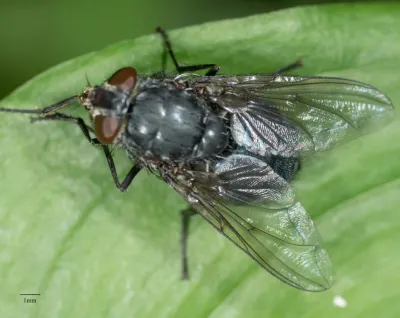
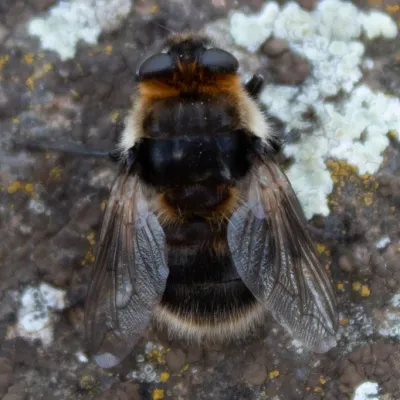
Commonly Confused With
Black Soldier Flies are often mistaken for these similar pests
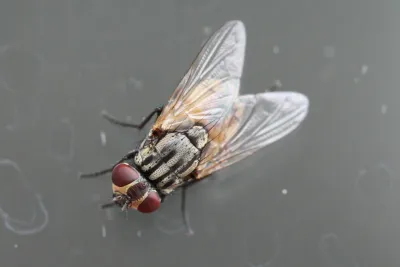
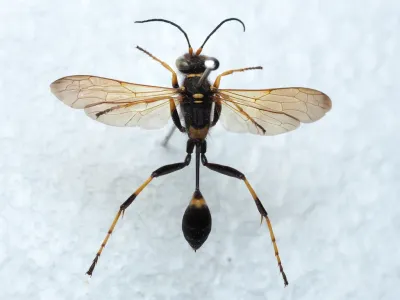
Where Black Soldier Flies Are Found
Hover over states to see their names. Green regions indicate where black soldier flies have been reported.
Common Questions about Black Soldier Flies
Are black soldier flies harmful to humans?
+
No, black soldier flies are not harmful to humans. Unlike house flies, they do not bite, sting, or spread diseases. Adult black soldier flies have reduced mouthparts and cannot even feed on solid food.
Why do I have black soldier flies around my compost?
+
Black soldier flies are attracted to decaying organic matter, which makes compost bins ideal breeding sites. Their larvae feed on organic waste and can outcompete other fly species like house flies for food sources.
Do black soldier flies bite or sting?
+
No, black soldier flies cannot bite or sting. Despite their wasp-like appearance, they are completely harmless to humans. They have greatly reduced mouthparts that can only consume liquids like nectar, if they eat at all as adults.
How do I tell black soldier flies apart from wasps?
+
Black soldier flies have only two wings, while wasps have four. Black soldier flies also have shorter, thicker antennae and lack a stinger. They have two small translucent windows on their abdomen that can give the illusion of a narrow wasp waist.
Should I get rid of black soldier flies?
+
Black soldier flies do not pose health risks or cause property damage. They feed on decaying organic matter and do not enter homes to seek food. If their presence bothers you, moving compost bins away from living areas and using tight-fitting lids can help reduce their numbers.
What do black soldier fly larvae look like?
+
Black soldier fly larvae are grayish-brown, flattened, and segmented. They grow up to 25 millimeters long. You can tell them apart from house fly or blow fly maggots by a thin gray-black stripe on their rear end and their larger, more robust body shape.
How long do black soldier flies live?
+
Adult black soldier flies live only 5 to 8 days. They focus entirely on mating and laying eggs during this time. The larval stage lasts 2 to 4 weeks, during which the larvae consume large amounts of organic material before pupating.
Can black soldier flies infest my home?
+
Black soldier flies rarely infest homes because they prefer outdoor breeding sites like compost piles, manure, and decaying plant matter. They are not attracted to human food or indoor environments the way house flies are. Occasional adults may wander indoors but will not establish populations there.

With five years of hands-on experience in the pest control industry, George Schulz is a registered technician with the Virginia Pest Management Association and a proud third-generation professional in a family business that's been protecting homes for over 57 years. He manages and trains a team of service pros while also leading internal research efforts—recently spearheading a deep-dive review of thousands of documents on pest control materials to hand-pick the most kid and pet friendly, most effective solutions tailored specifically for homes in the DC metro area.