Field Cockroaches Identification Guide
Blattella vaga
Field cockroaches are outdoor roaches native to central Asia that have established populations in the southwestern United States. Often mistaken for German cockroaches, they enter homes seeking moisture during dry periods.
Taxonomy
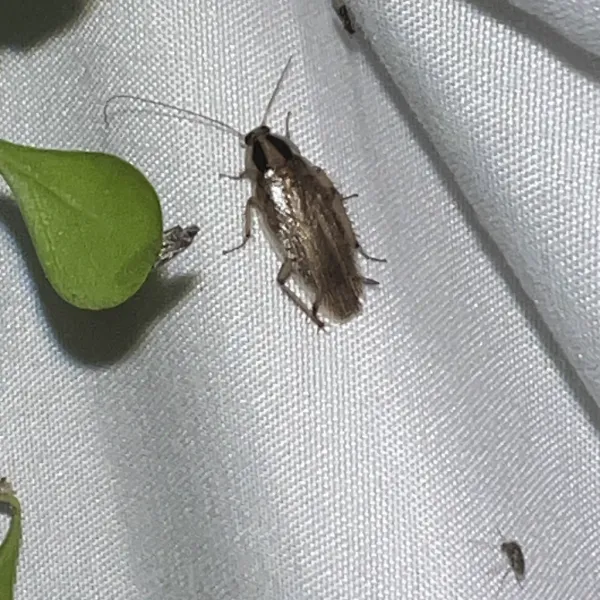
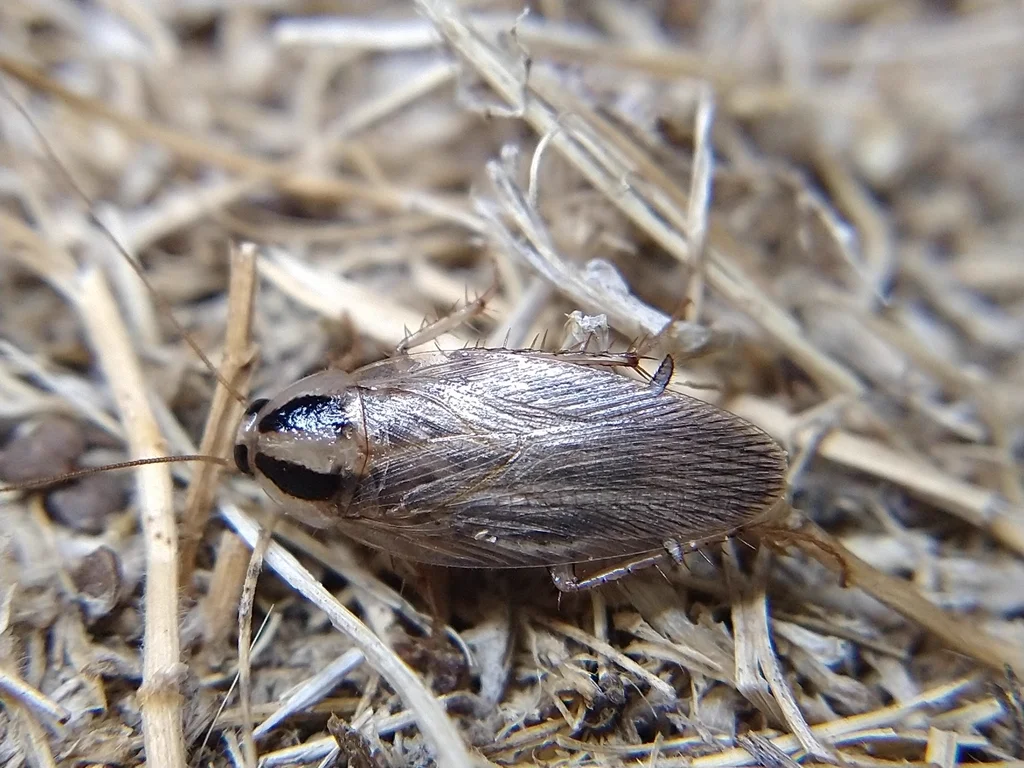
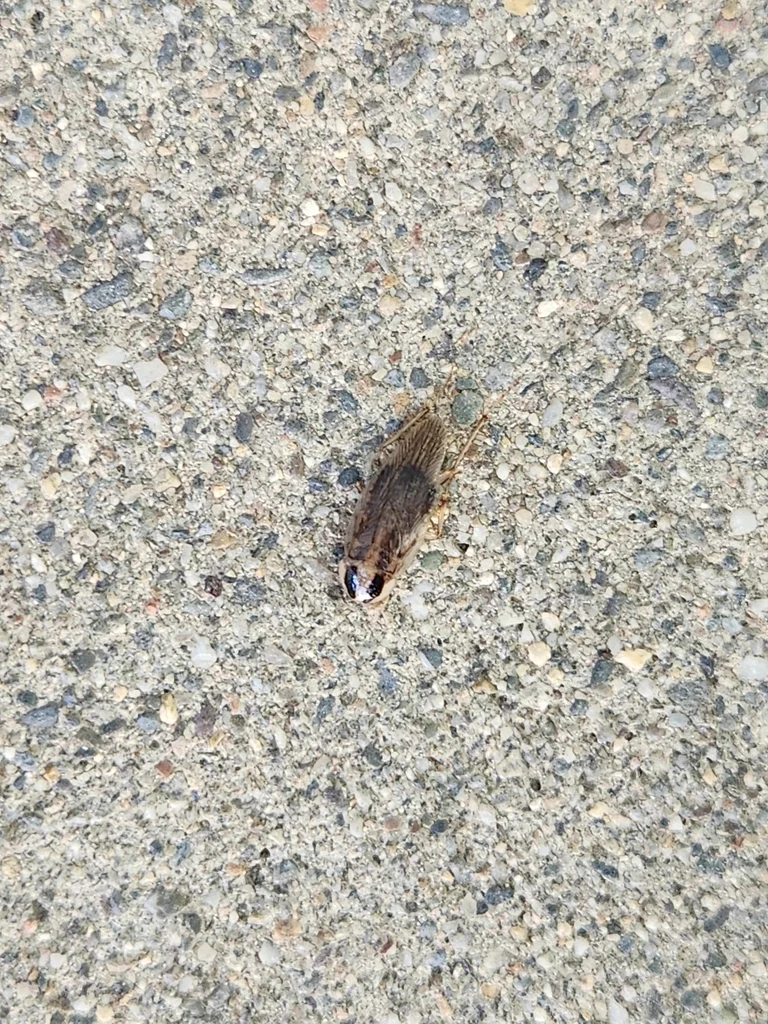
Field Cockroaches Coloration
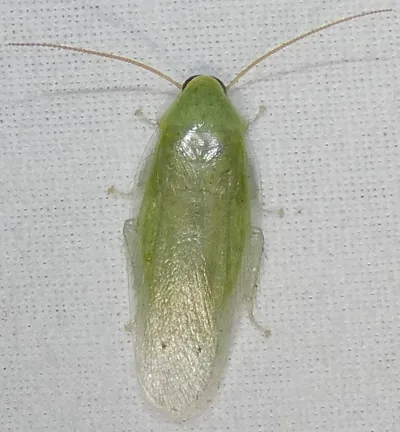
Common color patterns to help identify field cockroaches
Field Cockroaches
Seasonal Activity
When field cockroaches are most active throughout the year

Where Field Cockroaches Are Found
Hover over states to see their names. Green regions indicate where field cockroaches have been reported.
Field Cockroach Identification Guide
Field cockroaches (Blattella vaga) are small roaches that live outdoors. Many people mistake them for German cockroaches. These pests came from central Asia but now live in the southwestern United States. They were first found in Arizona in 1933 and have since spread across the region.
Physical Characteristics
Adult field cockroaches are about 9-12 mm long. That is roughly 3/8 to 1/2 inch. They are similar in size to German cockroaches. Their color is light brown to tan with an olive or greenish tint. This greenish color helps set them apart from other small roaches.
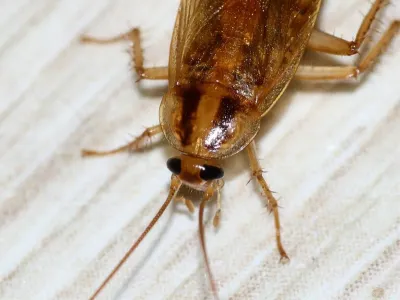
The best way to identify them is by looking at their face. Field cockroaches have a dark brown to black band between their eyes. German cockroaches do not have this marking. Their face is all tan. Both types have two dark stripes behind the head, which can make them hard to tell apart at first.
How to Tell Field Cockroaches Apart from Similar Species
People often confuse field cockroaches with these three species:
- German cockroaches: No dark band on the face. They live indoors and rarely fly.
- Asian cockroaches: Look very similar but are more drawn to light. They live mainly in the Southeast.
- Brown-banded cockroaches: No greenish color. They have light bands across their wings.
Field Cockroach Behavior and Biology
Where They Live
German cockroaches live almost only indoors. Field cockroaches are different. They are outdoor insects. You can find them in:
- Leaf piles and ground cover
- Rotting plants and debris
- Gardens with regular watering
- Under rocks, logs, and wood piles
- Near palm trees and other plants
- Mulched flower beds and vegetable gardens
Field cockroaches eat rotting plant matter. They help break down dead plants in nature. A related species, Brown-Banded Roaches, shares similar characteristics.
Flying and Light Attraction A related species, Palmetto Bugs, shares similar characteristics.
A key difference between field and German cockroaches is flight. Field cockroaches fly well, especially on warm evenings. They are drawn to lights. This brings them to porches and doorways where they may get inside your home. A related species, American Roaches, shares similar characteristics.
German cockroaches have wings too. But they almost never fly. They prefer to run away when scared. A related species, Lobster Cockroaches, shares similar characteristics.
Life Cycle A related species, Oriental Roaches, shares similar characteristics.
Female field cockroaches make about five egg cases in their life. The first three cases hold around 28 eggs each. The females carry these egg cases until the eggs are ready to hatch. A related species, Australian Cockroaches, shares similar characteristics.
Young roaches, called nymphs, start out yellowish-cream in color. They get darker as they grow. They molt 5-7 times before becoming adults. This takes about 70 days in good conditions. Adults live 100-150 days. Some females live up to 200 days. A related species, Spotted Mediterranean Cockroach, shares similar characteristics.
Why They Come Inside
Field cockroaches prefer to stay outdoors. But they may enter homes when:
- The weather is hot and dry: They come inside looking for water.
- Your yard has lots of watering: Homes near gardens may see more of them.
- Outdoor lights are on: Porch lights near doors can draw them in.
- Summer arrives: They are most active in the warmest months.
When found inside, field cockroaches are just passing through. They do not try to live indoors like German cockroaches do. They usually leave or die once things improve outside.
Treatment Approaches for Field Cockroaches
Field cockroaches enter homes only now and then. Because of this, control methods differ from those used for indoor roaches. The focus is on keeping them out and removing what attracts them.
Changing the Outdoor Environment
The best long-term approach is to make your yard less inviting:
- Clear debris: Remove leaf piles, fallen branches, and rotting plants near your foundation.
- Manage mulch: Keep mulch thin (2-3 inches) and away from the house.
- Fix moisture problems: Repair leaky faucets. Make sure water drains away from your home.
- Remove hiding spots: Store firewood away from the house. Clear clutter from outdoor storage areas.
Keeping Them Out
Blocking entry points works well for these occasional invaders:
- Add weatherstripping around doors and windows
- Install door sweeps on outside doors
- Fix torn window screens
- Seal cracks in the foundation
- Make sure vents have screens in good condition
Managing Outdoor Lights
Field cockroaches are drawn to light. These changes can help:
- Use yellow “bug light” bulbs for outdoor fixtures
- Place landscape lights away from doors and windows
- Close blinds or curtains at night to block light from inside
Barrier Treatments
When field cockroach problems persist, perimeter treatments can help. These create a barrier around your home. Treatments target the foundation, door frames, and window frames where roaches try to enter.
References
- University of Florida Institute of Food and Agricultural Sciences. “Field Cockroach (Blattella vaga).” Featured Creatures. https://entnemdept.ufl.edu/projex/gallery/dl/cockroaches/text/field_cockroach.htm
- U.S. Fish & Wildlife Service. “Field Cockroach (Blattella vaga).” Species Profile. https://www.fws.gov/species/field-cockroach-blattella-vaga
- Florida Entomologist. “First Record of Blattella vaga (Blattodea: Ectobiidae) from Southern Alabama.” Vol. 101, No. 1, 2018. https://bioone.org/journals/florida-entomologist/volume-101/issue-1/024.101.0119
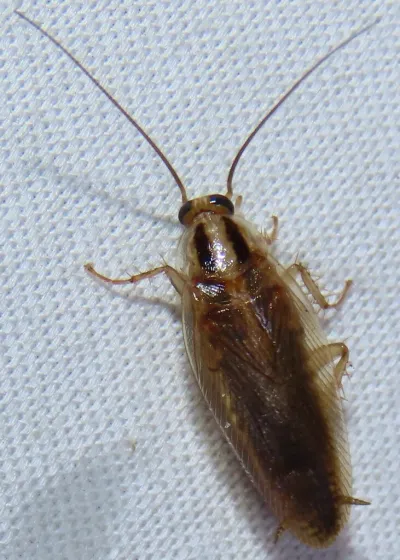
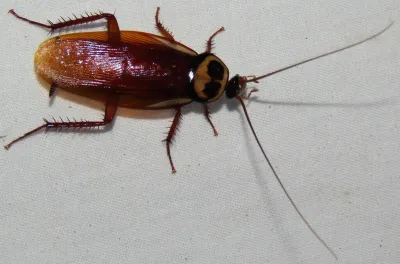
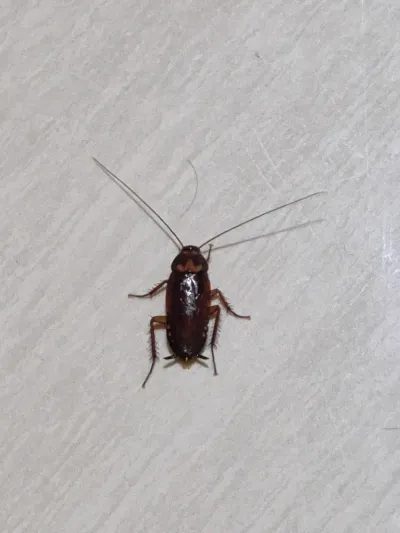
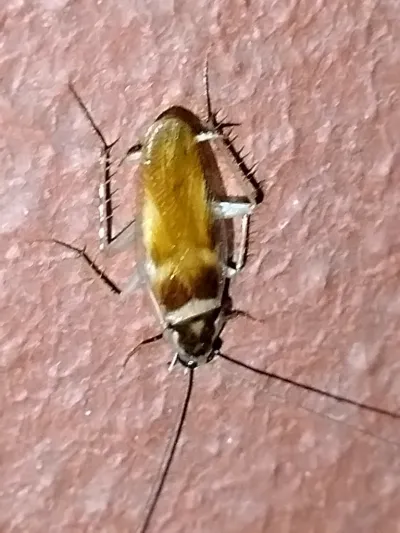
Other Cockroaches
Explore other species in the cockroaches family
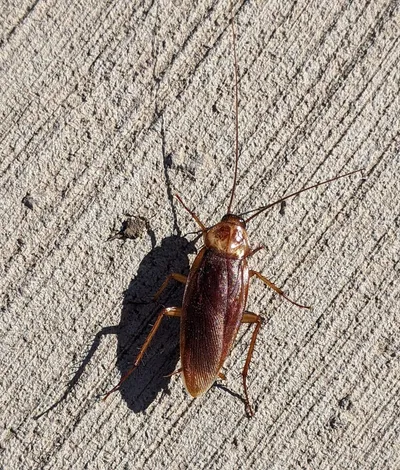
Commonly Confused With
Field Cockroaches are often mistaken for these similar pests
Where Field Cockroaches Are Found
Hover over states to see their names. Green regions indicate where field cockroaches have been reported.
Common Questions about Field Cockroaches
How can I tell a field cockroach from a German cockroach?
+
The most reliable way to distinguish them is the dark band between the eyes on a field cockroach's face. German cockroaches have a uniform tan color in this area. Field cockroaches also have a slightly more olive or greenish tint compared to the light brown German roach.
Do field cockroaches infest homes like German cockroaches?
+
No, field cockroaches are primarily outdoor insects that prefer leaf litter and decaying vegetation. They only enter homes occasionally when seeking moisture during dry periods. Unlike German cockroaches, they will not establish permanent indoor colonies.
Can field cockroaches fly?
+
Yes, field cockroaches can fly readily and are attracted to lights at night. This is another key difference from German cockroaches, which have wings but rarely fly.
Where are field cockroaches found in the United States?
+
Field cockroaches are most common in the southwestern states, particularly Arizona, California, New Mexico, and Texas. Their range has been expanding eastward along the southern United States, with recent records from Louisiana, Alabama, and potentially Florida.
Are field cockroaches harmful?
+
Field cockroaches pose minimal health risks compared to indoor cockroach species. Since they primarily live outdoors and feed on decaying plant matter, they rarely come into contact with food preparation areas. However, like all cockroaches, they can carry bacteria on their bodies.
Why am I seeing field cockroaches in my home?
+
Field cockroaches typically enter homes during hot, dry weather when they are searching for moisture. They are often found near irrigated landscaping, gardens, and vegetable patches. Reducing moisture sources around your home's foundation can help prevent them from coming inside.

With five years of hands-on experience in the pest control industry, George Schulz is a registered technician with the Virginia Pest Management Association and a proud third-generation professional in a family business that's been protecting homes for over 57 years. He manages and trains a team of service pros while also leading internal research efforts—recently spearheading a deep-dive review of thousands of documents on pest control materials to hand-pick the most kid and pet friendly, most effective solutions tailored specifically for homes in the DC metro area.