House Centipedes Identification Guide
Scutigera coleoptrata
House centipedes are fast-moving, many-legged predators commonly found in damp indoor spaces like basements and bathrooms. They prey on other insects and are often a sign of underlying moisture or pest problems.
Taxonomy
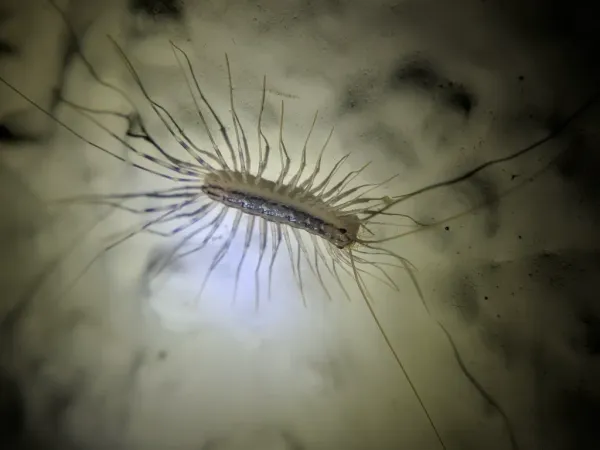
House Centipedes Coloration
Common color patterns to help identify house centipedes
House Centipedes
Seasonal Activity
When house centipedes are most active throughout the year
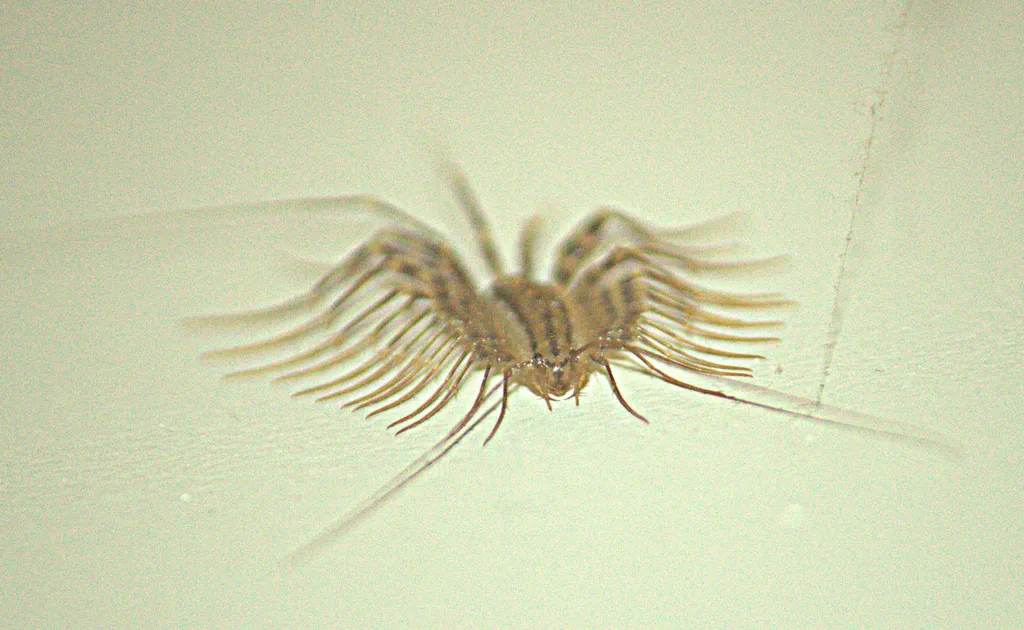
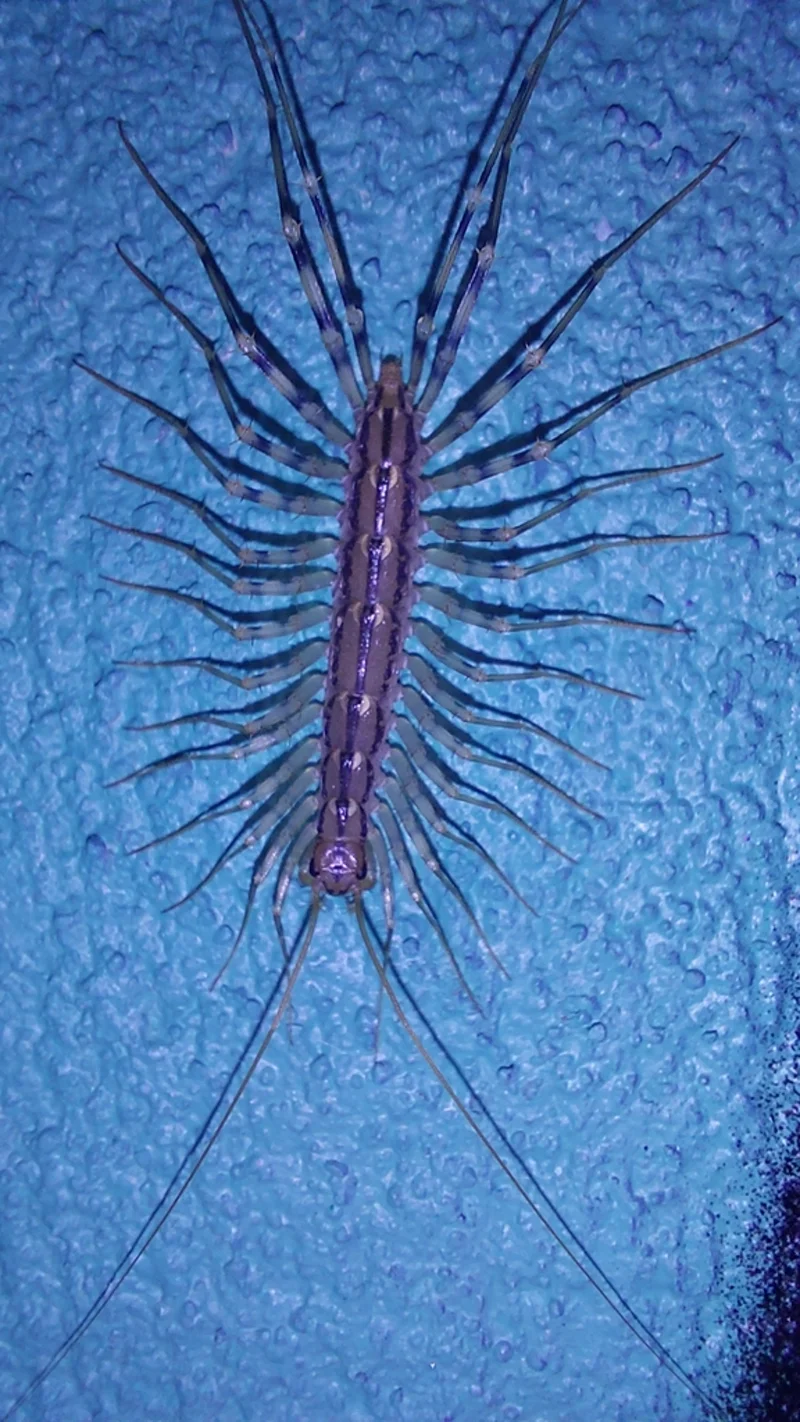
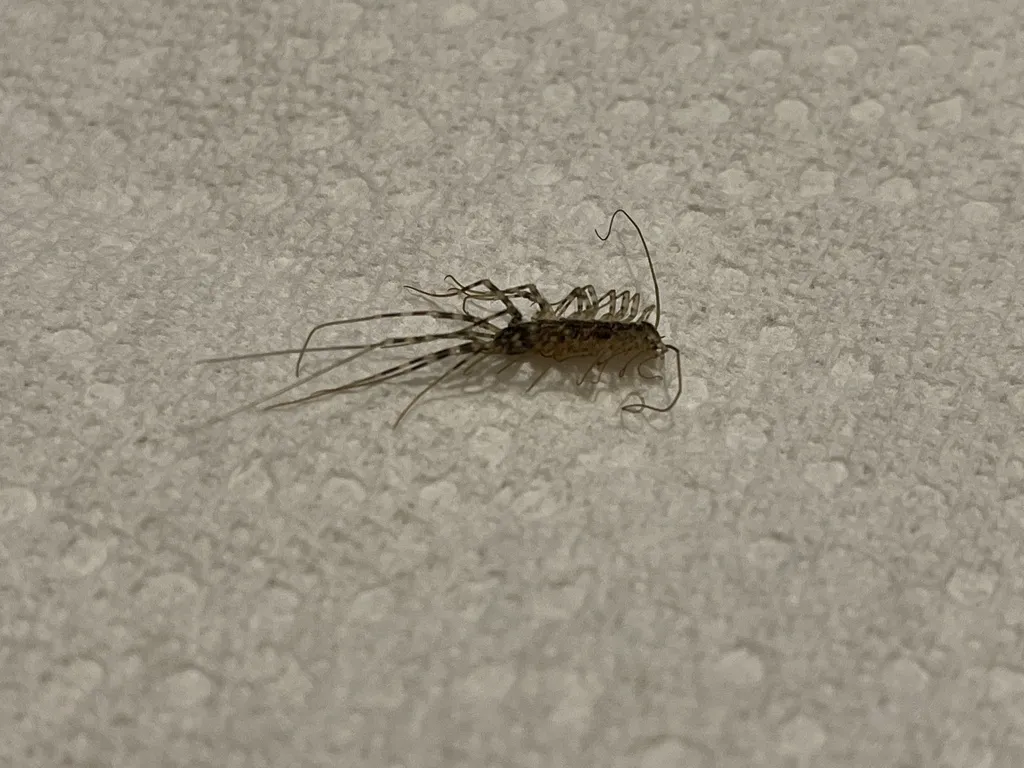

Where House Centipedes Are Found
Hover over states to see their names. Green regions indicate where house centipedes have been reported.
House Centipede Identification Guide
Physical Characteristics
House centipedes (Scutigera coleoptrata) are distinctive arthropods and one of the most common centipede species found indoors, with elongated, somewhat flattened bodies measuring approximately 1 to 1.5 inches in length. However, their extremely long legs make them appear much larger, often spanning 3 to 4 inches from leg tip to leg tip. Their yellowish-gray to tan bodies feature three dark longitudinal stripes running along the back, and their legs display characteristic dark and light banding patterns.
Adult house centipedes possess 15 pairs of legs (30 total), with the rear pair being notably longer than the others and often extending backward like additional antennae. They have well-developed compound eyes, unusual among centipedes, which gives them excellent vision for hunting. Long, sensitive antennae help them navigate in low-light conditions. Their modified front legs, called forcipules, contain venom glands used to subdue prey.
Distinguishing House Centipedes from Similar Pests
House centipedes are often confused with other multi-legged arthropods:
-
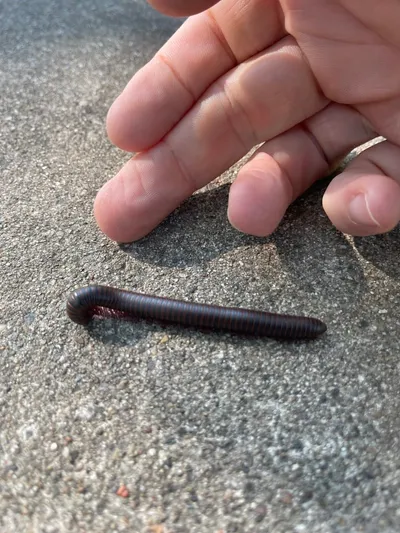
Millipedes: Millipedes have cylindrical bodies with two pairs of short legs per body segment, move slowly, and curl into a ball when disturbed. House centipedes are flattened, have one pair of very long legs per segment, and move extremely fast.
-
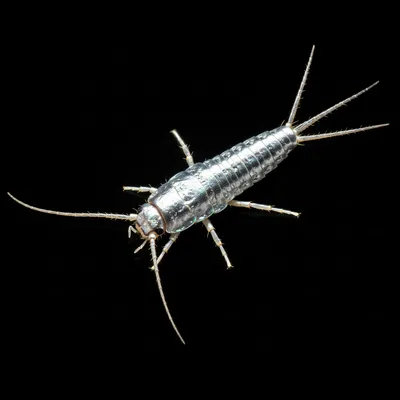
Silverfish: Silverfish are small, wingless insects with only 6 legs and three tail-like appendages. They have a distinctive carrot shape and silvery scales, unlike the many-legged house centipede.
-
Spiders: Spiders have 8 legs and two distinct body segments (cephalothorax and abdomen). House centipedes have many more legs and a long, segmented body.
-
Stone Centipedes: Stone centipedes are smaller (under 1.5 inches) with short legs held close to their body. They are brown and compact, lacking the long banded legs of house centipedes. They prefer outdoor habitats under rocks and debris.
-
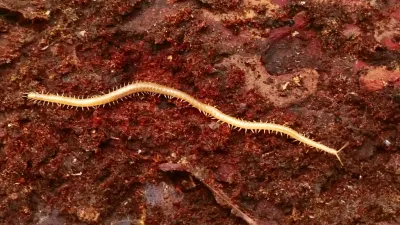
Soil Centipedes: Soil centipedes are long and thin with very short legs and no eyes. They burrow through soil rather than running across surfaces like house centipedes.
House Centipede Behavior and Biology
Natural History
House centipedes are native to the Mediterranean region but have become widely established throughout North America, thriving particularly in human structures. First recorded in Pennsylvania in 1849, they have since spread across most of the continent. Unlike many centipede species that prefer outdoor environments, house centipedes are well-adapted to indoor living.
Habitat Preferences
House centipedes require humid environments because they cannot close their breathing pores (spiracles), making them susceptible to desiccation. Indoors, they gravitate toward:
- Basements and crawl spaces
- Bathrooms, especially around tubs and sinks
- Under kitchen sinks and near plumbing
- Laundry rooms and utility areas
- Any area with moisture problems or poor ventilation
Outdoors, they shelter under rocks, leaf litter, logs, and mulch where humidity remains high.
Diet and Hunting Behavior
House centipedes are carnivorous nocturnal hunters that prey on a wide variety of household pests, including:
- Silverfish and firebrats
- Cockroach nymphs
- Carpet beetle larvae
- Spiders
- Flies and moths
- Bed bugs
- Other small arthropods
They use their excellent vision and speed to actively hunt prey, injecting venom through their forcipules to paralyze victims.
Life Cycle
House centipedes develop through multiple life stages. Females lay eggs in damp soil or protected indoor locations, often producing 60 to 150 eggs over their lifetime. Learn more about house centipede eggs and where they hide. Hatchlings emerge with only 4 pairs of legs, adding additional pairs through successive molts until reaching the adult complement of 15 pairs.
Development from egg to adult takes approximately one year under favorable conditions. Adults may continue to molt and can live for several years, with some females surviving 3 years or more. This longevity is unusual among small arthropods and contributes to their persistence in suitable habitats.
How We Treat for House Centipedes
Our house centipede treatment combines targeted pest elimination with environmental modifications to achieve lasting control. For DIY tips, see our guide on how to get rid of house centipedes.
Interior Inspection and Treatment
Our technician thoroughly inspects basements, crawl spaces, bathrooms, and other areas where house centipedes are observed or likely to occur. We look for:
- Active centipedes and their hiding spots
- Entry points such as cracks and gaps
- Signs of moisture problems
- Evidence of prey pest populations
A repellent insecticide treatment is applied to baseboards, cracks, crevices, and areas where centipedes are active. This creates a barrier that discourages centipedes from inhabiting treated zones.
Exterior Treatment
The exterior inspection focuses on the foundation, perimeter, and areas with mulch, landscaping, or other moisture sources. A granular insecticide treatment is applied to the exterior perimeter and mulch beds to target centipedes at their source before they enter your home.
Moisture Control Guidance
Since house centipedes depend on humid conditions, we provide recommendations for making your environment less hospitable:
- Repair plumbing leaks and improve drainage
- Use dehumidifiers in basements and crawl spaces
- Ensure proper ventilation in bathrooms and kitchens
- Keep mulch and debris away from the foundation (maintain a 3-4 foot buffer)
- Remove leaf litter and clutter where centipedes hide
Prey Pest Management
Because house centipedes follow their food sources, we address underlying pest issues that attract them. Understanding what attracts centipedes helps target the root cause. Reducing populations of silverfish, cockroaches, and other prey insects removes the centipedes’ incentive to remain in your home.
Ongoing Prevention
Our tri-annual pest control plan includes regular follow-ups to monitor activity, reapply treatments as needed, and ensure centipedes and their prey don’t return. A centipede repellent strategy can also help between service visits. This comprehensive approach provides long-term protection against occasional invaders like house centipedes.
References
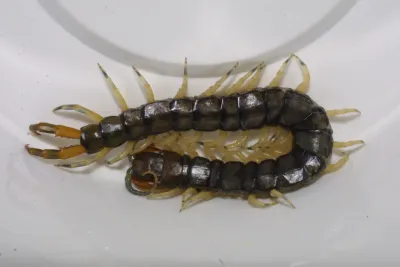
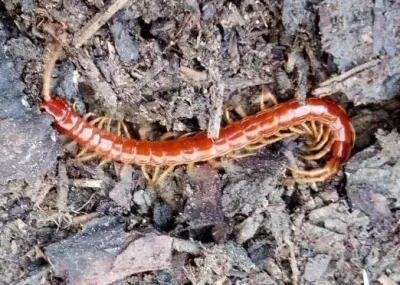
Other Centipedes
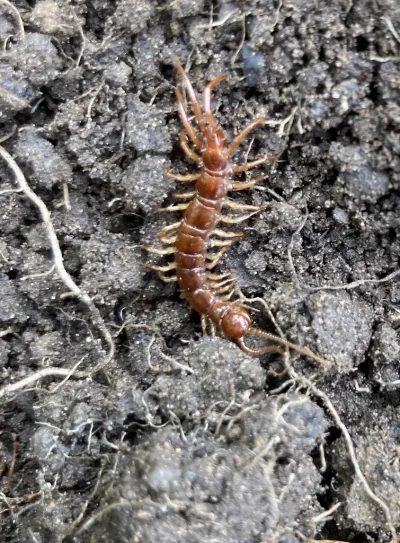
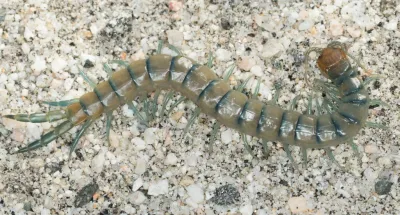
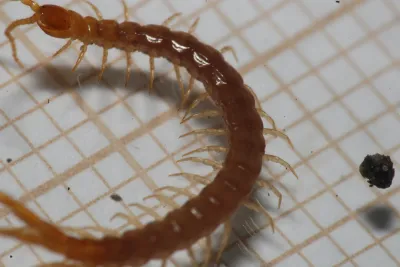
Explore other species in the centipedes family
Commonly Confused With
House Centipedes are often mistaken for these similar pests
Where House Centipedes Are Found
Hover over states to see their names. Green regions indicate where house centipedes have been reported.
Common Questions about House Centipedes
Are house centipedes dangerous to humans?
+
House centipedes possess venom used to subdue prey, but bites to humans are rare. If a bite occurs, it typically produces only localized pain, redness, and swelling similar to a mild bee sting. Severe reactions are uncommon but possible in allergic individuals. This is not medical advice—always consult a doctor for any health concerns following a bite.
Why are there centipedes in my house?
+
House centipedes are attracted to moisture and prey. If you're seeing them frequently, it often indicates high humidity levels and an abundance of other pests like silverfish, cockroaches, or spiders that they feed on.
Should I treat for house centipedes?
+
If their presence bothers you or indicates a moisture problem, professional treatment can address both the centipedes and underlying conditions that attract them.
How do house centipedes get inside?
+
They enter through cracks in foundations, gaps around doors and windows, utility penetrations, and poorly sealed vents. They seek out damp, dark areas and often follow moisture or prey insects indoors.
Will reducing moisture get rid of centipedes?
+
Yes, moisture control is one of the most effective long-term solutions. House centipedes cannot close their breathing pores (spiracles) and require humid environments to survive. Using dehumidifiers and fixing leaks significantly reduces their populations.
How fast can house centipedes run?
+
House centipedes are remarkably fast runners, capable of moving at speeds up to 1.3 feet per second. Their speed and their many long legs allow them to capture agile prey and escape threats quickly.
Do house centipedes lay eggs in houses?
+
Yes, females can lay eggs indoors in damp, protected locations like soil in potted plants, behind baseboards, or in crawl spaces. Each female can produce dozens of eggs, and young centipedes add legs as they molt and grow.

With five years of hands-on experience in the pest control industry, George Schulz is a registered technician with the Virginia Pest Management Association and a proud third-generation professional in a family business that's been protecting homes for over 57 years. He manages and trains a team of service pros while also leading internal research efforts—recently spearheading a deep-dive review of thousands of documents on pest control materials to hand-pick the most kid and pet friendly, most effective solutions tailored specifically for homes in the DC metro area.