Varied Carpet Beetles Identification Guide
Anthrenus verbasci
The varied carpet beetle is the most common carpet beetle species in North America. Its larvae cause significant damage to wool, silk, fur, and other natural fiber materials in homes.
Taxonomy
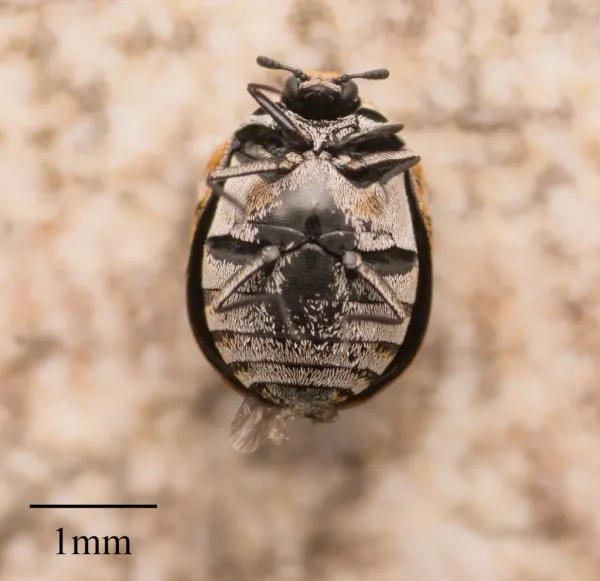
Varied Carpet Beetles Coloration
Common color patterns to help identify varied carpet beetles
Varied Carpet Beetles
Seasonal Activity
When varied carpet beetles are most active throughout the year
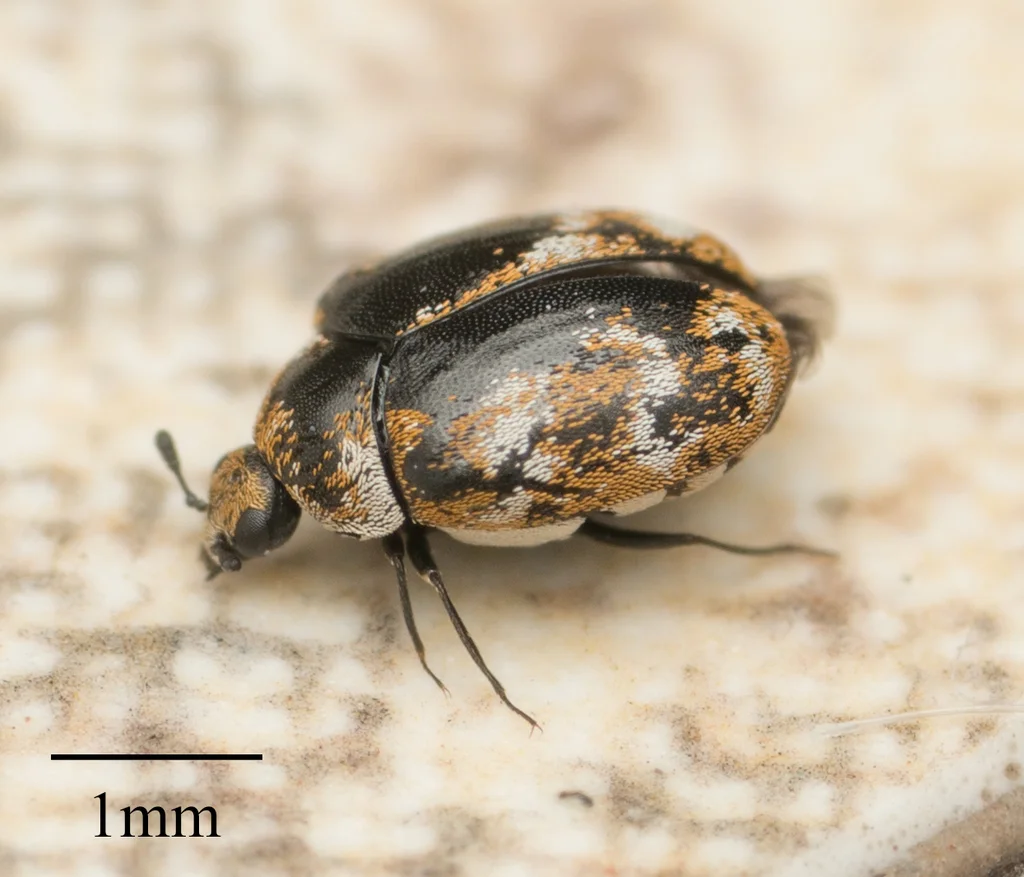
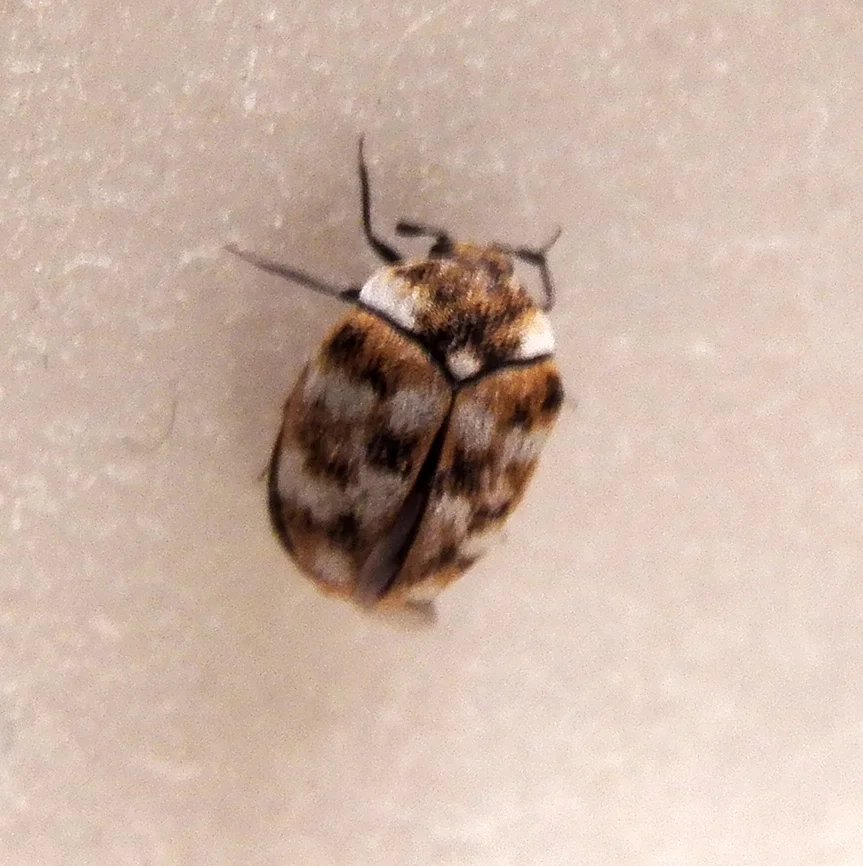

Where Varied Carpet Beetles Are Found
Hover over states to see their names. Green regions indicate where varied carpet beetles have been reported.
Varied Carpet Beetle Identification Guide
Physical Characteristics
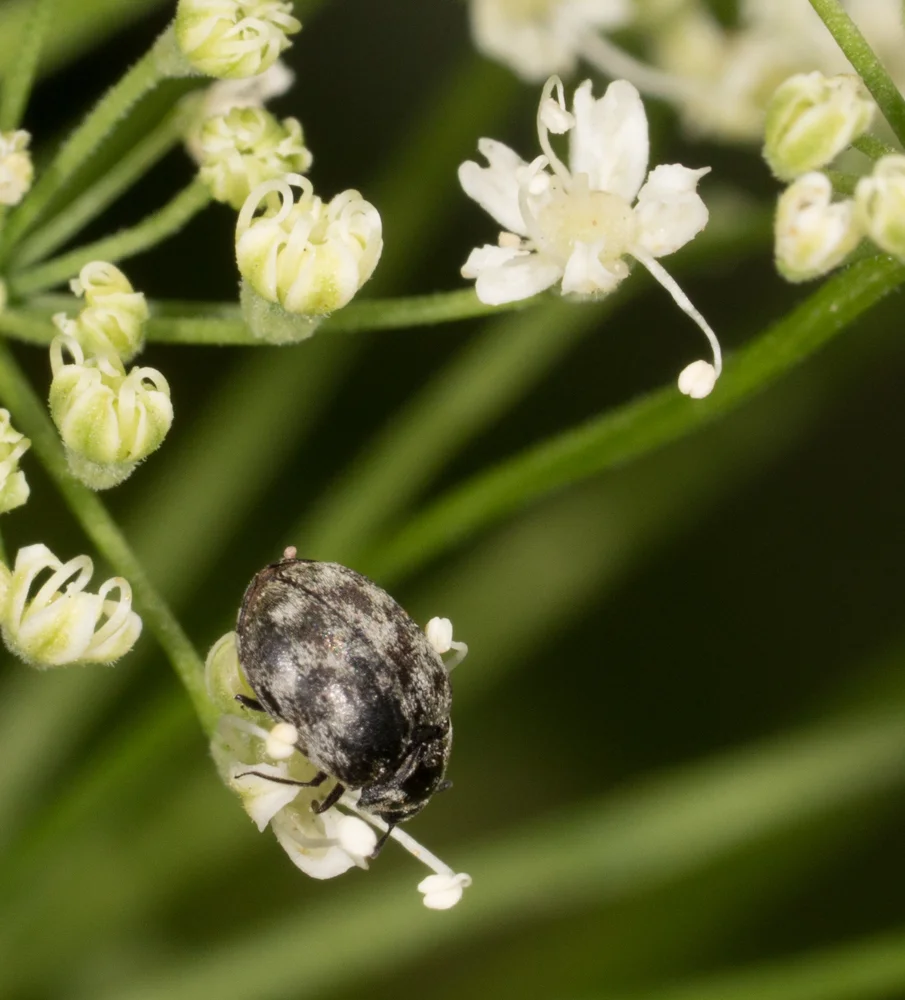
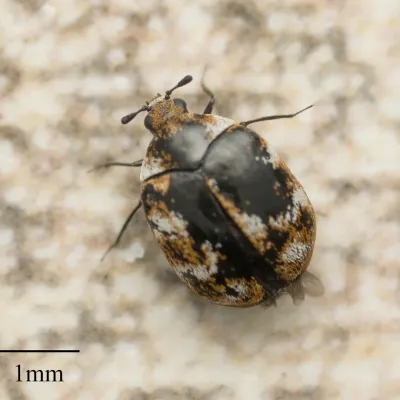
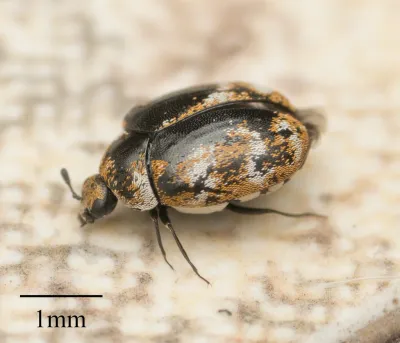
The varied carpet beetle (Anthrenus verbasci) is the most common carpet beetle in North American homes. Adults are small, round insects about 2-4mm long. Their bodies have tiny scales. These scales form a patchy pattern of white, brown, and yellow on their backs.
This mixed coloring gives them their “varied” name. As beetles age, their scales rub off. Older beetles look solid brown or black. This can make them harder to identify. Fresh beetles show the clearest patterns.
Adult varied carpet beetles have short antennae with a club shape at the tip. Their legs are black and tuck close to the body when scared. They have wings and can fly, but they are not good fliers.
Larval Appearance
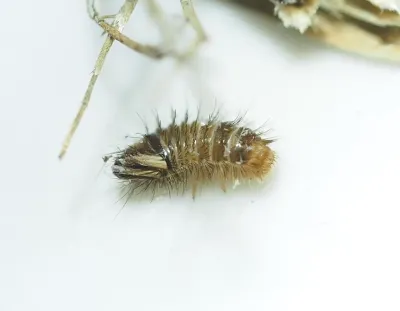
The larvae cause all the damage in your home. They look very different from adult beetles. Larvae are carrot-shaped grubs about 4-5mm long. Their bodies are covered in stiff, bristly hairs.
These hairs form bands of light and dark brown. This gives larvae a striped look. The body is wider at the tail than at the head. This shape helps tell them apart from black carpet beetle larvae.
At the rear, larvae have three tufts of longer hairs they raise when threatened. These hairs break off easily. They can cause skin rashes in some people. Find out more about whether carpet beetles are dangerous.
Similar Species
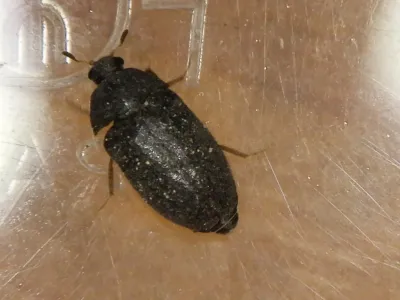
Black Carpet Beetle (Attagenus unicolor): Adults are solid dark brown to black and a bit larger (3-5mm). Their larvae have one golden-brown tuft of hairs at the tail instead of three separate tufts.
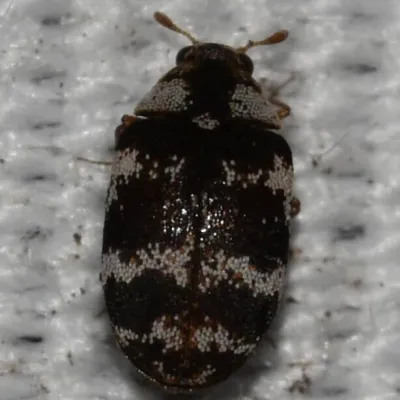
Common Carpet Beetle (Anthrenus scrophulariae): Adults are about the same size but have clearer bands of color. They may have red or orange scales. Their pattern is more orderly than the varied carpet beetle’s patchy look.
Furniture Carpet Beetle (Anthrenus flavipes): Adults are rounder with more yellow scales mixed with black and white. They often attack upholstered furniture rather than carpets.
Varied Carpet Beetle Behavior and Biology
Life Cycle
Varied carpet beetles have four life stages: egg, larva, pupa, and adult. Knowing this cycle helps with control.
Eggs: Females lay 25-100 small, white eggs in dark, hidden spots near food. They like lint, carpet edges, closet corners, and areas with pet hair. Eggs hatch in 10-35 days. Warmer temps speed this up.
Larvae: This is the stage that does damage. Larvae feed for 2-11 months in normal conditions. In cooler temps or with poor food, they can take 2-3 years to grow. Larvae shed their skins 5-16 times as they grow. Each shed skin is a bristly, brown shell. Finding these skins is often the first sign of a problem.
Pupae: Larvae turn into pupae inside their last shed skin. This stage lasts 10-30 days. Pupae resist many pesticides. This is why follow-up treatments matter.
Adults: Adults come out mainly in spring and early summer. They live only 2-6 weeks. They do not damage items in your home. Adults eat flower pollen and nectar outdoors. They like white and light-colored flowers. Their main job is to mate and lay eggs.
What They Eat
Varied carpet beetle larvae eat keratin. This is a protein found in animal materials like:
- Wool carpets, rugs, and blankets
- Silk clothing and fabric
- Fur coats and trim
- Feathers in pillows and comforters
- Leather goods and bookbindings
- Taxidermy and animal trophies
- Museum collections
- Dried pet food and dead insects
- Pet hair and lint buildup
Larvae like dirty materials best. Sweat, food stains, and body oils add nutrients. Clean wool is less tasty than a worn sweater stored without washing.
Where They Live
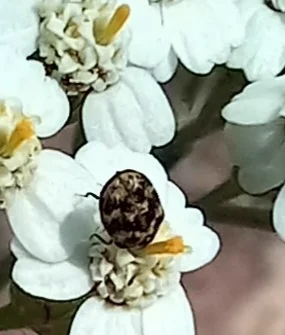
Outdoors, adult beetles are common on flowering plants. They like flowers in the carrot family (Queen Anne’s lace, yarrow) and white flowers (daisies, spiraea). They also live in bird nests. Larvae eat feathers and debris in these nests.
Indoors, larvae look for dark, quiet areas near food:
- Inside closets with stored woolens
- Under heavy furniture where pet hair collects
- Along baseboards and carpet edges
- Inside heating and air ducts
- In wall voids near bird or wasp nests
- Around taxidermy and antique natural fiber items
Adults that hatch indoors move toward windows and light. Finding adult beetles on windowsills is often the first sign of a problem inside.
Signs of a Varied Carpet Beetle Problem
Fabric Damage
Varied carpet beetle damage has a few clear signs:
- Irregular holes instead of the round holes moths make
- Surface grazing where larvae eat the top fibers but leave the backing
- Damage along folds, seams, and hidden areas where larvae hide
- Worn patches in carpets, often under furniture and along edges
Damage tends to stay in one area. It does not scatter randomly across a garment or carpet. Learn how to spot the signs of carpet beetles in your home.
Other Warning Signs
-
Shed larval skins: Light brown, bristly shells found near damaged items or along baseboards. These pile up over time and look quite distinct.
-
Fecal pellets: Tiny, sand-like bits near damaged items. They match the color of what larvae have been eating.
-
Adult beetles on windowsills: Common in late spring and early summer when adults try to get outside to find flowers.
-
Larvae on walls or ceilings: Older larvae may wander away from food looking for a place to pupate.
-
Skin irritation: Some people get itchy, welt-like rashes from touching larval hairs.
How We Treat for Varied Carpet Beetles
Good carpet beetle control targets all life stages. It also removes the conditions that help them thrive.
Inspection
Our technicians start with a full inspection to:
- Find the main food sources and breeding areas
- Note all affected materials and spaces
- Check how bad the problem is
- Find entry points and things that attract them
We check closets, storage areas, HVAC systems, baseboards, and anywhere with natural fibers or animal products. We also look for bird or insect nests near the home. These can be outdoor breeding sites.
Treatment Methods
Residual Sprays: We apply products to cracks, crevices, carpet edges, and baseboards where larvae travel and feed. These keep working over time to kill newly hatched larvae.
Insect Growth Regulators (IGRs): IGRs stop larvae from growing into adults that can breed. This breaks the cycle and gives lasting protection.
Dust Treatments: For wall voids and other hidden areas, we apply insecticidal dusts. These reach spots where larvae often grow without being seen.
What You Can Do to Help
Treatment works best when homeowners pitch in:
- Vacuum well: Clean carpets, furniture, and baseboards to remove larvae, eggs, and food debris
- Dry clean or hot wash fabrics: Temps above 120 degrees F kill all life stages
- Store woolens right: Use sealed containers or garment bags with mothballs or cedar
- Reduce lint and pet hair: This cuts off the food supply
- Check secondhand items: Look for signs before bringing used items home
Follow-Up and Prevention
Eggs and pupae can survive the first treatment. We come back 2-4 weeks later to kill newly hatched larvae before they can do more damage or breed.
We also share tips on long-term prevention. This includes how to store clothes, clean regularly, and seal entry points.
References and Further Reading
Other Carpet Beetles
Explore other species in the carpet beetles family
Commonly Confused With
Varied Carpet Beetles are often mistaken for these similar pests
Where Varied Carpet Beetles Are Found
Hover over states to see their names. Green regions indicate where varied carpet beetles have been reported.
Common Questions about Varied Carpet Beetles
What does a varied carpet beetle look like?
+
Adult varied carpet beetles are tiny (2-4mm), oval insects covered in scales that form an irregular pattern of white, brown, and yellow patches. Older beetles may appear solid brown or black as their scales wear off. The larvae look very different and are fuzzy, carrot-shaped grubs with alternating bands of light and dark brown bristly hairs.
Are varied carpet beetles harmful to humans?
+
Varied carpet beetles do not bite or sting. However, their larval hairs can cause skin irritation and itchy welts in some people. These reactions are sometimes mistaken for bed bug bites. The main concern is damage to fabrics, carpets, and stored natural fiber items.
What do varied carpet beetle larvae eat?
+
The larvae feed on natural fibers and materials containing keratin. This includes wool carpets, silk clothing, fur, feathers, leather, and animal hair. They also eat dead insects, pet hair, lint, and food crumbs. Soiled or stained fabrics attract them more than clean ones.
How do varied carpet beetles get into my house?
+
Adult beetles fly and are attracted to flowers. They enter through open windows, doors, or gaps around utility lines. They can also come in on cut flowers, potted plants, bird nests near the home, or secondhand furniture and clothing. Once inside, females seek dark, quiet spots to lay eggs.
How long do varied carpet beetles live?
+
Adult varied carpet beetles live only 2-6 weeks. However, the larvae can survive for several months to over two years depending on food quality and environmental conditions. The complete lifecycle from egg to adult takes anywhere from 1-3 years.
Where do varied carpet beetles hide in my home?
+
Larvae prefer dark, undisturbed areas near food sources. Check closets with wool or fur items, under furniture where pet hair collects, inside air ducts, around baseboards, in stored clothing boxes, and near taxidermy or insect collections. Adults are often found on windowsills trying to get outside.
How do I know if I have varied carpet beetles?
+
Look for irregular holes in natural fiber fabrics, shed larval skins that look like fuzzy brown shells, and tiny fecal pellets near damaged items. Adult beetles on windowsills in spring and summer is another sign. Damage often appears along seams, folds, and hidden areas of fabrics.

With five years of hands-on experience in the pest control industry, George Schulz is a registered technician with the Virginia Pest Management Association and a proud third-generation professional in a family business that's been protecting homes for over 57 years. He manages and trains a team of service pros while also leading internal research efforts—recently spearheading a deep-dive review of thousands of documents on pest control materials to hand-pick the most kid and pet friendly, most effective solutions tailored specifically for homes in the DC metro area.