Skin Beetles Identification Guide
Dermestidae
Skin beetles are scavenging insects that feed on dried animal matter, including hides, furs, feathers, and natural fiber materials. They are common household pests that damage woolens, leather goods, and stored animal products.
Taxonomy
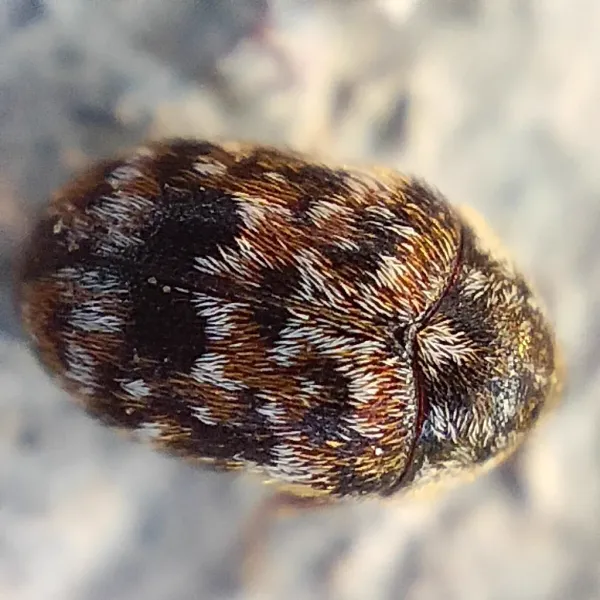
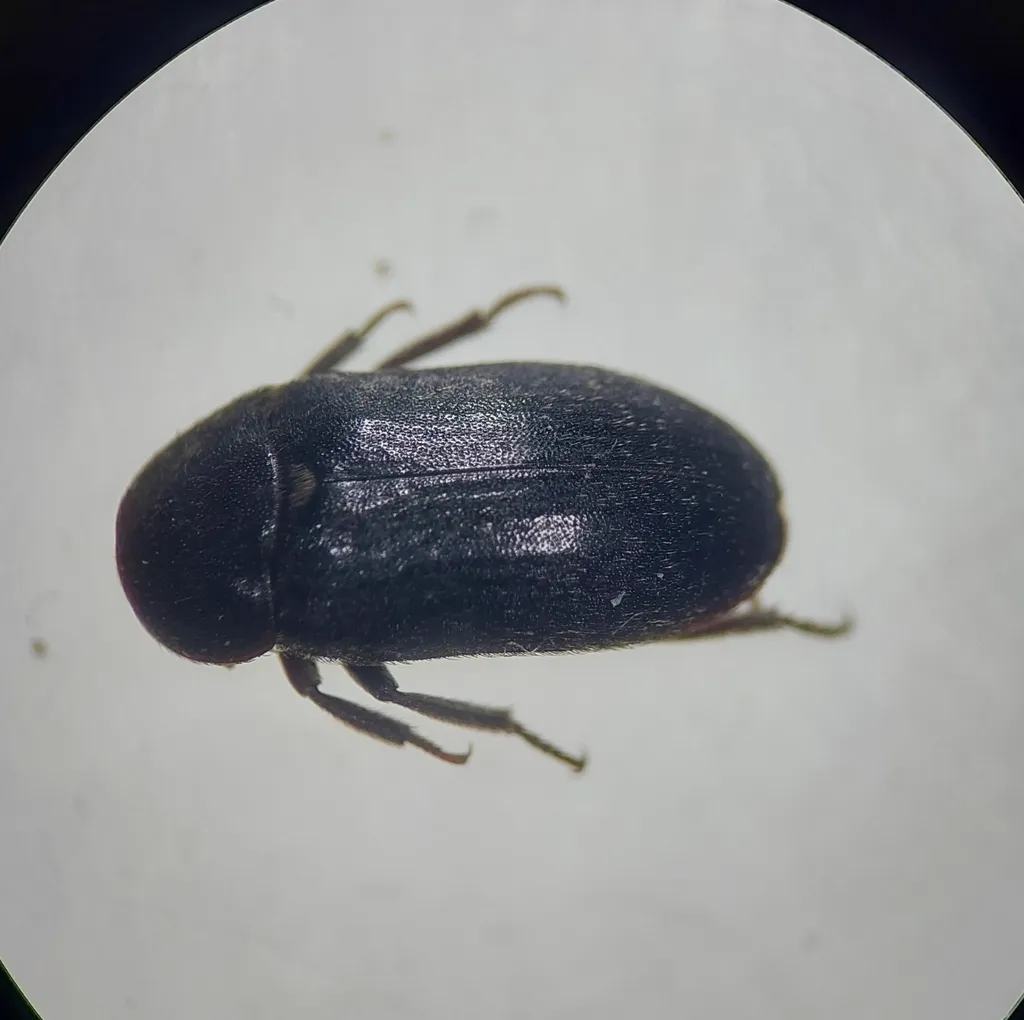
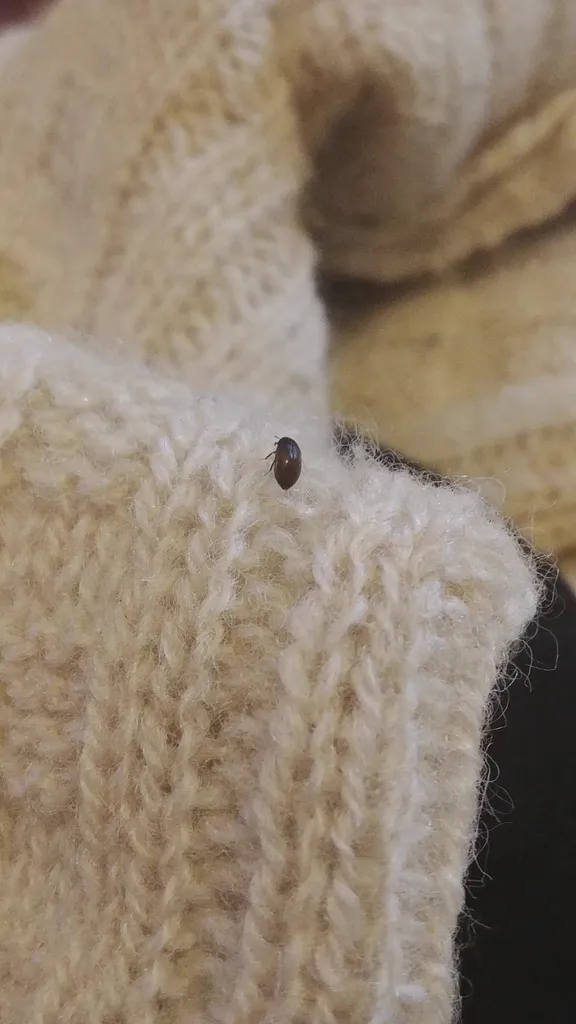
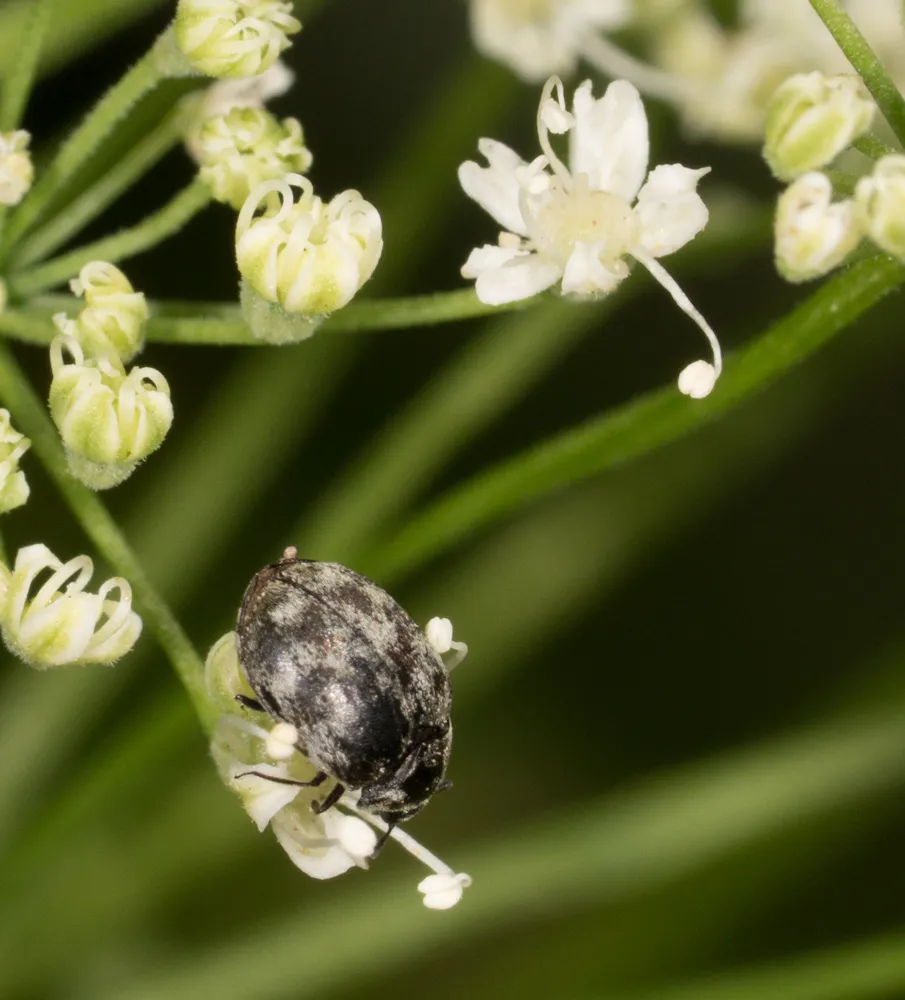
Skin Beetles Coloration
Common color patterns to help identify skin beetles
Skin Beetles
Seasonal Activity
When skin beetles are most active throughout the year

Where Skin Beetles Are Found
Hover over states to see their names. Green regions indicate where skin beetles have been reported.
Skin Beetle Identification Guide
What Are Skin Beetles?
Skin beetles belong to the family Dermestidae. The name comes from the Greek word “dermestes,” which means “skin eater.” This fits their feeding habits well. In nature, skin beetles help break down dead animals. Their larvae eat dried flesh, skin, hair, and feathers.
This family includes several types of household pests. You may know them as carpet beetles, larder beetles, hide beetles, or leather beetles. About 190 species live in North America. They help nature, but they become pests when they get into homes and damage your belongings.
Physical Characteristics
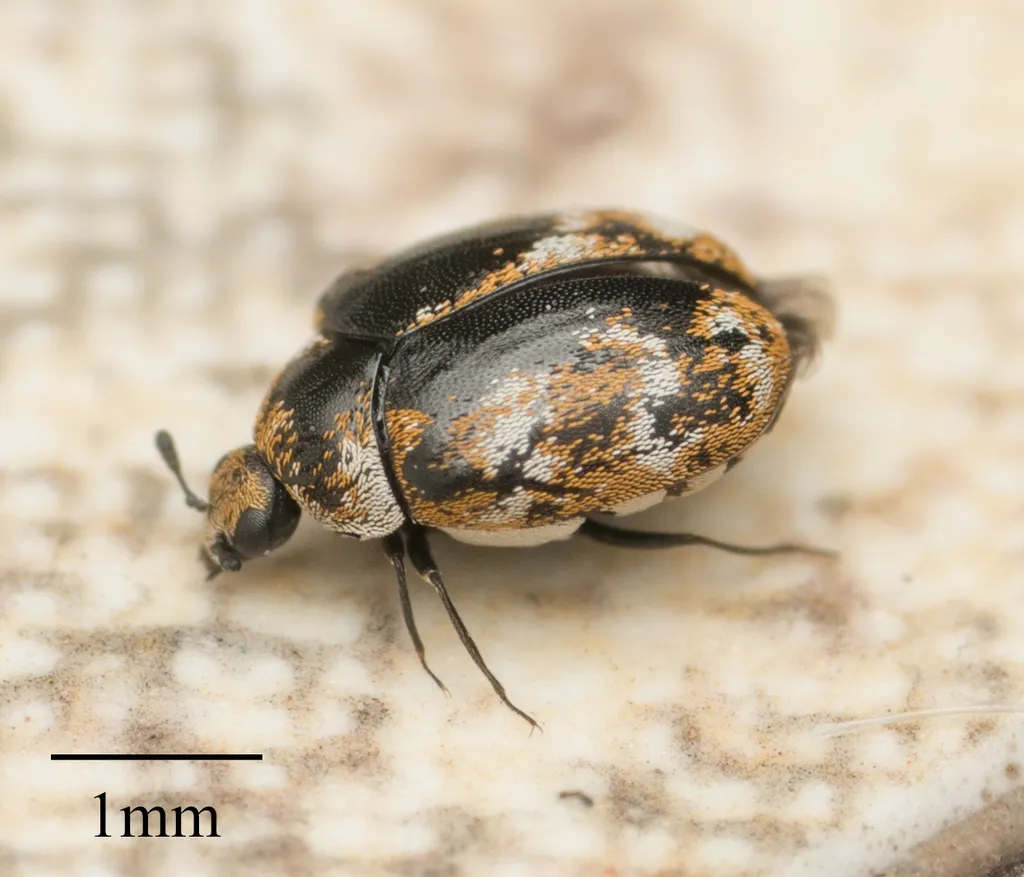
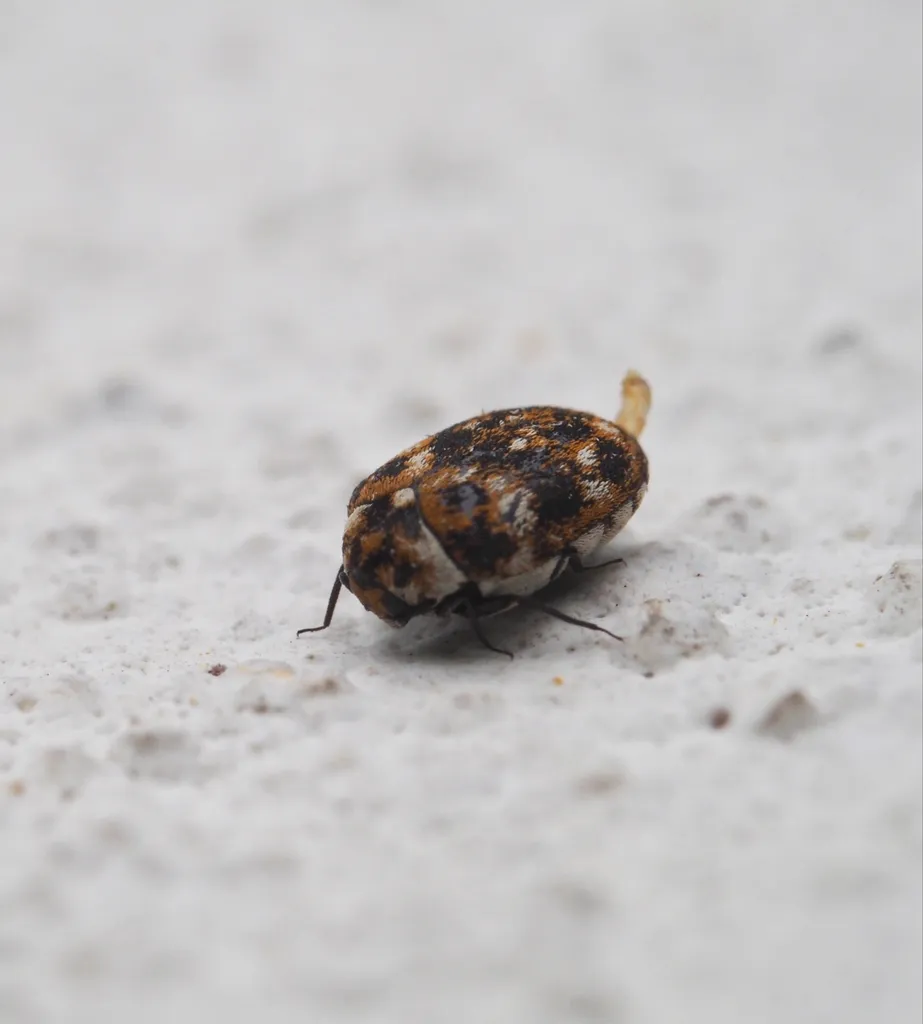
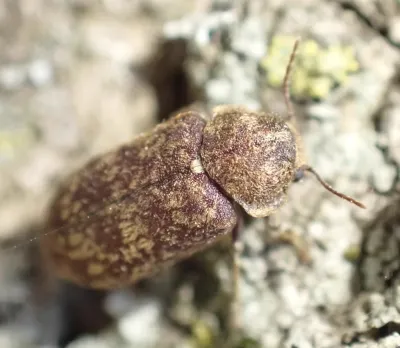
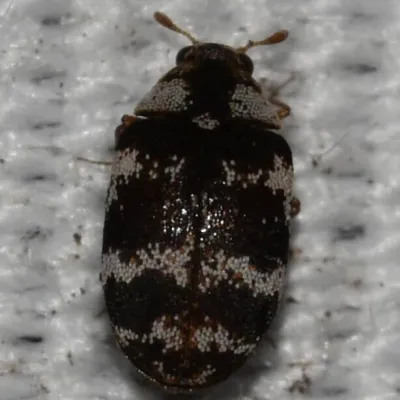
Adult skin beetles are small, oval insects ranging from 1 to 12mm long. Most are brown or black with patterns formed by tiny scales or hairs on their wing covers. Some species have mottled designs mixing white, tan, and brown. Others are solid dark colors.
Key identification features include:
- Oval or rounded body shape
- Clubbed antennae that tuck into grooves under the head
- Hard wing covers protecting flight wings underneath
- Six legs held close to the body when at rest
- Small size that helps them hide in cracks and folds
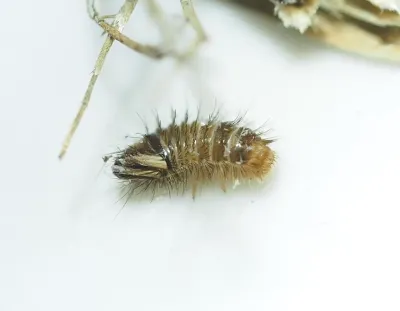
Skin beetle larvae look very different from adults. They are long, carrot-shaped grubs covered in thick bristly hairs. These hairs protect them from predators. In some species, the hairs have barbed tips that can irritate human skin. Larvae are 5 to 15mm long and usually brown with darker stripes.
Common Species in North America
Larder Beetle (Dermestes lardarius) is one of the largest skin beetles at 6-9mm. Adults have dark brown bodies with a pale yellow band and six dark spots on their wing covers. They like dried meats, cheese, and cured foods. Before refrigeration, they were major pests in food storage areas.
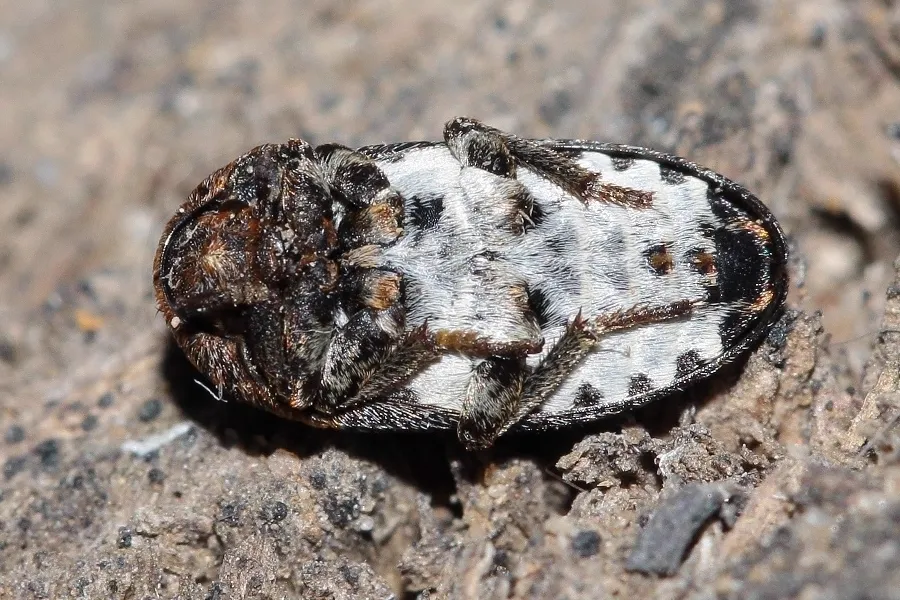
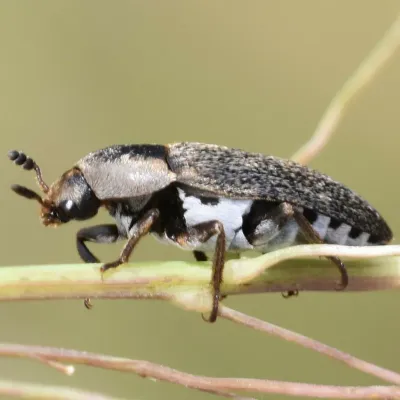
Hide Beetle (Dermestes maculatus) grows to about 8mm. Adults are dark with white scales on their bellies. They eat animal hides, leather, and dried skins. Museums use hide beetle colonies to clean bones for display.
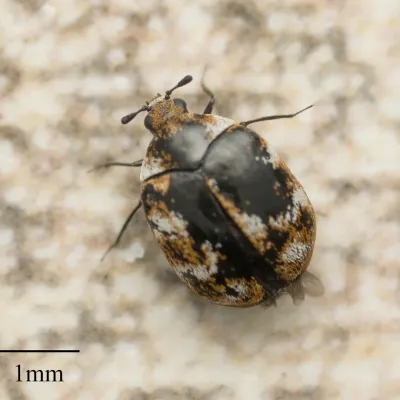
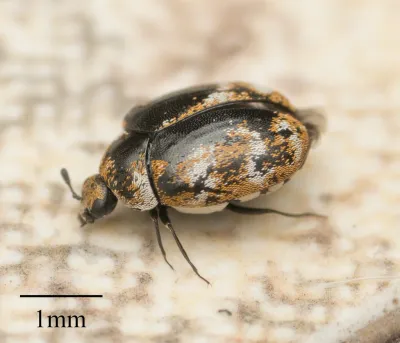
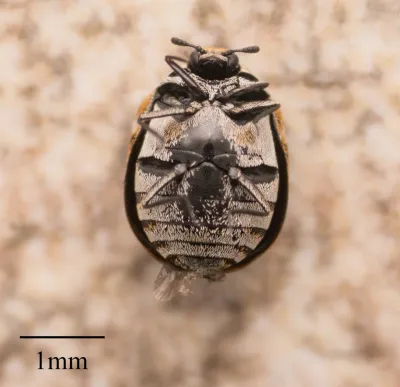
Varied Carpet Beetle (Anthrenus verbasci) is the most common type in homes. Adults are tiny at 2-3mm with white, yellow, and brown patterns. Their larvae do the most damage to wool carpets, clothes, and furniture.
Black Carpet Beetle (Attagenus unicolor) adults are 3-5mm and solid dark brown to black. Their larvae have a tuft of golden hairs at the tail. This is the most harmful carpet beetle type in the United States.
Skin Beetle Behavior and Biology
Lifecycle and Development
Skin beetles have four life stages: egg, larva, pupa, and adult.
Eggs are tiny white ovals. Females lay 20 to 100 eggs near food sources. They pick hidden spots like fabric folds, cracks near stored foods, or areas with lint and hair buildup. Eggs hatch in 1 to 3 weeks.
Larvae cause all the damage. This stage lasts 2 months to over a year, based on food and conditions. Larvae shed their skin 5 to 11 times as they grow. These shed skins are often the first sign of a problem. Larvae avoid light and hide while they feed.
Pupae form inside the last larval skin or in a small cell. This stage lasts 2 to 3 weeks. Pupae resist many bug sprays. This is why follow-up treatments are needed for full control.
Adults come out ready to mate. Most live only 2 to 6 weeks. Many adult skin beetles eat flower pollen and like light. You often find them on windowsills trying to fly outside. Adults do not cause much damage. Their main job is to reproduce.
What Do Skin Beetles Eat?
Skin beetle larvae can digest keratin, the tough protein in animal hair, skin, and feathers. Their diet includes:
- Animal hides, leather, and suede
- Wool clothing, carpets, and blankets
- Silk garments and natural fiber fabrics
- Fur coats, felt, and brushes with natural bristles
- Feathers in pillows, down jackets, and decorations
- Dried meat, fish, cheese, and pet food
- Dead insects and insect collections
- Bird nests, wasp nests, and animal remains
- Taxidermy mounts and museum specimens
Larvae prefer dirty items with body oils, food stains, or sweat. These give extra nutrients. Clothes worn once and stored without washing are at high risk.
Where Skin Beetles Hide
Problems often start in areas people miss:
- Closets with seldom-worn wool clothing
- Storage boxes with blankets, sweaters, or furs
- Under furniture where pet hair collects
- Along baseboards and in carpet edges
- Inside air ducts and HVAC filters
- Near bird or wasp nests on the building exterior
- Around taxidermy, antiques, or collected specimens
Signs of a Skin Beetle Infestation
Damage Patterns
Skin beetle damage has recognizable characteristics:
- Irregular holes in fabrics rather than uniform damage
- Surface grazing where larvae eat only the top fibers
- Damage concentrated along seams and folds where larvae hide while feeding
- Shed skins accumulating near damaged materials
- Small fecal pellets resembling fine sand grains
Early Warning Signs
Watch for these indicators of skin beetle activity:
- Adult beetles on windowsills seeking light in spring and early summer
- Shed larval skins (light brown, hairy shells) near stored items
- Fuzzy larvae crawling on walls as they search for pupation sites
- Holes in stored wool, fur, or leather items discovered during seasonal cleaning
- Damage to mounted animal specimens or insect collections
Treatment Methods for Skin Beetles
Good skin beetle control targets all life stages and removes food sources.
Finding the Source
Good treatment starts with a full inspection to find where they breed. Check these areas:
- All natural fiber items in closets and storage
- Stored foods including pet food, dried meats, and spices
- HVAC systems and air ducts where lint collects
- Wall voids
- Areas around bird nests or wasp nests on the exterior
- Collections of mounted specimens or taxidermy
Finding and removing the source is key. Without this step, treatments only give short-term relief.
Non-Chemical Control Methods
Many skin beetle problems respond well to non-chemical approaches:
- Freeze infested items at 0 degrees F for at least 7 days to kill all life stages
- Heat treatment at 130-140 degrees F for 30-60 minutes is also effective
- Dry cleaning kills skin beetles in fabrics
- Thorough vacuuming removes eggs, larvae, and debris from carpets and cracks
- Proper storage in sealed containers or garment bags protects susceptible items
- Discard heavily infested materials that cannot be salvaged
Chemical Treatment Approaches
For bigger problems, pest control products applied to cracks, carpet edges, and baseboards give lasting control. Growth regulators stop larvae from becoming adults that can breed. Dusts work well in wall voids and other hidden spots.
Treatment works best when applied to all areas where larvae feed and travel. Eggs and pupae resist many products, so follow-up applications 2-4 weeks later help catch newly hatched larvae.
Prevention Strategies
Long-term skin beetle prevention involves:
- Store wool, silk, and fur items in sealed containers or garment bags
- Clean clothing before long-term storage to remove body oils and food residues
- Vacuum regularly, especially along baseboards, under furniture, and in closets
- Inspect secondhand items before bringing them into your home
- Keep dried foods in sealed containers
- Remove bird and wasp nests from near the building
- Seal gaps around windows, doors, and utility penetrations
- Reduce humidity in storage areas when possible
Health Considerations
Skin beetles do not bite humans or transmit diseases. However, they can cause health issues in some people:
Skin irritation: The bristly hairs on carpet beetle larvae can cause itchy rashes when they touch skin. These reactions look like bug bites but come from the hairs, not bites. Learn more about whether carpet beetles are dangerous.
Breathing problems: Shed skins and hair bits can float in the air and cause allergic reactions. Some people get runny nose, itchy eyes, or asthma flare-ups from skin beetle debris.
Stomach upset: Eating food with skin beetle larvae or their parts can cause nausea and stomach problems.
If you have health concerns you think are from skin beetles, talk to a doctor. This is not medical advice.
References and Further Reading
Other Carpet Beetles
Explore other species in the carpet beetles family
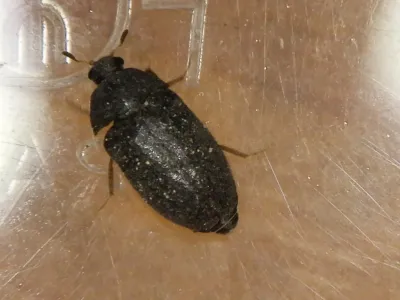
Commonly Confused With
Skin Beetles are often mistaken for these similar pests
Where Skin Beetles Are Found
Hover over states to see their names. Green regions indicate where skin beetles have been reported.
Common Questions about Skin Beetles
What are skin beetles?
+
Skin beetles belong to the family Dermestidae. The name comes from Greek meaning 'skin eater.' This family includes carpet beetles, larder beetles, and hide beetles. Their larvae feed on dried animal matter like hides, furs, feathers, wool, and dried meat products. About 190 species live in North America.
Why are they called skin beetles?
+
Skin beetles got their common name from their ability to digest keratin, the protein found in animal skin, hair, and feathers. In nature, they help decompose dead animals by eating dried flesh and skin. This same ability makes them pests when they attack leather goods, furs, and woolens in homes.
Are skin beetles harmful to humans?
+
Skin beetles do not bite or spread diseases to humans. However, their larvae have bristly hairs that can cause skin rashes and allergic reactions in some people. The hairs can also trigger asthma symptoms when inhaled. The main concern is damage they cause to household items.
What attracts skin beetles to my home?
+
Skin beetles are drawn to natural animal materials. They seek out wool clothing, fur coats, leather goods, feather pillows, taxidermy, and stored meats or cheese. Pet hair buildup, dead insects in wall voids, and bird nests near buildings also attract them.
How do skin beetles get inside?
+
Adult skin beetles can fly and often enter through open windows and doors. They are attracted to light and flowers for pollen. They also arrive on secondhand furniture, stored clothing, dried flower arrangements, or in bird seed and pet food products.
How do I know if I have skin beetles?
+
Look for irregular holes in wool fabrics, shed larval skins near damaged items, and small fecal pellets that look like sand. Adult beetles often appear on windowsills in spring as they seek light to exit. Fuzzy larvae may crawl on walls looking for places to pupate.
Do museums use skin beetles on purpose?
+
Yes, museums and taxidermists use dermestid beetle colonies to clean animal skeletons. The larvae eat all soft tissue while leaving bones perfectly intact. This natural cleaning method produces better results than chemicals and avoids damaging delicate bone structures.
How long does it take to eliminate skin beetles?
+
Complete elimination typically takes 2-3 months because you must break their lifecycle. Eggs and pupae resist many treatments. Follow-up applications 2-4 weeks apart target newly hatched larvae. Removing food sources is essential for lasting control.

With five years of hands-on experience in the pest control industry, George Schulz is a registered technician with the Virginia Pest Management Association and a proud third-generation professional in a family business that's been protecting homes for over 57 years. He manages and trains a team of service pros while also leading internal research efforts—recently spearheading a deep-dive review of thousands of documents on pest control materials to hand-pick the most kid and pet friendly, most effective solutions tailored specifically for homes in the DC metro area.