Powder Post Beetles Identification Guide
Lyctinae, Anobiidae & Bostrichidae
Powder post beetles are small wood-boring insects whose larvae tunnel through seasoned hardwood and softwood, reducing it to a fine, flour-like powder and causing significant structural damage to homes and furniture.
Taxonomy
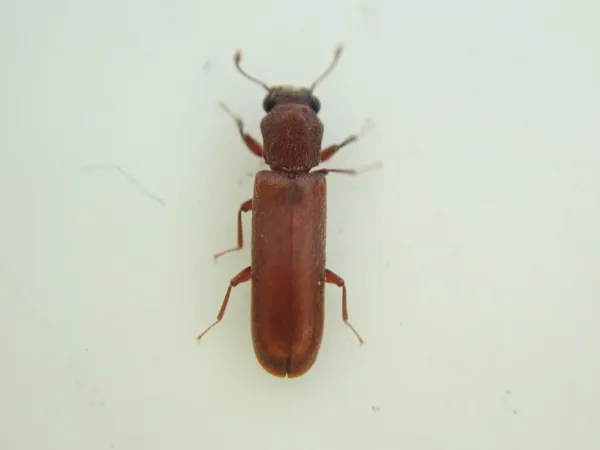
Powder Post Beetles Coloration
Common color patterns to help identify powder post beetles
Powder Post Beetles
Seasonal Activity
When powder post beetles are most active throughout the year

Where Powder Post Beetles Are Found
Hover over states to see their names. Green regions indicate where powder post beetles have been reported.
Powder Post Beetle Identification Guide
Physical Characteristics
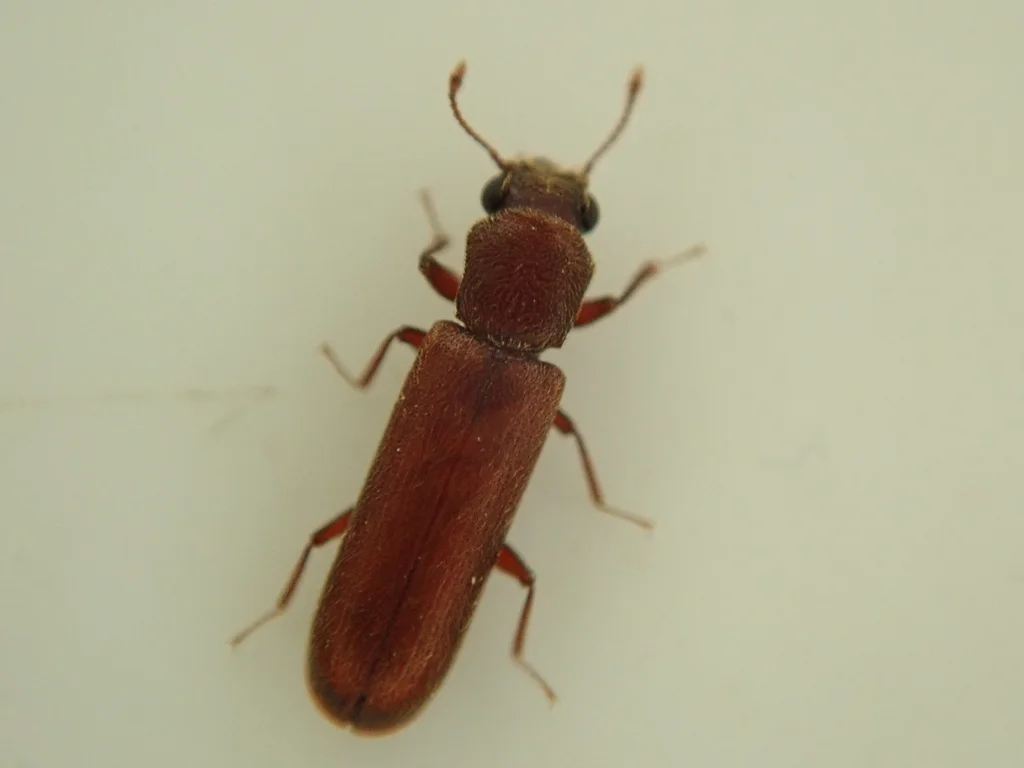
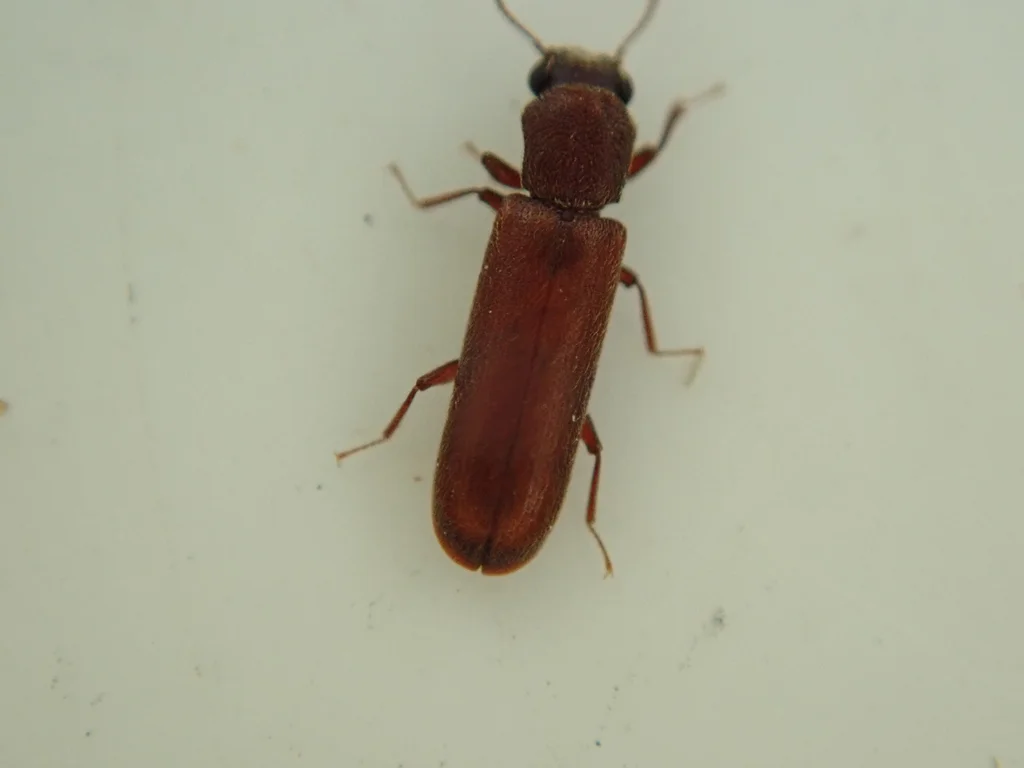
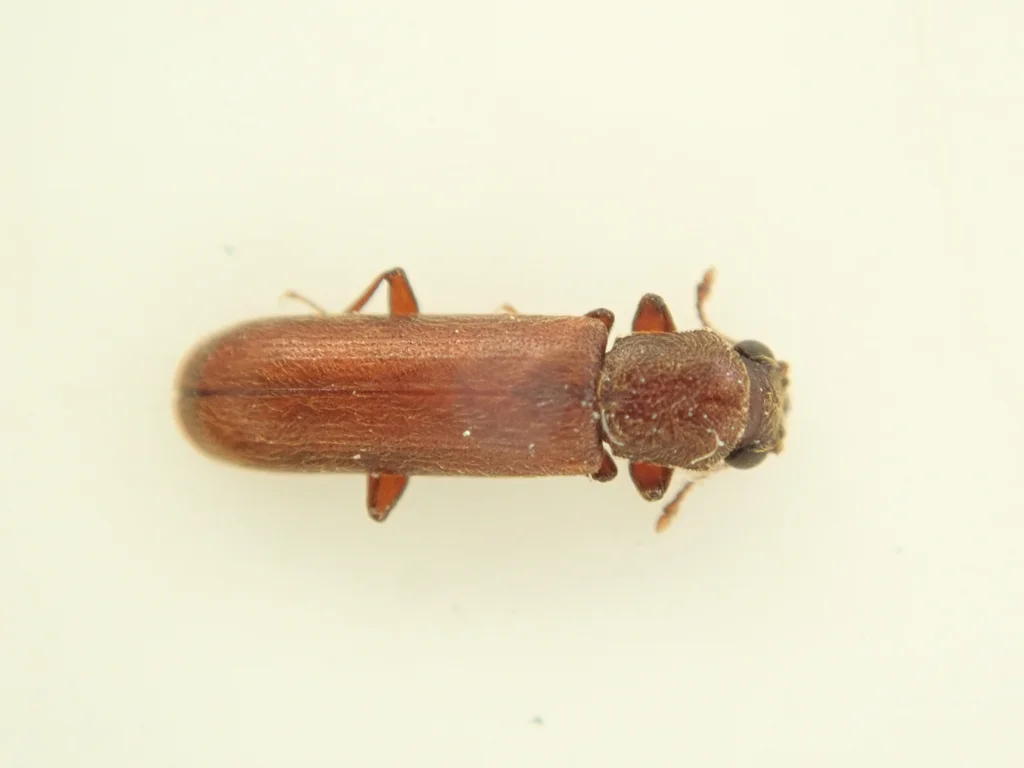
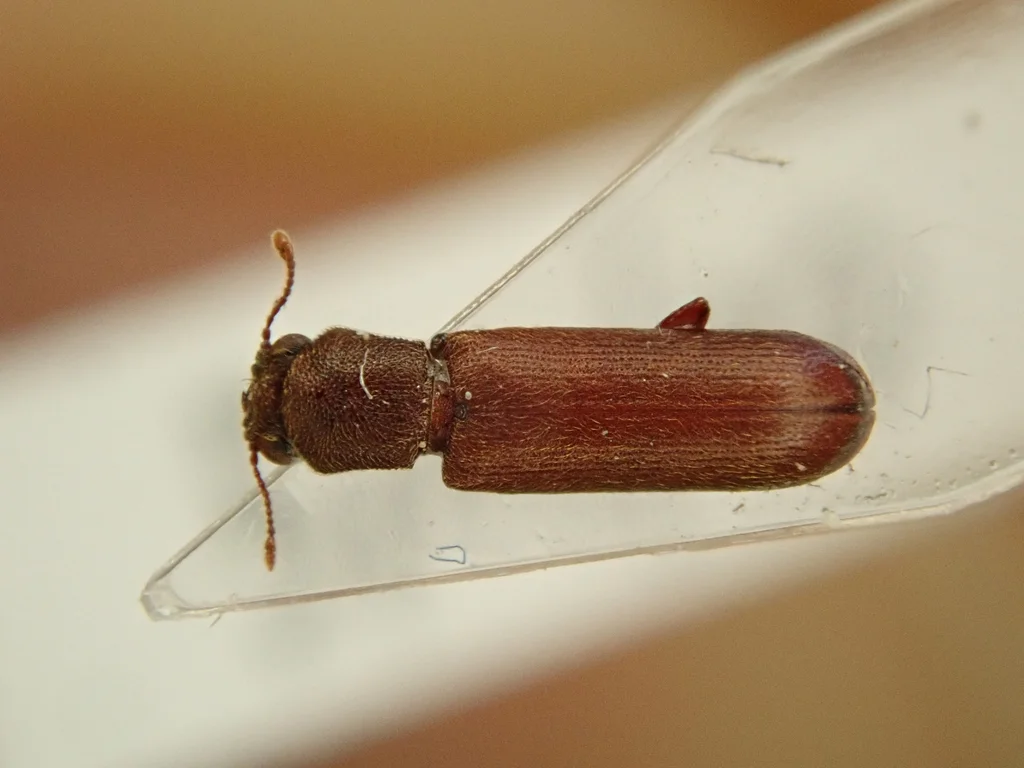
Powder post beetles are small wood-boring insects related to carpet beetles, about 1/8 to 1/4 inch long. They have long, narrow bodies built for boring through wood. Most are reddish-brown to black. Unlike many beetles, their heads stick out and are easy to see.
Adults have club-shaped antennae and fine hairs on their bodies. Hard wing covers protect their flight wings. When scared, they often play dead by pulling their legs in tight.
Larvae do all the wood damage. They are creamy white, C-shaped grubs with small brown heads. Some species have tiny spines on their backs. Larvae spend months or years eating wood before turning into adults near the surface.
Common Powder Post Beetle Families
Lyctid Beetles (True Powderpost Beetles) are the most common type in homes. They are narrow beetles about 1/16 to 1/4 inch long. Lyctids only attack hardwoods with large pores like oak, ash, walnut, hickory, and bamboo. Their exit holes are tiny (1/32 to 1/16 inch). The powder they leave behind feels like flour.
Anobiid Beetles (Deathwatch and Furniture Beetles) are a bit larger, about 1/16 to 3/8 inch. They look humpbacked because the head hides under the thorax. Anobiids attack both hardwoods and softwoods. This makes them a threat to building lumber like joists and studs. Their frass is gritty with small pellets.
Bostrichid Beetles (False Powderpost Beetles) are the largest type, up to 1/4 inch long. They have a rough thorax and short antennae with saw-like tips. Bostrichids attack hardwoods and are common in tropical woods and bamboo. Their exit holes are larger, around 1/8 inch.
Powder Post Beetle Behavior and Biology
Lifecycle and Development
Powder post beetles have four life stages: egg, larva, pupa, and adult. Knowing this cycle helps with control.
Eggs are laid by females in wood pores, cracks, or old exit holes. One female can lay 20 to 50 eggs in her short life. Eggs are tiny and white. They hatch in 1 to 3 weeks based on temperature and humidity.
Larvae are the damaging stage. After hatching, they bore into wood and start feeding. How long this takes varies by species. Lyctid larvae grow in 9 to 12 months but can finish in as few as 3 months. Anobiid larvae need 2 to 5 years. Bostrichid larvae take 3 to 12 months.
As larvae eat, they carve winding tunnels called galleries through the wood. They pack these tunnels with frass as they go. Larvae shed their skin several times before pupating.
Pupae form in small chambers just below the wood surface. This stage lasts 2 to 3 weeks. The larva changes into an adult inside a thin cocoon of wood fibers and frass.
Adults chew out of the wood and create the round exit holes you see. They live only 2 to 6 weeks. During this time they mate and females find new wood for eggs. Adults are most active in spring and summer. In heated homes, they can emerge year-round.
Habitat and Wood Preferences A related species, June Bugs, shares similar characteristics.
Powder post beetles need the right conditions to thrive. Wood moisture is key. Most species like wood with 8 to 32 percent moisture. Very dry or wet wood is rarely attacked. A related species, False Powderpost Beetles, shares similar characteristics.
Lyctid beetles are picky eaters. They only attack hardwoods with large pores where females can lay eggs. These include oak, ash, hickory, walnut, cherry, and poplar. They also like bamboo because it has lots of starch. Lyctids cannot infest softwoods or tight-pored hardwoods like maple and birch. A related species, Old House Borers, shares similar characteristics.
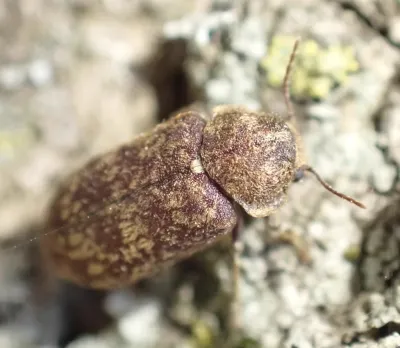
Anobiid beetles are less picky. They attack softwoods used in building, like pine, fir, and spruce. They also eat hardwoods. Anobiids like older wood and are common in humid areas like crawl spaces and basements. A related species, Spider Beetles, shares similar characteristics.
Bostrichid beetles prefer tropical hardwoods and freshly cut wood. They often come into homes through imported furniture, bamboo items, and decorations.
Signs of Powder Post Beetle Infestation
Identifying Wood Damage
The clearest sign of powder post beetles is small, round exit holes on wood surfaces. Adult beetles make these holes when they emerge.
Exit hole sizes by beetle type:
- Lyctid beetles: 1/32 to 1/16 inch, very small
- Anobiid beetles: 1/16 to 1/8 inch, a bit larger
- Bostrichid beetles: 1/8 to 3/16 inch, the largest
Fresh exit holes have clean, sharp edges. You may see fine powder around them. Old holes look weathered and darker. To tell if beetles are still active, you need to watch carefully over time.
Evidence of Active Infestations
Fresh frass is the best sign of active beetles. This fine, powdery dust piles up under exit holes. You may see it fall from wood when you tap it. Lyctid frass feels like flour. Anobiid frass is grittier with tiny pellets.
New exit holes that appear over time mean beetles are still active. Mark existing holes and check for new ones over several months.
Sounds from anobiid beetles (also called deathwatch beetles) can be heard at night. Males tap their heads on wood to attract females. This makes a ticking or clicking sound in quiet rooms.
Commonly Infested Items and Areas
Powder post beetles can infest many items in your home:
- Hardwood flooring and subflooring
- Furniture, especially antiques
- Trim, molding, and paneling
- Picture frames and wooden crafts
- Tool handles and wooden utensils
- Structural lumber like joists and studs
- Firewood brought inside
- Bamboo furniture and flooring
Treatment Methods for Powder Post Beetles
Good powder post beetle control starts with identifying the beetle type and how bad the problem is. Then you can pick the right treatment.
Surface Treatments
For small infestations in wood you can reach, borate-based products work well. These products soak into wood and kill larvae as they feed. They work best on bare, unfinished wood. The active ingredients need to soak in to reach the larvae.
You must apply surface treatments to all exposed wood. They protect against future beetles but will not work on painted or sealed wood.
Injection Treatments
Small infestations may respond to direct injection of products into exit holes and tunnels. This puts treatment right where larvae are active. But the maze of tunnels makes it hard to treat everything.
Heat Treatment
You can treat infested furniture with heat. Raising wood to 130-140 degrees Fahrenheit for several hours kills all life stages. This works well for valuable antiques that cannot be treated with chemicals. Heat must be controlled carefully to avoid wood damage.
Fumigation
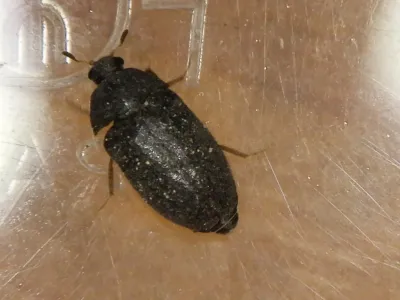
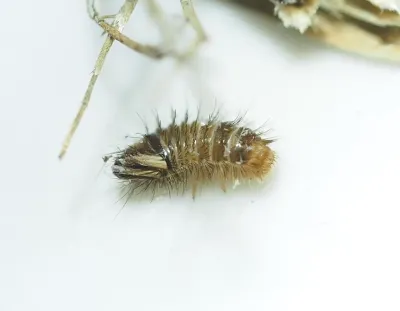
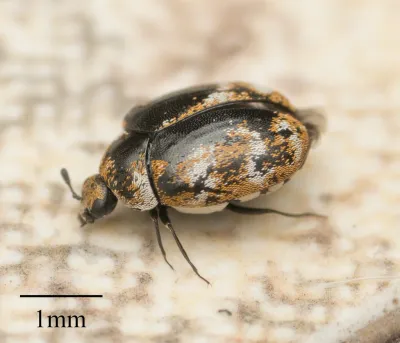
Bad infestations may need fumigation. This means sealing the area and filling it with a penetrating gas. Fumigation kills all life stages but does not protect against future beetles. Only licensed pest control experts can do this. Unlike dermestid beetles that damage fabrics and stored goods, powder post beetles target structural wood and furniture.
Moisture Control
Powder post beetles need certain moisture levels. Keeping wood below 12 percent moisture makes it hard for beetles to grow. Vapor barriers in crawl spaces, better airflow, and dehumidifiers all help lower moisture.
Prevention Strategies
Stopping beetles before they start is easier than getting rid of them:
- Check wood before buying: Look at furniture, flooring, and lumber for exit holes or powder before bringing them home
- Seal wood surfaces: Paint, varnish, or other finishes stop female beetles from laying eggs in wood pores
- Use kiln-dried lumber: Kiln-dried wood has low moisture and the heat kills any larvae already inside
- Control humidity: Keep indoor humidity below 50 percent to make your home less welcoming to beetles
- Remove infested items: Get rid of badly infested furniture or firewood quickly to stop the spread
- Store firewood outside: Never keep firewood inside your home for long periods
References and Further Reading
- University of Kentucky Entomology - Powderpost Beetles
- Purdue Extension - Powderpost Beetles
- University of Maryland Extension - Powderpost Beetles
- NC State Extension - Powderpost Beetles and Wood-Inhabiting Fungi
- University of Florida IFAS - Powderpost Beetles and Other Wood-Infesting Insects
- Penn State Extension - Powderpost Beetles
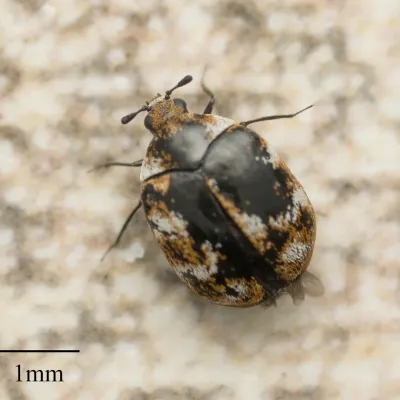
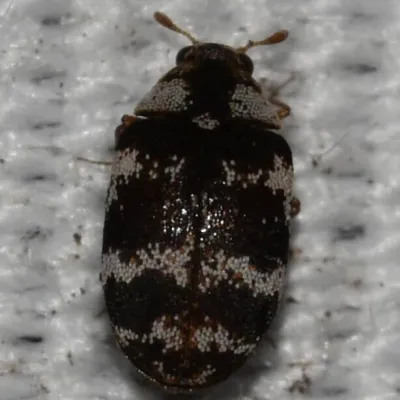
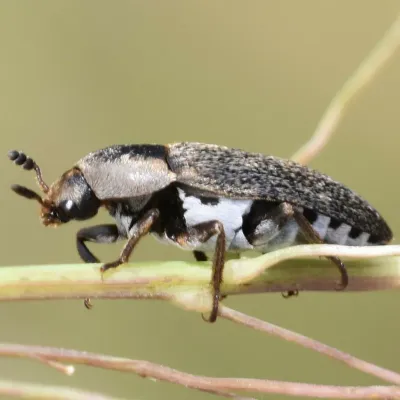
Other Carpet Beetles
Explore other species in the carpet beetles family
Commonly Confused With
Powder Post Beetles are often mistaken for these similar pests
Where Powder Post Beetles Are Found
Hover over states to see their names. Green regions indicate where powder post beetles have been reported.
Common Questions about Powder Post Beetles
What are powder post beetles?
+
Powder post beetles are small wood-boring insects that attack seasoned hardwood and softwood. Their larvae tunnel through wood as they feed, leaving behind a fine, flour-like powder called frass. They are second only to termites in their ability to damage wood structures and can infest flooring, furniture, and structural lumber.
How do I know if I have powder post beetles?
+
Look for small, round exit holes about 1/32 to 1/8 inch in diameter in wood surfaces. Fine, powdery sawdust (frass) near these holes or below infested wood is a telltale sign. Tapping infested wood may produce a hollow sound, and the interior may reveal packed powder when cut open.
Are powder post beetles dangerous?
+
Powder post beetles do not bite humans or spread disease. However, they can cause serious structural damage to homes over time. Left untreated, infestations can weaken wood to the point where it crumbles, potentially compromising flooring, furniture, and structural elements.
How do powder post beetles get into homes?
+
Powder post beetles often enter homes through infested wood products like furniture, flooring, trim, or firewood. Eggs or larvae may already be present in lumber before it is used in construction. Adult beetles can also fly to new wood sources to lay eggs.
How long does it take for powder post beetles to cause damage?
+
The lifecycle can take 1 to 10 years depending on the species and conditions. Damage builds up over time as new generations re-infest the same wood. Since larvae feed inside wood out of sight, infestations often go unnoticed for years before exit holes appear.
What types of wood do powder post beetles attack?
+
Different species prefer different woods. Lyctid beetles attack only hardwoods like oak, ash, hickory, and bamboo. Anobiid beetles prefer softwoods like pine and fir used in structural lumber. Bostrichid beetles attack both hardwoods and some bamboo products.
Can powder post beetles spread from furniture to my house structure?
+
Yes, infestations can spread. Adult beetles emerge from infested furniture and may lay eggs in other susceptible wood in your home. This is why treating or removing infested items quickly is important to prevent the infestation from expanding.
Do powder post beetles come back after treatment?
+
Treatment can eliminate active infestations, but eggs and pupae inside wood may survive initial treatment. Follow-up monitoring is essential. Additionally, untreated wood or new infested items brought into the home can start new infestations.

With five years of hands-on experience in the pest control industry, George Schulz is a registered technician with the Virginia Pest Management Association and a proud third-generation professional in a family business that's been protecting homes for over 57 years. He manages and trains a team of service pros while also leading internal research efforts—recently spearheading a deep-dive review of thousands of documents on pest control materials to hand-pick the most kid and pet friendly, most effective solutions tailored specifically for homes in the DC metro area.