Larder Beetles Identification Guide
Dermestes lardarius
Larder beetles are dark-colored dermestid beetles with a distinctive yellowish band across their wing covers. Both adults and larvae feed on high-protein materials like dried meats, pet food, and animal products in homes.
Taxonomy
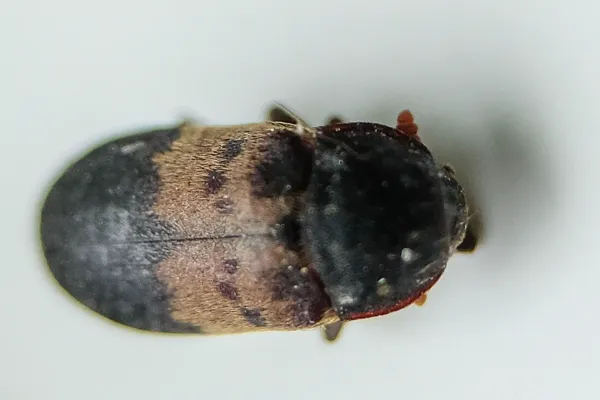
Larder Beetles Coloration
Common color patterns to help identify larder beetles
Larder Beetles
Seasonal Activity
When larder beetles are most active throughout the year
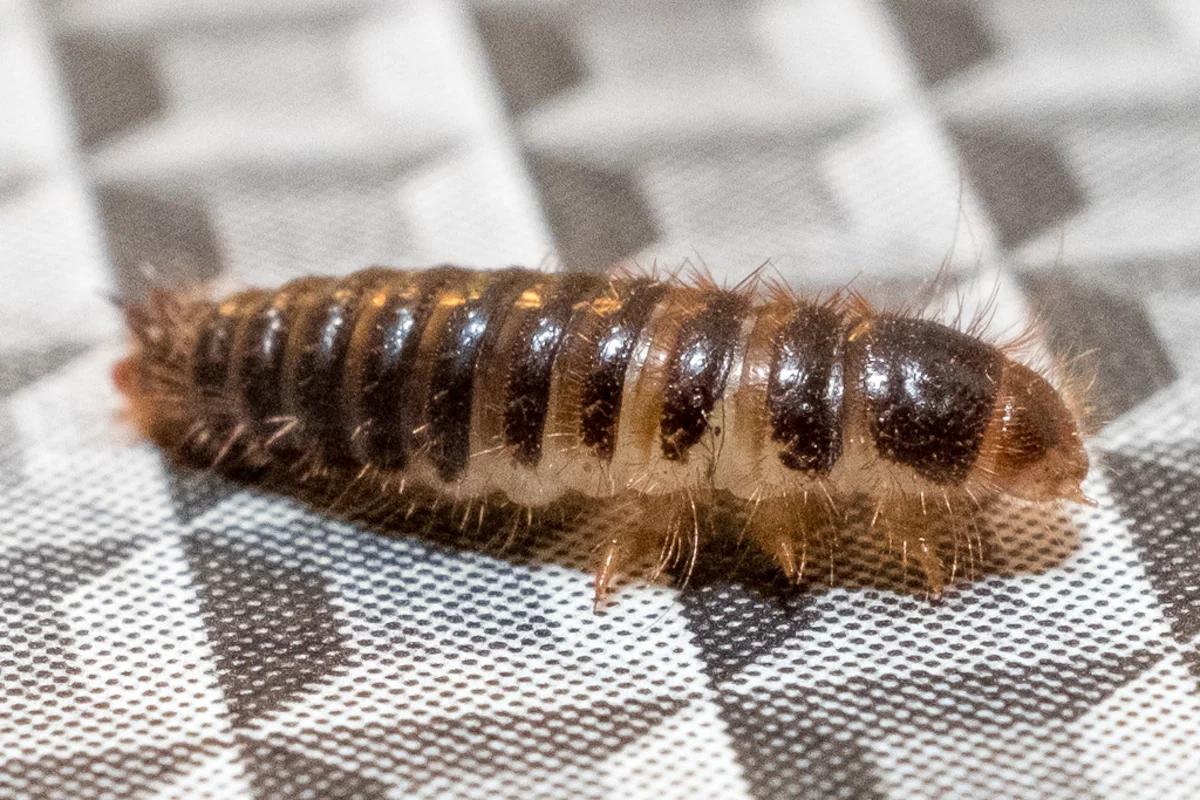
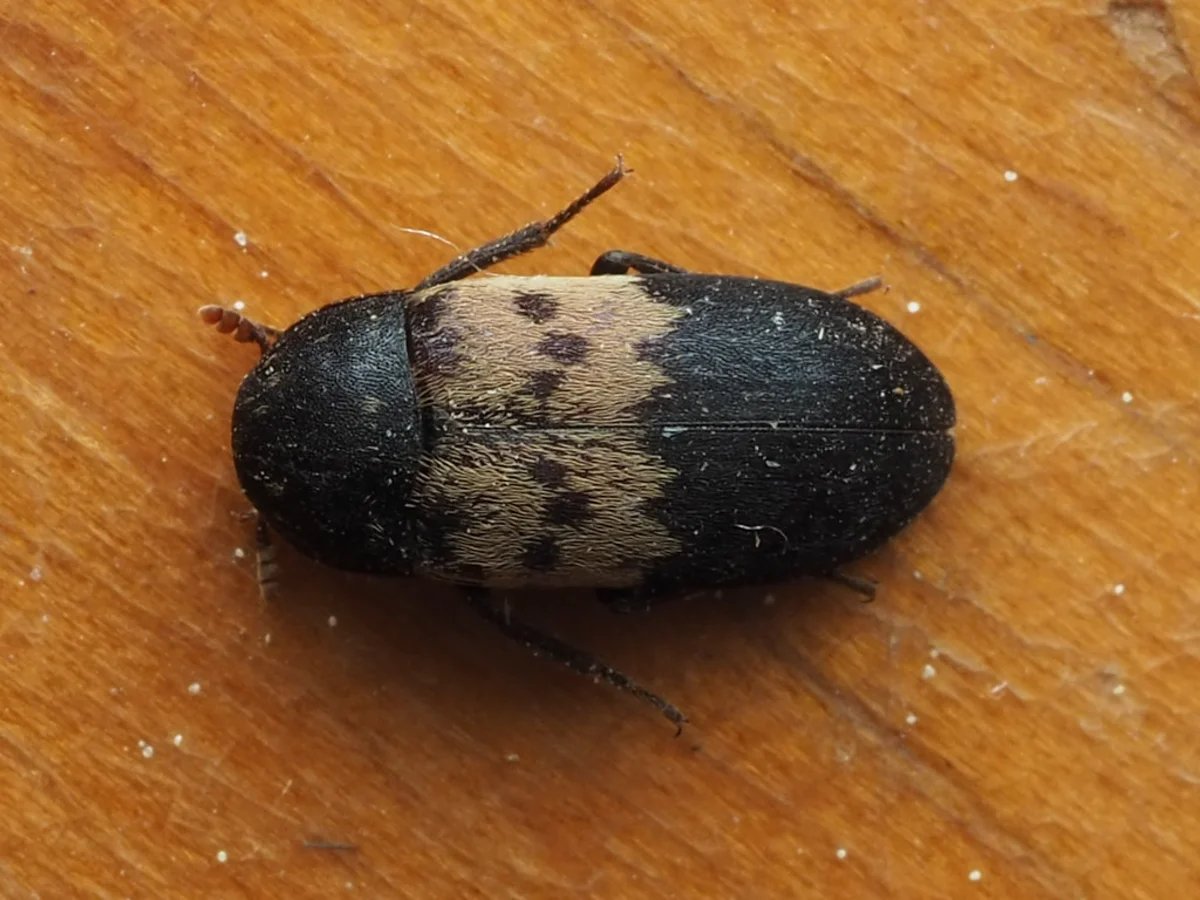
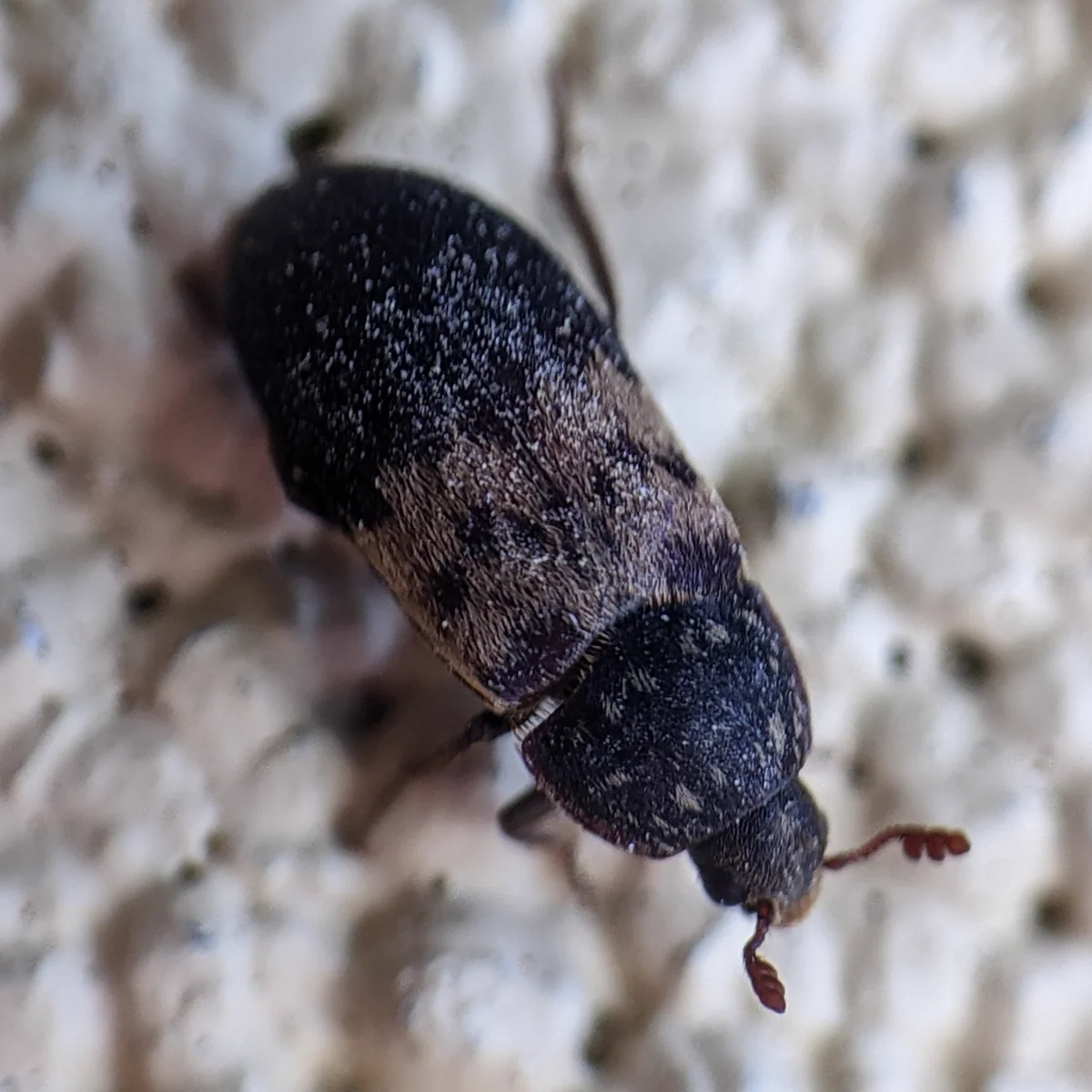

Where Larder Beetles Are Found
Hover over states to see their names. Green regions indicate where larder beetles have been reported.
Larder Beetle Identification Guide
Physical Characteristics
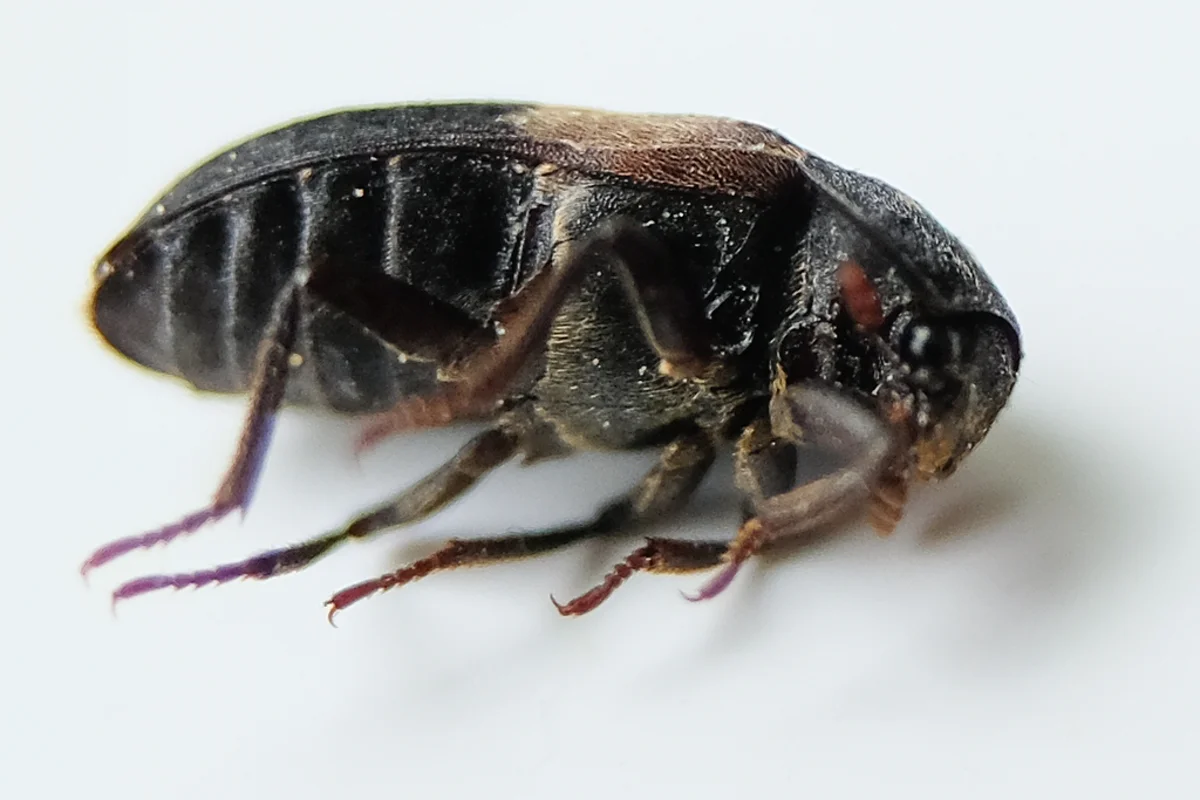
The larder beetle (Dermestes lardarius) is a medium-sized dermestid beetle that measures 7 to 9 millimeters long. Its most notable feature is a wide yellowish or tan band across the wing covers. This band creates a clear contrast against the dark brown to black body. Six dark spots sit within the band, three on each side.
The body is oval and slightly flat. Short antennae stick out from the head with a club-shaped tip. Dense yellow hairs cover the legs and underside. These hairs help tell this beetle apart from similar species.
Adult larder beetles have wings and can fly, but they are weak fliers. They are most active in spring and early summer when looking for food and mates.
Larval Appearance
Larder beetle larvae look very different from adults. They have long, tapered bodies that can reach 18 millimeters when fully grown. Long brown hairs cover the body, giving larvae a fuzzy or bristly look.
A key feature is the pair of curved spines on the last body segment. These spines point backward. They help tell larder beetle larvae apart from carpet beetle larvae, which lack these spines. Larder beetle larvae are darker than carpet beetle larvae. Their body segments are also more visible through the hairy covering.
Larder Beetle Behavior and Biology
Feeding Habits
Both adult and larval larder beetles eat high-protein animal products. Their name comes from larders, the food storage rooms common in homes before refrigeration. Today, they find similar foods in modern homes.
Common food sources include:
- Dried and cured meats such as bacon, ham, and jerky
- Pet food, especially dry dog and cat food left accessible
- Cheese, particularly aged varieties
- Dead insects that accumulate in attics, wall voids, and light fixtures
- Animal carcasses from rodents, birds, or other animals that die in walls
- Taxidermy mounts and preserved specimens
- Furs, feathers, and animal hides (materials also targeted by skin beetles)
- Bone meal, fish meal, and similar products
Larvae cause most of the feeding damage. They eat constantly until ready to pupate. Adults also feed but eat much less. A related species, June Bugs, shares similar characteristics.
Lifecycle and Reproduction A related species, False Powderpost Beetles, shares similar characteristics.
Larder beetles go through four life stages: egg, larva, pupa, and adult. The full lifecycle takes about 40 to 50 days in good conditions. Cooler temperatures slow this process. A related species, Old House Borers, shares similar characteristics.
Adult beetles spend winter in sheltered spots like bark crevices or protected areas outside buildings. In spring, they come out and use their strong sense of smell to find food for laying eggs. Females can lay more than 120 eggs in their lifetime. They place eggs directly on or near protein-rich foods.
Eggs hatch in about 12 days at temperatures around 66 degrees Fahrenheit. The new larvae start feeding right away. They molt up to six times, growing larger each time. Feeding goes on until larvae reach full size.
When ready to pupate, larvae leave the food and look for other materials. They bore into wood, cork, insulation, or similar items to make chambers. The pupal stage lasts about 7 days before the adult beetle comes out.
Signs of Larder Beetle Infestation
Finding a larder beetle problem early helps prevent major damage. Look for these signs:
Live beetles: Adult larder beetles may crawl near food sources or on windowsills trying to leave the building.
Larvae: The hairy larvae are often easier to spot than adults. Look for them in food, storage areas, or wandering as they search for places to pupate.
Shed skins: Larvae shed their skins as they grow. Finding cast skins shows an active problem.
Food damage: Holes in packaging and visible damage to stored products point to larder beetle activity.
Bore holes: Small round holes in wood, cork, or other materials near food show larvae have bored in to pupate.
Frass: Fine powder or debris near infested items may be waste from larval feeding.
Treatment Methods for Larder Beetles
Getting rid of larder beetles requires finding and removing their food source. Without removing the source, beetles will keep breeding.
Source Identification and Removal
The first step is finding the infested material. Check pantries, pet food storage, and spots where dead animals or insects might build up. Look in wall voids and crawl spaces for dead rodents or birds that could serve as breeding sites.
Remove infested items and throw them away in sealed bags. For items you want to keep, freezing below 0 degrees Fahrenheit for at least three days kills all life stages. Heat treatment above 130 degrees Fahrenheit for several hours also works.
Cleaning and Prevention
Good cleaning removes remaining beetles and stops future problems. Vacuum all cracks, crevices, and storage areas where beetles might hide. Clean shelves and containers before putting food back.
Steps to prevent larder beetles:
- Store foods in airtight containers with tight lids
- Check and rotate stored food often
- Clean up pet food spills quickly and store pet food in sealed containers
- Seal gaps around windows, doors, and vents
- Remove dead insects from light fixtures and window tracks
- Fix any rodent or bird problems that could provide food
Professional Help
For bad or lasting problems, pest control experts can find hidden food sources and apply treatments. This is key when dead animals are in hard to reach wall voids or when stored goods have major infestations. Learn more about the signs of carpet beetles and related dermestid pests in your home.
References
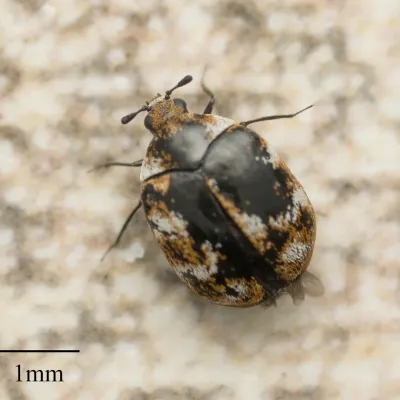
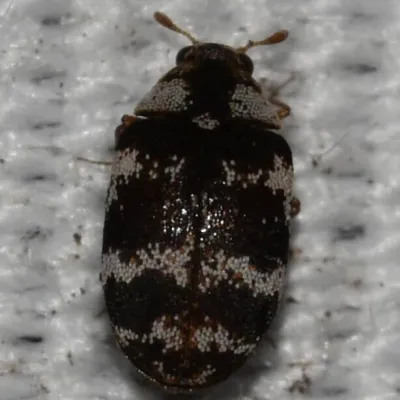
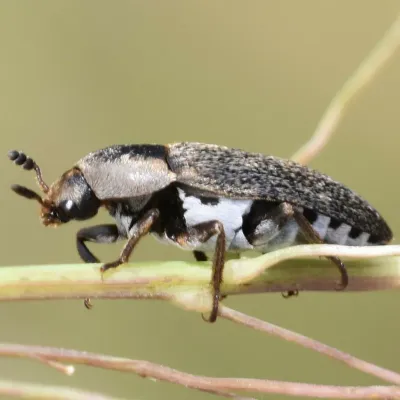
Other Carpet Beetles
Explore other species in the carpet beetles family
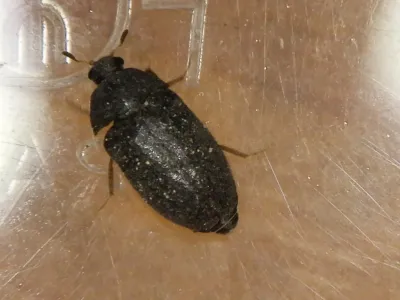
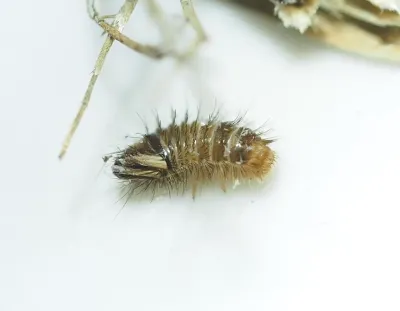
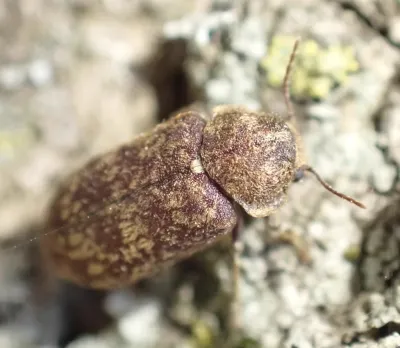
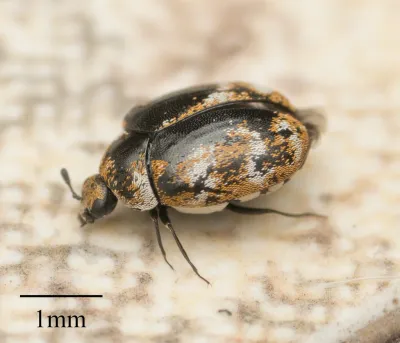
Commonly Confused With
Larder Beetles are often mistaken for these similar pests
Where Larder Beetles Are Found
Hover over states to see their names. Green regions indicate where larder beetles have been reported.
Common Questions about Larder Beetles
What do larder beetles look like?
+
Adult larder beetles are oval-shaped and measure 7 to 9 millimeters long. They have a distinctive appearance with a dark brown to black body and a wide yellowish or tan band across the middle of their wing covers. This band contains six dark spots, three on each side. The underside of the body is covered in dense yellowish hairs.
What do larder beetle larvae look like?
+
Larder beetle larvae are elongated and covered with long brown hairs, giving them a fuzzy appearance. They can grow up to 18 millimeters in length and have two curved spines on the last body segment. The larvae are darker and hairier than carpet beetle larvae.
What attracts larder beetles to homes?
+
Larder beetles are attracted to high-protein food sources. Common attractants include dried meats, pet food, cheese, dead insects, animal carcasses in wall voids, taxidermy specimens, furs, feathers, and stored animal products. They can also feed on plant materials that are high in protein, like certain grains.
Are larder beetles harmful to humans?
+
Larder beetles are not directly harmful to humans. While adults are capable of biting, they rarely do and are not known to transmit diseases. However, they can contaminate food products and their larvae can cause structural damage by boring into wood and other materials when preparing to pupate.
How do I get rid of larder beetles?
+
Eliminating larder beetles requires finding and removing the food source. Inspect pantries, pet food storage areas, and check for dead animals or insects in wall voids or attics. Discard infested food, thoroughly clean storage areas, and store susceptible items in airtight containers. Vacuuming helps remove beetles and larvae from cracks and crevices.
Where do larder beetles lay eggs?
+
Female larder beetles lay eggs directly on or near protein-rich food sources. A single female can lay over 120 eggs during her lifetime. Common egg-laying sites include dried meats, cured hams, dead rodents or birds in walls, accumulated dead insects, and stored pet food. Eggs hatch in about 12 days under favorable conditions.
What is the lifecycle of a larder beetle?
+
Larder beetles undergo complete metamorphosis with four life stages: egg, larva, pupa, and adult. The entire lifecycle takes 40 to 50 days under optimal conditions. Adults overwinter in protected locations and emerge in spring to mate and lay eggs. Larvae molt up to six times before pupating, and the pupal stage lasts about 7 days.
Can larder beetles damage my home?
+
While larder beetles primarily damage food products, their larvae can cause structural damage. When ready to pupate, larvae bore into non-food materials to create pupation chambers. They can tunnel into wood, cork, insulation, and other building materials. Repeated infestations can result in noticeable damage over time.

With five years of hands-on experience in the pest control industry, George Schulz is a registered technician with the Virginia Pest Management Association and a proud third-generation professional in a family business that's been protecting homes for over 57 years. He manages and trains a team of service pros while also leading internal research efforts—recently spearheading a deep-dive review of thousands of documents on pest control materials to hand-pick the most kid and pet friendly, most effective solutions tailored specifically for homes in the DC metro area.