Hide Beetles Identification Guide
Dermestes maculatus
Hide beetles are dark-colored dermestid beetles that feed on dried animal materials including hides, furs, taxidermy specimens, and stored meat products. They are common pests in museums, homes with wildlife carcasses, and food storage facilities.
Taxonomy
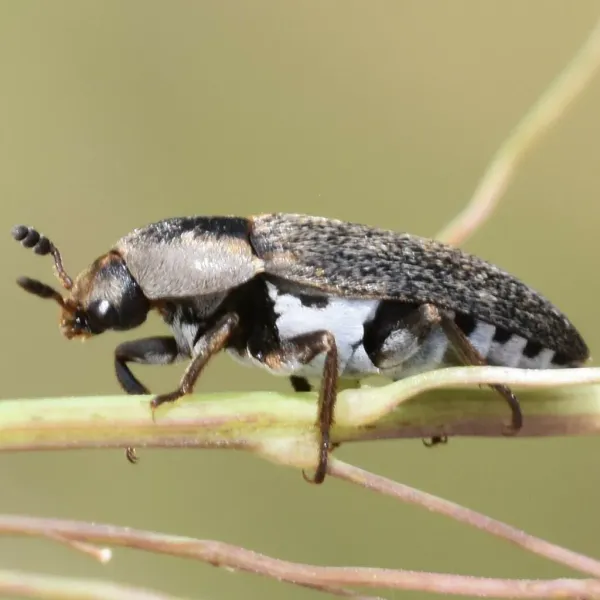
Hide Beetles Coloration
Common color patterns to help identify hide beetles
Hide Beetles
Seasonal Activity
When hide beetles are most active throughout the year

Where Hide Beetles Are Found
Hover over states to see their names. Green regions indicate where hide beetles have been reported.
Hide Beetle Identification Guide
Physical Characteristics
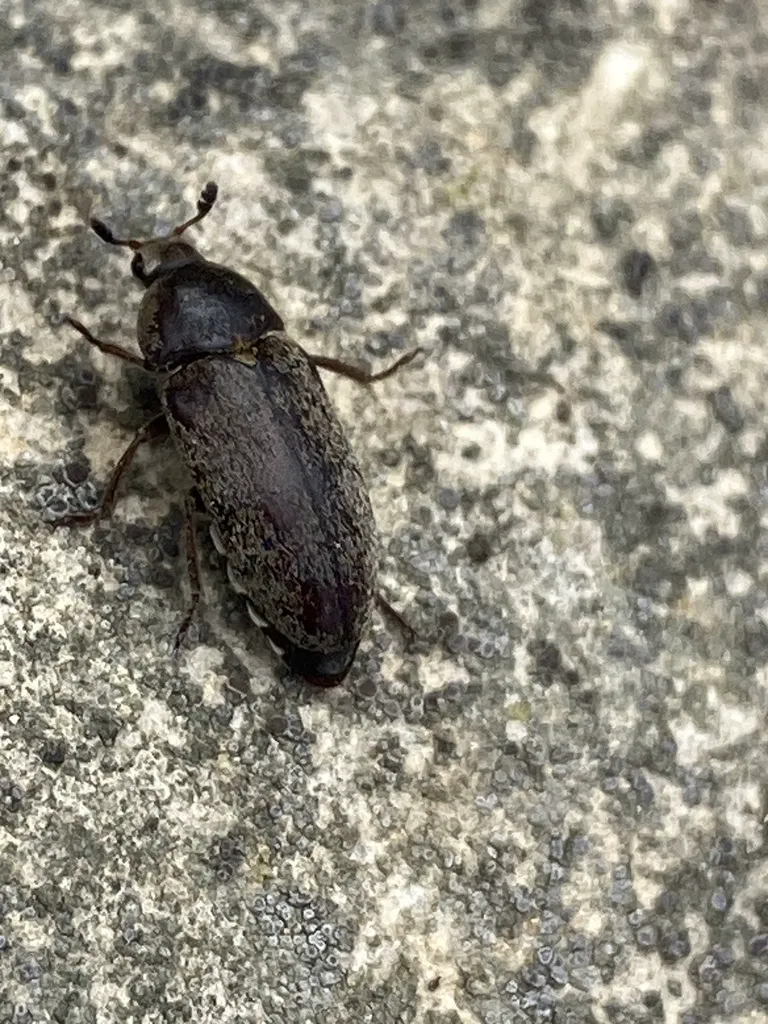
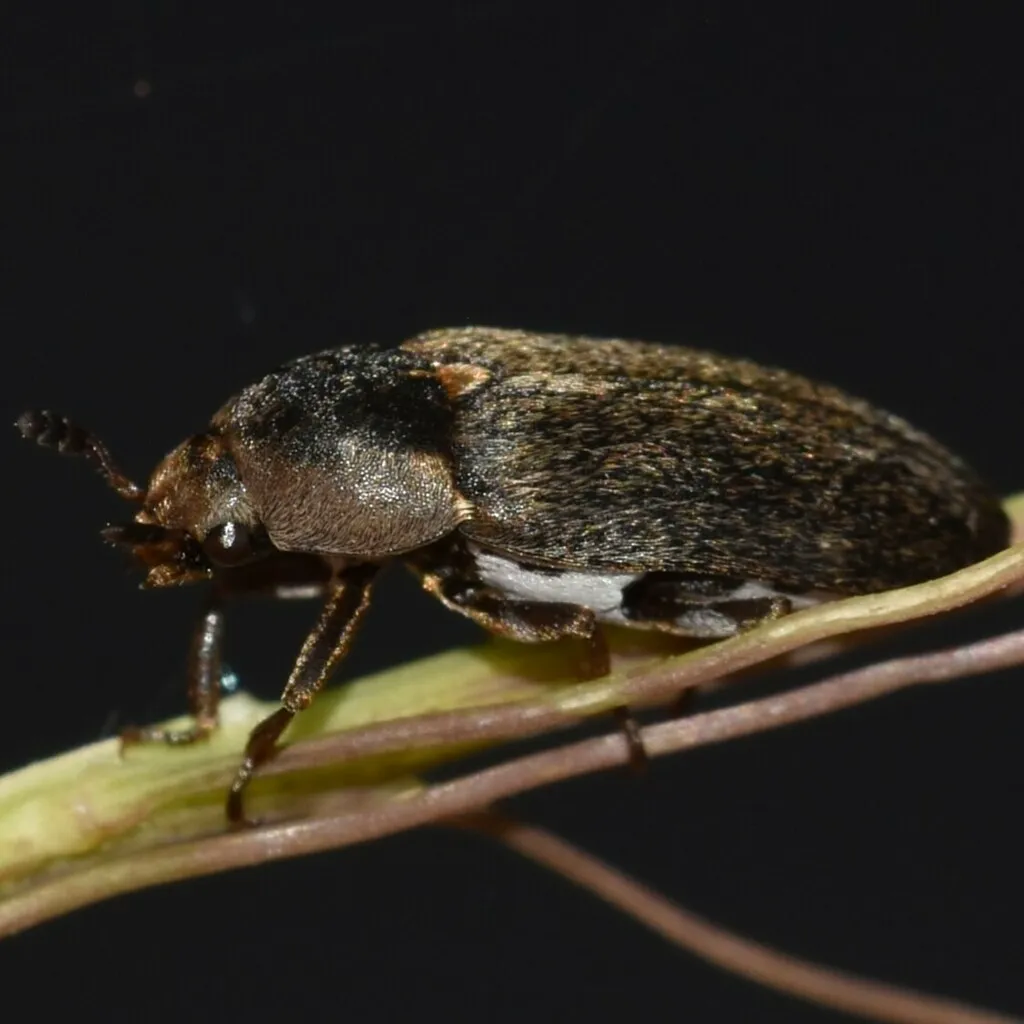
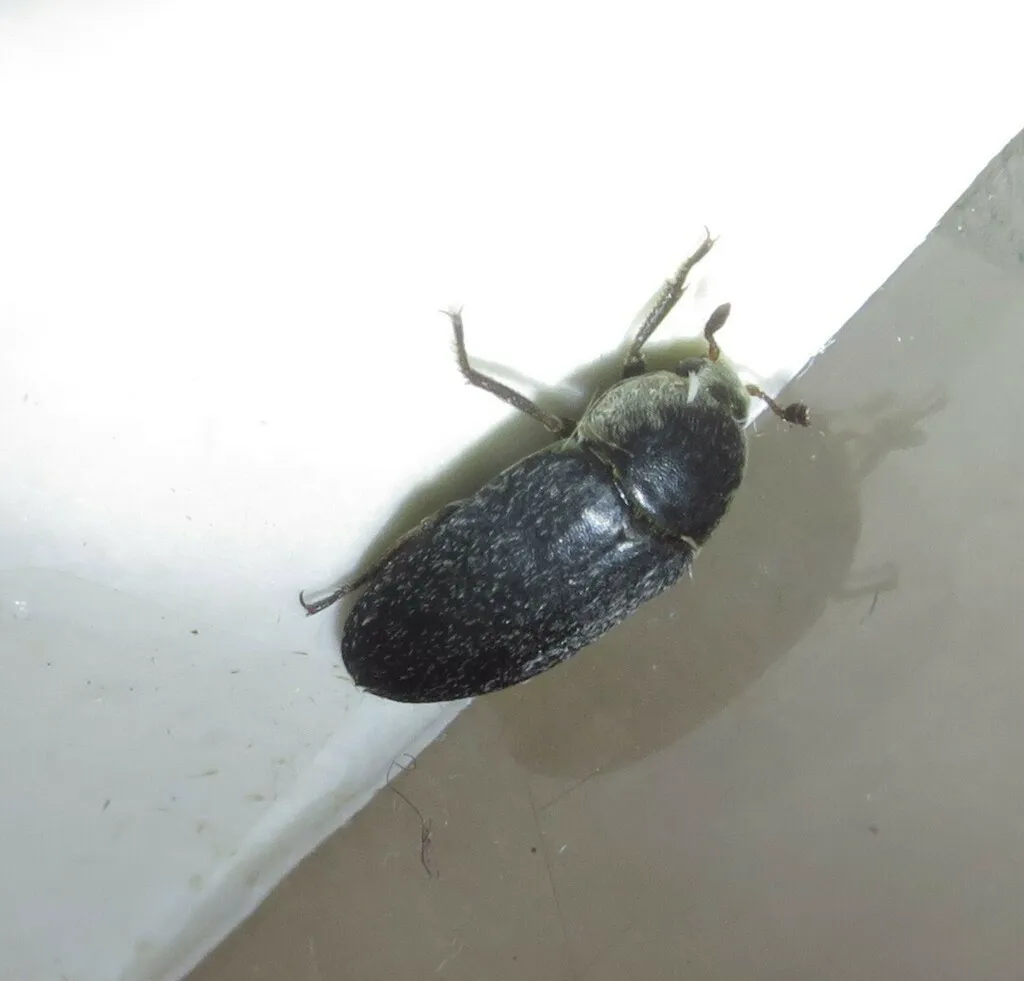
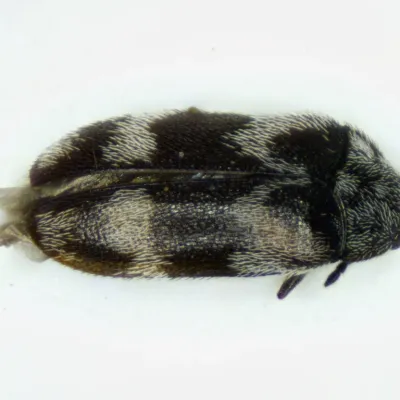
The hide beetle (Dermestes maculatus) is a medium-sized dermestid beetle that measures 6 to 10 millimeters in length. Its body is oval and slightly flattened, with a dark brown to black upper surface. Patches of white or cream-colored hairs line the sides of the pronotum and cover much of the underside, giving the beetle a subtly mottled appearance when viewed closely.
The antennae are short and end in a three-segmented club, a characteristic shared with other members of the Dermestidae family. One useful diagnostic feature is the tips of the wing covers (elytra), which have small serrated projections visible under magnification. Adults have functional wings beneath their elytra and are capable of flight, which helps them disperse to new food sources during warmer months.
Hide beetles are sometimes called leather beetles due to their tendency to feed on animal hides and leather products. They should not be confused with larder beetles, which share the same genus but have a distinctive broad yellowish band across the wing covers that hide beetles lack.
Larval Appearance
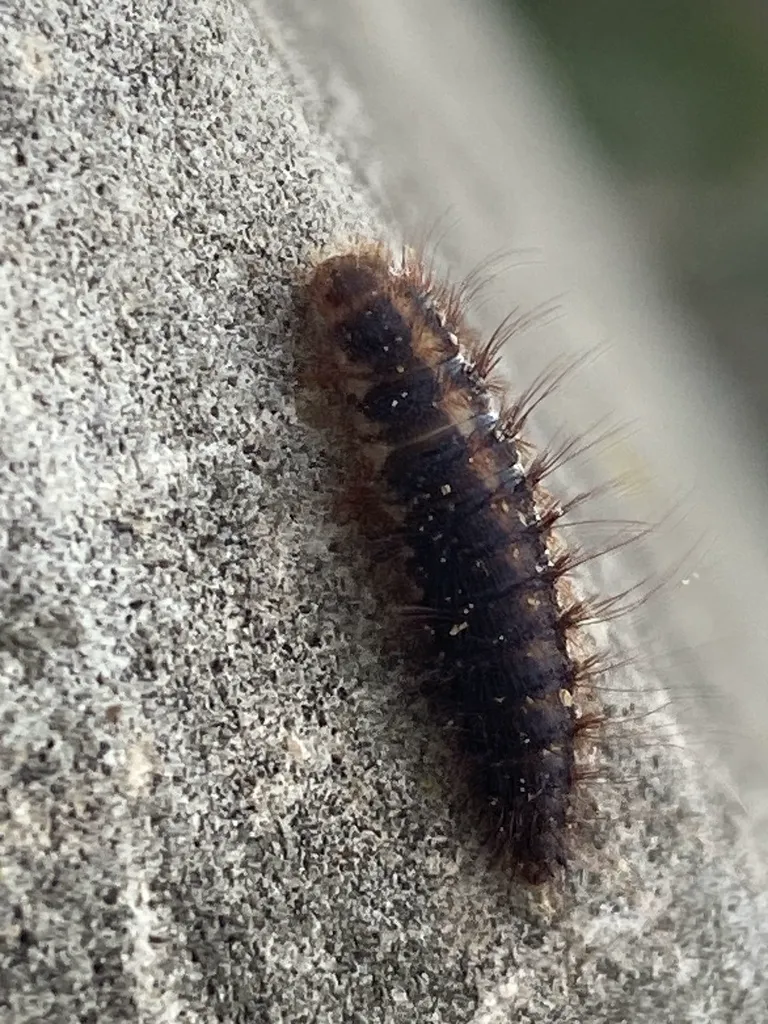
Hide beetle larvae look very different from the adults. They are elongated, up to 15 millimeters when fully grown, and densely covered in brown hairs that give them a bristly or fuzzy look. The body is reddish-brown to dark brown with visible segmentation through the hair covering.
The most reliable identifying feature on the larvae is a pair of curved spines called urogomphi on the last body segment. These spines point upward and backward, and they help distinguish hide beetle larvae from carpet beetle larvae, which lack these structures. Hide beetle larvae are also larger and hairier than the larvae of most carpet beetle species.
Hide Beetle Behavior and Biology
Feeding Habits
Both adult and larval hide beetles are scavengers that feed on dried animal tissues. In nature, they play an important ecological role by breaking down carcasses during the later stages of decomposition. Museums and universities even use colonies of hide beetles to clean skeletal specimens, taking advantage of their ability to strip dried flesh from bones without damaging the underlying structure.
In homes and buildings, hide beetles target a range of animal-based materials:
- Dead animals such as rodents, birds, or squirrels in wall voids, attics, or crawl spaces
- Dried and cured meats including jerky, bacon, and dried fish
- Taxidermy mounts and preserved animal specimens
- Leather goods, furs, feathers, and animal hides
- Pet food, especially dry kibble and treats left in open containers
- Accumulations of dead insects in light fixtures, window tracks, and attic spaces
- Cheese, particularly aged or dried varieties
Larvae cause most of the feeding damage. They eat constantly throughout their development, consuming dried protein at a steady rate. Adults also feed but consume less overall. When larvae are ready to pupate, they leave the food source and bore into nearby non-food materials like wood, cork, or insulation to create pupation chambers.
Lifecycle and Reproduction
Hide beetles undergo complete metamorphosis with four life stages: egg, larva, pupa, and adult. The speed of development depends heavily on temperature. At around 30 degrees Celsius (86 degrees Fahrenheit), the entire cycle from egg to adult takes roughly 38 days. At cooler temperatures around 18 degrees Celsius (64 degrees Fahrenheit), development slows to approximately 96 days.
Female hide beetles lay their eggs directly on or near protein-rich food sources. The small, white eggs hatch within a few days in warm conditions. Newly hatched larvae begin feeding immediately and molt multiple times as they grow. Each molt produces a cast skin that can serve as evidence of an active infestation.
When ready to pupate, larvae leave the food and search for suitable materials to bore into. They create small chambers in wood, cork, insulation, or similar substrates. The pupal stage lasts about one to two weeks before the adult beetle emerges. Adults can live for several months and are most active during warm weather, when they fly to locate new food sources and mates.
In the Mid-Atlantic region and across most of temperate North America, hide beetles are most active from June through September. Activity drops significantly during cold months, though infestations inside heated buildings can persist year-round.
Signs of a Hide Beetle Infestation
Finding a hide beetle problem early helps limit damage. Watch for these signs:
Live beetles or larvae: Adult hide beetles may appear on windowsills as they try to leave a building, or near food sources in dark, undisturbed areas. The hairy larvae are often easier to spot than adults.
Shed larval skins: As larvae grow and molt, they leave behind cast skins. Finding these in storage areas or near animal products signals an active population.
Bore holes: Small round holes in wood, cork, or insulation near food sources indicate that larvae have tunneled in to pupate.
Damaged materials: Irregular holes and feeding marks on hides, furs, leather items, taxidermy mounts, or dried food products point to hide beetle activity.
Frass and debris: Fine powdery debris or dark, stringy fecal material near infested items is a sign of larval feeding.
Treatment Methods for Hide Beetles
Controlling hide beetles requires an integrated approach that focuses on finding and removing the food source. Without eliminating the source of animal protein that attracts them, beetles will continue to breed.
Source Identification and Removal
The first and most important step is locating the infested material. Common sources in homes include dead rodents or birds in wall voids, attics, or crawl spaces. Check taxidermy mounts, leather goods, furs, pet food storage, and dried meat or fish products.
Remove infested items and dispose of them in sealed bags. For valuable items like taxidermy or museum specimens, freezing below minus 20 degrees Celsius (minus 4 degrees Fahrenheit) for at least 72 hours can kill all life stages. Heat treatment above 55 degrees Celsius (131 degrees Fahrenheit) for several hours is another effective physical control method.
Cleaning and Prevention
Thorough cleaning removes remaining beetles, larvae, and eggs. Vacuum all cracks, crevices, shelving, and storage areas where beetles might hide. Clean containers and surfaces before returning food or materials to storage.
Preventive steps to reduce the risk of hide beetle infestations include:
- Store dried foods, pet food, and animal products in airtight containers
- Inspect and rotate stored food products regularly
- Remove dead animals from wall voids, attics, and crawl spaces promptly
- Clean out dead insects from light fixtures and window tracks
- Seal gaps around windows, doors, pipes, and vents to limit entry points
- Address any rodent or wildlife issues that could provide a food source
- Use monitoring traps in storage areas, museums, or collections to detect early activity
Professional Control
For severe or recurring infestations, professional pest control can help locate hidden food sources that may be difficult to access, such as animal carcasses inside wall voids. Targeted treatments applied to cracks, crevices, and harborage areas can reduce beetle populations. In museum or collection settings, controlled atmosphere treatments using carbon dioxide or nitrogen may be used to treat infested objects without chemical residues.
References
Other Carpet Beetles
Explore other species in the carpet beetles family
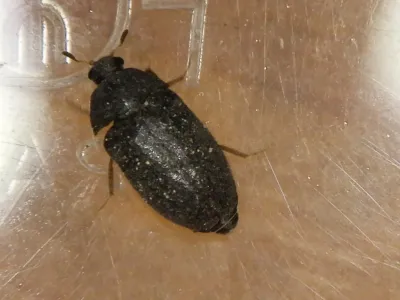
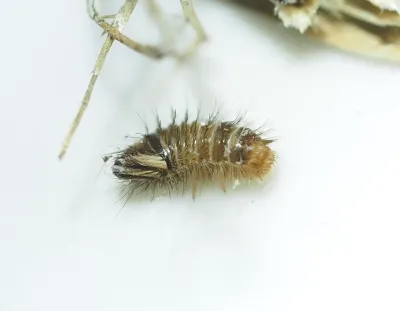
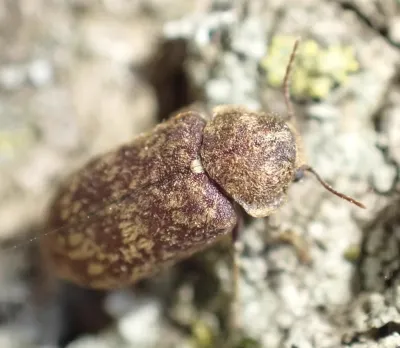
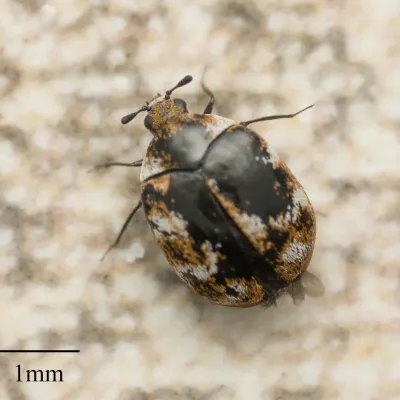
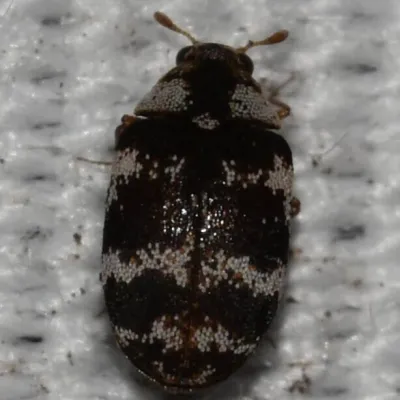
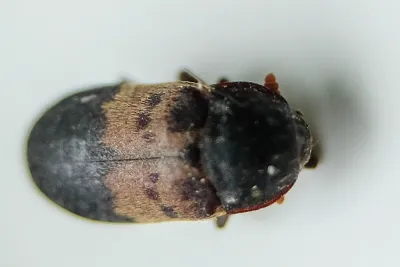
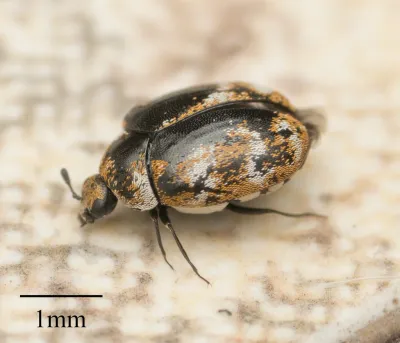
Commonly Confused With
Hide Beetles are often mistaken for these similar pests
Where Hide Beetles Are Found
Hover over states to see their names. Green regions indicate where hide beetles have been reported.
Common Questions about Hide Beetles
What do hide beetles look like?
+
Adult hide beetles are oval-shaped and measure 6 to 10 millimeters long (roughly a quarter inch). They have a dark brown to black body with patches of white or cream-colored hairs, especially along the sides of the pronotum and on the underside. Their antennae end in a distinctive three-segmented club. Under magnification, the tips of their wing covers show small serrated projections.
What do hide beetle larvae look like?
+
Hide beetle larvae are elongated and covered in dense brown hairs that give them a fuzzy, bristly appearance. They can grow up to 15 millimeters long. A key identifying feature is the pair of curved, upward-pointing spines called urogomphi on the last body segment. Their body is reddish-brown to dark brown with visible segmentation through the hair covering.
What attracts hide beetles to homes?
+
Hide beetles are attracted to dried animal materials. The most common attractants include dead animals in wall voids or attics, dried pet food, taxidermy mounts, leather goods, furs, feathers, and stored dried meats like jerky or bacon. They can also be drawn to accumulations of dead insects in light fixtures and window tracks.
Are hide beetles harmful to humans?
+
Hide beetles do not bite or sting humans and are not known to transmit diseases. However, their larvae can cause significant damage to animal-based products, leather goods, museum specimens, and stored foods. In rare cases, the tiny hairs shed by larvae may cause mild skin irritation in sensitive individuals.
How do I get rid of hide beetles?
+
Eliminating hide beetles starts with finding and removing the food source. Inspect for dead animals in walls or attics, check stored animal products, and examine taxidermy or leather items. Discard infested materials in sealed bags, vacuum thoroughly, and store susceptible items in airtight containers. For persistent infestations, professional pest control may be needed to locate hidden food sources and apply targeted treatments.
How long do hide beetles live?
+
The full lifecycle from egg to adult takes about 38 to 96 days depending on temperature, with warmer conditions speeding development. Adults can live for several months. Females lay eggs directly on or near protein-rich food sources, and a single female can produce dozens of eggs during her lifetime.
Where do hide beetles lay their eggs?
+
Female hide beetles lay their eggs directly on or near dried animal materials that will serve as food for the larvae. Common egg-laying sites include animal carcasses, dried hides and furs, taxidermy mounts, dried meats, and even accumulations of dead insects. Eggs are small, white, and typically hatch within a few days in warm conditions.
Can hide beetles damage my home?
+
While hide beetles primarily target animal-based materials, their larvae can bore into non-food materials like wood, cork, and insulation when searching for a place to pupate. This tunneling behavior can cause structural damage over time if infestations are left unchecked, particularly in areas near the original food source.

With five years of hands-on experience in the pest control industry, George Schulz is a registered technician with the Virginia Pest Management Association and a proud third-generation professional in a family business that's been protecting homes for over 57 years. He manages and trains a team of service pros while also leading internal research efforts—recently spearheading a deep-dive review of thousands of documents on pest control materials to hand-pick the most kid and pet friendly, most effective solutions tailored specifically for homes in the DC metro area.