Dermestid Beetles Identification Guide
Dermestidae
Dermestid beetles are a family of scavenging insects that includes carpet beetles and larder beetles. These pests damage natural fiber materials, stored foods, and animal products in homes.
Taxonomy
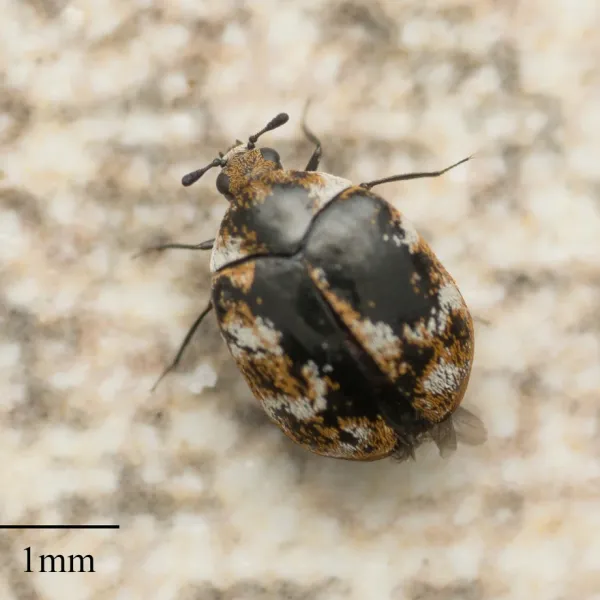
Dermestid Beetles Coloration
Common color patterns to help identify dermestid beetles
Dermestid Beetles
Seasonal Activity
When dermestid beetles are most active throughout the year

Where Dermestid Beetles Are Found
Hover over states to see their names. Green regions indicate where dermestid beetles have been reported.
Dermestid Beetle Identification Guide
What Are Dermestid Beetles?
Dermestid beetles belong to the family Dermestidae. This group of scavenging insects is found all over the world. The name comes from the Greek word “dermestes,” which means “skin eater.” About 190 species live in North America. You may know them as skin beetles, carpet beetles, larder beetles, or hide beetles.
These beetles play an important role in nature by breaking down dead animal matter. However, when they enter homes, they become destructive pests. Their larvae feed on many household items including wool clothing, carpets, leather goods, furs, and dried foods.
Physical Characteristics
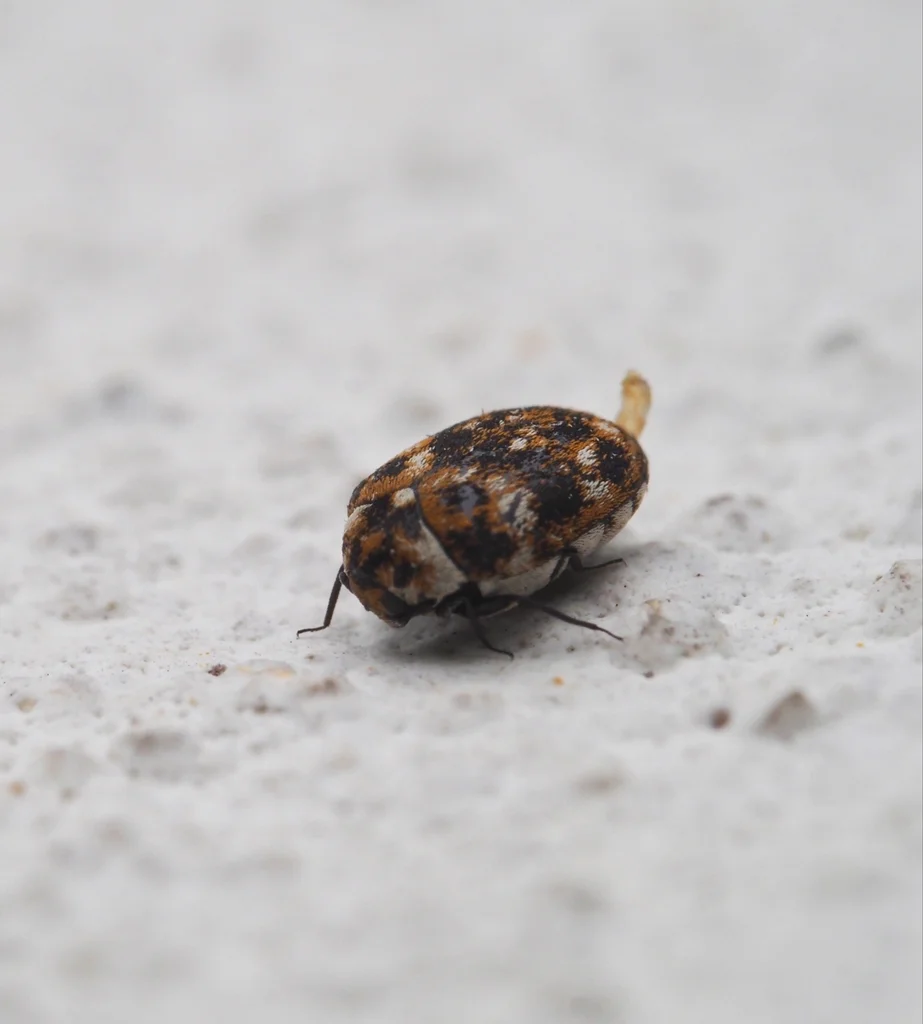
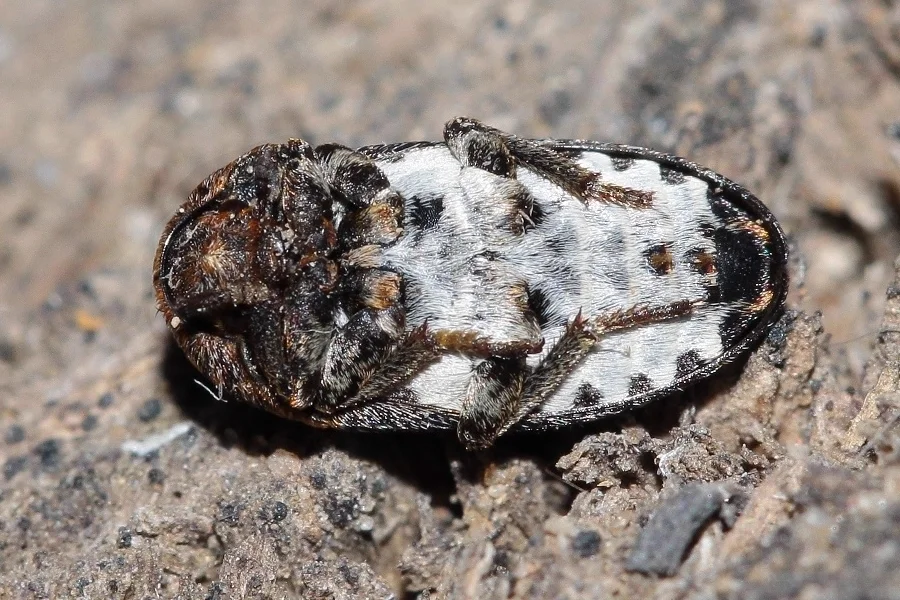
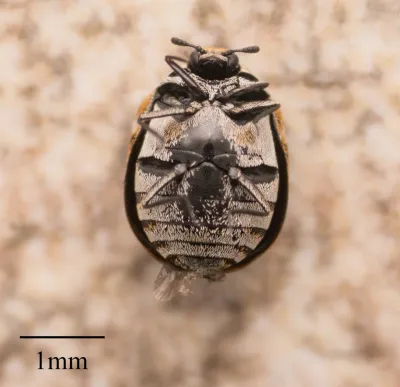
Adult dermestid beetles range from 1 to 12mm long. Size depends on the species. They have oval or rounded bodies covered with tiny hairs or scales. Most are brown or black. Some have mottled patterns of white, tan, and brown scales.
Key features include:
- Clubbed antennae that fit into grooves under the body
- Hard wing covers that protect the flying wings
- Six legs tucked close to the body when at rest
- Small size makes them easy to miss
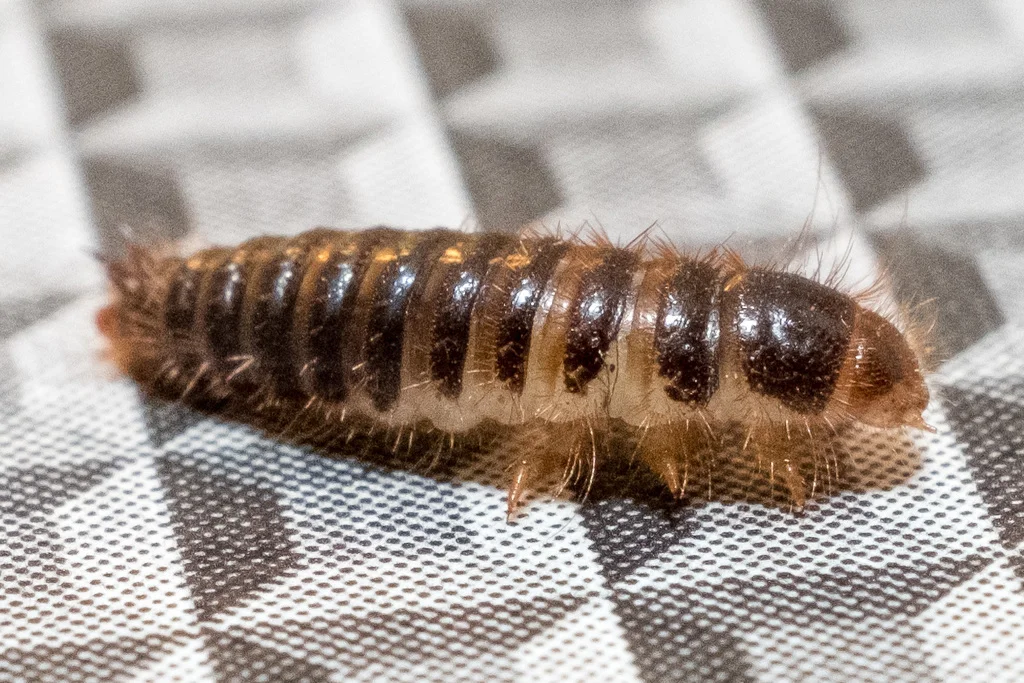
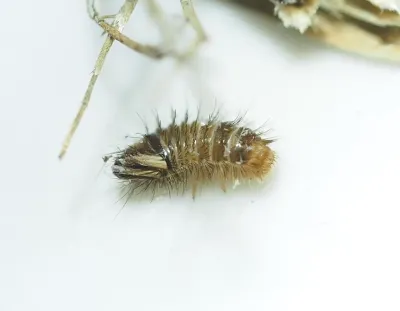
Dermestid larvae look very different from adults. They are long, carrot-shaped grubs covered in dense bristly hairs. These hairs help protect them from predators. In some species, the hairs have barbed tips that can irritate human skin. Larvae range from 5 to 15mm long. They are usually brown or tan with darker bands.
Common Species in North America
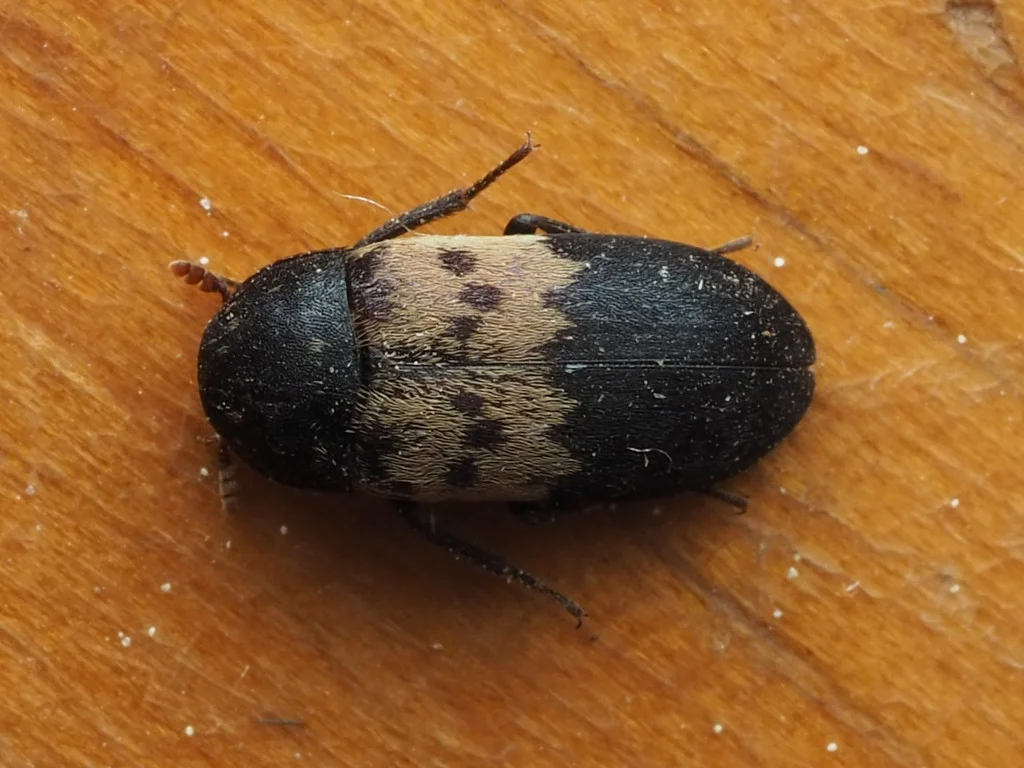
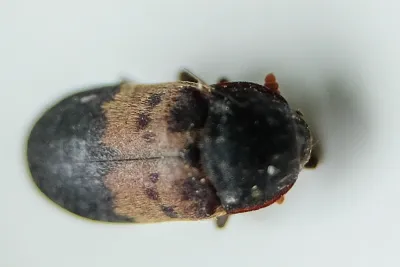
Larder Beetle (Dermestes lardarius) is one of the largest household dermestids at 6-9mm. Adults are dark brown to black. They have a pale yellow or tan band across the front half of the wing covers. This band contains six dark spots. Larder beetles prefer dried meats, cheese, and animal products. They got their name from being major pests in meat storage areas.
Hide Beetle (Dermestes maculatus), also known as a skin beetle, is slightly smaller than the larder beetle. Adults are dark brown with white scales on the underside. They feed on dried animal hides, leather, and cured meats. Museums sometimes use them intentionally to clean animal skeletons.
Warehouse Beetle (Trogoderma variabile) is a serious stored food pest. Adults are 2-4mm with wavy brown bands on their wing covers. They attack grains, cereals, pet food, and other dried goods. Their larvae can survive without food for months.
Carpet Beetles (Anthrenus and Attagenus species) are the most common household dermestids. They range from 2-5mm and attack natural fiber materials. For detailed information on carpet beetles, see our carpet beetle identification guide.
Dermestid Beetle Behavior and Biology
Lifecycle and Development
All dermestid beetles go through four life stages: egg, larva, pupa, and adult.
Eggs are tiny, white, and hard to see. Females lay them in clusters of 20 to 100 near food sources. Common egg-laying spots include cracks near stored food, lint buildup, and hidden areas near natural fiber items. Eggs hatch in 1 to 3 weeks.
Larvae cause all the damage. This stage lasts 2 to 12 months. The time depends on food quality and temperature. Larvae shed their skin 5 to 11 times before becoming pupae. They avoid light and hide in dark areas while feeding. Shed larval skins are often the first sign of a problem.
Pupae form inside the last larval skin or in a small cell the larva creates. This stage lasts 2 to 3 weeks. Pupae resist many insecticides, which is why follow-up treatments are often needed.
Adults emerge ready to mate. Most species live only 2 to 6 weeks as adults. They seek light and often fly to windows. Many adult dermestids feed on flower pollen. Some eat the same materials as their larvae. A related species, June Bugs, shares similar characteristics.
What Do Dermestid Beetles Eat? A related species, False Powderpost Beetles, shares similar characteristics.
Dermestid beetle larvae are scavengers. They eat keratin and other animal proteins. Their diet includes:
- Dried meats, fish, and cheese
- Animal hides, leather, and fur
- Wool, silk, and other natural fibers
- Feathers and down
- Dead insects and insect collections
- Pet hair, dander, and pet food
- Bird and wasp nests
- Dried blood and bones
- Museum specimens and taxidermy
Some species also attack plant materials like grains, cereals, and seeds. The warehouse beetle is a major pest of stored foods worldwide.
Where Do Dermestid Beetles Hide?
Infestations often start in overlooked areas:
- Pantries with dried foods, spices, or pet food
- Closets with wool clothing or furs
- Under furniture where pet hair collects
- In air ducts and HVAC systems
- Near bird nests or wasp nests on the building
- Inside wall voids with dead insects
- Around taxidermy or insect collections
- In stored boxes of clothing or fabrics
Adult beetles frequently appear on windowsills as they try to fly toward light. This is often when homeowners first notice a problem.
Signs of a Dermestid Beetle Infestation
Damage Patterns
Dermestid beetle damage varies by species:
Fabric damage shows up as irregular holes in wool, silk, and other natural fiber items. Larvae often feed along seams, folds, and dirty areas. They may eat only the top layer of fibers. This leaves a grazed or thin look.
Food damage shows up as holes in packaging, webbing in grain products, or live larvae in dried goods. You may notice a musty odor from heavily infested foods.
Leather damage includes surface pitting, holes, and deterioration of bindings and goods.
Warning Signs
- Adult beetles on windowsills: They are drawn to light when trying to exit
- Shed larval skins: Light brown, hairy shells left behind after molting
- Fuzzy larvae on walls: Common in spring as they search for pupation sites
- Fecal pellets: Tiny, sand-like particles near damaged items
- Holes in stored foods or fabrics: Irregular damage patterns
- Damaged packaging: Chewed holes in food containers
Treatment Methods for Dermestid Beetles
Good dermestid beetle control targets all life stages.
Source Identification
The first step is finding where the beetles are breeding. This often involves checking:
- All stored food products in pantries
- Wool clothing and natural fiber items in closets
- Pet food storage areas
- HVAC ducts and filters
- Wall voids and attic spaces
- Exterior bird or wasp nests
Removing the infestation source is essential. Without this step, treatments provide only temporary relief.
Non-Chemical Control
Many dermestid beetle problems can be reduced without pesticides:
- Discard infested foods and thoroughly clean storage areas
- Freeze infested items at 0 degrees F (-18 degrees C) for 7 days to kill all life stages
- Heat treatment at 130-140 degrees F for 30-60 minutes also kills eggs, larvae, and adults
- Dry cleaning kills dermestids in fabrics
- Vacuum thoroughly to remove eggs, larvae, and debris from carpets and cracks
- Store susceptible items in airtight containers or sealed bags
Chemical Treatment Approaches
For bigger infestations, residual insecticides applied to cracks, baseboards, and carpet edges provide lasting control. Insect growth regulators stop larvae from growing into adults. Insecticidal dusts work well in wall voids and hard-to-reach spots.
Treatment works best when applied to all areas where larvae hide or travel. Eggs and pupae resist many products. Follow-up treatments 2-4 weeks later help kill newly hatched larvae.
Prevention Tips
- Store wool and natural fiber items in sealed containers or garment bags
- Clean clothing before long-term storage
- Vacuum regularly, especially along baseboards and under furniture
- Inspect secondhand furniture and clothing before bringing them inside
- Keep pantry foods in sealed containers
- Remove bird and wasp nests from near the building
- Seal gaps around windows, doors, and utility penetrations
Health Concerns
Dermestid beetles do not bite or transmit diseases. However, their larvae can cause problems for some people:
Allergic reactions: The bristly hairs on carpet beetle larvae can cause skin rashes and breathing problems. This happens when the hairs are inhaled or touched. Some people get itchy bumps that look like insect bites. Learn more about whether carpet beetles are dangerous.
Food contamination: Larvae in stored foods can cause digestive upset if consumed. Heavily infested foods should be discarded.
Asthma triggers: Beetle parts and hairs can add to indoor allergens. This may worsen asthma symptoms in some people.
If you have health concerns related to dermestid beetles, talk to your doctor for medical advice.
References and Further Reading
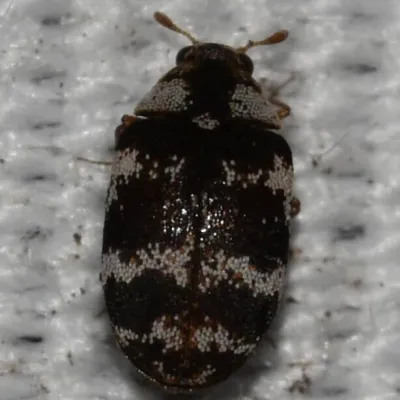
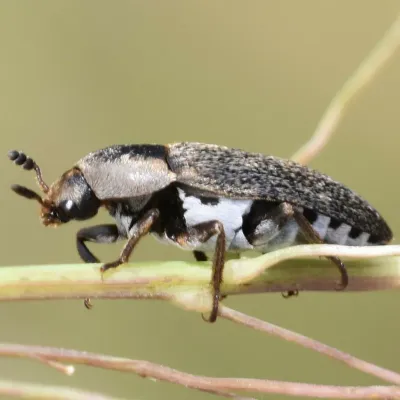
Other Carpet Beetles
Explore other species in the carpet beetles family
Commonly Confused With
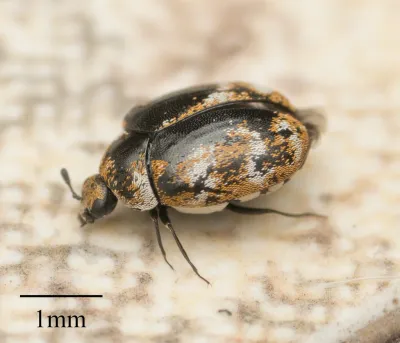
Dermestid Beetles are often mistaken for these similar pests
Where Dermestid Beetles Are Found
Hover over states to see their names. Green regions indicate where dermestid beetles have been reported.
Common Questions about Dermestid Beetles
What is a dermestid beetle?
+
Dermestid beetles belong to the Dermestidae family, also called skin beetles. This group includes carpet beetles and larder beetles. About 190 species live in North America. Their larvae scavenge on dried animal matter, natural fibers, and stored foods.
Are dermestid beetles harmful?
+
Dermestid beetles do not bite or spread disease to humans. However, their larvae can damage valuable items in your home. They eat wool clothing, carpets, leather goods, furs, and stored foods. The larvae's bristly hairs can also cause skin rashes in some people.
How do dermestid beetles get inside homes?
+
Adult beetles fly well and often enter homes through open windows and doors. They are drawn to light and flowers. They can also arrive on secondhand furniture, stored clothing, or in dried food products. Bird and wasp nests near homes provide another entry point.
What is the difference between carpet beetles and larder beetles?
+
Carpet beetles are smaller (2-5mm) and attack natural fiber fabrics like wool and silk. Larder beetles are larger (6-9mm) and prefer dried meat, cheese, and animal products. Both belong to the dermestid family. Larder beetles have a distinctive pale band across their wing covers.
How do I know if I have dermestid beetles?
+
Look for irregular holes in fabrics, shed larval skins, and small fecal pellets near damaged items. You may see adult beetles on windowsills or fuzzy larvae on walls in spring. Check stored foods for larvae or damage.
Why are dermestid beetles used in museums?
+
Museums and taxidermists use dermestid beetle larvae to clean animal skeletons. The larvae eat only soft tissue and leave bones intact. This natural cleaning method works better than chemicals for delicate specimens.
How long do dermestid beetles live?
+
The larval stage lasts 2 to 12 months depending on conditions. Adult beetles live only 2 to 6 weeks. The entire lifecycle from egg to adult takes 2 to 12 months. Cooler temperatures slow their development.

With five years of hands-on experience in the pest control industry, George Schulz is a registered technician with the Virginia Pest Management Association and a proud third-generation professional in a family business that's been protecting homes for over 57 years. He manages and trains a team of service pros while also leading internal research efforts—recently spearheading a deep-dive review of thousands of documents on pest control materials to hand-pick the most kid and pet friendly, most effective solutions tailored specifically for homes in the DC metro area.