Carpet Beetle Larvae Identification Guide
Dermestidae (larval stage)
Carpet beetle larvae are the destructive juvenile stage of carpet beetles, causing significant damage to wool, silk, fur, feathers, and other natural fiber materials in homes.
Taxonomy
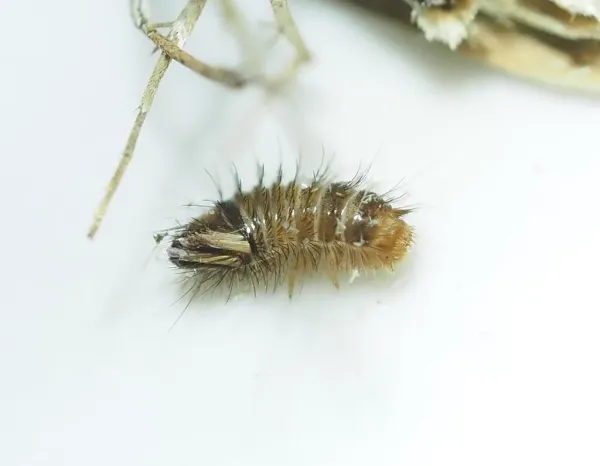
Carpet Beetle Larvae Coloration
Common color patterns to help identify carpet beetle larvae
Carpet Beetle Larvae
Seasonal Activity
When carpet beetle larvae are most active throughout the year

Where Carpet Beetle Larvae Are Found
Hover over states to see their names. Green regions indicate where carpet beetle larvae have been reported.
Carpet Beetle Larvae Identification Guide
Physical Characteristics
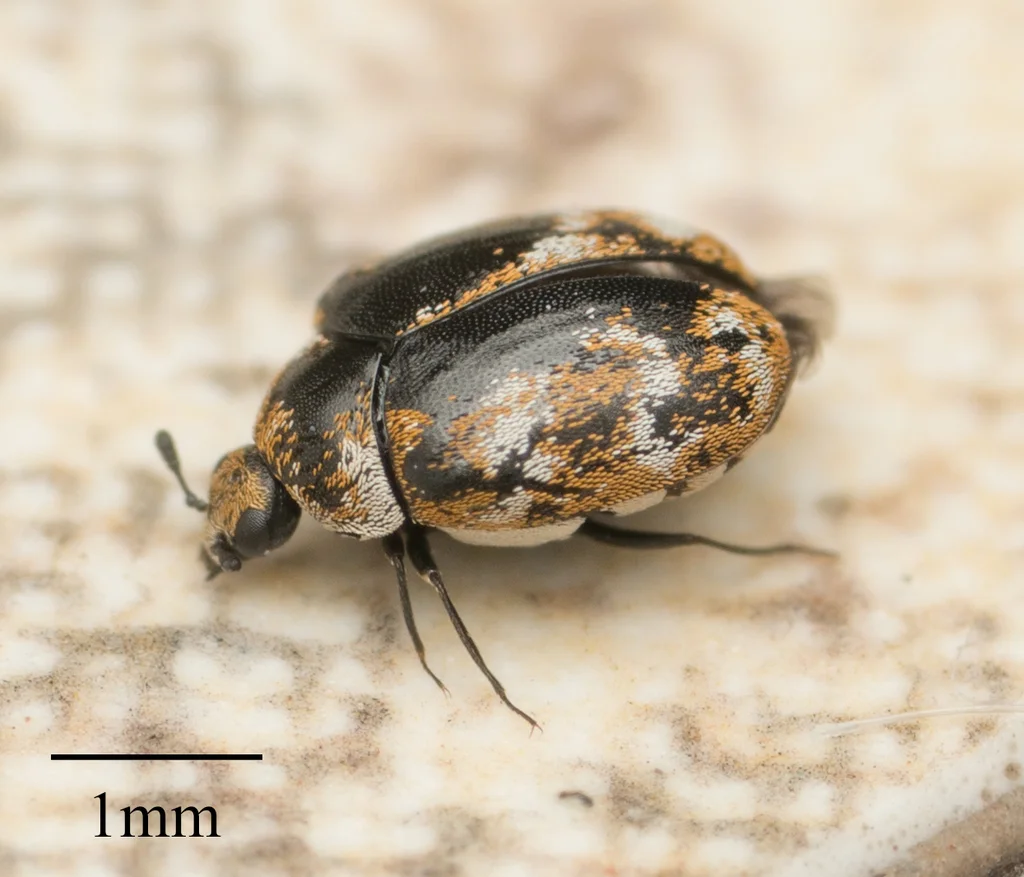
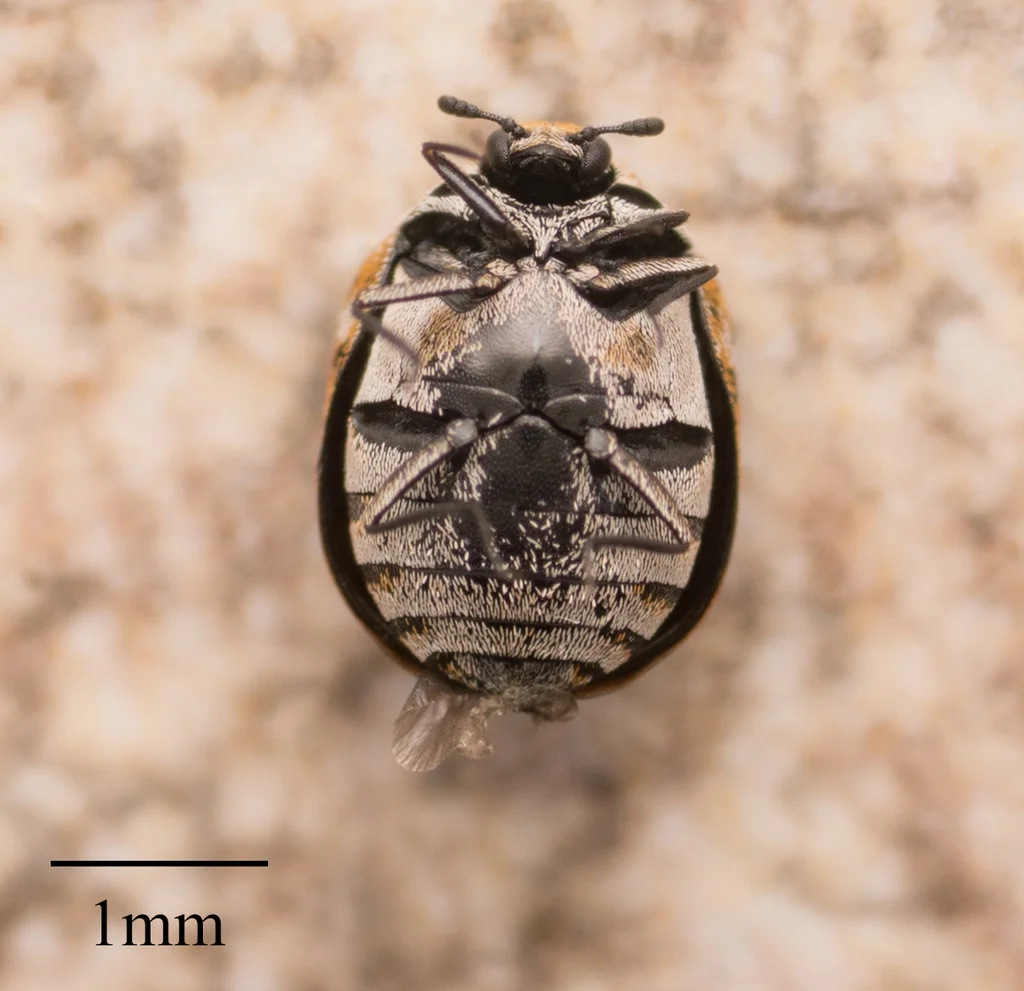
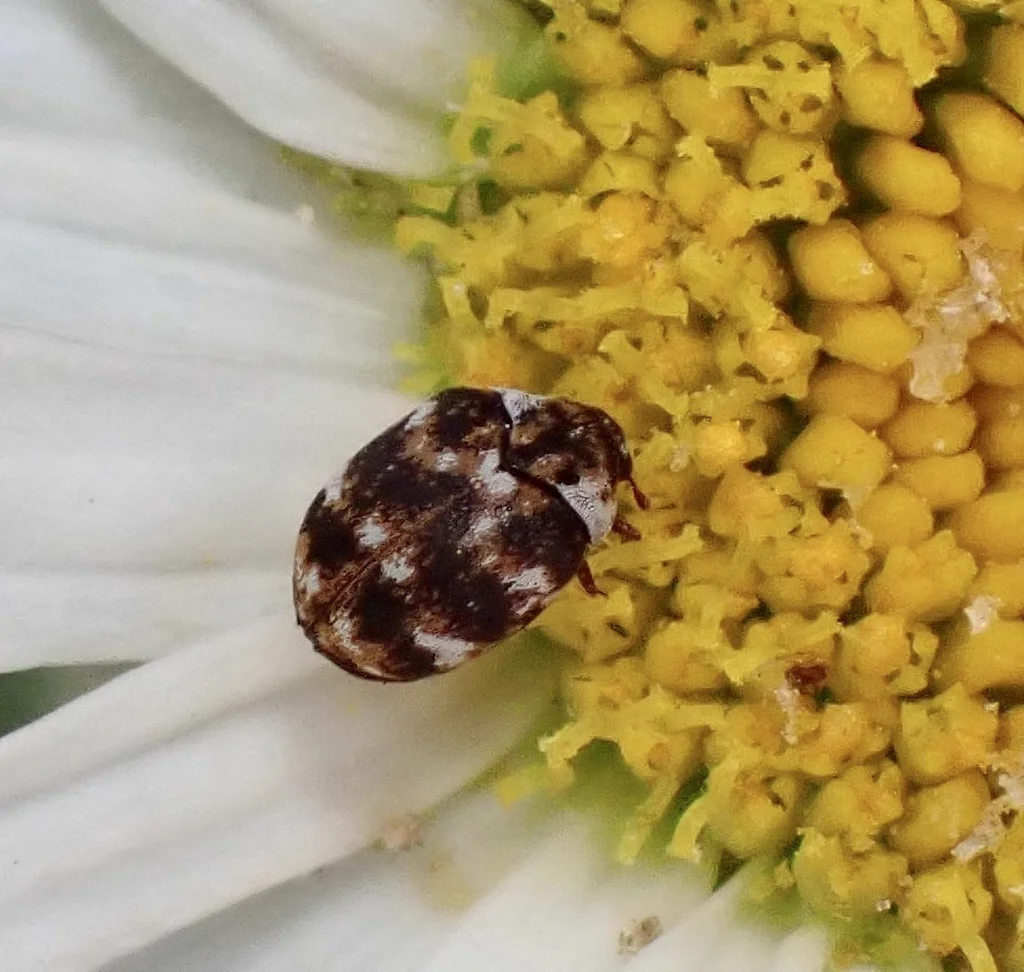
Carpet beetle larvae are the young stage of carpet beetles. They cause damage to fabrics and look very different from the adult beetles. Adult carpet beetles are small, round insects. The larvae are fuzzy, worm-like grubs that look more like tiny caterpillars.
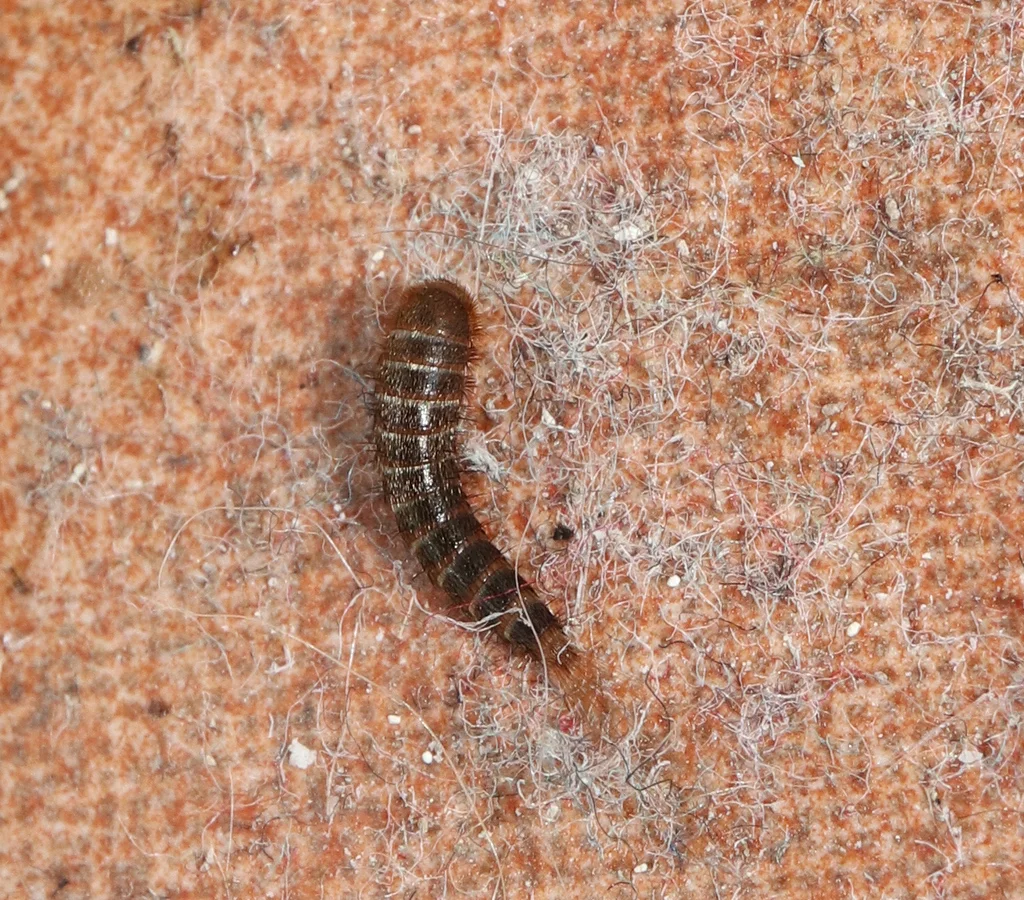
These larvae are about 3-6mm long. They have a carrot or cigar shape, wider at the head and narrow at the tail. Their bodies are covered in bands of bristly hairs. These hairs give them a fuzzy or woolly look. The barbed hairs can cause skin rashes in some people.
Colors vary by species but usually include bands of light tan and darker brown. Black carpet beetle larvae have a tuft of golden-brown hairs at the tail end. Larvae move slowly. You may find them crawling on walls or floors as they search for food.
Common Species and Their Larvae
Varied Carpet Beetle Larvae (Anthrenus verbasci) are the most common type in homes. They have bands of light and dark brown bristles and grow to 4-5mm long. They do not have the tail tuft that black carpet beetle larvae have.
Black Carpet Beetle Larvae (Attagenus unicolor) are larger, growing up to 12mm long. They have a brush of golden-brown hairs at the tail. Some people call them “buffalo moths.” Their bodies are more solid brown in color.
Common Carpet Beetle Larvae (Anthrenus scrophulariae) look like varied carpet beetle larvae. They are a bit larger with stronger banding patterns. They often live in homes with natural fiber carpets.
Furniture Carpet Beetle Larvae (Anthrenus flavipes) have a rounder shape and are covered in brown bristles. They often infest furniture and are common in the eastern United States.
Carpet Beetle Larvae Behavior and Biology
Lifecycle and Development
The carpet beetle lifecycle explains why larvae cause the most damage. Adult beetles live only 2-6 weeks and eat pollen outdoors. Their only job is to reproduce. After mating, females enter homes to lay eggs in dark spots near food sources.
Eggs hatch in 1-2 weeks. The tiny larvae start feeding right away. This larval stage lasts a long time, from 2 months to over 2 years. How long depends on temperature and food quality. Larvae do best in temperatures between 65-80 degrees F.
As they grow, larvae shed their skin 5-11 times. Each shed skin keeps the bristly look of the living larva. These shed skins pile up near feeding sites. They are often the first sign of a problem.
When fully grown, larvae find a hidden spot to change into adults. This pupal stage lasts 2-3 weeks. Then adult beetles emerge and head toward light to leave the home.
Feeding Behavior and Damage
Carpet beetle larvae feed on keratin, a protein found in animal-based materials. Their diet includes:
- Wool carpets and rugs, especially along edges and under furniture
- Clothing and textiles like wool sweaters, silk scarves, and blended fabrics
- Leather goods such as bookbindings, shoes, and handbags
- Fur and feathers in coats, pillows, and decorations
- Pet hair and dander that builds up in carpet and ductwork
- Dead insects in wall voids and window channels
- Taxidermy and museum items, including insect collections
Larvae like to feed in dark, quiet spots. They often burrow into materials to hide. They are drawn to soiled fabrics because sweat, food stains, and body oils add extra nutrients. Clothes worn once and stored without washing are at high risk.
The damage pattern is easy to spot. Larvae scrape the surface of materials, making irregular holes and thin patches. This differs from the more even damage caused by clothes moths. Damage often shows up along seams, folds, and hidden areas. For more on identifying these pests, read about signs of carpet beetles and are carpet beetles dangerous.
Where Larvae Hide
Carpet beetle larvae avoid light and stay hidden. This makes them hard to find until damage is severe. Common hiding spots include:
- Inside closets with stored woolens and rarely worn clothes
- Under furniture and along baseboards where lint and pet hair collect
- Inside upholstered furniture, in crevices and along seams
- In carpet fibers, especially along edges and under area rugs
- Inside HVAC ducts where lint and debris build up
- Near old bird nests, wasp nests, or rodent nests
- In stored boxes of blankets, sweaters, or seasonal clothes
Signs of Carpet Beetle Larvae Infestation
Identifying Larval Activity
The most reliable signs of carpet beetle larvae include:
Shed larval skins are the clearest sign. These hollow, bristly husks keep the shape of the larva and build up near feeding sites. They are light brown and may be found in corners, along baseboards, or in infested items.
Fecal pellets look like tiny, sand-like bits near damaged items. They match the color of the material being eaten.
Larvae crawling on surfaces is common in spring. Mature larvae leave feeding sites to find places to pupate. You may see them on walls, ceilings, or windowsills.
Irregular holes and surface grazing on natural fiber items. Unlike moth damage, carpet beetle damage is more random and may only affect the surface layer.
Distinguishing from Other Pests
Carpet beetle larvae are sometimes confused with other pests:
Clothes moth larvae are smooth, cream-colored caterpillars without bristly hairs. They also make silk webbing while feeding. Carpet beetle larvae do not.
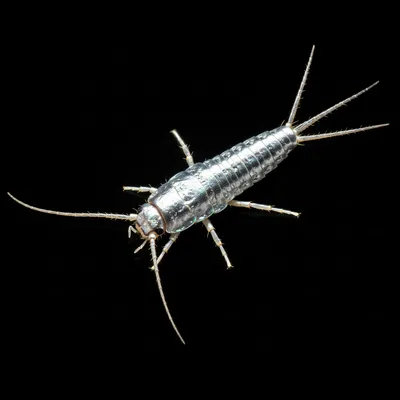
Silverfish look very different. They are long, silvery, and have no bristles. They eat paper and starches, not animal fibers.
Bed bug nymphs are flat, oval, and have no fuzzy covering. They feed on blood, not fabrics.
How We Treat for Carpet Beetle Larvae
Good control of carpet beetle larvae takes a step-by-step approach. We target all life stages and remove conditions that help them thrive.
Professional Inspection
Our technicians do a full inspection to find:
- Active larval infestations and their food sources
- Shed skins and droppings that show activity levels
- Problem conditions like lint buildup or stored natural fibers
- Entry points where adult beetles may be getting in
- Hidden infestations in closets, furniture, and HVAC systems
We check all areas with natural fiber materials. We pay close attention to dark, quiet spaces where larvae like to live.
Treatment Approach
Residual Insecticide Applications: We apply long-lasting insecticides to cracks, crevices, baseboards, and carpet edges. These are the areas where larvae travel and feed. The products keep working for weeks, killing larvae that hatch after the first treatment.
Insect Growth Regulators (IGRs): These products stop larvae from growing into adults. They break the breeding cycle and help prevent re-infestation.
Dust Treatments: In wall voids and other enclosed spaces where larvae may live, we apply insecticidal dusts. These provide long-term protection in hard-to-reach areas.
Homeowner Preparation
Treatment works best with your help:
- Vacuum well in all carpeted areas, furniture, and along baseboards to remove larvae, shed skins, and eggs
- Wash or dry clean fabrics at temperatures above 120 degrees F
- Throw away heavily infested items that cannot be saved
- Store clean woolens in sealed containers or garment bags
- Clean regularly to reduce lint and hair buildup
Follow-Up and Prevention
Carpet beetle eggs and pupae can survive insecticide treatment. That is why follow-up visits matter. We schedule a return visit 2-4 weeks after the first treatment. This helps us eliminate larvae that hatched since then.
For long-term prevention:
- Vacuum often, especially in closets and along carpet edges
- Store woolens in sealed containers
- Clean clothes before storing them
- Check used furniture and clothing before bringing them home
- Remove bird and insect nests near your home
References and Further Reading
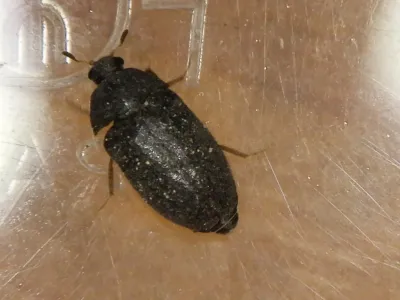
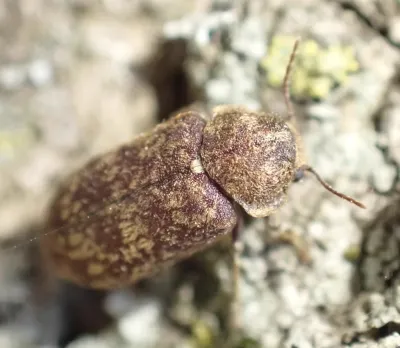
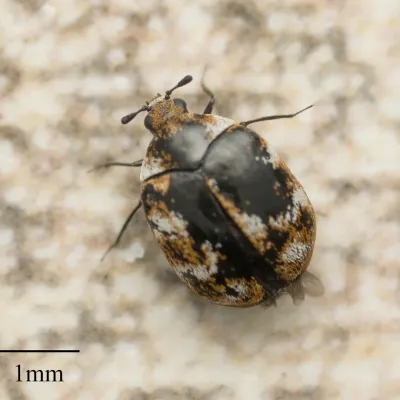
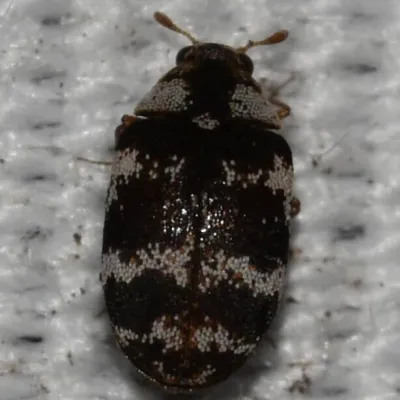
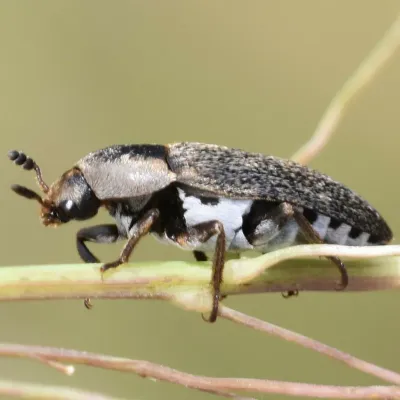
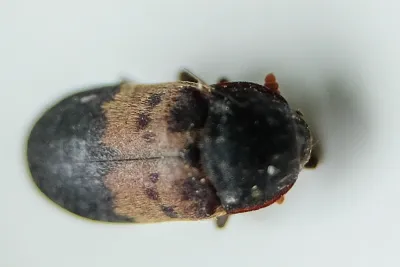
Other Carpet Beetles
Explore other species in the carpet beetles family
Commonly Confused With
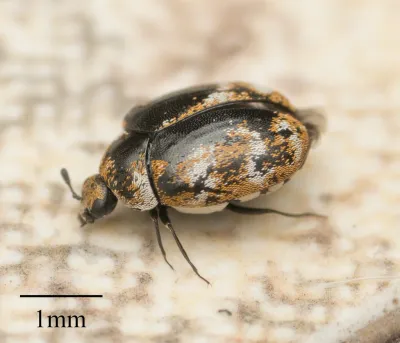
Carpet Beetle Larvae are often mistaken for these similar pests
Where Carpet Beetle Larvae Are Found
Hover over states to see their names. Green regions indicate where carpet beetle larvae have been reported.
Common Questions about Carpet Beetle Larvae
What do carpet beetle larvae look like?
+
Carpet beetle larvae are small (3-6mm), carrot-shaped grubs covered in bristly hairs. They have bands of light and dark brown and move slowly. Unlike the small, oval adult beetles, larvae are fuzzy and look like tiny caterpillars.
Are carpet beetle larvae harmful to humans?
+
Carpet beetle larvae do not bite. However, their barbed hairs can cause skin rashes and allergic reactions in some people. Some develop carpet beetle dermatitis from shed skins and hairs. The main concern is damage to natural fiber materials.
What do carpet beetle larvae eat?
+
Larvae eat wool carpets and clothes, silk, leather, fur, feathers, pet hair, and dead insects. They prefer dirty fabrics since sweat and body oils add nutrients. They do not damage synthetic materials unless blended with natural fibers.
How long do carpet beetle larvae live?
+
Carpet beetle larvae live longer than any other stage. They feed for 2-3 months to over 2 years, depending on temperature and food. They shed their skin 5-11 times before becoming adults. The shed skins are often the first sign of a problem.
Where do carpet beetle larvae hide?
+
Larvae like dark, quiet areas near their food. Common spots include closets with stored woolens, under furniture, along baseboards, inside air ducts, and in boxes of stored clothes or blankets.
How do I get rid of carpet beetle larvae?
+
Getting rid of carpet beetle larvae takes thorough vacuuming, hot washing or dry cleaning fabrics, and professional treatment. Eggs and pupae can survive treatment, so follow-up visits are needed to break the lifecycle.
Can carpet beetle larvae damage my furniture?
+
Yes, larvae can damage furniture with natural fibers like wool, silk, or horsehair stuffing. They often infest hidden areas of furniture, such as the underside, seams, and cushion crevices. They can feed there for months without being noticed.

With five years of hands-on experience in the pest control industry, George Schulz is a registered technician with the Virginia Pest Management Association and a proud third-generation professional in a family business that's been protecting homes for over 57 years. He manages and trains a team of service pros while also leading internal research efforts—recently spearheading a deep-dive review of thousands of documents on pest control materials to hand-pick the most kid and pet friendly, most effective solutions tailored specifically for homes in the DC metro area.