Chimney Bees Identification Guide
Anthophora abrupta
Chimney bees are solitary ground-nesting bees that build distinctive clay turret structures at their nest entrances, often found in clay banks, bare soil, and occasionally near foundations.
Taxonomy
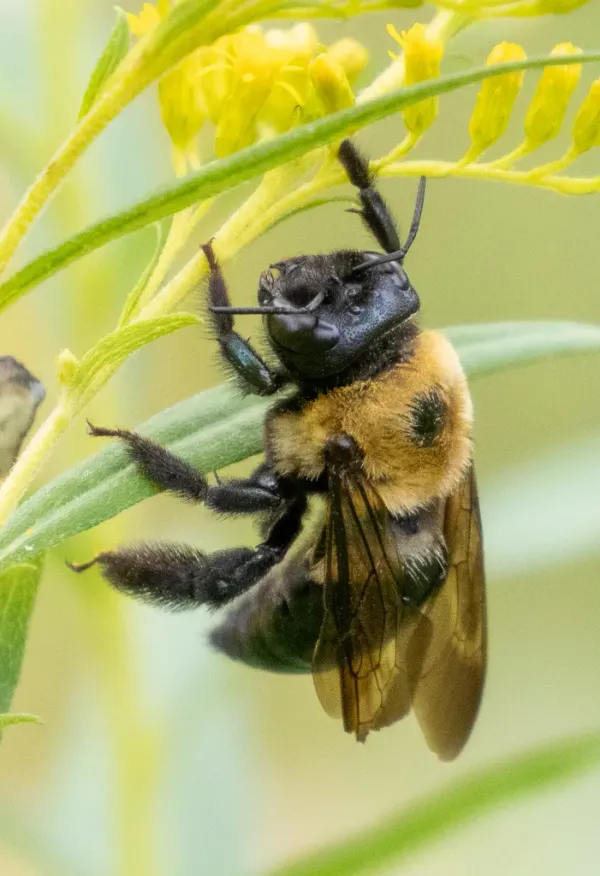
Chimney Bees Coloration
Common color patterns to help identify chimney bees
Chimney Bees
Seasonal Activity
When chimney bees are most active throughout the year

Where Chimney Bees Are Found
Hover over states to see their names. Green regions indicate where chimney bees have been reported.
Chimney Bee Identification Guide
Physical Characteristics
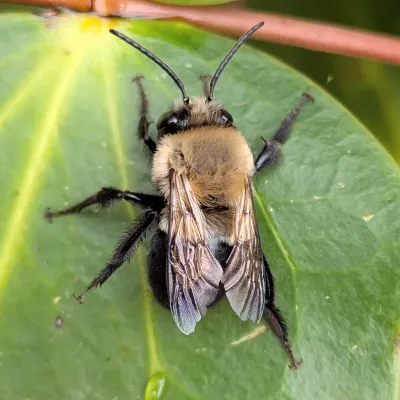
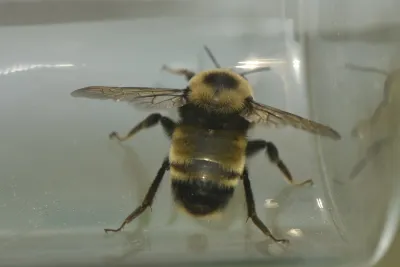
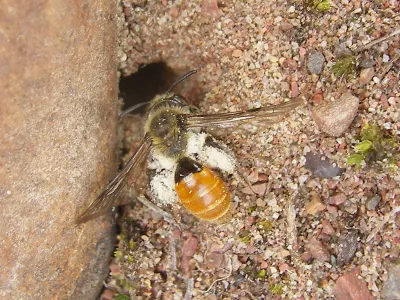
Chimney bees (Anthophora abrupta) are medium-sized, fuzzy bees. Adults measure about half an inch to two-thirds of an inch long (12 to 17 mm). At first glance, they can look like a small bumble bee, but a few key traits set them apart.
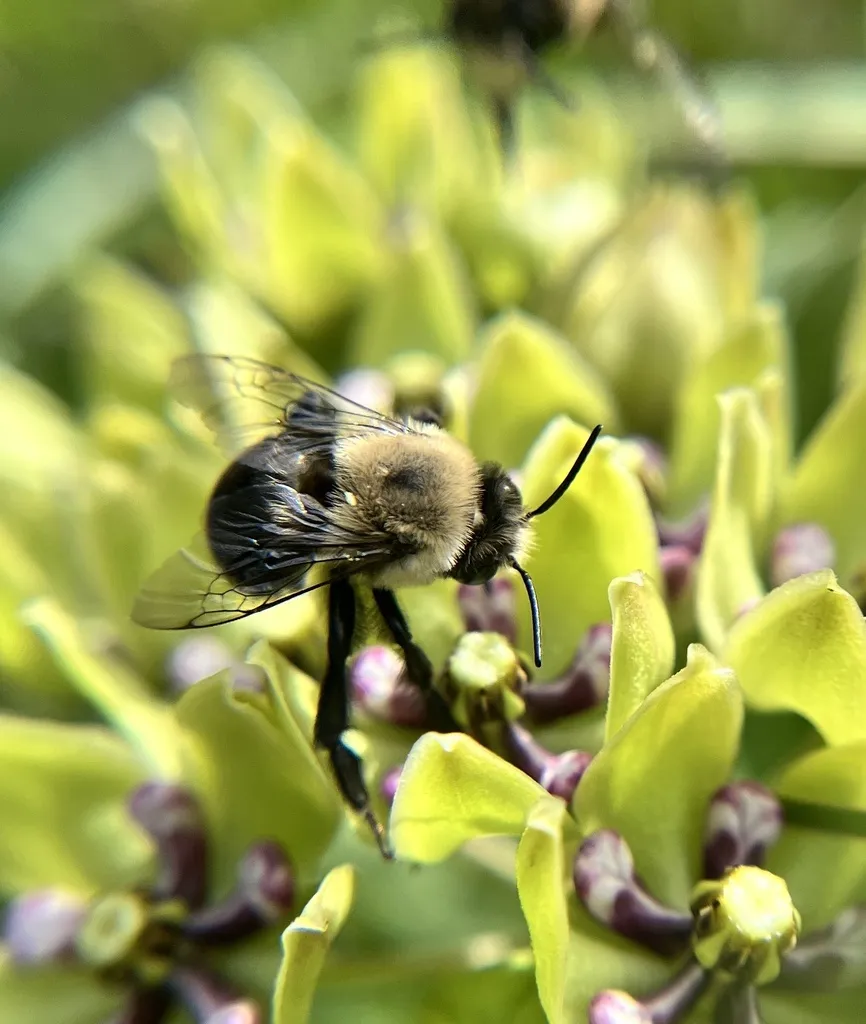
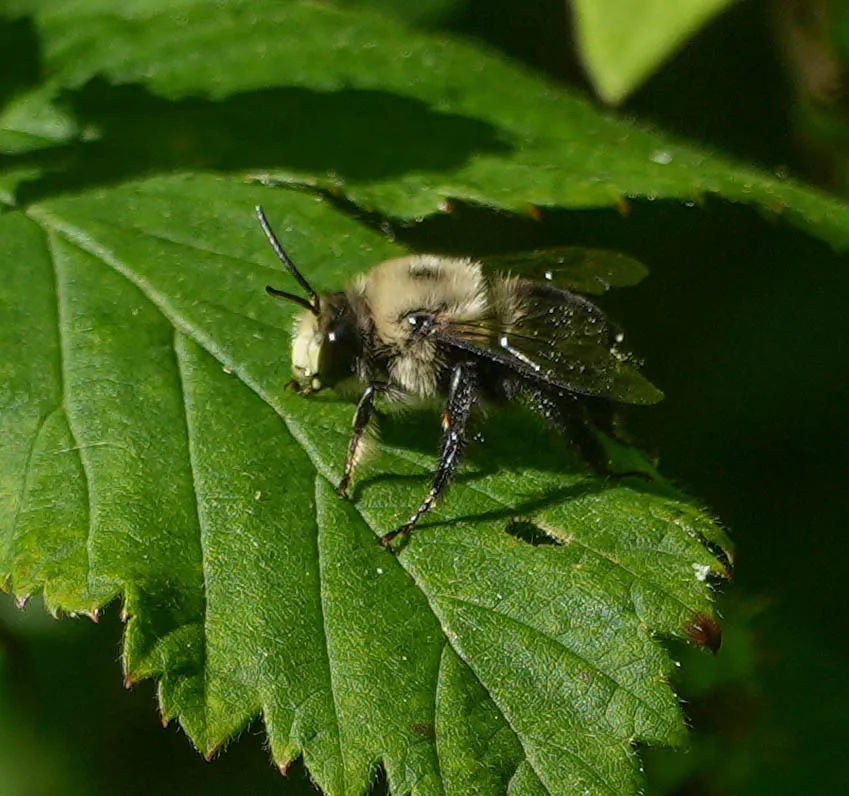
The midsection (thorax) is covered in thick, pale yellow to orange hair. The head and abdomen are darker, brown to black, with shorter hair. The wings are dark and see-through. Males have a patch of pale hairs on the face that looks like a mustache. This marking is one of the best ways to spot a male chimney bee.
These bees have large eyes and a wide face plate. Their body is stocky and round compared to other solitary bees, which tend to be longer and thinner.
How to Spot Chimney Bee Nests
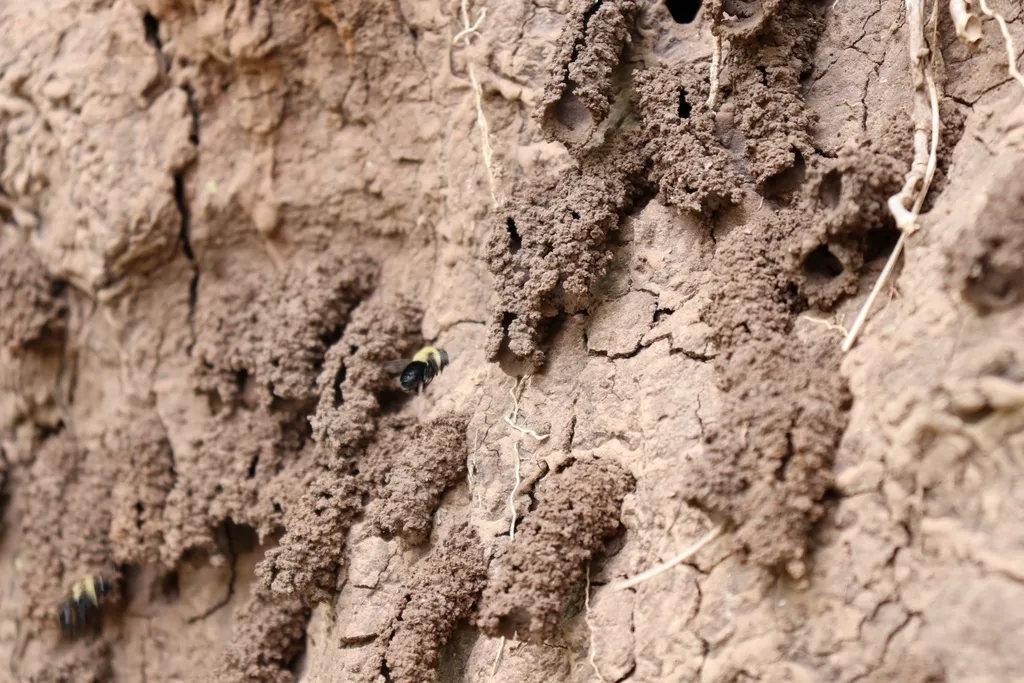
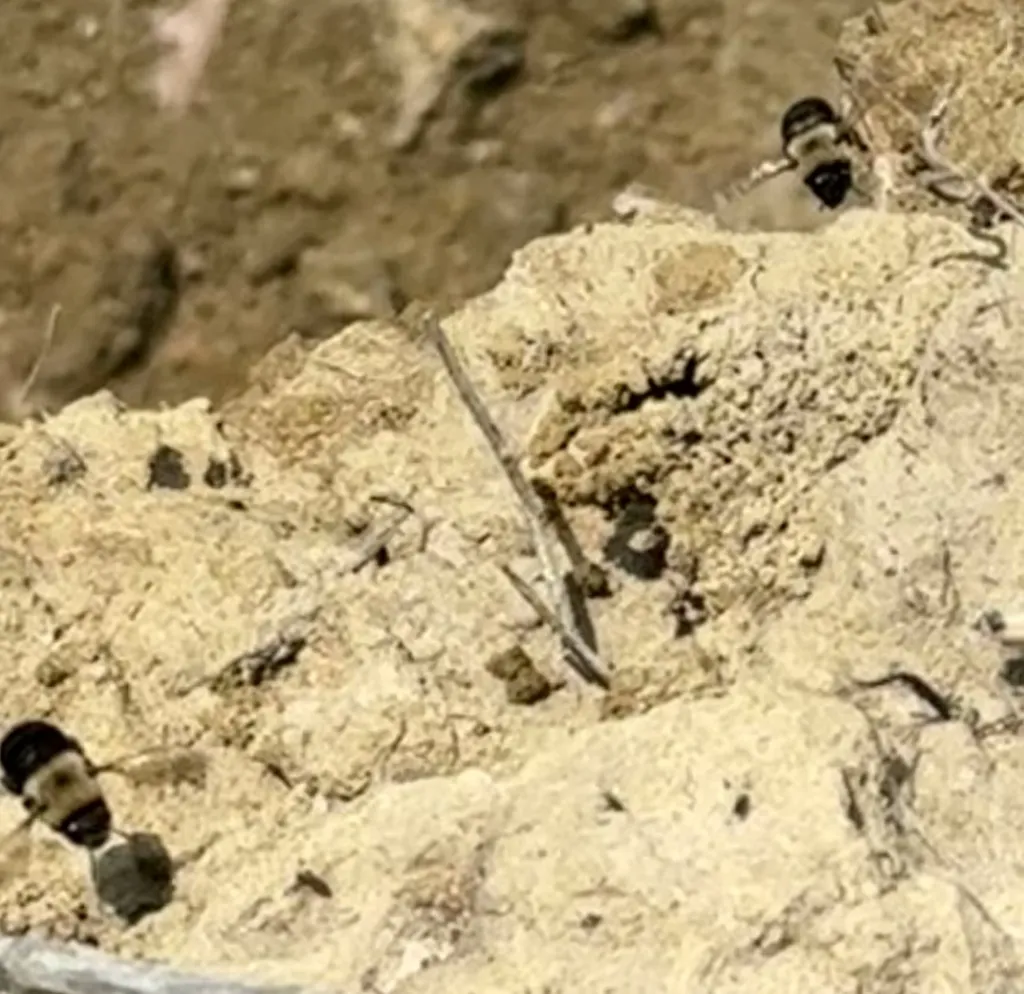
The easiest way to find chimney bees is to look for their nests, not the bees. Chimney bees build small tubes out of clay at each nest entrance. These tubes stick up one to three inches from the ground and look like tiny chimneys. That is where the name comes from. Each tube marks a single tunnel below the surface.
These nests show up in patches of bare, packed clay soil. Common spots include:
- Clay banks and hillsides
- Bare areas in lawns or gardens with heavy clay soil
- Edges of driveways or paths with exposed dirt
- Near foundations where clay is within reach
One nesting site can hold dozens or even hundreds of tubes packed close together. Each female builds and works on her own nest.
Common Species
- Chimney bee (Anthophora abrupta) is the main species known by this name in the eastern United States. It ranges from Florida north into southern Canada and west to Texas.
- Other Anthophora species like Anthophora bomboides look similar but live in different areas. Telling them apart takes a close look at face markings and hair patterns.
Chimney Bee Behavior and Biology
Chimney bees live alone. Unlike honey bees or bumble bees, they do not share a hive or split work. Each female digs her own tunnel, builds her own turret, and stocks her own brood cells. Still, many females often nest close together in the same patch of soil. A busy nesting site can look like a hive, but the bees are just neighbors.
Nesting and Reproduction
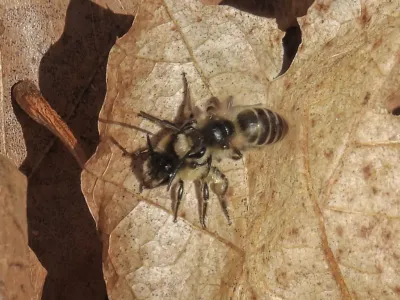
Males come out first in spring and fly around the nesting area looking for mates. Females show up about five days later. After mating, each female picks a spot in bare clay and digs a tunnel with her front legs and jaws. She shapes the dug-out clay into the turret at the entrance. Building one turret takes about six hours.
Each tunnel runs about four inches deep and holds around seven small brood cells shaped like tiny jugs. The female fills each cell with a ball of pollen and nectar. She lays one egg on top and seals it shut. The larvae hatch and eat the stored food. They grow through four stages and then go dormant. They stay in this resting state for about nine months before turning into adults the next spring.
Chimney bees have one generation per year. Adults are out from March through June or July depending on the climate. In the Mid-Atlantic region, May and June are the peak months.
Diet and Foraging
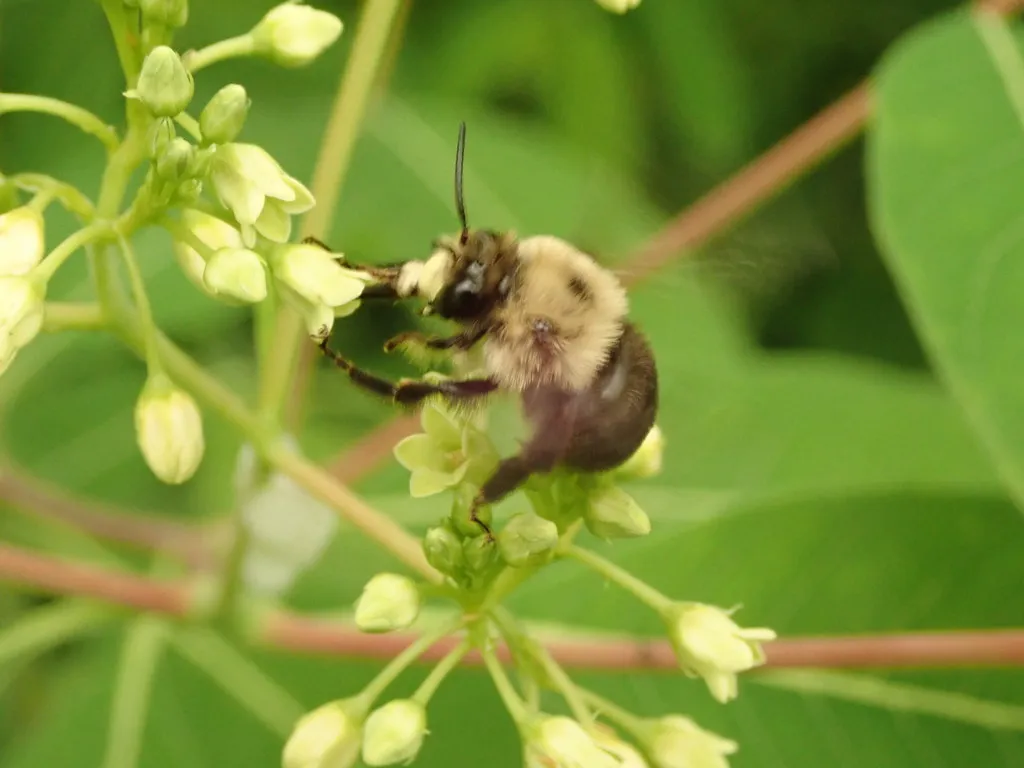
Chimney bees visit many types of flowers. They feed on dandelions, Virginia bluebells, milkweeds, blackberry, and cranberry, among others. They are fast fliers and will gather food even on cloudy days or in light rain. Females tend to collect pollen in the morning and spend afternoons building and stocking nest cells.
Treatment Methods for Chimney Bees
Chimney bees are not aggressive and rarely sting. They cause little to no property damage. However, a large nesting site near a patio, walkway, or play area can still be a concern for homeowners.
Habitat Modification:
The most effective long-term approach is changing the nesting site so it no longer appeals to chimney bees.
- Cover bare soil: After the bees finish their spring season, spread a thick layer of mulch, plant ground cover, or lay landscape fabric over the nesting area. Chimney bees need bare, packed clay to nest. Removing that exposed soil takes away the nesting spot.
- Move activity areas: If the nesting site is in a garden or yard, reroute paths or play zones away from the area while the bees are active in spring.
- Compact or grade soil: Changing the soil texture or slope at the site can make it less inviting for future nesting.
Professional Help:
If you are not sure what type of bee is on your property, a pest control professional can identify them. This step matters because yellowjackets also nest in the ground but are far more aggressive. They need a different treatment plan than chimney bees, bumble bees, or ground bees. A professional can walk you through the best options for your situation.
Signs of Chimney Bee Activity
Look for these signs that chimney bees may be nesting on your property:
- Clay tubes sticking up one to three inches from bare soil, often in groups
- Small holes about half an inch wide in packed clay or dirt
- Fuzzy, medium-sized bees flying low over bare ground in spring
- Quick, darting flight close to the soil, mainly on warm mornings
- Calm behavior around people, even near nest entrances
Chimney bee turrets are fragile. Rain, foot traffic, and mowing break them apart easily. Finding crumbled turret bits near bare clay patches is another clue of recent or past nesting.
References
Other Bees
Explore other species in the bees family
Commonly Confused With
Chimney Bees are often mistaken for these similar pests
Where Chimney Bees Are Found
Hover over states to see their names. Green regions indicate where chimney bees have been reported.
Common Questions about Chimney Bees
What are chimney bees?
+
Chimney bees (Anthophora abrupta) are solitary, ground-nesting bees named for the small clay turret or 'chimney' they build at the entrance to their underground nests. They are not carpenter bees and do not bore into wood. They nest in bare clay soil, clay banks, and sometimes near foundations.
Are chimney bees dangerous?
+
Chimney bees are not aggressive and rarely sting. Females can sting if directly handled or stepped on, but they do not defend their nests the way social bees or wasps do. Males cannot sting at all.
Do chimney bees damage my house?
+
Chimney bees cause little to no structural damage. They nest in existing clay or compact soil, not inside walls or wood. In rare cases, large nesting aggregations near a foundation or in adobe-style construction can be a cosmetic nuisance, but they do not weaken structural materials.
What do chimney bee nests look like?
+
Chimney bee nests are marked by small tubes or turrets made of sculpted clay that stick up from the ground surface. Each turret is roughly one to three inches tall and marks the entrance to an underground tunnel. Nesting sites often have dozens or even hundreds of turrets clustered together in a single patch of bare soil.
How do I tell chimney bees apart from bumble bees?
+
Chimney bees are smaller than most bumble bees and have a faster, more darting flight pattern. While both are fuzzy, chimney bees have pale yellow-orange thorax hair contrasting with a darker abdomen, and they nest individually in the ground with clay turrets. Bumble bees are social, nest in grass clumps or underground cavities, and do not build turrets.
How do I tell chimney bees apart from carpenter bees?
+
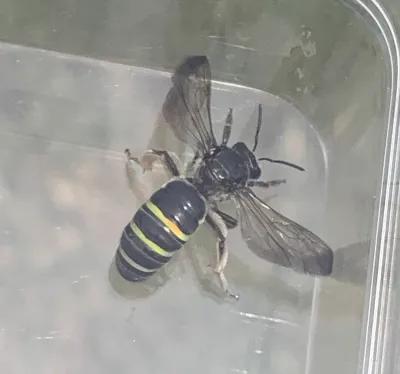
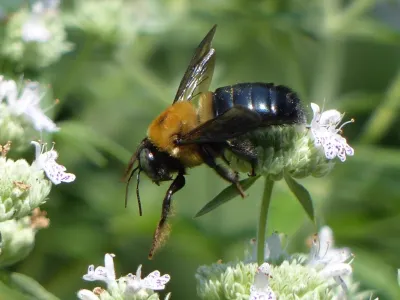
Carpenter bees are larger, bore into wood, and have a smooth, shiny black abdomen. Chimney bees are smaller, nest in clay soil, and have a more uniformly hairy body. If you see clay turrets on the ground rather than round holes in wood, you are looking at chimney bees.
When are chimney bees most active?
+
Chimney bees are most active in spring, typically from April through June across most of the eastern United States. Males emerge first and patrol nesting areas, followed by females that build turrets and provision their underground cells with pollen and nectar.
How do I get rid of chimney bees?
+
The most effective long-term fix is habitat modification. After the bees finish their spring season, cover the bare soil with mulch, landscape fabric, or dense plantings. Chimney bees need exposed clay to nest, so removing that exposed soil eliminates the nesting site. A pest control professional can also help with identification and recommend the right approach for your situation.

With five years of hands-on experience in the pest control industry, George Schulz is a registered technician with the Virginia Pest Management Association and a proud third-generation professional in a family business that's been protecting homes for over 57 years. He manages and trains a team of service pros while also leading internal research efforts—recently spearheading a deep-dive review of thousands of documents on pest control materials to hand-pick the most kid and pet friendly, most effective solutions tailored specifically for homes in the DC metro area.