White-Footed Ants Identification Guide
Technomyrmex difficilis
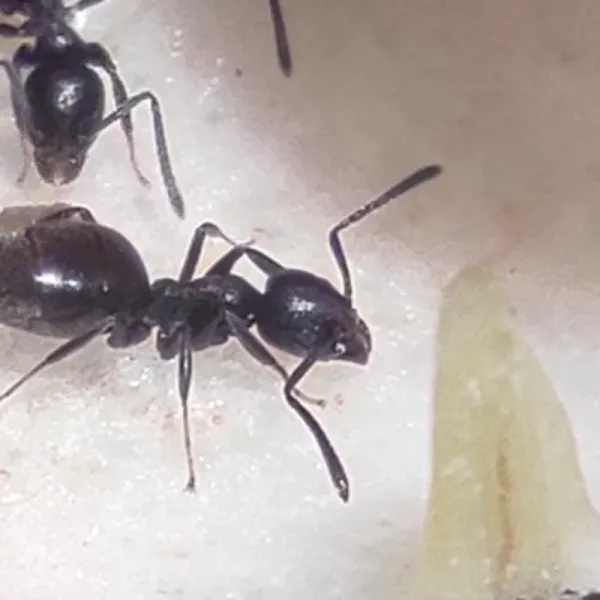
White-footed ants are small, black ants with distinctive pale yellowish-white feet. Originally from Southeast Asia, these invasive ants have become significant pests in the southeastern United States, where their massive colonies can number in the millions and create persistent infestations in homes and landscapes.
Taxonomy
White-Footed Ants Coloration
Common color patterns to help identify white-footed ants
White-Footed Ants
Seasonal Activity
When white-footed ants are most active throughout the year

Where White-Footed Ants Are Found
Hover over states to see their names. Green regions indicate where white-footed ants have been reported.
White-Footed Ants Identification Guide
White-footed ants (Technomyrmex difficilis) are invasive pests from Southeast Asia. They first appeared in the United States in the 1980s. These ants get their name from their pale feet, which stand out against their dark bodies. What makes them hard to control is how they eat. Unlike most ants, workers do not share food with other adults. This makes regular baits much less effective.
In Florida and other Gulf Coast states, white-footed ants are among the most common ant pests. Their colonies can grow huge, sometimes reaching millions of ants. One property may have many connected colonies. This makes getting rid of them very hard without professional help.
Note: This species used to be called Technomyrmex albipes. It was renamed to Technomyrmex difficilis in 2007. Older books and websites may still use the old name.
Physical Characteristics
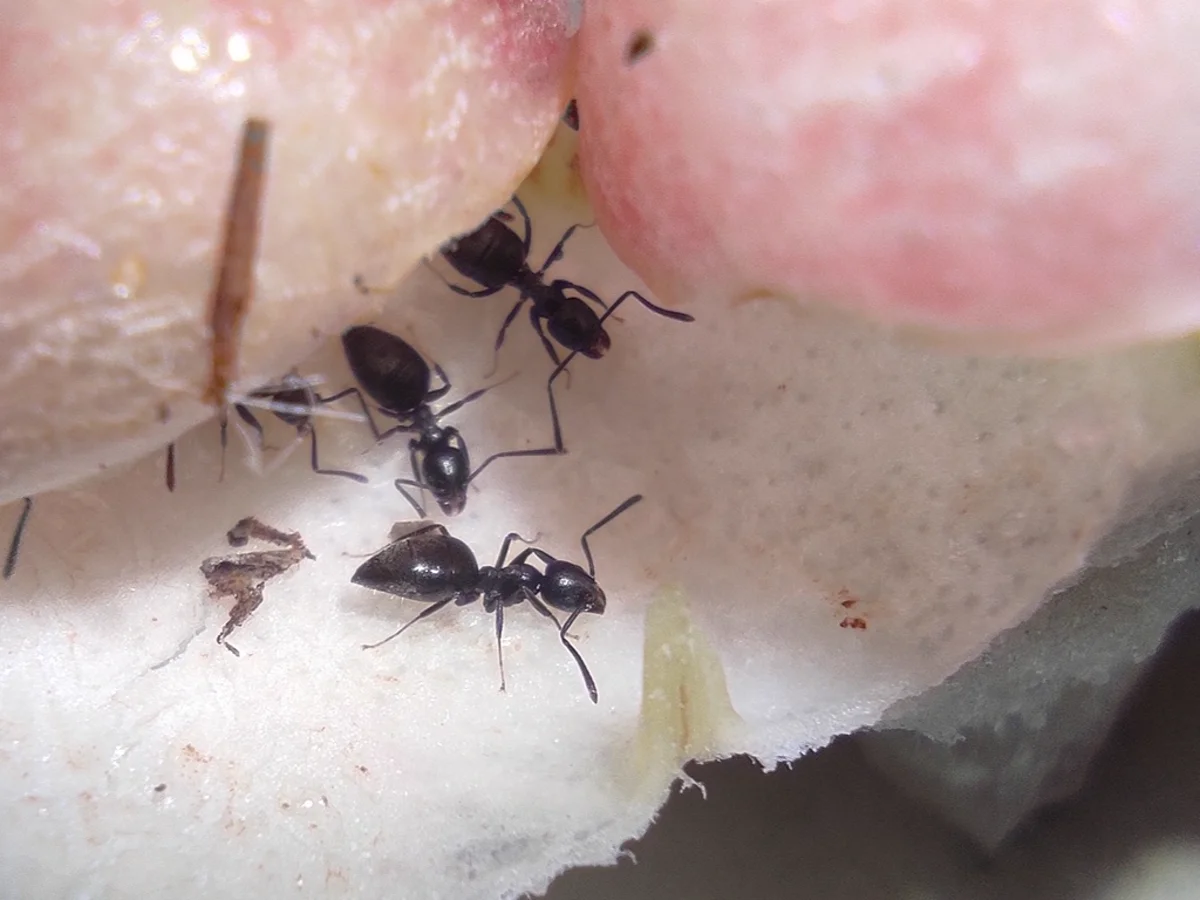
White-footed ants are small, measuring 2.5-3 mm (about 1/8 inch) in length. Their key identifying features include:
- Body color: Dark brown to black with a dull look
- Feet: Pale yellowish-white, giving them the “white-footed” name
- Antennae: 12 segments with pale tips
- Waist: Single node, flattened
- Abdomen: Five visible segments
- Hair: Very few standing hairs on the body
Workers move at a steady pace along clear trails. They are not as wild as crazy ants but more active than some other species. White-footed ants do not sting and rarely bite.
Queens are a bit larger than workers. Winged males and females show up in mid to late summer for mating flights.
Similar Species Often Confused with White-Footed Ants
Getting the right ID matters because white-footed ants need different control than other species:
-
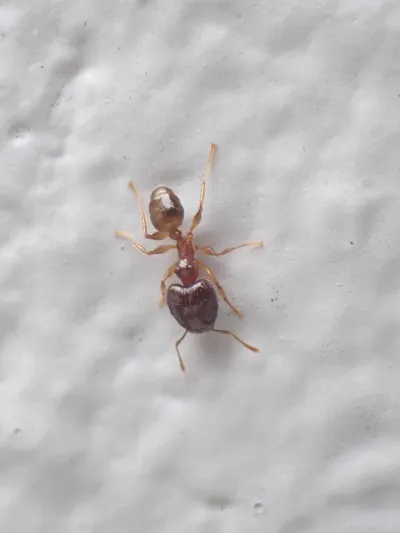
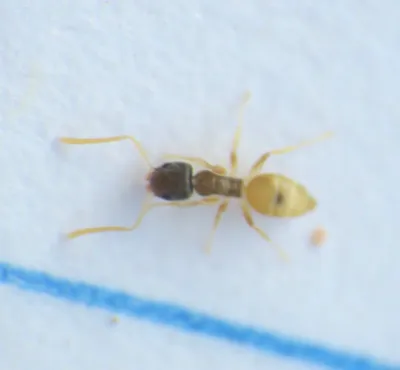
Ghost Ants: Smaller (1.3-1.5 mm) with a see-through abdomen and legs plus a dark head. Ghost ants smell like coconut when crushed.
-
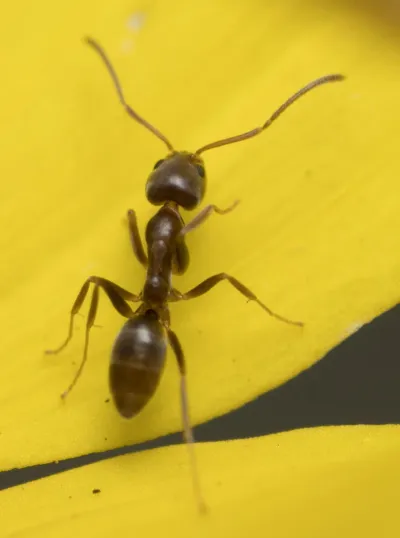
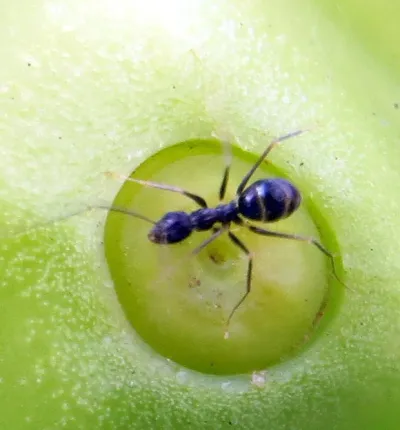
Argentine Ants: Similar size and dark color but all one shade with no pale feet. They have a bump on their waist that white-footed ants lack.
-
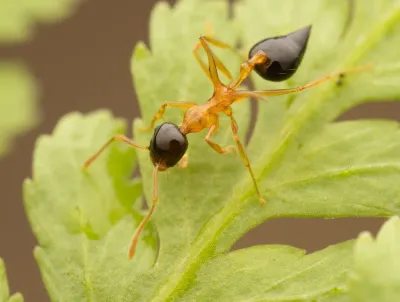
Crazy Ants: Similar size but move in a wild, jerky pattern. They have longer legs and more body hair.
-
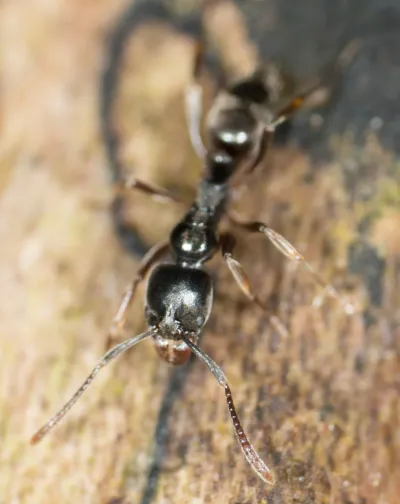
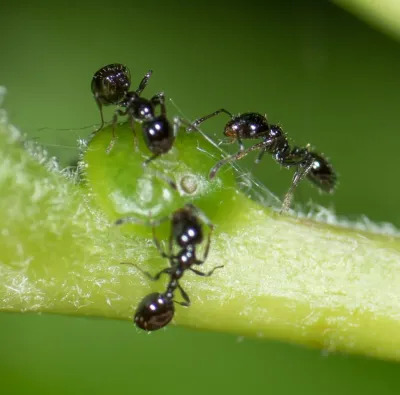
Little Black Ants: Smaller (1.5-2 mm) and jet black all over without pale feet. They have two waist nodes instead of one.
If you are not sure which ant you have, put some in a sealed container for a pro to look at. Knowing the exact species helps pick the right treatment.
White-Footed Ants Behavior and Biology
White-footed ants behave differently from most pest ants. These differences explain why they are so hard to get rid of.
Unusual Reproductive System
White-footed ant colonies have a unique caste structure:
- Queens: Main egg-layers that start new colonies after mating flights
- Intercastes: Wingless females that can store sperm and lay eggs in the colony
- Workers: Sterile females that find food and care for young
- Males: Some have wings for mating flights, others do not
The key difference from other ants is how many individuals can lay eggs. Nearly half of a white-footed ant colony is made up of fertile intercastes. These intercastes mate with wingless males inside the nest. They keep producing eggs all the time. This lets the colony grow very fast.
Colony sizes range from 8,000 to 3 million ants. With so many queens and intercastes, the colony can reproduce quickly. Colonies grow in two ways: through mating flights in July and August, and through budding. In budding, groups of workers and egg-layers simply walk to new spots to start satellite nests.
Feeding Behavior and Why Baits Struggle
Here is the key difference that makes white-footed ants so hard to control: adult workers do not share food like most ant species.
In most ant colonies, workers find food, eat it, go back to the nest, and spit it up to feed others. This sharing is exactly why ant baits work so well. A few workers carry the bait back and spread it through the whole colony.
White-footed ants work differently. Adult workers feed larvae by laying unfertilized eggs called trophic eggs. The larvae eat these eggs instead of getting regurgitated food. Adults eat on their own and do not share food with other adults.
This means:
- Baits kill foraging workers but do not reach the queens, intercastes, or developing brood
- The colony’s reproductive core remains protected
- New workers continue emerging to replace those killed
- The infestation persists despite baiting efforts
Diet Preferences
White-footed ants primarily consume:
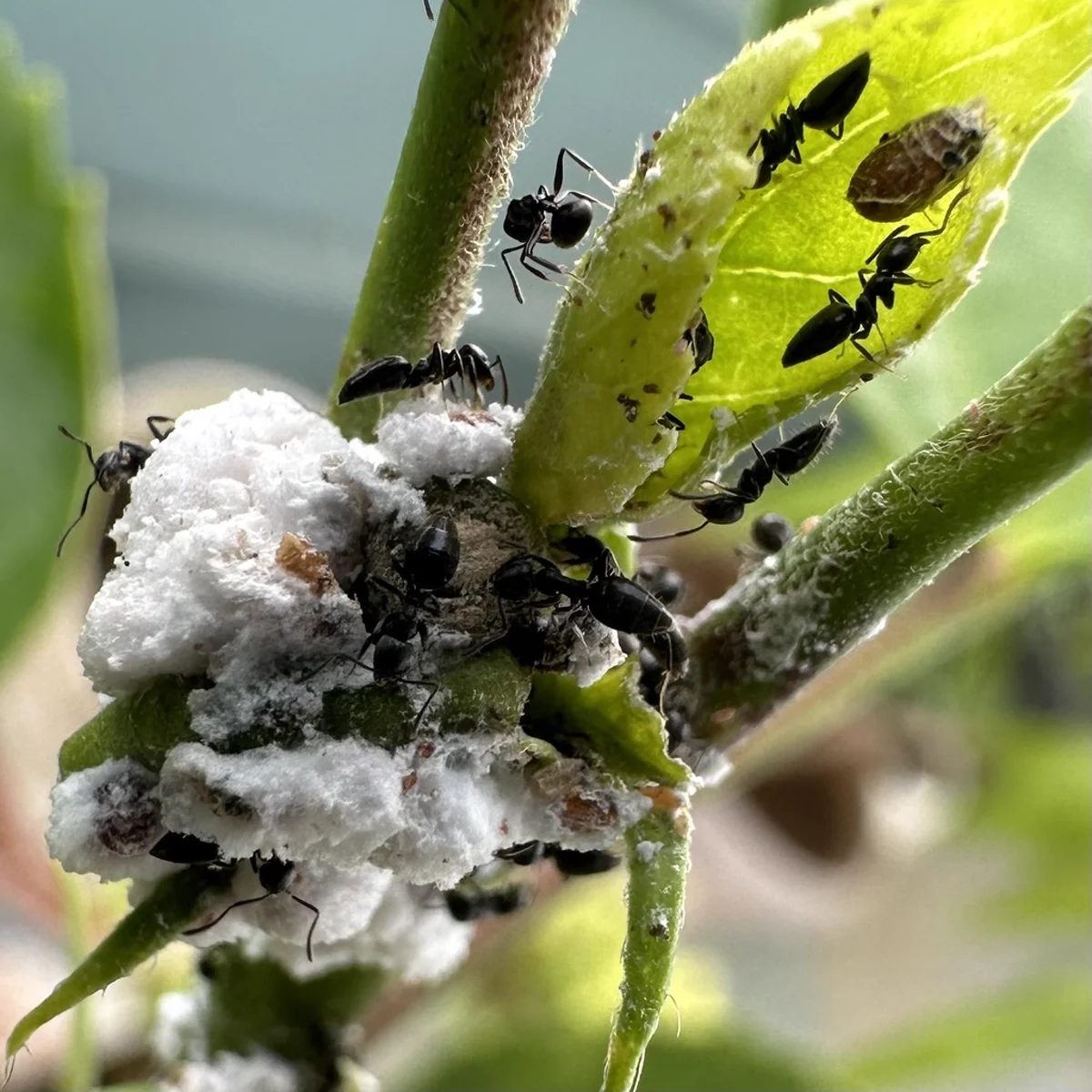
- Honeydew: The sugary liquid from aphids, mealybugs, scale insects, and whiteflies. This is their favorite food.
- Plant nectars: From flowers and other plant parts
- Dead insects: For protein when they can find them
- Household sweets: Sugar, syrup, honey, fruit juices, and soft drinks
Their love of honeydew creates another problem. White-footed ants guard aphids and scale insects from predators. This lets these plant pests grow in number. The result can be damage to ornamental plants and gardens.
Nesting Habits
Unlike many ant species, white-footed ants do not nest in soil. They prefer nesting sites at or above ground level:
Outdoor nesting locations:
- Tree holes and cavities
- Under loose bark
- In dead branches and palm fronds
- Within leaf litter and mulch
- Under debris and ground cover
- In the root balls of potted plants
Indoor nesting locations:
- Wall voids and hollow doors
- Rain gutters filled with debris
- Behind siding and trim
- Inside electrical boxes
- Around window and door frames
Nests require proximity to moisture and food sources. In landscapes with heavy aphid or scale populations, white-footed ant colonies thrive by farming these insects for honeydew.
Trailing Behavior
White-footed ants establish persistent foraging trails that may remain active for months. These trails often run along:
- Building foundations and exterior walls
- Tree trunks and branches
- Fence lines and utility lines
- Edges of sidewalks and driveways
Foragers use scent trails to tell other workers where to find food. Dense trails of hundreds or thousands of ants moving along the outside of buildings are a common sign of infestation.
Seasonal Activity
In their established range (Florida, Gulf Coast states), white-footed ants remain active year-round due to mild winters:
| Season | Activity Level | Notes |
|---|---|---|
| December - February | Moderate | Reduced but continuous activity in warm climates |
| March - May | High | Colony growth accelerates as temperatures rise |
| June - August | High | Peak activity and mating flight period (July-August) |
| September - November | High to Moderate | Continued foraging before slight winter slowdown |
Treatment Methods for White-Footed Ants
White-footed ant control is harder than most ant species. Standard baits do not work well on their own. Effective control often combines several methods over many months.
Why Traditional Baits Are Less Effective
Most ant baits work because workers share the bait with the whole colony. White-footed ants break this pattern because they do not share food. Baits kill the workers that find them, but do not reach the queens, intercastes, or young ants.
This does not mean baits are useless. Liquid sugar baits can still cut down the number of foragers and slow colony growth. But baiting alone rarely wipes out the whole colony.
Effective Treatment Approaches
Successful white-footed ant management typically combines several methods:
Liquid baits: Bait stations with fresh liquid bait can cut down the number of foraging ants. The bait needs to stay fresh because the ants eat a lot of it. This lowers the population over time, even if it does not wipe out the colony.
Contact sprays: Non-repellent sprays applied to trails, nests, and entry points kill workers on contact. These products spread between ants when they touch or groom each other. This helps the treatment reach more of the colony.
Removing food sources: Treating aphids, mealybugs, and scale insects takes away the ants’ main food. Sprays on infested plants can kill these pests and make the area less appealing to ants.
Sealing entry points: Closing gaps around foundations, windows, doors, and pipes keeps ants from getting inside.
Trimming plants: Cutting back trees, shrubs, and vines that touch buildings removes bridges ants use to get in. Keeping a clear space around foundations also removes nesting spots.
How Long Treatment Takes
Getting rid of white-footed ants takes time. Here is what to expect:
- Weeks 1 to 4: You start seeing fewer foraging ants
- Months 1 to 3: Activity keeps dropping with ongoing treatment
- Months 3 to 6: Big drop in numbers if treatment continues
- After that: Regular checks and touch-ups to stop them from coming back
Full removal is hard when neighbors have colonies too. Often, the best you can do is keep their numbers low.
Prevention Tips
These steps help prevent white-footed ant problems:
- Control plant pests: Get rid of aphids, scale insects, and mealybugs on your plants. This removes the ants’ food source.
- Trim plants back: Keep trees and shrubs at least 12 inches from exterior walls.
- Use less mulch: Deep mulch gives ants a place to nest. Keep it 2 to 3 inches deep and away from your foundation.
- Fix moisture problems: Repair leaky irrigation and dripping faucets. Improve drainage where water pools.
- Seal gaps: Caulk cracks around windows, doors, pipes, and utility lines.
- Clean gutters: Remove debris that gives ants a place to nest.
- Check potted plants: Look for ants before bringing plants inside or putting them near your home.
References and Further Reading
- Warner, J. and Scheffrahn, R.H. (2019). White-Footed Ant, Technomyrmex difficilis Forel (Insecta: Hymenoptera: Formicidae: Dolichoderinae). EENY-273. University of Florida IFAS Extension. https://edis.ifas.ufl.edu/publication/IN551
- Bolton, B. (2007). Taxonomy of the dolichoderine ant genus Technomyrmex Mayr (Hymenoptera: Formicidae) based mainly on the worker caste. Contributions of the American Entomological Institute 35(1): 1-150.
- CABI Compendium. Technomyrmex albipes (white-footed ant). CABI Digital Library.
- National Pest Management Association. Ant Identification Resources. https://www.pestworld.org/pest-guide/ants/
- Klotz, J.H., et al. (2008). Urban Ants of North America and Europe: Identification, Biology, and Management. Cornell University Press.
Other Ants
Explore other species in the ants family
Commonly Confused With
White-Footed Ants are often mistaken for these similar pests
Where White-Footed Ants Are Found
Hover over states to see their names. Green regions indicate where white-footed ants have been reported.
Common Questions about White-Footed Ants
Why are they called white-footed ants?
+
White-footed ants get their common name from their distinctive pale yellowish-white tarsi (feet), which contrast sharply with their dark brown to black bodies. This feature is visible under close inspection and helps distinguish them from other small black ants.
Are white-footed ants harmful?
+
White-footed ants do not bite, sting, or cause structural damage. However, they are considered nuisance pests because of their massive colony sizes (sometimes reaching millions of individuals) and their persistent presence in kitchens, bathrooms, and outdoor living areas. They can also damage plants indirectly by protecting honeydew-producing insects.
Why are white-footed ants so hard to control?
+
White-footed ants are uniquely difficult to control because adult workers do not share food with other colony members through mouth-to-mouth feeding (trophallaxis) like most ant species. Instead, they feed larvae unfertilized eggs. This means traditional bait strategies that rely on food sharing are less effective against white-footed ants.
How big do white-footed ant colonies get?
+
White-footed ant colonies can grow extremely large, ranging from 8,000 to several million individuals. Nearly half of a colony consists of fertile reproductive females called intercastes, which allows the population to explode rapidly. Multiple colonies often occupy a single property.
Where do white-footed ants nest?
+
White-footed ants nest at or above ground level, not in soil. Common nesting sites include tree holes, under loose bark, in wall voids, rain gutters, under palm fronds, in leaf litter, and loose mulch. They prefer locations near moisture and food sources with protection from weather extremes.
Do white-footed ants fly?
+
Yes, white-footed ants produce winged males and females that participate in mating flights, typically occurring in July and August in southern regions. After mating, queens shed their wings and establish new colonies. However, colonies also expand through budding, where groups of workers and reproductive females simply walk to new nesting sites.
Can white-footed ants survive in northern states?
+
White-footed ants are tropical insects that cannot survive harsh winters outdoors. In the United States, they are primarily established in Florida, Georgia, South Carolina, and Louisiana. While they could potentially survive indoors in heated buildings elsewhere, they have not become established pests in northern regions.
What do white-footed ants eat?
+
White-footed ants primarily feed on honeydew produced by aphids, mealybugs, scale insects, and whiteflies. They also consume plant nectars, dead insects, and household sweets. They are strongly attracted to sweet liquids and will forage extensively in kitchens seeking sugary foods.

With five years of hands-on experience in the pest control industry, George Schulz is a registered technician with the Virginia Pest Management Association and a proud third-generation professional in a family business that's been protecting homes for over 57 years. He manages and trains a team of service pros while also leading internal research efforts—recently spearheading a deep-dive review of thousands of documents on pest control materials to hand-pick the most kid and pet friendly, most effective solutions tailored specifically for homes in the DC metro area.