Tawny Crazy Ants Identification Guide
Nylanderia fulva
Tawny crazy ants are an invasive ant species from South America that have rapidly spread across the Gulf Coast states. Named for their erratic running patterns and golden-brown coloring, these ants form enormous supercolonies, infest electrical equipment, and have displaced native ant species including fire ants.
Taxonomy
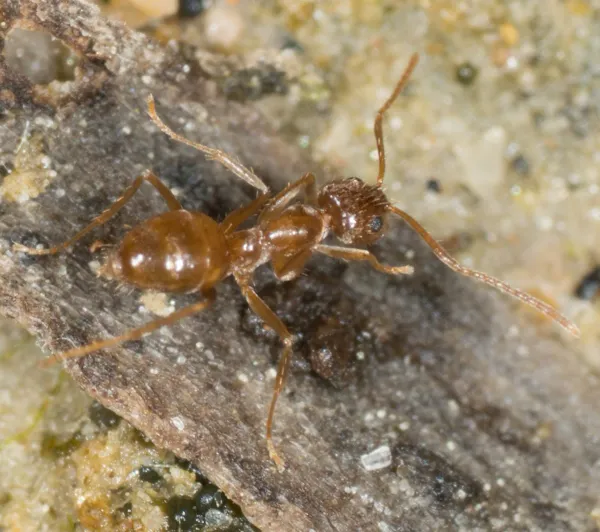
Tawny Crazy Ants Coloration
Common color patterns to help identify tawny crazy ants
Tawny Crazy Ants
Seasonal Activity
When tawny crazy ants are most active throughout the year

Where Tawny Crazy Ants Are Found
Hover over states to see their names. Green regions indicate where tawny crazy ants have been reported.
Tawny Crazy Ants Identification Guide
The tawny crazy ant (Nylanderia fulva) is also called the Rasberry crazy ant. It was named after Tom Rasberry, a Texas pest control operator who first spotted them in 2002. These ants are native to South America and have become a major pest in Gulf Coast states. They form huge colonies, damage electronics, and push out other ant species like fire ants.
Physical Characteristics
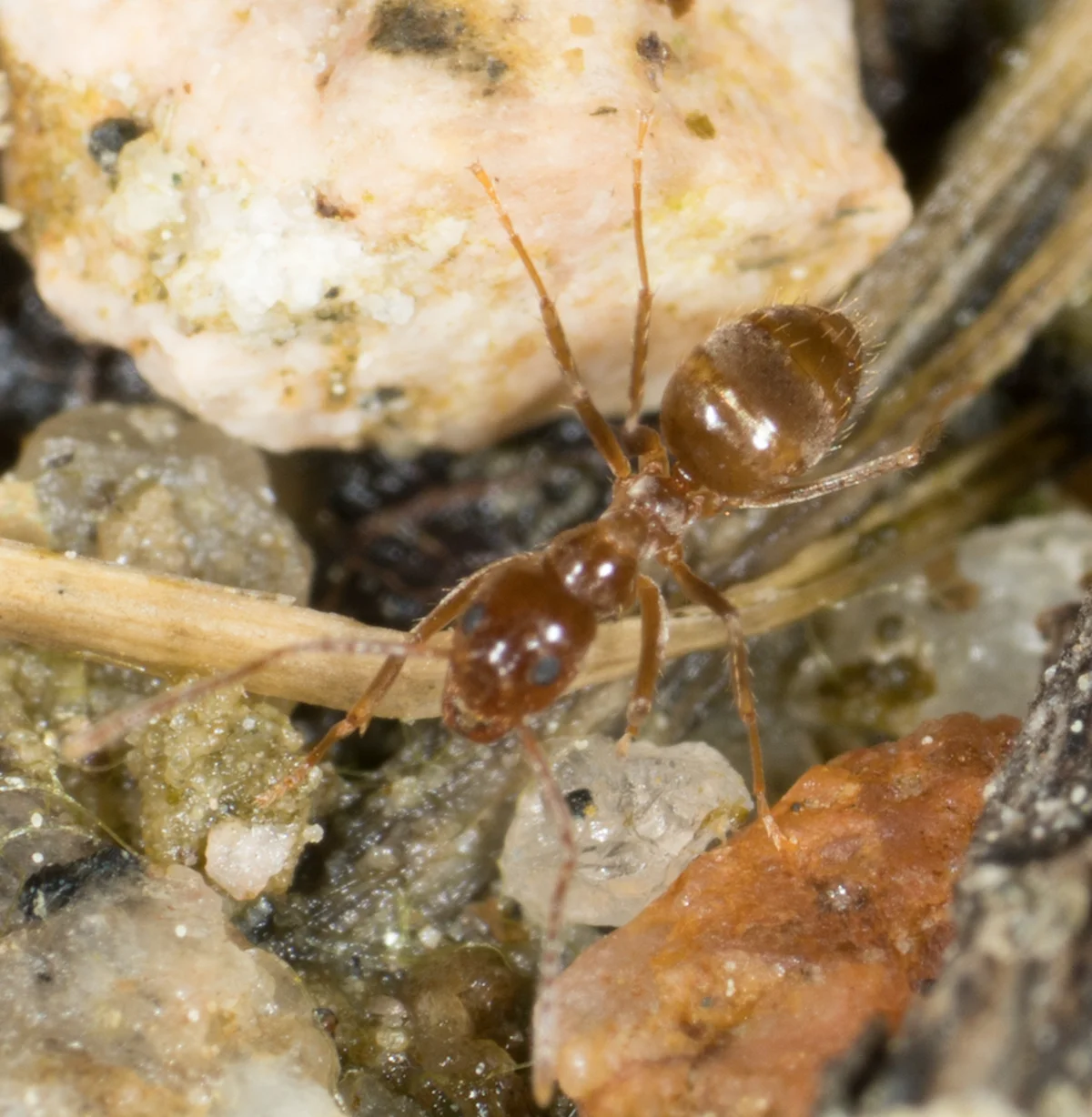
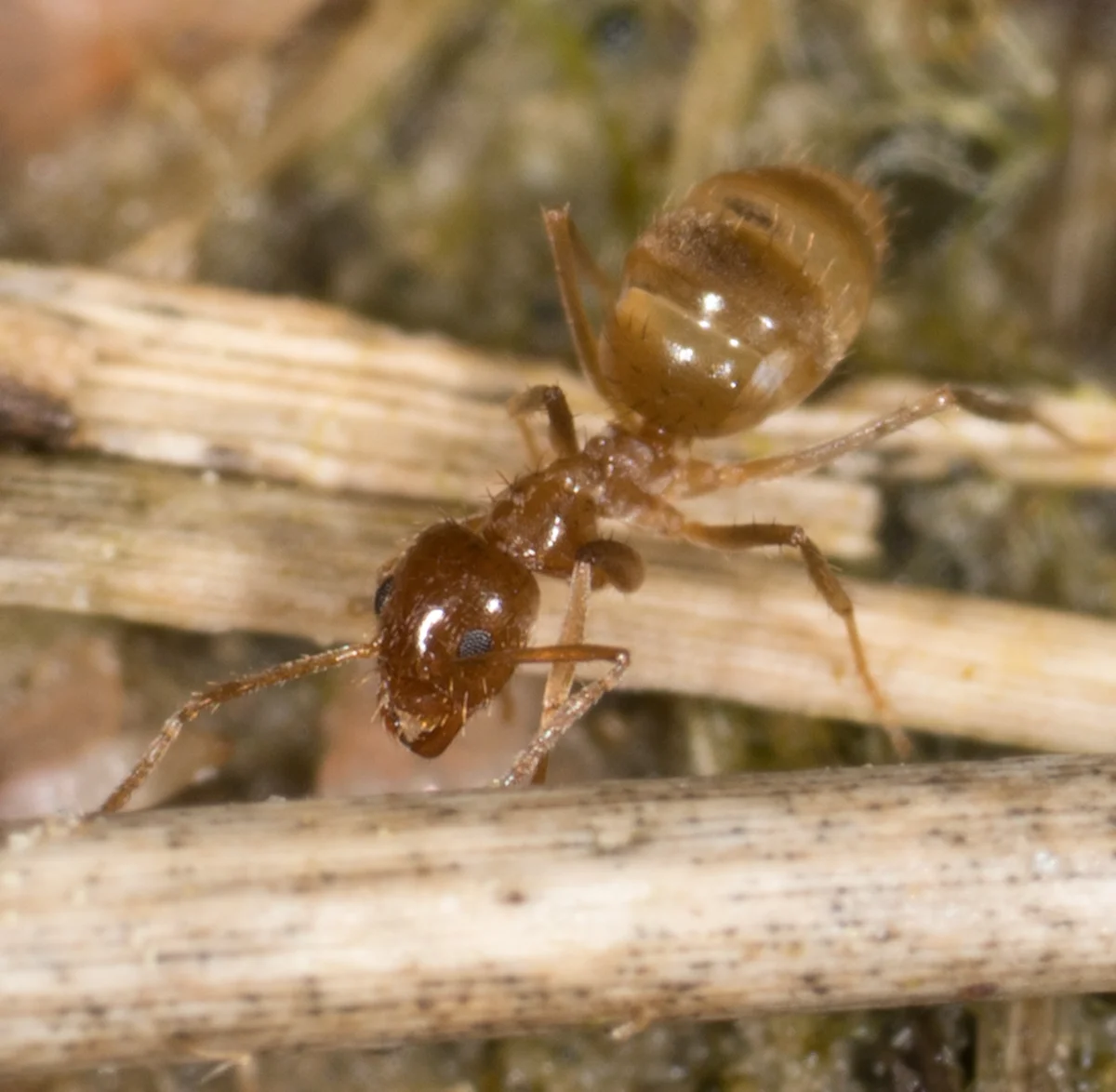
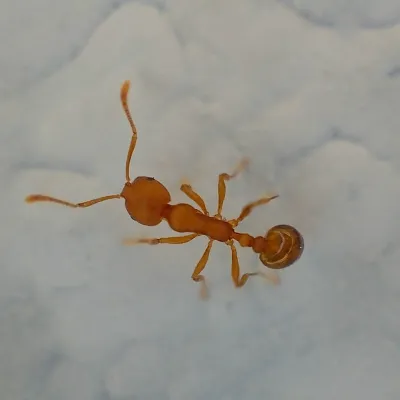
Tawny crazy ants are small ants measuring 2.0 to 3.0 mm (about 1/16 to 1/8 inch) long. All workers are about the same size. Their golden-brown to reddish-brown color gives them the “tawny” name. After eating, the abdomen may look striped as the segments stretch.
Key features to look for:
- Dense body hair: Long, coarse hairs cover the body, making them look fuzzy up close
- 12-segmented antennae: No club at the tip. The first segment is nearly twice as long as the head width
- Long legs and antennae: Longer than most ants, but shorter than the longhorn crazy ant
- Single-node petiole: One small segment connects the middle body to the abdomen
- No stinger: Instead, they have an acidopore (ring of hairs) at the tip that sprays formic acid
Queens are larger at about 4.0 mm or more. Males are slightly bigger than workers at 2.4 to 2.7 mm.
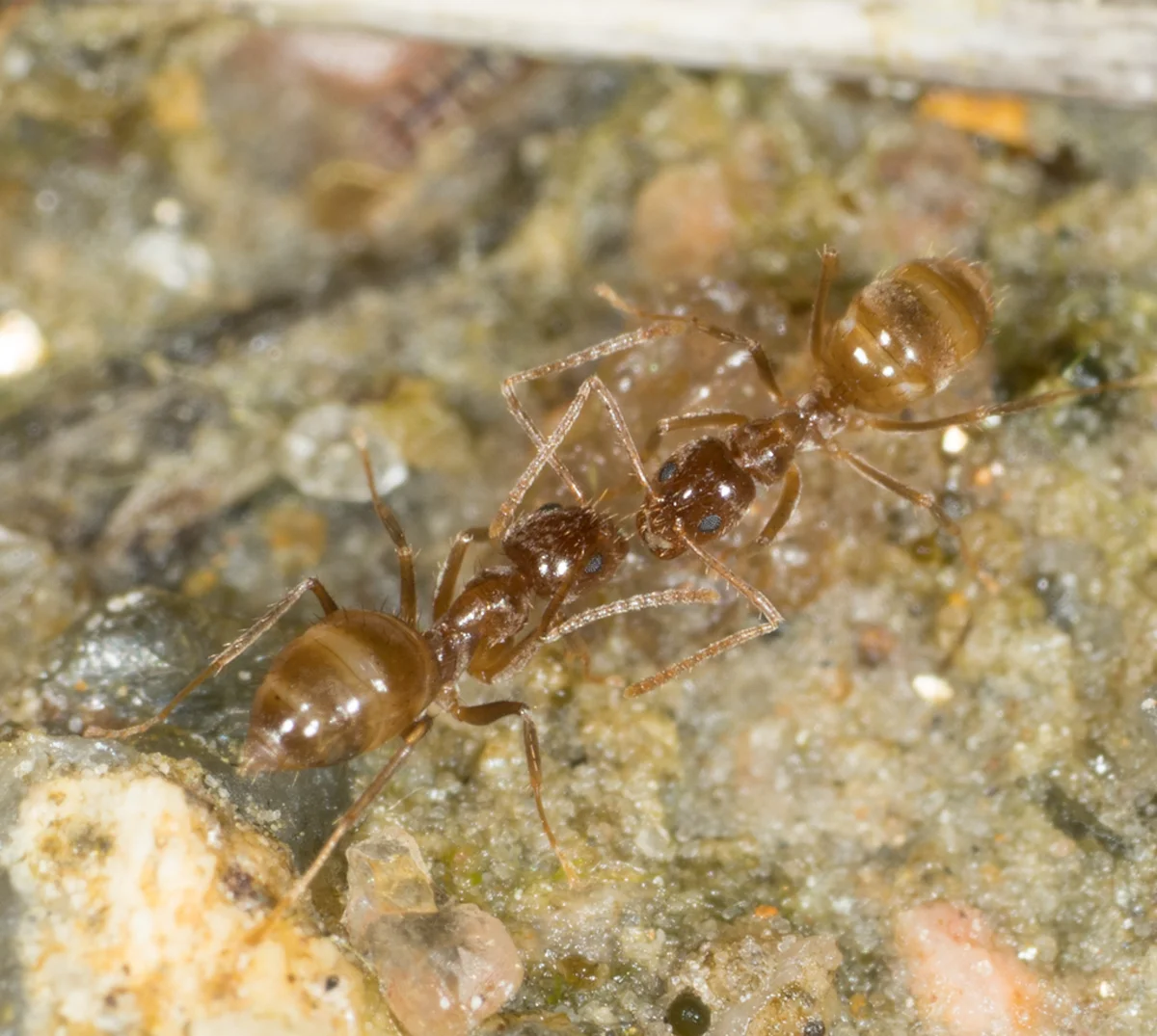
The easiest way to identify these ants is by watching how they move. Tawny crazy ants run fast in random, jerky patterns instead of following neat trails. When you disturb them, they scatter in all directions.
Similar Species
Several ant species look similar to tawny crazy ants:
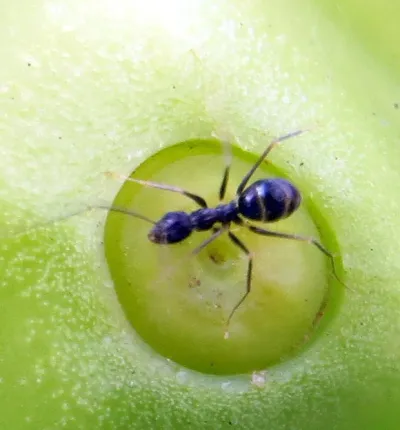
Longhorn Crazy Ant (Paratrechina longicornis): Also called the black crazy ant. It is darker (dark brown to black) with much longer legs and antennae. Longhorn crazy ants live throughout the United States. Tawny crazy ants are only in Gulf Coast states.
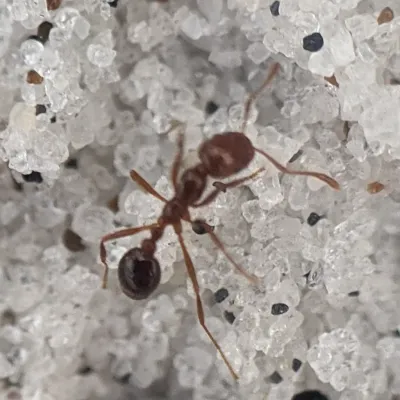
Fire Ants (Solenopsis invicta): Similar reddish-brown color, but fire ants have a stinger and build dirt mound nests. Fire ants march in organized lines and sting when threatened. Tawny crazy ants are pushing fire ants out of many areas.
Pharaoh Ants (Monomorium pharaonis): Similar small size and yellow color. But pharaoh ants are paler (light yellow to honey-colored) and do not run in erratic patterns.
Caribbean Crazy Ant (Nylanderia pubens): So similar that workers cannot be told apart by looking at them. You need to examine male ants under magnification to tell them apart. This species lives in Florida and the Caribbean.
Tawny Crazy Ants Behavior and Biology
Learning about tawny crazy ant biology helps explain why they spread so fast and are hard to control.
Supercolony Formation
Tawny crazy ants form “supercolonies.” This means ants from different nests do not fight each other. They mix freely and work together. This allows them to build huge, connected populations across large areas. A single supercolony may have:
- Hundreds of queens spread across many nest sites
- Billions of ants per acre in bad infestations
- Connected nests stretching hundreds of meters
This supercolony structure gives these ants a big advantage. They can quickly overwhelm local ant species through sheer numbers. Research from Texas A&M University shows they have pushed out fire ants wherever the two species meet. A related species, Allegheny Mound Ants, shares similar characteristics.
Fire Ant Displacement and Formic Acid Defense
Tawny crazy ants can fight off fire ants using a special defense. Research published in Science showed that when fire ants attack them, tawny crazy ants coat themselves with formic acid. This acid neutralizes the fire ant venom.
This chemical defense, plus their huge numbers, has let tawny crazy ants push out fire ants across large areas of the Gulf Coast. Crazy ant populations often grow much denser than fire ants and cause different problems, especially damage to electronics.
Diet and Foraging
Tawny crazy ants eat almost anything. Their main food sources include:
- Honeydew: Sweet liquid from aphids, scale insects, mealybugs, and whiteflies. The ants protect these insects to get their honeydew.
- Plant sugars: Nectar, damaged fruit, and plant sap
- Insects: Both living and dead bugs
- Human foods: Any sweets, proteins, or greasy foods they can find
These ants forage in fast, chaotic trails that are several ants wide. Unlike most ants that march in neat lines, tawny crazy ants constantly change direction as they move.
Nesting Habits
Tawny crazy ants nest in many places. They prefer humid spots with shelter from the weather:
- Under rocks, logs, and yard debris
- In leaf litter and mulch
- In soil holes and root systems
- Inside wall voids and under floors
- Behind siding and in insulation
- Inside electrical boxes, junction boxes, and appliances
- In potted plants and landscape containers
Nests can be temporary or permanent. During rainy weather, temporary nests with workers and larvae may move almost daily. Permanent nests in well-drained areas can cover a large ground area.
Why They Damage Electronics
Tawny crazy ants are strongly drawn to electrical devices. This is one of their most damaging traits. They gather inside:
- Air conditioning units and HVAC systems
- Electrical switch boxes and breaker panels
- Computers and other electronics
- Pool pumps and sewage pumps
- Appliances and transformers
When an ant gets shocked inside a device, it releases alarm chemicals that attract more ants. These ants may also get shocked, starting a chain reaction. Dead ants pile up inside the device. This buildup can cause short circuits, clog cooling parts, and lead to complete failure.
According to University of Florida Extension, tawny crazy ants have caused millions of dollars in damage across the Gulf Coast. They affect homes, businesses, and industrial facilities.
Reproduction and Spread
Tawny crazy ants spread through “budding” rather than mating flights. Queens and groups of workers walk away from the main colony to start new nests nearby. This means:
- New colonies form close to parent colonies, creating dense local populations
- Long-distance spread happens when people move infested materials
- Mating flights rarely happen and do not spread the species far
People have spread these ants by moving infested potted plants, mulch, hay bales, nursery plants, and other materials. This is how they have spread across Gulf Coast states.
Treatment Methods for Tawny Crazy Ants
Controlling tawny crazy ants is very difficult. Their huge colony sizes, many queens, and scattered nests make them hard to eliminate. Effective control usually requires professional pest control and ongoing treatment.
Why DIY Control Often Fails
Store-bought sprays and baits usually do not work on tawny crazy ants. Here is why:
- Colony size: Supercolonies have billions of ants spread across many nest sites. Killing the ants you see does not hurt the overall population.
- Contact sprays: Spraying just creates piles of dead ants that other workers walk over. The colony is not affected.
- Multiple queens: Killing one nest does not stop queens in other spots from making more ants.
- Fast reinvasion: Treated areas get taken over again quickly from nearby infested zones.
Professional Treatment Approaches
Effective tawny crazy ant control usually includes:
Baiting Programs: Slow-acting baits work best. Workers carry the bait back to their nests and share it with queens. This spreads the treatment through the colony. Large infestations may need granular baits spread across the whole property.
Perimeter and Structural Treatments: Non-repellent insecticides applied around entry points and foundations can stop foraging ants. Non-repellent products are key because ants cannot detect them. The ants walk through the treatment and spread it to other colony members.
Protecting Electronics: HVAC systems, electrical panels, and other devices may need special attention. Treatments are applied around (not directly into) electrical parts to reduce ant access. In bad cases, the power may need to be turned off before treatment.
Reducing Nesting Sites: Clearing mulch, leaf litter, and debris near buildings can limit places for ants to nest. Controlling aphids and scale insects on plants removes a major food source.
Ongoing Treatment: Because these infestations are so large and ants can reinvade from nearby areas, long-term control usually requires regular monitoring and retreatment.
Prevention Tips
Preventing tawny crazy ants is much easier than getting rid of them once they are established:
- Check all incoming plants, mulch, and landscape materials for ants before bringing them onto your property
- Seal cracks and gaps around foundations, pipes, and entry points
- Clear debris and harborage materials away from buildings
- Fix moisture problems that create good nesting conditions
- In areas where tawny crazy ants are known, consider preventive perimeter treatments
If you live in an area where these ants have been reported, catching them early is critical. Professional treatment before populations explode is much more effective.
References and Further Reading
- Tawny (Rasberry) Crazy Ant - Texas A&M AgriLife Extension - Comprehensive information on tawny crazy ant biology, behavior, and management in Texas
- LeBrun, E.G. et al. (2014). Imported crazy ant neutralizes fire ant venom. Science. - Research demonstrating the formic acid detoxification mechanism
- Tawny Crazy Ant - University of Florida IFAS Extension - Detailed identification guide and biology information
- Tawny Crazy Ant - BugGuide - Species identification and distribution information
- Invasive Species Compendium - Nylanderia fulva - Scientific review of invasion biology and ecological impacts
Other Ants
Explore other species in the ants family
Commonly Confused With
Tawny Crazy Ants are often mistaken for these similar pests
Where Tawny Crazy Ants Are Found
Hover over states to see their names. Green regions indicate where tawny crazy ants have been reported.
Common Questions about Tawny Crazy Ants
Why are tawny crazy ants called crazy?
+
Tawny crazy ants get their name from their distinctive erratic running pattern. Unlike most ants that follow organized trails, crazy ants run rapidly in random, unpredictable directions that appear chaotic or 'crazy.' The 'tawny' refers to their golden-brown to reddish-brown coloring.
Are tawny crazy ants dangerous?
+
Tawny crazy ants do not sting humans, though they can bite and spray formic acid if handled. Their primary threat is economic rather than medical. They cause significant damage to electrical equipment, displace native wildlife, and can make outdoor areas unusable due to their enormous population densities.
Why do tawny crazy ants damage electronics?
+
Tawny crazy ants are strongly attracted to electrical equipment and nest inside electrical boxes, air conditioners, appliances, and computers. When one ant is electrocuted, it releases alarm pheromones that attract more ants. The accumulating dead ants can create short circuits and equipment failures. They have caused millions of dollars in electrical damage across the Gulf Coast.
Can tawny crazy ants kill fire ants?
+
Yes. Research published in Science magazine documented that tawny crazy ants can neutralize fire ant venom by coating themselves with formic acid. This chemical defense gives them a significant advantage in competition, and they have displaced fire ant populations across large areas of Texas and other Gulf Coast states.
How big do tawny crazy ant colonies get?
+
Tawny crazy ant colonies are enormous, often described as supercolonies. A single colony can contain multiple queens and tens of thousands of workers, and interconnected nests can span hundreds of meters. Population densities can reach billions of ants per acre in heavily infested areas.
Where are tawny crazy ants found?
+
Tawny crazy ants are currently established in Gulf Coast states including Texas, Louisiana, Mississippi, Alabama, Florida, and Georgia. They were first reported as a pest near Houston, Texas in 2002 and have since spread rapidly. They are native to South America and thrive in warm, humid climates.
How do tawny crazy ants spread?
+
Tawny crazy ants primarily spread through human transportation of infested materials like potted plants, mulch, hay bales, and equipment. They do not disperse far on their own since queens do not fly to establish new colonies. Local spread occurs through budding, where queens and workers walk to establish new nest sites nearby.
What is the difference between tawny crazy ants and regular crazy ants?
+
The longhorn crazy ant (Paratrechina longicornis) and tawny crazy ant (Nylanderia fulva) are different species. Longhorn crazy ants are darker (black to dark brown) with extremely long antennae and legs. Tawny crazy ants are golden-brown to reddish-brown with shorter appendages. Tawny crazy ants form much larger supercolonies and cause more severe infestations.

With five years of hands-on experience in the pest control industry, George Schulz is a registered technician with the Virginia Pest Management Association and a proud third-generation professional in a family business that's been protecting homes for over 57 years. He manages and trains a team of service pros while also leading internal research efforts—recently spearheading a deep-dive review of thousands of documents on pest control materials to hand-pick the most kid and pet friendly, most effective solutions tailored specifically for homes in the DC metro area.