Little Fire Ants Identification Guide
Wasmannia auropunctata
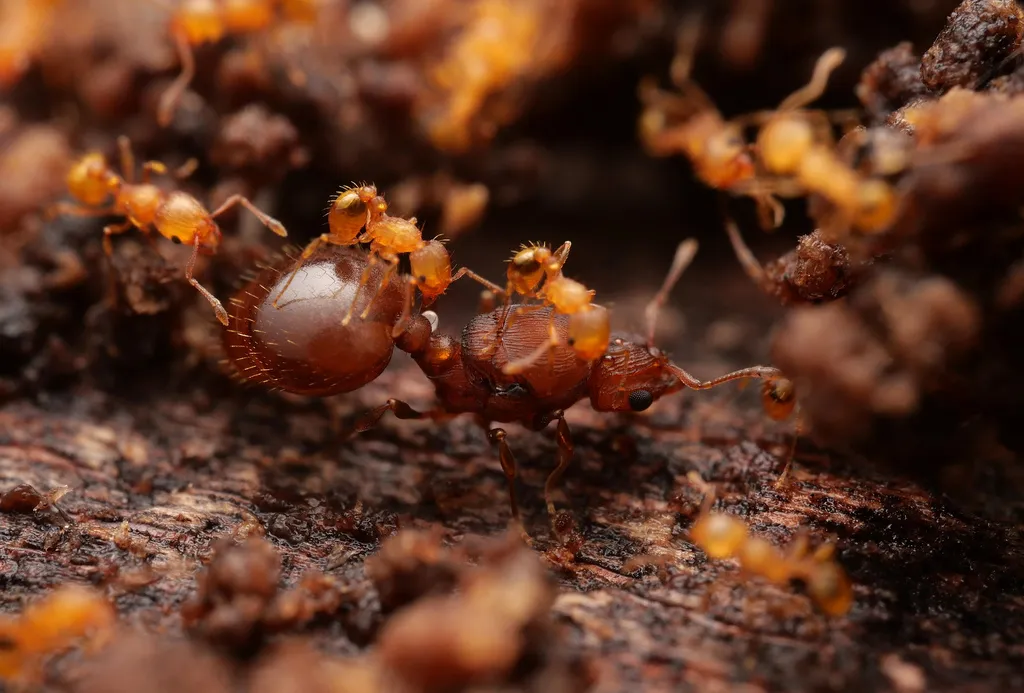
Little fire ants are tiny, aggressive invasive ants from Central and South America known for painful stings. At only 1-1.5mm, these ants hurt far more than their size suggests and cause serious damage wherever they spread.
Taxonomy
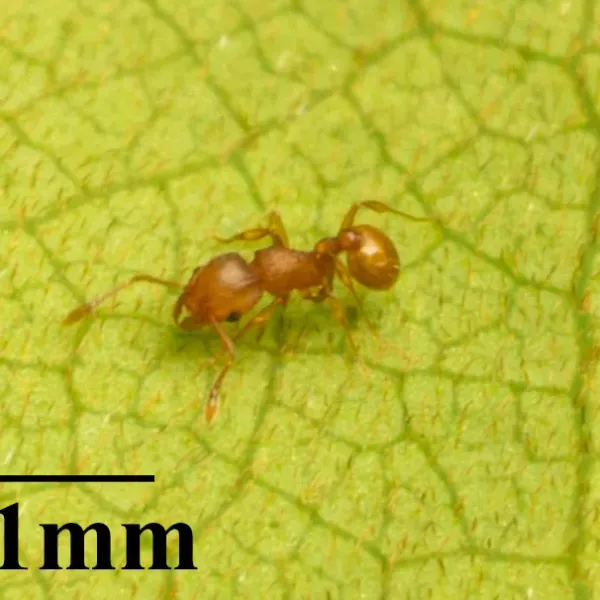
Little Fire Ants Coloration
Common color patterns to help identify little fire ants
Little Fire Ants
Seasonal Activity
When little fire ants are most active throughout the year

Where Little Fire Ants Are Found
Hover over states to see their names. Green regions indicate where little fire ants have been reported.
Little Fire Ant Identification Guide
The little fire ant (Wasmannia auropunctata), also called the electric ant, is one of the worst invasive ant species in the world. Native to Central and South America, this tiny ant has spread to tropical areas worldwide by hitching rides on shipped goods. The IUCN Global Invasive Species Database lists it among the world’s 100 worst invasive species because of the damage it causes and how hard it is to control.
Though not related to the red imported fire ant (Solenopsis invicta), this ant earned its common name from its painful sting. The species name auropunctata means “gold-spotted” in Latin, referring to the tiny golden hairs on its body.
Physical Characteristics
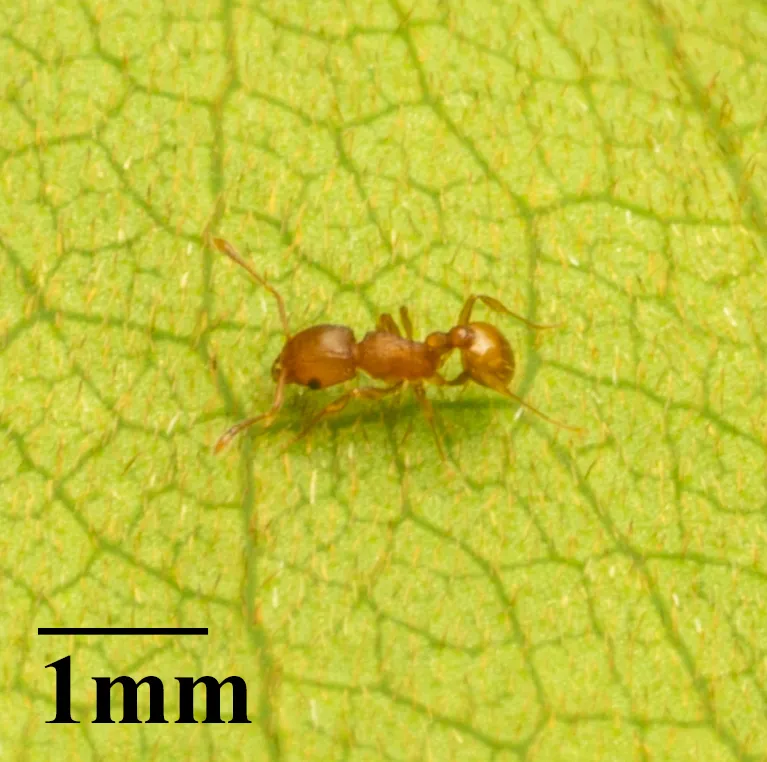
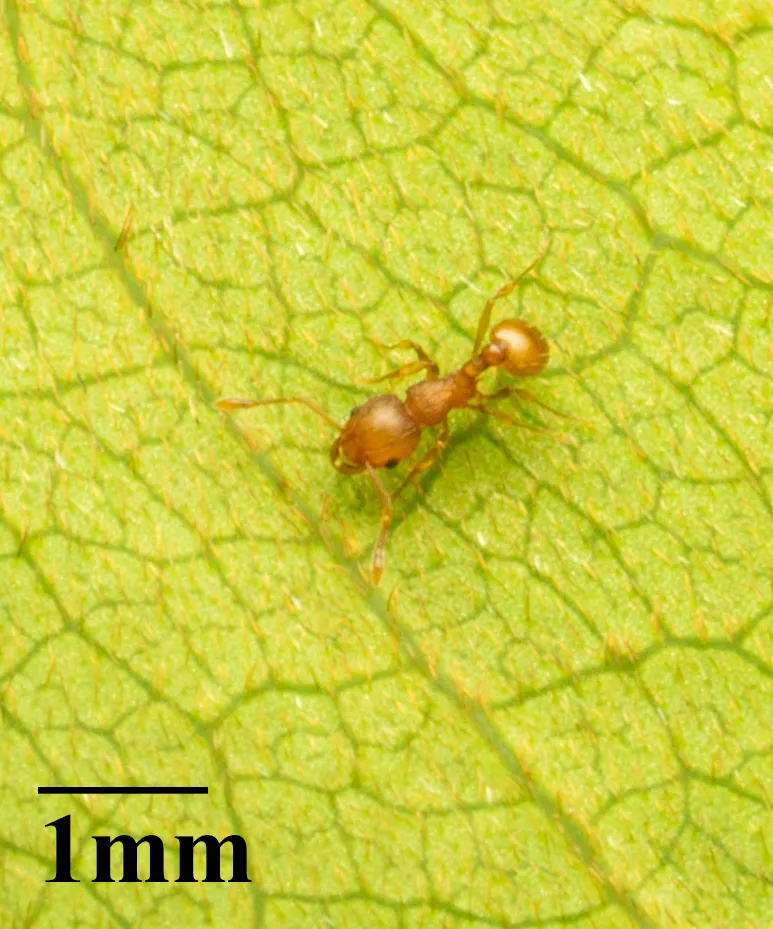
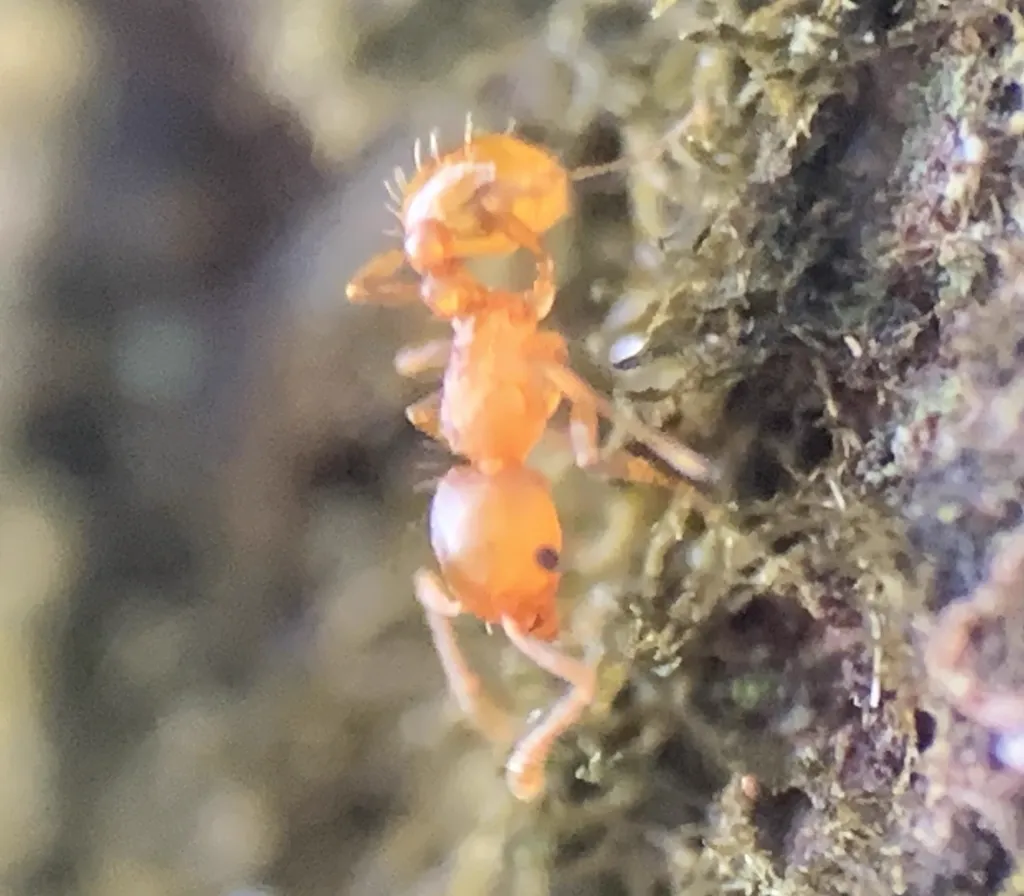
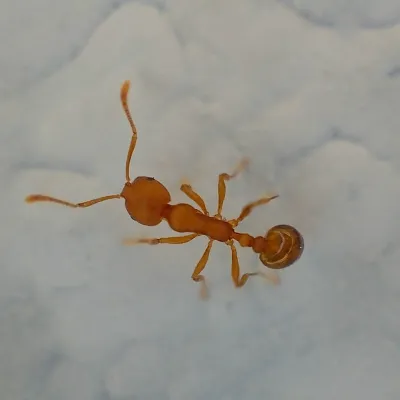
Little fire ants are very small. Workers measure only 1.0 to 1.5 mm long, about the size of a grain of sand. This makes them one of the smallest pest ants in North America. Unlike many ant species, all little fire ant workers are the same size.
Key features to look for:
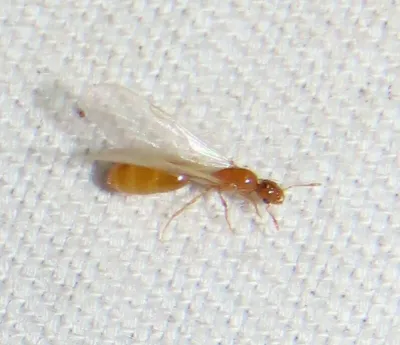
- Color: Light brown to golden-orange all over the body
- Head ridges: Parallel ridges running along the head between the antennae
- Head grooves: Grooves on the head where antennae can rest
- Waist: Square-shaped waist segment when viewed from above
- Antennae: 11 segments with a 2-segment club at the tip
- Movement: Slow, unhurried walking compared to other ants
Queens are much larger than workers at about 4.5 mm, nearly three times the worker size. This is one of the biggest size gaps between workers and queens in any ant species. Queens are darker reddish-brown and are rarely seen.
Distinguishing Little Fire Ants from Similar Species
Several small ant species may be confused with little fire ants:
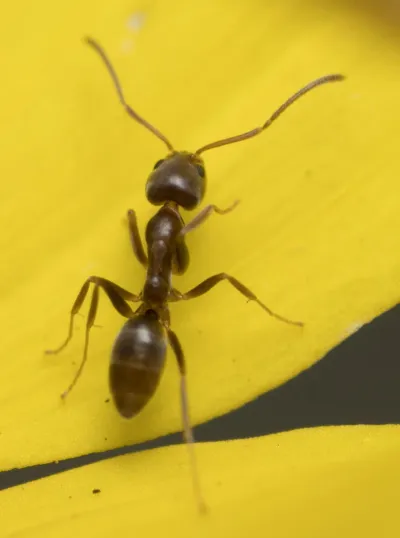
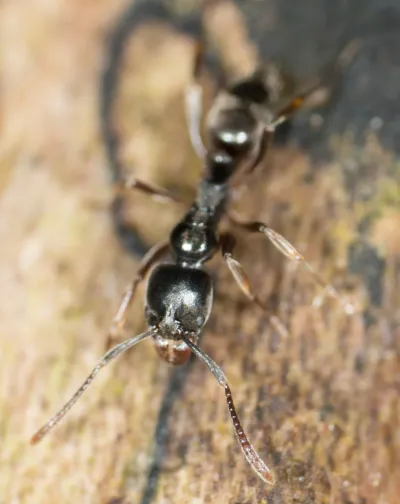
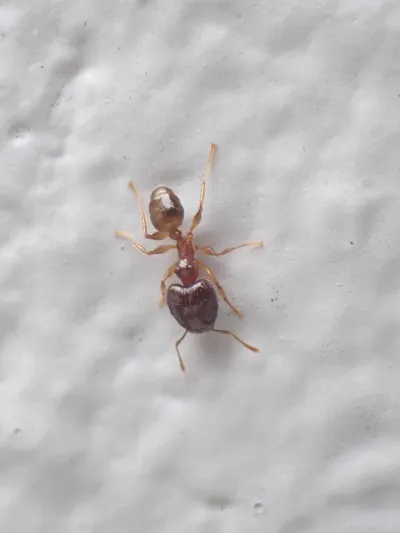
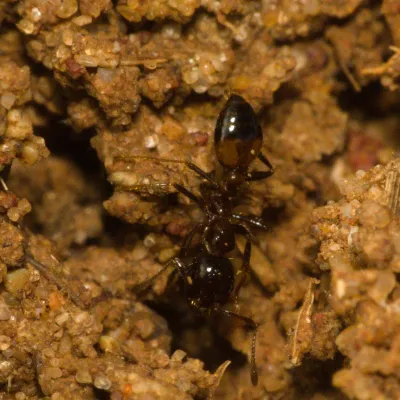
- Pharaoh ants (Monomorium pharaonis): Similar size and color but have a 3-segment antenna club instead of 2. Workers range from yellow to light brown.
- Thief ants (Solenopsis molesta): Even smaller (1.0 mm) with a similar golden color. Have 10-segment antennae with a 2-segment club. Eyes are smaller.
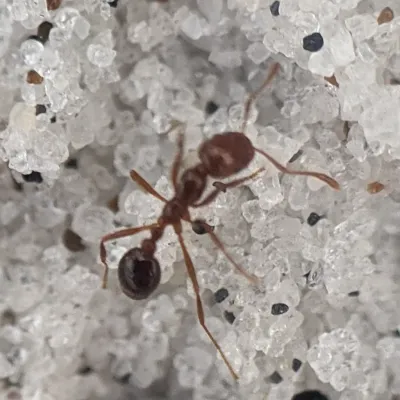
- Red imported fire ants (Solenopsis invicta): Much larger (2.4-6 mm) with workers of varying sizes. Darker color and more aggressive.
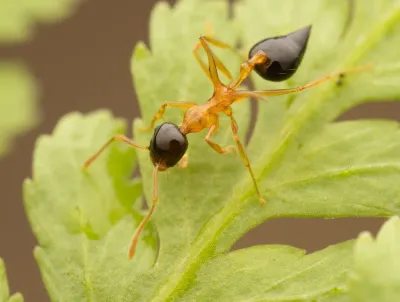
- Ghost ants (Tapinoma melanocephalum): Similar size but two-toned with a dark head and chest and pale, see-through rear and legs.
The University of Florida IFAS Extension notes that you usually need a magnifying glass to properly identify these ants because they are so small. If you think you have little fire ants, collect some samples for a professional to identify.
Little Fire Ant Behavior and Biology
Learning about little fire ant biology helps explain why this species is so hard to control and why it causes such damage in areas it invades.
Colony Structure and Supercolonies
Little fire ants have an unusual social structure that helps them spread so well. Unlike most ants that stay in their own colonies, little fire ants in invaded areas form supercolonies. Workers from separate nests do not fight each other. This lets colonies merge and form huge connected populations.
Key traits of their colony structure:
- Multiple queens: Colonies have many egg-laying queens, sometimes dozens or hundreds
- Multiple nests: A single colony spreads across many connected nest sites
- Budding: New colonies form when queens walk to new spots with a group of workers, rather than flying
- No fighting: Workers accept ants from other nests in the supercolony without conflict
This structure means that typical control methods aimed at single colonies often fail. The supercolony just rebuilds from surviving parts.
Unique Reproductive System
Little fire ants have one of the strangest breeding systems known in ants. Research shows that invasive populations use both sexual and clonal reproduction:
- Queens: Created as genetic copies of the mother queen
- Males: Grow from eggs with only the father’s genes
- Workers: Born through normal mating between queens and males
This system lets invasion traits pass unchanged through queen generations while keeping genetic variety in workers. Scientists think this breeding strategy may explain why some populations spread faster than others.
Nesting Behavior
Unlike red imported fire ants that build large dome-shaped mounds, little fire ants nest in shallow, hidden spots. The USDA Agricultural Research Service reports they use many different types of spaces:
- Under rocks and logs
- Within rotting wood and branches
- In leaf litter and plant debris
- Inside coconut husks and fallen fruit
- Within epiphytic plants (air plants, orchids, bromeliads)
- Inside potted plants and their soil
- Within hay bales and mulch piles
- In cracks and voids within buildings
- Inside electrical boxes and equipment
This flexible nesting allows little fire ants to build up huge numbers. In badly infested areas, almost every piece of debris on the ground may hold a nest.
Foraging and Diet
Little fire ants eat many different foods:
- Small insects and arthropods
- Honeydew from sap-feeding insects (aphids, scales, mealybugs)
- Plant nectar and fruit
- Seeds and other plant materials
- Deceased animals
- Human food scraps
They also guard honeydew-producing insects like aphids and scales. This creates farm problems because the ants protect these pests from predators, letting pest numbers grow and causing more crop damage. For comparison with other invasive ant species, see our ant identification chart.
Stinging Behavior and Health Impacts
Little fire ant stings hurt much more than you would expect from such a tiny ant. People describe the sting as feeling like a lit cigarette burn or touching a hot wire. This is why they are also called “electric ants.”
Health concerns with little fire ants include:
- Painful stings: Burning feeling that lasts several hours, with itching for days
- Eye injuries: Ants falling from plants can sting the eyes, causing sores and ulcers on the cornea
- Pet and livestock harm: Outdoor animals may get chronic eye problems, cloudy corneas, and shorter lives
- Wildlife harm: Reports of blindness in pets and wild animals in infested areas
This information is provided for educational purposes only and should not be considered medical advice. If you experience a severe reaction to ant stings or eye injury, please consult a healthcare provider immediately.
Ecological Impact
Little fire ants are one of the most damaging invasive ant species. When they invade new areas, they can devastate native wildlife.
Pushing Out Native Ants
Research shows that little fire ants push out nearly all native ant species where they invade. In some spots, they make up 96% of all ant life after taking over. This wipes out ant diversity, eliminating native species like harvester ants and field ants.
Harm to Other Wildlife
Little fire ants affect many animals beyond just other ants:
- Bugs and spiders: Big drops in spider, beetle, and cricket numbers
- Reptiles: Attacks on baby tortoises and lizards, stings to eyes and soft body parts
- Birds: Fewer ground-nesting birds raise young successfully
- Mammals: Attacks on small mammals, including pet cats and dogs
On the Galapagos Islands, these ants attack giant tortoise babies and sting the eyes of adult tortoises. This has helped cause population drops in these endangered animals.
Farm Damage
Little fire ants cause farm problems beyond direct crop harm:
- Guarding aphids and scales leads to more plant damage
- Workers sting farm workers, slowing work
- Infested crops cannot ship to clean areas due to quarantine rules
- Livestock may get repeated stings in infested pastures
Treatment Methods for Little Fire Ants
Controlling little fire ants takes a long-term, area-wide approach. Their supercolony structure and hidden nesting make them much harder to get rid of than typical ant species.
Bait-Based Control
Bait is the most effective treatment for little fire ants. Workers share food throughout the supercolony, so slow-acting baits can spread through the whole population before the ants notice.
Good baiting strategies include:
- Broadcast spreading: Spread bait evenly across the whole infested area, not just where you see ants
- Regular retreatment: Apply every 4-6 weeks for at least one year to address ongoing breeding
- Fresh bait: Use fresh products since little fire ants reject old or stale materials
- Good timing: Apply when ants are actively looking for food and no rain is expected for 24-48 hours
The Hawaii Ant Lab says to treat entire properties rather than single nests. The connected nature of supercolonies means treating only visible ant activity will not end the infestation.
Barrier Treatments
Barrier treatments with long-lasting insecticides can help protect homes and buildings. These treatments create zones where ants die on contact, cutting down the number that get in. But barrier treatments alone will not wipe out established populations.
Biological Control Research
Scientists are still studying biological control options for little fire ants. Agents being researched include:
- Parasitic flies that attack workers
- Fungal diseases that spread through colonies
- Parasites that weaken colonies over time
So far, no biological control agents have been released for wide use against little fire ants, but research continues in Hawaii and other affected areas.
Prevention and Quarantine
Since little fire ants spread mainly by riding along in infested materials, prevention is key:
- Check all plants before moving them to new spots
- Quarantine new plants away from your yard before planting
- Check outdoor gear, furniture, and vehicles before moving them
- Report suspected new infestations to local farm officials
- Follow quarantine rules that limit moving materials from infested areas
Finding and acting on new infestations early offers the best chance of wiping them out before they become established supercolonies. For general ant prevention advice, see our guide on how to keep ants away.
Distribution in North America
Little fire ants are less widespread in the continental United States than red imported fire ants, though they are well-established in some regions. For more on telling these species apart, see our guide to fire ants vs. red ants.
Current Range
| Region | Status |
|---|---|
| Florida | Established since 1924, primarily southern regions |
| Hawaii | Established since 1999, widespread on Big Island, spreading on other islands |
| California | Limited populations, primarily in greenhouses |
| Texas | Occasional detections, not widely established |
In their native range, little fire ants live throughout Central and South America, from Mexico to Argentina. They have also spread to the Caribbean, Pacific Islands, Australia, West Africa, and parts of Asia and the Middle East.
Climate Limits
Cold weather limits how far north little fire ants can spread in North America. They cannot survive long freezes and need mild winters or heated buildings to survive. Still, they can live in greenhouses and indoor spaces in colder areas. Populations have been found in Canada and England.
Climate change may let little fire ants spread farther north outdoors in coming years. This makes watching for them important even in areas without current infestations.
References and Further Reading
- IUCN Global Invasive Species Database - Wasmannia auropunctata - Comprehensive global information on little fire ant impacts and distribution
- University of Florida IFAS Extension - Little Fire Ant - Detailed identification guide and biology information
- USDA ARS - Little Fire Ant Distribution, Impact and Control - Comprehensive research on biology, impacts, and management
- Hawaii Ant Lab - How to Treat for Little Fire Ants - Practical homeowner guidance for little fire ant control
- Worldwide invasion by the little fire ant - PubMed - Research on invasion routes and reproductive system
Other Ants
Explore other species in the ants family
Commonly Confused With
Little Fire Ants are often mistaken for these similar pests
Where Little Fire Ants Are Found
Hover over states to see their names. Green regions indicate where little fire ants have been reported.
Common Questions about Little Fire Ants
How can I identify little fire ants?
+
Little fire ants are very small (1-1.5mm), about the size of a grain of sand. They are light orange to golden-brown all over with all workers the same size. Look for ridges along the head, a square-shaped waist, and slow movement compared to other ants.
What does a little fire ant sting feel like?
+
Even though they are tiny, little fire ant stings cause strong burning pain that lasts for hours. The sting feels like being touched by a lit cigarette. Unlike other fire ants, these ants often fall from plants and sting from above, making attacks hard to avoid.
Are little fire ants dangerous?
+
Yes, little fire ants can harm humans, pets, and farm animals. Their stings can damage eyes when they fall from plants. This can lead to blindness in outdoor animals. Pets in infested areas may get chronic eye problems and shorter lives from repeated stings.
Where do little fire ants live?
+
Little fire ants nest in shallow spots rather than building visible mounds. They nest under rocks, in leaf litter, rotting logs, plant debris, and potted plants. They can also nest inside walls, furniture, and electrical boxes. Their habit of living in plants makes them hard to spot.
How did little fire ants spread to the United States?
+
Little fire ants came to Florida by the 1920s, probably in plants and soil from Central and South America. They spread to Hawaii in 1999 and now live on multiple islands. People moving infested plants, soil, and goods keeps spreading them to new areas.
Why are little fire ants one of the worst invasive species?
+
The IUCN lists little fire ants among the world's 100 worst invasive species. They push out native ants, cut insect variety, attack wildlife, and harm ecosystems. Their ability to form huge supercolonies with millions of workers makes them very hard to control.
Can little fire ants live in cold climates?
+
Little fire ants prefer warm tropical climates but can survive in cooler areas by nesting in heated buildings and greenhouses. They have been found in greenhouses in Canada and England. Cold weather is what stops them from spreading farther north outdoors.
How can I prevent little fire ants from spreading?
+
Check all plants, soil, and materials before moving them. Little fire ants often hitch rides in potted plants, mulch, hay bales, and outdoor gear. If you live in an infested area, do not share plants with others and report new infestations to local farm officials.

With five years of hands-on experience in the pest control industry, George Schulz is a registered technician with the Virginia Pest Management Association and a proud third-generation professional in a family business that's been protecting homes for over 57 years. He manages and trains a team of service pros while also leading internal research efforts—recently spearheading a deep-dive review of thousands of documents on pest control materials to hand-pick the most kid and pet friendly, most effective solutions tailored specifically for homes in the DC metro area.