Crazy Ants Identification Guide
Paratrechina longicornis
Fast-moving ants named for their erratic, unpredictable running patterns. Crazy ants do not follow organized trails and are known to invade structures in large numbers, nesting in wall voids, electronics, and anywhere with moisture.
Taxonomy
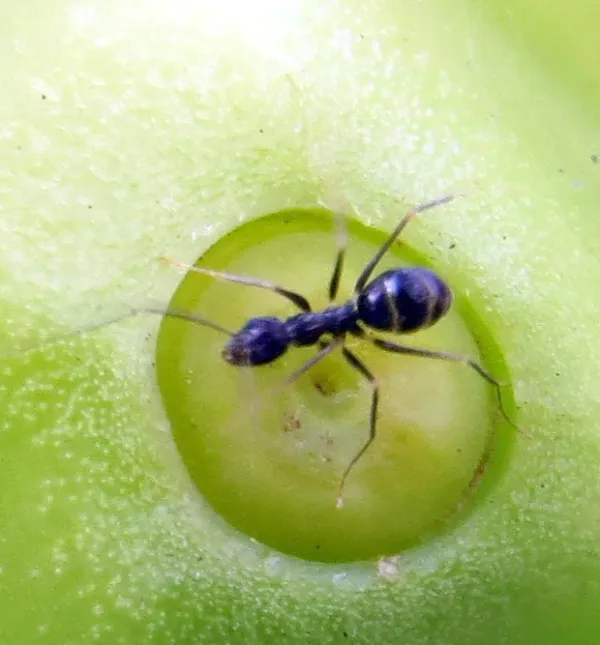
Crazy Ants Coloration
Common color patterns to help identify crazy ants
Crazy Ants
Seasonal Activity
When crazy ants are most active throughout the year

Where Crazy Ants Are Found
Hover over states to see their names. Green regions indicate where crazy ants have been reported.
Crazy Ants Identification Guide
Physical Characteristics
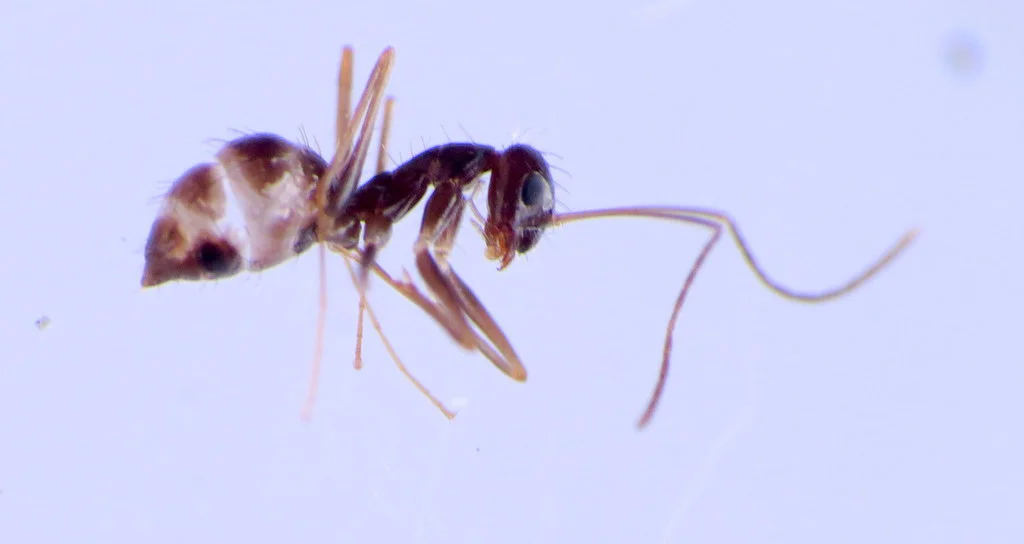
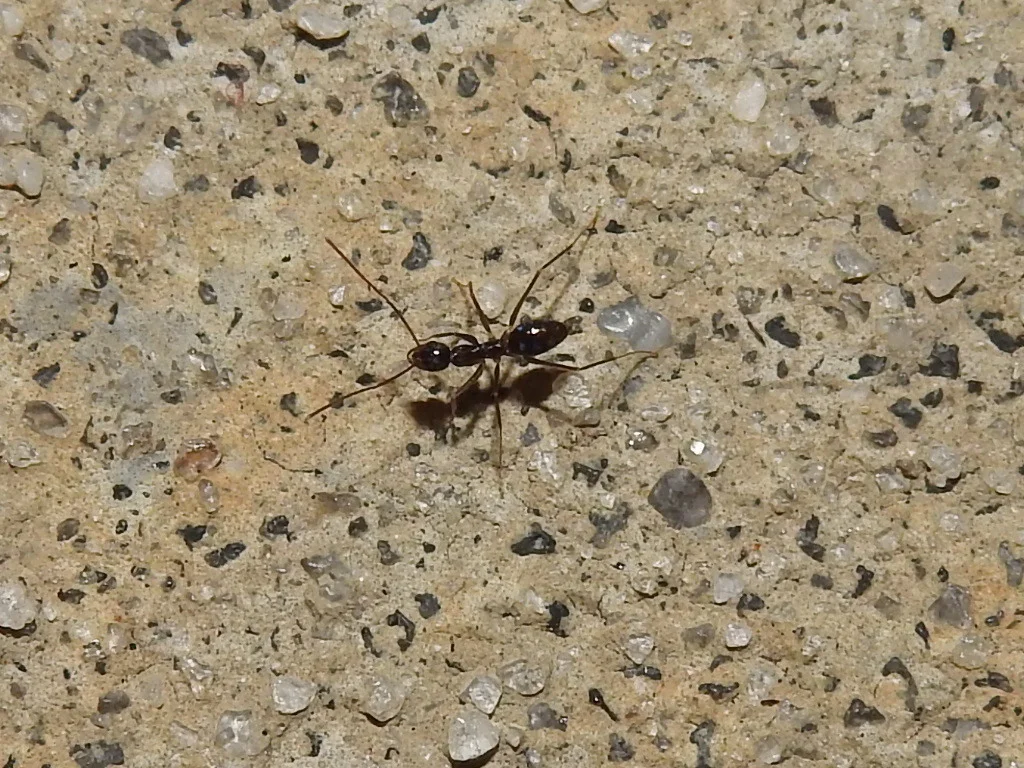
Crazy ants are small, slender ants measuring about 2 to 3 mm (roughly 1/8 inch) in length. Their most distinctive physical feature is their exceptionally long legs and antennae relative to their body size. The antennae have 12 segments with a long first segment (called the scape) that extends well past the back of the head.
Workers are uniformly dark brown to black with a slight grayish sheen. Their bodies are covered with scattered long, coarse hairs (setae) that give them a somewhat fuzzy appearance under magnification. Like all ants, they have a single node connecting the thorax to the abdomen (called a petiole), six legs, and elbowed antennae.
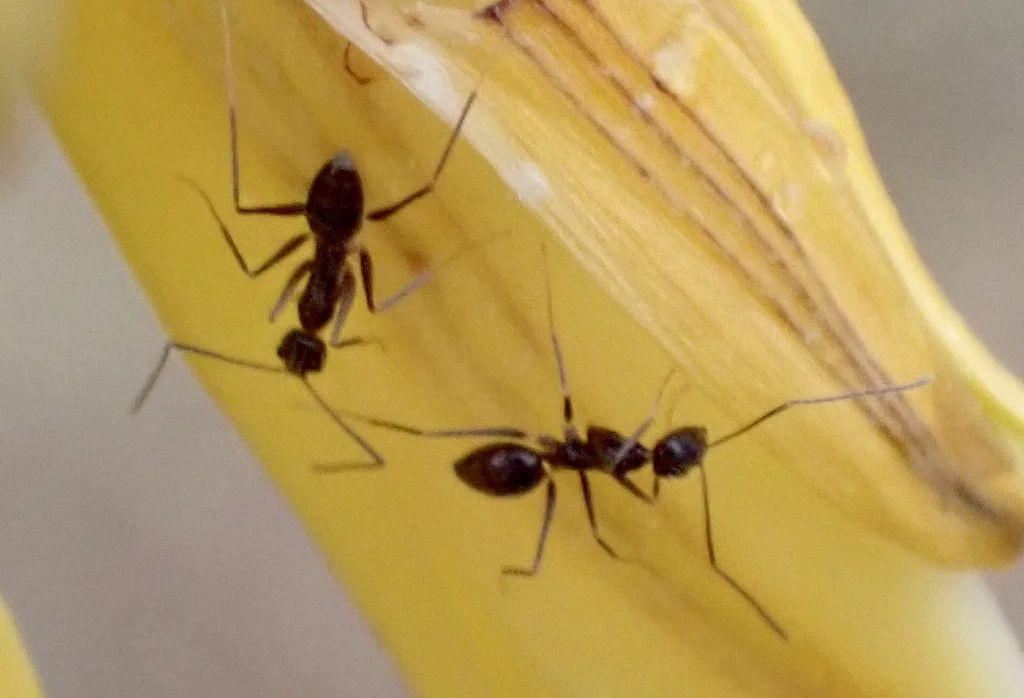
The most reliable way to identify crazy ants is their behavior. They move in rapid, erratic, jerky patterns that appear random compared to the organized trail-following of most ant species. When disturbed, they scatter in all directions rather than retreating in an orderly line. For help comparing species, see our ant identification chart.
Common Species
Longhorn Crazy Ant (Paratrechina longicornis) - Also called the black crazy ant, this is the most widely distributed crazy ant species in North America. Originally from Southeast Asia, it has spread to tropical and subtropical regions worldwide and thrives in heated buildings throughout the United States. It’s commonly found infesting structures in the Mid-Atlantic region.
Tawny Crazy Ant (Nylanderia fulva) - Also known as the Rasberry crazy ant after the Texas exterminator who first identified the invasion, this species has become a major pest in Gulf Coast states since the early 2000s. It’s distinguished by its reddish-brown to golden-brown coloring and has caused widespread electrical damage and displaced native ant species, including fire ants. Research published in Science demonstrated that tawny crazy ants can neutralize fire ant venom using their own formic acid secretions, giving them a competitive advantage. For more details, see our dedicated tawny crazy ants page.
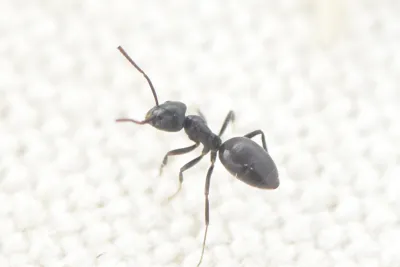
White-Footed Ants (Technomyrmex difficilis) - Like crazy ants, white-footed ants form massive supercolonies with multiple queens. They’re smaller (about 2.5 mm) and uniformly dark brown to black with distinctive pale feet. They lack the erratic movement pattern that defines crazy ants.
Crazy Ants Behavior and Biology
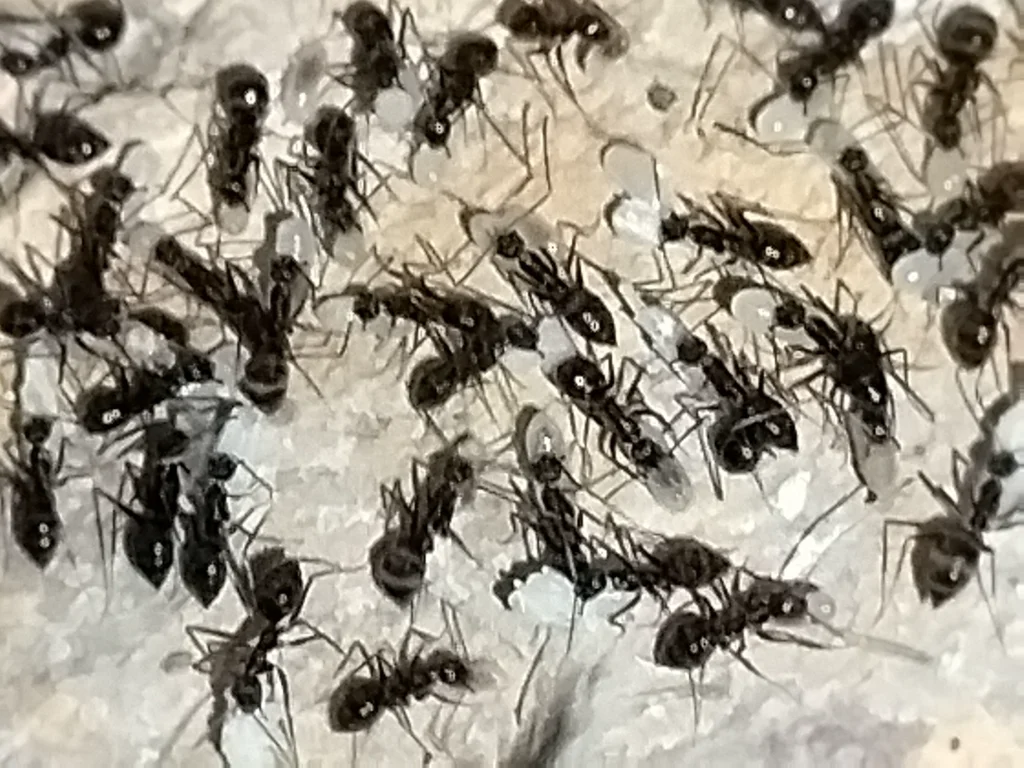
Crazy ants are highly social insects that form colonies with multiple queens (polygyny). This reproductive strategy allows colonies to grow rapidly and makes them difficult to eliminate because killing one queen doesn’t stop the colony. Colonies can contain tens of thousands to hundreds of thousands of workers, and when resources are abundant, populations can explode.
Unlike many ant species that establish new colonies through mating flights, crazy ants primarily spread through “budding.” A queen and group of workers simply walk away from the parent colony to establish a new nest nearby. This behavior means crazy ants don’t disperse far on their own but can rapidly colonize an area with interconnected satellite nests.
Crazy ants are omnivorous and opportunistic feeders. They primarily consume honeydew from aphids and scale insects, which they actively tend on plants. They also feed on other insects (dead and alive), seeds, fruits, and any human food they encounter. Their attraction to sweet liquids and protein sources leads them into kitchens and food storage areas.
These ants nest in a wide variety of locations, preferring moist environments with protection from the elements. Common nesting sites include:
- Under rocks, logs, and debris
- In mulch and leaf litter
- Inside wall voids and insulation
- Behind electrical outlets and switch plates
- Inside potted plants
- In air conditioning units and electrical equipment
- Under flooring and in crawl spaces
Their attraction to electrical equipment is a defining characteristic. According to Texas A&M University research, when a crazy ant is electrocuted inside equipment, it releases alarm pheromones that attract other workers. This leads to massive accumulations of ants that can cause short circuits, clog components, and result in equipment failure. The tawny crazy ant in particular has caused widespread damage to electrical infrastructure, air conditioners, and appliances in Texas, Louisiana, and Florida.
How We Treat for Crazy Ants
Controlling crazy ants requires a comprehensive approach because their colonies are large, have multiple queens, and often nest in inaccessible locations. Our treatment strategy combines inspection, baiting, and targeted applications:
Thorough Inspection - Our technicians begin by identifying all areas of ant activity and potential nesting sites. Since crazy ants don’t follow trails, we look for congregation areas, entry points, and signs of nesting in wall voids, electrical equipment, and moisture-prone areas. Understanding where the ants are coming from is essential for effective treatment.
Non-Repellent Crack and Crevice Treatment - We apply non-repellent insecticides to cracks, crevices, and entry points throughout the structure. Non-repellent products are critical because crazy ants will avoid areas treated with repellent chemicals. With non-repellents, ants contact the treatment unknowingly and transfer the active ingredient to nestmates through normal social behaviors.
Strategic Baiting - We place liquid and granular baits in areas of high ant activity. Crazy ants have strong preferences for sweet carbohydrates, especially in warm weather, and protein in cooler months. Our baits are formulated to be carried back to the colony and shared with queens and brood. Because colonies have multiple queens, we use slow-acting baits that give workers time to distribute the material throughout the colony before it takes effect.
Perimeter Treatment - We treat the exterior foundation and perimeter to create a barrier that intercepts ants moving toward the structure. We also address harborage sites like mulch beds, leaf litter, and debris near the foundation that serve as outdoor nesting areas.
Electrical Equipment Inspection - When crazy ants are infesting electrical equipment, we work carefully to address the infestation without damaging components. We may recommend having an electrician de-energize equipment before treatment. We avoid applying liquid products directly into electrical boxes and instead focus on treating access points and surrounding areas.
Ongoing Monitoring and Prevention - Crazy ants can reinvade from outdoor populations or neighboring properties. Our recurring pest control plans include monitoring for crazy ant activity and retreatment as needed. We also recommend sealing entry points, reducing moisture, and eliminating outdoor harborage to discourage future infestations. For more prevention tips, see our guide on how to keep ants away.
Because crazy ants are social insects that spread treatment materials among colony members, our non-repellent approach targets the entire colony rather than just the ants you can see. Most materials we use have a residual effective period of approximately 90 days, which is why regular maintenance visits help prevent reestablishment.
References and Further Reading
- Crazy ants detoxify fire ant venom - Science (NCBI) - Research demonstrating tawny crazy ants’ ability to neutralize fire ant venom using formic acid
- Rasberry Crazy Ant - Texas A&M AgriLife Extension - Comprehensive information on tawny crazy ant biology and electrical damage
- Longhorn Crazy Ant - University of Florida Featured Creatures - Detailed identification and biology guide
- Crazy Ants - National Pest Management Association - Overview of crazy ant pest management
Other Ants
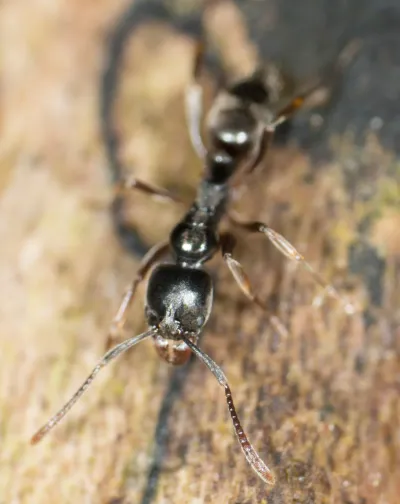
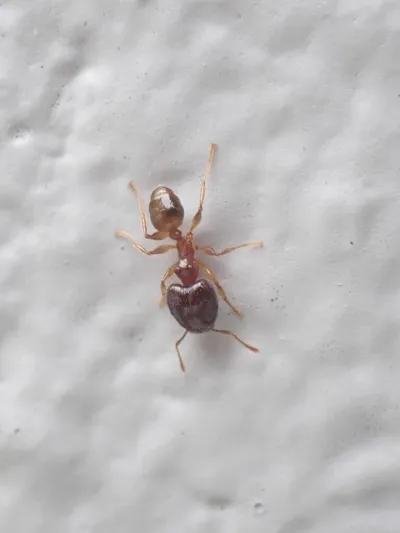
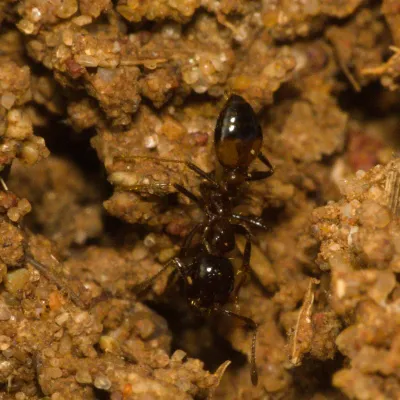
Explore other species in the ants family
Commonly Confused With
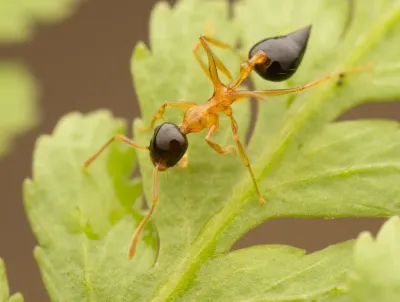
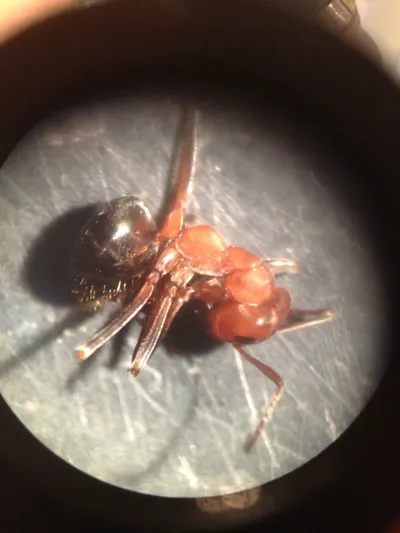
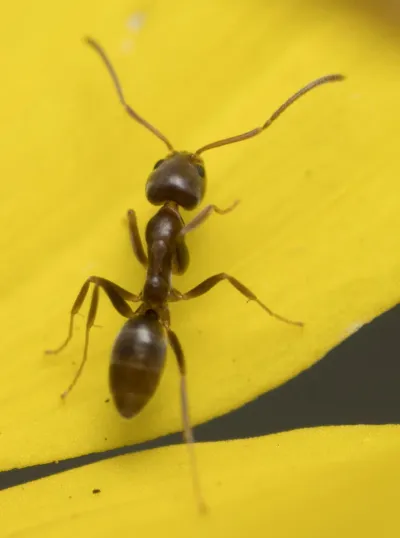
Crazy Ants are often mistaken for these similar pests
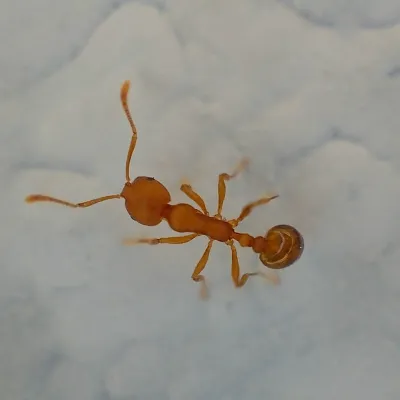
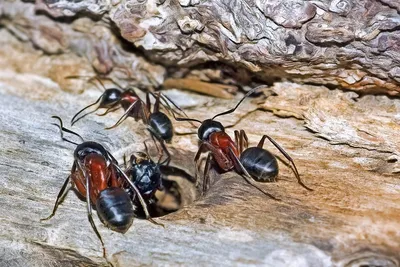
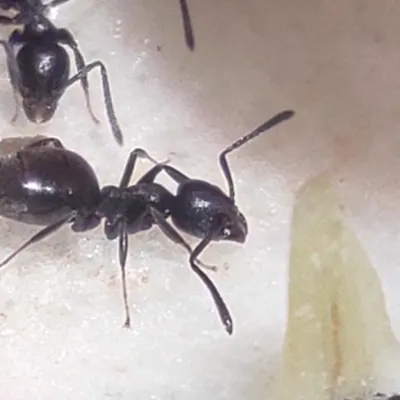
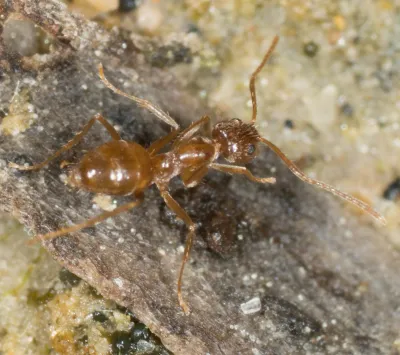
Where Crazy Ants Are Found
Hover over states to see their names. Green regions indicate where crazy ants have been reported.
Common Questions about Crazy Ants
Why are they called crazy ants?
+
Crazy ants get their name from their distinctive erratic, jerky running pattern. Unlike most ant species that travel in orderly trails, crazy ants move in quick, unpredictable directions that appear random or 'crazy.' This behavior makes them easy to identify once you know what to look for.
Are crazy ants harmful?
+
Crazy ants do not sting and rarely bite humans. However, they cause significant nuisance and economic damage. They invade homes in enormous numbers, contaminate food, and are notorious for infesting electrical equipment where they can cause short circuits and equipment failures. In the Gulf Coast region, the tawny crazy ant has caused millions of dollars in electrical damage.
Why do crazy ants get into electronics?
+
Crazy ants are strongly attracted to electrical fields and warm, protected spaces. They nest inside electrical boxes, air conditioning units, appliances, and computers. When one ant is electrocuted, it releases alarm pheromones that attract more ants, leading to massive accumulations that can short-circuit equipment.
How do I know if I have crazy ants?
+
Look for small, dark ants running erratically rather than in trails. They often accumulate in large numbers around entry points, in kitchens and bathrooms, and near electronics. If you see ants moving unpredictably in all directions rather than following each other in lines, you likely have crazy ants.
Can I get rid of crazy ants myself?
+
DIY control is difficult because crazy ant colonies can be very large, have multiple queens, and nest in hard-to-reach locations. Store-bought sprays may kill visible ants but won't eliminate the colony. Effective control requires identifying all nesting sites and using professional-grade baits, such as [borax-based solutions](/borax-for-ants/), that workers carry back to the colony.
How fast do crazy ants spread?
+
Crazy ants spread primarily through budding, where a queen and workers leave to start a new colony nearby. Unlike ants that spread through mating flights, this budding behavior allows crazy ants to establish new colonies very close together, leading to rapid local population explosions.
What's the difference between crazy ants and other small ants?
+
The key identifier is their movement pattern. Crazy ants run erratically in random directions, while other small ants like [odorous house ants](/pests/ants/odorous-house-ants/) or [Argentine ants](/pests/ants/argentine-ants/) follow organized trails. Crazy ants also have exceptionally long legs and antennae relative to their body size.
When are crazy ants most active?
+
Crazy ants are active year-round indoors where temperatures are controlled. Outdoors, they're most active from late spring through early fall during [ant season](/ant-season/). They prefer warm, humid conditions and may move indoors during extreme weather to seek shelter and moisture.

With five years of hands-on experience in the pest control industry, George Schulz is a registered technician with the Virginia Pest Management Association and a proud third-generation professional in a family business that's been protecting homes for over 57 years. He manages and trains a team of service pros while also leading internal research efforts—recently spearheading a deep-dive review of thousands of documents on pest control materials to hand-pick the most kid and pet friendly, most effective solutions tailored specifically for homes in the DC metro area.