Big-Headed Ants Identification Guide
Pheidole megacephala
Big-headed ants are invasive ants with two worker sizes. Soldiers have very large heads compared to regular workers. These ants rank among the 100 worst invasive species in the world. They form huge supercolonies that push out native insects and can become serious pests in warm parts of North America.
Taxonomy
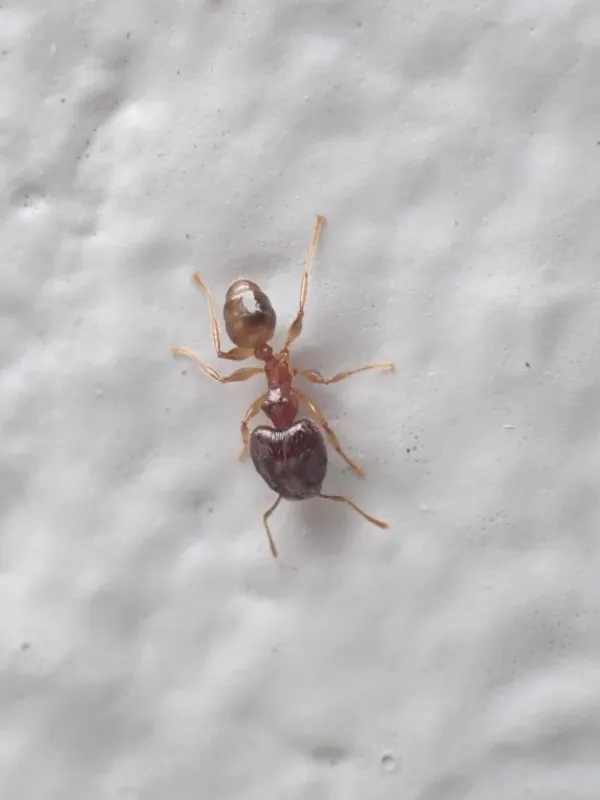
Big-Headed Ants Coloration
Common color patterns to help identify big-headed ants
Big-Headed Ants
Seasonal Activity
When big-headed ants are most active throughout the year
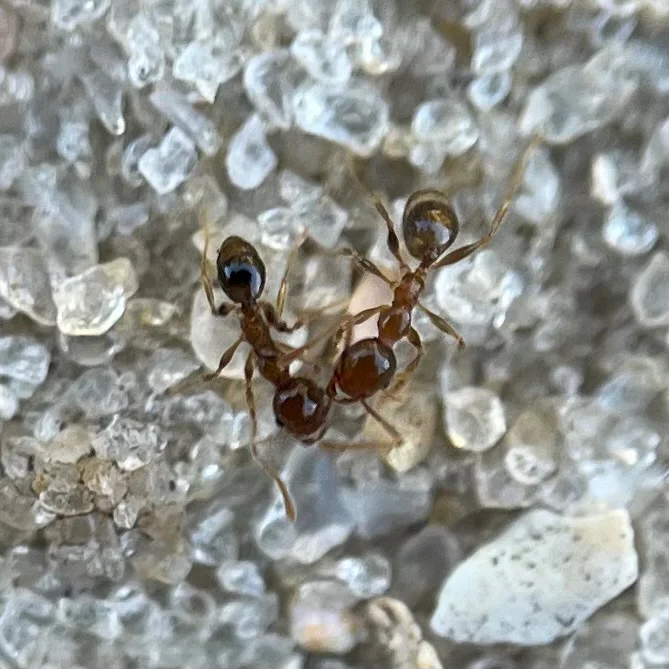
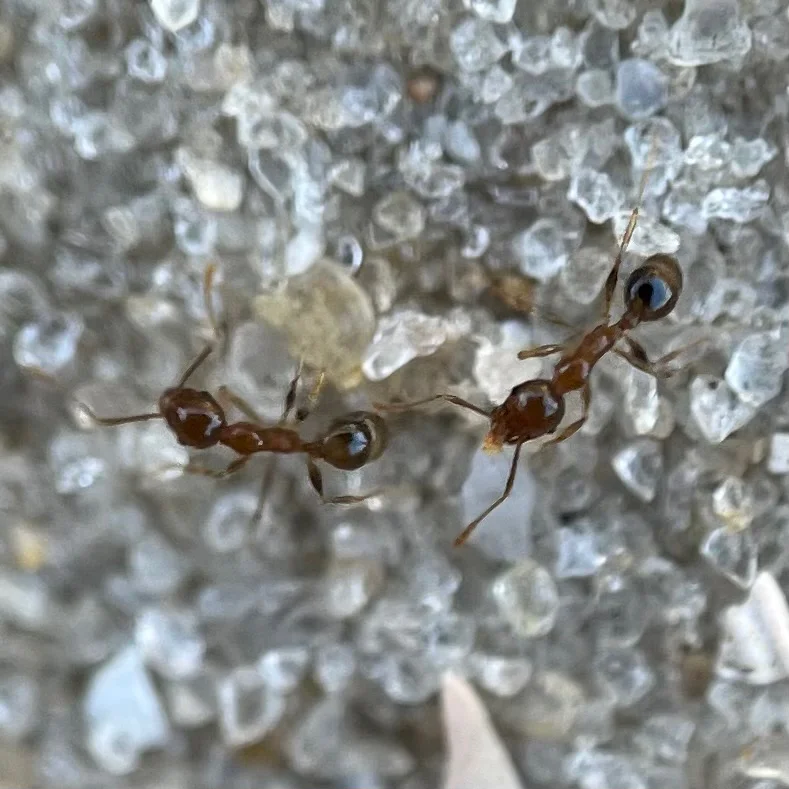
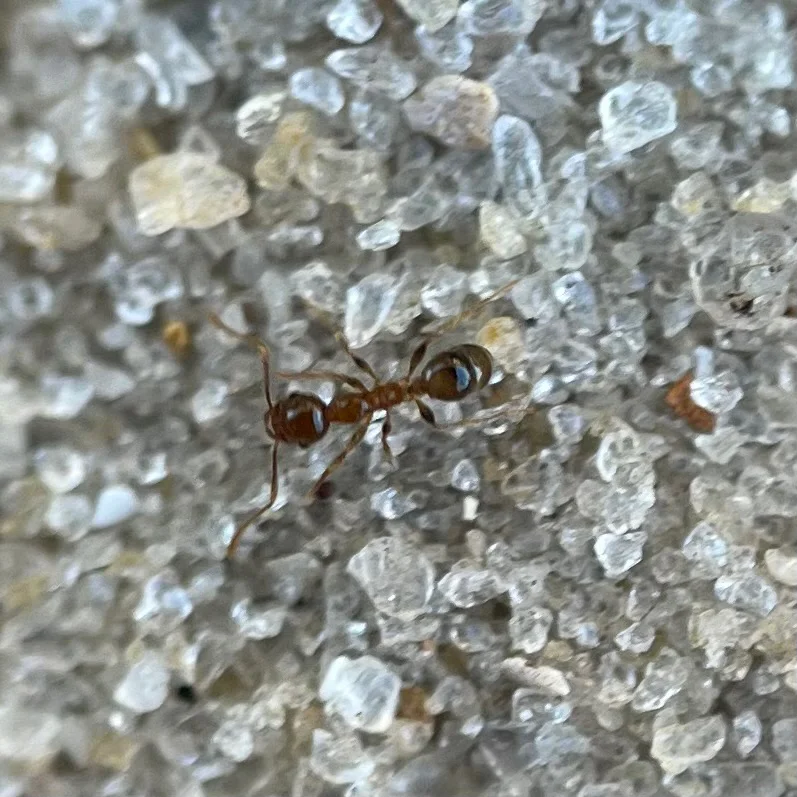
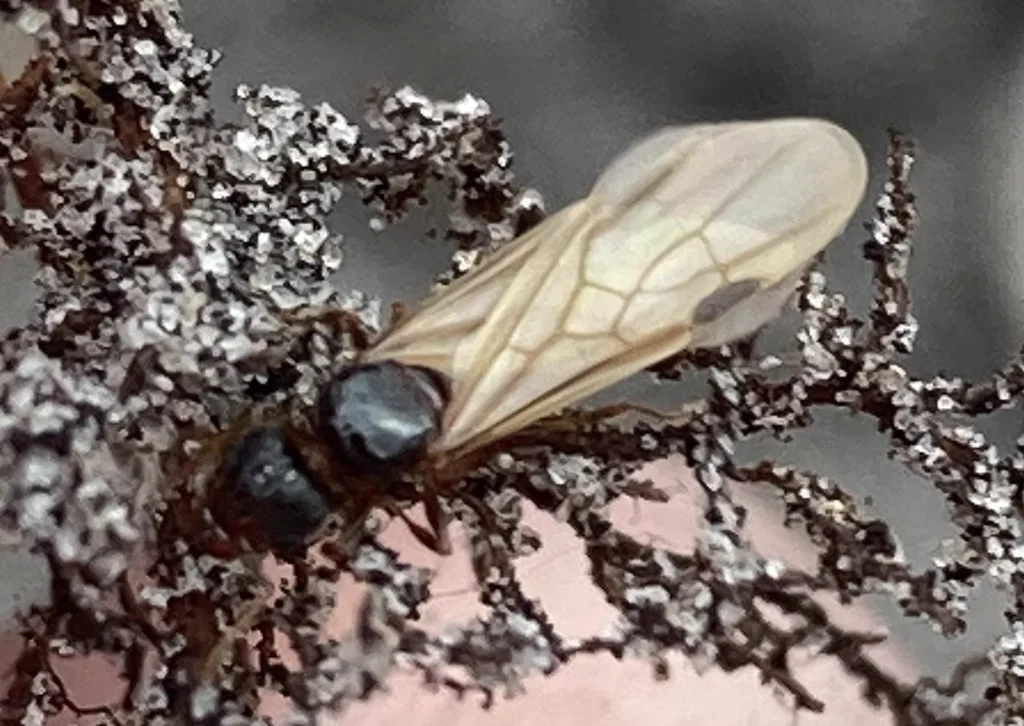

Where Big-Headed Ants Are Found
Hover over states to see their names. Green regions indicate where big-headed ants have been reported.
Big-Headed Ants Identification Guide
Big-headed ants (Pheidole megacephala) are one of the world’s most invasive ant species. The IUCN lists them among the “100 World’s Worst Invasive Alien Species.” These ants are native to southern Africa but have spread to warm regions around the world, including parts of the southern United States. They get their name from the soldier ants, which have very large heads compared to their bodies.
What makes these ants so hard to control? They form huge supercolonies with hundreds of connected nests and many queens. A single supercolony can spread across an entire neighborhood. Without treating the whole area at once, control efforts often fail.
Physical Characteristics
Big-headed ants have two sizes of workers in each colony. This is called dimorphism:
Minor Workers (about 99% of the colony):
- Length: About 2 mm (1/16 inch)
- Color: Pale yellow to reddish-brown
- Head: Normal size
- Job: Finding food, caring for young, and maintaining the nest
Major Workers / Soldiers (about 1% of the colony):
- Length: 3-4 mm (1/8 inch)
- Color: Similar, often slightly darker
- Head: Very large, almost heart-shaped when seen from above
- Job: Defending the colony, crushing seeds, and processing food
Key features to look for:
- Twelve-segmented antennae with a club at the tip made of three segments
- Two-segmented waist with a swollen rear node
- Short spines pointing up from the middle body section
- Dark spot usually visible on the underside of the abdomen
- Rear of head is smooth and shiny; front is textured
- Long, scattered hairs on the body
Queens are much larger than workers. Winged males appear during mating season, usually after rain.
Similar Species Commonly Confused with Big-Headed Ants
Because of their small size and reddish-brown color, big-headed ants are often confused with other ant species:
-
Fire Ants (Solenopsis invicta): Fire ants come in many sizes, not just two. They sting painfully, while big-headed ants do not sting. Fire ant mounds are dome-shaped with no visible opening.
-
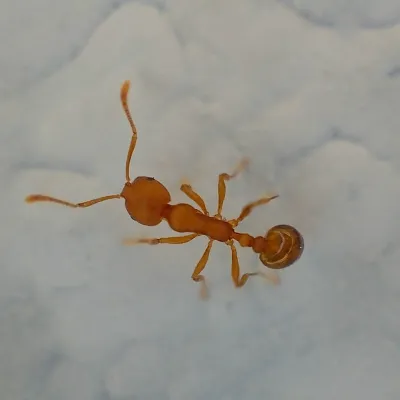
Pharaoh Ants (Monomorium pharaonis): Pharaoh ants are smaller and golden-yellow. All their workers are the same size. They nest mostly indoors.
-
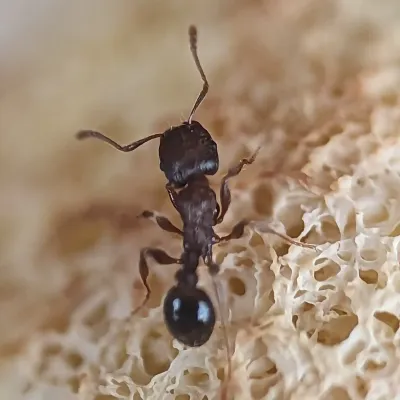
Pavement Ants (Tetramorium caespitum): These ants are dark brown to black with grooves on their head and body. They also create small soil mounds, but all workers are the same size.
-
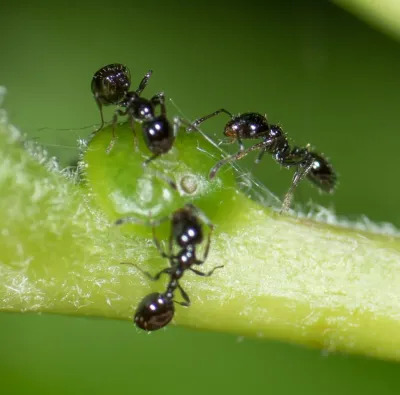
Little Black Ants (Monomorium minimum): These are dark brown to black and much smaller. All workers are the same size.
The easiest way to identify big-headed ants is to look for two very different sizes of workers foraging together.
Big-Headed Ants Behavior and Biology
Learning about big-headed ant biology helps explain why they spread so well and why regular ant treatments often fail.
Supercolony Formation
The most important thing to know about big-headed ants is that they form supercolonies. In a supercolony, workers from different nests treat each other as family instead of enemies. This is rare among ants and gives big-headed ants a huge advantage:
- Single colonies join together into networks with hundreds or thousands of connected nests
- Many queens produce eggs throughout the supercolony
- Workers move freely between nests without fighting
- Food and young are shared across the entire network
- The whole supercolony acts like one giant organism
A supercolony network can spread across many properties and contain millions of workers. When one nest is destroyed, the rest of the network quickly fills the gap. This is why treating single nests or even whole properties often does not work for long.
Diet and Foraging
Big-headed ants eat many different foods:
- Protein: Dead insects, earthworms, and other small creatures
- Sugars: Honeydew from aphids, mealybugs, and scale insects
- Seeds: Soldiers use their strong jaws to crush seeds
- Household foods: Sweets, meats, pet food, grease, and pantry items
You may see foraging trails along tree trunks, across lawns, and up walls into buildings. Workers share food mouth-to-mouth with other ants. This spreads nutrition throughout the colony network.
Nesting Habits and Soil Displacement
Big-headed ants nest in loose soil. They push dirt out of their tunnels, which is often the first sign of an infestation.
Common nesting locations:
- Under rocks, pavers, bricks, and landscape timbers
- In lawns, especially near edges and sprinklers
- Around tree bases and shrub roots
- Along sidewalks, driveways, and foundations
- Under mulch and leaf litter
- Inside wall voids and under concrete slabs
- In potted plants
The dirt they dig out forms small piles or “craters.” You often see these along cracks in concrete, around paver edges, and near foundation walls. These mounds look similar to pavement ant digging, but the large-headed soldiers are a giveaway.
Life Cycle and Reproduction
Big-headed ants go through four life stages: egg, larva, pupa, and adult. Temperature affects how fast they develop:
- Egg stage: 13-32 days
- Larval stage: 23-29 days
- Pupal stage: 10-20+ days
- Total development: About 6-10 weeks from egg to adult
Queens can lay up to 292 eggs per month in good conditions. Workers live about 78 days at 70 degrees F, but only 38 days at 81 degrees F.
Colonies produce winged ants for mating flights, usually after rain in warm weather. However, colonies mostly spread by budding and digging tunnels underground rather than through flying.
Ecological Impact
Big-headed ants cause major damage to ecosystems wherever they establish:
- Native ant loss: They outcompete and wipe out native ant species
- Fewer insects: Native insect variety drops sharply in invaded areas
- Farming problems: They protect pest insects like aphids and scale insects from predators, causing more crop damage
- Seed eating: Heavy seed feeding can affect plant growth
In Hawaii, big-headed ants may have helped cause the extinction of some native flies and beetles. Their impact on nature is similar to Argentine ants and fire ants.
Treatment Methods for Big-Headed Ants
Controlling big-headed ants is different from controlling most ants because of their supercolony structure. Treating single nests or properties usually gives only short-term relief. The ants quickly return from untreated areas nearby.
Effective Control Strategies
Area-Wide Treatment: The best big-headed ant control programs treat entire neighborhoods or property complexes at the same time. This prevents ants from quickly returning from nearby untreated areas.
Baiting Programs: Slow-acting baits work best for big-headed ants. Workers carry the bait back to nests and share it with other ants. Effective baiting programs often include:
- Protein-based baits, which work well in spring and summer
- Sweet baits for carbohydrate needs
- Granular baits spread across lawns and landscaping
- Gel or liquid baits placed along trails and near entry points
Baits must act slowly enough that workers have time to share them with queens and young ants throughout the supercolony.
Perimeter Treatments: Non-repellent insecticides applied around buildings help reduce indoor invasions. Repellent products should be avoided because they just redirect the ants instead of killing them.
Lawn and Landscape Treatments: Since nests are found throughout yards, treatments often need to cover lawns and planting beds. Several treatments over a season may be needed.
Prevention Tips
Full prevention is hard in areas where big-headed ants already live. But these steps can make your property less attractive and limit invasions:
- Reduce moisture: Fix irrigation leaks and avoid overwatering near foundations
- Limit ground cover: Use less mulch near buildings and remove debris piles
- Seal entry points: Caulk cracks around foundations, windows, doors, and pipes
- Manage landscaping: Trim plants away from buildings and remove branches touching walls
- Keep food clean: Store food in sealed containers, clean up spills, and manage pet food
- Check incoming materials: Look for ants in potted plants, mulch, and soil before bringing them home
What to Expect
Big-headed ant control is hard for several reasons:
- Huge supercolony populations with many queens
- Fast return from nearby untreated properties
- Underground nesting makes direct treatment tough
- Ants reproduce all through warm seasons
Successful control usually requires:
- Working with neighbors when you can
- Multiple treatments over time
- Ongoing monitoring
- Understanding that complete removal may not be possible without area-wide treatment
In places where big-headed ants are new, like parts of southern California, finding them early and treating right away offers the best chance to stop them from settling in for good.
References and Further Reading
- Wetterer, J.K. (2012). Worldwide spread of the African big-headed ant, Pheidole megacephala (Hymenoptera: Formicidae). Myrmecological News, 17, 51-62.
- University of Florida IFAS Extension. Bigheaded Ant, Pheidole megacephala. EENY-369.
- Global Invasive Species Database. Pheidole megacephala. IUCN Invasive Species Specialist Group.
- Hoffmann, B.D., & O’Connor, S. (2004). Eradication of two exotic ants from Kakadu National Park. Ecological Management & Restoration, 5(2), 98-105.
- Fournier, D., et al. (2024). Invasion of the big-headed ant (Pheidole megacephala) in southern California: implications of future expansion. Biological Invasions.
- Holway, D.A., et al. (2002). The causes and consequences of ant invasions. Annual Review of Ecology and Systematics, 33, 181-233.
Other Ants
Explore other species in the ants family
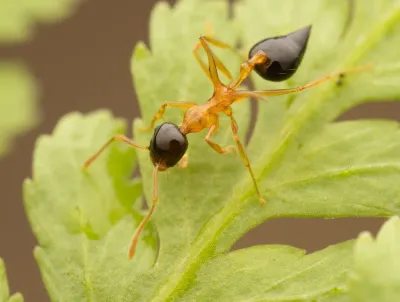
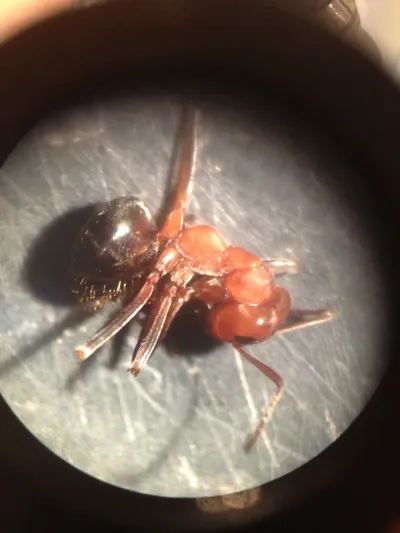
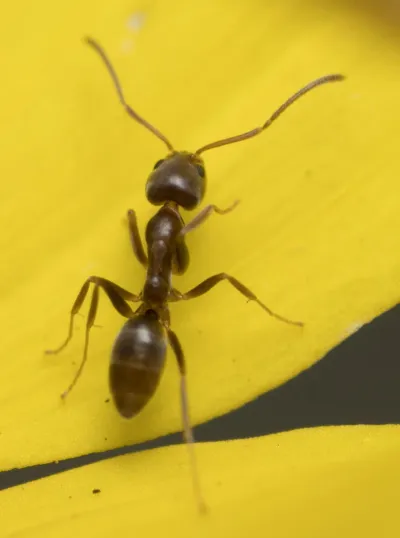
Commonly Confused With
Big-Headed Ants are often mistaken for these similar pests
Where Big-Headed Ants Are Found
Hover over states to see their names. Green regions indicate where big-headed ants have been reported.
Common Questions about Big-Headed Ants
Why are they called big-headed ants?
+
They get their name from the soldier ants, which have very large heads compared to their bodies. These big heads hold strong jaw muscles for crushing seeds, defending the colony, and breaking down food. Regular workers, which make up 99% of the colony, have normal-sized heads.
How can I tell if I have big-headed ants?
+
Look for two very different sizes of ants working together. Small workers are about 2mm, while soldiers are 3-4mm with large heads. These ants also pile up small mounds of dirt around sidewalks, driveways, patios, and foundations. Their colonies are usually very large with many trails.
Are big-headed ants dangerous?
+
Big-headed ants do not sting and rarely bite people. But they can be a serious pest problem. They invade homes in large numbers, get into food, and create messy dirt mounds in yards. The biggest harm is to nature. As one of the world's worst invasive ants, they push out native ants and other insects.
Where do big-headed ants nest?
+
They nest in loose soil, under rocks and pavers, in lawns and flower beds, under leaf litter, and near foundations. They dig long tunnel systems and often push dirt up near trees, sidewalks, driveways, and building walls. Inside homes, they may nest in wall spaces, under slabs, and in potted plants.
Why are big-headed ants so hard to control?
+
These ants form huge supercolonies with many connected nests, often with dozens of queens. One colony network can cover many properties. Treating single nests does not work because ants quickly return from untreated areas. You need area-wide treatment, ideally with neighbors working together.
What do big-headed ants eat?
+
They eat many things: dead insects, seeds, honeydew from aphids and scale insects, and household foods. They really like protein-rich foods and sweets. Soldiers use their strong jaws to crush seeds and break down larger food for the colony.
Are big-headed ants found in my area?
+
Big-headed ants live in warm climates. In the U.S., they are found mainly in Florida, southern California, and Hawaii. They cannot survive cold winters, so they stay in warmer regions. If you live in the Mid-Atlantic or northern states, the ants you see are probably a different species.
How do big-headed ants spread?
+
They spread in two main ways. First, supercolonies naturally grow into nearby areas. Second, people move them by accident in infested soil, potted plants, mulch, and landscaping materials. Once in a neighborhood, colonies can grow several meters per year by digging tunnels underground.

With five years of hands-on experience in the pest control industry, George Schulz is a registered technician with the Virginia Pest Management Association and a proud third-generation professional in a family business that's been protecting homes for over 57 years. He manages and trains a team of service pros while also leading internal research efforts—recently spearheading a deep-dive review of thousands of documents on pest control materials to hand-pick the most kid and pet friendly, most effective solutions tailored specifically for homes in the DC metro area.